Dedication date of Memorial / Plaque / Monument: Nil – at this time ( May 2026 )
? is NOT mentioned on the Police Wall of Remembrance * NOT JOB RELATED
FURTHER INFORMATION IS NEEDED ABOUT THIS PERSON, THEIR LIFE, THEIR CAREER AND THEIR DEATH.
If you have anything further to add to what is recorded here, please get in touch.
Herbert Robert Richardson MORROW ( mentioned above ) was born in NSW in 1885 and was a Probationary Constable with the NSWPF, Regd. # ‘Q’ 8636, on Wednesday 10 April 1907 but the mentioned Sgt Herb MORROW is most likelyHerbert William MORROW, NSWPF # 1711, who was a Probationary Constable on 20 November 1923 and died on 26 February 1975.
Eric, being born in 1932 would make the mentioned encounter in 1945.
Middle Row: Det SenCon R. MAHONEY # 12585, Det SenCon D.J. MAGICK # 13807, Plain Cloths SenCon J.G. FOWLER # 13730, Det SenCon C.G. HALLORAN # 14237, Det SenCon J. HOLMES # 13410, Plain Cloths Cst 1/c E.R. GRIMMOND # 15322, Plain Cloths Cst 1/c P. NUNAN # 15214, Det SenCon R.L. McDONALD # 13488
Back Row: Plain Cloths Cst 1/c M. FERGUSON # 15274, Det SenCon A.F. TAYLOR, Det Sgt 3/c C.J. CAMPBELL # 9711, Det SenCon R. JACKSON # 11042, Det SenCon M.H. TUTT # 13007, Det SenCon C. CAMERON, Det SenCon J.E. QUINN # 12748, Det Sgt 3/c L. TOWNSEND # 9234
Eric Stewart STRONG APM Presentation – 1988
Dulcie STRONG & Eric STRONG APM
* Story behind any Nickname:
Nothing further, than what is recorded above, is known about this person at the time of publication and further information and photos would be appreciated.
Dedication date of Memorial / Plaque / Monument: Nil – at this time ( April 2026 )
CATHY is NOT mentioned on the Police Wall of Remembrance * BUT SHOULD BE
CATHY is NOT mentioned on the Police Wall of Remembrance *NEED MORE INFO
? is NOT mentioned on the Police Wall of Remembrance * NOT JOB RELATED
CATHY IS NOT mentioned on the Sydney Police Centre Memorial Wall, Surry Hills Although is entitled to be.
FURTHER INFORMATION IS NEEDED ABOUT THIS PERSON, THEIR LIFE, THEIR CAREER AND THEIR DEATH.
If you have anything further to add to what is recorded here, please get in touch.
Our deepest condolences are extended to her 7 year old son Cooper.
Cathy Leigh DONNEY
Cooper DONNEY & Cathy Leigh DONNEY
Hi my name is Schooner and I am raising funds for a wonderful and heartfelt situation concerning a friend ‘Cath Donney’.
Everyday members of the emergency services put their lives on the line to protect and serve our community. Cath Donney is a 21 year general duties veteran and Sergeant of the NSW Police Force. Cath has minimal support re family assistance.
After many years of wanting to become a mother, Cath’s lifelong dream was finally realised with the arrival of her beautiful son ‘Cooper’ (2019).
The first diagnosis of Cancer
In 2021 Cath was diagnosed with stage 4 triple negative breast cancer. After countless rounds of radiation, chemotherapy and surgery she entered remission in early 2023. The following months were spent creating quality moments with Cooper.
Second diagnosis of Cancer
In September 2023 scans revealed a tumour in her brain. Cath underwent surgery and the tumour was removed successfully. However, in March 2024 the cancer had spread into Cath’s brain and her spine. Chemotherapy and radiation have commenced.
The situation currently
Cath and Cooper are currently surrounded by the love and support of close friends and work colleagues. She is receiving help with meals, lots of visits, house cleaning and lots of play dates for her son. Cooper is an amazing young boy who is a kind, affectionate and gentle young man despite all the challenges of mum being ill. He is a testament to the love that Cath embodies.
How the funds will help Cath and why this is so important
No longer being able to work Cath has had to use her life savings to keep her and Coop afloat amidst the extra costs due to being unwell. She now needs financial help.
Cath did not want any fundraising
When approached about this idea, Cath was totally against the concept of any fundraiser. She has always been an independent strong-willed individual never relying on any person whatsoever. Her response to this fund raiser was ‘Other people need this more than me’. Even though her diagnosis is serious Cath still does not feel deserving of any handout or financial assistance.
Thank you in advance to any donation, big or small. Every cent raised will be given to Cath and Cooper to assist with their ongoing expenses, and also set up a trust account for Coopers future.
Nothing further, than what is recorded above, is known about this person at the time of publication and further information and photos would be appreciated.
Dedication date of Memorial / Plaque / Monument: Nil – at this time ( April 2026 )
BAILS is NOT mentioned on the Police Wall of Remembrance * BUT SHOULD BE
BAILS is NOT mentioned on the Police Wall of Remembrance *NEED MORE INFO
BAILS IS NOT mentioned on the Sydney Police Centre Memorial Wall, Surry Hills ( although he is entitled to be mentioned in time )
FURTHER INFORMATION IS NEEDED ABOUT THIS PERSON, THEIR LIFE, THEIR CAREER AND THEIR DEATH.
If you have anything further to add to what is recorded here, please get in touch.
Anthony Rex BAILLIE AKA Anthony BAILLIE, Tony BAILLIE, Bails Tuggerah Lakes Police District
Grieving ex-cop leads memorial ride for police sergeant found dead at home
The ride two police mates never completed becomes a memorial journey as colleagues unite to honour a sergeant who took his own life with a service weapon.
Warning: Distressing content
The last message former police officer Mitch Wrigley received from his colleague and close friend will forever haunt him.
“He wanted to do a ride with me. I couldn’t make it. I had told him to set a date and I would make it work, but I couldn’t. It’s ruined me,” Mitch told news.com.au.
His friend, Sergeant Anthony Baillie – affectionately known as Bails and the name preferred by his family – was tragically found deceased in his Bateau Bay home on Monday, April 6, with a gunshot wound from a police-issue firearm.
13YARN: Speak to Aboriginal and Torres Strait Islander crisis supporter on 13 92 76 or visit 13yarn.org.au
Are you anxious? Take the Beyond Blue quiz to see how you’re tracking and whether you could benefit from support
Authorities have confirmed there are no suspicious circumstances surrounding his death.
Bails’ passing is now the subject of a Law Enforcement Conduct Commission Review.
Police sources have revealed the review will investigate how the sergeant managed to take a firearm home to his Central Coast residence after a night shift. It is understood he was designated an “internal sergeant”, meaning he was not permitted to carry a weapon due to mental health concerns.
Sergeant Anthony Baillie died in is Central Coast home. There are no suspicious circumstances. Picture: Supplied
Mitch, police colleagues and family and friends of Bails are for now focused on honouring the life of the much loved police officer.
“I just wish I could have done more for him,” Mitch said.
Mitch fondly remembered Bails as a truly exceptional individual who would go to great lengths for anyone, “even if it meant he copped criticism for it.”
Mitch wearing the shirts designed for the ride in honour of Bails . Picture: Supplied
“He always had your back and would fight for the troops below him before protecting himself.”
This Wednesday, Mitch, along with Bails’ father, other family members, and police colleagues, will embark on the very route the two men had planned to ride together.
Mitch is organising this ride in honour of Bails, aiming to make it “the biggest thing as he really enjoyed being out on his bike.”
“His ride of choice, which we did together many times, is the ride we will be doing,” Mitch said.
“I want to make this a big event to show how much he was loved as a son, father, brother, uncle, and friend. This ride means the world to me, and I would love as much support on the ride. If you can offer any support, big or small, it will all be greatly appreciated.”
He urged, “If you know Bails, know of him, or want to support a friend riding, please make every effort you can to attend.”
Former cop Mitch Wrigley and Sergeant Anthony Baillie. Picture: Supplied
Cyclists are requested to gather at 9am for a 10am start on Railway Parade, at the intersection of Gen Street, Belmont. ( NSW )
The group will ride to The Beach Hotel, Merewether, for lunch before returning to Belmont. A support vehicle will be available to transport bikes in case of mechanical issues or injuries. Coffee will be generously supplied by Emerge & See NSW & ACT, proudly serving Toby’s Estate Coffee.
“Let’s all get together and show our support for the legend Bails was,” Mitch encouraged.
Alana Singleton from Emerge & See emphasised the importance of reaching out for help, urging anyone experiencing mental health issues to contact their organisation.
Emerge & See is a “peer-led, free, independent, and confidential mental health support service for currently serving and retired emergency service workers and volunteers.”
She explained, “Driven by the lived experience of service, trauma, treatment, recovery, and growth, they will be there to help with resources, education, professional referrals, connection, and hope. We empower our community to proactively engage in support.”
To connect or seek support, please visit emergeandsee.org.au or email info@emergeandsee.org.au
Anthony Rex BAILLIE AKA Anthony BAILLIE, Tony BAILLIE, Bails 15 March 2024
Police officer found dead inside Central Coast home.
NSW
Police officer found dead with suspected gunshot wound inside Central Coast home.
An investigation is underway after a police officer was found dead inside a residence on the NSW Central Coast. It is not being treated as suspicious.
The police officer was found dead inside his Central Coast home.
A NSW police officer has been found dead from an apparent gunshot wound at a Central Coast home on Monday morning.
Initial investigations indicate that the death of the 56-year-old sergeant is not suspicious.
Forensic officers have set up a crime scene at a Bateau Bay home.
NSW Police will conduct an investigation into the death and report to the state coroner.
“A critical incident investigation is underway which will be reviewed by the Professional Standards Command and oversighted by the Law Enforcement Conduct Commission,’’ a police spokesman said today ( Monday 6 April 2026 ).
Our hearts break for our blue family, both current and former.
Please read the post below from Emerge & See Newcastle Hub Leader Mitch. We’ll be there for support Mitch.
Hey guys, as most of would be aware, I lost a good mate, Sergeant Anthony Baillie to suicide on Monday 6th April 2026.
Bails was a genuine top bloke who would do anything for you, even if it meant he coped criticism for it. He always had your back and would fight for the troops below him before protecting himself.
I am organising a ride in his honor and want to make this the biggest thing as he really enjoyed being out on his bike. His ride of choice which we did together many times is the ride we will be doing.
I want to make this a big event to show how much he was loved as a son, father, brother, uncle and friend.
This ride means the world to me and would love as much support on the ride. If you can offer any support, big or small, it will all be greatly appreciated.
Bails father and I will lead the ride which will be an easy 30k ride.
If you know Bails, know of him or want to support a friend riding, please make every effort you can to attend.
Details:
9.00am for a 10.00am start Wednesday 15th April 2026
Railway Pde x Gen St, Belmont, NSW
We will ride to The Beach Hotel, Merewether where we will have lunch before riding back to Belmont.
There will be support vehicle which will be able to accommodate transport for bikes if there are any mechanical issues, injuries etc.
Lets all get together and show our support for the legend Bails was.
Please share this post to get the best turn out possible
March 19, 2024
Sergeant Anthony Baillie has been named Tuggerah Lakes Police District’s Champion of the Month for March.
Sergeant Baillie has held his current position for nearly two years and has established himself as a strong leader and supporter of his team.
The police district’s Facebook page says he brings a positive and energetic attitude to his work with a ‘can do’ attitude.
“He is popular and well respected by his team, his peers and senior management,” the post says.
“Sergeant Baillie represents everything a strong supervisor should be and above all, he is a humble leader – a deserved winner for this month’s award.”
February “Champion of the Month – Sergeant Anthony Baillie
Yesterday, Sergeant Anthony Baillie was acknowledged in front of his peers by being presented the “Champion of the Month” award by Superintendent Chad Gillies.
Sergeant Baillie has held his current position for nearly two years.
He has established himself as a strong leader and supporter of his team. He brings a positive and energetic attitude to his work with a ‘can do’ attitude. He is popular and well respected by his team, his peers and senior management. Sergeant Baillie represents everything a strong supervisor should be and above all, he is a humble leader. A deserved winner for this months award.
Nothing further, than what is recorded above, is known about this person at the time of publication and further information and photos would be appreciated.
This Class first Walked into the Redfern Police Academy for ” Initial ” training on Monday 16 May 1966 to commence their Policing careers.
They were ” Sworn In ” on Monday 27 June 1966.
Towards the end of their Probationary period, these men returned to Redfern Police Academy for ” Secondary ” training which commenced on Monday 3 April 1967 and concluded on Friday 19 May 1967 at which time they returned to their respective Police Stations of attachment.
Although the faces are not that clear, in the photo, because of the distance, the following details have been recorded:
the photo was taken on Wednesday 3 May 1967 by Mullins of 10B Albion St, Haymarket, NSW.
Back Row ( L – R )
Greg COVENEY # 11947, J.F.G. CAMPBELL # 12017, J.P. HUNDY # 11964, ?, William Joseph KIERSE # 11937, Stephen Edward BILLS # 11934, R.J. BASSETT # 11977, B.S. BRINKLER # 11954, ANDERSON ( see note below ), R.E. BURNETT # 12026, ?, Col COLEMAN # 12030, ?, N.H. GILLON # 12016, T.W. DAN # 12025, R.J. BRADY # 12000, P.J. COOKE # 12018, G.R. GOODWIN # 12005, N.J. MAKEHAM # 12011, R.W. KENT # 11932, Terrence Bernard SHEPHERD # 12078, G.W. DAY # 12060, D.G. PARKINSON # 12007, C.D.R. CROSS # 11990, R.G. SMITH # 12048, G.J. NICHOLSON # 11994, ?, J.N. WRAGG # 12055, R.E. LILLY # 12032, B.V. CURTIS # 11997, J.B. MURRAY # 11980, MILLER, D.J. MURPHY # 11986
3rd Row
R. WESTERHUIS # 11978, ?, ?, K.W. HALLIGAN # 11975, Dick TREVERROW # 11991, William POCKRAN # 11945, ?, John E. WOOLCOTT # 11976, Brian George MARSDEN # 11958, ?, ?, A.F. POLLOCK # 12050, J.D. ABELL # 11987, EVANS, A.B. NORTON-BAKER # 11953, TOBIN, ?, R. ROBINSON # 11940, D.J. SNOWDEN # 12073, C.R. IRWIN # 11933, Patrick James KEYS # 11974, D.B. FERRINGTON # 12006, T.G. LEAHEY # 12022, R.C. WIGLEY # 12015, ?, ?, P.J. THOMAS # 12066, R.G. BULLEY # 12056, B.D. MURCHIE # 11957, ?, ?
2nd Row
Cst KING, L.S. ROBBINS # 11970, Kenneth James DASKEIN # 12064, M.J. HILTON # 11963, ?, P.M. RYAN # 11959, DEWRANT, CRIBBLE, M.P. FAWKNER # 11969, J.J. FALLON # 11968, Ross Norman BETTS # 12058, P.F. THANG # 12042, M.G. BROWN # 12043, ?, Keith David BRADLEY # 11926, ?, John William GILLIES# 12068, ?, N.J. TICEHURST # 11982, Peter Reginald O’CONNOR # 11989, P.J. TUDOR # 11949, Bernie NIVEN # 11946, KESBY, ?, ?, R.R. MORRIS # 11936, C.A. IRWIN # 12024, TAWNING, D.C. BRENTON # 12008, R.J. CAINES # 11973, J.D. MacLEOD # 11988, P.C. WARD # 11952, Cst FITZGERALD
Front Row
G. BRENT # 12034, C.B. WHITE # 11960, M.J. DALEY # 12028, Alan Leonard BECKE # 12001, Frederick Ernest HENNEBERRY # 11996, P.J. BUTLER # 11999, Peter MORRIS # 11948, I.G. CORMIE # 12059, J.H. FOGGO # 12036, ?, M.R. NEDELKO # 12044, SHENTON # 12009, J.M. CORCORAN # 12004, R.C. NICOL # 11941, S/C Brian Keith ANDREWS # 7275, Insp 3/c D. STEWART # 4320, S/C K.J. FERGUSON # 7830, T.W. BAGNALL # 11935, R.J. ELLERY # 12013, DAVIS, J.H. FERRIER # 12069, Michael John MIDDLETON # 12074, WHIT, W.J. DEVINE # 11943, A. BRAAK # 12057, GREEN, PRIOR, BOURKE, J.J. WRIGHT # 11981, D.G. PARKINSON # 12007, PAFF
There are THREE people with the surname ANDERSON in this Class. M.L. ANDERSON # 11939 / P.J. ANDERSON # 12038 / Cadet N.T. ANDERSON # 12083. I can not be 100% certain ( until further informed ) which ANDERSON is referred to ( in the Back Row ) on the original name sheet – thus I will mention them in this note but not in the photo.
There are two people with the surname of IRWIN in this Class. C.A. IRWIN # 12024 & C.R. IRWIN # 11933 ( Cadet ). I can not be 100% certain ( until further informed ) if C.A. IRWIN is in the 2nd row or the 3rd row. For the purpose of this photo – I have chosen the 2nd row for C.A. IRWIN # 12024 ( because the faces can’t be distinguished )
There are two people with the surname of MORRIS in this Class. Peter MORRIS # 11948 & R.R. MORRIS ( Cadet ) # 11936. I can not be 100% certain ( until further informed ) if Peter is in the front row or the 2nd row. For the purpose of this photo – I have chosen the front row for Peter ( because the faces can’t be distinguished )
Missing, from the above names in the supplied list and most possibly one of the ?’s:
# 11925 – not known if this person was in Class 106 or the first one in Class 107. Name does NOT appear in the 1968 ‘Stud Book’.
# 11927 – Name does NOT appear in the 1968 ‘Stud Book’.
# 11928 – Name does NOT appear in the 1968 ‘Stud Book’.
# 11929 – Cadet – D.J. DAVIS
# 11930 – Name does NOT appear in the 1968 ‘Stud Book’.
# 12071 – Name does NOT appear in the 1969 ‘Stud Book’.
# 12072 – Name does NOT appear in the 1969 ‘Stud Book’.
# 12075 – Cadet – P.A. CRYMBLE
# 12076 – Cadet – C.J. GREEN
# 12077 – Cadet – D.N. DURANT
# 12079 – 12082 Name does NOT appear in the 1969 ‘Stud Book’.
# 12083 – Cadet – N.T. ANDERSON
# 12084 – Name does NOT appear in the 1969 ‘Stud Book’.
# 12085 – Cadet – P.E. BODDY
# 12086 – Name does NOT appear in the 1969 ‘Stud Book’.
# 12087 – Cadet – P.R. SHERWOOD
# 12088 – Name does NOT appear in the 1969 ‘Stud Book’.
# 12089 – Cadet – B.A. HOWARD
# 12090 – Cadet – I.M. BARNES
# 12091 – Cadet – A.A. JONES
# 12092 – Cadet – J.L. AULT
Registered number range 11925 – 12092
Nothing further, than what is recorded above, is known about this person at the time of publication and further information and photos would be appreciated.
2nd last Class to be Sworn In at the Penrith Police college, NSW
New South Wales Police Force
Regd. # 7642
Rank: Commenced Training at Penrith Police Academy on Monday 26 October 1953 ( aged 21 years, 5 months, 11 days )
Probationary Constable – appointed ? November 1953 ( aged 21 years, ? months, ? days )
Constable – appointed ? November 1954
Constable 1st Class – appointed ? October 1959
Detective – appointed ? October 1961
Senior Constable – appointed 26 October 1964
Leading Senior Constable – appointed ? ? ? ( N/A )
Sergeant 3rd Class – appointed 1 January 1969
Sergeant 2nd Class – appointed 31 January 1977
Sergeant 1st Class – appointed ? December 1979
Inspector – appointed 26 May 1983
Chief Inspector – appointed 6 November 1985
Final Rank: = Detective Chief Inspector
Stations: Daceyville ( 15 Division )( GDs )( ProCst ), Randwick ( 15 Division )( GDs ), Randwick ( 15 Division )( ‘A’ List ; precursor to becoming a Detective ), Vice Squad ( Training )( Sept 1956 – Oct. 1958 ), Redfern ( 7 Division )( Relieving and Testing Duties )( Oct. 1958 – Feb. 1959 ), Paddington ( 10 Division )( C.I. Duties )( Feb. 1959 – Jan. 1961 ), Liverpool ( 22 Division )( Dets )( Jan. 1961 – Jan. 1971 ),Merrylands ( 26 Division )( Dets )( Jan. 1971 – Mar. 1974 ), Fairfield ( 34 Division )( Dets )( Mar. 1974 – Dec. 1975 ), Central ( 1 Division )( Det )( Dec. 1975 – Jan. 1979 ), Hurstville ( 31 Division )( Dets – Divisional Det. Sgt )( Jan. 1979 – Jan. 1980 ), Bankstown ( 19 Division )( Det. Sgt 1/c )( Chief of Dets )( Jan. 1980 – Sept. 1981 ), ‘ G ‘ District – Assistant to the Det. Insp. ( Sept. 1981 – June 1983 ), ‘ H ‘ District – District Detective Inspector – ( June 1983 – ), Bureau of Crime Intelligence ( B.C.I. )( c1986 )( Det C/Insp ) – Retirement
Service ( From Training Date ) period: From 26 October 1953 to 5 April 1988 ( optional Retirement ) = 34 years, 5 months, 10days Service
Time employed ( Paid ) with NSW Police: From: 26 October 1953 to 5 April 1988 ( optional Retirement ) = 34 years, 5 months, 10days Service
Time in Retirement from Police: 37 years, 3 months, 14 days
Age at Retirement / Leaving: = 55 years, 10 months, 14 days
Awards: No Find on the Australian Honours system – however;
won the Sir Robert Askin Memorial Award
Commended for his part played in the search for Monica Schofield, missing from Heathcote Hostel from the 17th June, 1963, and in relation to inquiries which resulted in the arrest of her attacker, Barry Rodrick, and his subsequent conviction for murder.
Signed N. T. W. Allan. Commissioner of Police.
Born: Sunday 15 May 1932
Died on: Saturday 19 July 2025
Age: 93 years, 2 months, 4 days
Organ Donor: No – Age restrictive
Cause: Natural – Old Age
Event location: ?
Event / Diagnosis date: ?
Funeral date: Thursday 31 July 2025 @ 12.30pm
Funeral location: South Chapel, Forrest Lawn Memorial Park, Camden Valley Way, Leppington, NSW
Liverpool PAC will provide an Official Police Guard of Honour
LIVE STREAM can be found HERE link expired before I had the chance to record it.
Ray was the President of the Cabramatta Golf Club for 7 years.
He was a well known sportsman, footballer and Policeman.
On Saturday, 19 July 2025, retired Chief Inspector Raymond Douglas Millington 93 , past away after a short illness.
Ray was an outstanding man! A very good detective, outstanding Policeman and accomplished athlete, he played 1st grade rugby Union for Easts, 1st grade rugby league for Easts, he was an excellent basket ball player and was in the graded finals for selection for the 1956 Olympics!
Ray was a man of old fashion principles and integrity, he excelled as a policeman, teacher and a friend.
Ray worked at Central Dets in the 70’s and at Bankstown in the late 70’s where he was the boss.
He was a man of wisdom, intelligence and compassion.
He recently was awarded a special commendation where he and 3 other persons were recognised as being the only sportsman too play 1st grade in 3 disciplines, rugby Union, rugby and AFL, on the Sydney Cricket Ground. An amazing feat for an amazing man.
Australia has lost a great Aussie!
1953 October: Liverpool Police Officer – Probationary Constable Raymond. D. Millington a former Driver’s Assistant, Cabinet Maker, Tally Clerk and Labourer entered the Police College at Penrith and commenced his Initial Training.
This was the second last class to be attested at the Penrith College.
Then four weeks later, in 11/1953 he was attested as a Probationary Constable and stationed at No. 15 Division (Daceyville) on General Duties.
In 5/1954 he was transferred to Randwick Police Station (a sub-station of No. 15 Division) on General Duties, and after a short time he went onto the ‘A’ List, where in 10/1954 he was promoted to the rank of Constable.
In those days a prospective Detective was transferred either to the Vice Squad or No. 21 Division for Criminal Investigation Training.
In 9/1956 he was transferred to the Vice Squad. In 10/1958 he was transferred to No. 7 Division (Redfern) on Relieving and Testing Duties.
In 2/1959 he was transferred to No. 10 Division (Paddington) on Criminal Investigations, where in 10/1959 he was promoted to the rank of Constable 1/c.
Then in 1/1961 he was transferred to No. 22 Division (Liverpool) on Criminal Investigation Duties, where in 10/1961 he was designated a ‘Detective’. Around this
period Liverpool stretched from Guildford to Bargo, and the Police Station located within No. 22 Division were Liverpool (Head Station), Fairfield, Cabramatta, Guildford, Ingleburn, Campbelltown, Camden, The Oaks and Picton.
1961 January: Liverpool Police Officer – Detective Constable 1/c. Raymond D. Millington was transferred to No. 22 Division (Liverpool) on Criminal Investigation Duties, where in 10/1964 he was promoted to the rank of Detective Senior Constable.
In 7/1968 he was one of the Criminal Investigators involved in investigating the Wally Mellish Glenfield Siege.
In 1/1969 he was promoted to the rank of Detective Sergeant 3/c.
In 1/1971 he was transferred to No. 26 Division (Merrylands) on Criminal Investigation Duties.
In 3/1974 he was transferred to No. 34 Division (Fairfield) on Criminal Investigation Duties.
In 12/1975 he was transferred to No. 1 Division (Central) on Criminal Investigation Duties, where in 1/1977 he was promoted to the rank of Detective Sergeant 2/c.
In 1/1979 he was transferred to No. 31 Division (Hurstville) at the Divisional Detective Sergeant, where in 12/1979 he was promoted to the rank of Detective Sergeant 1/c.
In 1/1980 he was transferred to No. 19 Division (Bankstown) as the Divisional Detective Sergeant.
In 9/1981 he was transferred to ‘G’ District as the Assistant to the Detective Inspector, where in 5/1983 he was promoted to the rank of Detective Inspector.
In 6/1983 he was transferred to ‘H’ District as the District Detective Inspector.
Source: Liverpool Police History time line by Joe Stanioch.
Bankstown Detectives: C1979
Back Row ( L – R )
Det SenCon E. HAWRYSIUK, P.C.Cst 1/c I.B. KEENAN, P.C. SenCon Joe STANIOCH, Det SenCon M.A. DONOVAN, P.C. Cst 1/c Michael P. McGANN # 16758, Det SenCon Ulrich BRAMANN # 14184, Det SenCon G.C. PRENTICE, Cst 1/c R.N. RYAN.
Second Row ( L- R )
P.W Det SenCon M.A. WESTAWAY, Det SenCon Trevor Lyle BEAUMONT # 14058, P.C. Cst G.Md. ABEL, P.C. Cst 1/c J. KHALIFEH, P.C. Cst A.J. BICKHOFF, Det SenCon A.A. TOWNSEND, P.C. SenCst K.J. PLATT, P.C. Cst 1/c TUNNICLIFFE, P/W Cst 1/c G. M. LAPHAM.
Front Row ( L – R )
Det Sgt 3/c Allan R. LYTHALL # 9291, Det Sgt 3/c W. J. HADLEY, Det Sgt 3/c Ray F. WEBSTER # 10213, Det Sgt 2/c R.N. MURRAY, Det Sgt 1/c Ray D. MILLINGTON # 7642, Det Sgt 3/c R.E. LYNCH, Det Sgt 3/c J.D.G. BARTLETT, Det Sgt 3/c M. COUGHLIN.
The Glenfield Siege, 50 years ago….
In July 1968, small-time criminal Wally Mellish held his girlfriend Beryl Muddle and her child hostage in a fibro house in Sydney’s southwest. The bizarre turns of the eight-day siege captured the attention of Australians and made headlines around the world.
THE SYNOPSIS: Small-time criminal Wally Mellish, 22, was living in a house in Glenfield Road with his girlfriend Beryl Muddle, 19, and her 11-week old son when police arrived to talk about local car thefts.
Mellish told them to “go to hell”, fired a shot in the air and for the next eight days the house was surrounded.
Mellish forced Police Commissioner Norman Allan to arrange for his wedding to Beryl and to be best man. Allan provided the ring and the police canteen the wedding breakfast. Mellish forced police to give him an Armalite rifle and ammunition.
When the siege ended Mellish was taken by Commissioner Allan to Ingleburn Army Camp to enlist for service in Vietnam but he was rejected and committed to Morisset Psychiatric Hospital. No charges were ever laid. The marriage was annulled.
DAY ONE: July 2, 1968: On a cold winter’s morning local detective Ray Millington knocked on the door of the fibro cottage to talk to Mellish about car thefts. He was told to “go to hell” and a shot was fired.
Riot Squad police surrounded the house. Mellish threatened to kill Beryl and the child and more shots were fired. Detective Superintendent Don Fergusson, chief of the CIB, and Long Bay Jail chaplain the Rev Clyde Paton negotiated a truce.
Earlier, a detective in the house talking to Mellish was ordered out by Commissioner Allan when he phoned to talk to Wally.
DAY TWO: Commissioner Allan took personal charge and organised the wedding of the year. He got special dispensation to avoid the statutory seven-day waiting period. Rev Paton married Wally and Beryl with Allan as best man and Fergusson as a witness. Allan brought five rings so one would fit.
The mobile police canteen provided a curry wedding breakfast washed down with Coca-Cola. Mellish laid down his weapons for the wedding but Allan and Fergusson honoured their promise and didn’t grab him. The world began to follow the Glenfield Siege.
DAY THREE: Allan admitted to astonished pressmen that Mellish had been given an Armalite rifle and 200 rounds of ammunition because he wanted to match the fire-power of the police. Allan denied he was a hostage, claiming Mellish threatened the life of his wife and child. Police also gave Mellish food and a radio. Allan said Mellish claimed to have hand grenades and this was supported by Beryl.
DAY FOUR: Police stopped serving food to Mellish but continued to provide for the child. Plans to dope Mellish’s food were ruled out. Mellish would only communicate with Rev Paton. The use of tear-gas was ruled out because of the effects on the baby.
DAY FIVE: Mellish again refused food and cigarettes as police tried to wait him out. Police Association began to question handling of the siege by Commissioner Allan. Power to the house was cut and searchlights installed.
DAY SIX: As the waiting game continued, police defied orders and rained rocks on the tin roof of the house. “If we have to be awake so does he,” one detective said. Riot police were openly contemptuous of Mellish reading papers in full view of the siege house. Dr Tom Lonie, superintendent of Morisset Hospital where Mellish had been a patient, spoke to him.
DAY SEVEN: Mellish reported to be twice on the verge of surrendering after telephone talks with Rev Paton but was still in the house at the end of the day. Police Association censured Commissioner Allan for handing over the Armalite rifle.
DAY EIGHT: After 174 hours, on a sunny afternoon at 3.09 pm. Wally and Beryl walked out of the house with the baby. Wally went to Ingleburn and then to Morisset in Allan’s car. Police and press packed their gear and Glenfield returned to its quiet state.
THE AFTERMATH: The next day Beryl announced she was seeking to annul the wedding. Commissioner Allan, Rev Paton and Superintendent Fergusson were decorated for their bravery. Rev Paton moved into obscurity
^ ^ ^ ^
Glenfield Siege. Liverpool Police attended premises in Glenfield Rd, Glenfield, the home of Wally Mellish (23old), to enquire about some stolen car parts and also execute an arrest warrant for car theft, initiating the siege.
After Detective Raymond Millington from Liverpool knocked on the front door he was told to “go to hell” and Mellish fired a shot in the air and the house was then surrounded for the next eight days.
NSW Police Commissioner Norman. T. W. Allan personally negotiated with a petty criminal Wally Mellish who defied police in a siege by holding his girlfriend Beryl Muddle and their 11 week old baby as hostages.
Having persuaded Mr Allan to arrange his marriage to Beryl and to provide the wedding ring and the feast, Mellish refused to surrender as promised.
Mr Allan acceded at gunpoint to the Mellish demand to be furnished with an Armalite rifle and 200 bullets.
The marriage celebrant Rev Clyde Paton persuaded Mellish to surrender 5 days later.
He was sent to the Morisset Mental Hospital. Soon after release from the Hospital, Mellish was arrested for demanding money with menaces, in an unrelated matter, and subsequently jailed for 3 years.
Detectives who complained about not been able to arrest Mellish following the siege were transferred to Uniform Duties by the Commissioner.
Commissioner Allan rewarded himself and Rev Paton with the Queen Medal for Bravery.
No charges were ever laid, and the marriage was annulled.
^ ^ ^ ^
Former Liverpool Police Officers – Detective Inspector Raymond. D. Millingtonwas the Detective Inspector at ‘H’ District Office. He and Detective Chief Inspector Jim Loomes were chosen to commence an investigation into allegations of corruption ( bribery for early prisoner releases ) by former NSW Corrective Services Government Minister Rex Jackson.
Their initial investigation later lead to a Royal Commission, which resulted in Jackson’s conviction in 9/1987 and serving a term in prison. He was released from prison in late 1990. The Royal Commission also exposed a number of other high profile persons acting corruptly.
^ ^ ^ ^
Scholastic Achievement: Sir Robert Askin Memorial Award. This award was presented annually for attainment during the Senior Police Course. Detective Inspector Raymond. D. Millington, who was attached to the Bureau of Crime Intelligence at the time, was the recipient.
Source: Liverpool Police History time line by Joe Stanioch.
The three-code pioneer who paved the glittering path for Folau and Hunt
Footy fans everywhere are familiar with the code-hopping stories of Israel Folau and Karmichael Hunt. But the pair were beaten in playing all three football codes by a Sydney policeman sixty years earlier.
It was a balmy Brisbane night. The kind of night that has citronella candles flickering right along the river.
Israel Folau knew the kind well, never once batting his eyelids as the Lang Park crowd milled around him, many still in singlets and thongs.
But while the multi-million-dollar dynamo was on familiar ground, he was entering new territory. All 102 kilograms of him.
With two seasons as a Brisbane Bronco already under his belt, Folau’s bus ride down Caxton Street that night was filled with a smorgasbord of familiar sights and sounds. Maroon-clad fanatics downing mangos in the swamp. Saturday night specialists sipping on whiskey apples at Lefty’s. The riff-raff congregating suspiciously outside of Honey B’s.
Only this time, none of the locals would be cheering his name. Even if every last one of them had turned up, and paid up, to see him.
Sweaty shoulder to sweaty shoulder, 35,081 made their way through the Lang Park turnstiles on the 23rd of February, 2013. 35,081 were on hand to witness history.
Or so they had been told.
Spruiked as the first man to play Australian rules football, rugby league and rugby union at the highest levels possible in this country, Folau made his return to Suncorp Stadium after 905 days. His hand poised to re-write the history books.
Despite earning detractors along the way, the gravity of the then-33-year-old’s achievement couldn’t be understated. Folau’s ability to hop from the Melbourne Storm to the Broncos (NRL), then over to the GWS Giants (AFL) and jump into place with the New South Wales Waratahs (Rugby Union) had kids weaving several dreams into a singular naptime.
No longer were aspirations of becoming a Kangaroo, a Wallaby, or an All-Australian mutually exclusive.
Two years on from his rugby union debut, Folau would be joined in this rare club by Karmichael Hunt, after the Auckland-born, Australian representative made his way from Brisbane to Biarritz, then to the Gold Coast Suns and onto the Queensland Reds’ roster in 2015, all while changing gears – and gear – with relative ease.
Yet, for these Polynesian superstars to stake their claim across all three codes, earning a chance to stroll contentedly down streets paved with gold, their path first needed paving.
For eight years, footy fans from all three codes have been under the impression that Folau was the first man to spin a Steeden, shoot a Sherrin, and grab a Gilbert professionally, to be paid for the honour.
But what if this collective belief was wrong?
What if the history books had been etched incorrectly?
What if we told you that more than six decades ago, it took a Sydney copper to sprint, so Folau and Hunt could stroll?
As the maxim goes, truth is often stranger than fiction. But for Raymond Douglas Millington, this strange truth is his life’s work.
Not that many had noticed.
Unless you are a nonagenarian that packed scrums around suburban Sydney, chased leather in inner Melbourne, or featured in the Harbour City’s first-grade competition during the 1950s, it is unlikely you have ever heard the name, Ray Millington.
However, for the vast uninitiated, the New South Welshman – all 76 kilograms of him – became the first name to sit at the table of three when he completed the trifecta way back in 1957.
A feat completed to absolutely no acclaim.
Take a beat and check out Ray’s entry in any edition of The Encyclopedia of AFL Footballers. You will find it is only marginally larger than a jelly baby. Folau and Hunt’s by comparison? Theirs are more like mini Mars bars.
“I’ve had a pretty colourful sporting career,” Millington wryly told Zero Hanger from his home in Sydney’s West.
Now less than a month shy of his 91st birthday, and over 63 years since he hung up his boots for good, Ray Millington no longer moves like the whippet-like competitor he once was.
“I’m getting old. I say that every day and I don’t like it very well, but it creeps up on you and you have no alternative,” he admitted through a fatigued drawl.
“Don’t rush yourself, mate. It’s all I can say to you.”
But as whippet-like competitors of any age are prone to, Ray still has plenty to say.
Precursor to Pendles
You could be forgiven for believing that for someone to play VFL football, top-grade rugby union and pull on the Sydney Roosters‘ famous Tricolours in one lifetime, they must be a near-supernatural entity, an all-conquering athlete touched by the gods themselves.
Part Scott Pendlebury, with a touch of James Tedesco, and just a sprinkle of Roy Hobbs in there for good measure. What most would call a natural.
However, if you took the short odds to back Millington in as the most gifted galloper in the race, the bookie would be holding your hard-earned. That ticket would be worthless.
“No, no, no,” Ray rebuffed. “I was never a natural. I had to work pretty hard to get to where I got.”
Raised in the country surrounds of Grose Wold – an 80-minute drive north-west of Sydney’s centre – Ray spent the early years of his childhood playing cricket and rugby league with the 10 others in the school yard of his one-horse town. A town where, ironically, most blokes earned a crust as horse studs.
But with the Curtin government committed to sending fit men to war following the German’s march into France, the Millington family traded the sticks for the tight-knit, double-terraced streets of Paddington in 1942, after Ray’s father was asked to make the barracks on Moore Park Road home.
With rations, blackouts, and tightened purse strings the norm, 10-year-old Ray wandered to the end of the road and changed the course of his life.
Once located less than a Phil Manassa run from the SCG’s stately Members’ stand, the Moore Park Playground was filled with kids of the depression honing their sporting skills from dawn until dusk, each enjoying unfettered access to enough poles, goals, nets, bats, and balls to keep dreamers of every persuasion in business.
“The playground was only about three or four hundred yards from where I lived, so I’d go there straight after school and stay there until around 7 o’clock at night,” Ray recalled.
“We played cricket, rugby league, basketball, rugby union, tennis, baseball, and whatever else.”
It was on this field of dreams that Ray was moulded into the precursor to Scott Pendlebury, with his own basketball background fostered under the watch of Australian hoops royalty.
“We were always bouncing basketballs or swinging bats or something. That was seven days a week. That’s how I got my start,”
“We had a very, very, very good supervisor in Ray Rosbrook. His skills as a sports coach were of an international standard. He was a superb head coach of the New South Wales basketball team.”
The playground’s posts and courts are long gone now. Each removed or sealed over with bitumen and marked into multiple gridlocked lanes. These days, the junction of Moore Park Road and Dowling Street acts as the mouth to the Eastern Expressway – a route used by tens of thousands of Sydneysiders every day, and avoided by hundreds of thousands more.
“The place I lived in Paddington just sold for $3.5 million,” Millington sighed. “Such is progress, I guess.”
Like present-day developers, progression would soon become the name of Ray’s game, with all roads soon leading to the SCG’s greener pastures, and the playground fading fast in his rearview mirror.
Collate the history books, and they will say that Ray was the first person to play any form of Aussie Rules, rugby union, and rugby league on the cricket ground. Still, his first mark at the venue came without a ball at all.
During the summer of 1950, a time in which Menzies was still moving furniture into the lodge, Ray took on all comers during the NSW Junior Athletics carnival, heading home as state champion in javelin, hammer throw, and the pole vault.
A burly lad, by then on the verge of adulthood, Ray’s crowning vault wasn’t without misfortune, as he flew for the heavens, crashlanding like an ungainly Roy Cazaly.
An 18-year-old Ray Millington tumbling from his pole at the SCG – February 25, 1950. Photo – supplied
“I’ve got a photograph of that. Me going through the air, arse upside down,” Millington said with a prideful chuckle, recalling with ease the events of an afternoon that unfolded more than 70 years ago.
“I think the bar was at about 10′ 6 – over three metres in today’s measurements – and the pole broke. In those days, the sandpit was just two inches of sand thrown on the grass.”
It was this size and courage that had served him well as he wandered into view of Australia’s own game. His sticky hands and high leap were more than handy, too.
“I wasn’t a natural, but just having a basketball in your hand every day gave you that hand-eye coordination and that’s why I adapted to Aussie Rules a lot easier than most,” he explained.
“I had good hands, very good hands, and because I used to compete in athletics carnivals, I could jump.”
“Learning to kick came with difficulty, but back then it wasn’t much of an issue, as everyone just went back and laced off big torpedo punts.”
Originally turning out for the now-defunct Dellmuth Football Club, Ray stab-passed his way around the ovals of suburban Sydney, eventually lining up with Eastern Suburbs – a club once home to Swans co-captain Dane Rampe and triple premiership Blue, Mark ‘Sellars’ Maclure.
Tasting grand final defeat in his first season at Trumper Park, the 17-year-old with the dukes and the hops had made waves since his rise to the seniors. Waves that would carry him into a sky-blue jumper and a date against a Hall of Fame spearhead.
Wollongong, October 1949 – A combined NSW side before their fixture against VFA premiers Williamstown – a 17-year-old Ray Millington can be found dead centre of the front row – PHOTO CREDIT – NSW Football History Society.
“I was selected in a composite New South Wales team in 1949 to play Williamstown, who had just won the VFA competition down in Melbourne,” Ray said.
“We played them at Wollongong and the great Ron Todd was at full-forward for them. They only beat us by six points and I kicked three for the day.”
Ray’s goalkicking prowess would continue throughout the 1950 season, with the Sydney Morning Herald routinely reporting on his ability to “dazzle spectators with high marks and long kicks”.
An 11-goal outing against Balmain in late May saw him skyrocket into the state side, booking a place on the plane for the 1950 State Carnival.
“We went up to Brisbane for about 10 days or so. We played on what’s now the Gabba and beat Canberra and Queensland.”.
With the Waratah stamped on his chest, the pride that filled Ray way back when remains a sensation he can vividly recall today, even if his jaw may have been a bit jutted at the time.
“I was just a kid. I was overawed, but I was up myself…”
“You think that you’re Superman.”
“But I played alright. I played pretty well.”
Man of Steel or otherwise, avenues were beginning to open for the nippy forward with a bloodhound’s sense for goal.
Although the dog days of rationing and blackouts had been shrugged off by the spring of 1950, with the nation now finding itself on the doorstep of economic prosperity, VFL outfits still took a decidedly narrow view when it came to signing talent.
Time and again, the stars and also-rans of the day came from within the near reaches of all 12 clubs, or from the bush just beyond town. But whether city slickers or hayseeds, there was a tie that bound almost every teammate: the ‘Barassi Line’.
More than 30 years on from landing a league side to call their own, Sydney may as well have been on a different planet to Melbourne in those days, with few in the Harbour City caring for a game that remains more religion than sport south of the Murray River.
But this Millington kid had something. Something that was too sharp to ignore. From the sticks to the big smoke; from the playground to national recognition, a chance to travel to football’s Mecca would soon follow.
New South Wales’ 1950 State Carnival Side on the tarmac at Mascot Airport – an 18-year-old Ray Millington can be found third from the left – PHOTO CREDIT: NSW Football History Society.
Gorillas and Galloping Greens
1951 was the quintessential ‘almost season’ for the Fitzroy Football Club.
10 wins, six losses, and, peculiarly, two draws, saw the Gorillas – the club’s overtly aggressive mascot between 1939 and 1956 – finish just outside the top four, forcing them to watch on as the hated Pies, Cats, Dogs, and Dons did battle in September.
By then, it had been four years since the Roys had last punched a finals ticket – their last look coming during their preliminary final loss to Essendon in 1947. It had also been eight years since their last premiership – a drought that would remain unbroken throughout their final 45 years of existence.
Though little more than the tracks of a sliding door had kept Fitzroy from a spot in the four, the club’s brass sought an alternative fix for their marginal woes. One that would cost them a mere fraction of the hard-earned spent elsewhere.
In an effort to climb the ladder, the Gorillas looked north, asking a raw utility to trade pre-bohemian Paddington for Fitzroy, a suburb still light years away embracing frothed oat milk in their fairtrade coffees.
“I was approached by the president of the NSW Aussie Rules competition, Les Taylor, at the end of 1951. He must have been approached by Fitzroy because he told me to head down to Melbourne and sign with them,” Ray explained.
News report from The News of Adelaide – January 10, 1952. PHOTO CREDIT: Trove.
“There were articles in the paper down there about how Fitzroy’s officials met me at Essendon Airport because other clubs were interested in signing me. They never told me who those mystery suitors were.
“At that stage, I was the youngest from New South Wales to ever go down to Melbourne. I was only 19 at the time.”
Young, brash, and keen to get his hands dirty, Ray and his wife, Norma, made a home for themselves in the heart of Fitzroy, waking most days to the sound of trams thundering past their front door.
“We lived directly opposite the footy ground In Brunswick Street,” Ray explained.
“That was back when the Harveys were playing cricket with Fitzroy.
“We walked straight out the front gate and across the road into Brunswick Street Oval.”
Across the tram tracks and beneath the shadow of the old railyard silo, Ray rubbed shoulders with a strong and silky ilk, honing his craft alongside Team of the Century members, Bill Stephen and Allan ‘The Baron’ Ruthven, by then a Brownlow medallist and the Roys’ captain-coach.
There was also ‘Butch’ Gale and Norm Johnstone, two men that were more granite than flesh and bone. Around them was place-kicker Tony Ongarello, a dapper gent who would famously hide brandy in his walking stick later in life.
Though the new kid on the block, the teenaged Ray Millington matched it with these champions, seeing scribes from The Age dub him the Roys’ most impressive off-season recruit.
But even after training the house down over the summer, Ray was forced to uphold a time-honoured tradition: earning a spot in the seniors from the reserves.
At 176cm, Ray was deemed too short for a forward post. And though unfamiliar with the rough and tumble of life at the coalface, the Sydneysider was asked to cut his teeth in the middle.
“I used to be the centre-half forward or full-forward up in Sydney, but I was just too short. So, the club threw me in on the half-forward flank instead,” Ray recalled of his perpetually moving magnet.
At 0-2, the Gorillas’ 1952 season wasn’t off to a flier. And, after seeing gun centre-man Don Furness go down with injury, centre half-forward Ron Simpson hit for six with the flu, and their boom recruit earning rave reviews in the twos, Ruthven brought the kid into the big time.
At Princes Park in Round 3 against the capable Ken Hands, Ern Henfry, Bruce Comben and the guile of Ollie Grieve, Ray was quickly swept up in the rise in class, earning a reminder square between the numbers stitched onto his guernsey.
“My first game, I was 19th man and had to go on pretty early,” Ray recollected with ease.
“It would have been in the first quarter. By the time I got to my position, I was shitting myself.
“Here I am, a kid from Sydney playing in the big league in Melbourne, running on in front of the crowd at Carlton.”
“The first mark I went for, big ‘Chooka’ Howell, all six-foot-four of him, took a mark over the top of me and belted the shit out of me.
“I remember thinking, ‘Christ, I’m in A-grade here’.”
Though Ray would make the short walk back down Curtain Street a winner that early-May evening, he would be back kicking the dew off suburban ovals until mid-July.
In those days of ankle-high boots, training on a Thursday and full-to-the-brim ashtrays at half-time, back pocket, of all positions, was a specialist one. And at Brunswick Street Oval, the Roys had the best in the state in Bill Stephen.
A routine Victorian representative, Stephen would again don the Big V in 1952, travelling to face the Croweaters at Adelaide Oval. His void would be filled by the kid used to seeing his magnet flung about. A kid that would help hold the Tigers to just five goals at their Punt Road manor.
Forward, back, or in the guts, with two wins from two starts, Ray had moulded himself into the Roys’ lucky charm. And despite his past in baby blue, he too would familiarise himself with the Big V before too long.
“I made the Victorian seconds team that year,” Ray said.
“We played a combined Victorian country team as a curtain raiser to the major interstate match between Victoria and Western Australia at the MCG.
“They had me running in the centre that day, too.”
Sadly, that afternoon at Melbourne’s Mecca would act as Ray’s crescendo south of the Murray, as circumstances – both at home and across the road – would cap his VFL career at just two senior games.
Though the Gorillas would go on to taste September success that Spring, edging the Blues by a point in a semi-final bout for the ages before going down to the Magpies a week later, Ray would watch each final from the stands.
Still, whispers from the board room led Ray to believe the red carpet would be rolled out for him in 1953.
While the notion of a kid from the wrong side of the border taking the spot of the club’s playing coach and Brownlow medallist seems fanciful, according to Ray, it is one that was squarely on the Roys’ selection table.
“The selectors told me they wanted me to then play in the centre. I had played there all year in the reserves. Unfortunately, ‘Baron’ (Ruthven) was the starting centre,” he said.
“But the rumours were that he would retire and that I would have a genuine opportunity to play firsts in the middle. However, he played on for another two seasons, so I probably would have been left to cool my heels in the reserves.”
Happy news on the home front would help slam the door closed, with Norma falling pregnant and a move back to Sydney proving impossible to deny.
The cruellest blow of upping and leaving after only one winter came when Fitzroy refused to grant Ray a clearance, effectively tying the 20-year-old to the club even after he had left town.
Sporting careers are littered with ‘what ifs’, and although Ray would have plenty more chapters to write by the end of 1952, he remains steadfast in the belief that had he stayed on in Melbourne, he would have stacked up at senior level.
“Oh, yeah. I was told as much,” said Ray when asked whether he could have matched it with the VFL’s stars of the day.
“That’s why Fitzroy held my transfer up. The club didn’t want me to go.
“I was a bit of a victim of circumstance, really.”
Back on familiar ground, Ray returned to Easts for the ’53 season, tasting premiership success, and yet again, earning state honours.
But while the NSW police force recruit’s frame and nous had him dominating defenders at Trumper Park – and even the SCG – on Sundays, the lack of professional pathways placed a use-by-date on his Aussie Rules days.
A date that would have mates from a different code down the road soon calling for a helping hand.
The 1953 NSW carnival team in Brisbane. A more muscular Ray can be found in the front row, fourth from the right. Photo Credit – NSW Football History.
“All my mates were playing rugby union at Randwick, so just to do something, I went out and trialled just to run around,” said Ray of his choice to head down to Coogee Oval.
“I played in two grade trials with them and played pretty well.”
Part Pendlebury, part Tedesco, with a sprinkle of Hobbs and a touch of Serge Blanco, Ray hit the ground running, winning the Galloping Green’s fullback position.
These were the days before Super Rugby clashes and World Cups. There were no central contracts, boot deals or battles across umpteen time zones, only fixtures between suburban Sydney sides. Gordon and Eastwood; West Harbour and Randwick. Fixtures filled to the brim with Wallabies.
At Coogee, Ray would share a dressing room with many of these stars, including those that would eventually have bricks and mortar named in their honour.
“I immediately made the first-grade side at Randwick, and Sir Nicholas Shehadie was captain. He was also the Australian captain. We were full of internationals in the forwards,”
“There were probably four to six internationals in the Randwick side when I played. We didn’t make the four because they were all forwards.”
Ray would also share the sheds with a man who would go on to raise polarising offspring, linking up with the father of Australia’s 30th Prime Minister, Scott Morrison.
“Johnny Morrison was a prop, and in the police force, too,” Ray said.
“He was a good bloke, Johnny. I knew him pretty well.
“He went into politics himself and finished up as the Mayor of Waverley Council.”
Ray’s two seasons at Coogee Oval followed a familiar trend. Not only did he make his presence known, scoring freely by hand and by boot, but he would again shift around the park, plugging holes at centre, first-five and at the back.
His wares wouldn’t go unnoticed by rep selectors either, returning to the SCG to play in a curtain raiser before the eyes of many of his more experienced teammates.
“I got picked for the rugby union city colts. We played Duntroon College on the cricket ground before Australia in Fiji during June of 1954,”
But with the cost of living growing as his young family expanded, Ray eventually made like Morrison junior, trading the amateur 15-man game in for rugby league’s relative riches.
Chooks, pies and Venetian blinds
They say there is no such thing as a free lunch, and with the force providing little for a cop that kept his nose clean, Ray was again left to cash in on his dash and dare.
“My sporting life hit a crossroads in 1956 and the juxtaposition of my sporting interests with the needs of a young family was thrown into clear relief,”
“I was back playing Aussie Rules, but a mate was playing lower-grade rugby league with Eastern Suburbs (nowadays the NRL‘s Sydney Roosters) and receiving a small amount of payment.
“I got nothing in Victoria, and up here, all I got was a pie for lunch or something.”
“I had three children I was raising on a police salary, which was not exactly generous. In fact, you could say it was very poor.”
Lured in by the promise of two pounds (four dollars) for every 3rd-grade appearance, and five (10 dollars) in the reserves, Ray made the short trek back to Moore Park, entering the Roosters’ coop in 1957.
“I hadn’t played rugby league since I was 15, so I was an older recruit with Easts, by then a 25-year-old,” Ray said of his choice to try out a third code.
Though he would spend the vast majority of his first two seasons in Tricolours playing reserve grade, sporadic shots in the firsts – and the accompanying 17-pound (34 dollars) payday – would arise.
On the 25th of August, 1957, before 11,360 at the old Sydney Sports Ground, Ray made his first-grade debut for the Roosters, running in 13-6 loss to Manly.
Ray’s set was complete. Not that anyone had noted.
But it would take a toe-to-toe battle against one of rugby league’s immortals before Ray’s spot in the seniors became his, and his alone.
“Our first-grade fullback was a bloke named Tony Paskins. He was the captain of New South Wales. He was just a great player,”
“In ’58, we were to play Souths at Redfern Oval and I was down to play second grade. I arrived there and was told Tony was injured and couldn’t play,”
“They threw me the boots and said, ‘Right, you’re playing, Ray’.”
“The fullback for Souths that day was Clive Churchill. That was his last year. It was one of the best games of football I played to the point that at training on the following Tuesday, one of the selectors came over and told me I had held my spot.
“I held it for the rest of the year.”
In all, Ray would don the Roosters‘ famed chevrons during 18 first-grade games, including a match-of-the-day clash at the SCG against the immortal might of Reg Gasnier, Norm Provan, Johnny Raper, and the Dragons pack.
Pies may have been off the menu, with some folding stuff finally coming Ray’s way, but – far from the property portfolios, fast cars, and diamond earrings accrued by Folau and Hunt over the years – Ray’s earnings only covered simple furnishings.
“In 1959, I played a full season of first-grade, earning total payments of 310 pounds (640 dollars in today’s currency) for the year,”
“As a result, we could indulge in Venetian blinds in our house at Mount Pritchard.”
And while his family would be sheltered from the summer sun, the 9-to-5 grind – a grind unfamiliar to those that would walk in his wake – put an end to his playing days for good.
“I couldn’t get to training. I was transferred out West as a detective. It would have been unfair,” he remembered.
“If I was working at 5 o’clock and we had a serious case and I said, ‘Look, fellas, I’ve got to go. I’m going to footy training,’ it would have gone down like a lead balloon.
“It took an hour and a half to get to the old Sydney Sports Ground, so I just packed it in.”
There would be attempts to lace them up again after making contact with clubs closer to home, but just as Ray found when he made the move home from Melbourne, his skillset would come at a price.
“I asked for a transfer from Easts in the hopes of joining Parramatta, but the club put a £300 transfer fee on my head to discourage other clubs from signing me,” He recalled, the last note of dismay still lingering.
There would be no seasons on the Basque coast, nor homecomings before tens of thousands of singlet-clad fans. Ray’s days in the arena were over.
Still, even after all these years, Ray knows his place as a true pioneer, just as he knows where he would be lining up in today’s game.
“Nah, they couldn’t. It’s impossible,” Ray said when asked whether a fourth name could ever repeat his code-hopping deeds.
“The players these days train seven days a week. They do weights and sprints. We never did any of that. If some of the blokes I played with back in the day trained like the players today, they would have succeeded.
“But none of us would survive today. They’re too tough. They’re too quick. Too everything.
“I wouldn’t even be the ball boy these days.”
And though Ray set the table for Folau and Hunt’s future feast, creating legacies and bottom lines that will serve their circles for some time, the man that sat at the table’s head alone for nearly six decades isn’t giving his seat up for anyone.
“Israel Folau couldn’t play Aussie Rules. He was awful. Karmichael Hunt could play a bit, though. He wasn’t a bad footy player,” Ray said without wavering.
“They only went over for a bit of publicity. The Giants wouldn’t have signed Folau if they needed him to actually play footy. He couldn’t catch a ball.
“Still, it’s not bad company for a boy from Paddington, is it?”
Regrets, I’ve had a few
None of us really know our parents. Not in totality, anyway.
We never knew them in the prime of their lives. We vaguely recognise them in fading photographs. More vibrant people, still yet to be burdened with the weight of mortgages, pickups, dropoffs, and tedious parent-teacher evenings.
We know the people in front of us, at least we tell ourselves we do. We know they are the ones that fed, clothed, and put a roof over our heads. We remember them instilling life lessons, either by hook or crook.
But at the end of the day, even the dying ones, we are left only with memories and moments, each thatched together with our own particular cross-stitch. Memories and moments that mean something to us.
And though Ray’s three children – Mark, Peter, and Robyn, now parents and grandparents themselves – knew their father as an Aussie Rules pioneer, a union transplant, a late-in-life league import, and a copper, there are still tales untold within the Millington clan.
“I talk to my kids, and I ask them, ‘Do you know what I did for work?’ They have no idea. Not a clue,” Ray said down the phone line.
“I’ve had an interesting life.”
A beat cop-cum-detective in Sydney’s wild West, taking every grizzly case home to the dinner table was never an option. Even those involving gunfire and shotgun weddings.
Ear massages from defenders, and hip-drop tackles from forwards are one thing, but in 1968, Detective Millington found himself in the line of fire when pulling up one morning to a fibro cottage in the suburbs of Sydney’s sprawling West.
Knocking on the door, Ray found a man inside with a woman, a baby, and a shotgun. The man was Wally Mellish, described as an unintelligent psychopath and the centrepiece of the infamous Glenfield Siege.
Shots were fired, threats were made and while the big guns would replace Ray on the front line, it would take police – including Commissioner Norm Allan – eight days and a wedding before Mellish was removed for sentencing.
Later in life, after his badge and gun were handed back and the golf course lured him like a trout to a fly, Ray would reprise his competitive spirit, shaving stroke after stroke off his golf handicap when playing alongside Norma and his two sons, Mark and Peter.
Although, as Sinatra crooned in his trademark track of a life lived, Ray’s life hasn’t unfolded without regrets on either side of the boundary line.
“I made a lot of mistakes in my life. I should have just played one sport. I played too many.”
“I should have concentrated on those where I had a natural flair. I became quite accomplished at Aussie Rules, but I gave it away at the very time when greater performances beckoned.
“Let me express a heartfelt mea culpa. I regret that my abiding interest in all things sporting meant that my wife and children went through life without my involvement at the level that it should have been.
“In short, I was selfish and I deeply regret this failure. I am sorry.”
Less than a month out from his 91st birthday, the former footballer, the ex-cop, the keen golfer, and the man known simply as ‘Millo’ is still keeping himself busy, taking time to mail this writer snippets and photographs from days gone by; even calling for a friendly chat about the weather.
While Ray’s records can be found etched in several yellowing record books, little has been done to collate them, bringing what is a truly unique journey across codes and lines, both real and imagined, to life.
Still sharp as a tack straight off the production line, Ray could have kept his yarn rolling for some time, however, he has never lost a wink of sleep over the fact that others have been championed for the barriers he hopped first.
“It doesn’t worry me, mate,” Ray Millington declares.
Nothing further, than what is recorded above, is known about this person at the time of publication and further information and photos would be appreciated.
Hi, our names are Jenna McAtamney & Sarah Wilkinson. We are organizing this fundraiser on behalf of our dear friend, Danni Matts, who recently experienced a heartbreaking tragedy.
Danni and her three children — ages 8, 7, and 8 months — are now facing life without their loving dad and step dad, Paul Matts, who passed away tragically and unexpectedly on July 8th, 2025. This loss has left the family devastated and in need of support as they begin to navigate this new reality.
Their youngest child Xavier, is just 8 months old. Danni is doing everything she can to stay strong for her kids, but she cannot do it alone.
We’re raising funds to help cover:
• Time off work for Danni
• Ongoing care for their youngest child Xavier
• emotional support for the family
•To take the financial strain from Danni, as she learns to financially support her family on her own.
Every donation will make a real difference in helping carry the burden for this family as they find stability and healing in the midst of deep loss. If you’re unable to donate, please consider sharing this campaign with your network.
Thank you for your compassion, prayers, and support. Paul was a great father to his daughter Harlow, and son Xavier, and step dad to Archer & Jasmine. He will be very missed by his children.
With heartfelt gratitude,
Sarah & Jenna
12 July 2025 by Sarah Wilkinson, Organiser
We have had a lot of people asking for details about the circumstances of Paul’s death. With permission from Danni, Paul was on holidays with his Wife and kids.
Danni, Paul and their 4 kids were having a great time laughing and playing on the beach when suddenly Paul had a medical episode. Sadly he succumbed to this, we have peace knowing that Paul passed away, surrounded by the ones he loved the most.thank you for all your donations
Community Recognition Statement – Senior Constable Paul Matts
6 February, 2020
Community Recognition Statement delivered in the Fifty-Seventh Parliament of New South Wales by the Member for Barwon Roy Butler on 4 February 2020.
I recognise in the House Senior Constable Paul Matts of Burren Junction. When Paul Matts moved to Burren Junction to become the local policeman he was blown away by the kindness and generosity of the community.
From invitations to dinner, helpful removalists and big waves from the local kids, Burren welcomed him warmly to the community.
To repay Burren for being so welcoming Paul in December organised a family fun day for the town.
The purpose of the event was twofold: to say thank you and to help people take people’s minds off the drought.
Paul moved heaven and earth to put on an afternoon and evening of entertainment—from slip’n’slides, to movies, a visit from Santa and a raffle for a family holiday. Burren had it all, thanks to Paul.
For that afternoon, the town put the drought to the back of their minds, came together and had a good time.
I went along and saw all the smiling faces on the kids who were having a great time. I was a really good afternoon.
On behalf of Burren Junction, Thank you, Senior Constable Paul Matts.
Nothing further, than what is recorded above, is known about this person at the time of publication and further information and photos would be appreciated.
August 1966: Liverpool Police Officer – Probationary Constable Brian. J. Saunders a former
Weaver, Engraver and Tyre Builder entered the Police Training Centre at Redfern and
commenced his Initial Training as part of Class 108.
In 9/1966 he was attested as a Probationary Constable and stationed at No. 22 Division (Liverpool) on General Duties, where in 9/1967 he was promoted to the rank of Constable.
He obtained first place in his secondary training class – Signed N. T. W. Allan Commissioner of Police.
In 6/1970 he transferred to the C.I.B. No. 21 Division on Special Duties.
In 8/1971 he was transferred to No. 26 Division (Merrylands) on Criminal Investigations, where in 9/1971 he was promoted to the rank of Constable 1/c.
Then in 9/1973 he was designated a ‘Detective’.
In 5/1974 transferred to No. 28 Division (Pillage Squad at the Water Police) on Criminal
Investigations.
In 5/1975 transferred to No. 34 Division (Fairfield) on Criminal Investigations.
In 8/1979 transferred to No. 9 Division (Burwood) on Criminal Investigations, where in 9/1975 he was promoted to the rank of Detective Senior Constable.
In 3/1980 transferred to the C.I.B. on Criminal Investigations.
In 2/1982 transferred to No. 26 Division (Merrylands) on Criminal Investigations, where in 6/1982 he was promoted to the rank of Detective Sergeant 3/c.
In 7/1982 transferred to No. 5 Division (Newtown) on Criminal Investigations.
In 4/1983 transferred to No. 34 Division (Fairfield) on Criminal Investigations.
Source: Police Service Card State Archives Werrington
Source: Liverpool Police Time Line ( 1788 – 2022 ) by Joe Stanioch.
Sergeants Course # 69 – Class 2Back Row ( L – R )
R. OAKMAN # 11884, J. PRYOR # 12020, B. McMURRAY # 11903, C. CAMERON # 11142, B. WESTERHUIS # 11978, J. HALL, K. BRADLEY # 11926, J. READING # 11894
Middle Row
B. SAUNDERS # 12111, R. STEER # 12067, G. COVENEY # 11947, R. McSWEENEY # 11692, P. MORRIS # 11948, A. MILROY # 12145, C. COLMAN # 12030, B. KIERSE # 11937
Front Row
R. NICOL # 11941, J. UNDERHILL # 10904 ( Inst ), A. McDONALD ( Inst ), J. PORTER # 8559 ( Dir ), B. DUNN # 7987 ( Inst ), R. WALKER # 9322 ( Inst ), C. WARRY # 12040
* Story behind any Nickname:
Nothing further, than what is recorded above, is known about this person at the time of publication and further information and photos would be appreciated.
From your mates – our deepest condolences to your Mother, Jean and your Daughter, Kristine & Son, Daniel.
Mates since kindergarden – Gary Storey and Roy Sterchow. Gary spent 9 years in the Navy aboard the Vampire as a Stoker prior to joining the NSWPF – as did Roy who was in the Air Force.
Gary STOREY rescues a young girl from flood water around Windang, NSW during 1988.
Gary being interviewed by the Illawarra Mercury newspaper in 2018 about the 1988 flood crisis in the Illawarra area, NSW.
Gary STOREY – 2021
* Story behind any Nickname: Stoz:
It appears that Stoz, having had a heart attack on the evening of ANZAC day ( Friday 25 April ) – after participating in the ANZAC march with his colleagues from HMAS Vampire, was taken to St Vincent’s Hospital, Darlinghurst, NSW, where he was placed on Life Support until his Life Support was removed on Tuesday 30 April 2025.
During those Five days, no attempt was made to contact his mother, daughter or son ( currently Serving our Nation with the Airforce ) in order for them to attend his bedside to say their last farewells.
Gary, having only passing away just over 34 hours ago, has since been Cremated with his Ashes going back to W.A. tomorrow morning ( 2 May 2025 ) despite Gary already having a plot next to his deceased father on the South Coast of NSW.
Nothing further, than what is recorded above, is known about this person at the time of publication and further information and photos would be appreciated.
Left to right Rick GRADY # 13207, Jim Counsel # 11561, Clarrie LEMME # 11290 and John LAYCOCK # 12592. Taken at the memorial for Geoff STEER. Jim was 83 at the time.
Graham ROSETTA # 11640, Jim COUNSEL # 11561 & Clarrie LEMME # 11290, Russell OXFORD # 19010
NSW Police Commissioner, Andrew Scipione APM, has formally announced the creation of Retired Police Day.
As part of its 150th Anniversary Celebrations, the NSW Police Force will host the inaugural Retired Police Day on Thursday 6 September 2012.
Retired Police Day has been launched to honour the contribution, sacrifice and ongoing legacy of retired NSW police officers who provided diligent and ethical service over many years. It will be held on the first Thursday of September each year.
This year, on Thursday 6 September, each of the state’s Local Area Commands will host a Retired Police Day event to formally recognise retired officers living within the local area. On the day, registered, retired officers will attend their local police station, where a commemorative 150th Anniversary Retired Police Pin will be presented by the Local Area Commander.
Drinks and refreshments will then be served, allowing retired officers and serving police to get to know one another.
Commissioner Scipione said Retired Police Day will allow the current crop of police, and the people of NSW, to recognise and commend the work of former officers.
“Retired Police Day will serve to remember and celebrate the effort and achievement of all the retired police officers who have contributed to the excellent work of this proud police force,” Commissioner Scipione said.
Commissioner Scipione also paid tribute to the three men who came up with the Retired Police Day concept – Retired Detective Inspector James Counsel, Retired Detective Sergeant William Harris, and Detective Sergeant Trent Atkins.
“Jim, Bill and Trent have devised a fantastic initiative and must be commended for their efforts in establishing a commemorative day that will be marked as a key date on the police calendar for many decades to come.”
The Minister for Police and Emergency Services, Michael Gallacher, said Retired Police Day provided a great opportunity for serving police to mix with retired officers.
“Retired police are an invaluable source of advice for the current generation of officers,” Minister Gallacher said.
“It’s great to see that Retired Police Day will be an annual event, allowing today’s police to establish and foster relationships with their vastly experienced predecessors.”
Retired Police Day was formally announced at an event at the NSW Police Executive Offices earlier this morning. In addition to the Police Commissioner and the Minister for Police and Emergency Services, the event was attended by a number of former commissioners, retired police, and serving officers, including:
Retired Commissioner, Mr Ken Moroney APM (Commissioner, 2002-2007)
Retired Commissioner, Mr Anthony Raymond Lauer APM (Commissioner, 1991 – 1996)
Retired Acting Commissioner, Mr Neil Owen Taylor APM (Acting Commissioner, 1996)
Retired Inspector Irene Juergens APM
Retired Detective Inspector James Counsel
Retired Detective Sergeant William Harris
Retired Sergeant Paul Biscoe, President of the Retired Police Association
Superintendent Terry Dalton, NSW Police 150th Anniversary Director
Detective Sergeant Trent Atkins
Anthony Raymond LAUER, James COUNSEL, Neil Owen TAYLOR, ? on 27 August 2012
841011. ex Blacktown. Pics. John Mobley. Story. K. Macey. S.M.H. NEWS. Pic shows Det Sgt. Jim COUNSEL from Homicide gives a press conference at Parramatta about the murder of Kyle Corbett, 10 whose picture is in front of him.
841011. ex Blacktown. Pics. John Mobley. Story. K. Macey. S.M.H. NEWS. Pic shows Det Sgt. Jim COUNSEL from Homicide gives a press conference at Parramatta about the murder of Kyle Corbett, 10 whose picture is in front of him.
Det Sgt Mal Matthews ( # 14381? ) & Det Sgt Jim Counsel ( #11561 ), CIB Homicide Squad leaving the Drummoyne flat of missing nurse Mary Wallace 1983. Robert Adams was convicted of her murder in 2016 after hairs found in the boot of his car were matched through DNA in 2013.
Adam Shand
9 March 2025
Rest in peace, “Gentleman” Jim Counsel, one of the best detectives you could meet unless you were a killer.
In 1983 Jim knew that Robert John Adams had killed *Mary Louise Wallace but he couldn’t prove it.
He vacuumed the boot of Adams’ car just to be sure the killer had not left a trace of Mary.
In 2017, Adams was convicted on the biological evidence contained in the vacuum bag which had been carefully stored for all those years. Jim was long retired by this time but his diligence and attention to detail had finally delivered justice for Mary.
Science had caught up with Robert Adams just as Jim hoped it would.
When I visited Adams in Cessnock Jail he maintained his innocence but it was more like the event had ceased to be real, so long ago, so many years he thought he was in the clear but Jim never forgot.
I spoke to Jim just a week ago and we agreed that the story couldn’t be over until Mary‘s body was finally discovered. Jim was restless, he wanted to get out of the nursing home and back home. His wife died last year after a long struggle with Alzheimer’s so that loving pair are back together.
*
This was published 8 years ago
Robert Adams jailed for 20 years for 1983 murder of nurse Mary Wallace
For more than three decades Robert John Adams kept a dark secret. While his victim’s parents went to their graves haunted by not knowing what happened to their daughter, Adams went on to marry, have children and live in the suburbs.
But in the NSW Supreme Court on Friday, nurse Mary Louise Wallace‘s two sisters and friends got to see her killer sentenced to a maximum of 20 years’ imprisonment.
Nurse Mary Louise Wallace was last seen getting into Robert Adams’ car in September 1983. Credit: NSW Police
Adams, 64, who has maintained his innocence, did not appear to react when the sentence was delivered. He will be eligible for parole in 2031.
In delivering his sentence, Justice Richard Button said it was regrettably a forlorn hope that Adams would ever reveal where he had put the body of Ms Wallace so she could receive a proper burial.
Robert Adams is led out of court after being found guilty of murdering nurse Mary Wallace. Credit: James Alcock
Ms Wallace, 33, a well-liked theatre sister who worked at Hunters Hill Hospital, met Adams, then 31, at the Alpine Inn on the lower north shore in the early hours of a Saturday in September 1983.
The last time she was seen was getting into Adams’ car after he offered her a lift home from the wine bar after falsely claiming that he was a police officer.
Adams choked Ms Wallace to death while attempting to rape her, then stored her body in his car before trying to remove all traces of her.
“This offence against a young woman in the prime of her life, simply for the sexual gratification of the offender, cannot be assessed as anything other than extremely grave,” Justice Button said.
Adams had, the court heard, “a long standing tendency to strangle young women if they rejected his sexual advances”.
In the years before he murdered Ms Wallace, Adams had served a jail sentence for rape and three women gave harrowing evidence during his trial that he had choked and raped them.
Ms Wallace’s body was never found, despite extensive searches of bushland and a lengthy police investigation.
After the sentence was delivered, Ms Wallace’s sister Anne Fraser said it had taken 33 years for Adams to pay for his crimes.
“That’s as long as Mary lived,” Ms Fraser said.
“We wish he would say where she is; that would be something for us but this is as good as we can get.”
Adams, who had already served a jail term for rape, was a prime suspect when Ms Wallace was discovered missing. But it was new forensic testing linking strands of hair found in the boot of his car that triggered police to charge him with murder in December 2013.
Adams did not deviate from the story he had told police during his first interview. He claimed that he had sexual contact with Ms Wallace and fell asleep in the driver’s seat of his car. When he woke, he said, Ms Wallace was nowhere to be seen and he assumed she left and made her own way home.
The Crown had submitted that it would be “difficult to find a worse category of murder of a young woman” and that a sentence of life imprisonment would “not be inappropriate”.
The defence argued that Adams had demonstrated a “completed process of rehabilitation” and a non-existent criminal record for the past 10 years.
Justice Button said Adams had shown “not the slightest sign” of remorse and may have thought that he had literally got away with murder before his arrest.
Nothing further, than what is recorded above, is known about this person at the time of publication and further information and photos would be appreciated.
Northern Territory Police, Fire and Emergency Services
26 December 2024:
Media statement from Northern Territory Police Commissioner Michael Murphy APM
The Northern Territory Police Force is today mourning the loss of one of its serving members.
Yesterday, Christmas Day, one of our Darwin based officers passed away while on leave at Daly River.
This is a deeply distressing time for the officer’s family and colleagues, and in accordance with the wishes of the member’s family, we will not be releasing the officer’s name.
On behalf of the Northern Territory Police Force, I extend our deepest condolences to the officer’s family, friends, and loved ones.
Our thoughts and prayers are with them as they navigate this difficult time.
We also wish to reassure the community that the death is not being treated as suspicious and we ask that the media respect the family’s privacy and allow them the space they need to grieve.
Support services are being provided to those within the Northern Territory Police family who have been impacted by this loss.
* Story behind any Nickname:
Nothing further, than what is recorded above, is known about this person at the time of publication and further information and photos would be appreciated.
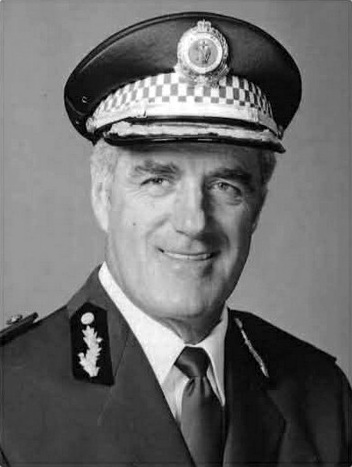
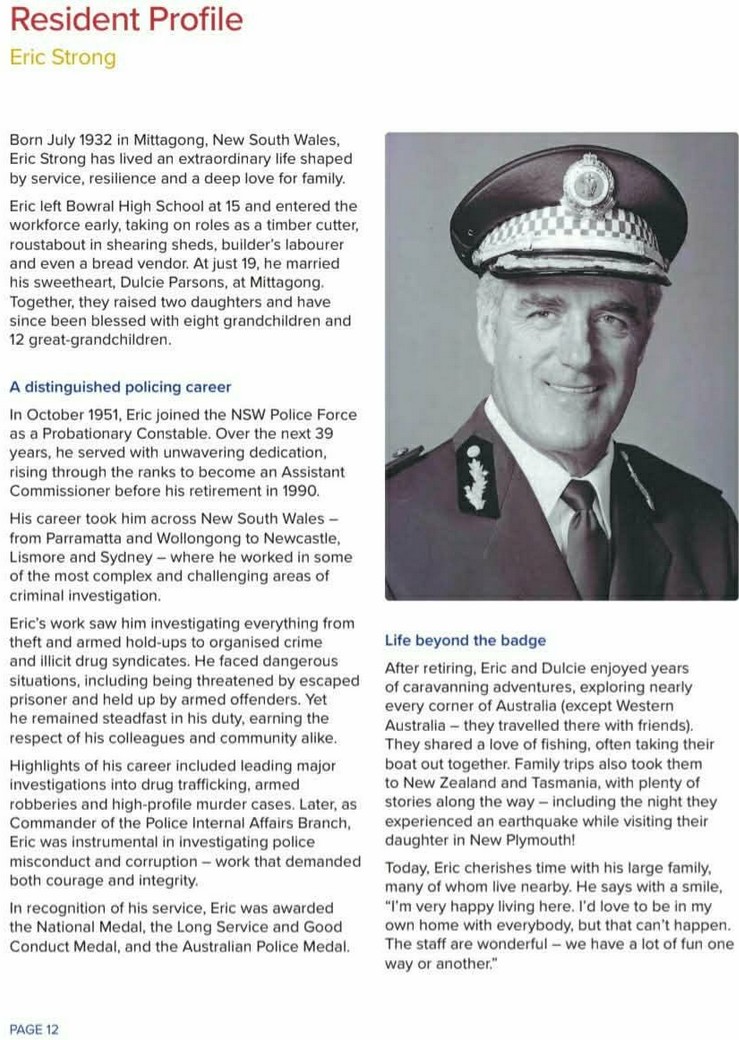
 Herbert Robert Richardson MORROW ( mentioned above ) was born in NSW in 1885 and was a Probationary Constable with the NSWPF, Regd. # ‘Q’ 8636, on Wednesday 10 April 1907 but the mentioned Sgt Herb MORROW is most likely Herbert William MORROW, NSWPF # 1711, who was a Probationary Constable on 20 November 1923 and died on 26 February 1975.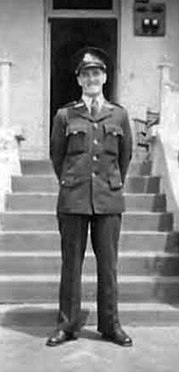
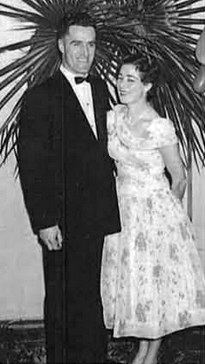
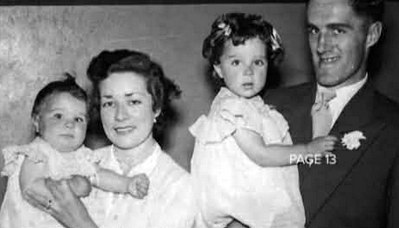
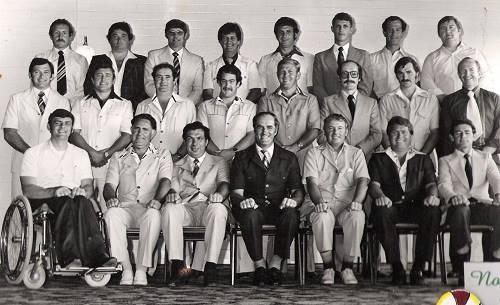 North Eastern Coast District Detectives c1979Front Row: ( L – R ) ProCst J.F. KIDD # 13416, Det Sgt 3/c B. KING, Det SenCon J.B. HOLLAND, Det Sgt 1/c Eric Stewart STRONG # 7110, Det Sgt 3/c D.R. JONES # 9319, Det Sgt 3/c H.J. MOELLER # 10344, Det SenCon R. MOORE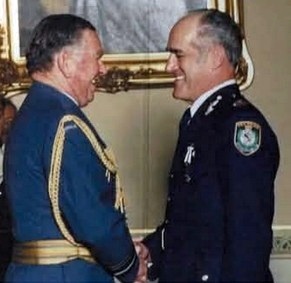
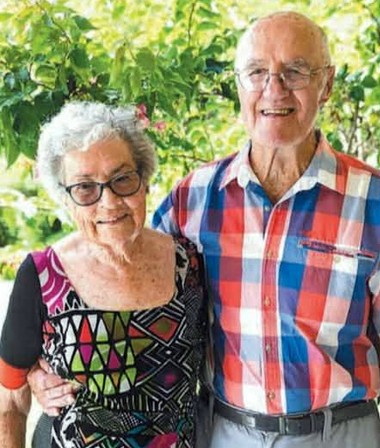
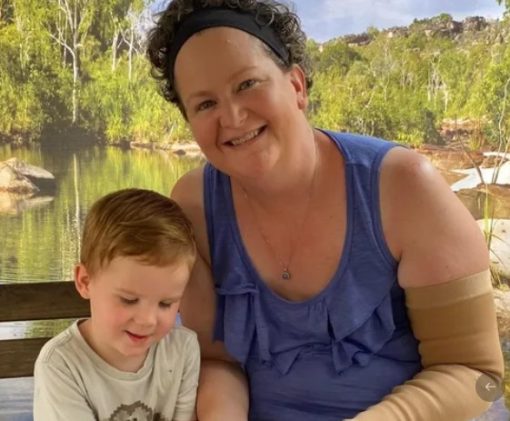
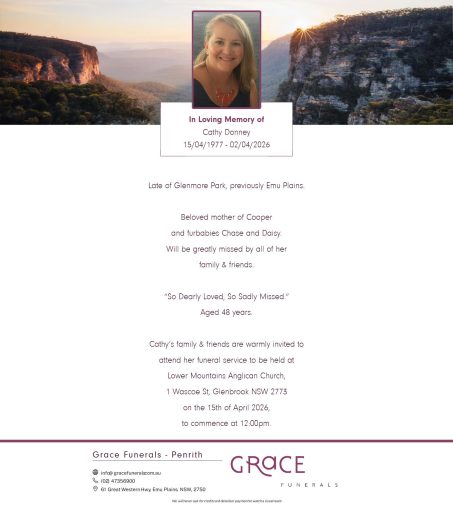

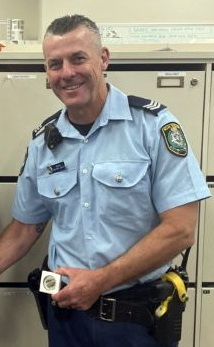
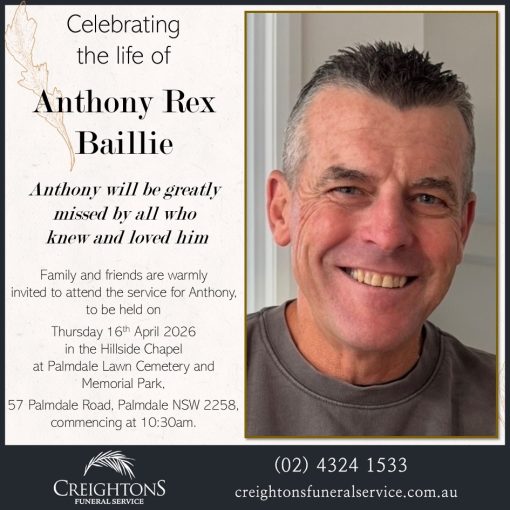

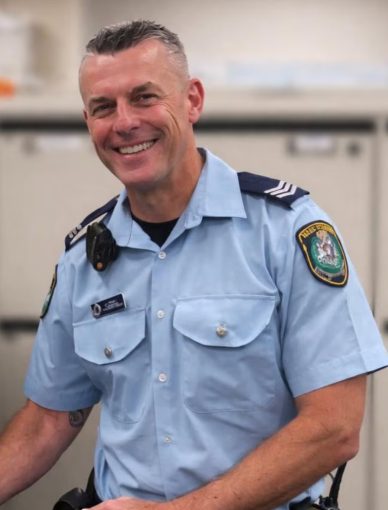
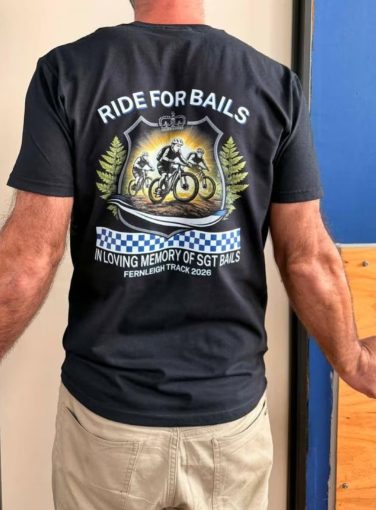
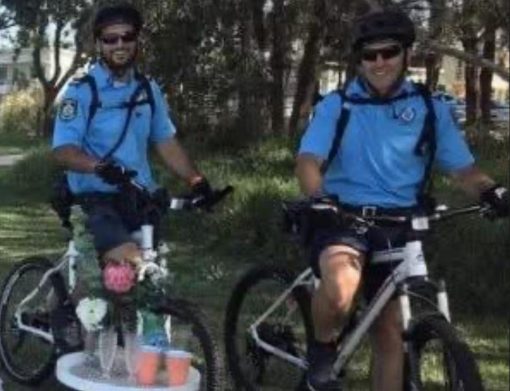
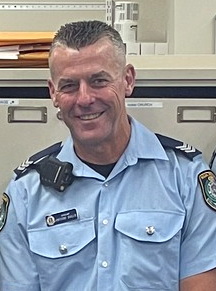


 Sergeants Course # 69 – Class 2Back Row ( L – R )