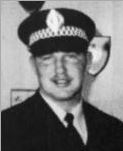
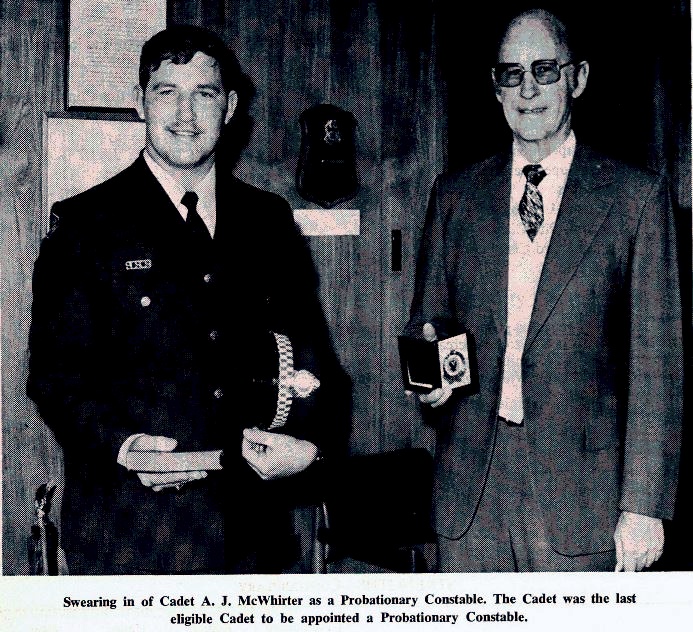
Yvonne TUPMAN

Where are they now ?

Yvonne TUPMAN aged 103 105 & living in Sydney


Yvonne TUPMAN nee ROBERTSON

aka Yvonne ROBERTSON, Von

Widow of Harry TUPMAN  NSWPF # 5450

Mother to Judge Robyn TUPMAN

New South Wales Police Force

Regd. # Police Woman # ???


Rank:  Commenced Training at ? Academy on Monday ? ? ?

Special Constable – appointed Tuesday 6 August 1946 ( aged 25 years, 9 months, 24 days )  


Final Rank?


Stations:  Newtown, School Lecturing, Central ( 1 Division )( 1960s ),


ServiceFrom  ? ? 1945  to 7 November 1949 = 3+ years Service

Police Women were Forced to Resign upon being Married.  Yvonne & Harry were Married on Saturday 12 November 1949.


Retirement / Leaving age: =  ?

Time in Retirement from Police?

Awards:  No Find on Australian Honours system


Born:  Wednesday 13 October 1920 in Orange, NSW

Yvonne TUPMAN - Yvonne ROBERTSON
Where are they now ?
Yvonne TUPMAN nee ROBERTSON
aka Yvonne ROBERTSON, Von

Hospital:  Burwood, NSW

Last heard of:


Memorial / Plaque / Monument located at?

Dedication date of Memorial / Plaque / Monument:  Nil – at this time ( October 2022 )


Where are you now ?

PLEASE SEND PHOTOS AND INFORMATION TO Cal@AustralianPolice.com.au


Any additional INFORMATION ABOUT THIS PERSON, THEIR LIFE & THEIR CAREER would be appreciated.


May they forever Rest In Peace

https://www.facebook.com/groups/AustralianPolice.com.au/ 


https://www.facebook.com/groups/NSWFallenPolice/ 

Australian Police YouTube Channel


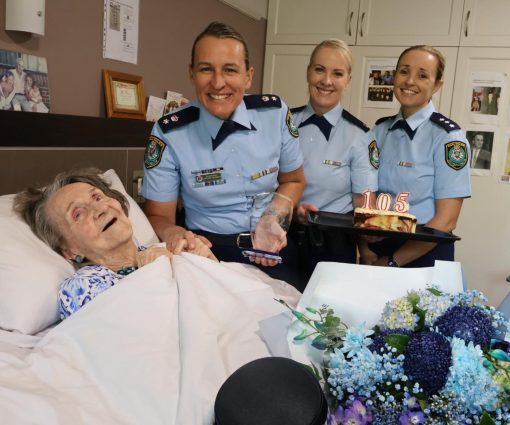
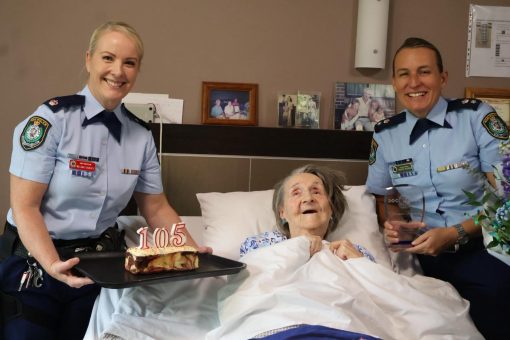
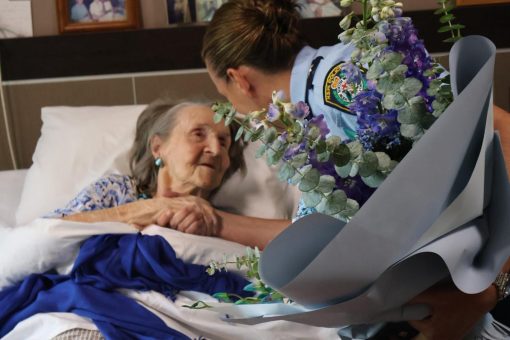
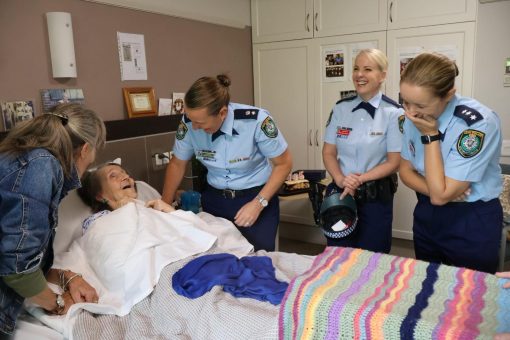
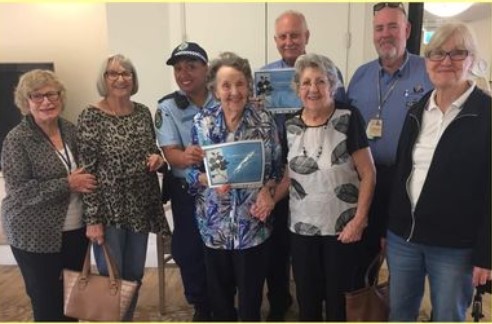
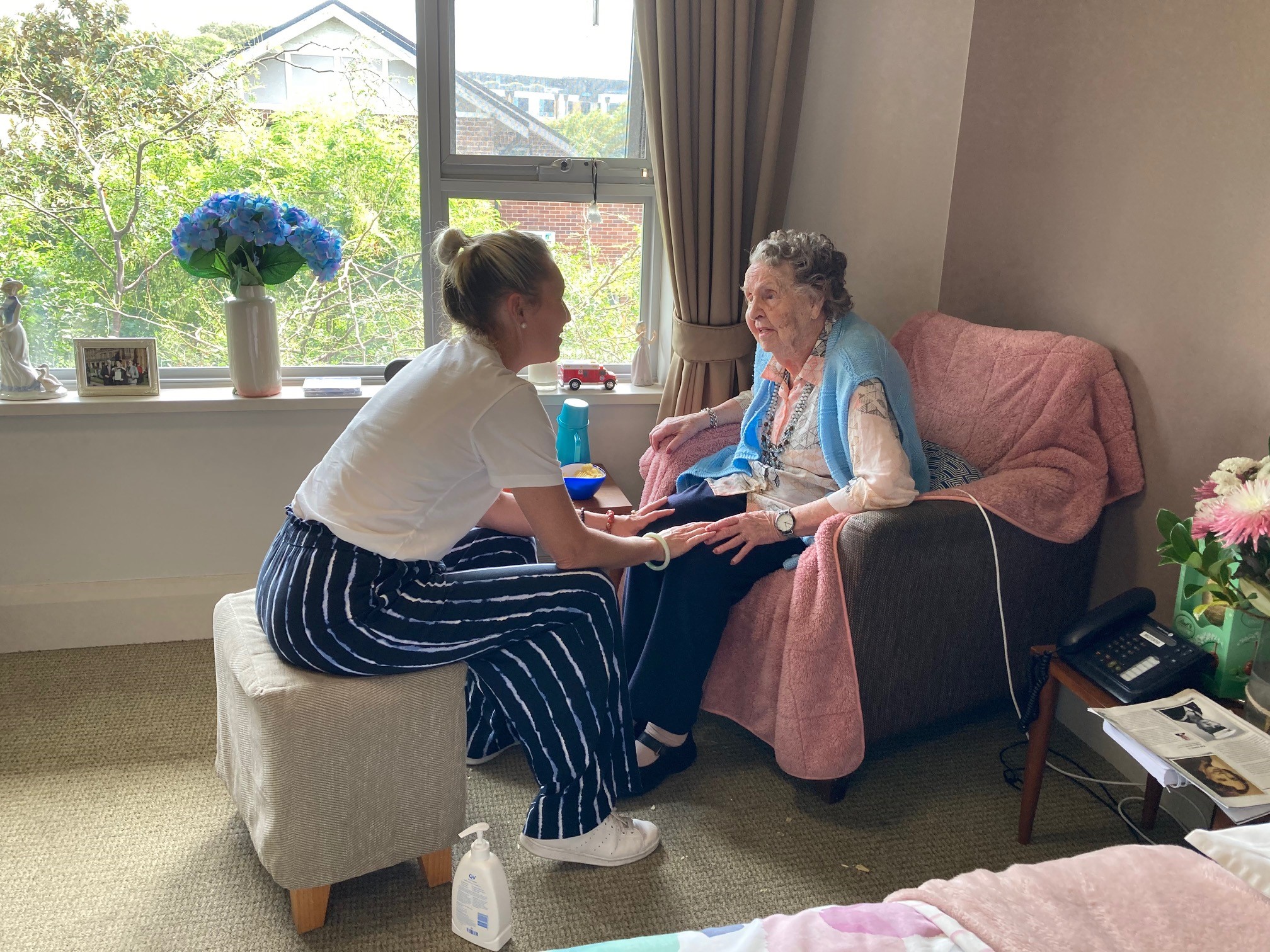
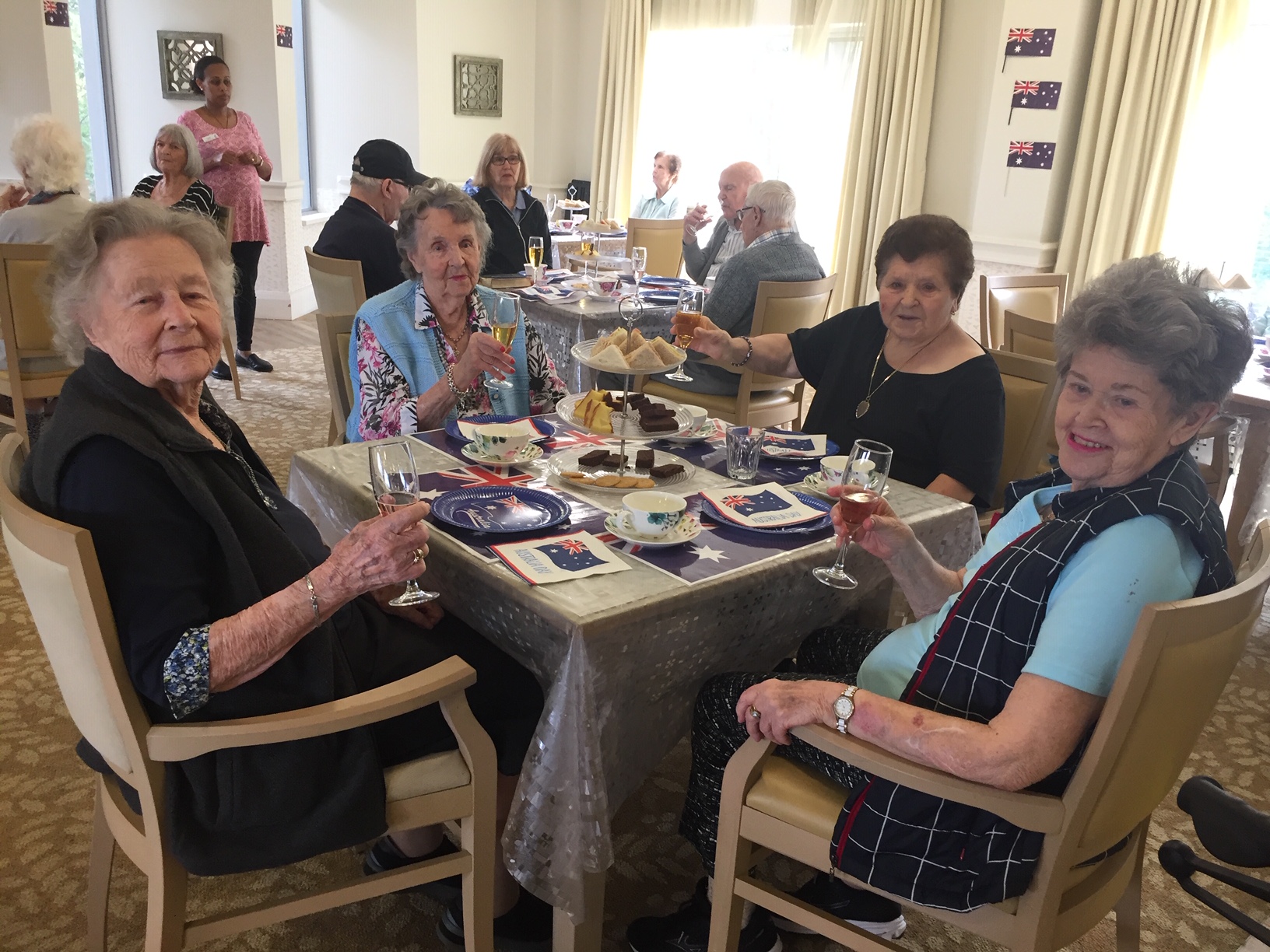
Burwood Police visiting Yvonne TUPMAN at her Nursing Home to help celebrate Yvonne's 105th birthday. 31 October 2025
Burwood Police visiting Yvonne TUPMAN at her Nursing Home to help celebrate Yvonne’s 105th birthday. 31 October 2025

Burwood Police visiting Yvonne TUPMAN at her Nursing Home to help celebrate Yvonne's 105th birthday. 31 October 2025
Yvonne TUPMAN nee ROBERTSON
aka Yvonne ROBERTSON, Von
Widow of Harry TUPMAN  NSWPF # 5450
Mother to Judge Robyn TUPMAN
New South Wales Police Force
Regd. # Police Woman # ???

Burwood Police visiting Yvonne TUPMAN at her Nursing Home to help celebrate Yvonne's 105th birthday. 31 October 2025


Burwood Police visiting Yvonne TUPMAN at her Nursing Home to help celebrate Yvonne's 105th birthday. 31 October 2025


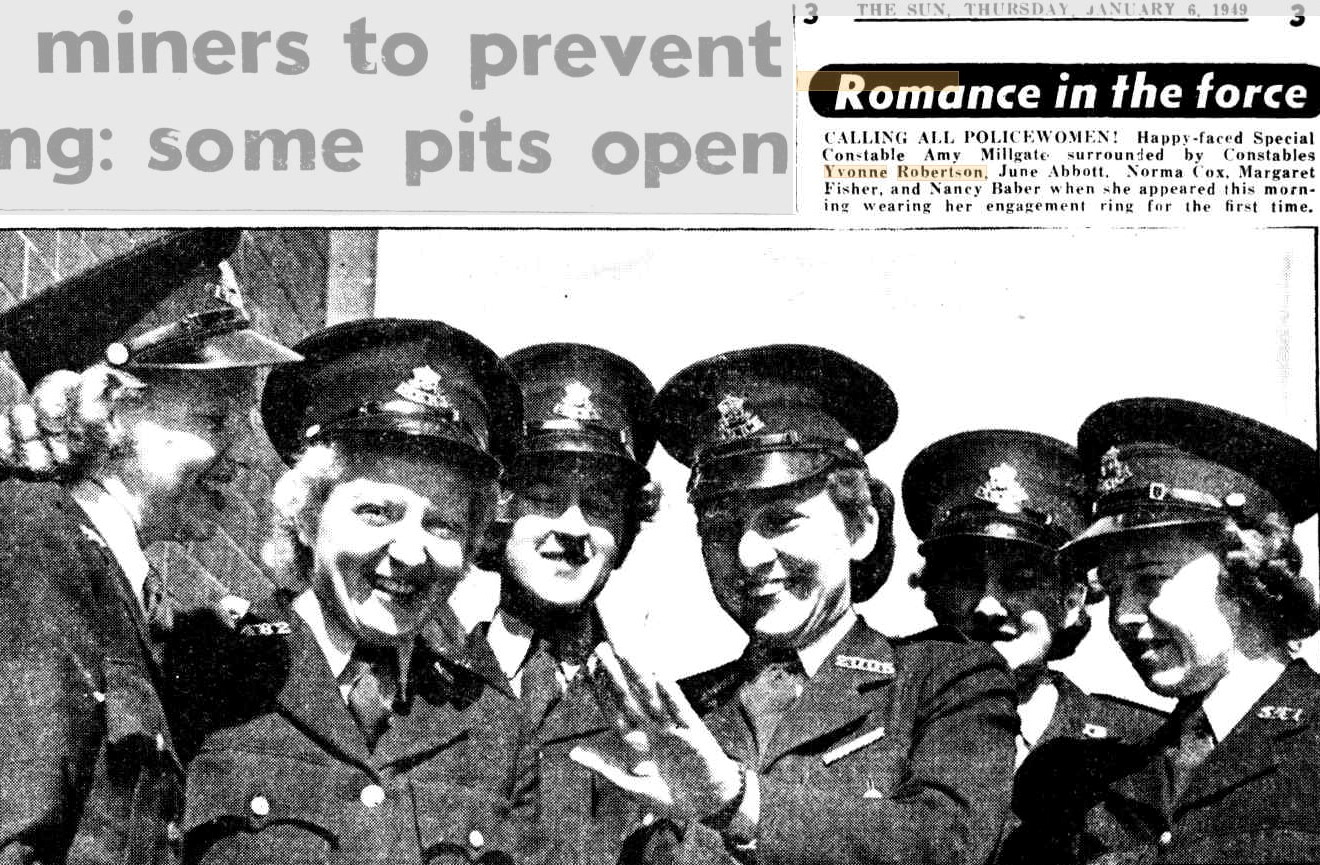
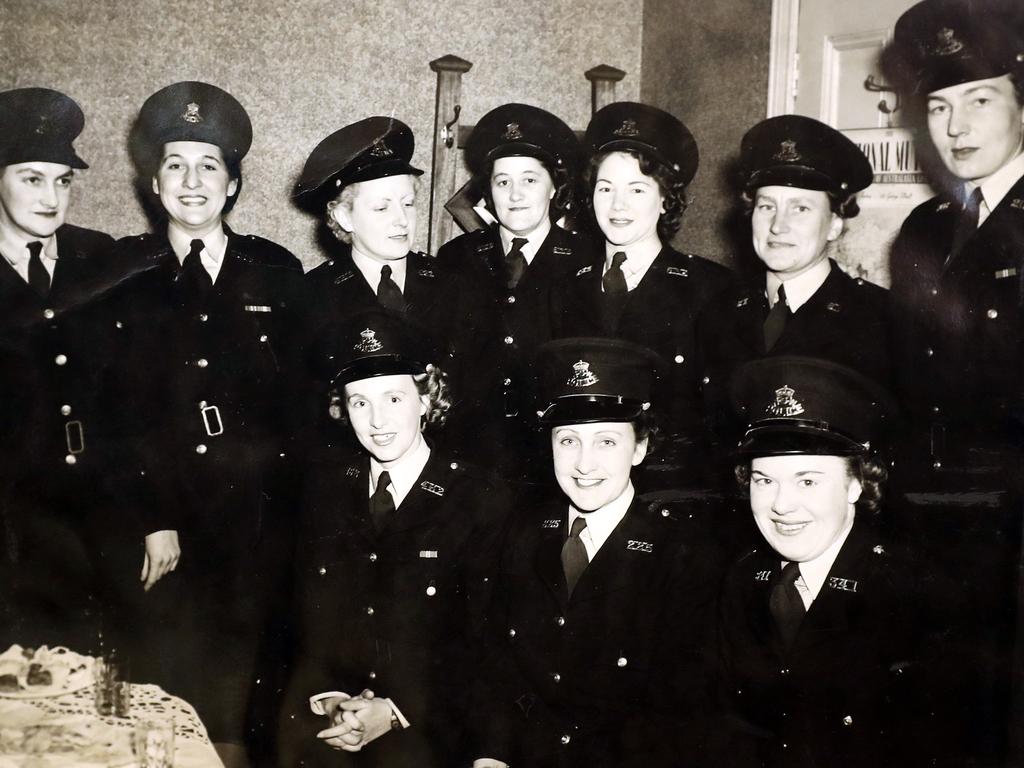
Romance in the force Calling all Policewomen! Happy faced Special Constable Amy MILLGATE surrounded by Constables Yvonne ROBERTSON, June ABBOTT, Norma COX, Margaret FISHER and Nancy BABER when she appeared this morning wearing her engagement ring or the first time. https://trove.nla.gov.au/newspaper/article/230239833
Romance in the force Calling all Policewomen! Happy faced Special Constable Amy MILLGATE surrounded by Constables Yvonne ROBERTSON ( far left ), June ABBOTT, Norma COX, Margaret FISHER and Nancy BABER when she appeared this morning wearing her engagement ring or the first time. https://trove.nla.gov.au/newspaper/article/230239833


Sun (Sydney, NSW : 1910 – 1954),

Sunday 2 October 1949, page 5

POLICEWOMEN LEAVE THE FORCE TO WED

FIVE of the NSW’s force of 14 women police have resigned to get married this year.

One policewoman has been married and four others have become engaged since January.

A senior police officer said: “These marriages are smashing our organisation of women police.

“Wedding bells are beginning to ring like an alarm clock around Police Headquarters.”

Amy Millgate, first uniformed policewoman appointed, said: — “You can’t arrest love, nor can you imprison affection. Right qualities “Anyhow, my Bruce ( First-class Constable Bruce Taylor ) says I would not have been appointed if I had not had a sense of responsibility, with tact, understanding and other qualities needed for successful marriage.

“When a fellow talks like that — well, that’s a proposal.”

Other uniformed police women said that there would he more marriages if it were not for the housing shortage.

Here is a record of how marriage is shattering the women’s police force: — Lorna Fraser now married to Detective Harry North, of Wollongong.

Yvonne Robertson ( Beamish Street crossing, Campsie ) to be married to Plain-clothes Constable Harry Tupman, of Newtown, on November 12.

Nancy Baber ( Cleveland Street School ) to be married to Constable Pat Smith, of Regent Street station, on November 19.

Eva Boyd ( Sydney Girls’ High School ) to be married to Constable Bill Dickson, of Darlinghurst division, in December.

Amy Millgate ( Leichhardt Public School ) to be married to First-class Constable Bruce Taylor, of Central prosecuting staff, early next year.

Main qualifications for a uniformed policewoman are: 25 years of age or over; 5ft 6in; Intermediate Certificate.

https://trove.nla.gov.au/newspaper/rendition/nla.news-article229226093


Sydney Morning Herald (NSW : 1842 – 1954),

Saturday 4 August 1951, page 44

DEATHS

ROBERTSON William – August 2 1951 at Military Hospital Concord dearly beloved husband of Christina and loved father of Yvonne (Mrs Tupman) Robert, Eric and Vyrna (Mrs Blanch) aged 66 years

https://trove.nla.gov.au/newspaper/rendition/nla.news-article18216328


Yvonne was interviewed just prior to her 100th birthday by Donna VALANTIS, Diversional Therapist,  of the Presbyterian Aged Care, Drummoyne, NSW

The Difference Makers – Celebrating Women Living In Aged Care

The interview with Yvonne commences at 6min 26sec mark


Yvonne is from a family of Service,

Her father, William ROBERTSON, served in the First AIF in France, Somme Valley and was wounded twice at Pozieres before returning to Australia.

Her brother, Bob, served in the Second AIR in the Pacific area and her other brother, Eric, served in the RAAF.

Her husband, Harry, served in the RAAF in World War 2.

Yvonne herself was in the Australian Women’s Army Service ( AWAS ) in Sydney and Bathurst for four years before joining the NSW Police.

Source:  Ashfield RSL.


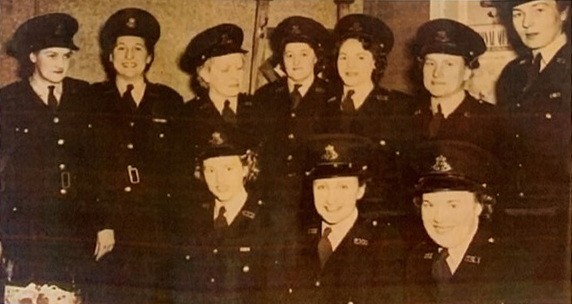
Standing ( L - R ) ?, ?, ?, ?, ?, ?, ? Seated: ( L - R ) ?, Yvonne ROBERTSON, ?
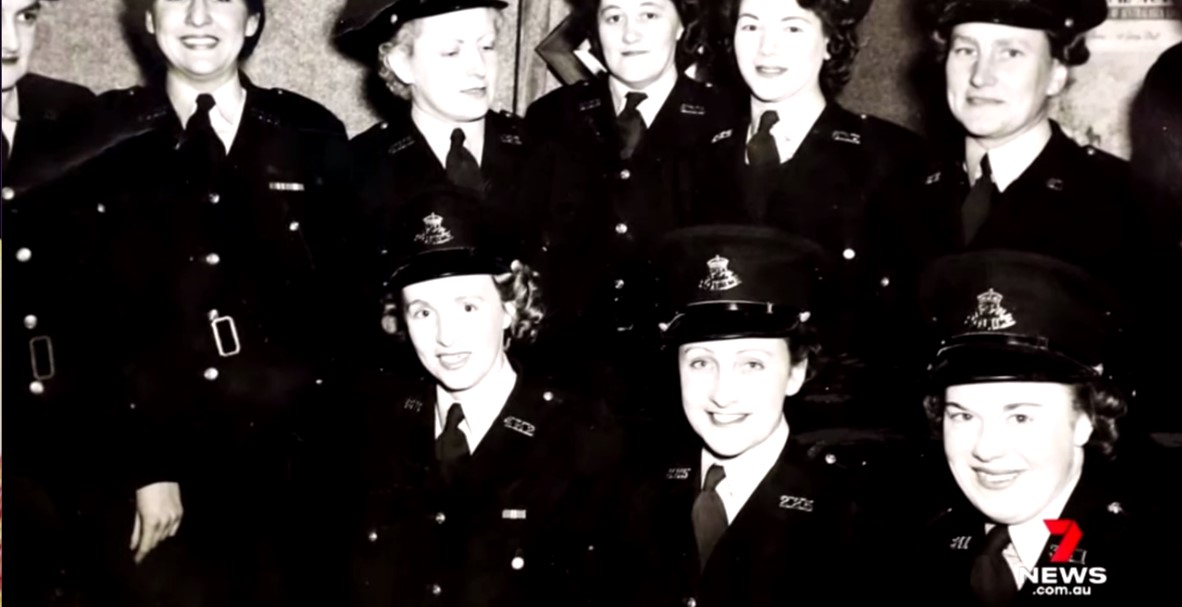
Standing ( L – R ) ?, ?, ?, ?, ?, ?, ?
Seated: ( L – R ) Yvonne ROBERTSON / Yvonne TUPMAN, ?, ?

Standing ( L - R ) ?, ?, ?, ?, ?, ?, ? Seated: ( L - R ) ?, Yvonne ROBERTSON, ?
Standing ( L – R ) ?, ?, ?, ?, ?, ?, ?
Seated: ( L – R ) Yvonne ROBERTSON / Yvonne TUPMAN, ?, ?


‘Keeping Community Connections Alive in aged care’ was Inspired by trail blazing female police officer Yvonne Tupman (centre).
Yvonne was the first female to don a police uniform in NSW 75 years ago.
Donna Valantis, Diversional Therapist supported Yvonne to maintain her personal interest in and connection with the police force using a person centred approach.
It was then that the community information sessions for their residential facility were implemented.
Donna thanks Burwood Police Command for their continued support of their seniors.
For more information about this program please contact DRTA office.
Thanks Donna for sharing your work with us

Yvonne TUPMAN - Yvonne ROBERTSON
Yvonne at front, holding the photo.

Yvonne TUPMAN 02 - Yvonne ROBERTSON
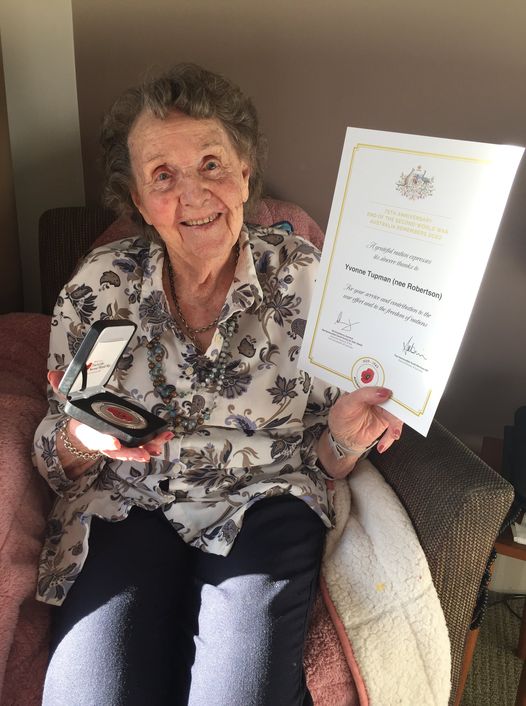
Presbyterian Aged Care 14 September 2020 During the recent 75th Anniversary celebrations marking the end of World War 2, 99 year old Yvonne Tupman at PAC Drummoyne received a beautiful certificate and medal from the Governor General David Hurley and the Prime Minister Scott Morrison to thank her for her contribution to the war effort. Yvonne served in the Australian Women’s Army Service from 1942 to 1946 stationed at Bathurst. Thank you for your service Yvonne!

(20+) Presbyterian Aged Care – Posts | Facebook

Presbyterian Aged Care is celebrating a birthday.
7 October 2020
Yvonne Tupman at PAC Drummoyne – Minnamurra just celebrated her 100th birthday. Minnamurra now has 5 centenarians living at the care home. Happy Birthday Yvonne!


Yvonne TUPMAN 07 - Yvonne ROBERTSON, Karen WEBB
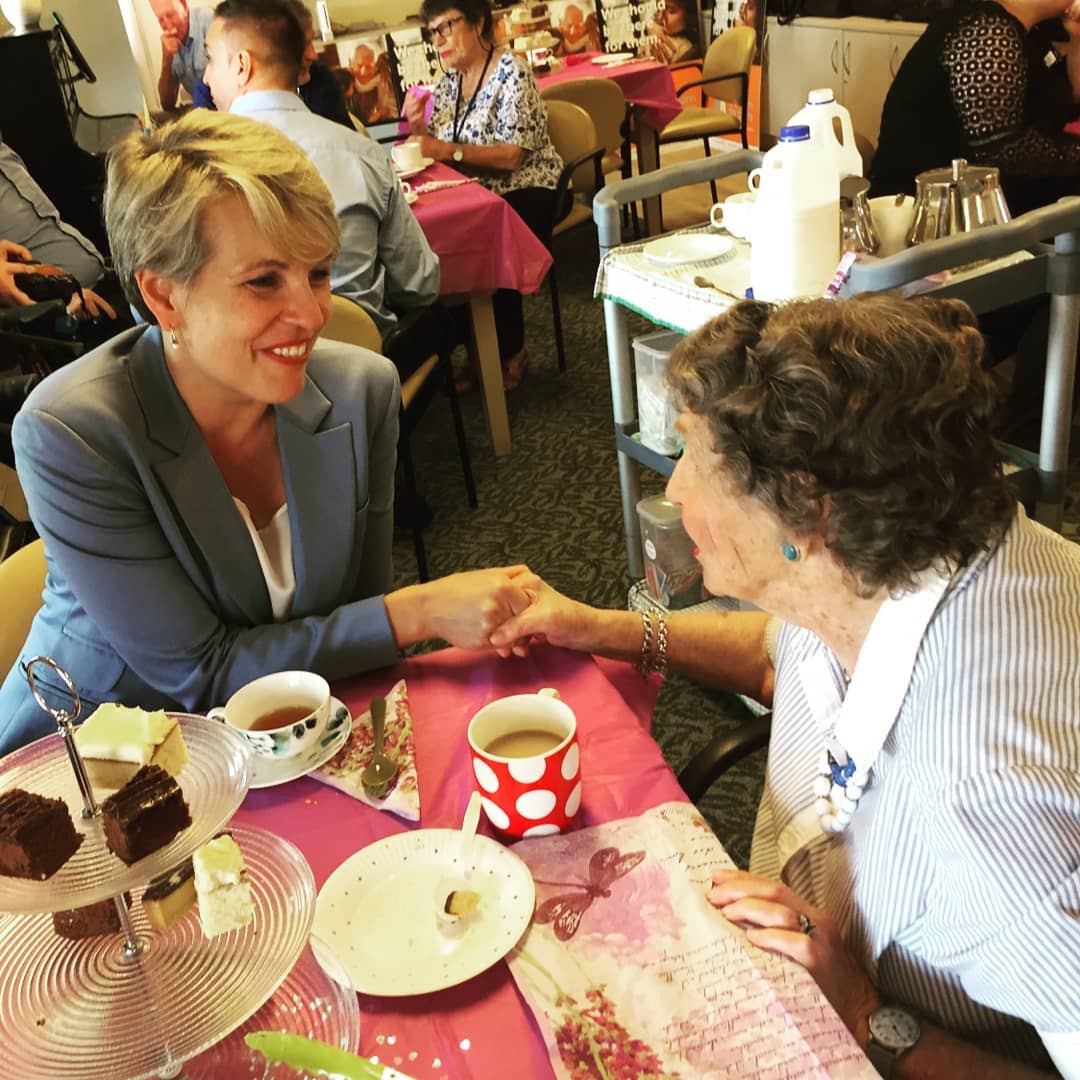
2020: Yvonne TUPMAN and Assistant Commissioner Karen WEBB.

23 November 2020

Last week, Assistant Commissioner Karen Webb APM met with Mrs Yvonne Tupman, a former NSW Police officer who recently turned 100 years old.
Assistant Commissioner Webb is the most senior serving policewoman currently within the NSW Police Force, the same police force that Mrs Tupman joined 75 years ago, in 1945.
They shared memories across many generations of policing, stories of bravery, resilience, kindness and spirit. Mrs Tupman fondly remembers her time as a police officer, recounting, ‘I enjoyed every moment. I went to the schools and taught the children about stranger danger, and also directed traffic.’
Assistant Commissioner Webb said, ‘It’s not lost on me the sacrifices and challenges that my predecessors, like Mrs Tupman endured in the past, in building the foundations for policewomen today. I am extremely honoured, along with my senior colleagues to lead the next generation of policewomen across New South Wales.’
(20+) Facebook

NSW Police Force’s first policewoman Yvonne Tupman turns 100

SHE MAY be the most senior serving policewoman currently in the NSW Police Force, but Assistant Commissioner Karen Webb still had some tips to pick up when she caught up with trailblazing centenarian Yvonne Tupman.

Mrs Tupman, who turned 100 last month, was one of the state’s first female police officers, donning the uniform 75 years ago in 1945.

Assistant Commissioner Webb visited the Mrs Tupman at her home for coffee and cake to congratulate her on turning 100 and to hear about the pioneering route she carved as one of the first policewomen in the state.

‘It’s not lost of me the sacrifices and challenges that my predecessors, like Mrs Tupman endured in the past, in building the foundations for policewomen today,” said Assistant Commissioner Webb, who earlier this year became the state’s first female Traffic and Highway Commander.

Born in Orange in 1920, Mrs Tupman (nee Robertson) was 25-years-old and fresh out of the army when she joined.

Along with her female colleagues, Mrs Tupman wasn’t allowed to ride in the police cars or to be involved in more serious police work.

The one duty the women were allowed to perform – directing traffic – sparked great controversy because it was thought the female officers would distract motorists and cause accidents.

She along with just two other policewomen were the first female officers in the state to be tasked with controlling traffic on Sydney’s busy streets, sometimes having to deal with drivers who were reluctant to take instruction from women in uniforms.

Other duties assigned to the first policewomen included attending schools to warn children about speaking to strangers and escorting children to court for various reasons.

“Women were never included in murder (cases), unless they took you along and you took notes (for the male officers),” she told the Central Western Daily.

Stationed first at Newtown in Sydney’s inner-west, Mrs Tupman then returned to the Central West to work at Bathurst station.

It was around this time that she met and hit it off with fellow officer, Harry Tupman. When the two were married, Mrs Tupman was forced to resign from the police force. Mr Tupman went on to become a celebrated detective.

“They didn’t want to once you got married,” she explained. “I had my daughters, that was the most important thing in my life”.

Joining the NSW Police Force in 1987, Assistant Commissioner Webb began her career at Castle Hill Police Station. She served as chair of the 100 years of Women in Policing Committee and was integral in its commemoration celebrations in 2015.

NSW Police Force’s first policewoman Yvonne Tupman turns 100 | The Senior | Senior


Yvonne TUPMAN

Yvonne TUPMAN

Yvonne TUPMAN

Yvonne TUPMAN


Drummoyne Aged Care Home – 2021

https://youtu.be/qBsqheaCdTg


One of NSW Police’s first women officers shares her memories of time on the force

Trailblazing female cop Yvonne Tupman joined NSW Police 75 years ago, when life on the force was very different for a woman. Despite being limited to duties such as note-taking and traffic directing, Mrs Tupman loved her time on the beat.


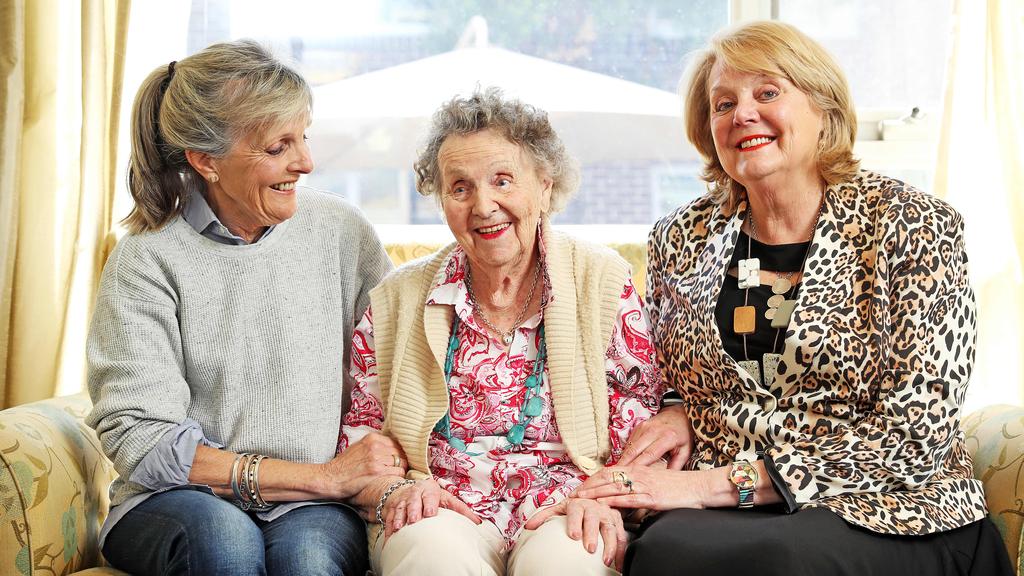
Yvonne Tupman, who recently turned 100 years old, was one of the first women in policing in NSW. She is pictured with her daughters Lyn and Robyn. Picture: Tim Hunter
Yvonne Tupman, who recently turned 100 years old, was one of the first women in policing in NSW. She had to retire from the Police Force once she married. She is pictured with her daughters Lyn and Robyn. Picture: Tim Hunter

Yvonne Tupman is celebrating a double milestone — 100 years of age and 75 years since she was one of the first women to join the NSW Police.

But the work Mrs Tupman was allowed to do when she joined the force in 1945 — aged just 25 and fresh out of army service — was very different to what women today can expect.

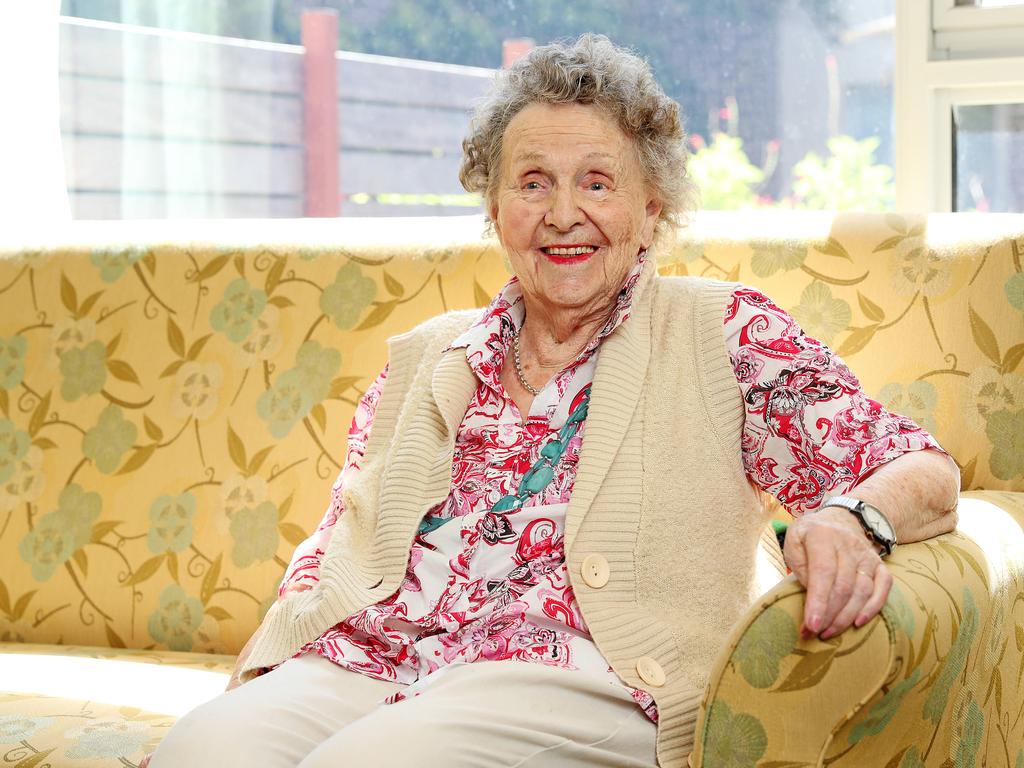
Yvonne Tupman, who recently turned 100 years old. Picture: Tim Hunter


Mrs Tupman (front left) with nine other trailblazing women in the NSW Police Service in 1945.

For a start, women police officers were forbidden to ­investigate criminal cases, with their duties generally limited to traffic direction, advising children of the dangers of speaking to strangers, and “taking notes”.

“Something like covering a murder case was forbidden,” said Mrs Tupman’s daughter Robyn, who is a District Court judge.

“I remember asking mum why she joined the force. I assumed it was to cover serious trials. But she said: ‘No, we weren’t allowed’. Women police were only allowed to accompany the male officers and possibly take notes.

“They were sometimes ­allowed to direct traffic which, in once case, actually made the papers because of the fact that two women were able to do so without causing an accident.

“That was actually the story. The fact that one male driver remarked that they didn’t tangle the traffic.

“It’s so ridiculous it really makes you giggle.”

Mrs Tupman, aged 23, when she joined the Australian Women’s Army Service.


Despite the limit on the duties they were permitted to carry out, Mrs Tupman would begin an impressive career, starting in Newtown in Sydney’s inner west before taking up a post at Bathurst.

However, it was there she would meet her eventual husband Harry and, as was the protocol with women ­officers, she was forced to retire.

In a video interview she gave in 2019, Mrs Tupman recalls the sadness of having to abandon her career because she had chosen to wed.

“My mother always said that the police force gave her an enormous sense of self-esteem and I know she ­enjoyed it very much. Which made retiring so difficult for her,” her daughter said.

However, her brief career would have a profound effect on her daughters Robyn and Lyn, as well as on the lives of her grandchildren.

Robyn Tupman was recently honoured as a life member of the Women’s Lawyers’ Association of NSW and assists the Women Barristers Forum.

Her sister Lyn is an ­accomplished special needs teacher.

Yvonne Tupman: One of NSW Police’s first women officers turns 100 | Daily Telegraph


Nothing further, than what is recorded above, is known about this person at the time of publication and further information and photos would be appreciated.

**********


Cal
19 October 2022


Errol William MONTEFIORE

Errol William MONTEFIORE

AKA Errol MONTEFIORE, Monty  

Late of  ? 


“possible” relation in ‘the job’:    ?


NSW Police Training Centre – Redfern  –  Class #  111 

( Last Class to be issued with the unreliable Webley Scott semi auto pistol )


New South Wales Police Force


Regd. #  12607


Rank:  Commenced Training at Redfern Police Academy on Monday 15 May 1967 ( aged 22 years, 10 months, 6 days )( previously employed as a Draftsman

Probationary Constable- appointed 26 June 1967 ( aged 22 years, 11 months, 17 days )

Constable – appointed 26 June 1968

Constable 1st Class – appointed 26 June 1972

Detective – appointed ? ? ? ( NO )

Senior Constable – appointed 26 June 1976

Leading Senior Constable – appointed ? ? ? ( N/A )

Sergeant 3rd Class – appointed 1 January 1983


Final Rank: = Sergeant 3rd Class 


Stations:  Petersham GDs ( 11 Division )( 26 June 1967 – Aug 1969 ), Marrickville GDs ( 11 Division )( Aug 1969 -Aug 1970 ), Four Wheels Motor Vehicle section ( 20 Division )( Aug 1970 – Feb 1972  ), Liverpool GDs ( 22 Division )( Feb 1972 – June 1973 ), Green Valley GDs( 22 Division )( June 1973 – Jan 1976 ), Liverpool – Licencing ( 22 Division )( Jan 1976 – Feb 1978 ), Bankstown – Licencing ( 19 Division )( Feb 1978 – April 1979 ), Liverpool – Licencing ( 22 Division )( April 1979 – Aug 1982 ), Office of the Superintendent of Licencing ( Relieving )( Aug 1982 – ? ), Cabramatta ( O.I.C. Intelligence Unit )( 10 July 1999 ) – Optional Retirement

Source: Liverpool Police History by Joe Stanioch

Believed he may have also worked at Macquarie Fields ( 35 Division ) and Merrylands  Licencing ( 26 Division )

During 1982 he had successfully completed the ‘Supervision Certificate Course’ at Liverpool Technical College


Service: From  15 May 1967  to  10 July 1999   = 32 years, 1 month, 25 days Service


Retirement / Leaving age: = 55 years, 0 months, 1 day

Time in Retirement from Police: 23 years, 3 months, 3 days


Awards:  National Medal – granted 9 August 1983 ( Sgt 3/c )

1st Clasp to National Medal – granted 16 June 1993 ( Sgt 3/c )


 Born:  Sunday 9 July 1944

Died on:  Thursday 13 October 2022

Age:  78 years, 3 months, 4 days

Organ Donor:  Y / N / ?


Cause:  Cancer ( Lung )

Event location:  Camden, NSW

Event date ?


Funeral date:  Friday 28 October 2022

Funeral location:  Forrest Lawn, Leppington, NSW

LIVE STREAM    PIN:  TBA   Email:  TBA


( click here to see Cornona19 Virus Pandemic rules – this will be a limited numbers Funeral )

any Future Wake location??? TBA 

any Future Wake date??? TBA 

( Due to current Govt. restrictions on ‘Gatherings’ due to Corona19 Virus Pandemic, some families may wish to have a Memorial Service / Wake with friends and family at a later date )


Funeral Parlour: ?TBA

Buried at: Cremated


Memorial / Plaque / Monument located at ?

Dedication date of Memorial / Plaque / Monument: Nil – at this time ( October 2022 )


  MONTY is NOT mentioned on the Police Wall of Remembrance  *NEED MORE INFO


FURTHER INFORMATION IS NEEDED ABOUT THIS PERSON, THEIR LIFE, THEIR CAREER AND THEIR DEATH.

PLEASE SEND PHOTOS AND INFORMATION TO Cal


May they forever Rest In Peace

https://www.facebook.com/groups/AustralianPolice.com.au/ 


https://www.facebook.com/groups/NSWFallenPolice/ 

Australian Police YouTube Channel


A quote I have found in relation to Monty:  “At the end of 1998, Sergeant MONTEFIORE, the Intell Sergeant at Cabramatta retired.  This man left a huge void, in what was, one of the great Intell Offices in the NSW Police Service, with National and International contacts.  It was a show piece of Crime Intelligence.  Information required by Police was instantly available as was the names, addresses, photo’s associates etc of every known gang member in the area, particularly the highly dangerous and ruthless 5T.  The Intell office was a remarkable area”


ERROL MONTEFIORE
6 NOVEMBER 2004


RETURN TO CABRAMATTA POLICE REUNION<br /> (L-R) <a href="https://www.australianpolice.com.au/robert-john-gollan/" target="_blank" rel="noopener">BOB GOLLAN</a>, <a href="https://www.australianpolice.com.au/errol-william-montefiore/" target="_blank" rel="noopener">ERROL MONTEFIORE</a><br /> 6 NOVEMBER 2004<br /> BOB GOLLAN DIED IN MARCH 2007 AGED 61.
RETURN TO CABRAMATTA POLICE REUNION – 6 NOVEMBER 2004

(L-R) BOB GOLLAN, ERROL MONTEFIORE

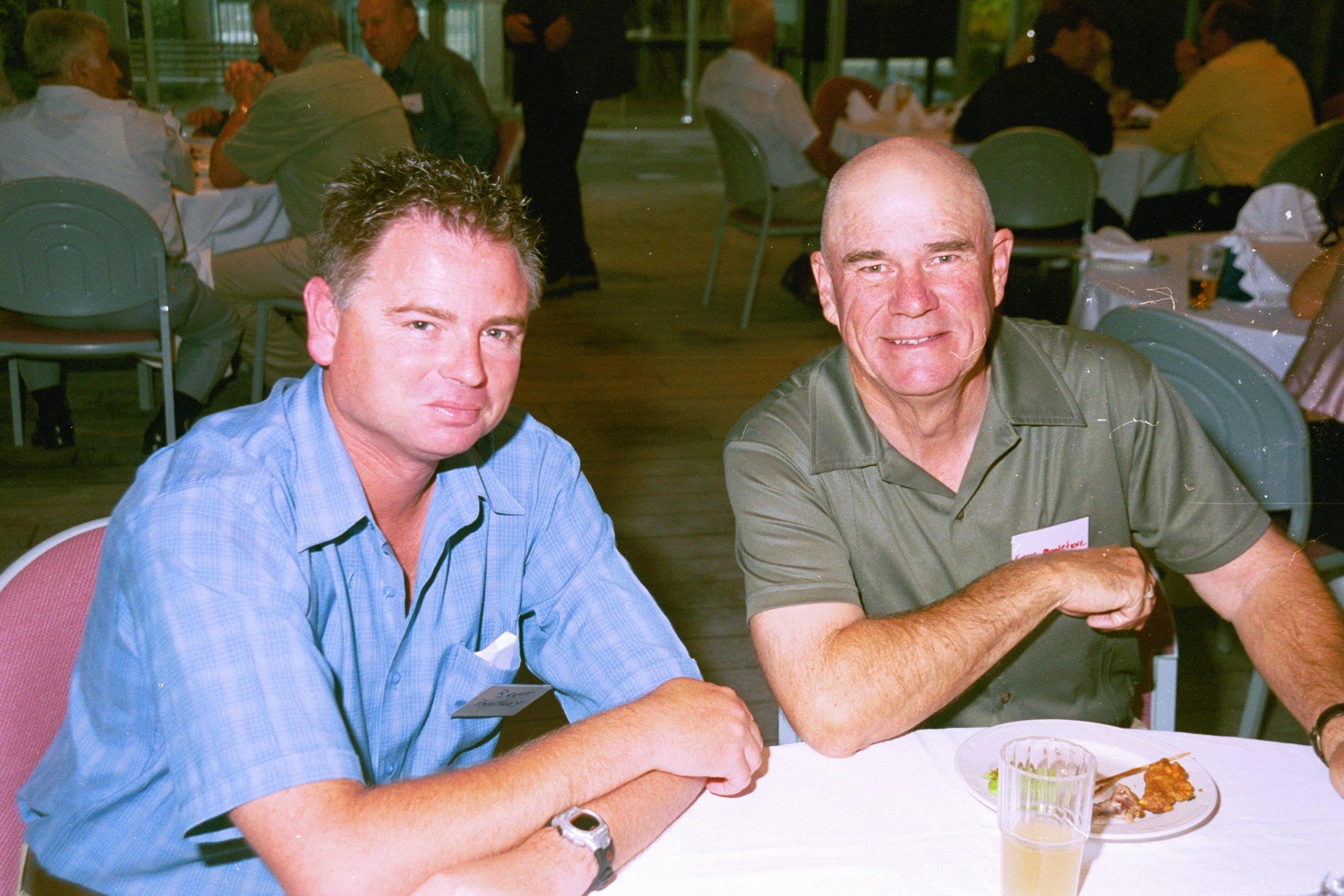
RETURN TO CABRAMATTA POLICE REUNION. BRETT POULTNEY, ERROL MONTEFIORE 6 NOVEMBER 2004
RETURN TO CABRAMATTA POLICE REUNION.
BRETT POULTNEY, ERROL MONTEFIORE
6 NOVEMBER 2004


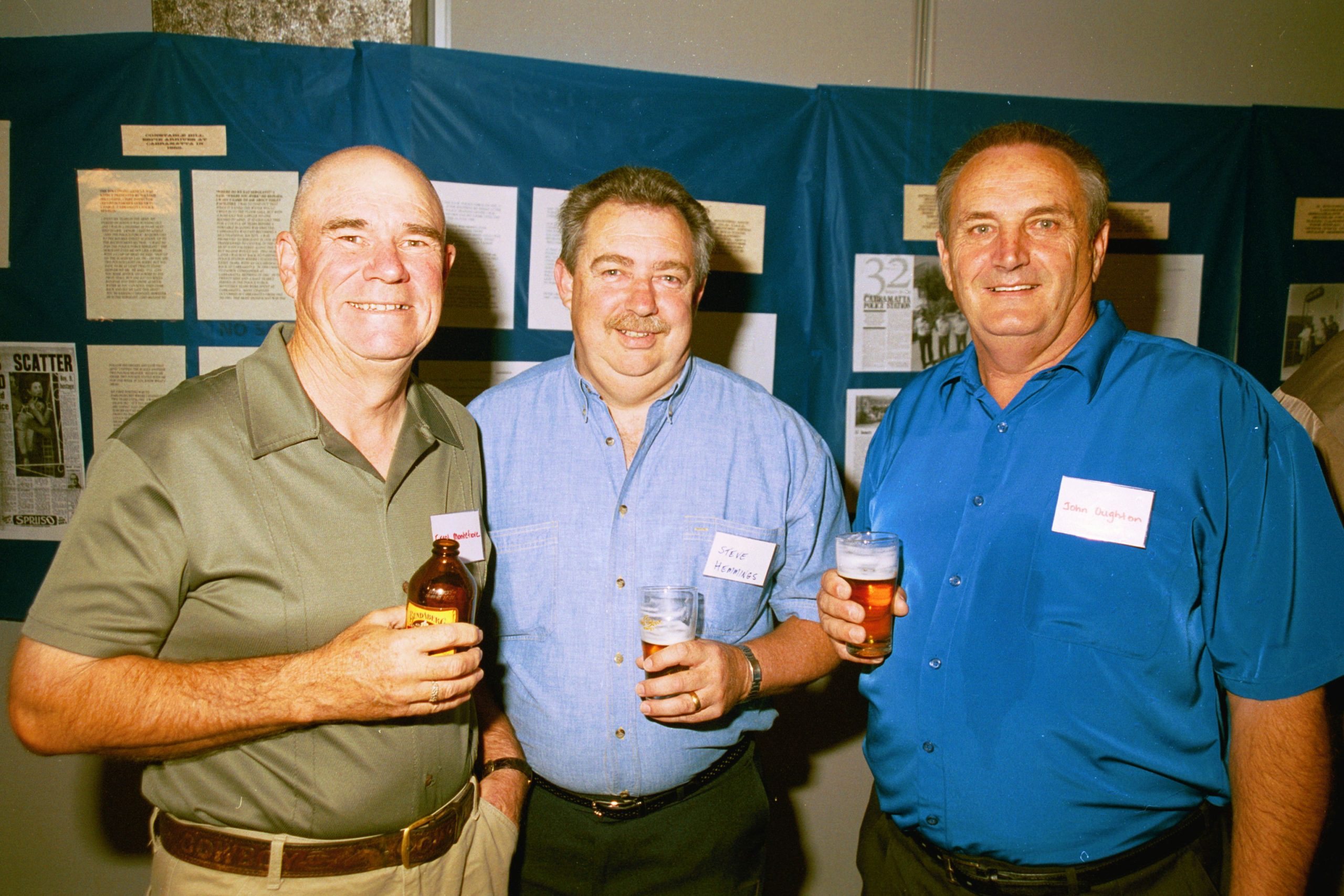
(L-R) ERROL MONTEFIORE, STEVE HEMMINGS, JOHN OUGHTON.
RETURN TO CABRAMATTA POLICE REUNION.
(L-R) ERROL MONTEFIORE, STEVE HEMMINGS, JOHN OUGHTON.
6 NOVEMBER 2004


ERROL MONTEFIORE

ERROL MONTEFIORE

April 2021: Group of former Liverpool Police Officers, who worked at Green Valley, in the 1970s - 1980s with the late Frederick K. WHITTON, gathered after his funeral. Standing L - R: Neville BATES ( Pulbican of the Green Valley Hotel ) Errol MONTEFIORE, Colin CAMERON, Michael REES, Roger FORD, Stephen REVVES, Charlie TURTON, Melvyn CLEWS ( Mel CLEWS ). Seated is Trevor BEAUMONT
April 2021: Group of former Liverpool Police Officers, who worked at Green Valley, in the 1970s – 1980s with the late Frederick K. WHITTON, gathered after his funeral. Standing L – R: Neville BATES ( Publican of the Green Valley Hotel ) Errol MONTEFIORE, Colin CAMERON, Michael REES, Roger FORD, Stephen REEVES, Charlie TURTON, Melvyn CLEWS ( Mel CLEWS ). Seated is Trevor BEAUMONT


Nothing further, than what is recorded above, is known about this person at the time of publication and further information and photos would be appreciated.

**********


Cal
18 October 2022


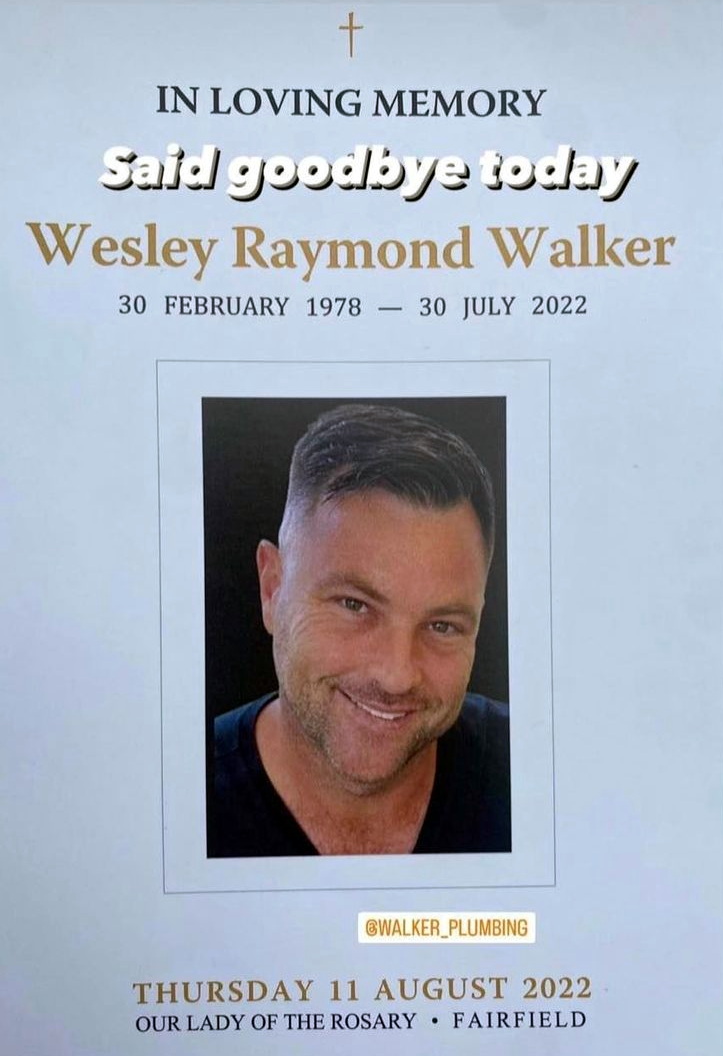
Wesley Raymond WALKER

Wesley Raymond WALKER

AKA  Wes WALKER  

Late of Cabramatta, NSW


“possible” relation in ‘the job’:  ?

Father = Ray WALKER, NSWPF # 15050 ( R.I.P. )( 2005 )


NSW Goulburn Police Academy –  Class # DPP 13 ( Class 286 )


New South Wales Police Force


Regd. #   37845


Rank:  Commenced Training at Goulburn Police Academy on Monday ? ? 2002

Probationary Constable- appointed Friday 30 August 2002

Constable – appointed ? ? ?

Constable 1st Class – appointed ? ? ? 

Detective – appointed ? ? ?

Senior Constable – appointed ? ? ? 

Leading Senior Constable – appointed ? ? ?


Final Rank: =  ?


Stations ?, Cabramatta ( 34 Division ), Flemington ( 32 Division ), Auburn ( 32 Division ) – Resigned and took up a plumbing trade.


Service: From  ? ? 2002   to   ? ? 2011 =  9? years Service


Retirement / Leaving age:?

Time in Retirement from Police?


Awards:  No Find on Australian Honours system


 Born:   Friday 3 February 1978

Died on:  Saturday 30 July 2022

Age:  44 years, 5 months, 27 days

Organ Donor:  Y / N / ?


Cause

Event location?

Event date ? July 2022


Funeral date:  Thursday 11 August 2022

Funeral location:  Our Lady of the Rosary, 18 Vine St, Fairfield West, NSW

LIVE STREAM    PIN:  TBA   Email:  TBA


( click here to see Cornona19 Virus Pandemic rules – this will be a limited numbers Funeral )

any Future Wake location??? TBA 

any Future Wake date??? TBA 

( Due to current Govt. restrictions on ‘Gatherings’ due to Corona19 Virus Pandemic, some families may wish to have a Memorial Service / Wake with friends and family at a later date )


Funeral Parlour: ?

Buried at:  Rookwood Cemetery, Lidcombe, NSW


Memorial / Plaque / Monument located at ?

Dedication date of Memorial / Plaque / Monument: Nil – at this time ( August 2022 )


Wesley Raymond WALKER, Wes WALKER, Wesley WALKER
DOB should read: 3 February 1978

  WESLEY is NOT mentioned on the Police Wall of Remembrance * NOT JOB RELATED


FURTHER INFORMATION IS NEEDED ABOUT THIS PERSON, THEIR LIFE, THEIR CAREER AND THEIR DEATH.

PLEASE SEND PHOTOS AND INFORMATION TO Cal


May they forever Rest In Peace

https://www.facebook.com/groups/AustralianPolice.com.au/ 


https://www.facebook.com/groups/NSWFallenPolice/ 

Australian Police YouTube Channel


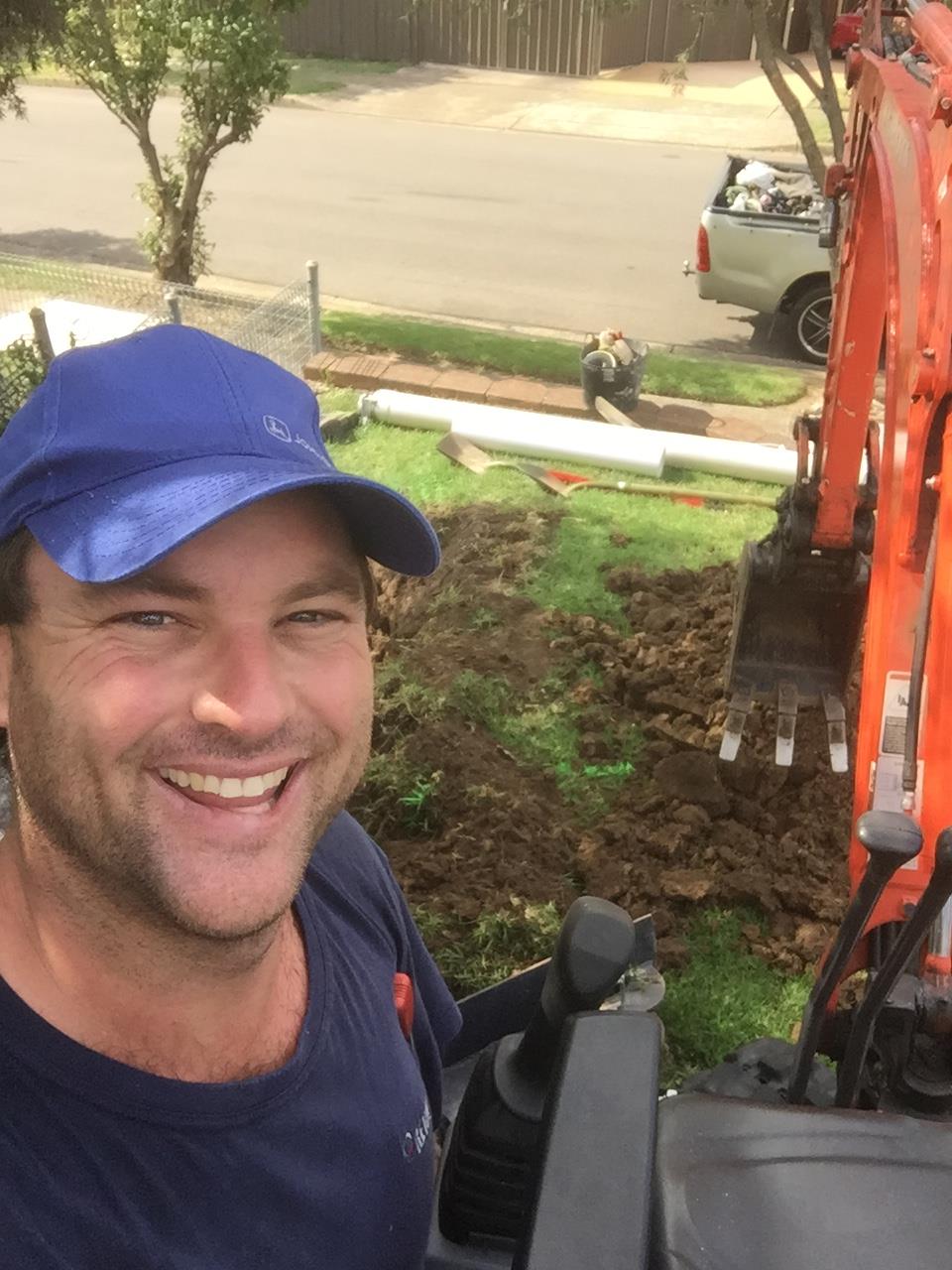
Wes had resigned from the employ of NSWPF in 2011 and pursued a career in Plumbing – making a family business from it.

Wes is described as a larakin and life of the party.

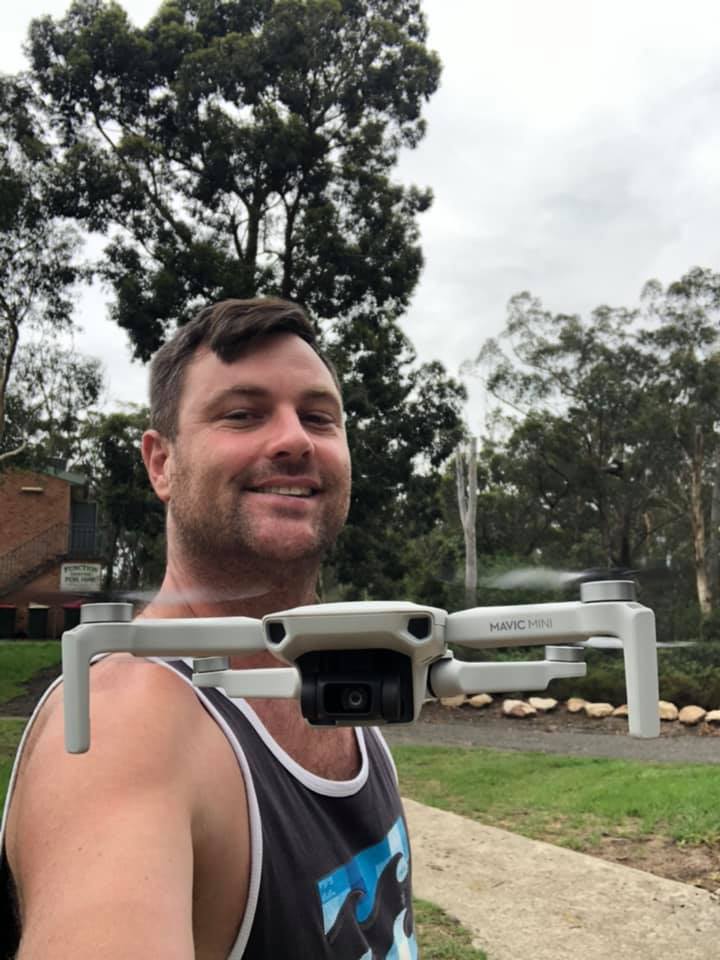
Wesley Raymond WALKER, Wes WALKER, Wesley WALKER
Culburra – 2020

Wesley Raymond WALKER, Wes WALKER, Wesley WALKER


May Wes, and his father – Ray, Forever Rest In Peace.


Nothing further, than what is recorded above, is known about this person at the time of publication and further information and photos would be appreciated.

**********


Cal
12 August 2022


William Charles HIPWELL

William Charles Hipwell   OAM

AKA  BILL

Late of  ?

NSW Redfern Police Academy Class #  082?

NSW Police Cadet # 0860

New South Wales Police Force

Uniform # 2973   

Regd. #  9614


Rank:  Commenced Training as Police Cadet on 27 March 1950 ( aged 15 years, 2 months, 22 days ) but Resigned on 8 September 1950.

Rejoinee

Probationary Constable- appointed 4 April 1960 ( aged 25 years, 2 month, 30 days old )( Leap Year )

Assuming that the date of commencing training and the date of being ‘Sworn In’ are both correct – it seems strange that he was not ‘Sworn In’ at the age of 19 unless he had left the Cadets at some stage and rejoined as a Trainee around the age of 24.

Constable – appointed ? ? ?

Constable 1st Class – appointed 1 March 1966

Senior Constable – appointed 1 March 1970

Sergeant 3rd Class – appointed 3 September 1976

Sergeant 2nd Class – appointed 23 June 1983


Final Rank =  Sergeant 2nd Class


Stations?, Missing Persons Unit (c1971 ) – Retirement 11 July 1985


Service:  From ( 27 March 1950 )  ? ? 1960   to    11 July 1985 =  25* years Service

*the NSWPF has William Serving for 25 years – which would suggest that he did not complete his Cadet Training from 1950 but came back as a Trainee around the age of 24

Time in Retirement:  34 years, 8 months, 28 days

Age at Retirement:  50 years, 6 months, 6 days


Awards:  National Medal – granted 22 September 1987 ( Sgt 2/c ) * I would suggest Australian Honours has recorded this information incorrectly, again, and this would possibly be Williams 2nd Clasp to the National Medal. In the Commonwealth Gazette S 215 – dated 24 Sept 1980 – they have him listed as Sgt 3/c )

1st Clasp to the National Medal – granted 22 September 1987 ( Sgt 2/c )

National Medal – granted 15 September 1980 ( Sgt 3/c )

Medal of the Order of Australia ( OAM ) – granted 10 June 1985 – for public service with the NSW Police Force ( Sgt 2/c )


Born:  Saturday  5 January 1935 in Erskinville, NSW

Died on:  Wednesday  8 April 2020

Age:  85 years, 3 months, 3 days

Cause?

Event location:   ?

Event date ?


Funeral date? ? ?

Funeral location?  ( Due to current Govt. restrictions of 10 persons at a Funeral due to the Cornona19 Virus Pandemic – this will be a Private Funeral )


Future Wake location? TBA ( Due to current Govt. restrictions of 2 persons only at ‘Gatherings’,  there won’t be an immediate Wake )

Future Wake date: ( Due to current Govt. restrictions on ‘Gatherings’ due to Corona19 Virus Pandemic, some families may wish to have a Memorial Service / Wake with friends and family at a later date )


Funeral Parlour: ?

Buried at: ?


Memorial / Plaque / Monument located at: ?

Dedication date of Memorial / Plaque / Monument: Nil – at this time ( April 2020 )


WILLIAM is NOT mentioned on the Police Wall of Remembrance  *NEED MORE INFO


FURTHER INFORMATION IS NEEDED ABOUT THIS PERSON, THEIR LIFE, THEIR CAREER AND THEIR DEATH.

PLEASE SEND PHOTOS AND INFORMATION TO Cal


May they forever Rest In Peace

https://www.facebook.com/groups/AustralianPolice.com.au/

https://www.facebook.com/groups/NSWFallenPolice/


At the time of joining the NSW Police Cadet system, Bill was described as:

5′ 9″ tall, 9lb 13ozs in weight, blue eyes, brown hair, medium complexion.  He was previously employed as a confectioner and his religion of Church of England.  He had finished school in year 2.

As a Cadet, he was sent to Regent St ( 2 Division ).

He resigned on 8 September 1950 as a Cadet.


At the time of publication, nothing further is known, or can be found, on this man – other than what is recorded above.


Cal  20 April 2020

Updated 1 April 2026


Childrens Cancer Institute – Great Cop Drop

Childrens Cancer Institute – Great Cop Drop

Dear All,

This post is shared on behalf of the author, (A mate and genuine nice guy!) and his family. Any support would be appreciated.

Friends,

On 9 September 2014 we were told that our then 4 year old daughter, Isla, had cancer. Her diagnosis was T-cell Acute Lymphoblastic Leukaemia, an aggressive type of leukaemia. Isla had over two years of constant chemotherapy, 28 general anaesthetics, 23 lumbar punctures, 4 bone marrow samples, blood and platelet transfusions and spent months in hospital. She is going well but it won’t be until November 2021 that we will be told she is ‘cured.’

Our family has benefited from the research and trials done by the Children’s Cancer Institute with Isla going on a study to reduce the effects of chemotherapy within a week of her diagnosis, so we want to give something back that will benefit all families with a child with cancer.

The Great Cop Drop is police ( unsworn, retired and ex ) only tandem skydive event by the Children’s Cancer Institute to raise funds to continue their vital and ground breaking research. I’m extremely grateful that Commissioner Michael Fuller APM has given NSWPF support to the event.

The website (link below) has the details;

Date: Sunday  28 October 2018
Time: From 7.30am
Location: Sky Dive Australia – Stuart Park, Cliff Rd, North Wollongong Beach – Sky Dive the beach
Cost : $279 which covers the event AND skydive. Normal weekend tandem sky dive is $329.


Registration also includes Great Cop Drop t-shirt to wear the during the event and keep plus BBQ lunch supplied thanks to the generous support of the Police Association.

Optional cost: Video and photographs

As this is a fundraiser, it’s hoped each participant raises at least $1000.

Although supported by the NSWPF, this is not a police event and participation is off-duty, not in uniform, voluntary and there will be waivers to be signed on the day.

Also there will media leading up to the event and it’s hoped the Today Show will be broadcasting live on the morning.

The first skydiver has already committed to the event and I’m excited to announce the fearless NWMR Commander Assistant Commissioner Mark Jones APM has taken up the #1 skydiving position and has started his fundraising with pace.

The below link is to the website and if you do register go all the way through the process to create your fundraising page.

https://donate.ccia.org.au/events/19/great-cop-drop


Grab your work mates for a great day raising funds for the Children’s Cancer Institute.

100% cure for kids cancer. It’s not if, but when.

Contact myself or the Children’s Cancer Institute if you have any questions.

Darrin Batchelor
Detective Inspector
0428 032921
batc1dar@police.nsw.gov.au

DONATE.CCIA.ORG.AU

Children’s Cancer Institute – Event – Great Cop Drop
The Great Cop Drop is a NSW Police fundraising initiative supporting Children’s Cancer Institute and childhood cancer research.


David H. WHITEMAN

David H. WHITEMAN

NEWS ARTICLE


New South Wales Police Force

NSW Redfern Police Academy Class 129

Regd. #  14994


Rank?


Stations?


ServiceFrom  1 November 1971  to  ?


Awards?


Born:  8 June 1951


PLEASE SEND PHOTOS AND INFORMATION TO Cal@AustralianPolice.com.au


Pittwater Online News

October 2 – 8, 2016   Issue 283

David Whiteman

Dave Whiteman is a gentleman of infinite talents who shows you may more than adapt to changing circumstances and live your life to suit your passions. Versatile to the nth degree, advances in services may be attributed to his hard work, an insight into Newport during an era when so much was changing and a love for this area still inherent dwell within his self and spirit.
We first noticed Dave’s photographic talents when one of his great images of Palm Beach Camping area from the mid 1950’s popped up in the Old Sydney Album on facebook, just one of the places we have a look when researching for History pages. After a quick conversation with Dave, and he happily allowing us to run this photo on the Front Page – Issue 265 in that base spot we reserve for Environment each week, present, and occasionally past, we knew we had to talk for a longer spell to him.
One of the first things he wanted us to get out to all of you was an upcoming Pittwater High School Reunion for all of you there during the first decade of this great local school – details:
Pittwater High School – Years 1963 to 1972 Reunion
October 22nd 2016 at 12 noon. Royal Motor Yacht Club, Newport.
Students who attended Pittwater High School between 1963 and 1973.  The Facebook group is for students who were at the school at the same time as the first group of students who graduated in 1968, and graduating no later than 1973.  https://www.facebook.com/groups/phsey/
Further information … email Dave Whiteman at snowy.whiteman@gmail.com
Then we went on to talk about Visions – and photography being able to communicate these – logical conclusion: ask Dave to take a turn as an Artist of the Month – which he is for the whole of October. Soon he began speaking about Newport, the place where he grew up, and thankfully allowed us to start at the beginning to make a record of one who was there, then:
Where and when were you born?
1951 in the old Mater hospital at St. Leonards. At that stage we lived at North Ryde, which was the outer suburbs of Sydney.
How long did you spend at North Ryde?
We were there until I was about 6 when we moved to Newport Beach in 1956/1957 to 6 The Boulevarde.
What was it like growing up in Newport during the 1950’s?
Newport was like an appendix of Sydney and the world ended at the Eleven Mile Store, south of there was a big black hole to us kids. Newport, and the peninsula further north was really like a backwater, like the country or a rural area. Seeing the old double decker 190 bus going through was the only link you had with the city.
Reconstructed Eleven Mile Store (Porters Store) – courtesy Guy Jenning’s The Newport Story 1788 – 1988
Newport in the 50’s was more of a holiday resort – lots of cottages and people who had holiday houses. It was a village with weekenders and had that village feel about it. There were some old buildings and where the Ampol service station used to be on the corner of the Boulevarde and Barrenjoey Road, opposite the bowling club, there was a Chinese restaurant, the only one in town. As kids we’d walk past and the putrid smell was overpowering.
Opposite that there was an old Art Deco style house called ‘The Lodge’ which was an abandoned building. In those times that’s where some of the local lads used to take some of the local girls. Very risqué!
Just along from there was Buck Taylor’s grocery store and the main shopping centre was down the Northern end  of the town. Dave Pitt’s newsagency was on the eastern side before it crossed the road, the Hodges had a hardware store and Bert Payne had the Timber yard at the back of this. Old Tom Wilson worked at the hardware store. His claim to fame was that the character Tug Wilson in the R E MacDonald novels about the Australian Navy in the Second World War, was based on him. Tom Wilson was quite a character, he used to come to work in a bow-tie – you could buy anything in that hardware store. Up the little lane beside the hardware store there was a Pet shop where I bought my birds.
There was the Alley Cat Milk Bar where the Beatniks used to hang out and down on the corner of Coles Parade was Bolle’s Milk Bar where the surfers used to hang out and opposite that, Spellson’s Night Club. Opposite was the Box-O-Birds milk bar and Tingell’s Nursery.
Newport was pretty Bohemian in those days and attracted some very interesting characters. Not many will remember “The Dugout” off Bromley Lane next to the bootmakers. On a Saturday night the Beatniks would meet there in a smoke filled room with the beat of hip music thumping.
There was nothing at what is now Porters Reserve, it had been a tip in those days. My dear old dad would take rubbish to the Newport and Avalon tips before they closed and this was considered a day out for us kids as he’d not only take rubbish to the tip, he would return with more than he went with. We would go could scavenging and we’d be running around in thongs, not even thinking about bits of wood with nails or anything like that. Meanwhile dad would look for pieces of cedarwood to use in his woodwork projects.
Many people remember old Mary who ran the Avalon tip we wondered how rich she may be. Newport tip closed when they filled it and they built a gas ball up and the end of the track and water tanks up top above Attunga Road.
Liz and I met at the St Michael’s Newport Church Fellowship Group. I used to go there because it was somewhere to go on a Friday night, to get out of the house. Liz was 12 when I met her and I was 16 and we’re still together. Anyway, Liz and I would wander up to the gas ball in Spring and pick the wild Freesias, they were all around there then. Porters Reserve was named for Carl Porter who was the boss of a construction company. I went to school with one of his sons, Robbie.
The gas ball reservoir in what used to be called ‘Farrell’s Quarry’ – courtesy Guy Jenning’s The Newport Story 1788 – 1988
At Newport Public school. Mr. Embury was the headmaster then and David Embury, his son, was in my class. Miss Bird was headmistress of the Primary section. I started there in Transition Class, which was in-between Kindergarten and First class.
I didn’t know Liz then though, she was living in Wallumatta road. To show you how keen I was, I used to ride my bike around to there and then walk up that hill, that’s a big hill.
One day I was coming back, when I was about 17, and Liz’s mum was taking them out somewhere in her little Volkswagen. We got down the bottom of the hill, me on my bike, near Heath Howell’s garage and they stopped at Barrenjoey Road and I kept going, straight into the back of her car. I used to build up some speed coming back down that hill.
Tim Bristow was also around when I was growing up. If I was down surfing he would come down, he was living in the units at the end of Ross Street prior to building a house round in The Crescent. If he saw me he’d drag his surf ski down and call out for me to come paddle his surf ski for him. I’d put my board down and paddle his ski off out off Newport Reef while he was snorkeling and spear diving. He’d spear fish and put them into a bag and I had to try and keep this bag on the surf ski, which would keep washing off and they’d be bloody sharks all around us – he was mad that bloke!
Liz’s father John Parkes, nicknamed ‘Cyprus Sid’, was in the Police as well and was a mate of Tim’s. He went to Cyprus with the NSW Police contingent as part of the United Nations Peace Keeping Force in the late 1960’s. This was a 12 month stint and you had to be a Senior Constable or above for them to take you.
Tim kept an eye on Liz’s family while her dad was away. Liz actually had her 21st at Tim’s home in The Crescent. This was a good night until some shady characters suddenly arrived and Tim said ‘everybody leave’ – and that was it, we all had to go.
I remember one Friday night, I’d had an altercation with one of the Windshuttle boys the previous week. They sent a deputation around to the church Fellowship hall and said ‘we’ll see you down at the Surf Club after this is done.’ I thought ‘righto, it’s going to be on’ I went down there and there was around a hundred guys gathered and we were shaping up ready to get stuck into it and all of a sudden there’s this thundering voice; “What the duck’s going on here?!” It was Tim. “I know both of your old men and they’ll be very upset if they find out this is going on.” The fight never got going after that– Tim was like that.
Where did you go to High School?
Pittwater High, I was in the second year to go there in 1964. The school opened in 1963, prior to that the only High School in the area was at Narrabeen. Stan Gorrell was the headmaster when I went through Pittwater. He was a tough old buzzard with the nickname ‘Stag’. Pittwater High school was good, a great school. This was during the 1960’s and there were a lot of things going on, the Vietnam War for instance.
At Newport on the weekends, and even during the week, you would see groups of U.S. soldiers on R&R. They would get a bus from the city out to the beach, it was nothing to see them wandering around the streets. You would see them in the little park where our home was on the corner of Ross Street and the Bouldvarde. There was a little bench there and they’d come there and sit and we’d go and chat to them while a lot of their cohorts would stay in the city, go up to Kings Cross.
That little park at Ross Street and the Boulevarde, called ‘Gretel Park’, was just overgrown weeds when we first went there in the late 50’s. There was an open drain that used to run through the centre of it and there was no kerb and guttering then. In the early 1960’s when Packer’s yacht Gretel went to contest the America’s Cup, my dad put in a submission that the park should be called ‘Gretel Park’ after the yacht. All those trees around there, the Norfolk Pines, he planted those and they are still there.
An aerial of Newport about 1957. You can clearly see ‘Gretel Park’ and the drains etc. that was even before kerb and guttering.
Did you play in that drain?
Of course. That was only a little drain though. Behind the shops was the big drain that everyone (us kids) went in, the outlets for which were down near the end of the bowling club. We’d go in there and play. I still remember the little drain in Gretel Park though, and all the duckweed and stuff – how we didn’t die from disease I don’t know.
In my final couple of years at Pittwater High, 1968 and 1969, three other guys and myself formed the first rock band made up of students at the school, The Velvet Image. Steve Marsh, Peter Chick, Mick Davidson and myself played at school socials and other venues on the Peninsular including the first Barrenjoey High school social. Hopefully at this year’s reunion we will all get together for the first time in 47 years.
Right: The Velvet Image 1969 : L-R Peter Chick, Dave Whiteman, Mick Davidson, Steve Marsh
What’s your dad’s name?
Randall, but he was known as ‘Snowy’ Whiteman. He was the boss of the famous 21 Division in the 60’s. When he retired in 1967 he’d wander around in the Summer in just a pair of shorts, no shirt, smoking a pipe and wearing sandshoes. He’d go to Dave Pitt’s newsagent to go and get the paper each morning. One morning Harry Ballarem (the Count), who was the boss of Mona Vale Police Station, saw Snowy sitting on the bus seat there outside the butchers. They pulled in and he sat down with Snowy; ‘how’s retirement going’ and all that sort of thing, and the next minute, he’d handcuffed him to the bus seat…and then they drove off. Here was the old man sitting there reading the paper handcuffed – you wouldn’t have got away with that thing a few years later on, but they were good mates all the same.
What did you do when you left school?
My first job was a Telegram boy at Newport Post Office. I used to ride the Post Office bike around Newport delivering telegrams. I’d do this on weekends and during school holidays.
I used to be involved with the local Newport Chamber of Commerce, more as a hanger-on I’d say to begin with, as I didn’t have a business but knew a couple of guys who were in this. I went to their end of year Ball, which was round at the Royal Motor Yacht Club, and there was a particularly lovely English girl there, an absolute stunner. I found out where she lived, up in Queen’s Parade West, so as a Telegram boy I would look for the letters coming through for her from the UK, and I’d put a stamp on them ‘Hand Delivery’ just so I could deliver them to her personally and see her. She thought it was quite strange. She came from Yorkshire so had a beautiful broad Yorkshire accent… “Ooooohh, that’s looovly, all these hand delivered letters”.
I also worked at the Mitre 10 Hardware store for a while. It was me who upset Tug Wilson, around 1968-69. I had to repaint the ceiling and he would say, ‘come on, get back up there you’ve missed a bit’ and so on. I got a bit upset and so started painting Peace signs all over the ceiling. He’d come in the next morning, ‘get those bloody thing off there!’ and I’d have to paint over them.
The very first job I had when I left school though was working as a Labourer on the Newport Arms, this would have been around 1969. Where the drive through is now there was only a little bar. This was the boat rowers bar, a little outdoor bar. (Brian Friend – where they had a carnival between Avalon, Newport and Mona Vale, all the boat rowers would go back there after a carnival).
The construction company was Green and Lloyd. A local bloke, Peter Anderson, was a bit of a legend around here then and used to drive a cement truck in those days. We used to dig 18 foot piers down to the bedrock so they could pour these for the foundations. These pier holes were about two feet wide. There was two or three others who got jobs as Labourers; Chicka Joyce, whose brother Frank “The Indian” who we’d find asleep under a tree on the way to school, myself and Owen.
They would put a ladder down and we would have to go down and scrape the bottom out so it was just bedrock. One day the cement truck came to do a pour and somebody said ‘where’s Chicka?’ – somebody said ‘he’s probably having a beer’ – they had the weakest bladders those blokes! – somebody would go in to use the toilets, have a beer on their way out, and by the time they got back to the site they’d have to go back in again, and on and on they’d go.
At any rate, he wasn’t doing that loop, fortunately somebody said ‘no, I was just in there and he’s not there.’ Anyway, Peter Anderson had the shute out ready to pour the concrete when someone said, ‘hang on a minute, wasn’t he down scraping the holes?’ We peered down into the darkness the hole and there he was asleep! They were just about to pour tons of concrete – they would never have found him.
Another job was working for Zacchary Stollznow up at his restaurant ‘Zachary’s’ at Terry Hills. They lived opposite us in the Boulevarde. Our family became very good friends with them and I thought I’d like to do cooking and become a chef. When I left school, much to my dad’s disappointment, as he wanted me to join the Police, and being a rebellious teenager, I said ‘no way in the world would I do that!’. I began working at Zacchary’s restaurant on a Friday and Saturday night and Zac would drive me up there. The worst part of that was he would like to sit around after the restaurant closed and get on the turps. I would have to wait for him while he’s doing that and it would be two o’clock in the morning before we’d head back home.
Dad said, ‘if you’re really keen on doing cooking then you’re going to learn somewhere properly.’ So I ended up at QANTAS Flight Catering out at Mascot, which ran 24 hours a day. I had an old FE Holden and would drive in there everyday, although with not the same volume of traffic you have today.
At Qantas I was getting paid $18.00 a week. I was learning the trade but it wasn’t like cooking a la carte meals such as I’d done at Zacchary’s. They would bring trays of steaks out and I would be on that for a week; that’s all you’d do all day – put them on, turn them over, on and on. Boring stuff.
In those days security at the airport was so lax, and because we were in catering and you could have anything you wanted to eat, we’d go into the bakery and get two or three rolls and stuff these with bacon and eggs. Sometimes we’d get rolls and make lobster Thermidor or Lobster Newburg and have this on bread rolls. I was skinny before I started working there, but not afterwards. For lunch three of four of us would take a tray of these out, where the 707’s were parked on the tarmac, and sit in the pilots seat with our feet up on the dashboard eating lobster rolls! No wonder the profits were slim that year! You couldn’t get away with that today.
In March 1970 my dad died of a heart attack. He was just 63. I came home from work and found out he’d been taken to Mona Vale Hospital. They didn’t have the drugs then that they do now so he died very young really.
But he was such a live wire that three days after he initially went in, we went down to visit him at the hospital, he wasn’t in his bed. We asked where he was and the nurse explained he was cutting somebody’s hair (laughs). So he was going around the Wards giving people trims, he’d borrowed some scissors form the nursing staff (laughs).
A week later they phoned us and said we’d better come down, he’d had a relapse, that was the 19th of March, 1970. The last words he said to me were ‘time for a haircut eh?’
Anzac Day 2015… Wearing my father Randall’s (WWII) and my Uncle Rupert’s (WWI) medals with my own National Medal and Australian Defence Medal
His funeral was held at St. Michael’s at Newport, where Liz and I met and where I used to play the organ during my teenage years, in fact I played the organ at Nat Young’s wedding. The Minister was Bruce Horton, and all through the vows Nat Young couldn’t keep his hands off his bride, kept giving her little pecks – Bruce Horton was ‘come on, focus…!’ Sounds like he was focused though…. (laughs)
I used to surf with Nat Young and Midge Farrelly when Newport Reef was working. Robbie Porter and I would go surfing before school and we’d go out off the reef. If Robbie wasn’t there I’d still go, and this was prior to leg straps, and we didn’t worry about sharks or anything like that. It was a long swim if you fell off!
An event of enduring significance was the meeting of my future wife, Elizabeth Parkes, at the St Michael’s Newport fellowship group in 1967. Yes we were school sweethearts and eventually got married at St Michael’s in 1977, and will celebrate our 40th Anniversary next year, 2017.
After a while of driving into Mascot and being on $18.00 a week I decided this wasn’t any good. So I started with a company called Compunet at Artarmon, who at that stage had the largest mainframe computer in Australia, the Univac 1108. I worked as an operator – QANTAS later got one of these. Compunet was a computing bureau where programmers would come in with punched cards. We would feed these into the card reader, and load the tape drives. Very interesting work and I could see a future in computers. I was on $50.00 a week.
During the time I was there I drove my FE Holden and there was a chap dad used to give a lift to work, Jim Blows, who lived at Mona Vale, and whose wife played the organ at our wedding. Jim would wait at the bus stop at the corner at the top of Bungan, near the Eleven Mile Store.
I saw him waiting at the bus stop there one morning when I was on my way to work and thought I’d do the right thing. I did a u-turn and went down to come back up, it was a foggy morning. I looked up, couldn’t see anything, turned right and bang, I’d hit a motorbike, or rather he hit me. Fortunately I didn’t kill him but his leg was shortened after that – Ted Zann. They lived in Newport. for years I used to see him and his wife often and he walked with a limp. That was the end of the FE Holden.
Ironically, years later when I was part of the Highway Patrol, I was chasing a bike one night from Newport up the hill and across the top of Bungan and there was a similar incident. The bike went left and another car in the middle lane – Kenny Bulger veered right and I veered left – the bike went into that little road there, and I ended up ruining the Charger right on that same corner there, a second accident on the same spot.
Compunet had a reshuffle and got rid of three computer operators. I then went to work at Cemac at Brookvale, so I was in Timber then for a year or so.
A school mate of mine at that time, Tom Brown, lived in Mona Vale and came up one day and said, ‘guess what boys – I’ve joined the New South Wales Police Force’. I was a bit shocked but thought, ‘if Tom Brown can join the Police, I can too’.
I applied, and because my dad had only left three years before, I still knew Inspector Roy ‘Curly’ Slocombe, who was the boss of 21 Division at the time. I went in and saw him and he said he’d give me a reference but I had to be fit and fulfill all the qualifications. I was successful in my application.
Tom Brown later turned up and he’d received a letter stating they’d knocked him back. He’d been caught speeding in Queensland and had forgotten to tell them about it. They said he hadn’t been honest but it was merely an oversight but he got knocked back.
I started in Class 129 on the 1st of November 1971 and did six weeks at Redfern, which was the Police Training Centre, the PTC. Dad used to take me out to the Depot when he’d work on a Saturday at 21 Division and so I knew all the Police horses by first name and would crawl all over the motorbikes and sidecars. So it was a bit like old home week for me but when you went back there with Sergeant Andrews as the Instructor it was a different matter. You weren’t allowed to walk across the Parade Ground – there were rules, an etiquette that applied. I remember this caused problems when dad was head of 21 Division as each Christmas they’d go out and rip up the Parade Ground to plant a Christmas tree, which of course upset the drill staff!
First day as a new Police Constable 16th December 1971
I did my six weeks there and was then stationed as a Probationary Constable at Manly with three other guys, sadly one of them passed away New Year’s Day this year, Ventry Lewis, a good mate and a lovely chap. That hit me hard.
While I worked the beat at Manly, Bumper Farrell was the 1st Class Sergeant and I worked with him as a driver. Winter would be interesting; he was a chain-smoker even though he was a superb sportsman, so he’d drive around with the window open, freezing cold, I’d be shivering behind the wheel, and he’d be at me… ‘man up!’.
The author Larry Writer asked me for some stories to use in his book about Bumper and I mentioned in one of these that even though he was a tough man there was a real empathy for everyone in him too. One day we were called to a deceased on Manly Beach. The car crew were already there but we went down and this was an immigrant family who really had no friends in Australia. They lived in Marrickville, had gone to the beach and the old man had laid back in the sand to sunbake and just didn’t wake up. The wife and the kids were pretty distressed so Bumper said, ‘right, we’ll take them home, we’ll leave the rest of the formalities for the moment.’
We drove them home to Marrickville and went into the living room, Bumper said to me ‘go and make a cup of tea for these people’. And we stayed there with them and he comforted here and made sure they had some kind of support there – he told me to go find the neighbours, go find someone to be here for them, to stay with them.
He really had a soft side to him, he was a very good man, a terrific cop. There were a lot of good Police that I worked with at Manly.
I was then transferred to Mona Vale and Brian Friend was at Mona Vale, that’s where I first met him. Being the most Junior Officer there I got all the station duty – and what was known as ‘fatigues’ where you had to do all the gardening. Harry Ballerum used to tell me I’m doing the garden tomorrow, mow the lawns, all that – I’d respond ‘I didn’t join this to do bloody gardening’ – but garden I would. I hated doing that.
Harry Ballerum was called ‘the Count’, he was a spit and polish man, apart from when he was handcuffing dad to the bench, but Mona Vale then was fairly quiet – ‘Koala Park’ they called us. The Collaroy boys were jealous because if we had to go out in the car and didn’t have a station boss rostered on, we’d have to put all the calls through to Collaroy.
(Brian Friend: There was a bit of a ongoing jesting between Don Freudenstein, the boss of Collaroy and Harry. One day when there was no one else to do fatigues Harry went out to mow the lawn himself – now Harry was a short skinny bloke with a big belly. As he was finishing doing the mowing the phone rings, he answers and it’s Don ringing to say ‘I’d like to make a complaint about the pregnant woman mowing the lawn – I don’t think that’s a good look’.
Harry gave him a mouthful of course and hung up. Christmas time was good as we’d all get together, we were all mates ultimately, all wore the same uniform and worked together.)
Did you go out on the Water Police too Dave?
Yes, I did – I crewed for John MacNamara, who was actually the Officer who attended my accident when I hit the guy on the bike. I did some days with him and also crewed for Buster Brown. I recall once we had to go to a yacht off Palm Beach, that was pretty hairy, nothing like what Brian had to do of course though.
More often than not I would be on station duty though, being the junior officer. I’d sit on a quit night on the veranda and watch the cars go by and would see the Special Traffic Patrol (Highway Patrol) guys in the Mini Coopers in those days; Frank Daniels, Brett Scott Young and Gordon Hay. They would park opposite the station watching the cars coming through. When one came through a bit quick they’d take off after them. After seeing this a few times I thought ‘that’s got to be better than sitting here’. I spoke to Stuart McCloud, ‘Old Silver’, and explained this is what I wanted to do, Special Traffic Patrol duty.
As a guest of Assistant Commissioner Corboy A.P.M. at the unveiling of the Special Traffic Patrol Mini Cooper ‘S’ at the Goulburn Police Academy in July 2016
(Brian Friend: in 1974, when we went from 14 Division, which was Manly out, to 29 Division, our own Division, we got our own Highway Patrol.)
Dave: When it was 14 Division, Manly to Palm Beach, if there was a job going and we were going past, as the Highway Patrol, we’d attend it, even if was just to settle he situation down or assess the situation until the local General Duty guys arrived. There was a bit of a culture then where the Detectives would give the Highway Patrol some lip, they called us ‘the cockroaches’.
I remember one Christmas party at Manly where one Detective, whose name escapes me, was giving the Highway Patrol boys some lip, calling them cockroaches etc. I stepped up to him and asked him how many lives he’d saved last week. “What do you mean?” How many lives did you save last week? I then explained I’d stopped 40 or more speeding, arrested a few drunk drivers and given tickets to a few who drove dangerously. I don’t know how many lives I saved but I knew it was more than him – food for thought. I never heard any criticism from him again, he realised there was another way to look at our different roles within the Force.
I went to Manly on the Special Traffic Patrol, the STP as it was called then. John Ley was the boss there. This was all spit and polish, you had to Parade in the morning there, very different to ‘Koala Park’.
Manly Special Traffic Patrol about 1973… (Dave back row 2nd from right.)
I did the course up at St. Ives. At that stage we’d just got the Torana’s. The STP changed to the Highway Patrol and then as Brian explained they split the Division up. Some of the guys went from Manly to Mona Vale. Bill Marcroft was the boss out there then, one of the Inspectors.
I stayed at Manly, did the usual Highway Patrol things; attending accidents, attending Court for cases.
Manly STP 14/41 about 1974
In April 1977 Lizzie came back from America, where she’d been staying with relatives, and we got married, at St, Michael’s church at Newport where we first started. We lived in Manly Vale at this stage and the Highway Patrol moved to Frenchs Forest.
Frenchs Forest Highway Patrol 14/41 about 1980
What was the worst experience you had while doing Highway Patrol duties?
People don’t understand that alcohol and driving don’t mix. I couldn’t count the amount of accidents I had to attend due to this.
(Brian Friend : I don’t think anyone understands how horrific it can be having to attend some road accidents. Younger adults think they’re ten feet tall and bulletproof and it’s only when it happens to someone they know or a member of their own family that they realise this is something that scars you for life – you never get over it.
Nowadays this is compounded by a drugs problem, which is causing more of the same.
As a Police Force member, it’s like anything else – Ambulance Paramedics for instance, if you can’t handle it, you have to get out.
We were blessed in our day in, if we had had a hard day, we could go over to the club at Mona Vale, have a beer with our mates and be able to say ‘I had a sh*t of a day today’. You could talk to somebody that could relate to it.
Today the General Duties Officers have to do a lot of hard stuff but there’s a lot who have never seen anything like these accidents or many of the other incidents others have to attend where something tragic has occurred.
For the average General Duty Office, or Highway Patrol Officers, they see this all the time and it can get to them, of course it does – if they have mates they can go and have a beer with and talk about it, it’s the mateship, that’s what we lived by – that was our code of honour.
If you could get it off your chest before you went home you could get on with it. Today they let them fester and then decide to send them to a shrink – someone who has come out of university and never seen a dead body but will tell them how to react or deal with seeing a dead body – what can they possibly know?)
Dave: I was talking to a bikie on Sunday, a Harley man, and we spoke about this very thing too. He said ‘it must be hard for the Police to see all these things and have to deal with them’. I explained that now they have all these counsellors but the problem is the counsellors have never seen any of this stuff, so there is a gap between theory and reality.
We dealt with it in different ways, and Brian has spoken of how he dealt with it. Back in 1976, I was at Manly at the time, on afternoon clearway duty in a marked car. A call came over that a truck had come down Woodland Street at Balgowlah and smashed into a block of home units.
As I was in the next street I called in and went to attend. There was traffic everywhere. And here was this truck with a tray and a cab which should have been this wide but was now this wide. He’d come down the hill, lost the brakes and taken out the ground floor of this block of units at the bottom of the hills. All the stuff on the back of the truck had come forward too.
I grabbed some bystander and told him ‘you’re on the radio, I’ll tell you what to say’. They cleared the channel and started other Police and emergency services on the way.
The driver was squashed up in the cab, the handbrake had gone through his leg – he was in a bad way but he was in shock. I told him he’d be alright and told the guy on the radio – tell them we need paramedics, more police, a rescue vehicle, everything!
The truck driver kept saying to me “how’s my boy? How’s my boy?” I kept telling everything will be alright. The other Police arrived, and the Ambos and Rescue Squad, Col Coleman brought some doctors from Manly Hospital.
I went around to the other side of the cab, here was all this brickwork all over the place and on the truck, and saw down between the seat and the front of the cabin which was squashed to about a foot wide, two little shoes. I reached in and the little boy was still warm – he’d been on the seat asleep. When the truck hit the wall he’d fallen forward off the seat and had been crushed instantly.
The driver they put drips into, and we had the rescue squad there. He got taken to Manly Hospital and the little kid was taken to Manly Hospital morgue. It turned out the driver’s wife had walked out on him and the kid and left him to look after the six year old child. There was nobody to look after the boy. He’d taken him out with him on the truck.
He’d been working on the brakes on the truck because he couldn’t afford a mechanic. The Vehicle Examination Report showed they hadn’t been put back properly, all that sort of stuff.
McGrory Truck Accident Balgowlah 1976… Dave holding the injured driver with Keith Giddings, Garry Raymond (Police Rescue Squad) and Graham Jessup (Police Rescue Squad)
The Sergeant at Manly Traffic said ‘you’ve got to charge him, unfortunately.’ I said, ‘you can charge him with whatever you like but I’m not signing anything on this – this poor guy has lost his son’. I really gave him a serve, it was hard for everyone.
So that little guy, that accident, that bugged me for years. It was only late last year when I found him, he’d been buried at Macquarie Park. I went over there with Liz and her mum one day and saw him and put some flowers on his grave. The kid’s father died aged 72 and they’re in a Family Plot there – so that was some sort of closure for me – decades later.
People deal with things in different ways. Brian had all this support and mates around him. Some don’t have that. They can end up going and getting on the turps and developing a problem, what’s known as ‘the black dog’. For me that was the worst one. Little Shane, he would have been 46 now.
(Brian Friend: What Dave there also points out what affects cops the most – and that’s the kids. This is because you relate it to your own kids.
I remember having to attend one, a burnt boat on Pittwater where we had to dig a baby out of the bow and get this child up to Mona Vale Hospital.
You don’t forget things like that – they stay with you. You have to go to work the next day anyway, do the Coroner’s Reports, everything associated with such tragedies.
We’re blessed in that we have the support of our wives, I think you can ascribe getting through it all, in a large part, to that, to our wives.)
How long were you on Highway Patrol?
I left Frenchs Forest Highway Patrol in about 1981 and went to the Communications Section. I began as a radio Operator at VKG at Smith and Campbell streets, the old CIB at Surry Hills. It had once been an old hat factory and now is very smart very expensive apartments.
They had the scientific section there too and this is where Michael and Lindy Chamberlain’s car was for months, down in the basement while all that investigation and court cases were going on.
While I was an operator there a few other guys from 14 Division were there. I was put on Channel D and E mostly, which was the North side of the Harbour, and this was great as I knew the area and knew those who were doing the work.
I was there for 12 months and then went into the training area and was training Radio Operators. This involved role playing exercises – the Granville Train disaster for instance, we’d use that as an example. We had radio consoles and we’d be in the other room gradually escalating what was happening to see how they coped and dealt with what was happening and how to manage a situation even though you can’t actually see it happening. Often when we’d escalate the incident, some would get up and walk out, you found out where their stress threshold was.
(Brian Friend: Your Radio Operators were basically the backbone of any job you were sent into. They had to determine what was needed and where and when and how to support those in the field.)
Dave: The Radio Operator had to determine what those in the field were saying, which resources they needed to be called in to help them and they had to take control. You had other operators coming in to help you, getting on the phone to the Ambos, to the Rescue team but you had to get the information out of the those attending and determine what’s actually going on.
The first cop to arrive at the Granville Train Disaster got there and said there’s three people injured when in fact there were 81 and a bridge about to be coming down over three carriages. So the Radio Operator had to get them to look, to get all the information out of them, and work out what was needed – all that was needed.
I would give lectures to classes at the Academy and say to them, ‘what’s the most important thing at the scene of a disaster or an accident – what’s the most important?’ They’d answer; ‘attend to the injured’ etc etc. The most important thing is the safety of the rescuers – simply because if they get injured then there’s more people down and more people you have to send in after them.
At the Granville Train Disaster, if they’d have just gone in all guns blazing, where there was gas, it would have been ‘bang’ – there would have been more people killed. You have got to be able to contain the incident and then make sure the rescuers are going to be safe to work – if you lose another three, whose going to rescue them?
Bob Bell (another old mate who died this year) and I came up with a Program that we submitted to the hierarchy of the Police Department, who took it to the Australian Police Commissioners Conference in Perth, that would address the perennial problem between Police-Ambulance-Fire Brigade.
There was a problem in that calls didn’t even come in to somebody who was trained – they’d be directed to someone at Telecom on the Triple 0 circuit; in other words, last week they were patching through calls on the international circuit and this week they’re on the Triple O circuit.
People would ring up and say this or that is happening and they would ask ‘who do you want?’ …umm, police? And they’d go bang, and put it through to the Police. We came up with this paper for a Program, it was 60-70 pages of outline, where they set up a centre and Emergency Call Distribution Centre – ECDC – which bypassed Telecom/ Telstra so it came straight in to trained people would say ‘what is your emergency?’. If you listen now, that’s what they ask. “What is your emergency?”
They get the information, listen and decide, ok, for this one the priority service is the Ambulance, send it through to there and then they determine, right, we need Police in on this one too, and the Police would be brought in too.
What precipitated this was as the Training Section we would do all the tapes from the incidences; murders, police chases, other incidences, including the Roger Rogerson shooting at Chippendale  – he came in and said, ‘Dave, I want the tape from today’. – I said, ‘bad luck, Internal Affairs has already come over and taken it.’
There was an Incident out at Hurstville whereby a young kid had phone a Triple 0 operator, and he was a young immigrant kid where English wasn’t his first language, and had said ‘firing, firing – there firing’ – and they put him through to the Fire Brigade. The Fire Brigade went in, without telling anybody else, and sent a truck to this address and as the Firies are walking up the path – bang, bang, bang – the father shoots the three kids. So this poor kid was saying his father’s firing, had been firing a gun in the house. The Firies then call the Police who go in and find he has shot his family.
We stated this at the end of the report, if they had been able to be having trained people talking to this kid they would have been able to find out what it was and provide the response that was required. This wasn’t a fire.
We had a meeting, did our presentation, the Ambulance head and Fire Brigade Head was there, and we explained we needed to set up an Emergency Call Centre with people trained by and from the Police or the Ambulance or the Fire Brigade – in all three really. We went forward with it and they adopted some of what we suggested in our Report/ Paper. Unfortunately there was some kind of ‘the unions won’t wear it’ so they didn’t implement the whole thing the right the way through the three services.
I then started becoming involved in the early days of Personal Computers and moved into another section, the Telecommunications Technical Unit – we looked after all the telephones for all of the department. We had 17 rows of filing cabinets where they stored all the records for all the phones and radios. We had the first PC (Personal Computer) for the Department, an old WANG PC, which had a 30MB hard drive and a monochrome monitor. I began teaching myself database Programming and wrote the software to track all of the telephones and all of the radios in the Department.
I was living out at Emu Plains by then and so would study on the train to and from work.
It used to take six months to do an audit of all the radios in the Department, determining where they were, what they were doing etc.  The Department gave me a dozen data entry workers to implement the Program and put all of this data in. Once we had done this it took five minutes to print a report of where every telephone and radio was. I received a Departmental Award for the work I had done from the Assistant Commissioner for Services. I’d trained up another couple of Public Servants who had been allocated to work with me on this.
Another quite new item then was a Word Processor. I typed up a report on one of these and took it round to the Superintendent who was well known for being finicky on how everything was termed and would mark your reports with what needed to be clarified or modified to make them correct as per the way they were to be done.
You would end up with a 20 page report with red pen marks all over it. Prior to this reports were all typed up on your old typewriter, so correcting them or making modifications was another task on top of the already quite lengthy in some cases report. This particular report received the usual corrections and was handed back to me to go and change. I reappeared minutes later, due to being able to use the Word Processor, and the Superintendent was amazed. He decided everyone should have one of these.
Why Emu Plains?
My maternal grandparents lived in Penrith. We used to go out there as kids when they still had steam trains, it was a big country town then. My brother lived out there, built a house at Kingswood and Liz and I would visit him every month.
One of my nephews left school and went into Real Estate. At that stage we were living at Telopea. We went out to visit my brother Max one weekend and my nephew wanted to show us some houses as a practice exercise. We saw a few places and then visited this place at Emu Plains that was owned by a Greenkeeper and his family. It was $59,500 – we thought, ‘cripes, even if we buy it and just keep it for a couple of years we’ll do well.’ Well, we’re still there.
In the meantime my other duties at the Telecommunications Unit was to go out and install Eagle Phones at country Police Stations. The Eagle Phone was a call diversion unit as country police stations, let’s say Bulga for example. If there was an accident on the Putty road for example, and this is in the days prior to mobile phones, someone would call into the Police Station and knock on the door and the station officer, who usually lived on the premises, would then phone Maitland or Singleton and get cars to attend. If the officer was off duty, then he was entitled to claim for three hours overtime minimum just for attending to that knock on the door or for taking a phone call.
They had decided this needed to be stopped, the budget was being blown out by this, and so they decided on installing these call diversion units. On one man Police Stations there would be a unit on the front of the Police Station where you would press the button on the unit, a recorded announcement would ask you to hold while your call was redirected, and the internal workings of the unit would send the call through to Singleton. If they called through it would be switched over to Singleton and then if that office wanted the officer stationed at Bulga they would call through on another line.
I was tasked to install these Eagle Phones and got to visit everywhere. I just wished I’d been more involved in my photography then as I am now – I visited almost every Police Station in NSW and saw some beautiful scenery.
I was then head hunted by the Police Computing section who wanted to set up a new micro-computing group, which is PC’s, they wanted to bring PC’s into the department to so that people could do word processing and other use other programs just being developed for PCs.
I had to become a Public Servant in order to make the change so I resigned as a police officer and became a Grade 6 Public Servant. I believed that my future lay in information technology and computing. I was writing software for different units in the Department including the Police Air Wing and I had a team of Programmers whom I was training to write database software for PCs. The Department put me through a Systems Analyst Course at the same time.
I was then given the task of allocating 260 Wang PCs to different units and stations within the Department. Having been out to the country Police Stations and all these officers banging away on old typewriters, I thought that’s where they should go. The city and surrounds Police Stations already had office workers to help them with their paperwork. Unfortunately police politics raised its ugly head and most of the PCs went to city stations. The poor country coppers had to put up with typewriters for a few years to come. This episode left me pretty disillusioned and disappointed in the way things were going.
About this time I got a phone call from the Kerry Hobbs the CEO of Ashton-Tate, which was the third largest software company in the world at that time. They were the developers of dBase, which was the computer language I programmed in. Apparently they had heard about the database applications I had been developing which was considered cutting edge stuff at the time. They made me an offer to go and work for them, at three times the money I was getting as a Public Servant, to which the simple answer was ‘when do I start?’.
I jumped ship and joined the corporate world – they were out at Epping and then Neutral Bay. I then found out what the corporate life is all about. It was pretty cut throat, nice on the surface, but that was just a veneer. When you work in the Cops you’re working with people that you like and got on well with. There may be some that you didn’t particularly like but that didn’t matter because you knew if you were going into a situation they had your back as surely as you had theirs. You knew you could rely on them. That didn’t work in the corporate world, it was dog eat dog on the way to the top.
I’d been writing software for aviation companies as back in 1972 I learnt to fly and would fly on my days off.
What were you flying?
Light twin engined aircraft, Aerostars, Aero Commanders, Navajos, Partenavias. I flew Islanders down at Wilton doing parachute drops. I had a few interesting experiences there I can tell you!
Where did you learn to fly?
Camden, it cost me $10 an hour in those days. Tony Wright, whom I used to work with on the Highway Patrolo, learnt to fly in Cyprus when over there with the UN. We both came to know people in General Aviation and would fly what they call the ‘Bank Runners’. We would leave Sydney on our days off in nice twin engine aeroplanes and fly up to Tamworth and Armidale, Inverell and Moree, dropping off bags of bank documents and then back to Sydney. I had helped Vic Walton set the up the boatshed and float plane operation at Palm Beach when he first started there. Phil Yates, Ian Chessel and Ian Long flew for him for a while. Vic also had HobieCats there at that stage and I or one of the others would take people out on Pittwater and set them up, give them training in how to sail them.
Around that same time, the mid 1970’s, Vic was in 22 Squadron, which was the RAAF Reserve Squadron based out at Richmond. He talked me into applying to join the RAAF Reserve explaining the great trips and planes you could go on. I joined the Reserves and was commissioned as a Flying Officer in the RAAF on a part time detachment to 22 Squadron.
22 Squadron RAAF 1979
I did three or four Multi-National Exercises, while attached to 22 Squadron. Vic and I were in Operations and would go and man a BOR or Base Operations Room on a base or wherever there were flight ops. I did Operations up in Townsville on one occasion and attached myself to 77 Squadron, which was the Mirage squadron from Williamtown. I was fortunate to chalk up about 20 hours in the Mirage. Flying a Mirage was just unbelievable; we’d go out off Townsville and bust holes through clouds, amazing stuff.
I took part in an exercise, Kangaroo III, in 1979 at Rockhampton with 77 Squadron as an Ops Officer there. This involved tasking the aircraft, briefing the pilots and because I was a pilot you spoke the same language. Sometimes you would go out in little small aircraft, Winjeals, called FAC’s, Forward Air Controllers.  These were slow aircraft that could fly low and would spot targets for the Mirages which were so fast they couldn’t actually eyeball a ground target. The FAC would fly along the top of ridges and down into gullies, it was real stomach churning stuff because you were all over the place. You would then call the Mirages in and provide visual references so they could do a hit on the target, which during an exercise might be an old truck or abandoned building.
While at Rockhampton I was assigned as RAAF Flight Operations Co-ordinator aboard the United States Navy USS Tripoli LPH-10. The Americans were involved in this multi-national exercise. I jumped on a CH46, which was like a Chinook but a smaller version, with its rivets hanging out and I thought, ‘geez, this thing could fall out of the sky.’ But we got there. We flew out into the Coral Sea about 30 miles to the USS Tripoli, which was an amphibious assault ship. My duties involved coordinating air operations for the exercise between the RAAF and the US Navy. I made a very good mate while aboard whom I still stay in contact with.
While on the Tripoli I got to ride in a Cobra which is an attack helicopter. They were going to do a strike on Townsend Island, which is in the Military Area at Shoal Bay. It was a bit like a scene out of ‘Apocalypse Now’.  You took off and you wore these goggles with crosshairs that were connected to a joystick between your legs. Wherever you put those crosshairs that’s where the 20mm gatling gun would fire. You would come in at about 110 knots, line up the target and watch the tracers, the whole seat and you shaking like anything – that was pretty memorable.
So I’d already been developing software for the Aviation Industry, didn’t enjoy the corporate world especially, and the company had been taken over by another and shed a lot of people, so I went out on my own and began developing and writing my own software.
As well as writing database applications for many different industries I wrote software for Toyota which led to another contact and I ended up in Brisbane writing software for a small insurance company, which became a big insurance company and was recently taken over by Suncorp. I developed and wrote all their software, prior to that, for 17 years.
I’d also always been involved in Photography. When I was a Telegram Boy in Newport riding around, I used to hold up an old 35mm slide holder and look for pleasing compositions. I ran ran up the back of a few parked cars while doing that! I had a box Brownie then.
In 2002 I had a heart attack, then developed Diabetes Type 2 and then I had a hip that needed replacing. After this I went for a trek around the Himalayas with an old mate.
This led me to becoming more involved in Photography. I began entering competitions and won awards in every competition I entered, from regional Photography Exhibitions to winning corporate sponsored competitions such as the Country Energy comp at Oberon a couple of years ago. I’ve sold a lot of my images to corporates overseas and my work has been published in magazines and books both here and overseas. It’s like it’s a whole new career for me.  .
What sort of subjects are you choosing?
I started off as most people do photographing Landscapes. Landscapes are a good place to start as they don’t move, they don’t argue. During the last 12 months I’ve been doing a lot of Portrait and Model work. I still do Landscapes as well though.
I’m also involved in the Penrith RSL Photography Club, last year winning both A-Grade trophies for Monochrome and also Colour. But if I don’t just head out on my own I also have photo shooting mates I go out on photo shoots with. Aside from my personal photography which I do for enjoyment, I have been doing more and more commercial photography work.
What are your favourite places in Pittwater and why?
I’d have to say Newport and Newport Beach. Newport Pool has featured in many of my photo shoots – I still go there, it’s a special spot with many memories. Newport Pool is where I learnt to swim too. I was Captain of the Newport Swimming Club in 1966 and was involved in the Learn to Swim Program there, so there would be kids out there now who I taught to swim. If it was a sunny day it was great, if it was a dull day we’d still go down there and start a fire and put some potatoes in, bake them, go surfing – great stuff, wonderful memories. It’s also where Liz and I would meet up, so that makes it a special place too.
The park at Newport where I played rugby for the Newport Rugby Club and nearby, the 1st Newport Scouts. I was a scout there when they built the current scout hall and then transferred to Bayview Sea Scouts after I got my sailing boat.
Newport Rugby Club – The Breakers – circa 1969 – ‘making a playfield’ – courtesy Newport Ruby Club
As a teenager I had a sailing boat, a Heron, and I used to race on Pittwater from BYRA, the yacht club at Bayview. Pittwater was my backyard and it has never lost its appeal for me. But living, growing up and then working in and around Pittwater and the Peninsular was just magic and it will always have a special place in my heart with many fond memories. I still visit often and do photo shoots there… it’s a special place.
I have recently become involved in an annual Pittwater High Reunion group (held first in 2014 at the Newport Arms and subsequently at the RMYC) for those who attended Pittwater High between 1963 (the year it opened) and 1972. Our next reunion will be on 22nd October this year and anyone who attended Pittwater during those years are welcome to come along, no booking necessary and all very informal. But a great opportunity to meet up with old school mates..
I’ve also just recently been elected the Chairman of the Northern Metropolitan Retired Police Association, taking over from Brian Friend OAM. It’s a great way to keep in contact with many of my old Police colleagues.
David being presented with the National Police Service Medal earlier this year.
2016 Northern Metropolitan Retired Police Association Executive : L – R Brian Friend O.A.M. (Vice Chairman), Barry Miles (Welfare), Trevor Swift (Welfare), Dave Whiteman (Chairman), Jim Soiland (Welfare) and Tony Wright (Secretary)
What’s your ‘motto for life or a favourite phrase you try to live by?
My dad said to me, ‘in life you’ll meet a lot of people. You will meet some people who teach you good things and others who will teach you bad things. Listen to the good things and you won’t go far wrong. Forget the rest of it.’
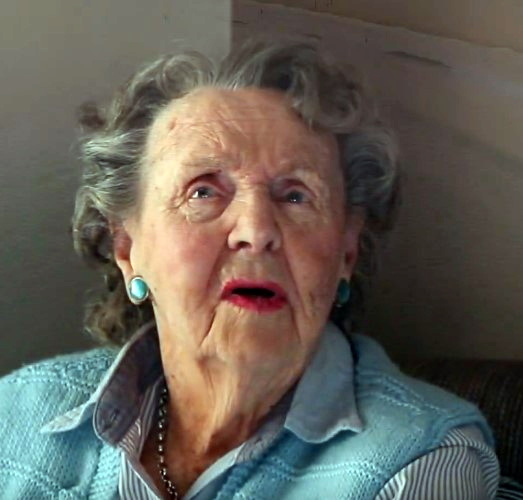
Highway Patrol Charger and Digidar Radar at the Retired Traffic and Highway Patrol Officers Day 2015.
Newport Pool – copyright Dave Whiteman
North Newport – copyright Dave Whiteman
Dave Whiteman
Dave Whiteman has been a keen photographer for over 60 years.
Growing up at Newport Beach, he used to photograph the area with a Box Brownie camera, often while out on his rounds as a Telegram Delivery Boy riding his bike. His passion for photography and particularly seascapes and landscapes has only increased over the years, but it was the advent of Digital Photography that allowed him to explore other genres.
Dave has photographed most of Australia and has traveled to much of the Pacific, South East Asia and India to add to his portfolio. What started as taking portraits of friends and family has led to the rewarding and challenging world of fashion and model photography, often at locations on the Peninsula but also in the Blue Mountains and other stunning locations.
What started as an interest has become a second career for Dave and he now undertakes commissions for corporate photography work including in the transport, aviation and construction industries. He was quite emphatic that he doesn’t do weddings but has shot the occasional engagement or 21st.
Dave has won awards at every photographic competition he has ever entered, including regional shows and exhibitions and corporate sponsored events. Adding to a string of awards in previous years, he won both A-Grade trophies for Monochrome and Colour in 2015 at the Penrith RSL Photographic Club where he is a member. He also runs independent photographic workshops, is a sought after speaker and  trainer and has had several successful exhibitions of his work. His images have been published in magazines and books both here and overseas.

Notes

Gretel, as the first ever Australian 12 Metre, was launched on February 19th 1962 at the Royal Sydney Yacht Squadron on Sydney Harbour, seven months before the first Americas Cup Race. The boat was christened Gretel nine days later on February 28, 1962, in memory of Sir Frank Packer’s late wife. Mr. Packer was President of the Challenge Association.
Gretel Launch – photo courtesy Old Sailing Blogspot
CHALLENGE YACHT TO SAIL AS GRETEL
SYDNEY, Wednesday.— Australia’s yacht challenger for the America’s Cup was officially named Gretel by Dame Pattie Menzics at the Royal Sydney Yacht Squadron to-day. Gretel was named after the late Lady Packer, wife of the Committee Chairman, Sir Frank Packer.
 
In a moving ceremony Gretel was blessed by R.A.N. Senior Chaplains G. P. Swain (Protestant), and Father G. S. Lake (Catholic). The Governor – General, Lord De L’Isle, and Lady De L’Isle attended the naming ceremony.
 
In a speech to 250 guests Dame Pattie said, “I name this ship Gretel.
 
“I commend all those who so faithfully and skillfully constructed her.
 
“May she uphold Australia’s name overseas or wherever else she may represent.
 
“May God’s protecting care be over all those who sail in her.”
 
Dame Pattie made a presentation to the yacht of a clock “so that the crew can note the time the race was won,” and a barometer “to see fair weather always ahead.”
 
Lord De L’Isle presented a standard ship’s bell on behalf of the Royal Sydney Yacht Squadron. Gretel later hoisted sail and cruised for 15 minutes off Kirribilli. CHALLENGE YACHT TO SAIL AS GRETEL (1962, March 1). The Canberra Times (ACT : 1926 – 1995), p. 32. Retrieved fromhttp://nla.gov.au/nla.news-article104924879
President and Mrs. Kennedy pictured with Sir Frank Packer (second left), head of the syndicate which built Gretel, the Australian challenger 1 in the forthcoming America’s Cup yacht race, and skipper Alexander (Jock) Sturrock (right), and Emil (Bus) Mosbacher (second from right), skipper of Weatherly, the American yacht, at a reception for America’s Cup crews given by Mr. and Mrs. Hugh D. Auchincloss, at Newport, Rhode Island.PRESIDENT MEETS CREWS (1962, September 15). The Canberra Times (ACT : 1926 – 1995), p. 1. Retrieved from http://nla.gov.au/nla.news-article131779725

http://www.pittwateronlinenews.com/David-Whiteman-Profile.php


Wall to Wall Ride of Remembrance, NSW – 2016

Wall to Wall Ride of Remembrance, NSW – 2016


This video and associated photos show bikes from Sydney Rd, Goulburn, entering Goulburn city, past the location that Constable Shelley DAVIS died, on duty, in 2004.

Other photos are taken at the NSW Police Academy, Goulburn, both ‘still’ and ‘drone’ photos / footage.

The third location is at Tarago Pub ( the Loaded Dog ) where the Illawarra ( NSW ) contingent stopped for lunch.

The forth location is outside of Tarago Police Stn ( NSW ) as the Illawarra contingent continues their ride to Canberra.


POLICE ON THE SYDNEY ROAD, GOULBURN, AT THE LOCATION THAT CONSTABLE SHELLEY DAVIS LOST HER LIFE WHILST ON DUTY.

sept-103

sept-104

sept-105

sept-106

sept-107

sept-108

sept-109

sept-110

sept-111

sept-112

sept-113

sept-114

sept-115

sept-116

sept-117

sept-118

sept-119

sept-120

sept-121

sept-122

sept-123

sept-125

sept-126

sept-127

sept-128

sept-129

sept-130

sept-131

sept-132

sept-133

sept-134

sept-135

sept-136

sept-137

sept-138

sept-141

sept-142

sept-143

sept-145

sept-146

sept-147

sept-148

sept-149

sept-150

sept-152

sept-153

sept-154

sept-155

sept-156

sept-157

sept-158

sept-159

sept-160

sept-161

sept-162

sept-163

sept-164

sept-165

sept-166

sept-167

sept-168

sept-169

sept-170

sept-171

sept-172

sept-173

sept-174

sept-175

sept-176

sept-179

sept-180

sept-181

sept-182

sept-183

sept-184

sept-185

sept-186

sept-187

sept-188

sept-189

sept-190

sept-191

sept-192

sept-193

sept-194

sept-195

sept-196

sept-197

sept-198

sept-199

sept-200

sept-201

sept-202

sept-203

sept-204

sept-205

sept-206

sept-207

sept-208

sept-209

sept-210

sept-211

sept-212

sept-213

sept-214

sept-215

sept-216

sept-217

sept-218

sept-219

sept-220

sept-221

sept-222

sept-223

sept-224

sept-225

sept-226

sept-227

sept-228

sept-229

sept-230

sept-231

sept-232

sept-233

sept-234

sept-235

sept-236

sept-237

sept-238

sept-239

sept-240

sept-241

sept-242

sept-243

sept-244

sept-245

sept-246

sept-247

sept-248

sept-249

sept-250

sept-251

sept-252

sept-253

sept-254

sept-255

sept-256

sept-257

sept-258

sept-259

sept-260

sept-261

sept-262

sept-263

sept-264

sept-265

sept-266


[divider]


Anthony James McWHIRTER

ARTICLE

The Last NSW Police Cadet to be Appointed a Probationary Constable – Retires

Anthony James McWHIRTER  APM

anthony-james-mcwhirter-the-last-nsw-police-cadet-to-be-sworn-nswpf

Swearing in of Cadet A. J. McWhirter as a porbationary Constable. The Cadet was the last eligible Cadet to be appointed a Probationary Constable.

aka  Squirt

Joined NSW Police Force via NSW Police Cadet system

New South Wales Police Force


Cadet # 3357

Regd. #   19159


Rank: NSW Police Cadet – commenced on 4 July 1977

Probationary Constable – appointed 6 July 1980

Constable 1st Class – appointed 6 July 1985

Detective Constable 1st Class – 1986

Detective Sergeant 3rd Class – appointed 15 August 1995

Inspector – appointed 13 November 1995

Superintendent – appointed 9 March 2003 – retirement

Retired 25 October 2012

StationsAs a Cadet: Modus Operandi Section, the Traffic Room 6 Division ( North Sydney ), Station Duty 25 Division ( Chatswood ) and the Coroners Court before returning to the Police Academy as a Trainee in January 1980.

As a Sworn Policeman:  25 Division G.D’s & Beats ( Chatswood ),  Queanbeyan ( August 1981 – 1984 ),  Armidale ( 1984 – 1987 ), Port Macquarie CIB & SWOS ( 1987 – 1995 ), Katoomba G.D’s ( 1995 – 1999 ),  St Marys LAC – Duty Officer ( 1999 – 2003 ),  Hawkesbury LAC & Commander ( 9 March 2003 – 2008 ),  Blue Mountains LAC & Commander ( 2008 – 25 October 2012 ) – Retirement.


ServiceFrom  4 July 1977  to  25 October 2012 = 35+ years Service


AwardsNational Medal – granted 28 April 1993

1st Clasp to National Medal – granted ? April 2003

Australian Police Medal ( APM ) granted 26 January 2007

Clasp to Australian Police Medal – granted ? ? ?

Commissioner’s Commendation for Service – granted ? ? ?


Born:  1961


NSW POLICE CADETS

THE END OF AN ERA

There is a saying that,”All good things must come to an end”. The police cadet scheme was no exception and, eventually, succumbed to this adage. The intake of July 1977 was the last group of youths recruited to become Police Cadets.

Many reasons can be advanced as causing this state of affairs: the demise of apprenticeships in society generally; the success of the Wyndham Scheme which added an extra year to high school attendance thus robbing the cadet scheme of potential recruits aged 15 and 16 years of age; the growing trend of high school students to continue their education to obtain the Higher School Certificate, together with the desire to obtain a university education.

On 7 July 1980, Commissioner James Travers Lees, who was a former cadet, administered the oath of office to Cadet Anthony James McWhirter, who then became a Probationary Constable in the Police Force. With that ceremony completed, there were no more cadets and the scheme, which had commenced in June 1933, some 47 years earlier, ceased to exist.

http://www.expolicecadets.asn.au/history.php


14 December 2012

Five retiring officers ‘march off’ the parade ground after a combined 150 years’ service:

Five retiring police officers will be ‘marched off’ the parade ground at the Goulburn Police Academy today after a combined 150 years’ service with NSW Police Force.

NSW Police Force Commissioner Andrew Scipione will pay tribute to the remarkable careers of Assistant Commissioner Paul Carey, Detective Superintendent Terence Dalton, Superintendent Michael Kenny, Superintendent Anthony McWhirter and Inspector Edward Billett.

“The service provided to our state by these retiring officers cannot be measured. They have been dedicated and have served our communities during their remarkable careers,” Commissioner Scipione said.

“Today their dedicated service will be recognised on this parade ground by their colleagues, family and friends,” he said.

Assistant Commissioner Paul Carey

Assistant Commissioner Paul Carey joined the NSW Police on the 26 February 1973 and was sworn in as a probationary constable on 1 April 1973, where he started work at Central Police Station.

A year later in November 1974, he was transferred to No.22 Division at Liverpool and Green Valley Police Stations to work both in General Duties and as a Rescue Operator. In 1980 he transferred to Wollongong Police Station where he remained for 10 years performing general duties and licensing.

In 1990 Mr Carey transferred to the Police Headquarters and performed a number of program and policy development roles until 1994. During 1995, he relieved as the Chief of Staff to Deputy Commissioners and the Commissioner.

In 1996 he became the Patrol Commander at Manly and the following year became the Local Area Commander at St Marys until his transfer to Kogarah in 1999. Mr Carey was appointed as the Local Area Commander of City Central in 2003 and performed these duties for four years until 2007.

During his time at City Central Mr Carey was the Operational Commander for numerous major public demonstrations, public protests and community celebrations including: ANZAC Day; New Years Eve; dignitary visits; APEC; and, the Harbour Bridge 75th Anniversary.

In 2008, Mr Carey was promoted to the rank of Assistant Commissioner and the Commander of Professional Standards, a position he has held until his retirement today.

Mr Carey is a qualified Counter Terrorism Commander, a senior Operational Commander and has represented the NSW Police Force at a number of national and international conferences.

He retires today (Friday 14 December 2012), on his 60th birthday, after 39 years and 10 months of service in the NSW Police Force.

Detective Superintendent Terence Charles Calov Dalton

Detective Superintendent Terence Charles Calov Dalton APM attested into the NSW Police Force on 5 February 1982. He had previously served in the Tasmanian Police and Royal Hong Kong Police.

His first role in NSW was performing general duties at Gosford and Waverley and then criminal investigation duties at No.10 Division.

He also worked in the roles of Superintendent of Licences; Police Internal Affairs Branch; Special Branch (VIP Protection); at Campsie Local Area Command; the Major Crime Squad South; Crime Agencies; and, City Central Police. Between 1989 and 2000, Mr Dalton performed the duty of a negotiator with SWOS and SPG.

On 20 May 2000 Mr Dalton was promoted to the rank of Detective Inspector and appointed as the Crime Manager of Rose Bay Local Area Command. In December 2002, he was again promoted to the rank of Superintendent and appointed as the Commander of the NSW Marine Area Command. During this time he was instrumental in conducting major reform and developing greater capability at the command.

Mr Dalton then worked as Commander of North Shore Local Area Command which he undertook from January 2008 until December 2011.

Mr Dalton is a recipient of the National Medal and 1st Clasp to the medal. He is also the recipient of the NSW Police Medal and 3rd Clasp to that medal. He was awarded the Centenary Medal in 2001 for service to policing in the community and is the recipient of the Australian Police Medal for distinguished service in the 2010 Queen’s Birthday Honours List.

Mr Dalton was awarded the Commissioner’s Unit Citation in 2003 in recognition of outstanding work demonstrated during the pursuit and interception of North Korean vessel MV Pong Su.

Detective Superintendent Dalton retired from the NSW Police Force on 29 September 2012. He was the Director of the 150th Anniversary of Policing Project and it is fitting he is recognised in this 150th year of policing in NSW.

Superintendent Michael Kenny

Superintendent Michael Kenny joined the NSW Police Force as a trainee on 11 January 1982 and was attested as a Probationary Constable on 2 April 1982.

His early service was as a general duties officer at Chatswood and Lane Cove patrols, and then in tactical policing with the Tactical Response Group and State Protect Group Operations Unit.

In the early 1990’s, Mr Kenny worked as an investigator and training officer with Internal Affairs before transferring to Armidale as the Education Officer where he was promoted to the rank of Sergeant in 1996. He then transferred to Kempsey to perform the role of a general duties supervisor.

Mr Kenny was promoted to the rank of Inspector on 28 October 1999 and worked as a Duty Officer at Waratah Local Area Command, before becoming Commander of Scarce Resources for the Hunter Region, leading the Target Action Group, Anti-Theft Unit and Transit Units.

Mr Kenny was promoted to the rank of Superintendent on 18 November 2002 and appointed as the Local Area Commander at Lake Macquarie where he worked for three years. In 2006 he was transferred to Tweed Byron Local Area Command where he worked for four and a half years, before being transferred to his current duties as Commander of Kuring-gai Local Area Command in 2010.

Over his 30 year career, Mr Kenny has been recognised and was awarded the National Medal in 1997, NSW Police Medal and 2nd Clasp to the NSW Police Medal in 2005, 1st Clasp to the National Medal in 2008 and 3rd Clasp to the NSW Police Medal in 2009.

Commander Kenny was awarded the Rotary Club of Newcastle Award in 2002 in recognition of his outstanding policing service to the community of Newcastle during 2001-2002.

Superintendent Kenny retired from the NSW Police Force on 8 November 2012 after 30 years of dedicated service in the NSW Police Force and to the people of NSW.

Superintendent Anthony McWhirter

Superintendent Anthony (Tony) McWhirter APM was 15-years-old when he first joined the NSW Police Force as a cadet on 4 July 1977. He initially worked in the metropolitan area at the Modus Operandi Section, the Traffic Room at No.6 Division, Station Duty with No.25 division and the Coroners Court before returning to the Police Academy as a Trainee in January 1980.

Mr McWhirter officially became the last NSW Police Cadet when he attested as a probationary constable in July 1980 following the conclusion of cadet enlistments. He worked as a general duties constable and beat policing in No. 25 Division at Chatswood.

In August 1981, he transferred to Queanbeyan Police Station and in 1984 to investigations at Armidale, and was awarded the designation of detective in 1986. Between 1987 and 1995 Mr McWhirter was attached to criminal investigations in Port Macquarie and also performed duties as an operative with the Special Weapons Operation Squad.

On 15 August 1995, he was promoted to the rank of Sergeant and worked at Katoomba as a general duties supervisor. On 13 November 1999 Mr McWhirter was promoted to the rank of Inspector and worked as a duty officer at St Marys Local Area Command.

On 9 March 2003 Mr McWhirter was promoted to the rank of Superintendent and Commander of Hawkesbury Local Area Command. In 2008 he became the Commander of Blue Mountains Local Area Command where he served until his retirement.

During his 35 years of service in NSW, Mr McWhirter was awarded the Australian Police Medal, the National Medal with first Clasp, the NSW Police Medal and subsequent Clasps, and a Commissioner’s Commendation for Service.

Superintendent McWhirter retired from the NSW Police Force on 25 October 2012.

Inspector Edward Billett

Inspector Edward Billett APM, joined the NSW Police Force on 17 February 1969 as a police cadet, graduating on 30 September 1971. He was sworn in as a probationary constable on 1 October 1971 and performed general duties at No.9 Division.

In 1973 Mr Billett transferred to No.20 Division Police Transport Section and remained there until October 1975. He then transferred to General Duties at No.32 and No.1 Division.

On 27 May 1979, Mr Billett transferred to the Police Prosecuting Branch where he remained until July 1995. Between July 1995 and June 1997, Mr Billett worked as a Senior Sergeant Patrol Tactician at Lakemba Patrol.

On 1 July 1997, Mr Billett transferred to Marrickville Local Area Command and relieved as a Duty Officer before becoming an Inspector and Duty Officer in 1999.

Mr Billett remained at Marrickville Local Area Command until his retirement on 11 October 2012. During his service he was awarded the National Medal and Ist and 2nd Clasps, the 6th Clasp to the NSW Police Medal and National Police Service Medal.

On 13 June 2011, Mr Billett was awarded the Australian Police Medal for distinguished service in the 2011 Queen’s Birthday Honours List.

Inspector Billett retired from the NSW Police Force on 11 October 2012.


POLICE CADETS

1933, the Metropolitan Superintendent, William John MacKay, who later became the Commissioner of Police, introduced a system of Police Cadets as part of the New South Wales Police Department. The innovation was not immediately popular with members of the Force because it was feared that cadets would become a “select group” of potential officers, similar to cadets training in selective schools of the Armed Services. When it was established, however, that the only material advantage to cadets would be sectional clerical experience and extended long service leave benefits the system was accepted and finally approved.

On June 12, 1933, twelve Police Cadets, the sons of serving Policemen, were appointed to the Police Force and attached to various sections and metropolitan city stations. The Cadets were an immediate success and on 19 October of that year, an additional 18 Cadets were recruited. Of this intake, only a few were sons of Policemen. The rate of pay was £2 weekly. The first of the intake of original Cadets was sworn in during 1936, and by 1962, many of them were serving as Sergeants and Detective Sergeants in important sectional positions. Since 1933 and up until 1962, over 1,700 Cadets had been enrolled in the Police Service.

The working conditions of Police Cadets improved greatly over the first two decades and by 1962 all Police Cadets received training in Statute Law, Police Procedure, Police Practice and Duties, English, Shorthand, Speech Culture, Physical Training, Squad Drill, and all sporting pursuits. A select few also attended a course of wireless instruction at the Marconi School of Wireless.

UNIFORMED CADETS

In November 1956 it was decided to place police Cadets, in uniform very similar to that worn by police but with a distinctive cap band, on selected school crossings to alleviate the work of traffic police. This immediately raised the ire of the Executive Committee of the police union, the NSW Police Association. The Committee voiced objections to the Commissioner of the day, Colin Delaney, which were based not only on protecting police duties but also because of the risks cadets might face. There was the lack of protection from legal liability, the tenuous situation if they were injured and a fear that cadets would be used in traffic control. The Commissioner was unmoved and the scheme was introduced. The following school holidays saw the Association’s fears realised. With no school crossings to supervise, the uniformed cadets were deployed to assist police in the City of Sydney to assist control the vast crowds of Christmas shoppers who flocked to the metropolis. A compromise was reached when representations to the Premier, JJ Cahill, resulted in those uniformed cadets reverting to plain clothes during school holidays.

ENROLMENT

In 1962 enrolment in the Police Cadet Service was open to youths between the ages of 15 and 18 years who were of excellent character, weighed approximately 10st. 7lbs., measured not less than 5ft. 8 1/2in. in height, educated to a higher primary or secondary school standard and were of such physical proportions as to reasonably indicate that upon attaining the age of 19 years they would fulfil all physical requirements for appointment to the Police Force.

As young men they could now be appointed to the Police Force at the age of 19 years, but it was not the practice to accept applications for cadet appointment from youths above the age of 17 1/2 years unless the applicant was in the possession of outstanding qualifications.

SCOPE OF TRAINING

The object of the Cadet Service was to keep Cadets mentally and physically alert, and to embody in their training a high standard of discipline, dress, and bearing. The tutorial syllabus was designed to prepare Cadets for their future training as Probationary Constables, and to assimilate the fundamental principles of Statute Law, and the necessity of a basic understanding of human relations.

At the age of 18 years selected Cadets were assigned to duty at selected school crossings in Cadet uniform. In 1962 Police Cadets effectively controlled 30 school crossings, relieving Traffic Police for more pressing and important road patrol duties.

EXAMINATIONS

During the period of training all Police Cadets were required to participate in the “Silver Baton Award” competition, which was awarded annually to the Cadet attaining the highest marks in the full training curriculum and syllabus of studies. All Cadets in the Public Speaking Class were required to participate in the annual “Mervyn Finlay Prepared Speech Competition”, for which the winner received a handsome trophy.

SHORTHAND INSTRUCTION

At the commencement of the Cadet system in 1933 it was the practice for Cadets to attend approved Business Colleges in their own time and at their own expense for instruction in typing and shorthand. In 1938 shorthand classes were inaugurated at the Criminal Investigation Branch under the direction of qualified Police Instructors. Attendance at these classes was on a voluntary basis. In 1940, at the instigation of Commissioner of Police, William J MacKay, daily shorthand instructional classes were officially included in the syllabus of studies for all Cadets.

In 1962 Cadets entering the service were required to study shorthand and enter into a departmental contract to write shorthand at a speed ranging from 100 to 120 words per minute at a specified period of their training. Cadets studying the theory of shorthand were required to attend an approved business collage at their own expense.

In addition to attending daily courses at the Police Training Centre. Upon graduation from the theory class Cadets terminated private tuition and then received instruction in the Low and High Speed classes conducted four mornings weekly, until they could attain their contract rate. Up until 1962 and since the inauguration of the system over 1,700 Cadets have received shorthand tuition. All had attained speeds of 120 words per minute, and 5%, had achieved speeds in excess of 150 words per minute, the qualifying standard for appointment as official departmental shorthand writers.

The use of shorthand proved of inestimable value to Cadets when later appointed Probationary Constables, in the recording of wireless and telephone messages and the taking of statements at accident and various crime scenes. A large number of ex-Cadets were utilised in the offices of country Superintendents and Inspectors as clerks, whilst twelve high speed writers were permanently employed at Police Headquarters on special investigations and departmental conferences.

EXPANSION OF SYSTEM

In 1962 all Commonwealth Police organisations had adopted the New South Wales Police Cadet training system. Strangely enough, the cadet system, based on Sydney methods, was not introduced into the London Metropolitan Police Force until 1951. It is now firmly established in that world-famous organisation and it is anticipated that Cadets will soon constitute one-half of the intake of new trainees.

The Police Cadet Service proved an outstanding success and a vital acquisition to the New South Wales Police Force in suitably preparing young men for a qualified and an efficient approach to Police procedure, and the manifold responsibilities and difficulties of their chosen career.

http://www.expolicecadets.asn.au/history.php


NSW Police Department Annual Report – 1980

INTRODUCTION
The year 1980 was of special significance to me as it marked my first full year as Commissioner of the New South Wales Police Force and after having completed twelve months in the position I can honestly say that the management and command of the largest Police Force in Australia is by
no means a small task. In this regard I would be lacking if I did not place on record my gratitude for the loyalty and assistance given me by Mr R. E. Whitelaw, my Senior Assistant Commissioner.
Assistant Commissioners J. J. E. Black, W. A. R. Allen, C. R. Abbott, M. Kelly, W. R. Ross, R. M. Holloway and former Assistant Commissioners K. C. Jensen and B. D. Taylor who retired during the year. I am no less mindful of the dedication and efficiency displayed, at times under the most trying of conditions, by members of the Force of all ranks in discharging their heavy onus of service to the community at large.
On the administrative side of the Department my thanks go to Mr P. A. Bowmer, Secretary, and all Public Service staff under his control for the competent manner in which they carried out their duties.
I would be remiss if I did not take this opportunity of expressing my appreciation to my Minister and his staff, for the support and consideration shown to me and the Police Department.
Likewise I value the assistance and co-operation of other Ministers, Members of Parliament, heads and representatives of various Government authorities, private organizations, the media and the countless public spirited citizens, who in so many ways have given of their support.
The year also saw additional responsibilities placed upon the position of Commissioner.
Early in 1980, the State Emergency Services and Civil Defence Act and the Police Regulation Act were amended and under the provisions of the amended legislation I took over the responsibilities of the Director, State Emergency Services and Civil Defence. Because of the complexities of that role an additional position of Assistant Commissioner of Police was created to assist me in the general administration of the organization. Assistant Commissioner Kelly was selected and although it could be described as an area unfamiliar to the normal Police environment, his experience and knowledge has enabled the Assistant Commissioner to carry out the duties required of him in his new position in a most capable manner.
I commenced my association with the New South Wales Police Force in 1936 when I was appointed as a Police Cadet. I make mention of this only because 1980 somewhat marked the end of an era with the swearing in of the last eligible Police Cadet. This notable event occurred on 7th July, 1980, when Cadet Anthony James McWhirter attended my Office and was attested as a Probationary Constable.
In general and as in the past, the year imposed ever increasing demands on the resources of the Department in the areas of crime, traffic and general Police work. I am proud to say that the men and women under my control met those demands in a very loyal and efficient manner.
I have much pleasure in presenting the Police Department’s Annual Report for the year 1980.
J. T. LEES
Commissioner.

Cowra Community News

Regional police join Texas cops in Ride for the Fallen

THREE police officers – one from Orana (Dubbo) Local Area Command (LAC) and two from the Blue Mountains – are among 18 policemen who will support law enforcement officers in Texas by joining a motorcycle ride in remembrance of colleagues who have died in the line of duty.

Superintendent Stan Single, Orana LAC, and Superintendent Anthony McWhirter and Inspector Michael Bostock, Blue Mountains LAC, will ride with a contingent of 18 officers from across New South Wales who left Sydney today (Monday) headed for Austin, Texas, to join the Combined Law Enforcement Agencies of Texas in the 11th annual Ride for the Fallen.

The main ride will be held in Austin next Saturday, May 5, with daily rides taking place across Texas until Friday, May 11.

The NSW Police Force was invited to take part in the ride following the success of last September’s Wall to Wall Ride for Remembrance, which was inspired by the Texas ride.

Like the Wall to Wall Ride for Remembrance, the Ride for the Fallen honours officers killed in the line of duty, and raises money for the Peace Officers Memorial Foundation, which perpetuates the memory of law enforcement officers who have made the ultimate sacrifice while protecting the citizens of Texas.

NSW Police Deputy Commissioner, Catherine Burn, says participating in the Texas ride is a great honour for the officers involved.

“It is wonderful for the officers who work tirelessly to organise the Wall to Wall Ride for Remembrance to experience the ride that inspired our event,” Deputy Commissioner Burn says in a statement.

“In addition, it is an opportunity to forge relationships with law enforcement officers around the world, and come together, remember and honour those officers who have died in the course of their duty.”

Australian participants in the Texas ride are self-funding the trip, with assistance from the Police Credit Union and the Police Association of NSW, and will raise funds for Police Legacy in Australia.

Wall to Wall Ride national president, Assistant Commissioner Michael Corboy, who will take part in the Texas ride, says all funds raised will be included in the total for the Wall to Wall Ride in September 2012

“We are always aiming to raise as much money as possible, but we are determined to beat our targets as we celebrate 150 years of policing in NSW,” he says.

“In just two years, the Wall to Wall Ride has doubled the number of participants, is supported by police from all jurisdictions in Australia, and raised more than $100,000 for police charities.”

NSW Police will provide updates on the Ride for the Fallen on Facebook at: www.facebook.com/nswpoliceforce.

Further information on the Wall to Wall Ride for Remembrance at the official website www.walltowallride.com.


David John MANSFIELD

David John MANSFIELD

aka  Dave

( late of Edgeworth )

New South Wales Police Force

Commenced with Goulburn Police Academy Class ???

Regd. #   43664


Rank:  Commenced Training at Goulburn Police Academy on Sunday 1 February 2007 ( aged 31 years, 4 months, 27 days )

Probationary Constable – appointed 28 August 2007 ( aged 31 years, 11 months, 23 days )

Constable – appointed ?

Constable 1st Class – appointed ?

Senior Constable – appointed ?


Final Rank:  Senior Constable


Stations?, City Central, ?, Tuggerah Lakes


ServiceFrom 1 February 2007  to   7 September 2016 = 9 years, 7 months, 6 days Service


Awards:  No find on It’s An Honour


Born:  Friday 5 September 1975

Died on:  Wednesday  7 September 2016

Cause:  Bowel Cancer – diagnosed early 2015

Age:  41 years, 0 months, 2 days


Funeral date:  Tuesday  13 September 2016 @ 2pm

Funeral location:  Macquarie Memorial Park Cemetery & Crematorium, 405 Cessnock Rd, Ryhope

Buried at?


 Memorial at:  Dave IS MENTIONED on the Sydney Police Centre memorial Wall of Remembrance.   Right Wall,  Plaque E16


DAVE is NOT mentioned on the Police Wall of Remembrance, Canberra  *NEED MORE INFO

Dave IS MENTIONED on the Sydney Police Centre memorial Wall of Remembrance.   Right Wall,  Plaque E16


 Funeral location [codepeople-post-map]


FURTHER INFORMATION IS NEEDED ABOUT THIS PERSON, THEIR LIFE, THEIR CAREER AND THEIR DEATH.

PLEASE SEND PHOTOS AND INFORMATION TO Cal


Dave has lost his battle with Bowel Cancer and passed away on Wednesday 7 August 2016.

We pass on our deepest condolences to Dave’s wife and three children.

May you forever Rest In Peace Dave.


[blockquote]

The Funeral is at 2pm with the Service commencing at 2.30pm by Reverend Mark Watt, Police Chaplain, and the Service will be a full Police Funeral.

Those wishing to march in the Marching Escort Party are to be at the Memorial Park at 1.30pm for rehearsal in full uniform.

The family have invited all, after the service, to Central Leagues Club, Bula St, Charlestown to celebrate Dave’s life and it was on of Dave’s last wishes that those attending the funeral ( not in uniform ) wear a Hawaiian Shirt and bright colours to ‘celebrate his life’ and not mourn it.

[/blockquote]


MANSFIELD, David John ‘DAVE’

Late of Edgeworth

Passed away peacefully surrounded by His loving friends & family

7th September, 2016

Aged 41 Years

Dearly loved Husband of KY-LEE.

Much loved Dad of SARAH, KYAN, & LILA.
Adored Son of BRIAN MANSFIELD, SONJA & EDWARD HERIVEL,
Son-in-law of DAVID & MARGARET STODDART,
Brother of DEBRA, GLEN, & IAN,
Brother-in-law & Uncle to His Family.

A good friend to many.

At DAVE’S request, bright colours & Hawaiian shirts to be worn.

The Family & Friends of DAVE are warmly invited to attend a Celebration Of His Life to be held in The Chapel of Lake Macquarie Memorial Park, Cessnock Rd, Ryhope this TUESDAY 13th September, 2016 service commencing at 2pm.

In lieu of flowers & In Memory of DAVE donations to the ‘Starlight Foundation at JHH‘ may be made at the service.

‘Always Forever,
For Eternity’


Dave's mantra
Dave’s mantra


JumpforDave Tuggerah Lakes

May you rest in peace Dave Mansfield. You fought the entire battle with more courage than anyone known. We would break any world record to still have you here. Sincerest of condolences to the Mansfield family.
Message dated:  Thursday  8 September 2016              May you rest in peace Dave Mansfield. You fought the entire battle with more courage than anyone known. We would break any world record to still have you here.   Sincerest of condolences to the Mansfield family.


  • 22 Apr 2015
  • Central Coast Express Advocate Wyong
  • Emma Herd

Police leap to challenge of helping stricken mate

WHEN Senior Constable Dave Mansfield was diagnosed with bowel cancer at the start of the year, he had many colleagues willing to literally jump to his aid.

Senior Constable Jay Stewart and colleagues Graham Smith, Mick Errickson, Karen Bertram and Steve Bancroft warming up for their Guinness Book of World Records attempt for continuous jumping on a jumping castle.


As a fundraiser for the father of three, officers from Tuggerah Lakes police are preparing to set a new Guinness Book of World Records mark for continuous jumping on a jumping castle .

The record stands at 37 hours and 14 seconds, and the group is determined to blow that time out of the water at Mingara Recreation Club, Tumbi Umbi, on May 29-31.

Such was the interest in assisting the Mansfield family, organiser Senior Constable Jay Stewart had to knock back some prospective jumpers as only eight are required.

While there is no strict training schedule planned, Sen-Constable Stewart said they had a plan of attack for their record attempt.

“We’re going to try half an hour stints,” he said.

“We were going to try an hour at a time but I don’t know if you could do it for that long.”

The group have set up a Facebook page and are seeking support from businesses in the lead-up to the event.

Sen-Constable Mansfield was speechless when his colleagues told him of their plans, although he confessed to having a laugh when he was told about the jumping castle.

“I thought it was hilarious to begin with,” he said.

“But I’ve been speechless at how much support has been generated.”

Hunter Valley Amusement Hire has donated the use of a jumping castle.

Details: Search Jumpfor Dave Tuggerah Lakes on Facebook.

http://newslocal.newspaperdirect.com/epaper/viewer.aspx


World record attempt to raise funds for cancer sufferer

Eight officers from Tuggerah Lakes Police will begin a world record attempt for the longest marathon bouncing on a jumping castle at Mingara Recreation Club on Friday, May 29.

The attempt is to raise funds for their Tuggerah Local Area Command colleague, senior constable Dave Mansfield, who was diagnosed with bowel cancer at the start of the year.

SC Mansfield is a married man and a father of a young family, so, according to the Police Association of NSW, his “police family” is banding together to raise funds to assist the Mansfield family.

The current marathon on a jumping castle world record stands at 37 hours and 14 seconds.

“We believe we can blow that record out of the water by jumping well into Sunday,” said Ms Alison McLaughlin, spokesperson for the Police Association.

A family fun day will be held on Saturday, May 30 as part of the world record attempt including raffles, barbecue, NSW Police Dog Unit, POLAIR landing and “Dunk a Cop”.

Email, 27 May 2015
Alison McLaughlin, Police
Association of NSW

http://wyongchronicle.com.au/2015/05/world-record-attempt-to-raise-funds-for-cancer-sufferer/


‘Jump for Dave’ fundraiser day at Mingara Rec Centre, Tuggerah, in support of Sen Cst Dave Mansfield & his family during his medical treatment. Come by for a Sausage sandwich & see the great displays of NSW Police, NSW Ambulance, Fire & Rescue NSW, SES, VRA, Marine Rescue, PCYC. Till 2pm.

https://www.facebook.com/TrafficServicesNSWPF/photos/pcb.915386548526326/915386001859714/?type=3


COAST COPS SMASH WORLD RECORD FOR JUMPING CASTLE MARATHON

Finally tonight, a group of Central Coast police officers has set a new world record for the longest team marathon on a jumping castle, by bouncing for 43 hours and 25 minutes.

They smashed the previous mark by more than six hours.

It was all about raising money to support fellow Tuggerah Lakes officer, David Mansfield, who was diagnosed with bowel cancer in February.

“I… I truly am speechless. How do you thank so many people? I guess you keep fighting. This is the most humbling experience I think you could ever have.”

BOUNCING TO BEAT BOWEL CANCER AND RECORD BOOKS


Longest marathon on a bouncy castle (team)

The longest marathon on a bouncy castle by a team is 43 hr 25 min 1 sec and was achieved by Tuggerah Lakes Police (Australia) in Tumbi Umbi, New South Wales, Australia, on 29-31 May 2015.

The team consisted of Jay Stewart, Graham Smith, Steve Bancroft, Mick Erickson, Nicole Bird, Jon Paul Dinsdale, Karen Bertram, and Dave Brown. They attempted this record to raise money for a New South Wales Police officer who was diagnosed with cancer.

http://www.guinnessworldrecords.com/world-records/longest-marathon-on-a-bouncy-castle-(team)


Tourists saved from Sydney bus inferno

A quick-thinking driver and two alert off-duty police officers saved 32 foreign tourists from the smoke, flames and explosions of a burning tour bus in Sydney.

The group were travelling on the Gore Hill freeway at Artarmon about 6.30pm yesterday when the driver noticed an engine fire, prompting him to stop in a breakdown lane and quickly start evacuating his passengers.

Two off-duty police officers, Constable David Mansfield and Senior Constable Bryon Williams, happened to be travelling in a car nearby and decided to follow the bus after noticing smoke coming from its rear.

“As the bus pulled over we got out of the car,” Senior Constable Williams told reporters yesterday.

“The back of the bus was engulfed in flames and smoke.”

By the time the officers got to the front of the bus, passengers were scrambling to get off.

“Obviously there was a lot of chaos,” Senior Constable Williams said.

“Within minutes the whole bus was alight.

“There were numerous explosions … the windows on either side were blowing out with the heat.

“I thought, if we don’t get these people off there’s going to be a big fatality.”

None of the passengers were injured. The officers and the bus driver suffered smoke inhalation.

All that remains of the bus is a burnt shell.

The freeway at Artarmon was closed between Willoughby Road and Reserve Road for nearly an hour while firefighters fought the blaze, causing traffic problems.

http://www.smh.com.au/nsw/tourists-saved-from-sydney-bus-inferno-20100706-zza9.html


Tourists’ lucky escape from bus blaze

Updated

Two off-duty police officers who had just seconds to save passengers from a burning bus on Sydney’s North Shore last night say they feared the bus would explode.

Senior Constable Bryon Williams and Constable David Mansfield were travelling behind the bus when it caught on fire while carrying 32 tourists on the Gore Hill Freeway in Artarmon about 6:00pm.

The driver pulled over and the officers only had seconds to get the passengers off before flames engulfed the bus.

Senior Constable Williams says the officers’ first concern was the passengers.

“It was out of control. Within a minute, the whole bus was nearly alight. The windows on either side of the bus were blowing out with the heat and the amount of fire and that coming from the bus,” he said.

“It was close… I actually thought this thing’s going to blow up and if we don’t get these people off, there’s going to be a big fatality.

“It was very scary from my point of view, from the point of view of the people on the bus and the poor bus driver himself.”

The fire started in the engine bay of the bus.

The southbound lanes of the freeway were closed for more than an hour, causing traffic problems.

http://www.abc.net.au/news/2010-07-07/tourists-lucky-escape-from-bus-blaze/894904


Parliamentary Inquiry into Workers Compensation now accepting submissions

Parliamentary Inquiry into Workers Compensation now accepting submissions


Dear friends,

The Law and Justice committee, of which David is a member, has just commenced a Parliamentary Inquiry into the operation of the workers compensation scheme.

The terms of this inquiry very much allow for an investigation of oppressive surveillance, the tactical and unethical use of so-called “independent medical examiners” and organisational responses to workplace injuries.

All of these matters are of very real concern to injured police and it is my intention to be seeking some time gets set aside specifically to deal with injured police in the course of this inquiry.

This can only be done if we have the submissions, material and evidence that supports this as systemic issue. We would strongly encourage you to make a submission about your experience: https://www.parliament.nsw.gov.au/committees/inquiries/Pages/inquiry-details.aspx?pk=2414

The inquiry will be accepting submissions until the 25th September, please don’t hesitate to contact our office if you have any questions.

Kind regards,

David

Parliament House
Macquarie Street
Sydney NSW 2000
(02) 9230 3030
davidshoebridge.org.au


Placed on www.AustralianPolice.com.au on Wednesday  31 August 2016