STEPHENS
Michael
19.12.1947 – 10.05.2025
Aged 77 years
Late of Mangrove Creek
Beloved partner of Noreen (dec).
Dearly loved father and father-in-law of Israel and Lisa.
Cherished grandfather of Remi.
Much loved brother of Carole, Pat, Terrey, Helen, Leslie and Debbie.
Good friend of the Spencer Crew.
Will forever live on in our hearts
Family and friends of Michael are warmly invited to attend the funeral service to be held at 1pm on Tuesday, 27 May 2025 in the Rose Chapel at Palmdale Lawn Cemetery and Memorial Park Palmdale Road, Palmdale.
Published by The Sydney Morning Herald on May 22, 2025.
Class 109 of 12 December 1966 at Redfern Police Training Centre, Redfern Police Academy.
Hornsby Detectives – c1979 Back Row ( L-R) G.M. BROWN, N. WARES, W.R. HERRICK, Michael STEPHENS # 12386, B.J. MOLLOY Front Row: J.R. HUTCHINGS, L. POTTER, K.A. SAWYER, A. THORRINGTON
Hornsby Detectives – August / September 1979 L to R , Mick Stephens, Paul Fuller, John Hutchings, Smithy, Tony Thorrington, Murray Edwards, Les Potter and Ken Sawyer ( at very front )
* Story behind any Nickname:
Nothing further, than what is recorded above, is known about this person at the time of publication and further information and photos would be appreciated.
NSW Redfern / Penrith Police Academy Class # ? ? ?
New South Wales Police Force
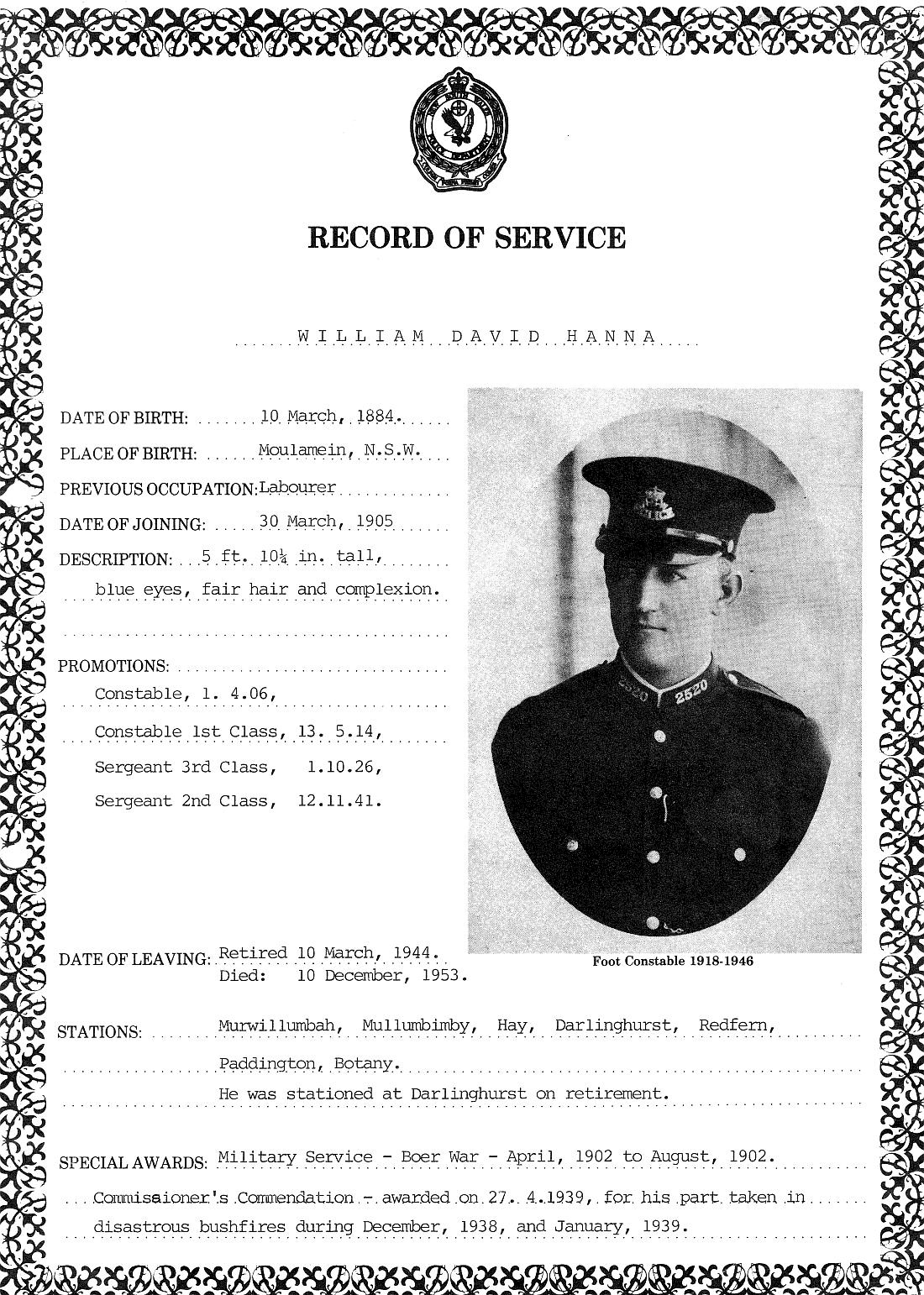
Uniform # 103 & 2520
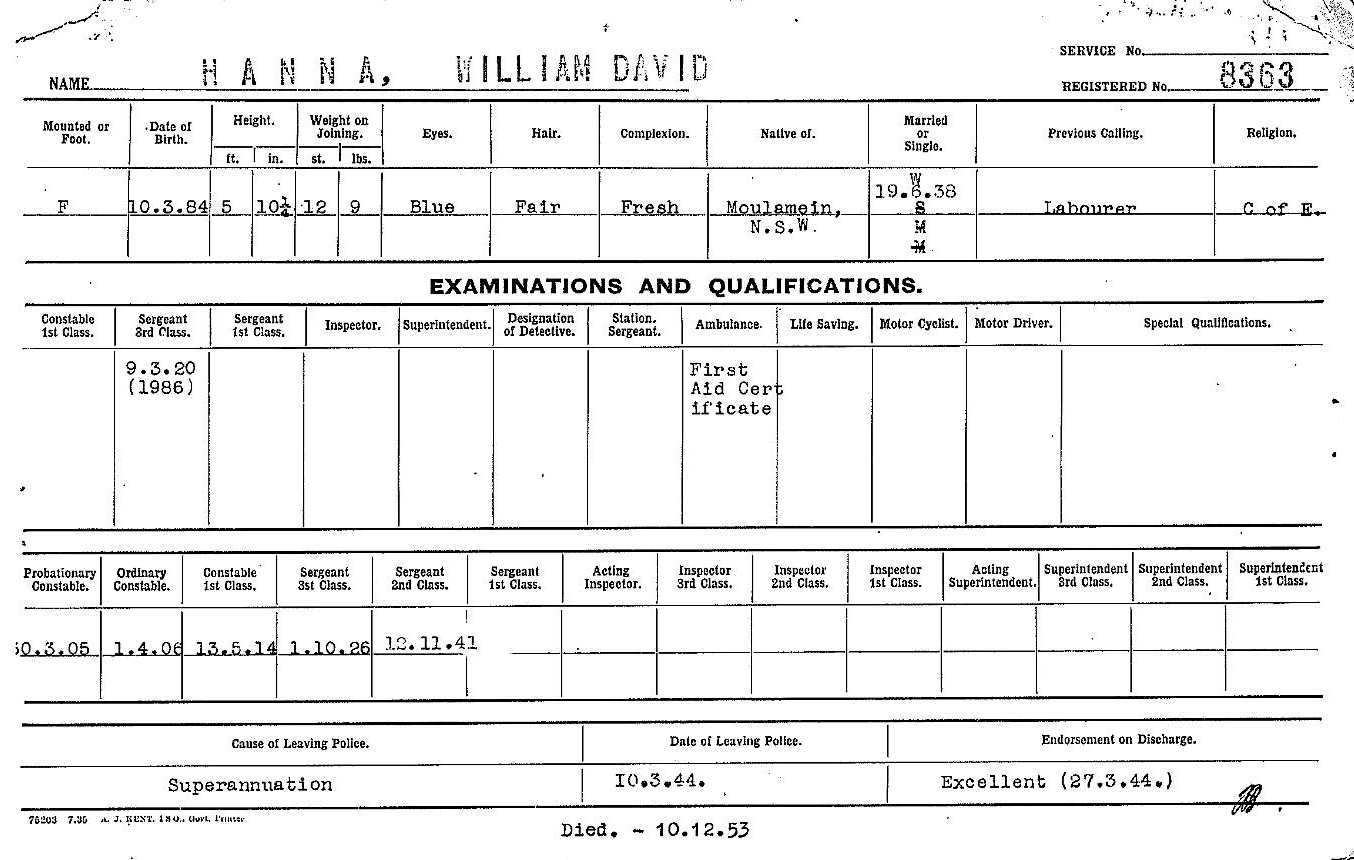
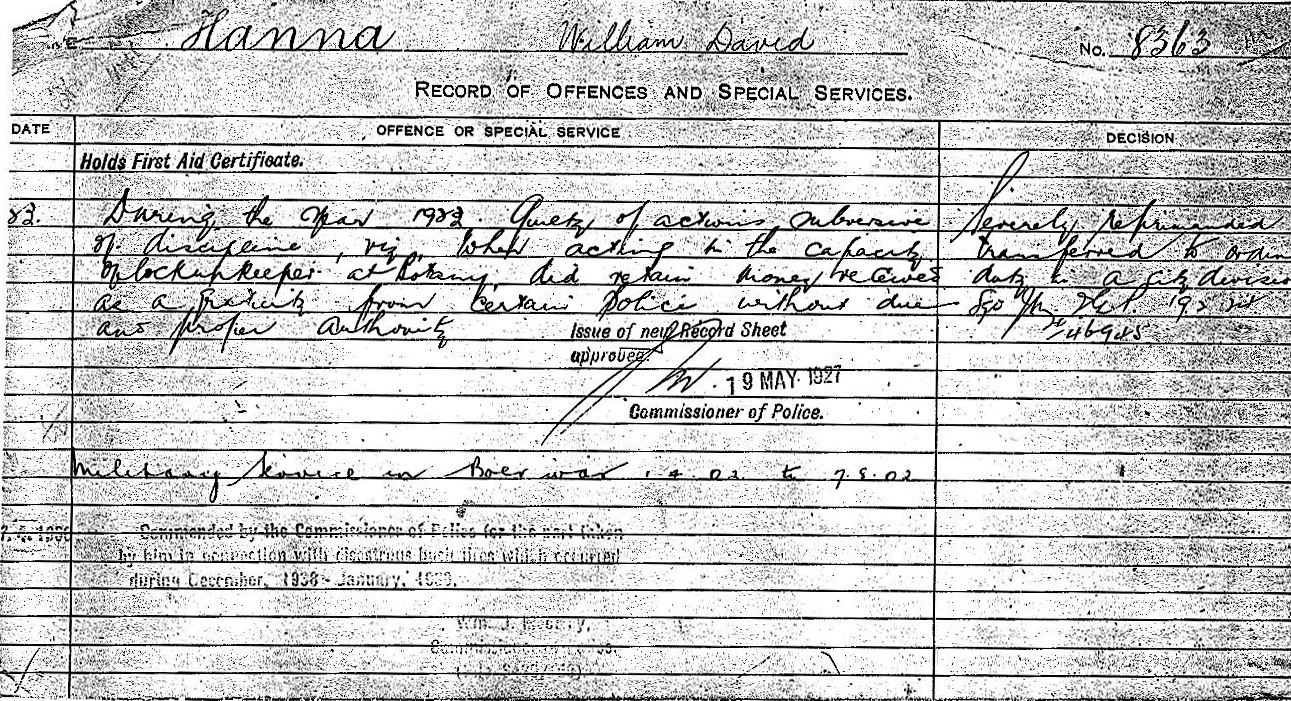
Regd. # ‘Q’ 8363
For the purposes of this website ‘Q’ represents those Police joining between 1 March 1862 ( commencement of NSWPF ) – 23 February 1915 ( Commencement of NSWPF current numbering system )
Rank: Commenced Training on ? ? ?
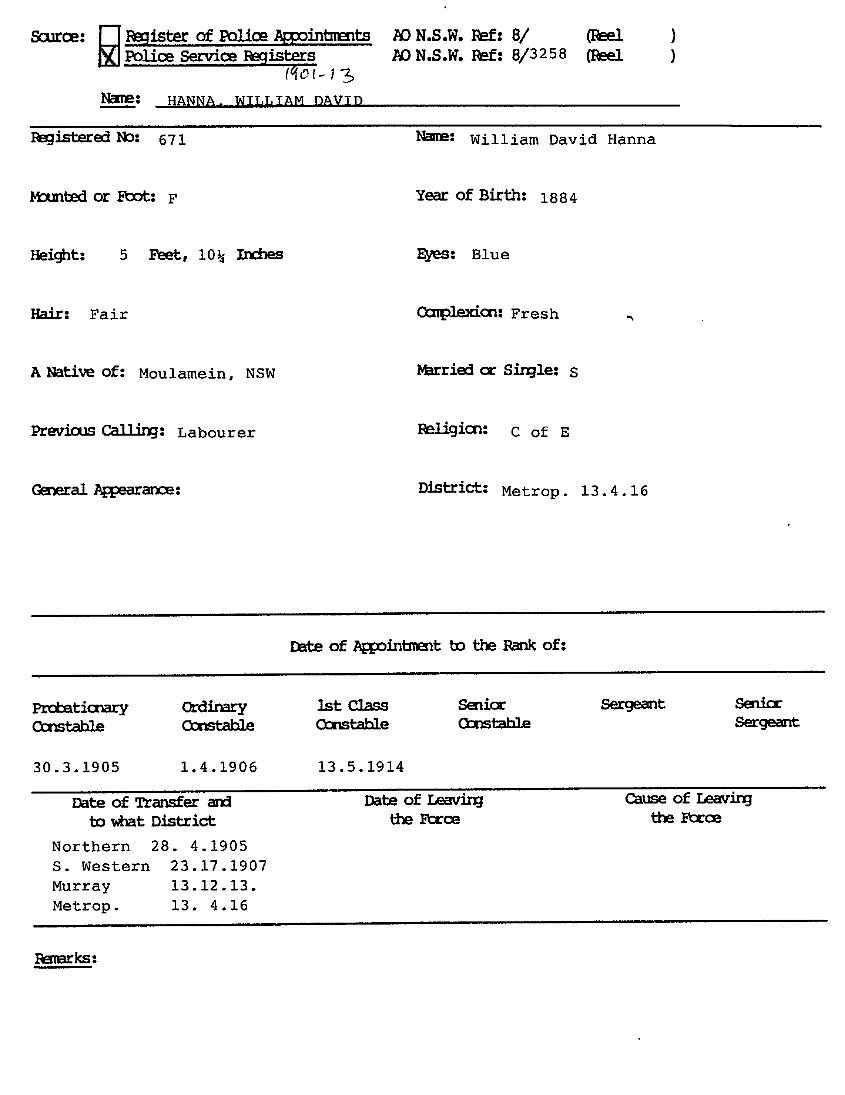
Probationary Constable- appointed 30 March 1905
Constable – appointed 1 April 1906
Constable 1st Class – appointed 13 May 1914
Senior Constable – N/A ( No such Rank )
Sergeant 3rd Class – appointed 1 October 1926
Sergeant 2nd Class – appointed 12 November 1941
Final Rank = Sergeant 2nd Class
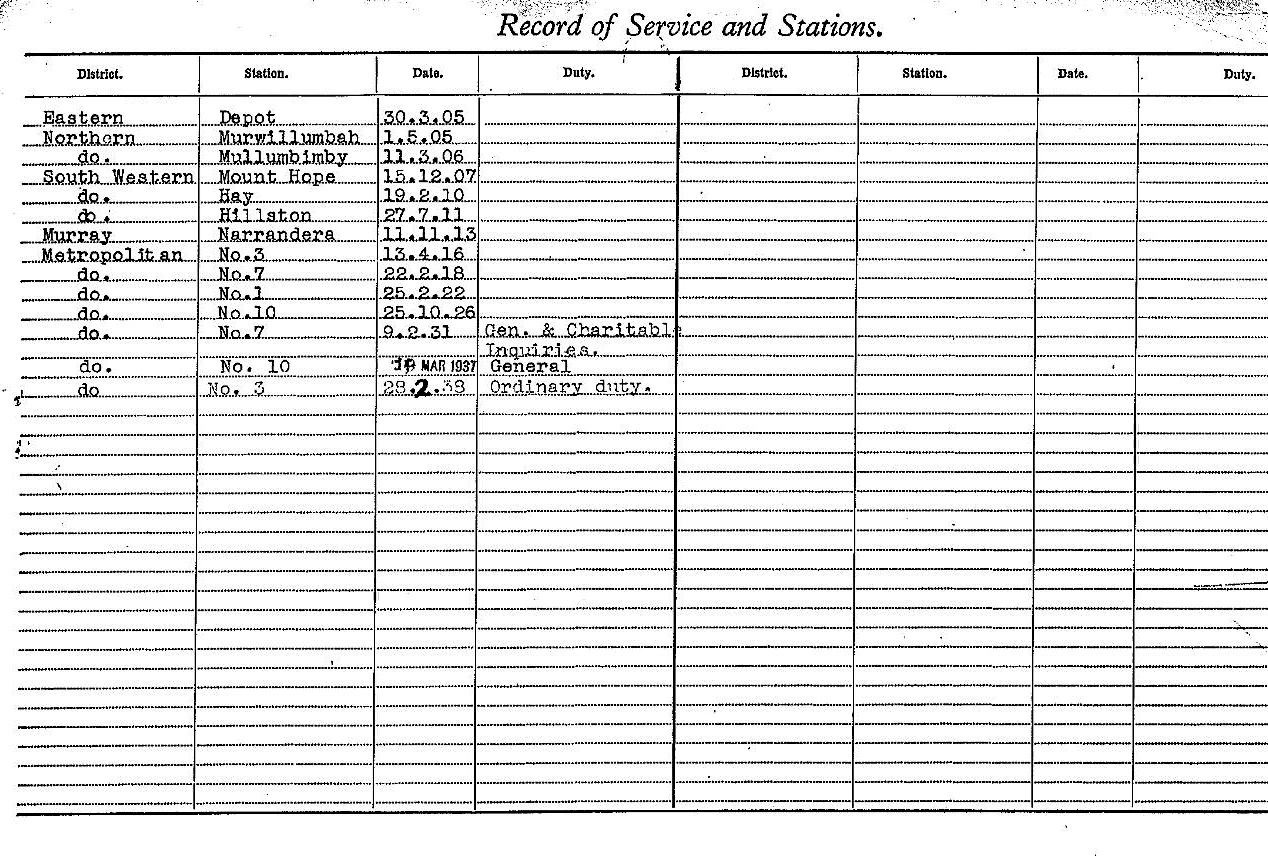
Stations: Murwillumbah ( 28 April 1905 ), Mullumbimby, Hillston ( 1907 ), Murray District ( 13 December 1913 ), Metropolitan District: ( 13 April 1916 ) – Redfern, Paddington, Randwick, Botany ( Crown Sgt ), Darlinghurst – Retirement
Service: From 30 March 1905 to 10 March 1944 = 29 years Service
Awards: Imperial Service Medal ( Imperial ) – granted 11 August 1944 ( Sgt 2/c )
Commissioners Commendation: Awarded on 27 April 1939 for his part in the disastrous bush fires during December, 1938 and January 1939.
Appointed Justice of the Peace – 1946
Served in the Boar War – April 1902 – August 1902
Born: 10 March 1 884 , Moulamein, NSW
Died on: Thursday 10 December 1953
Age: 70
Cause: Carcinoma of the stomach ( Cancer )
Event location: his residence, 71 Rosebery Ave, Rosebery, NSW
Event date: Thursday 10 December 1953
Funeral date: Friday 11 December 1953 @ 2.45pm
Funeral location: St Andrews Church of England, Rosebery
Funeral Parlour: Thomas Dixon P/Ltd. Undertaker = T. Moncrief.
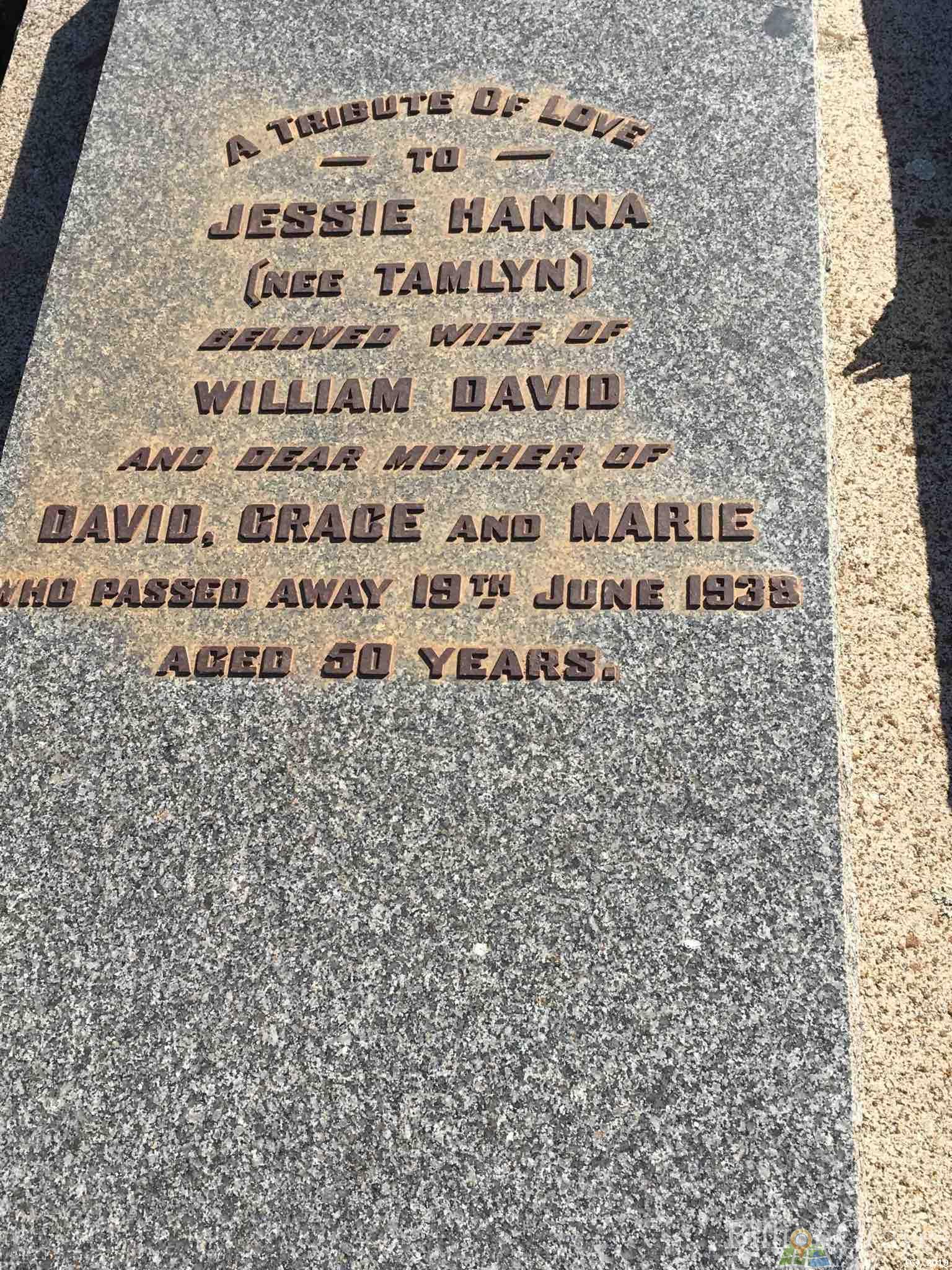
Ashes taken to Urana, NSW & buried with his wife – Jessie TAMLYN. ( DoD = 19 June 1938 )
Grave location: [codepeople-post-map]
GPS: -35.3110259521874 146.25799840606
Memorial / Plaque / Monument located at: ? Dedication date of Memorial / Plaque / Monument: Nil – at this time ( August 2020 )
Retired Sgt 2/C ( NSWPF ) William David HANNA was buried with his wife, Jessie, after his death on 10 December 1953. Jessie predeceased him by 20 years. William ( also known by the nickname of ‘Barlow’ ) was cremated at the Eastern Suburbs Crematorium, Sydney, and his ashes later buried with Jessie. May they forever Rest In Peace together.
WILLIAM is NOT mentioned on the Police Wall of Remembrance *NEED MORE INFO
FURTHER INFORMATION IS NEEDED ABOUT THIS PERSON, THEIR LIFE, THEIR CAREER AND THEIR DEATH.
William David HANNA was the third child born to David HANNA and Susan Anna SMITH. He was born on the 10th March 1884 at Woorooma Station, Moulamein NSW.
After his Boer War service in 1902, the next recorded record of his life was on 12 July 1903 when he reported the death of his brother, John Alfred Hanna at the Jerilderie Hotel NSW Australia.
As a returned soldier he was offered a career in the NSW Police Force, and was appointed as an Ordinary Constable on the 1 April 1906, (information obtained from the NSW Police Gazette dated 11 July 1906).
His service number was 8363 and he was posted to the far North Coast country towns of Murwillumbah and Mullumbimby. A few years later he was posted to Hillston, in far western NSW.
Members of the HANNA family knew him by the nickname of “Barlow”.
On the 31st March 1908 he married Jessie TAMLYN in the Mount Hope district of NSW.
William and Jessie had three children. William David Gregory was born in Condobolin during 1909. The second child born was Grace May Dorothy who was born on 16 December 1911 at Hay NSW. The third child Jessie Margaret was born at Urana NSW on the 14th June, 1913.
When John Alfred Carroll HORGAN moved from Jerilderie NSW in the late 1920’s, to take up a job the GPO in Sydney, he boarded with his uncle, William David HANNA, who was a Crown Sergeant by this time, in the NSW police force. He resided at 71 Rosebery Avenue, Rosebery NSW where it was common for relatives to arrive at his home and stay for whatever time they liked.
A family source advised that Uncle Barlow’s relatives and friends would visit on a Saturday and drink beer in the garage.
When transferred to Sydney NSW William David held postings at Darlinghurst, Redfern, Paddington, Randwick and Botany Police Stations as a Crown Sergeant.
Molly HORGAN recalls that when she was completing her nursing certificate during the 1940’s at St. Vincent’s Hospital, Darlinghurst, she would often receive a visit from Crown Sergeant William HANNA, just to see if she was alright and making sure she had everything she needed.
Molly also knew him as Barlow and stated he was a wonderful caring man.
Crown Sergeant William HANNA was professionally acquainted with Sydney’s major underworld figures of the day. He was also a member of the Orange Lodge and Masonic Lodge.
He was sent to the Hunter Valley Region on several occasions for Bush Fire control and Law and Order at times of the infamous Coal Miners Strikes during the 1930’s.
On one occasion he was severely beaten in a brawl and finished up in Hospital. His family could not get near him because of the number of Chinese residents holding a vigil around his bed side. He had an affiliation with the Chinese population and believed they were good citizens.
William David HANNA owned three houses in Sydney; I have located five addresses that he lived at in Sydney: one a flatette above the Lynx Service Station on the corner of Gardeners Road and Tunstall Ave, Kensington, another residence at 155 Botany Road, Botany, “Akaroa” Mount Street, Randwick,
The Sands Directory of 1917 and 1918 recorded his address as Mort Street, Randwick and his final residence at 71 Rosebery Ave, Rosebery.
My sister Valerie recalls that she and our mother visited Uncle Barlow in Sydney. As children my sisters would be threatened with “uncle Barlow”when they misbehaved.
William David HANNA died aged 70 on the 10 December 1953 at his Rosebery NSW residence.
His death certificate states he was a widower, married at the age of 25 to Jessie TAMLYN at Mount Hope NSW. He died of a carcinoma of the stomach, which he suffered with for two years and was under the care of a Doctor John C. RADFORD.
He was cremated on the 11th December 1953 at the Eastern Suburbs Crematorium. The undertaker was T. Moncrief, Reverend J.A Ross, Church of England Minister conducted the service and C. Higgins was a witness to the cremation.
His ashes were taken to Urana NSW and buried with his wife Jessie TAMLYN. His death certificate gives his daughter Jessie HANNA as the informant of his death and also gave 71 Rosebery Avenue, Rosebery as her address.
Career of William David HANNA 1902 – 1944.
Boer War Service 1902
Labourer 1903-1905
Joined the NSW Police Force: 30 March 1905
Promotions NSW Police Force:
Constable 1 April 1906
Constable First Class 13 May 1914
Sergeant 3rd Class 1 October 1926
Sergeant 2nd Class 12 November 1941
Retired From NSW Police Force 10 March 1944
Stations Appointed to:
Murwillumbah, Mullumbimby, Hay (all NSW Country areas) Botany, Darlinghurst, Paddington, Redfern (Sydney Metropolitan Region).
Commissioners Commendation:
Was awarded on the 27 April 1939 for his part in the disastrous bush fires during December, 1938 and January 1939.
Special Award:
For his military service in the Boer War – April 1902 to August 1902.
Retirement:
Retired on the 10th March 1944
From The NSW Police Force.
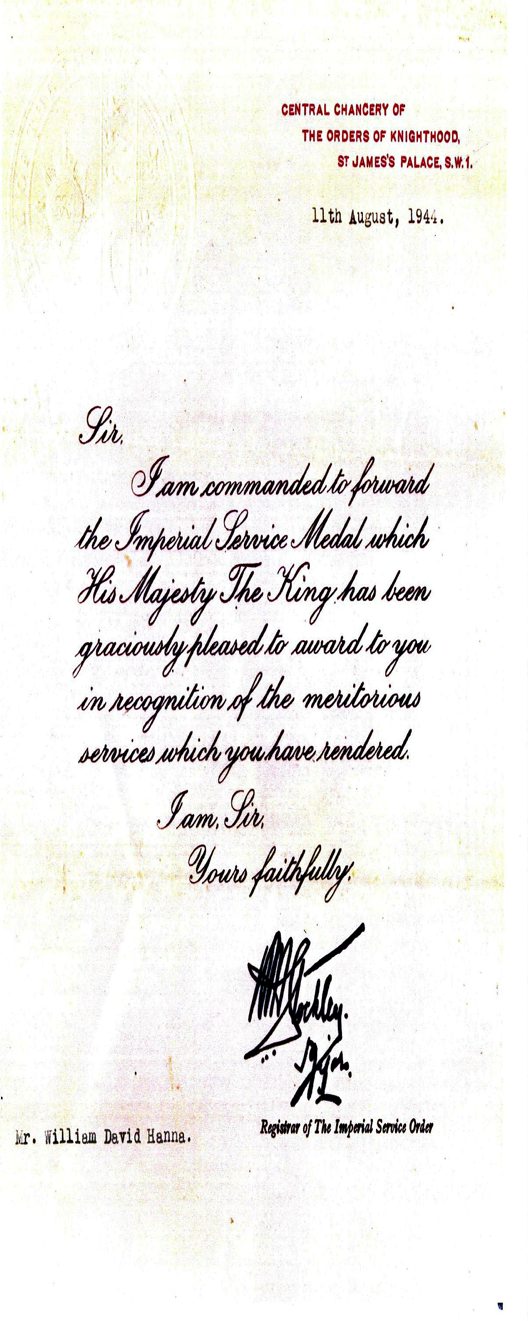
Awarded the Imperial Service Medal on 11 August, 1944 from the King of England in recognition of the meritorious services rendered.
Appointed as a Justice of The Peace 1946
Death:
Died 10 December 1953 at 71 Rosebery Avenue, Rosebery NSW.
* * * *
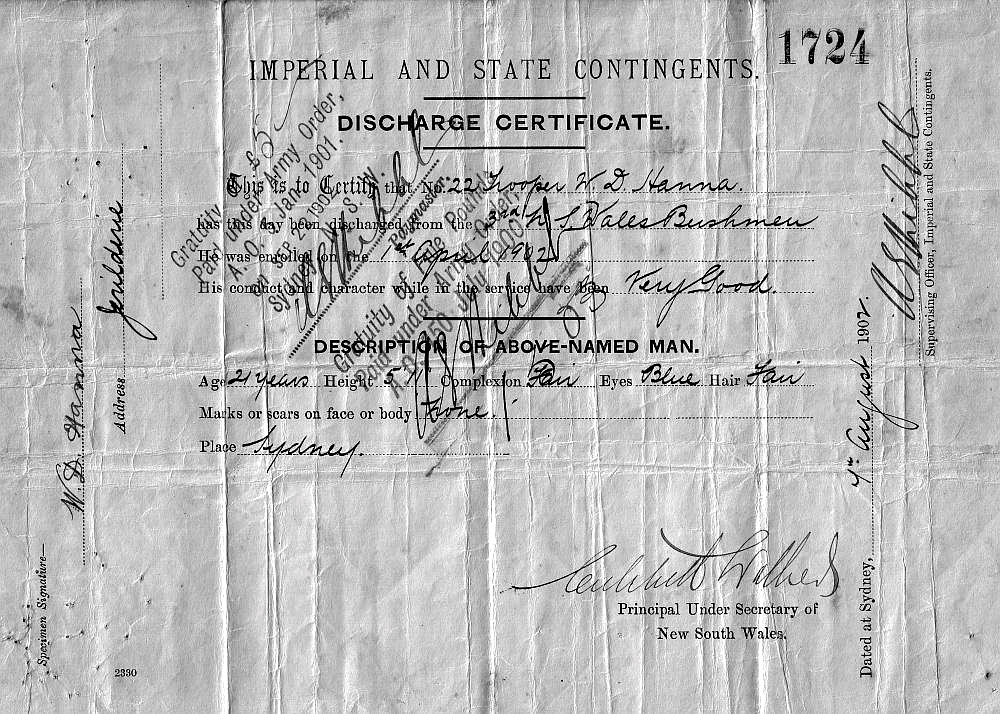
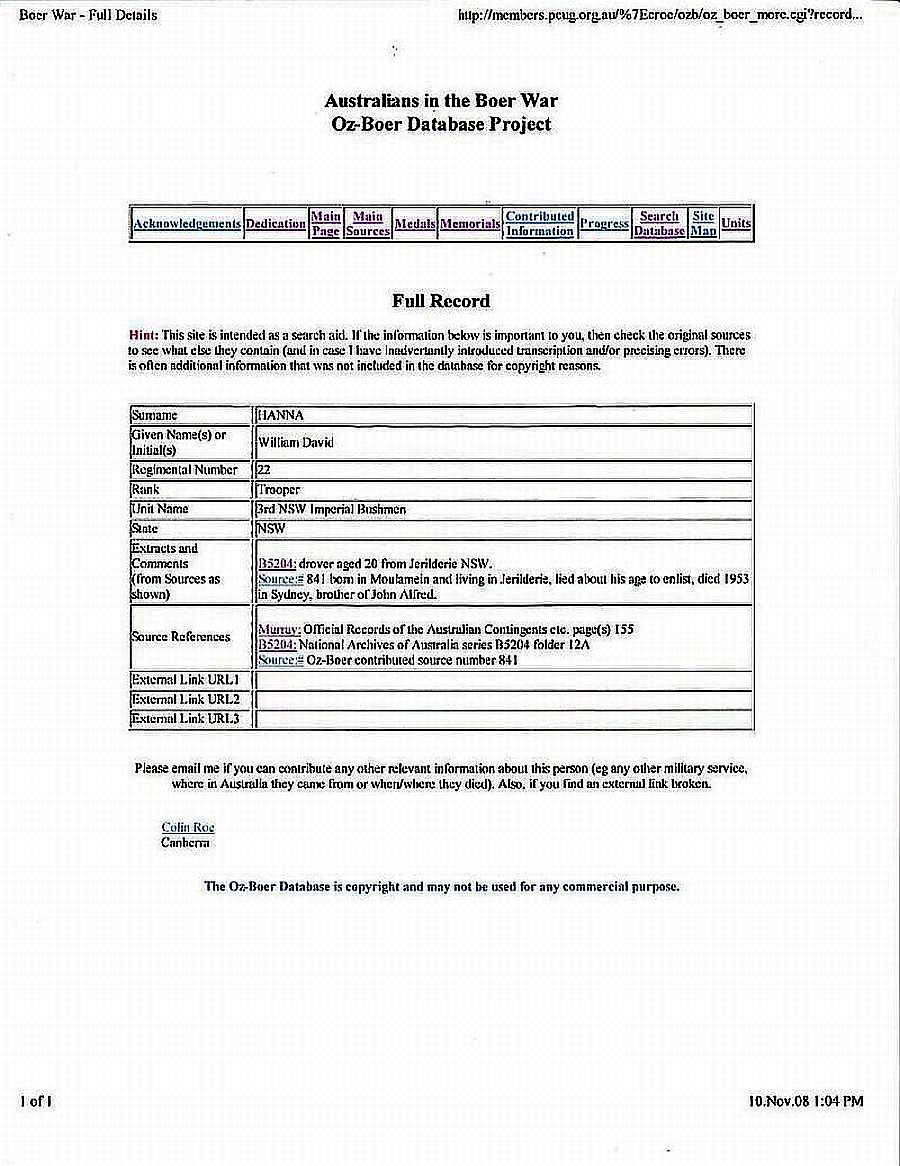
Trooper William David HANNA – 22 – 3rd NSW Imperial Bushmen- Boer War 1902
In 1902 William David HANNA then aged 18 enlisted in the Colonial Army to fight against the Boers in South Africa.
William HANNA like so many other young men lied about his age stating he was 20 years old to get into the colonial army. He gave his occupation as “station hand” and was a Trooper in the 3 NSW Imperial Bushmen with the service number of 22.
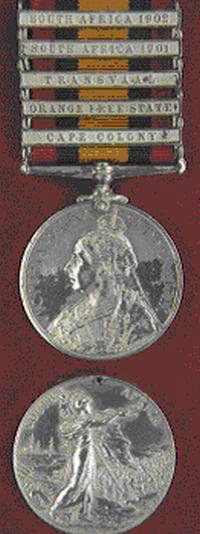
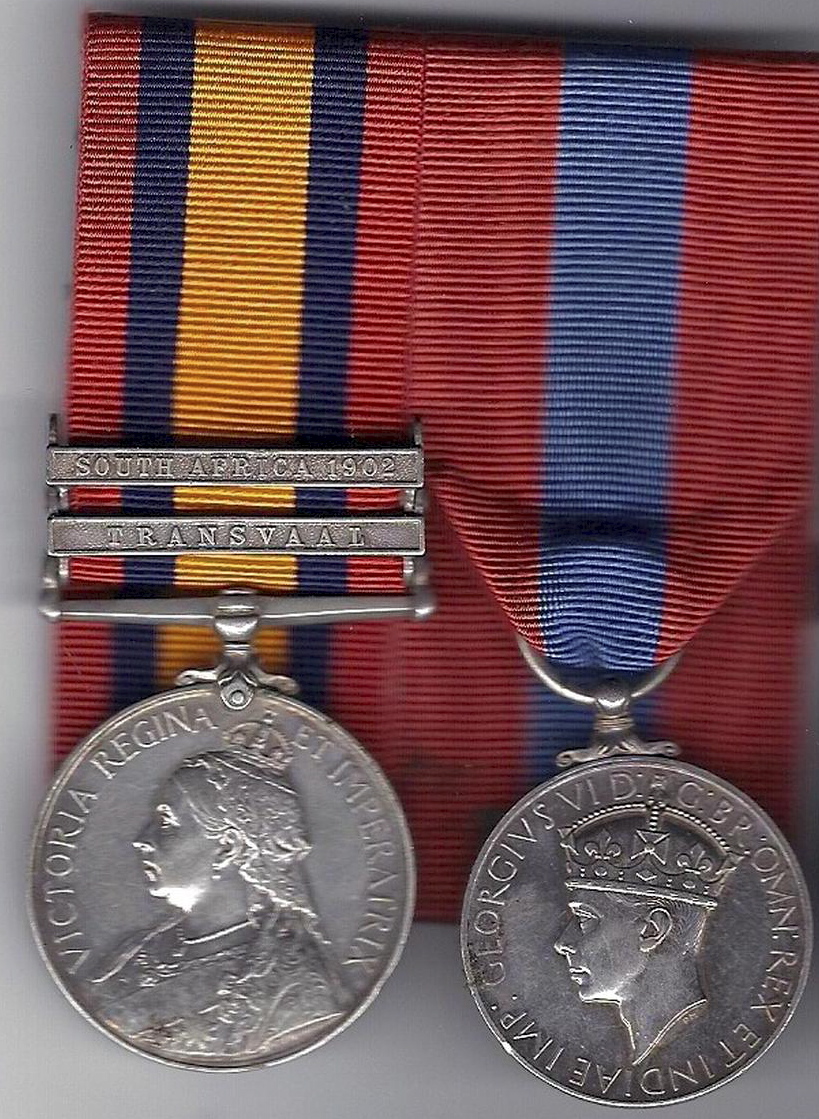
This contingent of soldiers, arrived in South Africa and when peace was declared, immediately returned to Australia. He was awarded the Queens South Africa Medal, with clasps serving at Belmont, Transvaal, Rhodesia and South Africa, 1902.
Records of The 3rd New South Wales Imperial Bushmen gave the following information:”
In January 1902 a new squadron for the Regiment was formed in Cape Town from Australians already in the country, as was another squadron in February. This brought the strength of the regiment to 500.
About 1,000 men in total are thought to have served in the unit, although it had no more than 600 at any time.
During May 1902 some of the men whose time had expired returned to Australia in the transport Ansonia but many more, and all the officers, volunteered for further service.
200 Victorian Riverina Bushmen, raised by J. S. HORSFALL, reinforced those who stayed. (I believe that his future brother-in-law, John Joseph HORGAN were part of this 200 being from the Riverina Area).
William’s older brother John Alfred HANNA was also serving in South Africa at the time with the 3rd Battalion Australian Commonwealth Horse (NSW)
The regiment spent the remainder of its time serving with William’s column in west Transvaal, until peace was declared in June 1902.
On 12 July 1902 the regiment sailed from Durban, Natal, for Australia, on board the transport Drayton Grange arriving in Sydney on 11 August”
Boer War Discharge
Boer War Record
Boer War Medal
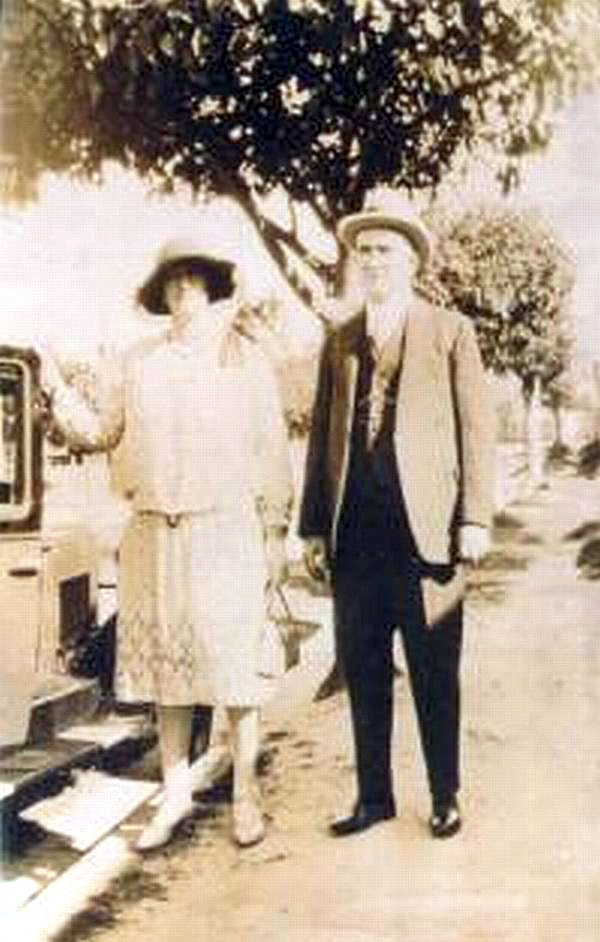
William David and Jessie HANNA taken shortly before Jessie’s death in 1938. They were on their way to a wedding.
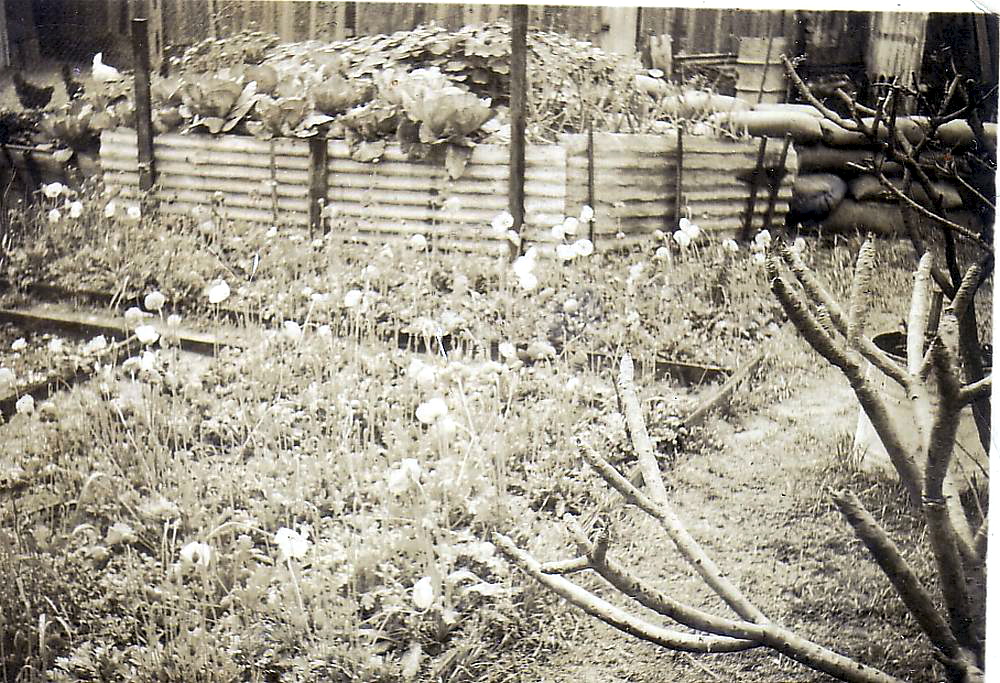
William David HANNA’s backyard garden at 71 Rosebery Ave, Rosebery. Note the air raid bunker that was built during the war years when Sydney was under threat. Photo taken circa early 1950’s.
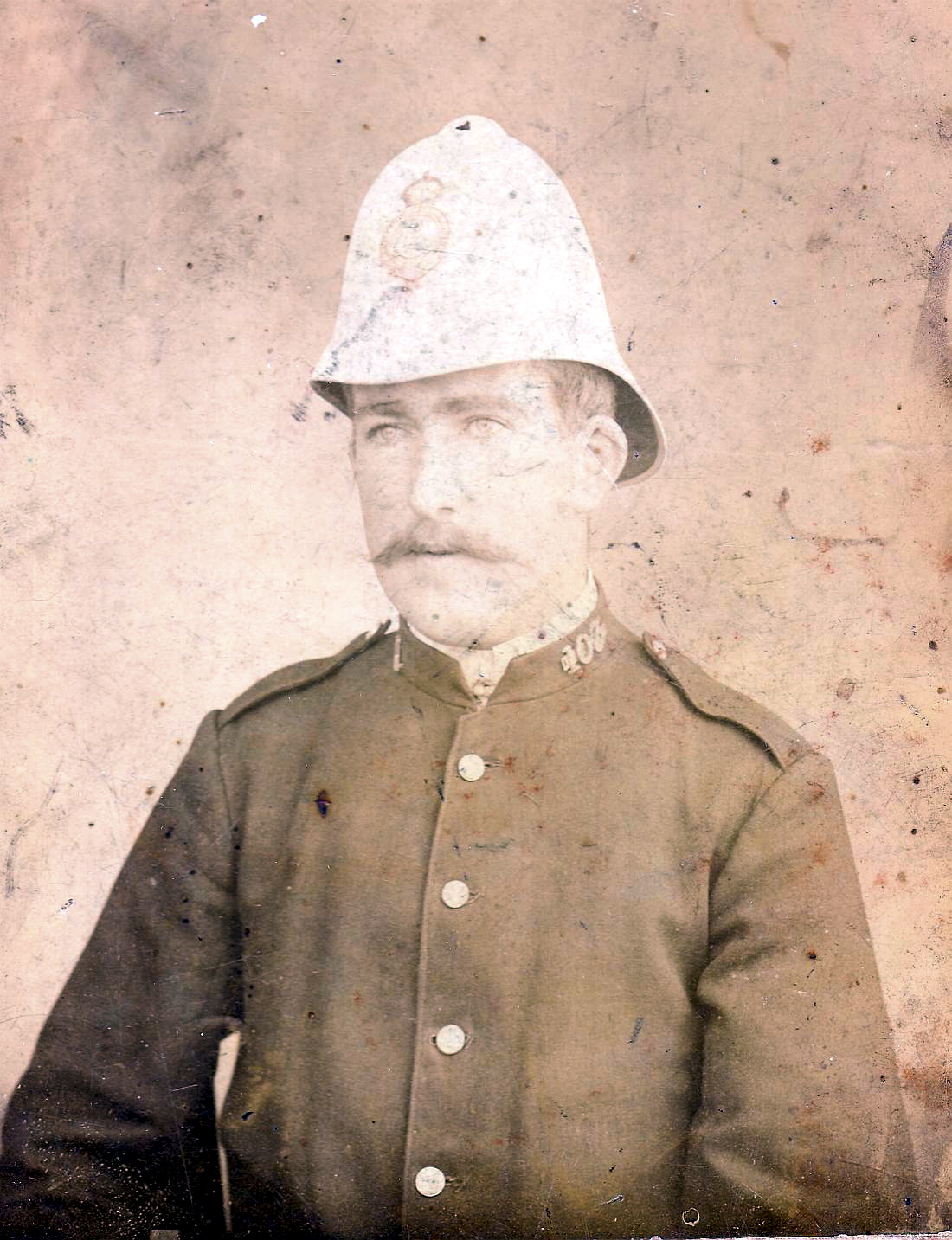
A Studio Photo of Constable William David HANNA taken 1n 1907/1908.
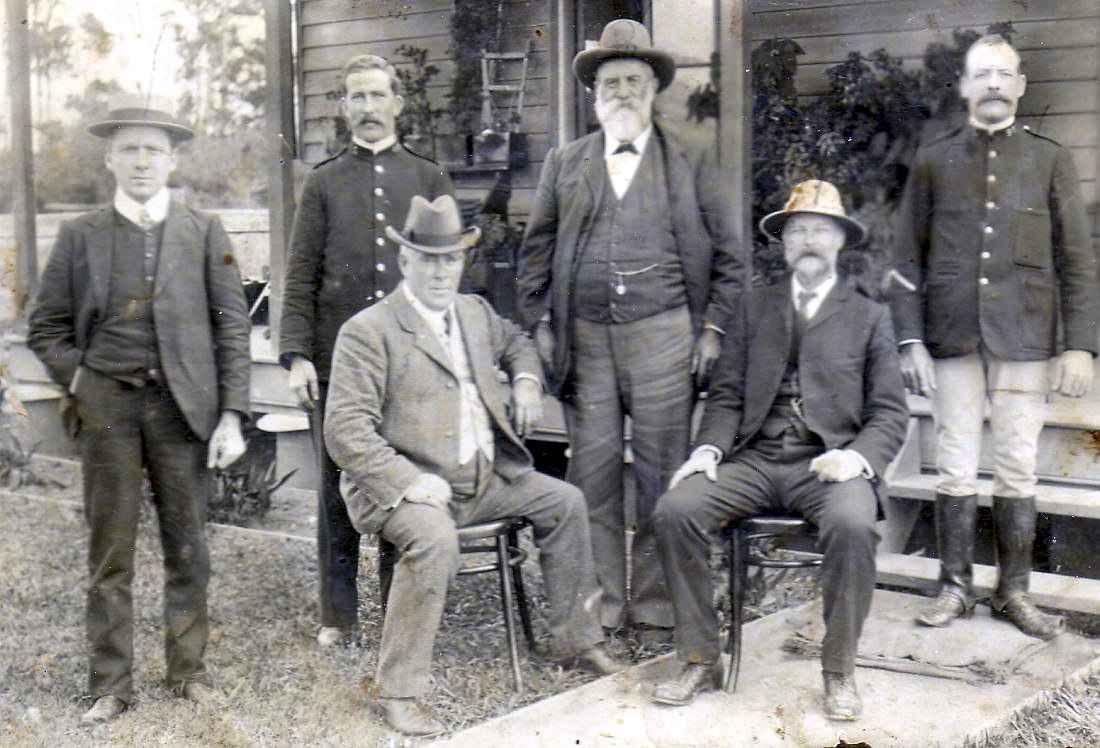
William David HANNA (second from left standing) aged 22. Photo taken in 1906 when he was stationed at Mullumbimby Police Station NSW.
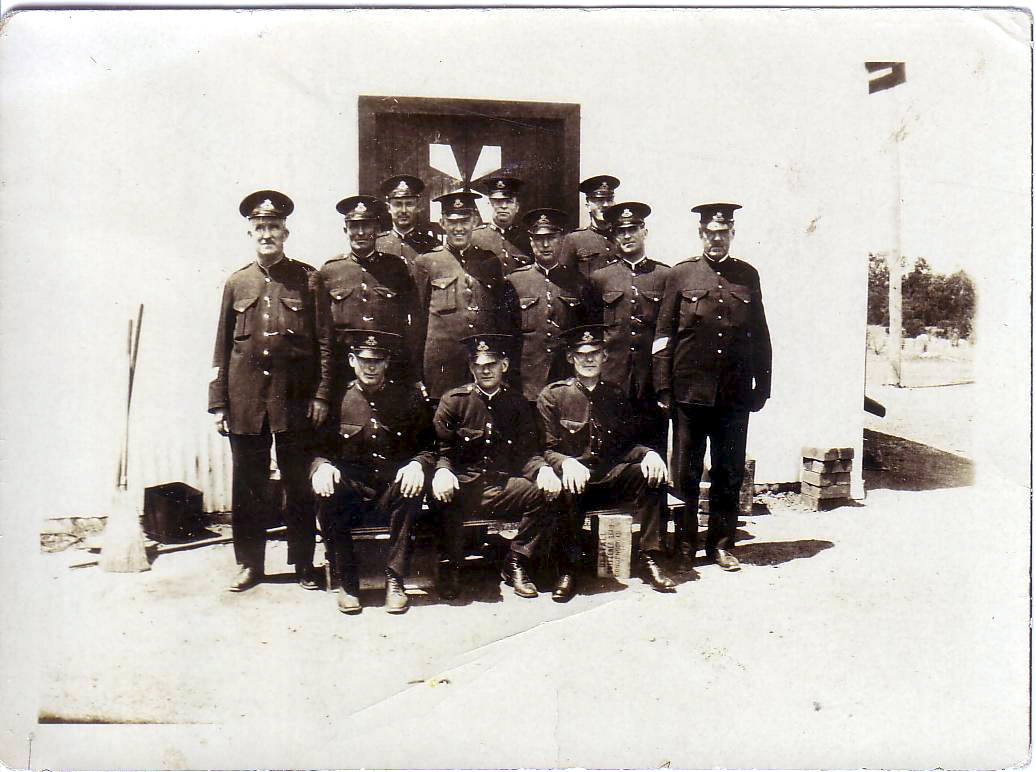
Sergeant William David HANNA (standing middle row on left) taken at North Rothbury, Hunter Valley NSW during the infamous coal miners strike on the 1930’s.
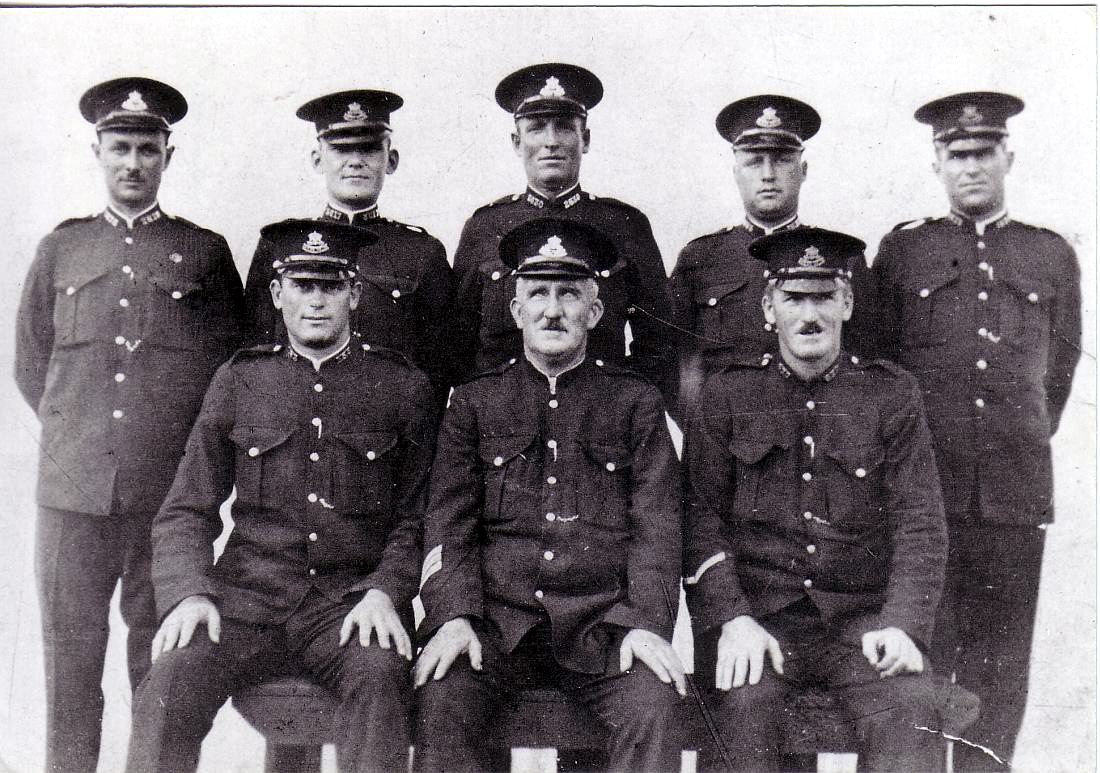
Taken during Coal Miners strike during 1930’s Hunter Valley NSW. William David HANNA seated in the middle of the front row.
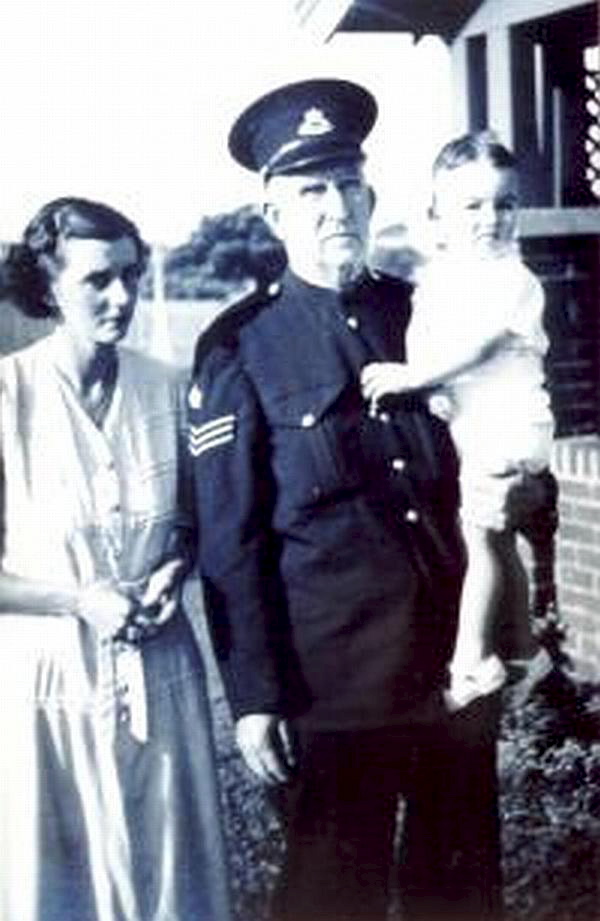
Crown Sergeant William HANNA, his daughter-in-law Elva MOORE with baby Gordon in about 1944
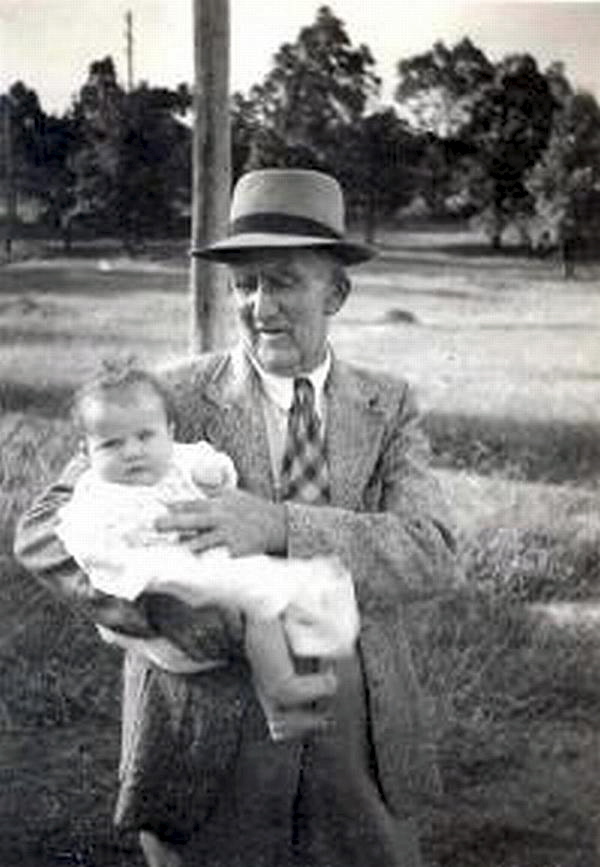
This is William David HANNA during 1947. He is holding his newly born grandaughter Yvonne, the daughter of Grace (nee HANNA) and Douglas BRENNAN.
This is the letter advising William David HANNA that he had been awarded the Imperial Service Medal.
These are the medals awarded to William David HANNA. His 1902 Boer War service medal on the left and his Imperial Service Medal on the right.
Sydney Morning Herald (NSW : 1842 – 1954), Friday 11 December 1953, page 20HANNA, William David.-December 10. 1953, at his residence, 71 Rosebery Avenue, Rosebery ( late of N.S.W. Police Dept.). Relict of the late Jessie Hanna, beloved father of David, Grace ( Mrs. D. Brennan ) and Marie, and dear uncle of Neville Tamlyn, aged 70 years.At rest.11 Dec 1953 – Family Notices – Trove
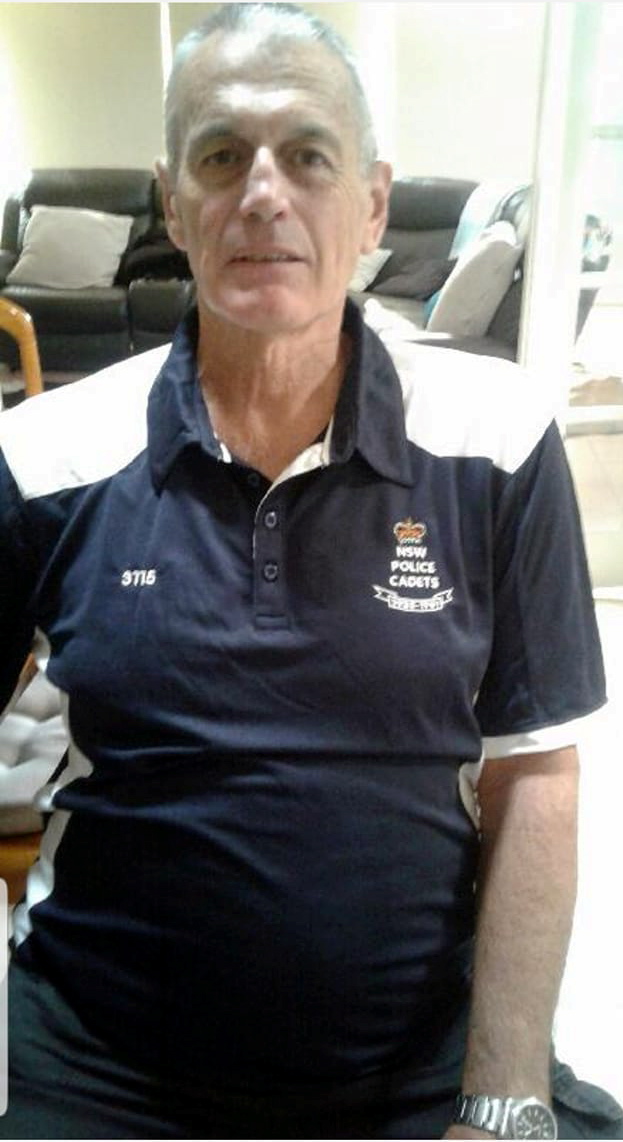
Christopher Noel MANNING
29/05/2025
Christopher Noel MANNING
AKA CHRIS
Late of Wallsend, NSW
NSW Redfern Police Academy Class # 153
NSW Police Cadet # 3115
New South Wales Police Force
Regd. # 17449
Rank: Commenced as NSW Police Cadet on Monday 3 February 1975
Probationary Constable – appointed 14 January 1977
Constable – appointed 14 January 1978
Constable 1st Class – appointed ? ? ?
Senior Constable – appointed 14 January 1986
Sergeant 3rd Class – appointed ? ? ?
Sergeant 2nd Class – appointed ? ? ?
Sergeant 1st Class – appointed ? ? ?
Final Rank = Senior Sergeant
Stations: ?, Lithgow HWP, ? , ‘A’ District HWP, Newcastle HWP – Retirement ( 6 August 2004 )
Service: From 3 February 1975 to6 August 2004 = 29+ years Service
Awards: National Medal – granted 15 November 1991 ( SenCon )
1st Clasp to National Medal – granted 6 April 2001 ( Sgt )
Born: Tuesday 14 January 1958
Died on: Monday 30 March 2020
Age: 62 yrs 2 mths 16 days
Cause: Cancer – Stomach & Gall Bladder
Event location: Home with family
Event date: ?
Funeral date: ? ? ?
Funeral location: ? ( Due to current Govt. restrictions of 10 persons at a Funeral due to the Cornona19 Virus Pandemic – this will be a Private Funeral )
Wake location: ? TBA ( Due to current Govt. restrictions of 2 persons only at a ‘Gatherings’, there won’t be an immediate Wake )
Funeral Parlour: Pettigrew Family Funerals – 02 4951 1166
Buried at: Cremated
Memorial located at: ?
CHRIS is NOT mentioned on the Police Wall of Remembrance *NEED MORE INFO
FURTHER INFORMATION IS NEEDED ABOUT THIS PERSON, THEIR LIFE, THEIR CAREER AND THEIR DEATH.
Deepest of condolences to his wife Julie and their boys Tiron & Nathan and to their extended family and friends.
Now out of pain, may you forever Rest In Peace mate.
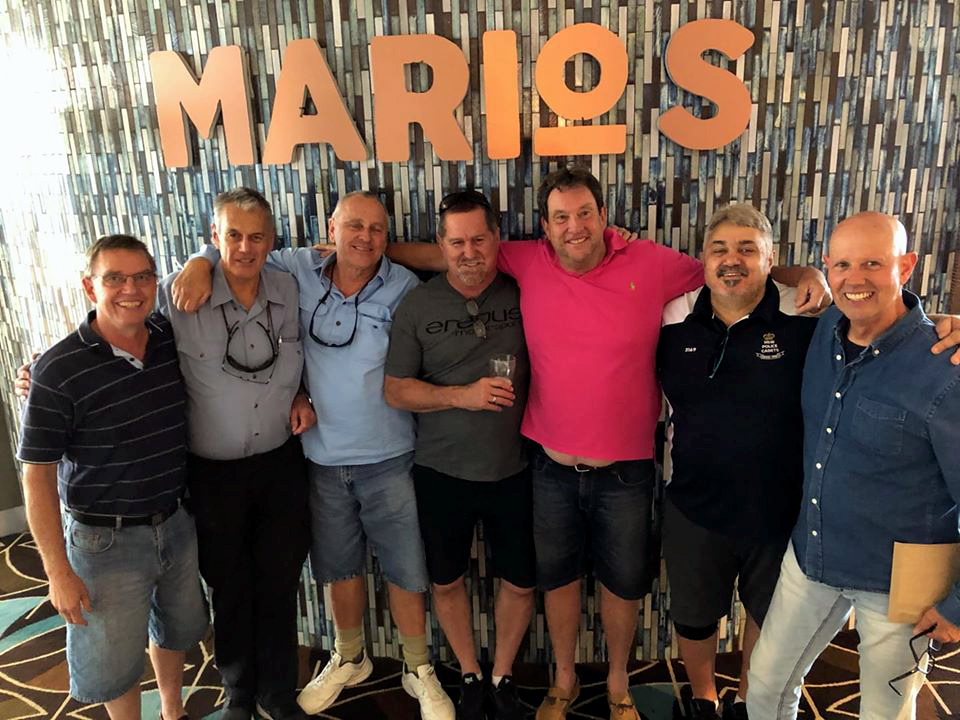
27 November 2019, the 1975 NSW Police Cadets had a luncheon for Chris Manning ( 2nd from left ) who is severely ill. A great day with food and drinks. Most drove between 2 and 3 hours for the special occasion. with ( L – R ) Rob Schwarz, Chris Manning, Jeff Sloane, Grant Duncan, Neal Carr, Charlie Dagostino & Ian Dawson, at Belmont 16s.
MANNING, Christopher Noel
Late of Wallsend
Died peacefully at home
30th March, 2020
Aged 62 Years
Dearly loved husband of Julie.
Proud Dad of Tiron, and Nathan.
Father-in-law of Kristal, and Jackie.
Besotted Pa of Xavier and Hudson.
Cherished brother, brother-in-law and uncle of his family.
A proud Dinosaur.
The family and friends of Chris are advised that His cremation has taken place privately at His request.
A Memorial Service will be held to Celebrate Chris’ Life at a later date.
Probationary Constable – appointed 18 January 1991
Constable – appointed ? ? ?
Constable 1st Class – appointed ? ? ?
Senior Constable – appointed ? ? ?
Sergeant 3rd Class – appointed ? ? ?
Final Rank = Sergeant ?
Stations: ?, Kogarah GDs ( 1988 ), Mounted Police Unit – State Planning Unit ( 1992 – onwards – still Serving )
Service: From? ? December 1988 to 10 October 2019 = 30+ years Service
Awards: No Find on Australian Honours
Born: Monday 11 October 1965
Died on: Thursday 10 October 2019 about 3.40pm
Age: 53 yrs 11mths 29 days. ( 1 day short of his 54th birthday )
Cause: Cancer – Stomach & Liver
Event location: Home with family
Event date: Thursday 10 October 2019
Funeral date: Thursday 17 October 2019 @ 10.30am
Funeral location: Lady of Fatima Catholic Church, 389 Port Hacking Rd, Caringbah, NSW
Wake location: TBA
Funeral Parlour: Olsens Family Funerals, 02 9545 3477
Buried at: TBA
Memorial located at: A pub at Bathurst, where Dick enjoyed a drink during the Bathurst Races each year, had a section of the Hotel renamed the ” Dick Martin Beer Garden ” in honour of Dicki.
DICK is NOT mentioned on the Police Wall of Remembrance *NEED MORE INFO
DICK IS NOT mentioned on the Sydney Police Centre Memorial Wall, Surry Hills – But should be ( by 2020 )
Funeral location: TBA
FURTHER INFORMATION IS NEEDED ABOUT THIS PERSON, THEIR LIFE, THEIR CAREER AND THEIR DEATH.
Passed away peacefully at home with his loving family by his side October 10, 2019.
Late of Sylvania.
Beloved husband of Trish.
Adored father of Ben and Daniel.
He will be sadly missed by all his family and friends.
Aged 53 Years
Dearly Loved By All Who Knew Him
Requiem Mass for the repose of RICHARD’S soul will be celebrated at Our Lady of Fatima Catholic Church, 389 Port Hacking Road, Caringbah on Thursday, October 17, 2019 at 10:30am
Published in St George & Sutherland on Oct. 16, 2019
8 October 2019
A ‘family‘ member of the Kogarah dayswas extremely ill and did not make the rest of the week.
Richard ‘Dicki’ Martin. Approximately 4 weeks ago, was not feeling well and was diagnosed with Stage 4 Stomach cancer and liver cancer. Dick is at home in palliative care.
You may all remember he went to the mounted unit, and is still attached to the State Planning Unit.
Gregor Dumbrell: Oh wow that is terrible. So sad to hear. Great guy. Haven’t seen him for a few years. Fellow 242 member. Thanks for sharing xx
David Draper: Gregor Dumbrell – good bloke. Another of our class
Mick Holmes: Really sad news, always a real character, liked by everyone, would like to get in contact, can anyone please PM me with a contact No.
Tracey Kearns: What terrible news for him and his family. Thinking of him x
Ian Logue: Sad, sad news, Richard was a real nice bloke to work the truck and the station with. Please keep us informed.
Greta Rae: That is very sad news, sending him all our love. X
Robert Gillespie: Dicky is a champion and doesn’t deserve this. Very sad news.
Kevin Stewardsen: Sorry to hear the news. Always a laugh with dick on the shift.
Margo Starr-Sizzle: Such sad news , one of the greats , thoughts to him and his family at this hard time
Mick Lee: Bloody Hell ????
Champion bloke to work with.????
Lee Howell: Saw him just over a week ago walking very slowly through the SPC. A bit bent, a bit slower but same cheek and laughter about a few things. Facing it unbelievably strong with a lot of the ‘it is what it is’ attitude and a laugh. Great guy and I like many just hope he is as comfortable as is possible. Tough on his mum as well, lost Dicky’s older brother when we were all teenagers. Not supposed to happen this way.
Garry Law: So sorry to hear that news. A great bloke and he was often my Reserve Constable. He had me enthralled one Night Shift telling me about his time working at Spendthrift Stud Farm in Kentucky and all the famous American racehorses he saw. We had some great young Police in those days and he was one of them.
Steve Papworth: That’s terrible news Dicky is one of the nicest guys you’d ever meet.
Brett Farragher: I am shocked and saddened by the news that Dickie is sick. I always wondered what happened to him. I always thought I would catch up to him again one day and talk about the old days. He was always such a good guy to be around and he made me laugh. I have some great memories of our time at Kogarah. Shitty, shitty news.
Ford Scarelane: Shit I only saw him the other week … a true gentleman… always had time for a chat …. that sucks big time …. fuck cancer!!!!
David Longfield#Toby Lindsay
Toby LindsayDavid Longfield that’s crap mate
Rebecca Carven: So sorry to hear this devastating news …. will pray for him and his family. Thank you for sharing xx
Da Vid Mudds: Such sad news, top bloke, loved working with Dicky in those Kogarah days, thoughts with him and his family.
Carl Reburg: Terrible news. Please pass on my thoughts if speaking with him. Groobs.
Gra Naps: That is terrible news. Thanks for passing this on. I have some great memories of working with him at Kogarah.
John Green: Sad to hear – such a short time from diagnosis to palliative…! I remember Dick well from Kogarah days and then the Mounties when I was in City East and OSG. Thanks for sharing the information.
Lee Greenstein: Sorry to hear this need I know the name can’t put s face to him any one got any pics of him
Gregory Moose McMahon: Thanks for the information. I contacted Craig MELVILLE. He is aware. He has spoken to Trish. But does not want to bother here too much. If you get any more news please let everyone now. Ta.
Sandra Parriott Thanks for the update.
John Elfes: Terrible news, please keep us posted.
David Draper Very sad news. Good bloke.
Sadly Dicki passed away during the evening of Thursday 10 October 2019.
Now at peace and out of pain.
May Trish, family and friends accept our condolences.
Dicki also played in the Cronulla / St George Police Football Team in years gone by.
Gregory Joseph JENSEN
29/05/2025
Gregory Joseph JENSEN
New South Wales Police Force
Redfern Police Academy – Class 203
( 1st Class at the new Goulburn Police Academy )
Regd. # 21470
Rank: Commenced Training at Redfern Police Academy on Monday 7 May 1984
Probationary Constable – appointed 20 July 1984
Constable – appointed 20 July 1985
Constable 1st Class – appointed ?
Detective- appointed ? ? 1991
Senior Constable – appointed ? ? ?
Stations: Regional Crime Squad, Nth West ( Parramatta ), ?
Service: From: 7 May 1984 to To: ? ? ?
Awards: No Find on Australian Honours system
Born: Thursday 25 July 1963
Died: ? ? ?
Cause: Stomach Cancer – H.O.D.
Funeral date: ?
Funeral location: ?
Grave site location: ?
FURTHER INFORMATION IS NEEDED ABOUT THIS MEMBER
GREG IS Mentioned on the Police Memorial Wall, Sydney Police Centre, Surry Hills as of October 2022
25 October 2022
This afternoon, in a quiet and deeply-felt ceremony at the Sydney Police Centre, another thirteen names were added, and the memories of another thirteen dedicated NSW Police Force employees were honoured, at the NSW Police Force Service Memorial:
It took up 451 hearing days, heard from 902 public witnesses and cost an estimated $64 million. Malcolm Brown reports on the Wood royal commission, 10 years on.
It began on June 15, 1995, when an unnamed Annandale detective jumped to his death from the seventh floor of a building, apparently through fear of the Wood royal commission. The detective’s suicide was followed by those of Ray Jenkins, a dog trainer (July 10), and Inspector Robert Tait, the acting patrol commander at Narrabri ( March 29, 1996 ). Nineteen days later a former Wollongong alderman, Brian Tobin, gassed himself.
On May 8 the same year, Peter Foretic gassed himself the day after giving evidence about paedophilia. On September 23, Detective Senior Constable Wayne Johnson shot himselfand his estranged wife after being adversely named in the royal commission. On November 4, David Yeldham, a retired judge about to face the royal commission on questions of sexual impropriety, killed himself. A month later Danny Caines, a plumber and police confidant, committed suicide at Forster, on the North Coast.
Altogether, 12 people enmeshed in the Wood royal commissiontook their own lives. Scores of others were so profoundly affected by proceedings that their supporters and families believe it shortened their lives. A former detective, Greg Jensen, suffered a recurrence of the stomach cancer that ultimately ended his life, while another former detective, Ray McDougall, who faced the threat that commission investigators might expose his extramarital affair if he did not co-operate, succumbed to motor neurone disease.
There is no doubt that the Royal Commission into the NSW Police Service, headed by the Supreme Court judge James Wood, purged the force of a rollcall of rotters. A total of 284 police officers were adversely named, 46 briefs of evidence were sent to the Director of Public Prosecutions and by 2001 nine officers had pleaded guilty to corruption offences and three not guilty. Seven police officers received jail sentences, including the former Gosford drug squad chief Wayne Eade and a former chief of detectives, Graham “Chook” Fowler.
Several high-profile police ended their careers in disgrace, including Ray Donaldson, an assistant commissioner, whose contract was not renewed, and Bob Lysaught, the commissioner’s chief of staff, whose contract was torn up. Charges against 14 officers were dismissed because of irregularities in search warrants and their execution.
That left the question of what to do with police who were on the nose but who could not be brought to account by normal means. The solution was the creation of section 181B of the Police Service Act, under which the police commissioner could dismiss an officer on the basis of what had come out of the royal commission. Section 181D allowed the police commissioner to serve an officer with a notice indicating that he “does not have confidence in the police officer’s suitability to continue as a police officer”. The officer could show cause as to why he should be retained, and if dismissed could appeal to the Industrial Relations Tribunal.
In the wake of the two legislative changes, 380 officers were targeted for dismissal or internal investigation. By March 1998, 19 police officers had been dismissed under section 181B and three under 181D. Another had been dismissed under a separate provision of the act, 14 had resigned, four had been medically discharged and 15 had been given performance warning notices. Others were under consideration, and as the Police Integrity Commission – a legacy of the royal commission which became a permanent watchdog – has demonstrated, even officers who had been corrupt many years before were not necessarily in the clear.The former independent MP John Hatton, who was instrumental in setting up the royal commission, said he thought the Police Integrity Commission was the royal commission’s “greatest achievement”. The Child Protection Enforcement Agency, which launched a purge of sex offenders, is another positive legacy of the royal commission.But 10 years on, was the exercise worth it?To some there were considerable benefits. Some appalling malpractice – known as “process” or “noble cause” corruption – prompted Wood to wonder at one point about the quality of a lot of police evidence he had accepted over the years.Despite this, many officers still believe the royal commission was too puritanical. They claim the investigators, not able to grapple with the really big issues, jumped on anything they could: “They had to have runs on the board,” says Michael McGann, who as a policeman in 1984 participated in the so-called Kareela Cat Burglar case, in which police used mace on an uncooperative thief and sex offender. To some critics this treatment did no serious harm and only required a word of caution. But under the spotlight of the royal commission 12 years later, it ended the careers of high-flying police such as John Garvey, Brian Harding and Steve York. A decade later, Harding works in corporate security but insists that the real sting was that the investigators had fabricated evidence. When that finally came out, he says, the group received a confidential settlement, but it did little to redress the feelings of outrage.
Another former policeman, Dr Michael Kennedy, says the commission was a political response to the police commissioner, Tony Lauer, bringing about the downfall of the then police minister, Ted Pickering.
The attorney-general, ministry and judiciary took little responsibility for the state of the force, Kennedy says, while the responsibility of the police rank-and-file grew to “the size of a Pacific driftnet”. “I don’t think the royal commission contributed anything to the reform process except to provide a template for double standards,” he says.
“Chook Fowler put $200 into his pocket from Louis Bayeh. Chook was a lazy, good-for-nothing drunk. But he was put into the same category as Ray Williams and HIH.”McGann says that against the string of petty corrupt activities uncovered, “you have to look at what the government did and did not do with gambling and vice, over the decades. There have been direct links to Parliament for 50 or 60 years. That is hypocrisy.”The critics’ view is that the royal commission has left a demoralised police force, tarnished and rudderless, with limited operational effectiveness and the problem of corruption unsolved. Seven police officers have taken their lives since 2001, including two this year.”It highlights the fact that the structure no longer takes in the needs of the NSW police force,” says Mike Gallacher, the Opposition police spokesman, and a former internal affairs police officer. Gallacher believes, as does the NSW Police Commissioner, Ken Moroney, that the tentacles of corruption no longer spread to embrace entire squads or larger units. But it does not prevent low-level incidents of corruption and there are continuing nests of corruption.In its most recent report, the Police Integrity Commission said it had undertaken 21 major investigations in 2005-06. These dealt with extortion, theft, unauthorised disclosure of confidential government information and perverting the course of justice, police brutality and the handling of $250,000 stolen from automatic teller machines. The then police integrity commissioner, Terry Griffin, said there had been 51 investigations in the 12 months, compared with 44 in 2004-05, and the 1141 written complaints represented a 15 per cent increase. Moroney says all these reports are disappointing, but one of the significant statistics was the number of police who were reporting on other police. “You go back a decade and the number of informants who were police was 5 to 10 per cent,” he says. “In the Ombudsman’s last report, that figure was 49 per cent.”The mechanism for dealing with internal complaints has been expedited: “I have not been afraid to use a section 181D notice,” Moroney says.He believes there is a different mentality in the force. A video of the royal commission had been shown at a recent reunion dinner of the old criminal investigation branch. “It is part of our history. But the interesting thing is that when Chookie came onto the screen, everyone booed. That was a signal to the Fowlers and the Eades that those found to have acted corruptly would not be accepted.”
However, Moroney accepts that corruption is not a thing of the past. “In the contemporary period, there are huge monies to be made from the illicit drug environment. You are talking in some cases of millions of dollars. It is the greatest menace in society today. And the greatest menace to officers is drug money. That is why rotation of officers out of specialist squads on a regular basis is important.”Taking over as commissioner five years ago, he had brought a low-key “Uncle Ken” influence, sorely needed, and had had to balance the principles of police accountability against the public demand for law and order, and the task has been awkward.A senior counsel told the Heraldthis week that the focus on integrity, scrutiny of professional standards and attacks by defence lawyers meant that talented police prepared to do the dirty work were deterred. “In the old days the best and the brightest went into plain-clothes,” he said. “But when the police perceive that when they have to go the extra yard [to get convictions], they are crucified – ‘Why should I go to plain-clothes when I can just get some uniform job with a 12-hour shift, and a second job?”‘Clive Small, a former assistant commissioner who set up crime agencies and established the child protection unit, says that after so many detectives were disgraced in the royal commission, the police force sought to take the spotlight off detectives and put more of the onus of responsibility for crime control onto local area commands. Crime agencies had a continual battle to keep up to strength. Regionalising responsibility for crime control reflected a lack of understanding. “A lot of crime spreads through the metropolitan area, across the state and across the nation,” he says.Kennedy, now a university lecturer, says the “business model” approach is incompatible with good police work. “We cannot expect police to behave like they are in the private sector, where competence is measured in terms of productivity,” he says.Kennedy attended the recent CIB reunion dinner and sat at a table with former drug squad detectives who remained friends of Wayne Eade. He takes issue with Moroney‘s claim that people at the dinner made catcalls when Fowler came on screen. “No one supported Chook,” he says. “But the animosity of the crowd was directed straight at Justice Wood and his commission.”Clive Small, who was also at the dinner, says: “I think it is really a matter of interpretation who they were booing. There were things the royal commission did not take care about. There was a lot of collateral damage. And the implementation [of its recommendations] has been pretty ordinary.”
CRUSADER WHO MADE THE CALL
JOHN HATTON well remembers the audience on May 11, 1994, when he made his speech calling for a royal commission into the NSW Police Service. MPs were listening, of course, but it was a gallery above him, packed with the “top brass of the police force – the commissioner himself, the deputy commissioner, superintendents – they were an intimidating force on the Parliament”.
“They thought they could stare down the Labor Party support for my motion,” Hatton, now retired, says. “It was probably the best indicator of the way in which the police force thought they could control the agenda.”
Hatton won the day, putting paid to a claim by then police commissioner, Tony Lauer, that “systemic corruption” was “a figment of the political imagination”. Hearings started on November 24, 1994, and Justice James Wood delivered his final report on August 26, 1997.
Ten years later, Hatton believes he was vindicated. He says Wood was “the right man” to head the commission and the recruitment of interstate police was crucial, along with the decision to use phone taps and surveillance.
The 11 volumes of material Hatton gave the royal commission had been accumulated over 14 years, he says, from the time he had first spoken up. He had received information on illegal gambling, drug trafficking and police involvement with the mafia.
There had been earlier moves to address police corruption, including inquiries by the Independent Commission Against Corruption, but these had only scratched the surface. “I can remember on one occasion I reported a death threat which had to do with the McKay murder in Griffith and 48 hours later the bloke who had given the information was threatened by a shotgun at his door in Queensland,” Hatton says.
The royal commission came into being because Hatton and other independent MPs held the balance of power in Parliament. The Labor Party may have had high public motives, but also saw a chance to attack the Fahey government. Labor stipulated that an inquiry into police protection of paedophiles, previously in the hands of the ICAC, become part of the royal commission.
The process of gathering information was helped greatly by Trevor Haken, a detective who became an informer and covert investigator as part of a deal to avoid being prosecuted himself.
Hatton says Haken‘s entry was “out of the blue”. Though useful, in the long term it had had a detrimental effect on the fight against corruption. Living in fear and watching his back, Haken had provided “the greatest disincentive for someone coming forward to finger corruption in the system”.