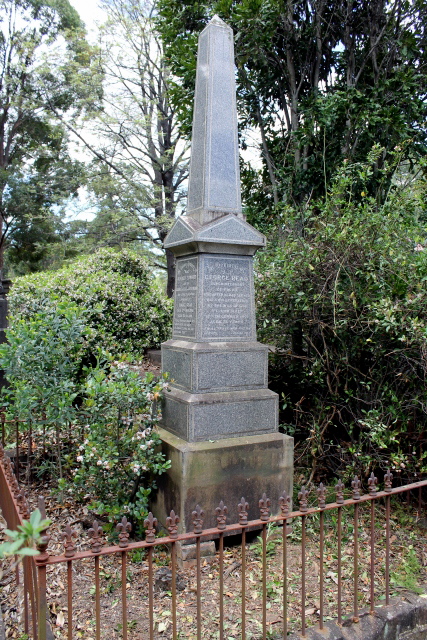
Arrived in Sydney from London Police – 1855 as the Officer In Charge of the original Police detachment raised in London to form the nucleus of NSW Police
Officially joined NSW Police – Saturday 13 January 1855
Sub-Inspector – appointed ? March 1862
Inspector – appointed 1 January 1875 ?
Superintendent – appointed 1 January 1875 ?
Superintendent 1st Class – appointed 1 January 1885
acting Inspector General – 23 February 1888
Final Rank = Superintendent 1st Class
Stations: London Metropolitan Police, Sydney Metropolitan Police – Death
Service: From 13 January 1855 to 12 December 1901 = 46 years Service
At the time of his death he was the oldest serving Policeman in New South Wales.
1855: Arrived in Sydney with fellow London Police Officer SAUNDERSON who was later to become Superintendent at Bathurst District. Both READ and SAUNDERSON were part of an original detachment raised in London to form the nucleus of the present Force. READ was the Officer in Charge of the detachment, SAUNDERSON was his second in charge and joined the NSW Police.
1875: READ was promoted to Superintendant
1888: Performed the duties of Inspector General in the absence of Inspector General FOSBERY who was absent from New South Wales for some months.
April 1900: Granted 9 months leave but was extended.
12/12/1901: Died at his residence 507 Dowling St, Moore Park. Among the many senior members of the NSW Police mourners was Inspector General FOSBERY and Superintendent SAUNDERSON, Bathurst.
It would know appear that Superintendent SAUNDERSON with whom READ arrived in 1855 may be the oldest serving NSW Police Officer at the time in 1901.
George was married twice in Sydney. His first wife died 1873 and they had 4 children. He married again in 1875 and had 5 more children. His last born was a daughter in 1886 when he was 58 years old.
Spanning over 5 levels, this updated registered 10 room boarding house with approval for a maximum of 20 occupants offers single, double & extra-large rooms, some with balcony’s and bathrooms & city skyline views. A sought after and rare find with consistent income stream and strong growth investment opportunity.
Features include large paved courtyard, communal kitchen, dining, separate living areas and a rear pedestrian lane.
Set within a fine pocket of Surry Hills and moments from famed eateries, Moore Park, Centennial Park and transport.
507 South Dowling St, Surry Hills, NSW 2010 ( cream building )
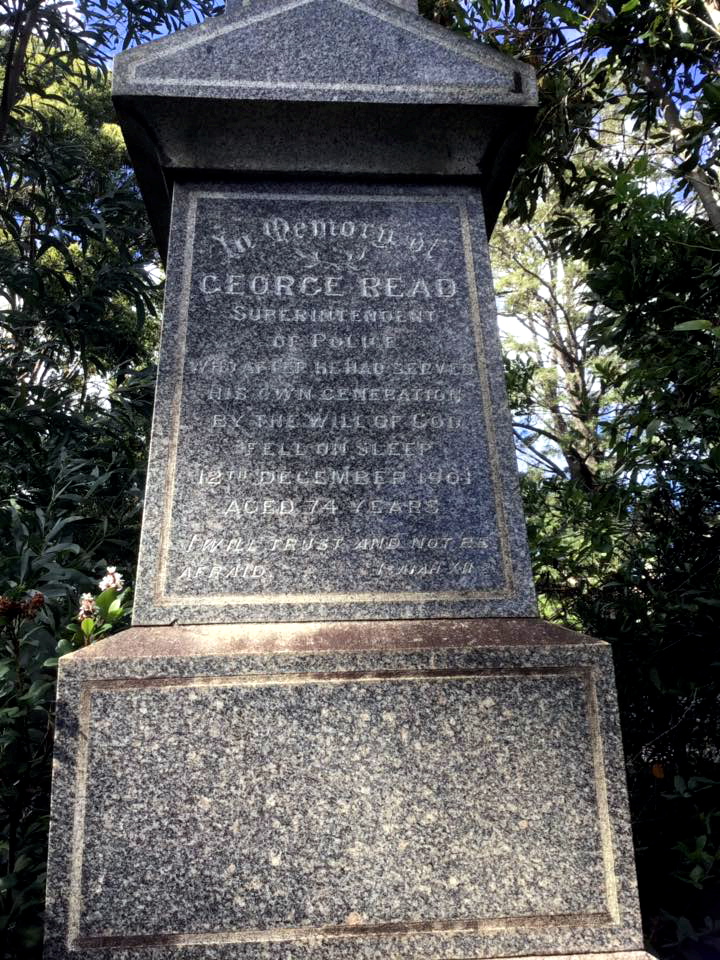
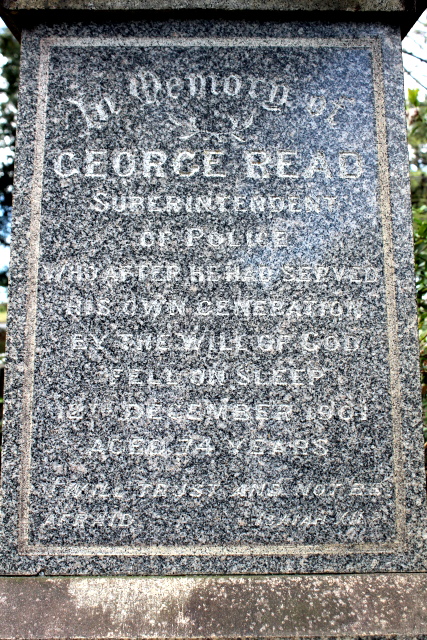
A memorial tablet to the memory of the late Superintendent George Read has been placed in the Bourke-street (Sydney) church by the officers and men of the police force.
The ceremony of unveiling the tablet took place on Sunday night ( 24 December 1905 ) in the presence of a large congregation; which included a number of officers and members of the police force.
An address in appreciation of the deceased, who was a member and trustee of Bourke-street, was delivered by Rev. J. W. Collier.
The late Superintendent Read was the honoured father of Rev. George Read of the Homebush Circuit.
Sydney Mail and New South Wales Advertiser (NSW : 1871 – 1912), Saturday 11 January 1902, page 75
Police Promotions.
The Executive Council on Tuesday approved, on the recommendation of the Inspector-General of Police, of the following police promotions : —
Superintendent Thomas Garvin (2nd class) to be 1st class from December 13 last.
Superintendent Nicholas Larkins (3rd class) to be 2nd class from July 1 last.
Superintendent Martin Brennan (3rd class) to be 2nd class from December 13 last.
Acting-Superintendent Stephen J. Cotter, appointment to that rank confirmed, and to take effect from December 13 last.
Sub -Inspector Isaac Morrow (1st class) to be Inspector from December 13 last.
Sub-Inspector John S. Clark (2nd class), drill instructor at the police barracks ( Belmore Barracks ? ), to be sub-inspector 1st class, from July 1 last.
Acting Sub-Inspectors A. A. Hojel, A. A. Sykes, H. Trenchard, J. McVane, and Thomas Kendall (storekeeper), appointments confirmed to the rank of sub-inspector from July 1 last.
Superintendent Garvin takes the position left vacant by the death of Superintendent George Read.
Australian Town and Country Journal (Sydney, NSW : 1870 – 1907), Saturday 21 December 1901, page 26
Superintendent Read.
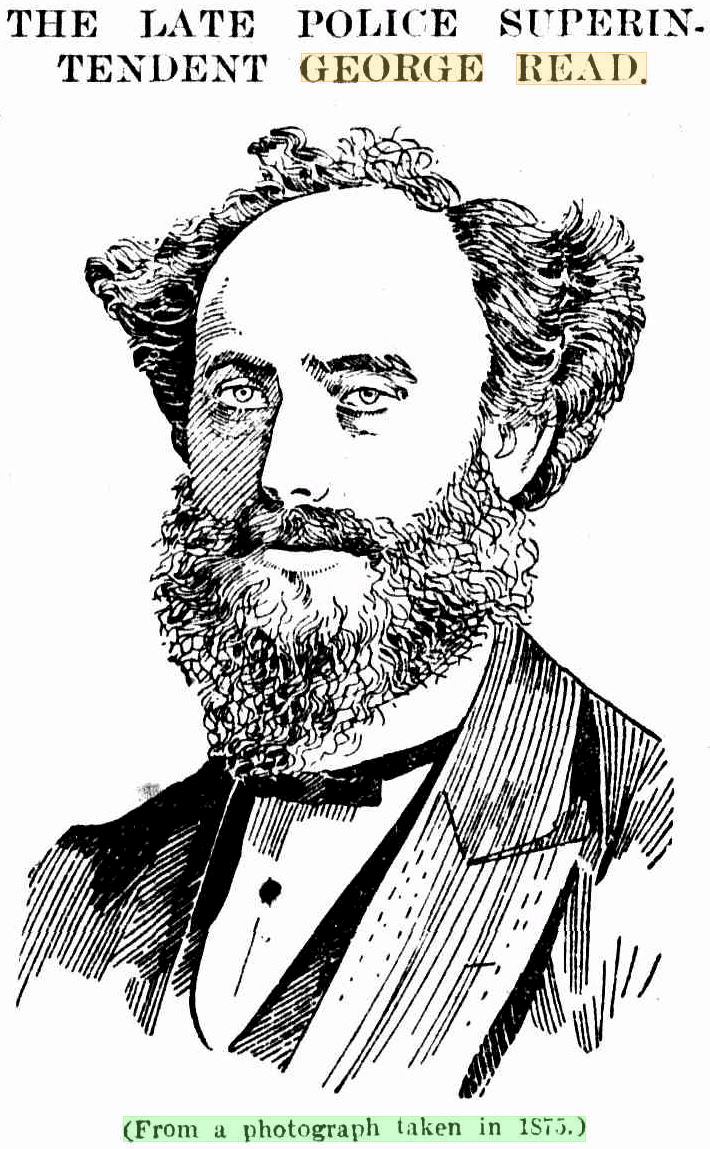
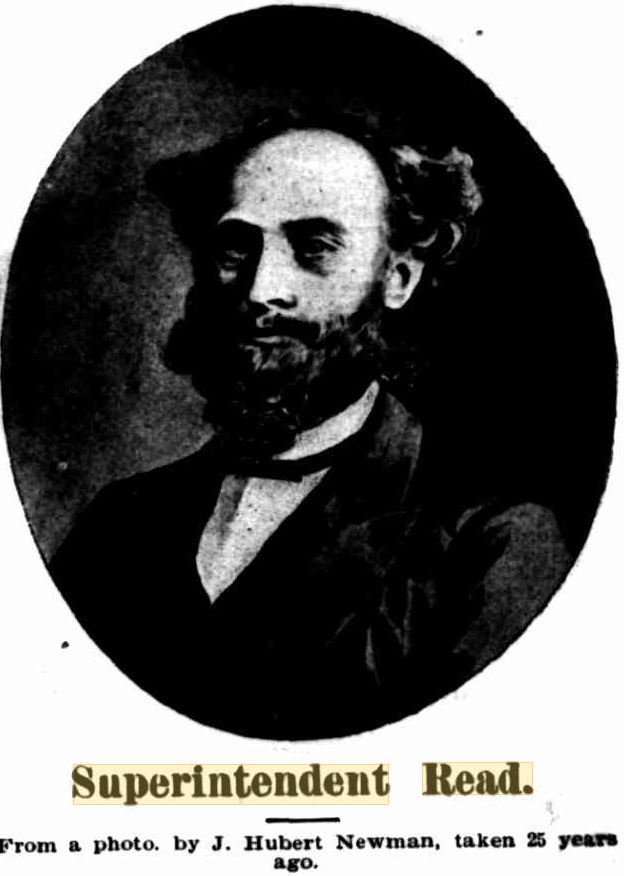
The oldest policeman in New South Wales, as far as length of service is concerned, died on December 12, when Superintendent George Read, who for over a quarter of a century controlled the metropolitan district, breathed his last at his residence in Dowling-street, Moore Park. The end was not entirely unexpected by either his family or his colleagues, for Mr. Read had been in ill-health for the past six or eight months, and it was generally recognised that the end of his useful career was at hand. The deceased gentleman shared with Superintendent Saunderson, of Bathurst, the distinction of being, as stated, the oldest policeman in this State, and of the two Mr. Read held the senior position. Both officers came to New South Wales in the fifties, in a detachment of police who had been engaged in London, and who formed the nucleus of the present force. Of this detachment Mr. Read came out as officer-in-charge, having had several years’ experience previous to that in England. He and Superintendent Saunderson joined the police here on January 13, 1855. By degrees the merit of both gentlemen won for them promotion, and on January 1, 1875, Mr. Read was appointed superintendent, which is the highest position next to that of the Inspector-General. For a good many years before this, however, he had had the control of the police of Sydney. In April last year he obtained nine months’ leave of absence, and this was afterwards extended. Mr. Read, who died from senile decay, was 73 years of age. He was married twice, and several children, besides his second wife, survive him.
Mr. N. Larkin, who has been performing the duties of superintendent of the metropolitan division for some time past, was recently permanently installed in the position, and his appointment as Mr. Read’s successor has proved to be generally popular with the men of the police force. Speaking of Mr. Read’s death, Mr. Fosbery, the Inspector-General, said:-“I cannot speak in terms too high of Mr. Read’s public services, and of his integrity of purpose, and knowledge of, and close attention to, his duties during his very long and very useful career.” It may be mentioned that Mr. Read, for some months, carried out the duties of Inspector General of Police, during the absence of that officer, in 1888, from New South Wales.
Sydney Morning Herald (NSW : 1842 – 1954), Friday 13 December 1901, page 7
DEATH OF SUPERINTENDENT READ.
A PROMINENT POLICE OFFICIAL.
Superintendent George W. Read, one of the oldest members of the force in New South Wales, who was in charge of the metropolitan police district, died yesterday at 1 30 pm, at his residence, 507 Dowling-street, Moore Park.
The deceased officer, who was highly respected throughout the service, had been in bad health for some little time, and was granted leave of absence lately with a view to his retirement.
Dr. Piton, the Government Medical Officer, was his medical adviser. The late Mr. Read leaves a widow and several children.
The late superintendent arrived in Sydney in January, 1855, he being one of a number of the London Metropolitan Police who came out to the colony in that year.
He was placed in charge of the Sydney police as sub-inspector in March, 1862 – nearly 40 years ago.
On the recommendation of Inspector-General Fosbery, who always regarded him as a very worthy and conscientious officer, he was advanced to the position of Inspector on January 1, 1875, and subsequently he was made superintendent of the metropolitan district.
The deceased officer was 72 years of age.
In April last year he obtained nine months’ leave of absence, which was subsequently extended. On one occasion he carried out the duties of Inspector-General of Police during Mr. Fosbery’s absence form the State.
Mr. Read’s position was recently allotted to Mr. N. Larkin, who had been for some time in temporary control of the metropolitan police.
New South Wales Government Gazette (Sydney, NSW : 1832 – 1900), Tuesday 31 August 1897 (No.688), page 6239
The Treasury, New South Wales, [1942] 31st August, 1897.
It is hereby notified that the undermentioned Police Officers have been appointed by the Board of Health to be the Local Authorities under action 9, sub-section 1 (b) of the ” Public Health Act, 1896,” for the respective Police Districts mentioned, namely:—
The Inspector General of Police – Office was location at 109 Phillip St, Sydney.
New South Wales Police Gazette and Weekly Record of Crime (Sydney : 1860 – 1930), Wednesday 29 December 1886 (No.52), page 399
[Extract from the Government Gazette.] [8521] Colonial Secretary’s Office,
Sydney, 23rd December, 1886.
Excellency the Governor, with the advice of the’ Executive Council, has been pleased to approve of the following promotions and appointments in the Police Force,
viz.
Superintendent George Read to be Superintendent, 1st Class,— to take effect from the 1st January last;
Rank: Probationary Constable – appointed 17 August 1964 ( aged 21 years, 5 months, 29 days )
Constable – appointed 17 August 1965
Senior Constable – appointed 17 August 1973
Senior Sergeant – appointed 31 December 1987
Final Rank = Senior Sergeant
Stations: ?, ‘D’ District, G.D’s all of his service in Metro & Country areas, Police Academy lecturer at the Secondary Training annexure, Elizabeth St, Redfern ( 1980’s ), Sutherland District Office, Kogarah – Retirement
Service: From? ? pre August 1964?to? ? ? = ? years Service
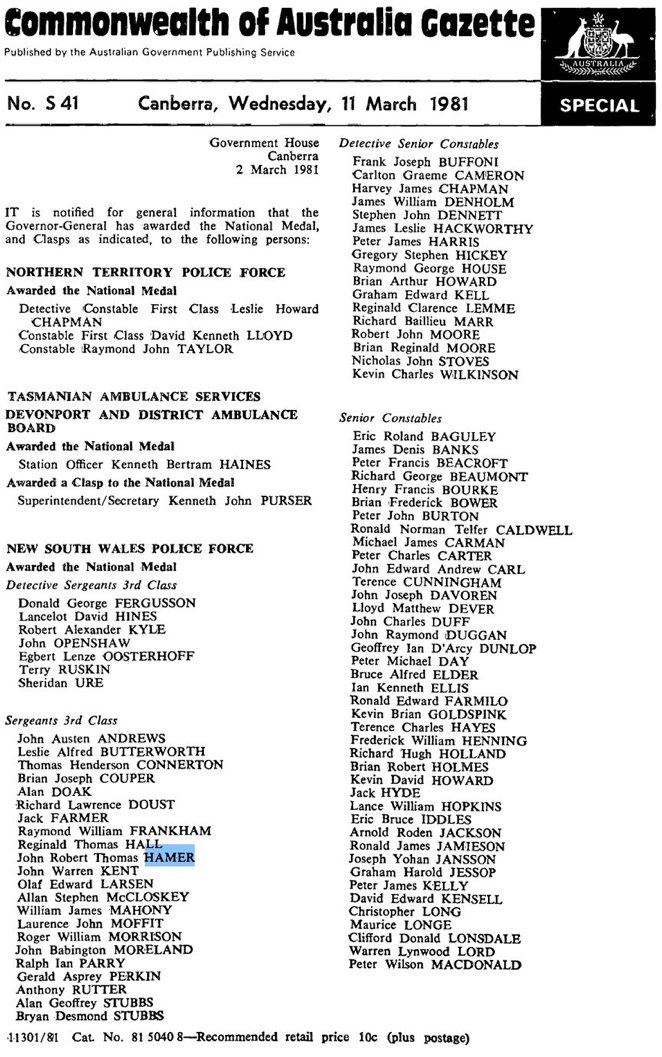
Awards: National Medal – granted 2 March 1981 ( Sgt 3/c )
1st Clasp to National Medal – granted 7 October 1991
2nd Clasp to National Medal – granted 10 August 2000
Born: Friday 19 February 1943
Died on: Monday 3 December 2018
Age: 75 years, 9 months, 14 days
Cause: Parkinson disease ( sufferer for 10 years ) & recently suffered progressive dementia
Event location: ?
Event date: ?
Funeral date: Monday 10 December 2018 @ noon
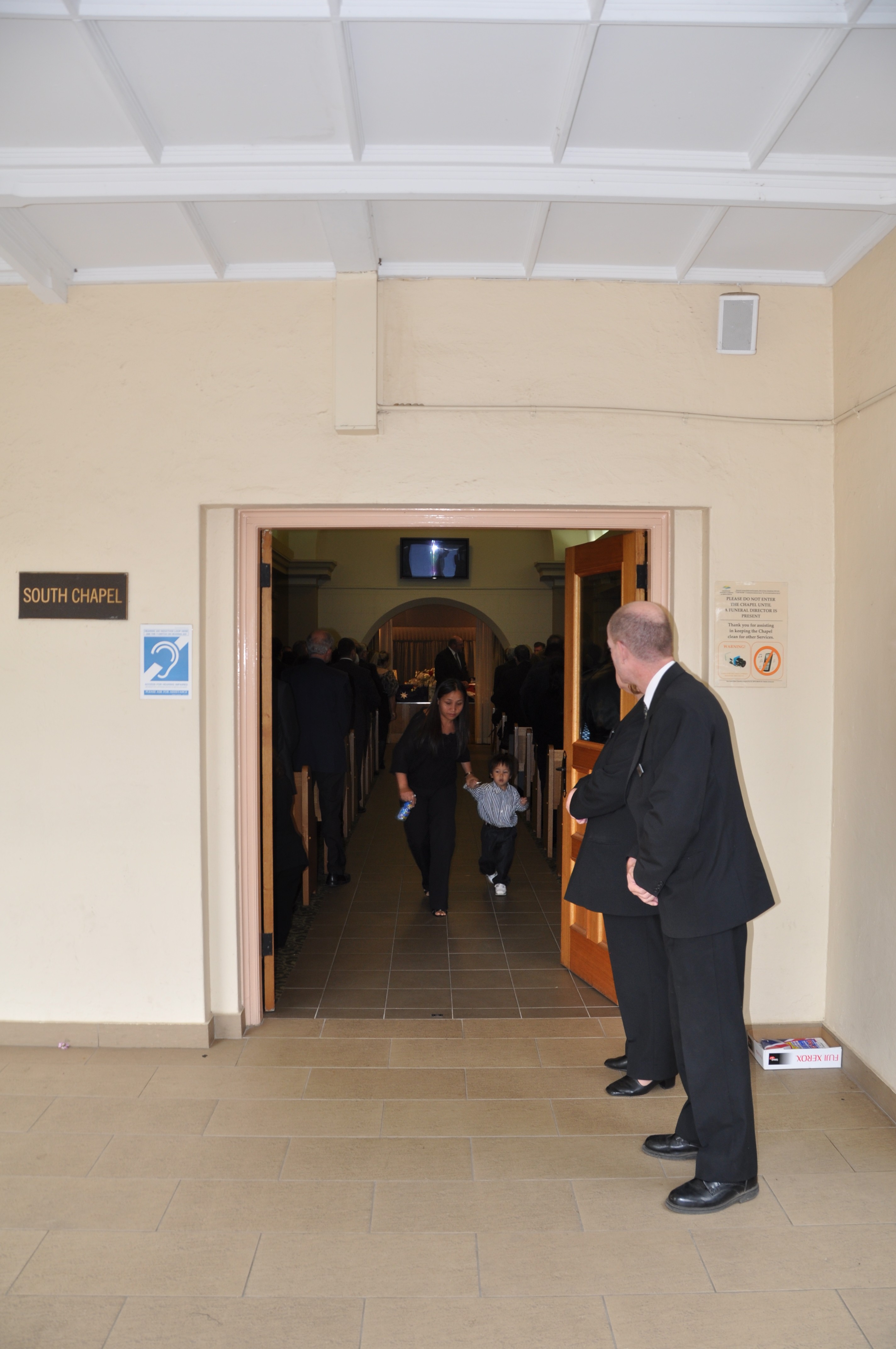
Funeral location: South chapel, Woronora Cemetery, Linden St, Sutherland
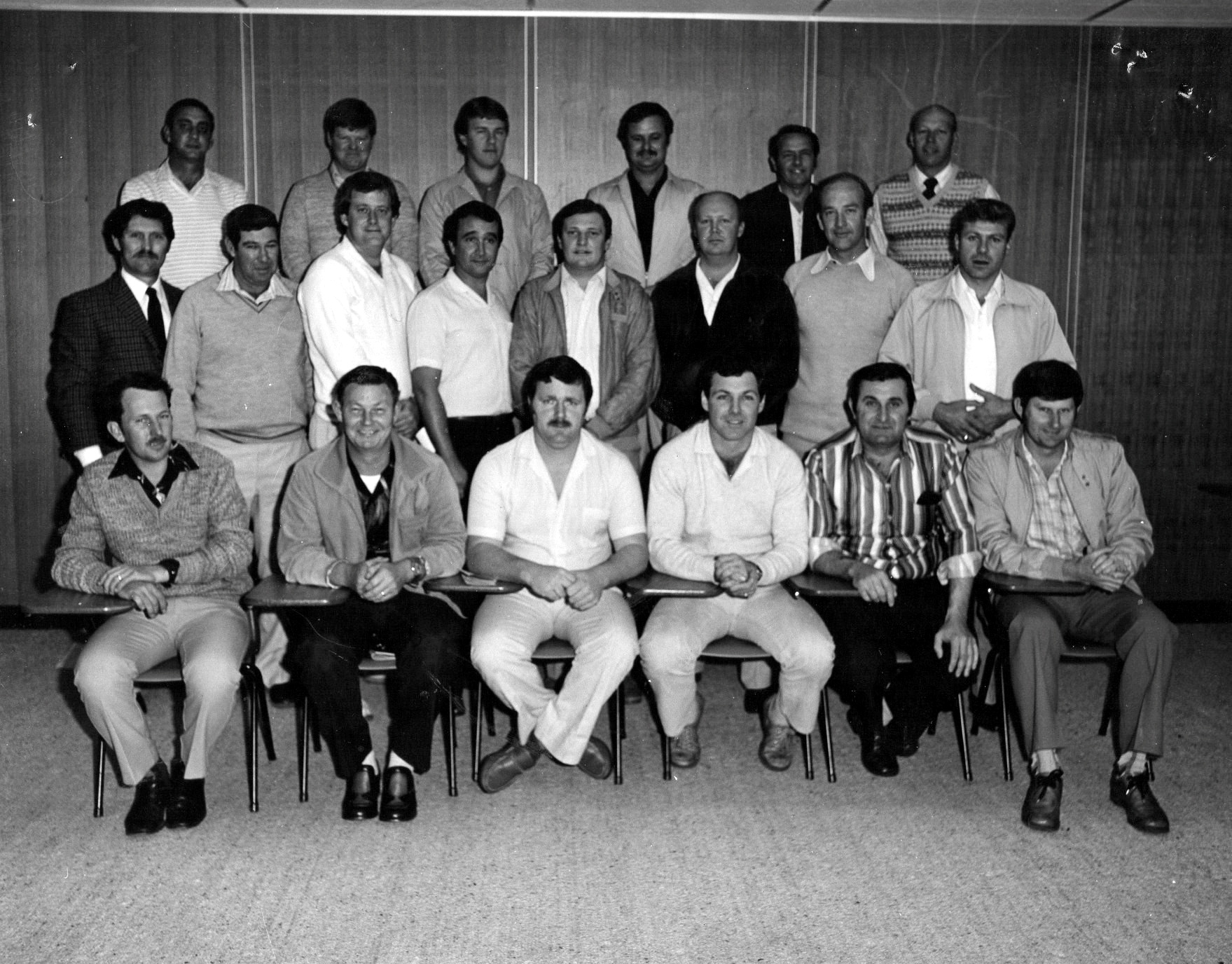
a Sergeants course or First Line Commanders course at Penrith Police Station around mid 1980s. Can’t remember all the names but I will give it a try. Back row: Laurie Eddy ( # 16868? ), Greg Peterson ( # 15106 ), Warren Newton ( # 14491 ), Bob Murrell ( # 15864 ), Hank Vanderwaarden ( # 15760 ), Ron Blake ( # 10029 ). Middle row: John HAMER – instructor ( # 11103 ), Ernie Jones ( # 15468 or # 14515 ) , Gary BUCKLEY ( # 16269 ), Ces Kearney ( # 16804 ), Ray Filewood ( # 15912 ), Dave Clouston ( # 16727 ), Alan Targett ( # 14196 ), Helmut Myers ( # 16359 ). Front row: Kieron Power ( # 17384 ), John Findlater ( # 13571 ), Ron McGOWAN ( # 15631 ), Gordon Middlemisss ( # 17058 ), Gary Winchester ( # 15414 ), Mal Roser ( # 16028 ).
the Metropolitan South Associates Branch of the Police Association have advised of the death of retired Senior Sergeant John Hamer, last station Kogarah.
During his service John performed general duties at country and metropolitan stations, and for a time was a lecturer at the Police Academy. He was an absolute gentleman, a very humble and respected man. For the past ten years John battled Parkinson disease and more recently suffered progressive dementia. Rest in Peace friend.
————–
03/12/2018 – John Robert Thomas HAMER, 75 old, Reg. No. 11103. Ret. Sen. Sgt of Monterey, Sydney NSW.
John’s funeral will be held at 12.00pm on Monday the 10th Instant at the South Chapel, Woronora Cemetery, thence a burial will be conducted within the grounds.
The family are desirous that former colleagues attending John’s funeral may wear relevant medals. If so, appropriate dress clothes would be required. The family have indicated that they would also like a Police Honour Guard to be present. Later, a wake will be held within the grounds to celebrate John’s life.
Les DalrympleSergeant Hamer was an instructor at the Academy when I did secondary training back in the very early 80s. A thorough gentleman — Vale John.
Ron AlexanderI worked with John at the secondary training annexure Elizabeth Street Redfern during the late 80’s. John was admired by all and a true friend. RIP John.
Col ColmanThank you John Hamer for your fine and dedicated Service to our Community. We also thank you for you enthusiastic approach whilst performing instructional duties at the Police Academy, and on behalf of the many hundreds of Probationary Constables you instructed in class, and launching them into a wonderful career, we say thank you, you really did make a difference. As a new Instructor at the Academy, during John’s tour, I found him most helpful and informative, during those first few months. RIP………..
Ken EmmsI was a student of John’s in the Methods of Instruction Course. A very competent teacher & all round good bloke. He will be sadly missed. Sincere sympathies to John’s family.
Glenn Stan Cam StanleyJohn was attached to Sutherland District Office when I was in SOGs and he was always a gentleman who also had a good sense of humour. Will be sadly missed RIP mate
Stewart McNeiceWorked with John at Kogarah. A real gentleman. A dam shame.
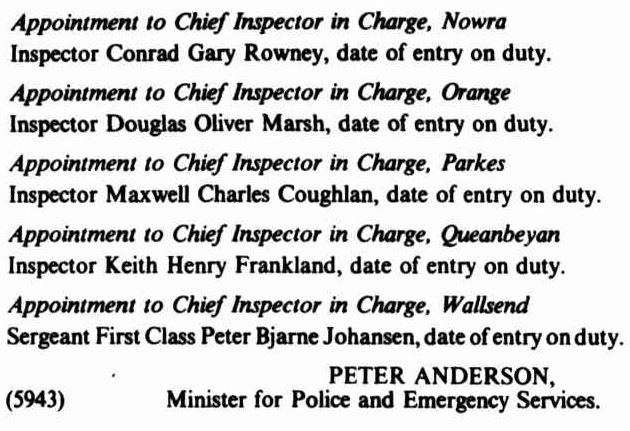
JOHANSEN, Peter Bjarne.
Passed away peacefully 18th March 2017.
Late of Medlow Bath.
Devoted husband of Deirdre.
Proud father and father-in-law to Thorbjorn & Svetlana, Tim & Melanie and Ashley & Melissa.
Loving grandfather of Morgan, Samual, Mischa, Nikita, Edward and Henry.
Aged 78 years.
Peter’s family and friends are warmly invited to attend his funeral service to be held at St Thomas Aquinas Catholic Church, 168 Hawkesbury Road, Springwood on Friday 24th March, commencing at 11:00
In God’s Care.
Published in The Sydney Morning Herald on Mar. 21, 2017 – See more at: http://tributes.smh.com.au/obituaries/smh-au/obituary.aspx?pid=184584852#sthash.rMPgNE3v.dpuf
Canberra Times (ACT : 1926 – 1995),
Sunday 21 October 1990, page 2
Police to blitz speeders
SYDNEY: Police will launch a second special Night Car patrol on the Pacific Highway for one week from today in a bid to prevent accidents on Australia’s notorious road.
The special patrol coincides with the first anniversary of the Sunliner coach crash at Cowper, near Grafton, in which 22 people died.
In a statement issued in Sydney, Chief Inspector Peter Johansen, of Northern Region headquarters, said increased patrols were to continue for the remainder of the year, as statistics gathered over several years had revealed an increase in serious crashes in the September December quarter.
The patrol would be on the road between 8.30pm and 4am, covering the area from Hexham, near Newcastle, to the Queensland border.
It would complement routine traffic police operations based in all major towns along the route. Chief Inspector Johansen said the Night Car patrols were necessary to maintain a constant high profile for police.
The first Night Car operation earlier this year travelled more than 3000km and booked 55 vehicles for exceeding the speed limit. This included 18 coaches, and two heavy vehicles were found travelling at 96 and 110km/h in a 60km/h zone near Coffs Harbour.
Canberra Times (ACT : 1926 – 1995),
Wednesday 6 June 1990, page 16
Random patrols to cut toll
SYDNEY: The number of fatal accidents on the Pacific Highway at Port Macquarie on the NSW mid-north coast has forced police to increase patrols and start community-awareness programs, a police spokesman said yesterday.
Since January, 27 people had been killed in 20 accidents in the area, compared with 18 deaths in the same period last year, operations support commander Chief Inspector Peter Johansen said in a statement.
He said a traffic policing system had been adopted from Tasmania using a computer to select random patrol points along the Pacific Highway.
“It has the potential to reduce the accident rate by up to 50 per cent,” he said.
Chief Inspector Johansen said the system aimed to undermine the security of drivers who thought they knew the “favourite radar spots”.
There will be a six-month trial of the new patrolling system by Port Macquarie police and if successful it could be extended to other areas.
SYDNEY: Tougher CB radio laws and increased police patrols were foreshadowed yesterday as a means of cutting the number of fatalities on NSW’s notorious Pacific Highway.
Senior police have recommended stiffer penalties for truck drivers who use CB radios to warn colleagues of police patrols on the state’s roads.
North region commander Chief Inspector Peter Johansen said many truck drivers were using the CBs to undermine police operations, particularly those involving marked car’s.
“I imagine the trucking industry has a code of ethics, but I don’t think it’s ethical when they divulge the position of marked cars to other drivers,” Inspector Johansen said.
“I would like to see-heavier fines for the illegal use of CB radios.”
Inspector Johansen said existing resources would be re-examined with a view to assigning more officers to the Lismore and Port Macquarie districts to boost patrols on the Pacific Highway.
Northern NSW was the scene of two recent crashes involving tourist coaches which claimed more than 50 lives.
Rank: Probationary Constable – appointed 10 June 1952 ( aged 23 years, 1 month, 29 days )
Sergeant 3rd Class – appointed 1 January 1968
Sergeant 1st Class – appointed 14 December 1978
Chief Inspector – retirement
Stations: ?, Safety Bureau – Nth Sydney HWP, Bankstown STP ( 1970’s ), The Glebe ( 8 Division ), Five Dock ( to GD’s from Traffic ), Eastwood ( 17 Division ) as OIC at time of Retirement
Service: From? ? pre June 1952? to? ? ? = ? years Service
Awards: No find on It’s An Honour
Born: 12 April 1929 at Hurstville, NSW
Died on: Saturday 7 January 2017
Age: 87 years, 8 months, 26 days
Cause: Dementia and Pneumonia
Funeral date: ?
Funeral location: ?
Buried at: Cremated
Memorial at: ?
ROBERT is NOT mentioned on the Police Wall of Remembrance *NEED MORE INFO
Funeral location: ?
FURTHER INFORMATION IS NEEDED ABOUT THIS PERSON, THEIR LIFE, THEIR CAREER AND THEIR DEATH.
NIXON, Betty Margaret.
5.8.1924 – 29.12.2015
Aged 91 years.
Loved wife of Ross for 65 years and wonderful mother to Len, Christine and Mark. Grandmother to Emma, Amy, Sam, Brady and to new grandchild Matilda. Mother-in-law of Karen, John and Sarah.
Betty survived the Depression, served in the Australian Army Nursing Service 1945, was *Allambie Heights Brown Owl for 21 years, and secretary and member of the Methodist-Uniting Church Allambie Heights for 40 years. Betty worked for many years at Coles and Avon. She gave great support to her family, friends and the community and is greatly missed.
Betty like many others never deserved to be struck down by the incurable disease of dementia. The Nixon family pay special tribute to Alexander Nursing Home Brookvale for their outstanding care of Betty over the last 4 years.
Deeply missed, may Betty rest in peace.
A Celebration of Betty’s Life will be held in the South Chapel of Northern Suburbs Crematorium, 199 Delhi Rd, North Ryde on Wednesday, January 6, 2016 at 12pm.
Rank: Commenced Training at Redfern Police Academy, with Class 088, on Monday 14 August 1961 ( aged 27 years, 0 months, 7 days )
Probationary Constable – 14 September 1961
1st Class Constable – appointed 1 April 1967
Senior Constable – appointed 1 April 1971
Sergeant 3rd Class – appointed 1 February 1978
Sergeant 2nd Class – 31 August 1984 ( Central Police Station )
Sergeant 1st Class – 9 August 1986
Chief Inspector – February 1989 ( Fairfield & Cabramatta )
Chief Inspector – Patrol Commander ( Cabramatta ) until Optional Retirement in April 1991
Stations: Central ( No. 1 Division ), Darlinghurst ( No. 3 Division ) to Liverpool ( 22 Division ) in November 1963, Merrylands ( 26 Division ), Cabramatta, Fairfield, Cabramatta ( 34 Division ) – Optional Retirement
Service: From 14 August 1961 to ? April 1991 ( Optional Retirement ) = 31? years of Service
Awards: Queen’s commendation for Brave Conduct – granted19 October 1965 ( rescue of two people from their burning vehicles after a collision – whilst standing in fuel )
Commissioner’s Commendation – rescue – 1965 ( rescue of two people from their burning vehicles after a collision – whilst standing in fuel )
Peter Mitchell Award, a perpetual trophy, for selfless & brave conduct – 1965 ( as above )
George Lewis Trophy “for the most courageous act by a member of the NSW Police Force in 1965” ( as above )
Australian Defence Medal
Commissioner’s Commendation – for pursuing & arresting an armed prison escapee – 1971
Commissioner’s Commendation – pursuit and arrest of an offender of a fatal shooting at Cabramatta – 1977
1st Clasp to National Medal – granted 7 November 1988 ( SenSgt )
Australian National Police Service Medal
Born: Tuesday 25 June 1935 in Alice Springs, N.T.
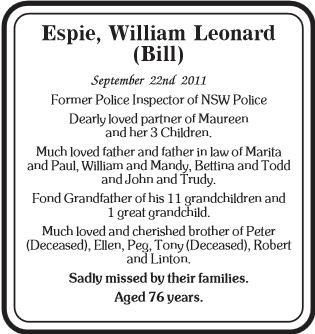
Died on: Thursday 22 September 2011
Cause: Dementia
Age: 76 years, 2 months, 28 days
Funeral date: Wednesday 28 September 2011 @ 10.30am
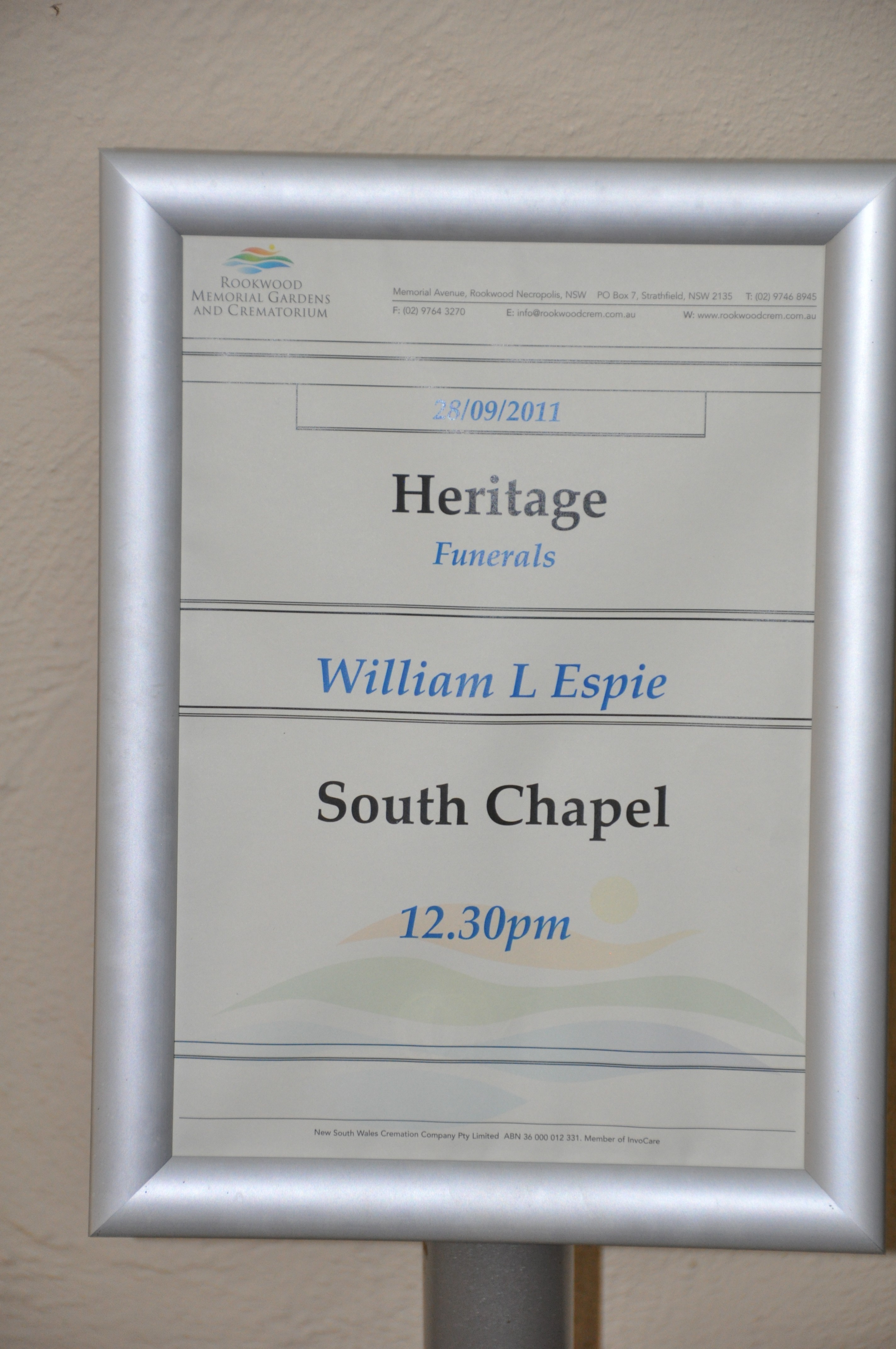
Funeral location: SOUTH CHAPEL, ROOKWOOD CREMATORIUM, ROOKWOOD
Buried at: Cremated
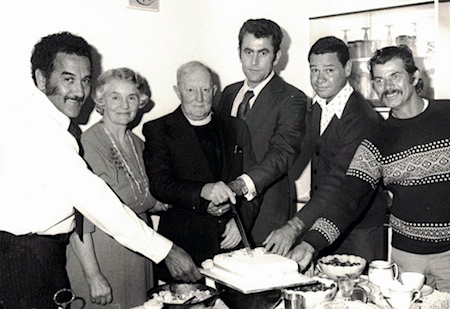
1976 Bill Espie standing next to Father Smith celebrating his 50 years of ordination – Charlie Perkins on far left next to Mrs Smith – Noel Hampton and David Woodford on far right
Memorial location 1: NSW Police Academy, Goulburn
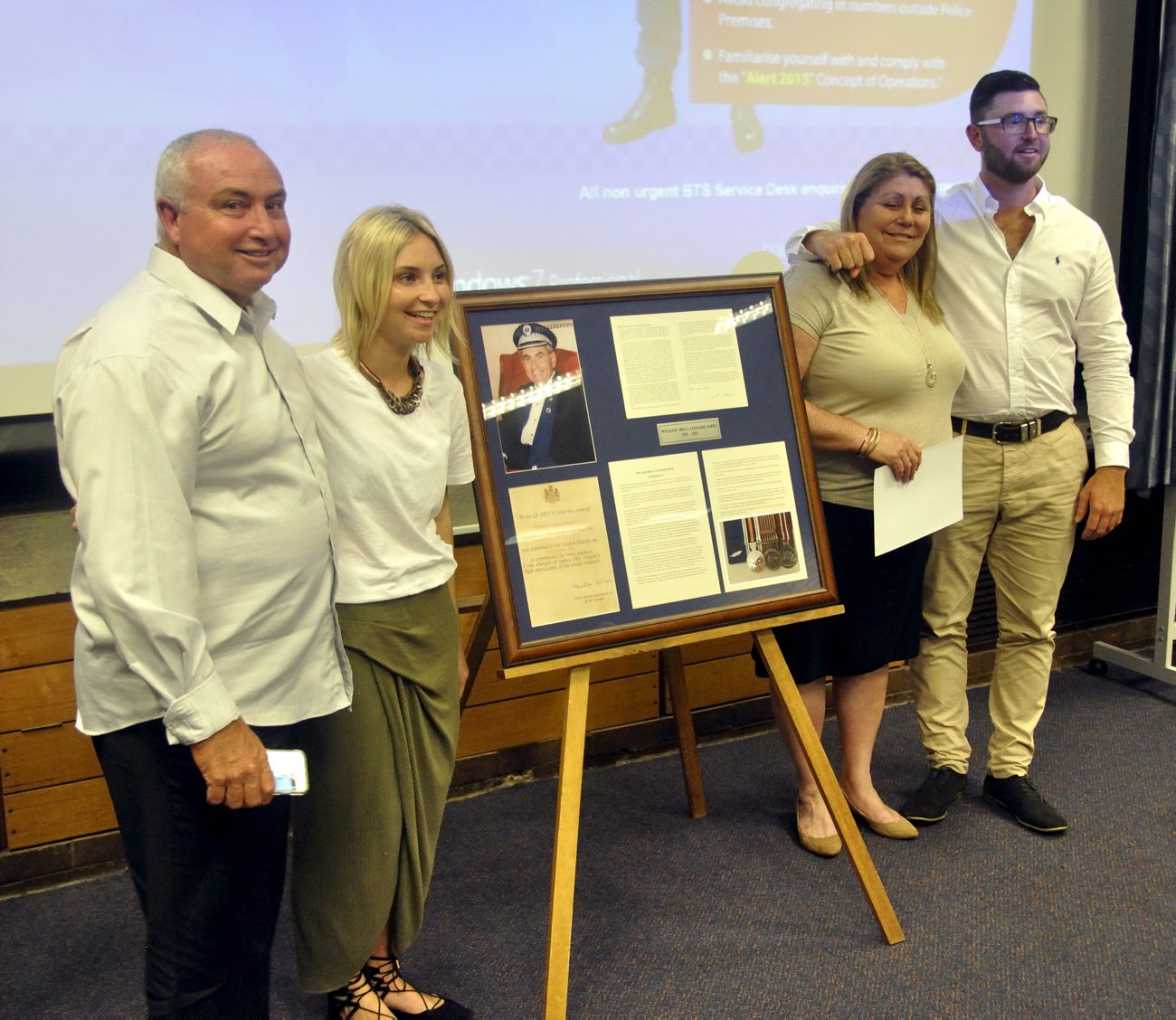
Memorial 1 description: Framed picture & literature in relation to Bill’s Service
Memorial date: 29 October 2015 @ 1pm
Former Det Sgt Peter Croucher & Former Sgt Sue Bytheway
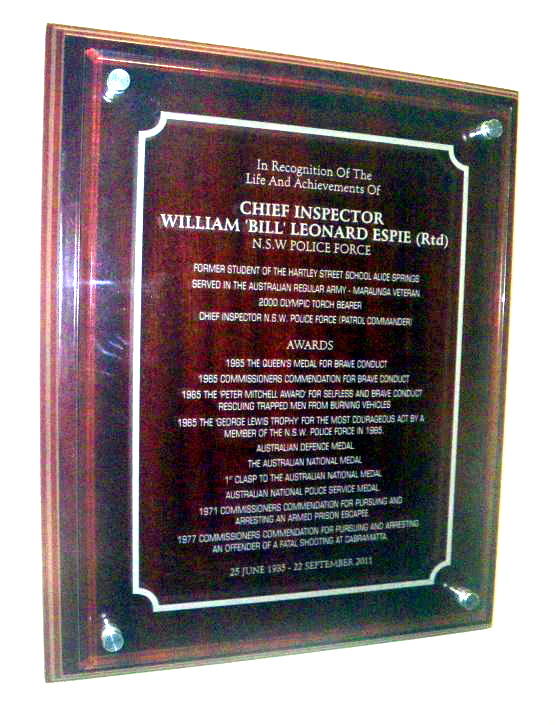
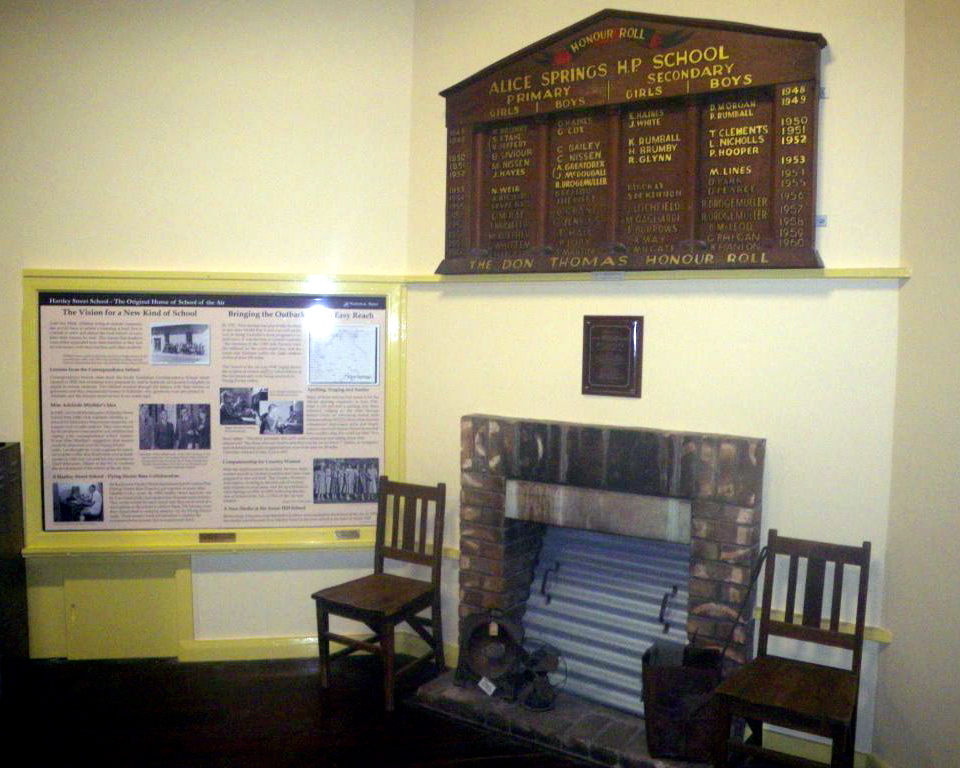
Memorial location 2: Hartley St School Museum, 39 Hartley St, Alice Springs, N.T.
Memorial 2 description: Plaque
Memorial date: 29 July 2017
BILL is NOT mentioned on the Police Wall of Remembrance * NOT JOB RELATED
Bill Espie reading his Queen’s Commendation for Brave Conduct.
Former Police Commissioner Ken Moroney
Former Detective Sergeant Peter Croucher
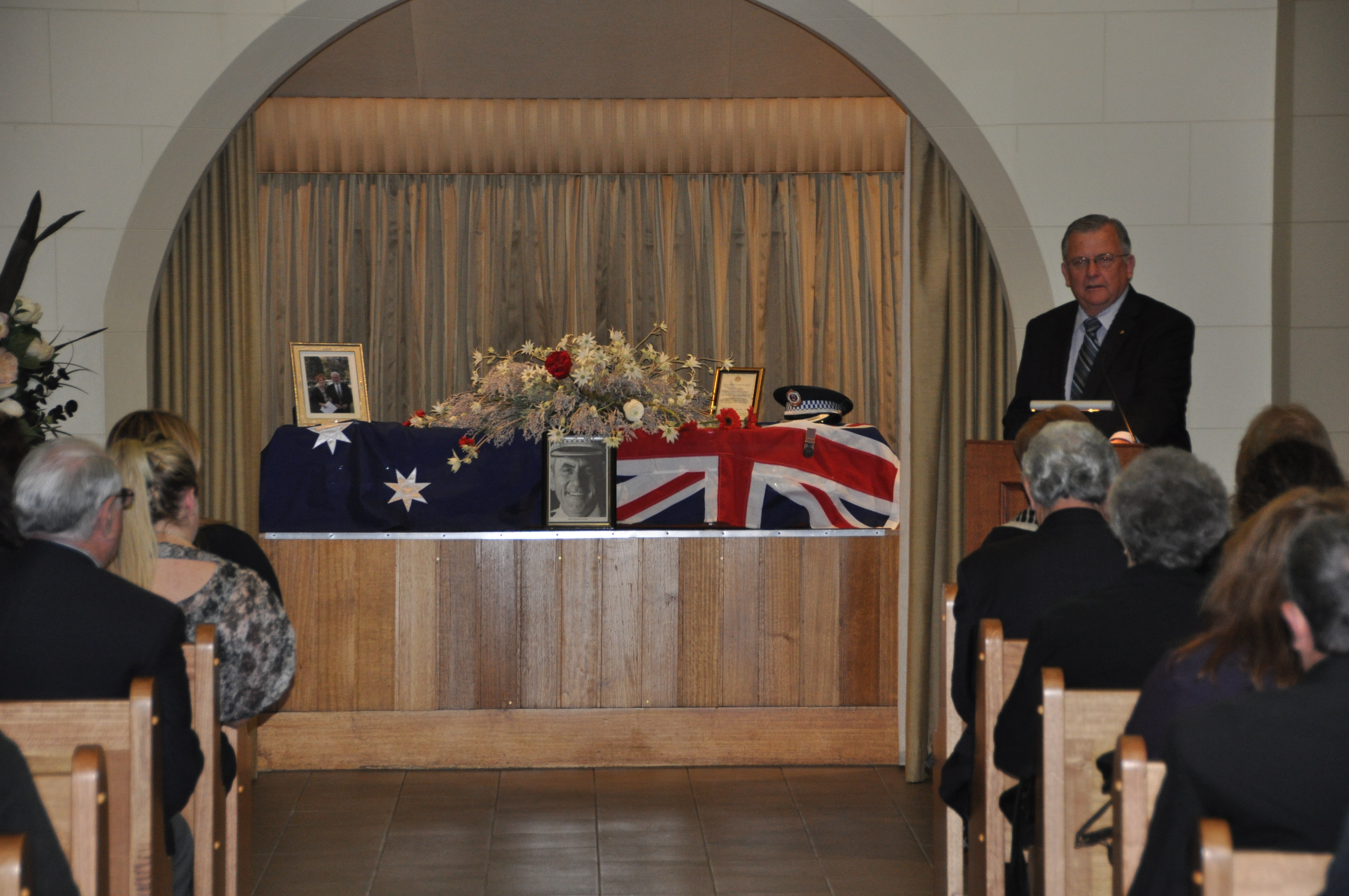
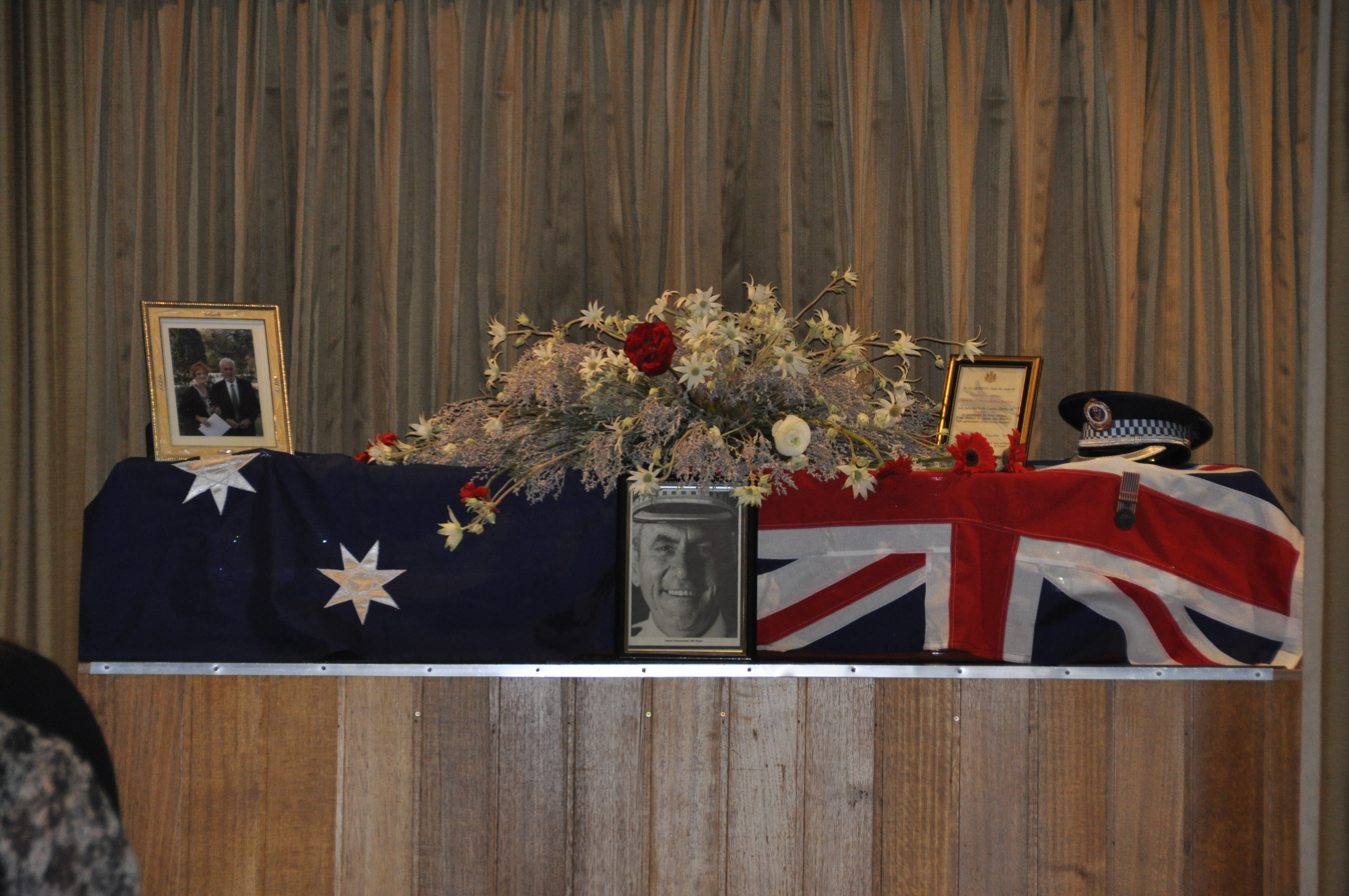
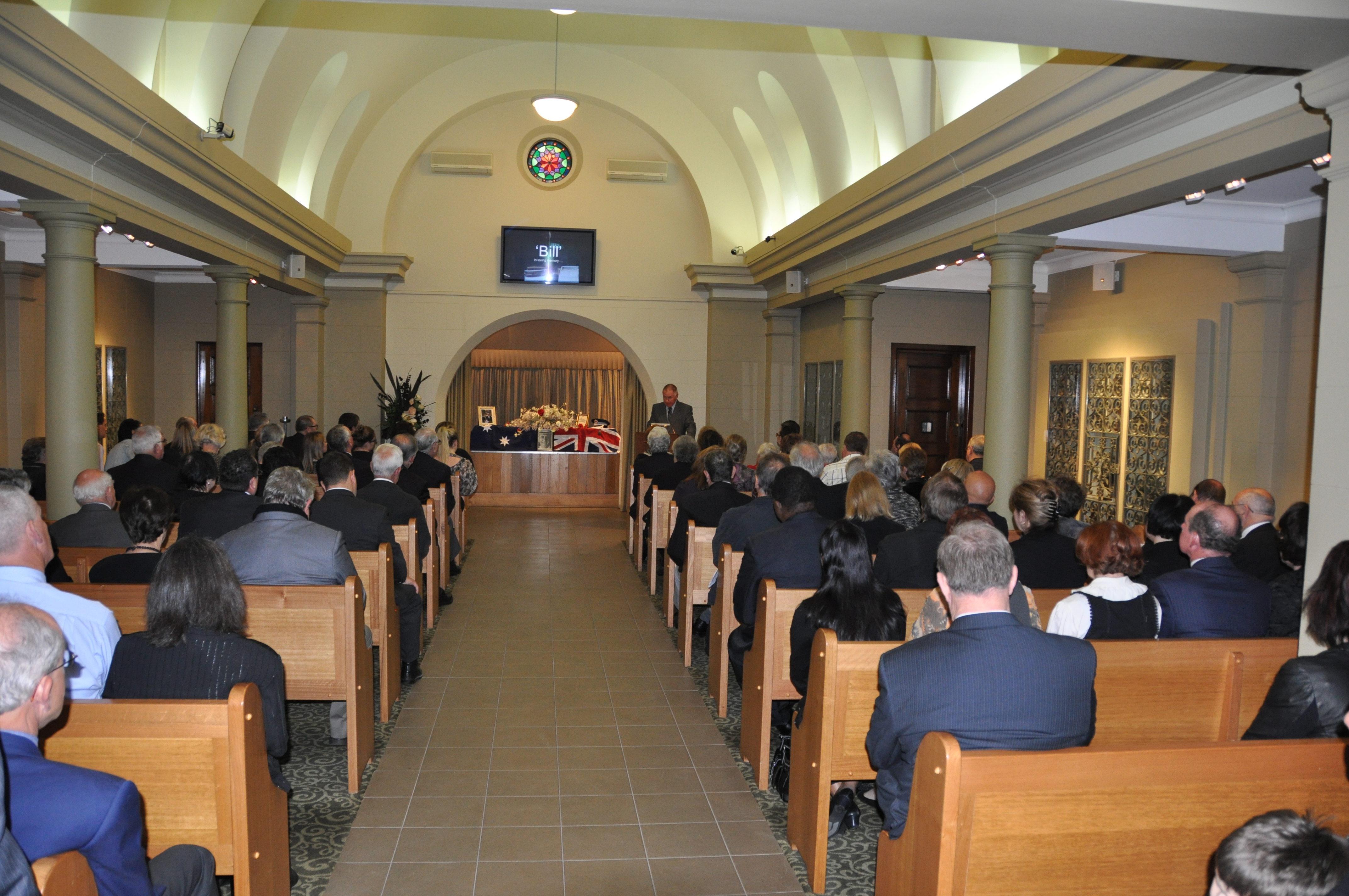
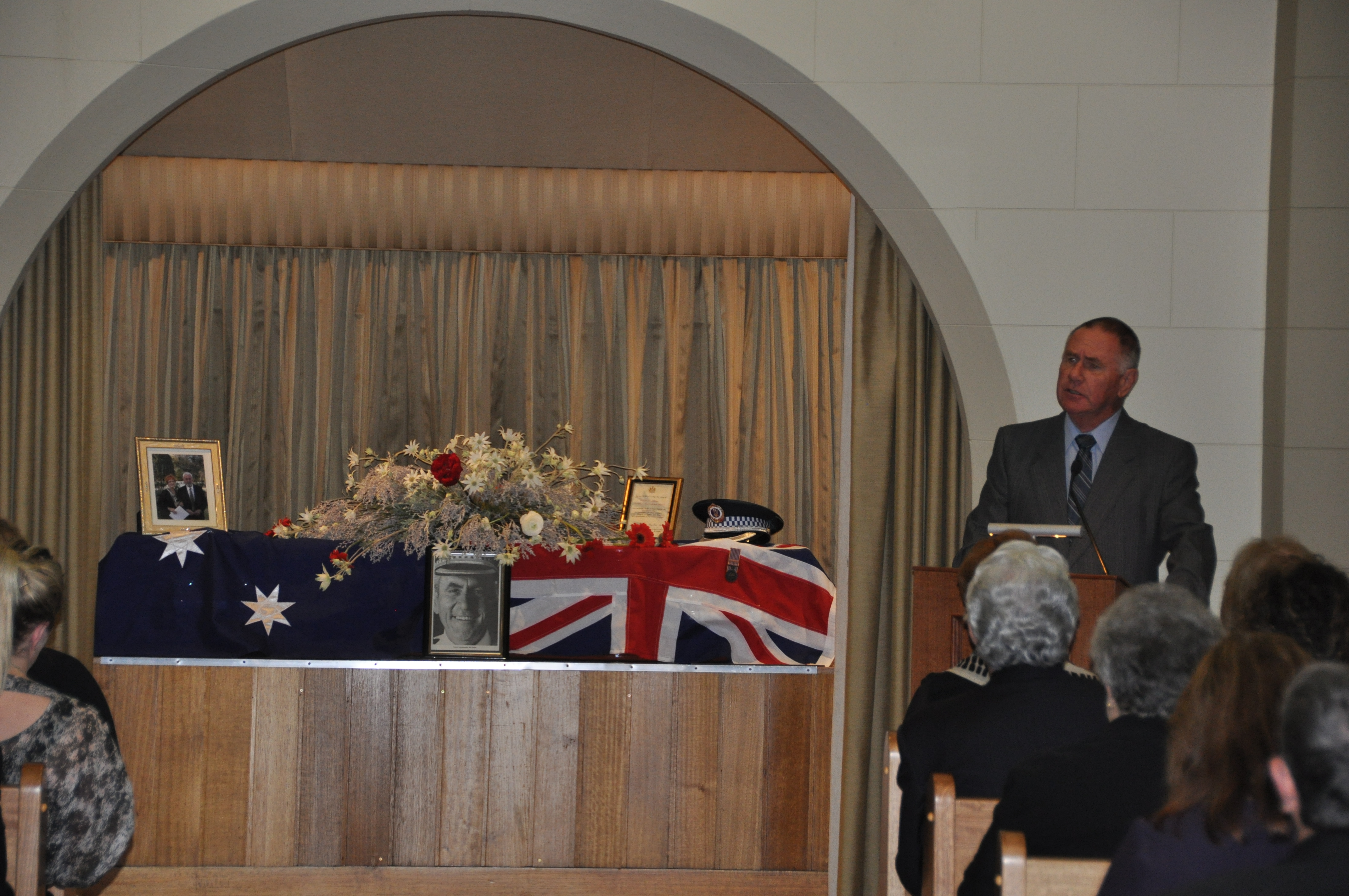
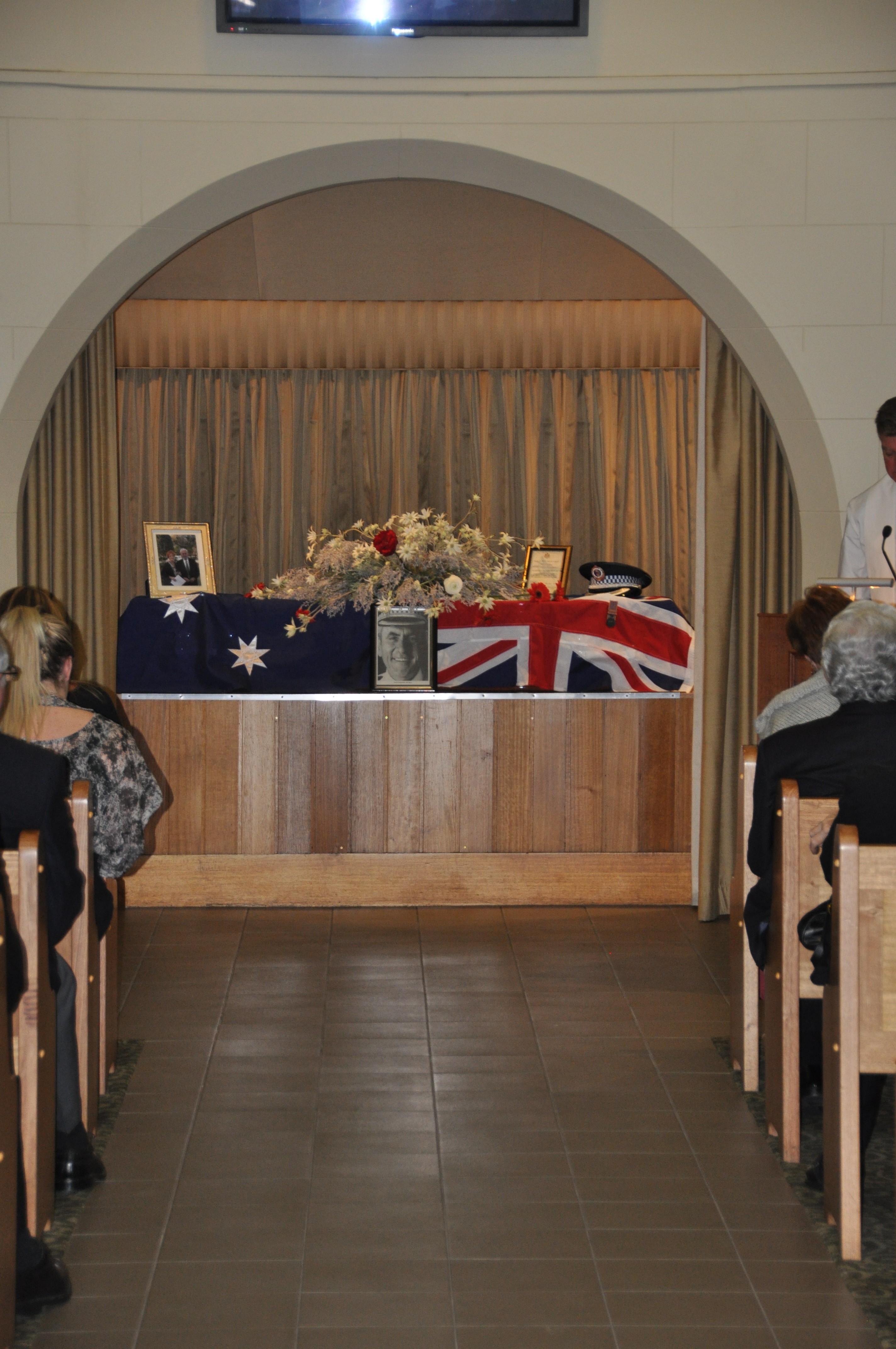
WEDNESDAY 28 SEPTEMBER 2011
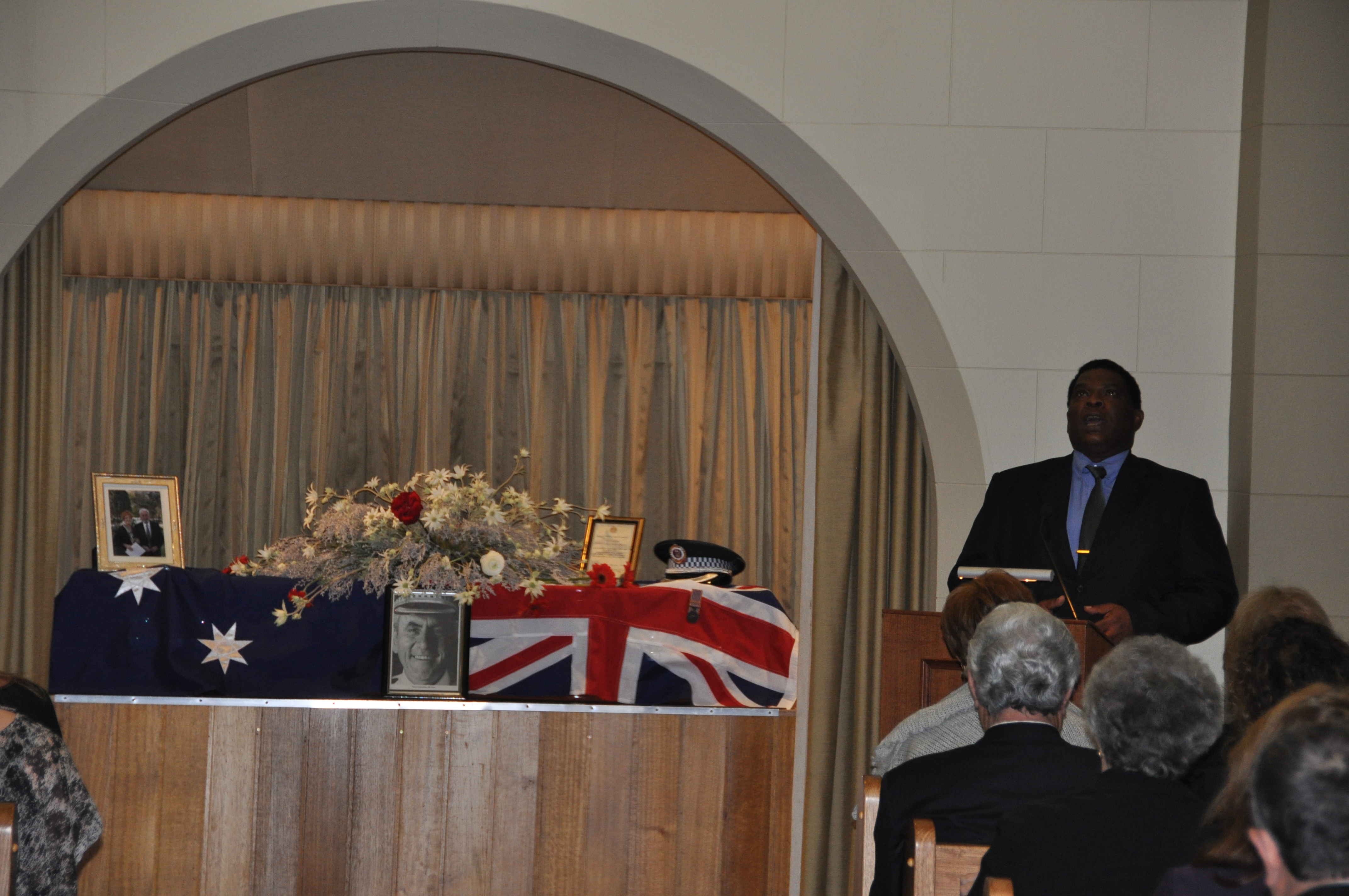
CREMATION CEREMONY FOR RETIRED CHIEF INSPECTOR WILLIAM ‘BILL’ LEONARD ESPIE. Born 250635 – 220911
SERVICE AT THE SOUTH CHAPEL, ROOKWOOD CREMATORIUM, ROOKWOOD, 10.30AM.
POLICE FUNERAL.
RETIRED POLICE COMMISSIONER KEN MORONEY GIVING THE EULOGY.
Bastion of culture and community October 15, 2011 .
Bill Espie was one of several talented Aboriginal men born in the Northern Territory in the mid- to late 1930s who went on to make, each in his own way, his mark on Australia and to contribute to the progress of his people. Espie was the first, destined for an exemplary police career in which he became the highest-ranking police officer of Aboriginal descent in all the Australian police forces. He was followed by Charlie Perkins, who became a famous activist; Professor Gordon Briscoe, an academic and activist for his people; the artist John Moriarty; Vince Copley, chairman of Indigenous Cricket; and Brian Butler, in Aboriginal aged care.
William Leonard Espie was born in Alice Springs on June 25, 1935, one of seven children to a mixed-race Arunta woman, Edith Espie, who was part of the stolen generation, and Victor Cook, a European who had moved from South Australia to work in Alice Springs as a labourer.
Espie’s sister Ellen said the family lived in a good house in Alice Springs and their parents did their best for them. Like Perkins and Briscoe and several others, Espie came under the benign influence of an Anglican priest, Father Percy Smith, who arranged for the boys to go to St Francis House at Semaphore in Adelaide, an indigenous boys’ home.
Espie, known then as Buckshot by the boys, went to school in Port Adelaide and showed himself to be an outstanding tennis player, facing at one time Lew Hoad and Ken Rosewall. He completed his Intermediate Certificate, then trained as a maintenance fitter.
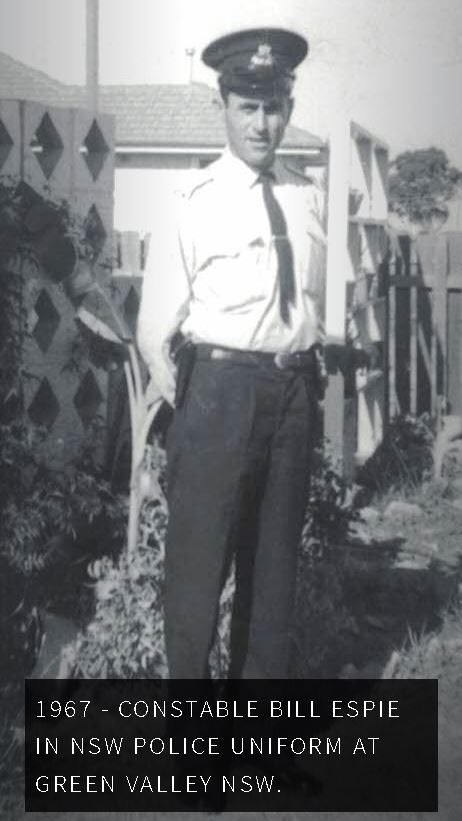
In 1955, he joined the Australian Army, became a sapper in the engineers and was appointed a field engineer. He served at Marginal during the atomic testing. Along the way, he married Irene Zachary and served in the army until 1961. At 26, Espie decided to go to Sydney. He entered the NSW Police Force as a recruit and did his training at the Redfern academy, where he was noted as ”a good all-rounder”.
He became a probationary constable on September 18, 1961. Assigned for 12 months to Darlinghurst, he experienced a profound culture shock – the place could have not been more different from Alice Springs – but he managed the situation and was then transferred to Liverpool.
During the following 16 years, he was to serve there, at Merrylands and Cabramatta.
Espie quickly came to notice for his discipline and attitude to his work. Former police commissioner Ken Moroney said: ”It was in these early formative days of his career that Bill deservedly earned the respect not only of his senior officers and peers but, as important, of the community in which he worked. Long before the words ‘community-based policing’ became the fashion of the day, Bill Espie’s life skills and worldly experiences had seen him well versed in the importance of effectively communicating with people at all levels. What you saw was what you got and there were no in-betweens. You knew exactly that he meant what he said and he said what he meant.”
What Espie did in practical terms did not escape official notice either. In March 1965, he went to the scene of a collision and found both vehicles burning fiercely. Without hesitation, he went in and rescued a trapped man from each of the burning cars. For that, he earned a Commissioner’s Commendation and the Queen’s Commendation for Brave Conduct.
Commissioner Norman Allen also awarded him the Peter Mitchell Award, a perpetual trophy, to recognise his selfless and brave conduct. On top of that, he received the George Lewis Trophy ”for the most courageous act by a member of the NSW Police Force in 1965”.
In 1971, he received another Commissioner’s Commendation for pursuing and arresting an armed prison escapee.
A further Commissioner’s Commendation came in 1977 when he received a report of a man leaving a crime scene following a fatal shooting at Cabramatta. He was able to secure the crime scene and pursue the man, whom he arrested. The man was charged with murder and prosecuted.
In December 1980, Espie was awarded the National Medal for service and was later awarded the First Clasp of the National Medal.
Transferred to Central Police Station in the city, he became a sergeant second class in 1984 and sergeant first class in 1986. Arranging a transfer back to Fairfield, he continued performing well and, in February 1989, became a chief inspector. He served as patrol commander at Cabramatta until his retirement in April 1991.
Bill Espie is survived by his long-term partner, Maureen Ola, brothers Robert and Linton, sisters Ellen and Peg, his children Marita, William junior, Bettina and John, 11 grandchildren, great grand-daughter Sienna and nephews and nieces.
Bill Espie: Police hero from Alice Springs
By JOHN P McD SMITH
Bill Espie, born in Alice Springs in 1935, holds the unique distinction of being the highest-ranking Aboriginal police officer in any Australian police force.
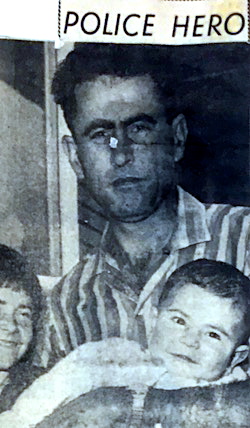
In March 1965 he attended a two vehicle collision with both vehicles on fire.
He rescued a man from each burning car, putting his own life at distinct risk.
For this act of bravery Bill was awarded the Queen’s Commendation for Brave Conduct as well as the Commissioner’s Commendation.
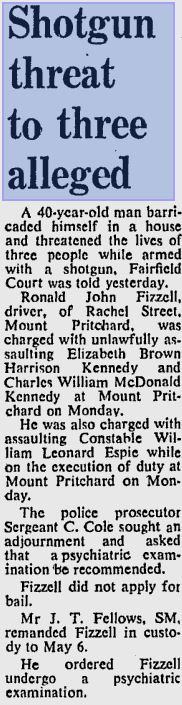
1965 Newspaper clipping reporting on Bill Espie’s heroic act to save two men for which he was awarded the Queen’s Commendation for Brave Conduct
Bill’s mother Edie Espie was one of a group of Aboriginal women in Alice Springs who wanted their children to have a better chance in life.
Others like her were Hetti Perkins, Dido Cooper, Tilly Tilmouth, Melva Palmer and Millie Woodford who accepted assistance from Father Percy Smith to help further the education of their children at St Francis’ House in Adelaide.
All these mothers had one thing in common, and that was their determination to do the best for their children. They were strong women.
Bill Espie’s nickname was “Buckshot” or “The Wasp”. All the Aboriginal boys who lived at St Francis’ House had nicknames.
Peter Tilmouth was called “Truck” because every Saturday he would go with the local greengrocer doing deliveries in his truck.
David Woodford was known as “Woody”.
This is Bill Espie’s account of his life. He passed away on September 22, 2011.
John P McD Smith
1976 Bill Espie standing next to Father Smith celebrating his 50 years of ordination – Charlie Perkins on far left next to Mrs Smith – Noel Hampton and David Woodford on far right
This story involves three components, St Francis House, Father Smith and Mrs Smith and me.
The identity of “me” is not important as “me” could well have been any number of young Aboriginal children who grew up in Alice Springs in the thirties.
My Aboriginal mother, through no fault of her own, could not have raised me in the way that she would have wished, due mainly to economic and social barriers.
Fancy phrases of course, but simply meaning being poor and not being fully accepted in the community.
My mother had a choice; bring me up herself in an environment which offered no more than a twenty percent chance of being successful, or to let me grow up under the watchful eye of Father Smith who was the first resident Anglican priest in Alice Springs in 1933.
No doubt at great pain my loving mother chose the latter.
After spending a few years at St John’s Hostel in Alice Springs, I travelled with five other young Aboriginal boys to St Francis’ House a Semaphore.
This was to be my home for the next seven or eight years, again for most of the time under the care of Father and Mrs Smith.
It was to become my fortress, my haven against an outside community who did not fully accept persons of Aboriginal descent.
It was also to become a place where friendships would flourish, ambitions take shape and my character develop. It was a place where I would gain an education so that I may at least obtain future employment.
Looking back one would ask, how? How could a big rambling one-hundred-year-old house containing some twenty or so young Aboriginals, who came from far and wide, possibly help me in achieving my goals?
I expect the logical answer would have been: “I really don’t know.”
Perhaps calling this beautiful old house “St Francis’ House” might help in some way, but we all know that names alone will not press the magic button. The next obvious question was of course: “Well, what was it then that made this house so successful?” A place where I would achieve some of my ambitions.
The accolades must of course go in the main to Father and Mrs Smith who brought about the concept of St Francis’ House by an overwhelming desire to help young Aboriginal children take their place amongst the general community with pride and qualifications to reach attainable goals both in the present and future.
Their private lives were non-existent due of course to their dedication in what they were doing was justified and correct. It was this dedication and commitment that made St Francis’ House a success.
Of course there were other factors that must be considered when judging the overall effectiveness of St Francis’ House.
Those factors were “the boys”, the occupants or to be more explicit the Aboriginal boys themselves.
The same boys who slept three, four, five in a room; and if it was a ghost story night or someone had imagined seeing the ghost of Captain Hart (the original owner) wandering the halls prior to bedtime, then it was six to a bed – not unreasonable I would think!
These same boys depended on each other for guidance, support, company; but most of all I think each and every one craved for that family environment, and because of the actions of Father and Mrs Smith it was achieved.
The individual personalities of each of the boys also contributed towards the overall aura of the house. Their continuing effort to “fit in” within the community and their sense of humour in day to day activities made life unique and gave the house a “soul”.
Even though the function of this house has long since gone one would still hope the “soul” still haunts the corridors, hallways and rooms we affectionately remember as St Francis House … who knows?
Group of boys ready in Alice Springs in 1944 – Bill Espie, John Palmer (Back), Noel Hampton, Charles Perkins, Malcolm Cooper (standing in front or Mrs Smith), Mrs Isabel Smith, Father Percy Smith
John P McD Smith picks up the story.
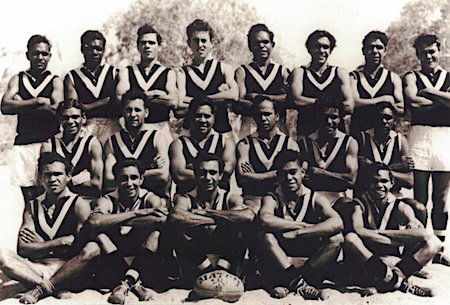
1950s Aboriginal Football Team Alice Springs: Bill Espie in back row 4th from left
After completing his Intermediate Certificate at Le Fevre Boys High School Bill Espie trained as a maintenance fitter. For a short time he returned to Alice Springs to be with his family, but he soon realised that there wasn’t much of an employment future for him there.
In 1955 he joined the Australian Army and was appointed a field engineer.
He served at Maralinga. The world was opening up to him.
After his marriage to Irene Zachary, Bill decided to go to Sydney where he was accepted into the NSW Police Force.
He trained at the Redfern academy becoming a probationary constable in 1961. During his career Bill served at Darlinghurst, Liverpool, Merrylands and Cabramatta.
He became an effective communicator as a police officer and was very good at dealing with different types of people and situations.
After rescuing the two men Bill merely said: “There wasn’t time to think, I just had to get the men out.” They were saved from a firey death.
His commendations, which also included the Peter Mitchell Award, in 1971 Bill received another Commissioner’s Commendation for pursuing and arresting an armed escapee.
Towards the end of his career Bill was awarded the National Medal for meritorious service to which later was added the First Clasp.
By 1986 Bill was a sergeant first class. Then in 1989 he became a Chief Inspector and served as patrol commander at Cabramatta until his retirement.
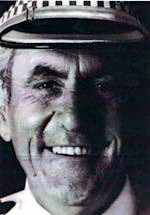
Chief Inspector Bill Espie
He deeply appreciated the chance he was given in life, which was manifested by his exemplary service. Much of his memorabilia is on perpetual display at the NSW Police Academy at Goulburn. He passed away in September 2011.
John P McD Smith is the son of Father Percy Smith (1903-82), first resident Anglican priest in Alice Springs in 1933. John has written his father’s biography, “The Flower in the Desert.”]
Posted: April 5, 2019 at 8:48 am
4 Comments (starting with the most recent)
NB: If you want to reply to a previous comment, start your comment with this notation: @n where n is the number of the comment you want to reply to.
Dwayne
Posted April 11, 2019 at 9:20 am
Enjoyed this story and the footy team photo is great. Would love to know who some of the other players are – if anyone around town knows.
James T Smerk
Posted April 5, 2019 at 4:12 pm
What a bloke. A life well lived.
Nathan
Posted April 5, 2019 at 9:51 am
Bill lived a life of service to the community. I think his own words are very strong: “My mother had a choice; bring me up herself in an environment which offered no more than a twenty percent chance of being successful, or to let me grow up under the watchful eye of Father Smith.”
Inspiration
Posted April 5, 2019 at 9:49 am
What a great story, Father Smith did a lot for the local Indigenous people here in the Alice.
My brother was one who went to Adelaide, Peter Tilmouth.
All the boys taken, all became great mates.
The Espie family was well respected here in the Alice and what an honour to have this man Bill Espie recognised, letting others know of his achievements. A story worth mentioning.
Constable William Leonard Espiewas awarded the Queen’s Commendation for Brave Conduct and Departmentally commended for initiative and courage displayed in effecting the rescue of two men from motor vehicles which had collided at Cabramatta on the 18th March, 1965. Both vehicles were burning fiercely and one was in immediate danger of exploding when the Constable, standing in burning petrol, succeeded in extricating the two men from their respective vehicles. Within seconds of the rescue one vehicle became a blazing inferno.
Bill Espie was born in Alice Springs. He was in the Army for six years and remained in Sydney upon completing his service. He joined the Police Force in 1961.
Interviewed by Shirley McLeod 5th September 2005
Shirley McLeod: Good morning Bill. Bill Espie: Good morning Shirley.
Thank you very much for giving us your valuable time.
Bill Espie: My pleasure.
Shirley McLeod: First of all I’d like to ask you, what’s your full name?
Bill Espie: My full name is William Leonard Espie, E-S-P-I-E.
Shirley McLeod: And what suburb do you live in?
Bill Espie: I live in Croydon.
Shirley McLeod: Croydon, right. I’ll just go a little bit into your early life. I see here that you were born in Alice Springs, were you?
Bill Espie: Yeah I was, yes. I was born, strange as it may seem, in a tent outside the Alice Springs hospital back in 1935.
Shirley McLeod: And what were your parents doing there?
Bill Espie: Mum was a general hand, a cook, she had many jobs. When she grew up there as a young girl, there was about a hundred people in Alice Springs and that was about it. So — my father was a grader driver in the bush.
Shirley McLeod: Right. Now, you went to Alice Springs Primary School and then you went to La Favure Tech College, that’s in Alice Springs is it?
Bill Espie: No, the Tech College is in Adelaide. The schooling in Alice Springs was very limited when I was growing up. You only had a primary school, no high school.
Shirley McLeod: And what, you would have gone to it at the age of 15 or 14?
Bill Espie: 15, 16… 15.
Shirley McLeod: And what did you do at Tech?
Bill Espie: It was a different type of Tech as they know now. It was just a high school but they called it a Technical College.
Shirley McLeod: Well we had some in Sydney, Technical College. We had North Sydney Technical, Boys Technical High School I think it was called.
Bill Espie: Usually you had to get your intermediate at those schools.
Shirley McLeod: Yes. So you did that in Adelaide?
Bill Espie: Did that in Adelaide.
Shirley McLeod: And you stayed there and you got the equivalent to your intermediate certificate?
Bill Espie: Yes.
Shirley McLeod: And what did you do after that?
Bill Espie: Well then I went back to Alice, worked as a fitter in the Department of Roads for four years prior to joining the Army.
Shirley McLeod: And where did you join up in the Army?
Bill Espie: I joined in Adelaide. So I went from — stayed in Adelaide for a couple of years and then I was fortunate enough to go to Maralinga where the atom bomb tests and came back to Sydney and stayed here for the rest of my six years.
Shirley McLeod: Right. What sort of work were you doing in the Army?
Bill Espie: I was in the engineers. So it’s like an Engineering Corp that I was in.
Shirley McLeod: All right, well we’ll get to the Police Force. Why did you decide to join Police Force?
Bill Espie: Again, it was just a change of direction. Six years in the army seemed to be long enough for me. And it wasn’t quite what I wanted so someone suggested to me why don’t you join the Police Force, well, I will. So I joined the police and never regretted it.
Shirley McLeod: Where did you join up?
Bill Espie: At Bourke Street in the City.
Shirley McLeod: Is that where the Mounted Police are now?
Bill Espie: Yes.
Shirley McLeod: I’ve been there a couple of times. And you did your training there didn’t you in those days?
Bill Espie:Yes, I done six weeks. I was lucky to get in actually because when I, when I came to the office, the sergeant that was behind said to me, ‘hop up on the scales.’ I was three pound light. And he says, ‘we can’t take you.’ And I said, ‘well I’m fit enough, I just left the Army.’ He said, ‘no you gotta have the right weight.’ but he said, ‘I’ll tell you what you do.’ He said, ‘come back and see me at 3 o’clock,’ this was obviously in the morning, it was in morning. ‘Come back and see me, but in the meantime go down to that fruit shop down in Bourke Street and eat 20 bananas.’ This is a true story. ‘Eat 20 of bananas,’ and he said, ‘then go to a tap and a drink as much water as you can until you start to be sick.’ I thought he was joking. He said, ‘do it if you want to join the Police Force.’ So I did, I ate 20 bananas, this was over about a two-hour period. Drank so much water out of this tap, I was bloated, looked like I was pregnant, went back and seen the sergeant and I tipped the scales at three and a quarter pound. He said, ‘you’re in.’
So — and the bananas (.. unclear ..) with me for a fortnight.
Shirley McLeod: Oh dear. So you did your training and Bourke Street.
Bill Espie:Bourke Street.
Shirley McLeod: And how long were you training there?
Bill Espie:Well in those days it was six weeks initial training and then one day a week for a year. So that’s the way they used to do it back in ‘61.
Shirley McLeod: And the initial training was also shooting?
Bill Espie:You’re shooting, and law…
Shirley McLeod: Hmm. And typing?
Bill Espie:And typing down at Harris Street in the Ultimo, typing. With your fingers underneath a cover that you couldn’t see and couldn’t cheat. But they didn’t want much, only wanted — can’t remember now — but it was some paltry amount of 20 words a minute or something like that.
Shirley McLeod: You’ve done your training, where was your first posting?
Bill Espie:Darlinghurst. I spent two years at Darlinghurst initially.
Shirley McLeod: Was that a culture shock to somebody from…?
Bill Espie:That was a, well I was going to say terrible culture shock, but it wasn’t, it was an interesting culture shock. Being smothered in Alice Springs in the quietness of the bush and then hitting Darlinghurst — when Darlinghurst was Darlinghurst — it was a shock but a nice one. For me it was interesting.
Shirley McLeod: Where was the Police station in Darlinghurst?
Bill Espie:Right opposite the Court of Sessions Court in Taylor Square.
Shirley McLeod: All right. Cabramatta. How did feel, the first time you came to Cabramatta, you’ve come from Fairfield anyway so you knew it fairly well. Cabramatta didn’t have such a bad name in those days did it?
Bill Espie:No, I think no. It had a, you know, it was just a normal suburb. Policing wise it was just a normal suburb. Because when I first came there were a lot of nationalities, English, Spanish you know. They had a big — in Aleck Street Cabramatta, they had a big migrant hostel where there was quite a number of nationalities living there.
Shirley McLeod: They were a mixed nationality then, were they? What year would that have been about ‘57?
Bill Espie:That was in ‘65, ‘63-‘65. There must have been 10, 12 nationalities living in the hostel. They had the old army huts for accommodation.
Shirley McLeod: Did you have problems there, did the police, were the police called in there very often?
Bill Espie:Strange as it may seem, no. No, it was well run. The people were intermingling with one another. Occasionally you’d get a fight caused by different nationalities, but very rare, very rare.
Shirley McLeod: But Cabramatta was, in later years became very much different and you were here working at the time that the south-east Asian migrants came in here.
Bill Espie:No I was here for… didn’t… in the last three years of my working with the police, that’s when they were here in Cabramatta. Say from — I didn’t take too much notice of it because I wasn’t, until I became the officer in charge, I wasn’t sort of really aware of the extent that we had. So that was in 19… say, 1987, ‘88. It was starting to become noticeable that it was gonna be an Asian suburb so to speak.
Shirley McLeod: How did that affect you?
Bill Espie:I don’t think it really affected me that much because we, we didn’t get an over problem for the first couple of years. There were minor skirmishes, minor problems that could be solved there and then on the spot. Didn’t hit the news as much as it did when the drugs were involved in Cabramatta. So we hardly ever hit the newspapers for the first two or three years that I knew. And then all of a sudden it started to change. That’s when them drugs started to come in and I was lucky enough you know, I retired prior to that occurring.
I was at Cabramatta when we only had a little call box you know, a little seven by seven (feet) box.
Shirley McLeod: Where was that?
Bill Espie:There were four of us stationed.
Shirley McLeod: There was one at Fairfield like that before the police station was built. There was one here at Cabramatta too?
Bill Espie:Yes. Cos when I first came in ‘63, you might know — one the people you’ve interviewed, Baz Lawler — he was there a (.. unclear ..)..
I haven’t interviewed him yet, I’m going to.
Bill Espie:And, it was a little call box, seven by seven (feet). And when it rained you’d get wet, it would come in underneath the floorboards, you know. We were in that for about two or three years. But there was only four of us then, that was in ‘63 to about ’70, then the police started to come and things started to improve. The more police came the more improvements we had.
Shirley McLeod: Have you had, I suppose you’ve had some very funny incidents over your many years as a policeman. Can you remember anything specifically?
Bill Espie:Oh yes.
You don’t have to mention names if you don’t want to, just incidents.
Bill Espie:I think the funniest episode was I was on my way to work when I lived in Liverpool and coming to the intersection, this car was on my right and I noticed two people sitting in the car with ski masks on. And being very astute I thought, well that’s funny, it’s hot (laughs). So, they had, they were both holding what appeared to be shot guns and I stopped to give way to ‘em, because I couldn’t believe my eyes. This was about 10 to 3 (2:50pm) in the afternoon, going to work, afternoon shift. So they turned the corner and stopped a hundred yards up the road outside the Post Office and they both bounded out and sure enough, they both had shot guns. So, I had an old car, an old the Gemini that could hardly run and it was famous around the police and they all knew it was mine. So I stopped just behind this car containing the crooks, so to speak and I said, I’ll nab thee when you come out of the Post Office. But I had another bad habit of leaving my gun at home and I realised when I stopped my car and took position behind my car, I didn’t have a gun. So I said, I’m not going to be a fool, I’ll race across the street and ring for the police to come. By this time they’d come out of the Post Office with bags. So I got… raced back to my car, they had an old car as well and they couldn’t start it.
Shirley McLeod: You hadn’t fixed it?
Bill Espie:No, but they couldn’t start their car. Their car was an old bomb too. You know, real brainy armed robbers. So I said, I’ll have thee now. Then their car roared into life, so I got back into my car, I said, I’ll follow you. My car wouldn’t start because it was a bomb.
Shirley McLeod: Sounds like comic capers.Bill Espie:Comic capers. And finally it kicked over, their car kicked over, they put it into gear and somersaulted, you know how you jack-knife down the street? And here are these two crooks getting away from me, jack-knifing down the street. I’m in my car jack-knifing after them, we must have done it at no more than 10 kilometres an hour. And in the end my car just blew — just stopped. The engine blew it was so old. They went down the street getting away from me and when they got to the corner they put the old forefinger up into the sky towards me and turned the corner. I was more insulted by the actions of the finger than the robbing.
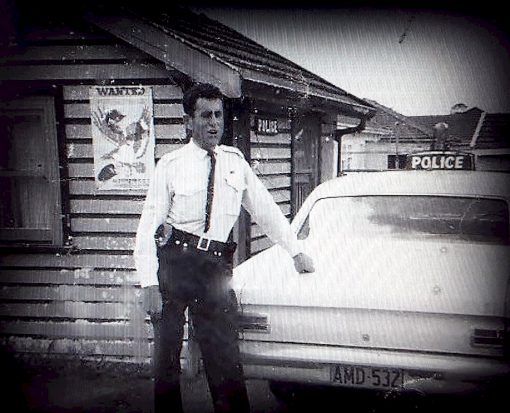
From Peter Croucher The original Cabramatta Police Station in 50s 60s early 70s. It was a call box in it’s time with barely enough room for three police. When I was stationed there in 1968, Sgt Bill Turner was the boss, Bill Espie, pictured above, had not long received the Police Medal for Bravery. If we were lucky to have an afternoon shift, the day shift would walk outside to let the others in. If it rained we’d sit on the bench desk with our feet on the chair so’s we could keep our feet dry from the rain water running across the floor. Peter Croucher
Bill [William Leonard] Espie, one of several talented Aboriginal men born in the Northern Territory in the mid to late 1930s who went on to make, each in his own way, a mark on Australia and to contribute to the progress of his people, has died in hospital, aged 76.
Espie was the first of these men destined for an exemplary career: he became the highest-ranking police officer of Aboriginal descent in all the Australian police forces.
He was followed by Charlie Perkins, who became a famous activist and then public service bureaucrat; Professor Gordon Briscoe, an academic and activist for his people; the artist John Moriarty; Vince Copley, chairman of Indigenous Cricket; and Brian Butler, in Aboriginal aged care.
Espie was born in Alice Springs, one of seven children to a mixed-race Arunta woman, Edith Espie, and Victor Cook, a European who had moved from South Australia to work in Alice Springs as a labourer.
His sister Ellen said the family lived in a good house in ”the Alice” and their parents did their best for them. Like Perkins and Briscoe and several others, Espie came under the benign influence of an Anglican priest, Father Percy Smith, who arranged for the boys to go to St Francis House at Semaphore in Adelaide, an indigenous boys’ home.
Espie, known then as Buckshot by the boys, was educated at Le Fevre High School, where he was a good sportsman, playing soccer, football and excelling at tennis, playing against state champions. He was even used in practice hit-ups against world champions such as Lew Hoad and Ken Rosewall.
He completed his intermediate certificate, then trained as a maintenance fitter. In 1955, he joined the Australian Army, became a sapper in the engineers and worked as a field engineer. He served at Maralinga during the atomic tests. Along the way, he married Irene Zachary, and served in the army until 1961.
At age 26, Espie decided to go to Sydney. He entered the New South Wales Police Force as a recruit and did his training at the Redfern academy, where he was noted as ”a good all-rounder”. He became a probationary constable on September 18, 1961.
Assigned for 12 months to Darlinghurst, he experienced a profound culture shock – the place could have not been more different from Alice Springs – but he managed the situation and was later transferred to Liverpool. During the following 16 years, he was to serve there, at Merrylands and Cabramatta.
Espie quickly came to notice for his discipline and attitude to his work. Former police commissioner Ken Moroney said: ”It was in these early formative days of his career that Bill deservedly earned the respect not only of his senior officers and peers but, as important, of the community in which he worked. Long before the words ‘community-based policing’ became the fashion of the day, Bill Espie’s life skills and worldly experiences had seen him well versed in the importance of effectively communicating with people at all levels. What you saw was what you got and there were no in-betweens. You knew exactly that he meant what he said and he said what he meant.”
What Espie did in practical terms did not escape official notice, either. In March 1965, he went to the scene of a collision and found both vehicles burning fiercely. Without hesitation, he went in and rescued a trapped man from each of the burning cars – earning a Commissioner’s Commendation and the Queen’s Commendation for Brave Conduct.
Commissioner Norman Allen also awarded him the Peter Mitchell Award, a perpetual trophy, to recognise his selfless and brave conduct, and he received the George Lewis Trophy ”for the most courageous act by a member of the NSW Police Force in 1965”.
In 1971, he received another Commissioner’s Commendation for pursuing and arresting an armed prison escapee.
A further Commissioner’s Commendation came in 1977 when he received a report of a man leaving a crime scene after a fatal shooting in Cabramatta. He was able to secure the crime scene and pursue the man, whom he arrested. The man was charged with murder and prosecuted.
In December 1980, Espie was awarded the National Medal for service and was later awarded the First Clasp of the National Medal.
Transferred to Central Police Station in Sydney, he became a sergeant second class in 1984, and sergeant first class in 1986. Arranging a transfer back to Fairfield, he continued performing well and, in February 1989, became a chief inspector. He served as patrol commander at Cabramatta until he retired in April 1991.
Espie is survived by his long-term partner, Maureen Ola, children Marita, William jnr, Bettina and John, 11 grandchildren, a great-granddaughter, his brothers Robert and Linton, sisters Ellen and Peg, and nephews and nieces.












4 Comments (starting with the most recent)
NB: If you want to reply to a previous comment, start your comment with this notation: @n where n is the number of the comment you want to reply to.
Enjoyed this story and the footy team photo is great. Would love to know who some of the other players are – if anyone around town knows.
What a bloke. A life well lived.
Bill lived a life of service to the community. I think his own words are very strong: “My mother had a choice; bring me up herself in an environment which offered no more than a twenty percent chance of being successful, or to let me grow up under the watchful eye of Father Smith.”
What a great story, Father Smith did a lot for the local Indigenous people here in the Alice.
My brother was one who went to Adelaide, Peter Tilmouth.
All the boys taken, all became great mates.
The Espie family was well respected here in the Alice and what an honour to have this man Bill Espie recognised, letting others know of his achievements. A story worth mentioning.