Government Gazette of the State of New South Wales (Sydney, NSW : 1901 – 2001), Friday 18 July 1986 (No.120), page 3400
NEW SOUTH WALES POLICE FORCE
Commissioned Officer Appointments
HIS Excellency the Governor, with the advice of the Executive Council, has approved of the undermentioned Commissioned Officer appointments, effective from the dates indicated:
Appointment to Inspector, Assistant Officer, No. 5 Division
Thank you for the page on Lawrence Blake Leonard. I thought you might be interested to know he had a brother in the NSW Police & another in the Queensland Police. I understand William was posted to Moulamein, Broken Hill and then Albury. The following is copied from Trove : Western Herald 1 Jul 1903
Constable William Leonard, brother of Constable J. B. Leonard, of Enngonia, died on Friday last at the Hospital, Albury, from pueumonia. Deceased was a married man and about 37 years of age. Very general sympathy is extended to both Mr and Mrs Leonard, who have each lost a brother within a few days, and also to the young widow and remainder of the family.
William had married Emily Theresa Stevens in Moulamein.
A third brother, Joseph Blake Leonard, joined the Queensland Police. This is from the Daily Mercury, Mackay (Trove) 1939
Many friends will regret the passing of Mr. Joseph Blake Leonard, who was a retired Sergeant of Police, death taking place in Brisbane on Monday last. The late Mr. Leonard spent many years in Mackay, and after serving a short period in the North, went to Gayndah. After his retirement Mr. and Mrs. Leonard built a home at Ashgrove, where Mrs. Leonard died in 1938. Their son, Blake, survives them.
The three were the children of James Leonard, (an assisted emigrant from Woodford Galway in 1850) and his wife Catherine Blake. All three were born at Jerrara, Goulburn, New South Wales. James was a farmer.
Another ‘mentioned’ Brother is Roger. It is not known if Roger was in the Police.
New South Wales Police Force
Regd. # Q 7396
For the purposes of this website, ‘Q‘ represents those Police joining between 1862 ( commencement of NSWPF ) – 23 February 1915 ( Commencement of NSWPF current numbering system )
Rank: ?, “possibly” a Sergeant
Stations: ?, “possibly” Taree, “possibly” Walgett ( from June 1923 as a SenSgt ), Marrickville – Sgt ( 2 July 1926 ),
Service: From 21 October 1899to? ? ? = ? years Service
Our Taree correspondent wires that a boy named Frank Leonard, 12 years of age, eldest son of Sergeant Leonard of the Taree police station, was drowned on Thursday evening, whilst bathing with a number of other children at Shallow Island swimming baths.
Sergt. PATRICK Stephen Leonard, Senior Police Prosecutor, died from pneumonia at Randwick to-day, after six week’s illness. ” He was one of the ablest men who have ever held the position of police prosecutor. ” said the Commissioner of Police to-day. ” I heard of his death with extreme regret. He was one of my best, most conscientious, and most promising officers. In my opinion, he would have attained to high police rank had he lived “.
The late sergeant was highly esteemed by all who know him. He was a most courteous, unassuming, and obliging officer, and was exceedingly popular with Pressmen, with whom he came into close contact at the various police courts. His word was his bond, and he was always scrupulously fair to defendants.
Sergeant Leonard joined the police force in 1900 and was made a first class sergeant in 1923. He served in the Darlinghurst division for 13 years and at Redfern, and was police prosecutor for seven years, first on the suburban circuit and latterly at the Central Police Court.
He was born in 1876, and was a native of N.S.W.
He was unmarried, and lived with his sister at Melford-street. Randwick.
WORKER FOR CHARITY
He was a prominent worker for various charities, and took an active part in the organisation of the annual police carnival.
The late officer’s first promotion to the rank of first-class constable was a reward for a particularly daring arrest of a burglar in William-street. City, at 4 a.m.. on December 13, 1904.
Two of his brothers also joined the police force — Charles, ( Q7396 ) now a sergeant at Marrickville, and Michael, (Q7115 ) who died from pneumonia some years ago.
The funeral will leave the Church of Our Lady of the Sacred Heart, Avoca street, Randwick, at 2.30pm tomorrow.
TRIBUTES IN COURT
‘ It is a sad end to a distinguished career.’ remarked Mr. Jennings. C.S.M., at the Central Court to-day. In referring to the death of Sergeant Leonard. ” He had been a long time with us, and his services were much appreciated by all those who worked with him. ”
Mr. Parker, on behalf of the legal profession. said he had known Sergeant Leonard for 23 or 24 years. ” I always admired him as an officer, ” went on Mr. Parker. ” He was absolutely conscientious. As a prosecutor he was one of the hardest men we had to fight, but he always fought fairly. He was a big man not only In stature, but In mind.”
Mr. Lionel Dare, barrister, remarked that, In his public capacity, Sergeant Leonard was courageous, unflinching, honorable, and firm.
Sergeant Cummings, police prosecutor, said the police felt Sergeant Leonard‘s death as a deep personal loss. He understood the late sergeant was on the eve of promotion to the rank of inspector. He was a highly capable officer.
TO HAVE BEEN MARRIED
A pathetic feature is that Sergeant Leonard was to have been married last Saturday to Miss Mary Agnes Roche, of Rose-street, Darlington, but his illness intervened.
( a photo of Sgt Leonard and Mary Roche appear in this news article but the ‘scan’ is far too dark from the Trove article to be useful for his Memorial page )
Great regret was felt over the death of Sergeant Patrick S. Leonard, Chief Police Prosecutor of the metropolitan district, which occurred at his late residence, Milford Street, Randwick, on Friday morning last.
Poignancy is added to the death of this fine police officer by the fact that he was on the eve of his promotion to an inspectorship — in fact, he was about to be presented with the whip that accompanies elevation to that rank.
The late Sergeant joined the service in 1900, and was stationed at Darlinghurst.
A hard-working and efficient policeman, he soon attracted the attention of his superiors, and he won quick promotion, attaining the rank of first-class sergeant in 1923. He was police prosecuting officer in the suburbs for 10 years until his transfer to the Central Police Court over a year ago.
Of a courteous and genial nature, he enjoyed the friendship of all sections of the community, and the esteem of all his fellow officers and subordinates.
Genuine expressions of regret at his passing were made at the Central Police Court on Friday. Mr. Jennings, S.M., said that those who represented defendants had been well satisfied with his fairness in all proceedings. It was a sad end to a distinguished career.
On behalf of the legal profession, Mr. Parker and Mr. Lionel Dare paid tributes to his conscientiousness. He was a hard man to fight, said Mr. Parker, but he fought fairly. He was big in stature and mind, and it would be hard to replace him.
For the police, Sergeant Cummings, prosecutor, extended sympathy to the relatives. He understood that Sergeant Leonard was on the eve of promotion.
The Commissioner of Police ( Mr. J. Mitchell ) said that it was with extreme regret that he had heard of Sergeant Leonard‘s death. ” He was one of the ablest officers in the service, and had he lived he would have reached high police rank. He also rendered excellent service as a member of the committee of the police carnival for hospitals. ”
Sergeant Leonard, who succumbed to pneumonia, was 50 years of age, and a devout Catholic.
Requiem Mass was celebrated by the Rev. Father T. O’Loughlin, M.S.C, at the Church of Our Lady of the Sacred Heart, Avoca-street, Randwick, after which the funeral cortege left the church for the Randwick cemetery.
The procession, which was officially a police funeral, attracted a very representative gathering.
Squads of police, preceded by the Police Band, marched under Inspector Maze, and members of the Metropolitan Fire Brigades, under District-Inspector Grimmond.
The pall-bearers were Inspector Maze, Sergeants Roser, Dean, MacDougall, Twist, Jones and Maher. Many and beautiful were the wreaths conveyed.
The principal mourners were: Messrs. Charles, Thomas, and Roger Leonard ( brothers ), Misses Annie and Cissie Leonard, and Mrs. Delahunty ( sisters ), and Miss Mary Roche, to whom Sergeant Leonard was to have been married.
Amongst those present were: The Chief Secretary ( Hon. C. C. Lazzarini, M.L.A.), Inspector Spyer ( representing the Commissioner of Police, Mr. Mitchell ), Mr. Cruise ( representing the Minister for Justice ), Mr. A. Bishop ( representing the Crown Law Department ), the Speaker ( Hon. J Dooley, M.L.A.), Supt. G. Mitchell, Supt. Mankey, Chief of C.I.B., Inspectors Lynch, Delaney, Lindfield, and Kersley; Det.-Sgt. Lynch, Det.-Sgt. Coombes, Det.-Sgt. Jones ( South Africa ), Det. Sgt. Kennedy, Det.-Sgt. Smith, Det.-Sgt. Miller, Sergeant Nicholls and Constable Carroll Ashfield, Detective Gallagher, Sergeant T. O’Brien, ex-Sergeants Duncan, Hay and Toohey, ex-Inspector Fullarton, C. Thackeray ( ” Police News ” ), Mr. B. Fortescue ( general secretary, Police Association ), Detective Comans, ex-Sergeant Hayes, Sergeant Lane, and Sergeants Philpott and Maples ( Redfern ), Station-officer Beare ( representing Fire Brigades’ Hospital Carnival and Art Union ), Messrs. R. D. Meagher, W. Niland, and T. Arkins ( solicitors ), R. O’Halloran, B. Greig, S. R. Alldis, Ms.L.A., Hon. J. Tyrrell, M.L.C., P. Conroy ( vice-president ), and W. Carey ( secretary, A.L.P.), Aldermen M. L’Estrange ( Mayor of Mascot ), R. H. McDonald ( Redfern ), and D. Mulcahy ( Waterloo ), Messrs. Rafferty ( assistant secretary, R.A.S.), T. Windrum ( Rockhampton), E. Ward, P. Fennessy, D. Capice, W. O’Connor, R. Allen, A. Agnew, L. R. Mordant, and A. R. Pope ( Catholic Club ), J. McCann, W. Campbell, Hartnett, H. Kirkland, W. McNamara ( secretary, Friendly Society Dispensary ), P. Rynn, and F. Haron. — R.I.P.
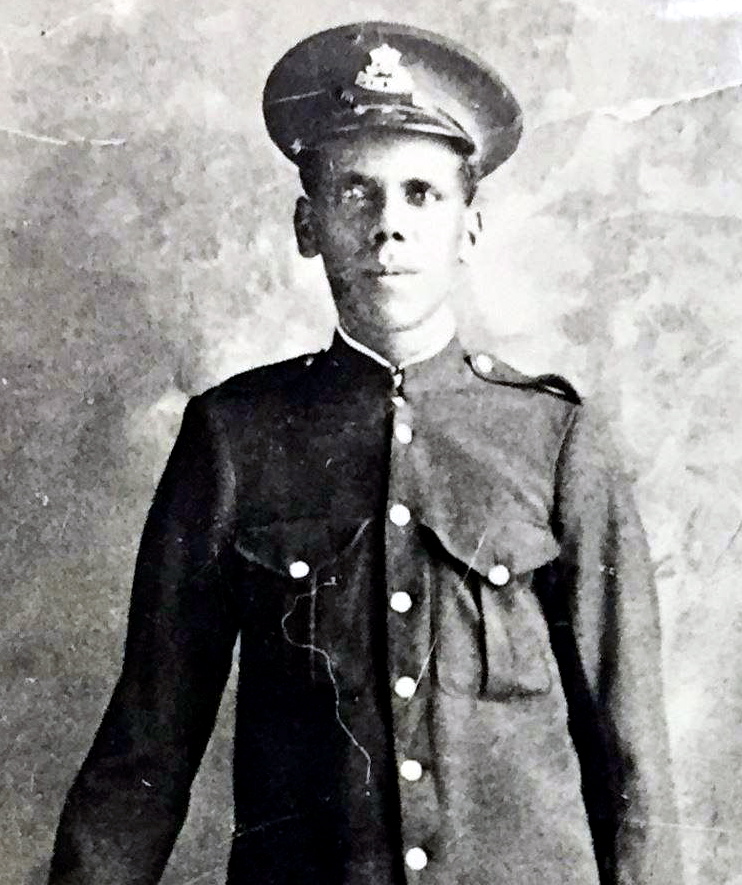
Walter Williams, a Bundjalung man, was born at Bonalbo in the 1890s to Lansbury Williams, a renowned stockman and tracker, and Emily Charles. Lansbury Williams probably spoke the Gidhabal dialect of Bundjalung. Walter was also the great-grandson of King Bobby and Queen Jinny Little who both had strong ties to Yulgilbar Station on the Clarence River. Before taking the job as the tracker at Casino in about 1919, he worked as a bush labourer and horse breaker. On one occasion, he drove 200 horses to Tabulam before breaking them all. He was a master horseman.
Walter took over as the Casino tracker from his father-in-law Denny Joseph. He continued to break horses for the police. His other main jobs as the tracker were to look for people lost in the bush and trailing herds of lost or stolen cattle. His tracking career was sadly cut short in 1930 when he suddenly passed away suffering from pneumonia, a condition he had first suffered from in 1919. He was survived by his wife, Violet Joseph, and four children.[1]
Bundjalung News 01/11/1977; Death Certificate of Walter Williams 1930/005249; Casino and Kyogle Courier and North Coast Advertiser 26 February 1919:
Casino and Kyogle Courier and North Coast Advertiser (NSW : 1904 – 1932), Wednesday 5 March 1930, page 2
CASINO BLACK TRACKER DIES.
The black-tracker, Walter Williams, who was attached to the Casino Police station, and who had been ill for the past few weeks, died on Sunday, after a severe bout of pneumonia and pleurisy. The deceased was 38 years of age, and besides his wife and family, leaves other relatives in the Tabulam district. . ” Walter Williams was a loyal and conscientious worker. ” said Sergeant S. L. McIntosh, when referring to Tracker Williams‘ death. ” He was with the police for 12 years, ” he added, ” and was most loyal in his work. ”
Clive Andrew Williams (1915?-1980), Aboriginal leader, was born probably on 22 February 1915 at Casino, New South Wales, second of five children of Walter Williams, an Aboriginal tracker, and his wife Violet, née Joseph, from Queensland. Clive attended the public school and was one of few Aborigines accepted at Casino Intermediate High School. At the age of 15 he began work on the railways at Coonabarabran. He returned to Casino where he was employed in the butter factory. While still a young man, Williams planned to travel to Bellbrook on the Macleay River to participate in an initiation ceremony. He found, to his disappointment, that the ceremonies had recently been discontinued, as they had among his own Bundjalung people on the Richmond and Clarence rivers.
At St John’s Presbyterian Church, Coraki, on 26 April 1941 Williams married Ida Drew, who had been taken from her parents by the Aborigines Protection Board. He built a rough dwelling and continued to work in the Casino butter factory. The family then lived for a time on the Aboriginal reserve, but in 1962 moved to a cottage in the town. In the mid-1960s Williams accepted accommodation at Tranby Co-operative College for Aborigines at Glebe, Sydney, where his work with Rev. Alfred Clint and the Co-operative for Aborigines Ltd was highly regarded. He gained employment with the Department of Main Roads and brought his growing family to their new home at Rozelle.
Having joined the Aboriginal-Australian Fellowship, Williams attended the annual conferences of the Federal Council for the Advancement of Aborigines and Torres Strait Islanders. Before the 1967 referendum, he helped in the successful campaign for the removal of the two offensive clauses in the Constitution relating to Aborigines. A member of the executive committee of the Aboriginal Education Council, he was involved with the early leadership training schools and other community development programmes. His wise counsel was appreciated.
In the 1960s the Commonwealth government was promoting the doctrine of ‘assimilation’, while Aboriginal organizations, especially F.C.A.A.T.S.I., wanted increased recognition of Aboriginal identity. Caught between two worlds, Williams was fiercely proud of his Aboriginal heritage but remained gentle and non-aggressive. In 1967 he took the leading role in a film, One Man’s Road, produced by the Commonwealth Film Unit for the Department of Interior; in it he and Ida told of their life and struggles. He was dismayed to discover that the Department of Territories used the film as propaganda to promote assimilation.
Williams and his family returned to the North Coast where he quickly became involved with the community. He was a leader among a group of Aboriginal elders who worked with the administrators of the Northern Rivers College of Advanced Education towards the recognition of the interests of the Bundjalung and other Aboriginal communities in the area. Suffering from hypertension, Clive Williams died of myocardial infarction on 1 December 1980 at his Lismore home and was buried in Goonellabah cemetery. His wife, and their three sons and six daughters survived him.
Rank: Probationary Constable – appointed 10 June 1952 ( aged 23 years, 1 month, 29 days )
Sergeant 3rd Class – appointed 1 January 1968
Sergeant 1st Class – appointed 14 December 1978
Chief Inspector – retirement
Stations: ?, Safety Bureau – Nth Sydney HWP, Bankstown STP ( 1970’s ), The Glebe ( 8 Division ), Five Dock ( to GD’s from Traffic ), Eastwood ( 17 Division ) as OIC at time of Retirement
Service: From? ? pre June 1952? to? ? ? = ? years Service
Awards: No find on It’s An Honour
Born: 12 April 1929 at Hurstville, NSW
Died on: Saturday 7 January 2017
Age: 87 years, 8 months, 26 days
Cause: Dementia and Pneumonia
Funeral date: ?
Funeral location: ?
Buried at: Cremated
Memorial at: ?
ROBERT is NOT mentioned on the Police Wall of Remembrance *NEED MORE INFO
Funeral location: ?
FURTHER INFORMATION IS NEEDED ABOUT THIS PERSON, THEIR LIFE, THEIR CAREER AND THEIR DEATH.
For the purposes of this website ‘Q‘ represents those Police joining between 1 March 1862 ( commencement of NSWPF ) – 23 February 1915 ( Commencement of NSWPF current numbering system )
Rank: Plain Clothes Constable ( 11 years )
Stations: Newcastle ( all his service )
Service: From 20 December 1899 to 7 September 1913 = 14 years
Awards: ?
Born: ? ? 1870
Event: Tuesday 2 September & Wednesday 3 September 1913
JOHN is NOT mentioned on the Police Wall of Remembrance *BUT SHOULD BE
Newcastle Morning Herald & Miner’s Advocate Monday 8 September 1913 page 5 of 8
CONSTABLE JOHN MURPHY. DEATH IN HOSPITAL.
Plain-clothes Constable John Murphy died in the Newcastle Hospital at half-past five yesterday morning, after a short illness. On Thursday he was admitted to the hospital suffering from an attack of pneumonia. His condition was very serious, and but little hope was held out of his recovery.
Forty-one years of age, Plain-clothes Constable Murphy had had about fourteen years’ service in the police force, during all of which he was stationed at Newcastle, and he had been doing plain-clothes duty for about eleven years.
A smart, capable detective, he was associated as a plain-clothes constable for over eight years with Senior-detective McHattie, and during that time those officers did some very creditable work in clearing up some forgeries and big railway robberies. He was also associated for a time with Plain-clothes Constable (now Detective) Ramsay.
Since the transfer of First-class Detective Surridge from Sydney to Newcastle, ten months ago, Plain-clothes Constable Murphy had been working with him, and they were instrumental in clearing up a number of serious and minor offences. He was popular with his colleagues, and particularly well liked by those with whom he came into immediate contact ; and his good-nature was well-known. On many occasions he has put his hand in his pocket to help even those who had come within the reach of the law. He was also popular with the public, and his death will be regretted by a large circle of friends.
His last duty was with Detective Surridge on Tuesday and Wednesday nights last attending to certain offences that had been committed between Hornsby and Newcastle, necessitating both officers spending two nights in the bush. He complained on Thursday morning of feeling ill on the return journey to Newcastle, and later in the day he was ordered into the hospital.
His father is Mr. Edward Murphy, a grazier, of Collingwood station, Murrumburrah, to whom telegrams have been forwarded. His sister, Mrs. F. Cooper, and her husband arrived at Newcastle yesterday from Sydney.
The funeral will leave the Newcastle Hospital at twenty minutes to three o’clock this afternoon for the Roman Catholic portion of the Sandgate Cemetery. The district police will be present, and Mr. Day, the Inspector- General, last night gave his sanction for the Police Band from Sydney to attend if the members could be notified in time for them to catch the train this morning.
Newcastle Morning Herald & Miner’s Advocate Tuesday 9 September 1913 page 4 of 8
LATE CONSTABLE MURPHY. THE FUNERAL.
The funeral of Constable John Murphy, who died in the Newcastle Hospital at an early hour on Sunday morning took place yesterday afternoon from the hospital, and the large attendance was a tribute to the deceased’s popularity.
The procession, which attracted hundreds of people along the line of march, proceeded by way of Telford-street, Hunter street, Extended, and Watt-street, to the railway station.
The Newcastle and district police, under Acting Superintendent Banks and Sub-inspector McHardy, to the number of nearly 100, headed the procession, then came the hearse and the general public. The length of the procession may be estimated when it is stated that the front portion had turned into Watt-street before the rear had reached the municipal jubilee memorial in the park.
The pall-bearers were Senior Detective McHattie, Detective Surridge, and Constables A. Roberts and G. Ferguson. Wreaths were sent by Miss Zoe Brady, Mr. Myer Cohen, Mr. and Mrs. E. W. Hough, Mr. and Mrs. J McHattie, Mr. Banfield, Mr. and Mrs. Howden, Mr. and. Mrs. J. Probert, Mr. E. W. Bearby, and the Newcastle and sub-district police. The police also sent a beautiful wreath of immortelles.
The chief mourner was Mrs. Cooper, a sister of deceased. At the graveside, the Rev. Father M Keenan, of St. Mary’s, Newcastle, conducted the service, which was of a most impressive character, the deceased being buried with all the rites of the Roman Catholic Church.
The Maitland Daily Mercury ( NSW ) Saturday 13 September 1913 page 6 of 12
Constable T. Ryan who for some time has been lockup-keeper at Wallsend, has been appointed to the plain-clothes branch of the Newcastle police, in succession to the late Constable John Murphy. By the way, it is stated as a sad circumstance in connection with the death of the popular officer named, that he was to have been married on the date of his demise.
This man is NOT recorded on the Police Memorial system, Canberra, but it is apparent, from reading these two articles, that the man contracted pneumonia from direct exposure over two nights in the bush in order to capture offenders.
He returns to his station on the 3rd day, and is directed to hospital where he dies three days later from pneumonia.
That sounds like a duty related death under those circumstances to me.
Cal
25 March 2014 ( 100 years later. )
Updated 1 March 2025 – still NOT mentioned on the National Police Wall of Remembrance.
Cause: lack of oxygen “due to displacement of oxygen supply” in Hospital. Pneumonia
Death location: Concord Hospital, Concord, NSW
Age: 45 years, 8 months, 13 days
Funeral date: ? ? ?
Funeral location: ?
Buried at: ?
Memorial location: ?
Andy at Redfern Police Academy on the day of his Passing Out Parade – 26 June 1981
ANDY IS mentioned on the Police Wall of Remembrance
BUT despite being mentioned, there are no details as to the cause of his death
From 15 October 2003 Detective Inspector Day and other members of the South East Asian Crime Squad were involved in archiving official documentation which was stored in a garage near their covert workplace. The inspector subsequently took ill and was admitted to Concord Hospital, where he unfortunately passed away on the 14th November 2003.
The detective inspector was born in 1958 and was sworn in as a probationary constable on the 26 June 1981. At the time of his death he was the coordinator of the South East Asian Crime Squad at the State Crime Command.
Not only Andy was affected by ‘flu like’ symptoms whilst working out of these premises. Several others took ill with severe flu like symptoms around the same time.
Detective Inspector Andy Day died on Concord Hospital floor
By Janet Fife-Yeomans
The Daily Telegraph
April 24, 200812:00AM
No comfort … widow Jacqui Day, with her son Ben, will return to Concord Hospital for the first time since her husband was found dead on the floor. Picture: Tracee Lea
CONCORD Hospital and a leading specialist have been secretly disciplined by the Health Care Complaints Commission after a patient was found dead on the floor in the middle of the night.
Widow Jacqui Day complained about the treatment of her husband Andy, a top undercover police officer, after an anonymous letter from nurses at the hospital said: “Mr Day should not have died.”
Detective Inspector Day, 45, was being treated for pneumonia and died when his oxygen tube fell out of its wall tap for the second time in six hours.
After an inquiry behind closed doors, the HCCC found that Concord, a major teaching hospital, had provided below standard care to Mr Day “in a number of respects”, The Daily Telegraph can reveal.
The commission also found that Professor Matthew Peters, the head of respiratory medicine at the hospital, had “departed from the acceptable standard of care” in two areas.
He was referred to the Medical Board’s conduct committee for “counselling” for not transferring Mr Day to the intensive care unit and for failing to appropriately monitor his oxygen needs.
Mrs Day will today appear before the Government’s special commission of inquiry into the state’s ailing health system, sitting at Concord, to demand answers and ask why the complaints procedure is shrouded in such secrecy.
There was evidence before the HCCC from four medical experts that Mr Day should have been moved to intensive care.
Professor Peters told the inquiry there were no intensive care beds available and Mr Day did not want to be moved.
The commission’s report, obtained by The Daily Telegraph, said there had been at least one bed available on five of the eight days Mr Day was in hospital and there was no record in the medical notes of Mr Day’s comments.
“In 2008, you can’t leave your loved one in a public hospital on their own,” Mrs Day said yesterday, adding that all adverse HCCC findings should be made public.
“I still do not know how a 45-year-old man can be admitted to hospital and die on the floor in the middle of the night.”
It will be Mrs Day’s first visit to the hospital since her husband died at 3.30am on November 14, 2003, after eight days treatment. The HCCC took 18 months on its inquiry.
The anonymous letter from nurses was sent to the coroner who conducted a 2006 inquest into Mr Day’s death.
The cause of death was recorded as a lack of oxygen “due to displacement of oxygen supply”, however coroner John Abernethy found Mr Day’s condition was so serious he would have died even with different care.
HCCC executive officer Kim Swan said legislation limited what the commission could release to the public.
The Medical Board did not return calls. Professor Peters is overseas.
 Edmund John Herbert LOWE 1957