A man has died following a crash in Sydney’s south west.
About 11.15pm yesterday (Thursday 2928 March 2024), emergency services were called to Oxley Street, Campbelltown, following reports a pedestrian had been hit by a car.
The pedestrian – believed to be an 80-year-old man – was treated by NSW Ambulance paramedics; however, he died at the scene.
He is yet to be formally identified.
The driver – a 26-year-old man – was not injured, and was taken to hospital for mandatory testing.
Officers attached to Campbelltown Police Area Command established a crime scene and commenced an investigation into the incident.
A report will be prepared for the information of the Coroner.
Anyone with information about this incident is urged to contact Crime Stoppers: 1800 333 000 or https://nsw.crimestoppers.com.au. Information is treated in strict confidence. The public is reminded not to report information via NSW Police social media pages.
Liverpool Police Cadet – NSW Police Cadet John. J. W. Hillier a former Labourer and Shop Assistant entered the Police Training Centre at Redfern to join the New South Wales Police Cadets.
Following his induction as a Police Cadet he was stationed at the C.I.B. Modus Operandi Section.
In 10/1961 he was transferred to No. 3 Division (Darlinghurst) on Station Duties.
In 1/1962 he was transferred to No. 22 Division (Liverpool) on Station Duties and then from the 8/1962 his duties at Liverpool were changed to the Public Safety Bureau Office.
During his examinations in 1961/1962, having received top marks, he obtained the Silver Baton – signed N. T. W. Allan Commissioner of Police.
Liverpool Police Officer – Probationary Constable John. J. W. Hillier who had returned to the Police Training Centre at Redfern to commence his Initial Training as part of Class 94.
He was attested 4/1963 as a Probationary Constable of Police and stationed at Liverpool Police Station on General Duties, where in 2/1964 he was promoted to the rank of Constable.
In 6/1964 he was transferred to Merrylands Police Station as the Inspector’s Clerk, a position which he held for approximately 18 months.
In 9/1965 he was transferred to Fairfield Police Station (which was part of No. 26 Division ( Merrylands ) at the time) on General Duties.
In 11/1966 he was transferred to No. 21 Division on Criminal Investigations Training.
In 10/1967 he was transferred to the Pillage Squad, where in 2/1968 he was promoted to the rank of Constable 1/c., and in 11/1969 he was designated a ‘Detective’.
Then in 12/1970 transferred to No. 28 Division on Criminal Investigations, where in 2/1972 he was promoted to the rank of Detective Senior Constable.
In 5/1974 he was transferred to No. 26 Division on Criminal Investigation and in 1/1978 transferred to No. 22 Division (Liverpool) on similar duties.
Liverpool Police Officer – Detective Senior Constable John. J. W. Hillier transferred from Merrylands (No. 26 Division) to Liverpool Police Station on Criminal Investigation Duties.
Then in 4/1979 he was transferred to No. 7 Division (Redfern) returned to Uniform Duties and was place on General Duties, where in 4/1983 he was promoted to the rank of Sergeant 3/c.
A Couple of weeks later in 4/1983 he was transferred to No. 2 Division (Regent Street) on General Duties.
Then in 8/1983 he transferred to the Traffic Branch on the Accident Investigation Squad.
While at the Accident Investigation Squad he wrote a ‘Training Course’ for those transferred into the Squad.
He was then the ‘head’ of its Training Unit, and took part in the first three Training Courses conducted at the Police Academy at Goulburn.
Later in 1980’s he transferred to Macquarie Fields Police Station on General Duties.
After a number of years he transferred to Campbelltown Police Station on similar duties.
Later he transferred to Revesby Police Station from where he was discharged medically unfit in 6/1999, after serving the NSW Community for a period of 38 years.
Above Service History Sourced from ‘History of the NSW Police At Liverpool ( 1788 – 2022 ) penned by Joe Stanioch, NSWPF # 14194
* Story behind any Nickname:
Nothing further, than what is recorded above, is known about this person at the time of publication and further information and photos would be appreciated.
The POS accused of fatally running over a young police officer has admitted stealing and driving the car but denies murdering the constable, a court has heard.
Reagan Ainslie Chown, 23, faced Stirling Gardens Magistrates Court in Perth on Wednesday ( 21 Feb. 2024 ) where he pleaded guilty to driving recklessly to escape police during a pursuit in a stolen Holden Cruze.
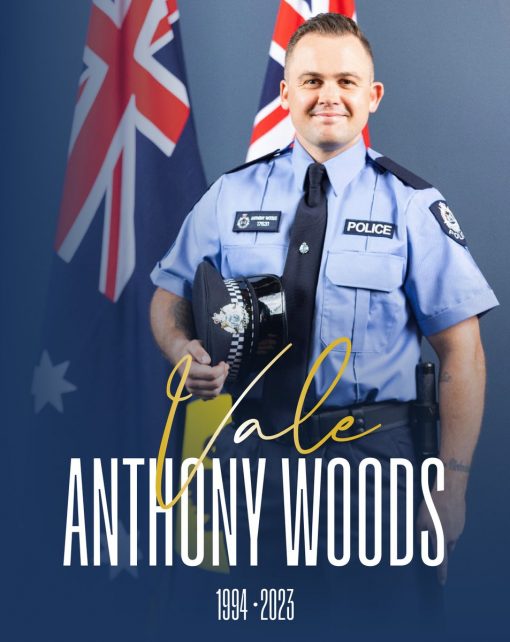
But he pleaded not guilty to murdering Constable Anthony Woods, 28, who was allegedly struck with the car in Ascot on June 8 last year.
The officer and his colleague had pulled over the vehicle and they were trying to detain three occupants when Constable Woods was allegedly dragged underneath as the car reversed.
Constable Woods was rushed to hospital in a critical condition and died on June 11.
He became the 88th WA Police officer to lose his life in the line of duty.
Constable Woods had only been on the force for about three years and had just passed his probation when he died.
He was farewelled at Optus Stadium on July 7.
In a statement after his death, Constable Woods’ family said they were shattered.
“He was a devoted husband and loving son, brother, and uncle who was taken from this earth far too soon,” they said.
“Anthony will be remembered as a funny, hard-working man who loved the West Coast Eagles and mucking around with his mates.
“He brought light and laughter to every situation, and his wicked sense of humour is irreplaceable.
“Our pain at this time is indescribable, and we take comfort in the outpouring of love from the community.
“We ask that you keep Anthony’s memory alive by telling stories of all of your good times with him.”
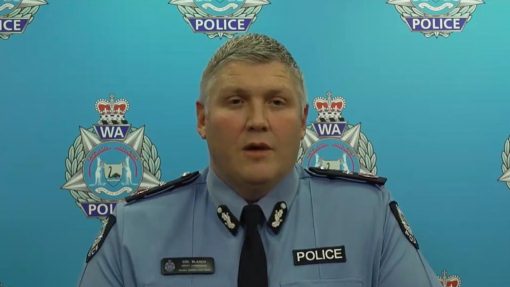
Police Commissioner Col Blanch said the young officer had been trying to keep the community safe.
“It was the sort of interaction that any of our officers may encounter any given day or night of the year, reminding us of the ever-present dangers facing police officers,” he said.
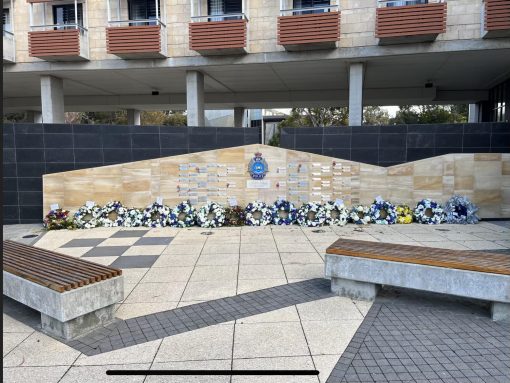
Constable Woods’ name has been added to memorial wall at the WA Police Academy in Joondalup, facing the flame of remembrance.
Chown will next face the WA Supreme Court on June 10.
Constable Anthony Woods succumbed to injuries suffered in the line of duty, while attending an incident in early June, in Ascot, Perth, Western Australia.
Three weeks previously, he had welcomed PolicingTV Founder, Bernard Rix, to Belmont Police Station in Perth, where they recorded this video intended to give PolicingTV viewers a detailed look behind the scenes.
Constable Woods’ family has asked that PolicingTV publish this video – today, the day of Anthony’s funeral – in his memory.
A personal statement by PolicingTV Founder, Bernard Rix:
It is with great sadness that I heard of the recent death, whilst on duty, of Western Australia Police Force’s Constable Anthony Woods.
Just last month, Anthony was chosen by the Force to provide me and PolicingTV with a guided tour of Belmont Police Station, in Perth. It was my great pleasure to film with him: he was a natural communicator, wonderfully friendly and engaging. I left Belmont that day having made a new friend, as well as with some wonderful film and memories.
My heart goes out to Anthony’s family, friends and policing colleagues. I may have met Anthony just the once, but his warmth that day made me feel I’d known him far longer. I hope this video helps bring back positive memories of a wonderful man: like so many others, I mourn his loss.
Thousands gather for funeral of police officer Anthony Woods in Perth
Thousands have gathered to honour Constable Anthony Woods after he was killed in the line of duty.
A West Australian police officer killed on duty is being laid to rest as his loved ones remember a larger-than-life character full of fun and joy.
A police funeral was held Thursday for Constable Anthony Woods, 28, who was allegedly run over by a man attempting to avoid arrest in June.
WATCH THE VIDEO ABOVE: Loved ones mourn Perth officer Anthony Woods.
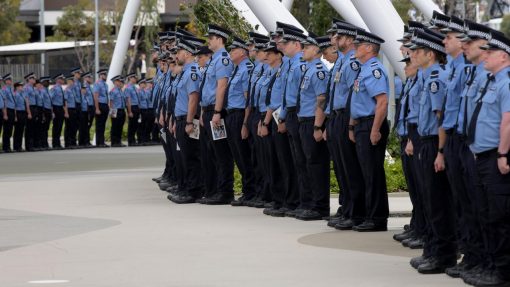
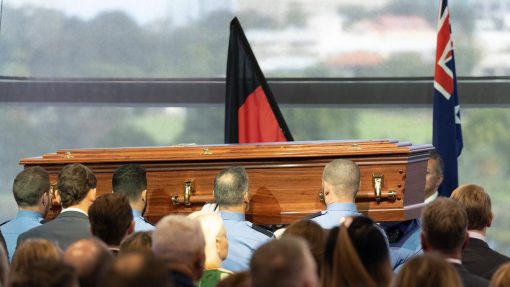
About 2000 officers and dignitaries stood in silence on Thursday as a bagpiper led the procession into a function room at Optus Stadium in Perth.
Opposition Leader Peter Dutton, WA Governor Chris Dawson, Police Commissioner Col Blanch and WA Premier Roger Cook were among the guests.
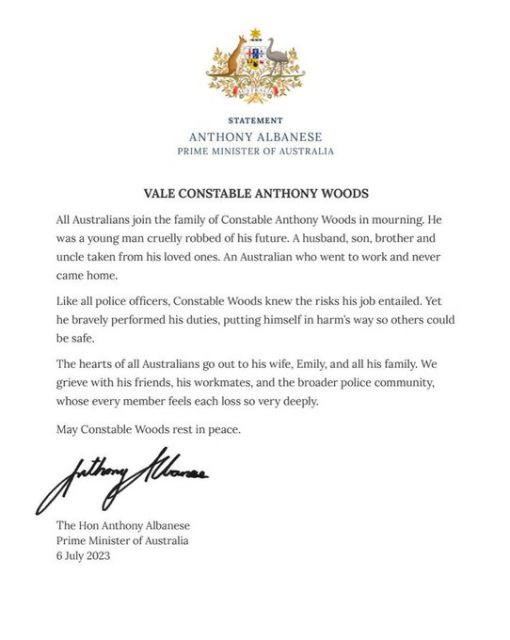
Prime Minister Anthony Albanese, who paid tribute to Woods in a statement as a “young man cruelly robbed of his future”, was represented by local Labor MP Zaneta Mascarenhas.
Police chaplain Paul Trimble paid tribute to the “larger-than-life” character who was full of fun and joy, but always treated others with respect.
A firm but fair officer, he died doing what he loved best.
The service concluded with a police honour guard. Credit: 7NEWS
“Anthony was in his element and wouldn’t have wanted to be anywhere else in that moment,” Timble told the service.
The chaplain spoke of a man who Woods had previously arrested leaving a condolence card at the station when he attended to sign in for his bail conditions, describing the officer as “a gentleman”.
In a poignant tribute, Woods’ wife Emily said she was “proud” and “so grateful for you”.
“Your love made me really strong and I’ll carry that with me every minute of every day,” she said
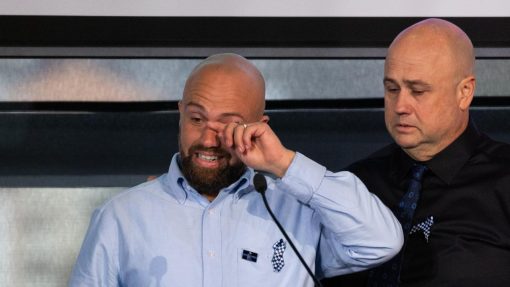
Woods’ older brother Nathan paid an emotional tribute, promising to live life to the fullest in his sibling’s honour.
“I’ll do my best to pick up where you left off. You’ve left a legacy and a massive imprint on this world,” he said.
“I love you bro and always will … until next time, mate.”
Anthony Woods’ wife Emily said she was ‘proud’ and ‘so grateful’ to have known the fallen officer. Credit: 7NEWS
The service concluded with a police honour guard.
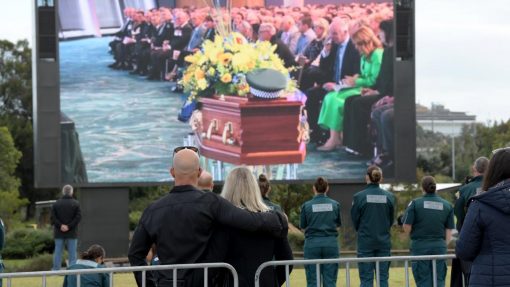
A few dozen members of the public gathered in gloomy weather to watch a livestream of proceedings outside the stadium.
Albanese said all Australians joined the officer’s family in mourning.
“He was a young man cruelly robbed of his future … an Australian who went to work and never came home,” he said.
“Like all police officers, Constable Woods knew the risks his job entailed, yet he bravely performed his duties, putting himself in harm’s way so others could be safe.”
Albanese said the hearts of all Australians went out to Woods’ wife, Emily, and his family.
“We grieve with his friends, his workmates and the broader police community, whose every member feels each loss so very deeply,” he said.
Earlier on Thursday, WA Police shared footage of Woods filmed just a month before his death.
The video was captured in May as part of a tour of Belmont Police Station as part of a series for PolicingTV.com.
“The selected footage demonstrates his professional, friendly and enthusiastic approach to the job he loved,” WA Police said.
Woods had just passed his probation with the force before he was killed, having volunteered at the PCYC before joining the police cadets in 2019 and moving into the recruit squad in 2021.
Emily has previously remembered him as a devoted husband and loving son, brother and uncle “who was taken from this Earth far too soon”.
“Anthony will be remembered as a funny, hard working man who loved the West Coast Eagles and mucking around with his mates,” she said in a statement.
“He brought light and laughter to every situation, and his wicked sense of humour is irreplaceable.”
Woods’ family was shattered by his death.
“Our pain at this time is indescribable, and we take comfort in the outpouring of love from the community,” the family said in a statement.
“We ask that you keep Anthony’s memory alive by telling stories of all of your good times with him.”
Blanch said Woods was a brave and dedicated police officer and it was a sad time for the “blue family”.
“You did your duty mate, we will remember,” he said at a press conference to announce the death.
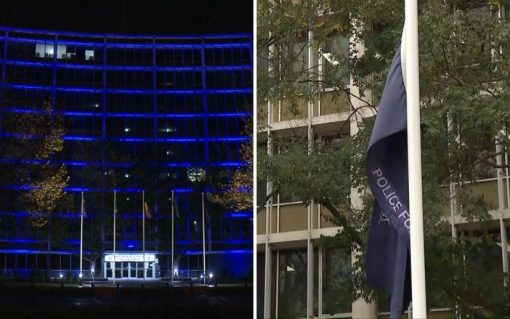
WA Police headquarters was turned blue in honour of the officer, while flags were flown at half-mast in the wake of the officer’s death. Credit: 7NEWS
Flags flew at half-mast at police stations across the state soon after, and Const Woods was honoured in federal parliament as someone who exemplified the values of the force.
Reagan Ainsley Chown, 23, has been charged with Woods’ murder after a vehicle with stolen number plates that he was allegedly driving hit and dragged the young officer underneath.
Chown is scheduled to next appear in court on August 30.
‘Infectious smile’: Funeral held for fallen WA cop Anthony Woods
The wife of a police officer killed while on duty has recounted the day they cried “happy tears” when he was accepted as a police cadet.
Anthony Anderson
4 min read
July 6, 2023 – 4:26PM
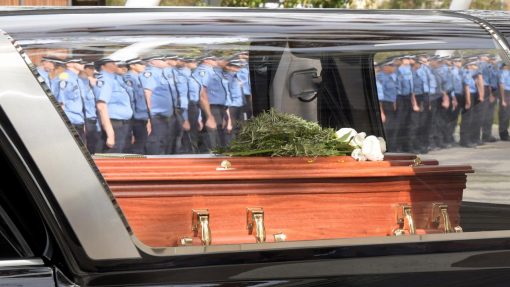
Hundreds of police officers and dignitaries from all branches of emergency services have filed into Perth’s Optus Stadium for the funeral of Constable Anthony Woods.
The 28-year-old died in hospital on June 11, four days after he was allegedly run down and dragged by a car during an early morning vehicle stop in the inner-east Perth suburb of Ascot.
Mourners braved a chilly, overcast Perth morning as they waited to be let into the private service on Thursday, the facade of Optus Stadium illuminated in blue lights.
The coffin of Constable Woods leaving the service in an honour guard. Picture: NCA NewsWire / Sharon Smith
Although the forecast called for a high chance of rain, it graciously held off as uniformed officers, some donning their full dress uniform, entered the stadium.
Police commissioners from across the nation were in attendance.
Queensland Police Service also paid tribute to the fallen constable on social media.
“Today, we are thinking of our (WA Police) colleagues as they farewell Constable Woods. With Honour He Served,” it posted on Twitter on Thursday morning.
Members of the public gathered outside the stadium to watch the service on a big screen. Picture: NCA NewsWire / Sharon Smith
Even Anthony Albanese posted a tribute to Constable Woods ahead of the service.
“Like all police officers, Constable Woods knew the risks the job entailed, yet he bravely performed his duties, putting himself in harm’s way so others could be safe,” the Prime Minister said in a statement.
Representatives from the Australian Defence Force and St John Ambulance also headed inside as invited guests, joined by family and friends of the late Constable Woods.
Outside, members of the public gathered to watch the service in the BHP Amphitheatre, which features a large screen normally used for broadcasting whatever sporting event is taking place inside the venue at the time.
Those in attendance included WA Governor, former police commissioner, Chris Dawson, Police Commissioner Col Blanch, Premier Roger Cook and his Police Minister Paul Papalia, and Federal Opposition Leader and former Queensland police officer Peter Dutton.
Mr Albanese was represented by member for Swan Zaneta Mascarenhas, while WA’s National and Liberal parties were represented by Shane Love and Peter Collier respectively.
Eulogies during the service were delivered by Constable Woods’ brother Nathan, his mother Natalie, wife Emily, childhood mates, and colleagues from the Belmont Police Station, where the constable had been posted since December.
Nathan said his brother should have been the one speaking “in the limelight, in his element, making you smile”.
Constable Woods’ “infectious smile,” as his mother described it, continued to pop up in the eulogies.
“You may now have been able to live the longest life, but you lived a full one,” Nathan said.
Adolescent friends Max and Jacob fondly remembered their mate, known to them by his nickname “Fumbles”.
“He is someone who deserve better, and I’ll miss him every day,” Max said.
Constable Woods’ coffin being taken from the room ahead of his final trip to Karrakatta Cemetery. Andrew Ritchie/The West Australian/ Pool image
Belmont Police Station colleagues Shaun and James touched on “Woodsy’s” less-than-perfect driving ability and elicited laughs from the audience when they told of the time he accidentally “tasered the floor”.
But they also praised the quality of his police work.
Mum Natalie said in death her son “has been given angel wings and a golden heart”.
But perhaps most touching was the eulogy given by Constable Woods’ wife Emily.
“You cried all through our wedding vows while I was dry-eyed and professional, so I think it’s only fair that it’s my turn to cry in public,” she said.
She told the story of how they received the news Constable Woods had been accepted in the police cadet program while out grocery shopping and had held each other and cried happy tears in the middle of the store.
“We spent 95 per cent of the day doubled over in laughter, loving each other and planning our future,” Ms Woods said.
“Nothing in the world will replace the comfort and love you gave me.”
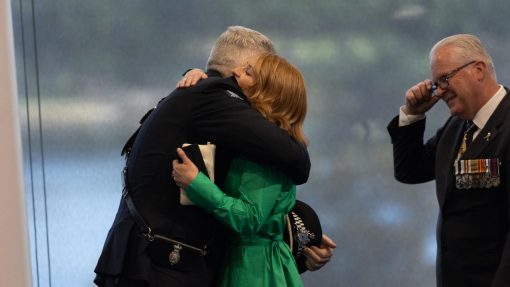
Emily Woods embraces WA Police Commissioner Col Blanch, alongside WA Governor and Mr Blanch’s predecessor, Chris Dawson. Picture: Andrew Ritchie/The West Australian/ Pool image
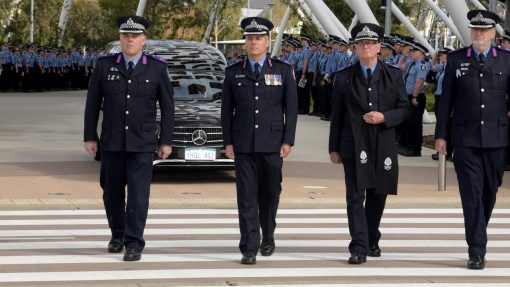
The service ended with the hundreds of police officers gathered forming an honour guard outside the stadium, where Mr Blanch radioed every officer statewide, calling on them to stand if they were able to have a minute’s silence for their fallen colleague.
Those driving were ordered to pull over, activate their emergency lights, and leave their vehicles for the minute.
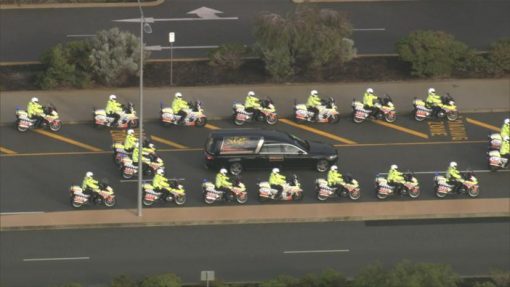
Constable Woods’ body was taken to Karrakatta Cemetery, where he will be cremated.
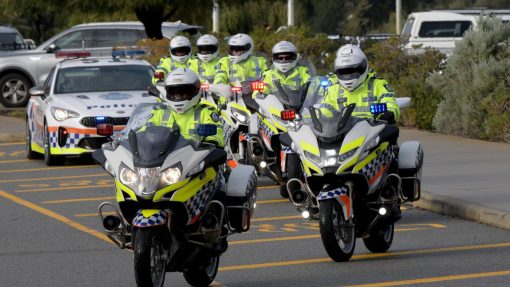
The hearse was followed by mounted police units and bagpipe players as it made its way around the stadium. Picture: NCA NewsWire / Sharon Smith
The funeral comes just a day after the man allegedly responsible for running down Constable Woods, Reagan Chown, fronted Perth’s Stirling Gardens Magistrates Court.
The 23-year-old appeared on a charge of murder, upgraded in the wake of Constable Woods’ death.
Mr Chown’s was adjourned until August 30 when he’ll appear on all charges relating to the alleged incident.
Police say Mr Chown was behind the wheel of a car that bore stolen number plates when it was pulled over by Constable Woods and his partner about 1am on June 8.
As the officers tried to apprehend three people in the vehicle, Mr Chown allegedly reversed over Constable Woods and dragged him some distance, causing him catastrophic injuries.
Other officers arrived and they had to lift the vehicle off Constable Woods and perform CPR until paramedics arrived.
Nathan Woods said his brother lived a full life. Picture: Andrew Ritchie/The West Australian
Mr Chown is the first person to be charged over the alleged killing of a WA police officer in the line of duty in 16 years since Constable Damien Murphy was run down by an unlicensed driver in 2007.
His killer was later jailed on a charge of manslaughter.
Constable Woods is the 88th WA Police officer to die in the line of duty.
A man who allegedly ran over and killed a West Australian police officer is now facing a murder charge.
Constable Anthony Woods, 28, died in hospital on Sunday night, four days after he was allegedly dragged under a car in Ascot in east Perth during an arrest.
WA Police Commissioner Col Blanch said the man in custody over the incident, Reagan Ainsley Chown, would have his charges upgraded.
On Tuesday, police revealed the 23-year-old had officially been charged with murder.
Mr Chown initially appeared in court on Friday and made no application for bail on a number of charges, including causing grievous bodily harm while trying to avoid arrest.
He appeared in court again on Tuesday via videolink from Hakea Prison on the murder charge. He did not apply for bail and will appear in Stirling Gardens Magistrate in July.
Flags were flown at half mast outside the WA Police headquarters and at police stations across WA on Monday.
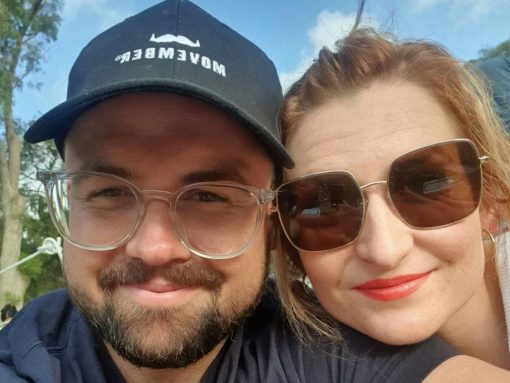
WA Police officer Anthony Woods (left) with wife Emily
WA Police Commissioner Col Blanch revealed on Monday that Constable Woods had just finished his probation prior to the tragic incident.
He described the young officer as someone who liked to joke with friends and colleagues at Belmont police station.
“We spoke about his cheeky grin and the pranks that he pulled,” Mr Blanch said.
“He had a bubbly personality, he was very personable, he was well loved by all.
“Anthony was a brave and dedicated police officer. You did your duty mate. We will remember.”
Mr Blanch said a full police funeral would be offered to Constable Woods’ family, who shared a tribute to the late officer on Monday.
In a statement, Constable Woods’ family said they were shattered by the loss of their “dear Anthony”.
“He (Mr Woods) was a devoted husband and loving son, brother, and uncle who was taken from this earth far too soon,” they said.
“Anthony will be remembered as a funny, hard working man who loved the West Coast Eagles and mucking around with his mates.
“He brought light and laughter to every situation, and his wicked sense of humour is irreplaceable.
“Our pain at this time is indescribable, and we take comfort in the outpouring of love from the community.
“We ask that you keep Anthony‘s memory alive by telling stories of all of your good times with him.”
On Sunday, WA Police said in a statement: “Constable Anthony Woods exemplified the values of the WA Police Force.
“His is memory will be forever etched in our hearts.
“We extend heartfelt condolences to Anthony’s family, colleagues and all those who knew and loved him.”
Constable Woods and his partners were following a vehicle with allegedly stolen plates about 1am on Thursday.
The vehicle came to a stop on Ascot Place before police approached the vehicle and the three people inside.
It is alleged the car suddenly reversed while police were dealing with the driver.
“He (Constable Woods) has subsequently been pinned by that vehicle,” Mr Blanch said.
“His partner then had a desperate few minutes to not only put three suspects into custody inside that vehicle but also try to save the life of his partner.”
Other officers arrived soon after and rushed to assist.
Police used a nearby resident’s car-jack to lift the car off Constable Woods before performing CPR.
Constable Woods was resuscitated before being rushed to hospital soon after in a critical condition.
Constable Woods’ death marks the 88th police officer in the state to die in the line of duty.
WA Premier Roger Cook took to social media to share his condolences to the force.
Deputy Commissioner Col Blanch said the car suddenly reversed while police were dealing with the driver.
“I am devastated by the horrific events that occurred last week resulting in the death of one of our police officers,” Mr Cook said.
“Actions like these are senseless – and going to work should be safe.
“I know I speak on behalf of everyone in WA, in sending our love and thoughts to Anthony’s family, friends and colleagues. His life was dedicated to making our state a safer place for West Australians.
“He is to be commended on his dedication and bravery.”
Perth Mayor Basil Zempilas said on Sunday the Council House would be lit blue to honour Constable Woods.
“We remember his bravery and mourn his loss,” Mr Zempilas said.
“Our deepest condolences to his family, friends and colleagues.
“Our city has lost a hero.”
City of Gosnells councillor and former police officer Glenn Dewhurst also paid his respects.
“Even though I have been out of the force for some time, it still hits home when one of your own loses their life,” he said.
“God bless you – your family and friends and your colleagues past and present.”
Police said the vehicle’s other two occupants, a 20-year-old woman and 25-year-old man, had been released pending further investigation.
Accused cop killer in court one day before Constable Anthony Woods’ funeral
The man accused of fatally running down a police officer made a brief appearance in court just a day before his alleged victim is farewelled.
Anthony Anderson
2 min read
July 5, 2023 – 1:14PM
The man accused of fatally running down a West Australian police officer has briefly appeared in court the day before his alleged victim is farewelled in a massive service.
Constable Anthony Woods will be honoured in a private funeral service at Optus Stadium on Thursday, expected to be attended by thousands of his fellow officers.
The 28-year-old’s life support was switched offfour days after suffering catastrophic injuries after allegedly being backed over and dragged by a car he and his partner had stopped in the inner-eastern Perth suburb of Ascot in the early hours of June 8.
The man allegedly behind the wheel of the vehicle, Reagan Ainsley Chown, had his case briefly heard in Stirling Gardens Magistrates Court on Wednesday.
The 23-year-old appeared via video link from Hakea Prison in his first appearance in Stirling Gardens following appearances in Perth Magistrates Court, where he had his charges upgraded to murder.
He’s also facing a number of drugs charges as well as reckless driving to escape pursuit by police and driver of a vehicle failed to comply with a direction to stop (circumstance of aggravation), which also relate to the June 8 incident.
His matter was adjourned to August 30 when all of his charges, including the count of murder, will be heard together.
During the fatal incident, Constable Woods and his partner had been trying to detain three people in the stopped vehicle, which allegedly bore stolen number plates, when it allegedly reversed and struck Constable Woods.
Other officers arrived and had to lift the car off the critically injured constable, performing CPR until paramedics arrived.
WA Police Commissioner Col Blanch previously spoke about visiting Constable Woods’ colleagues at Belmont Police Station in the days following his death.
“We spoke about his cheeky grin and the pranks that he pulled,” Mr Blanch said.
“He had a bubbly personality, he was very personable, he was well loved by all.
“Anthony was a brave and dedicated police officer. You did your duty mate. We will remember.”
In a statement following his death, Constable Woods’ family said they were shattered by the loss of their “dear Anthony”.
“He (Mr Woods) was a devoted husband and loving son, brother, and uncle who was taken from this earth far too soon,” they said.
“Anthony will be remembered as a funny, hard working man who loved the West Coast Eagles and mucking around with his mates.
“He brought light and laughter to every situation, and his wicked sense of humour is irreplaceable.
“Our pain at this time is indescribable, and we take comfort in the outpouring of love from the community.”
Mr Chown is the first person to be charged over the alleged killing of a WA police officer in the line of duty in 16 years since Constable Damien Murphy was run down by an unlicensed driver in 2007.
His killer was later jailed on a charge of manslaughter.
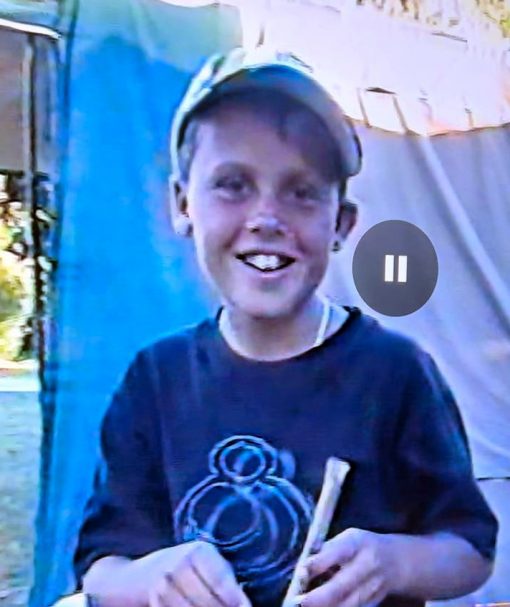
* Story behind any Nickname: Woodsy – stemming from the surname Woods. Fumbles: ?
As of 16 February 2024, the offenders Court matter, involved in our Blue Brothers Murder, has still not been finalised.
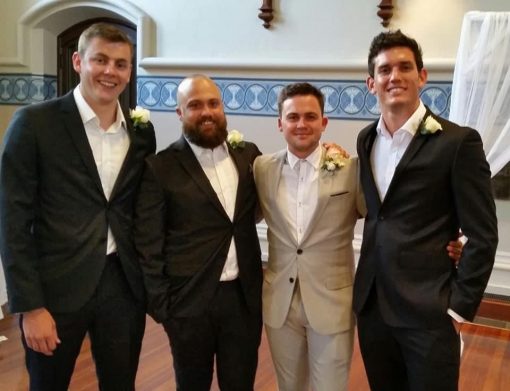
Tony WOODS & ?
Siblings: Anthony, Brooke & Nathan WOODS
?, Nathan WOODS, Tony WOODS & ?
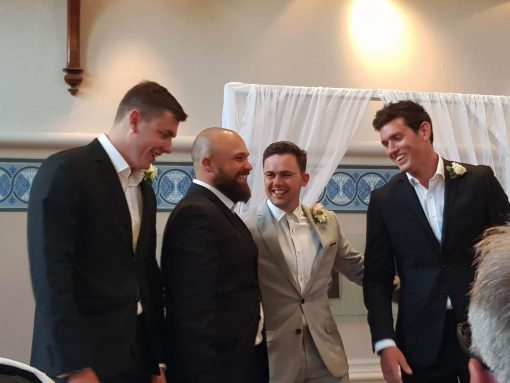
Nathan WOODS, ?, Tony WOODS
? & Tony WOODS
Tony WOODS & ?
Nothing further, than what is recorded above, is known about this person at the time of publication and further information and photos would be appreciated.
The constable was knocked down by a young man riding a bicycle in Pennant Hills Road, Parramatta on 27 November, 1912. He was taken to the Parramatta Hospital where he passed away on 7 December. He was on duty at the time. The following brief article appeared in the Barrier Miner newspaper of the 9 December, 1912.
“DEATH OF A CONSTABLE – RESULT OF A BICYCLE COLLISION.
On November 27 Constable G. Sheill [sic], while on duty on the Pennant Hills Road, was run into from behind by a cyclist named Francis Mobbs, who was on his way to the chemists for medicine for a sick relative. The constable was thrown heavily on the roadway, his head striking the metal with great force. He was conveyed in an unconscious condition to the Parramatta Hospital, where he remained in a very bad way until Saturday morning last, when he succumbed to his injuries. The deceased officer, who was 43 years of age and had been 22 years in the police force, leaves a widow and three children. He was previously stationed at Lawson and Broken Hill.”
The constable was born in 1860 and joined the New South Wales Police Force on 2 January, 1891. He was stationed at Parramatta. He is not listed in the official New South Wales Police Honour Roll.
Cumberland Argus and Fruitgrowers Advocate (Parramatta, NSW : 1888 – 1950), Wednesday 11 December 1912, page 2
Death of Constable Shiell.
A Fatal Collision,
Constable George Shiell died in the Parramatta District Hospital early on Saturday morning. He had been a patient since the evening of November 27, on which day he was run down by a cyclist, and sustained severe concussion of the brain which proved fatal. The facts as narrated at the time in ‘The Argus’ were that Shiell was on duty on the Pennant Hills Road on the evening of the 27th, when Frank Mobbs, riding into Parramatta with all speed on a cycle, to obtain medication for his sister, ran into the constable with considerable force.
Shiell, who was a heavy man, fell back wards, his head striking the hard metal road very severely. He did not move after he. fell, and Mobbs went to his assistance. The constable was then unconscious, and was removed in a cab to the Parramatta Hospital. He never regained consciousness, and died ten days after the accident happened. The funeral was impressively carried out on Monday morning, Mr. E. L. Maitland, S.M., adjourning the Parramatta Police Court front 11.30 a.m. until 2 p.m., as a mark of respect. The arrangements were entrusted .to Mr. Ralph Metcalfe. The solemn procession was formed up in front of the police station, the coffin being brought to the hearse, from the Hospital morgue. Troopers Porter and Wilkinson, mounted, headed the cortege. which marched to the mournful strains of the Dead March in Saul and other appropriate music. This thrilling lament was exquisitely and most feelingly played by the fine police band, consisting of some 18 musicians, under the direction of Capt. Bentley and Sergeant Mankey. The drums were draped in black as a token of sorrow for the comrade departed. The band was followed by a body of police under the command of Inspector Trenchard, amongst whom were Sergeant MacMillan, Sergeant Hynes, Senior-Constables Gillies, Nelson, Robertson, Allison, McDonald, Trevillian, and Freeland, and some IS members of the force. Also present were notice ex Senior Constable May and West, and ex Constable Denman, Buchanan, Sergeant Cawood and others. The pall bearers were Constables Kelly, Sheddon, Bruce and Wilson, and the chief mourners were Mr. and Mrs. Shiell. jun., Miss Venables and Mr. Potts, near relatives of deceased. The procession marched via George and Church streets to the Western-road cemetery, where the mortal remains of the departed officer were reverently laid to rest in the Presbyterian portion of the burial ground. The funeral service was conducted by the Rev. John Paterson, and the police band played very movingly by the grave-side. Beautiful floral tributes were sent in, one wreath under a glass cover bearing a card stating that it was ‘a token of esteem and deepest sympathy from his brother comrades of the Parramatta police.” The other bore the word, ‘Asleep,’ and was addressed ” With deepest sympathy, from the employees of Yolhnann’s ?, Ltd.’
Cumberland Argus and Fruitgrowers Advocate (Parramatta, NSW : 1888 – 1950), Saturday 22 February 1919, page 6
MARRIAGE.
FISHBURN — SHIELL — January 25, 1919, at St. Paul’s, Castle Hill, by the Rev. W. J. Roberts, Frank Walter, only son of Mr. and Mrs. W. Fishburn, Castle Hill, to Florence Janet, only daughter of the late Constable George Shiell and Mrs. Shiell, Sorrell-street, Parramatta.
Constable George Shiell, of Parramatta, was run down by a cyclist, at the Pennant Hill road, about 9 o’clock last night. The cyclist was hurrying Into Parramatta for medical assistance for his sister, when the accident happened, and he went to the assistance of Shiell, who was unconscious, and had him conveyed to Parramatta Hospital. The constable was still unconscious this morning, suffering from concussion of the brain.
BY virtue of an authority vested in me by an order of His Excellency the Governor-in-Council, I have appointed the undermentioned members of the Police Force as Inspectors of Slaughter-houses and of Cattle intended to to slaughtered :—
IT is hereby notified, for public information, that the undermentioned Sanitary Inspectors have been appointed by the Local Authorities under the ” Public Health Act, 1902,” for the Police Districts named :—
Police District. Lawson.
Name of Sanitary Inspector. First Class Constable George Shiell
Barrier Miner (Broken Hill, NSW : 1888 – 1954), Thursday 22 March 1894, page 1
THE SOUTH TRAGEDY.
THE INQUEST.
CONSTABLE WHITE’S EVIDENCE.
THE inquest on the body of John Jeremiah Considine, who was killed at South Broken Hill on Sunday morning, was resumed at the Town Hall this afternoon before Mr. A. N. Barnett, district coroner.
Constables J. L. White and George Shiell were present in custody. Alderman John Souter was foreman of the jury.
Mr. A. J. Hall appeared for the relatives of the deceased.
The first witness was Constable James Lees White, who appeared with his head bandaged.
The Coroner said before administering the oath that the witness was not obliged to answer any questions which might bear on any future proceedings.
The witness said : – I was stationed in charge at South Broken Hill ; I am relieved from duty ; I have been in charge at South Broken Hill from the middle of October last ; I was on duty at South Broken Hill on the night of March 17 ; Constable George Shiell was also on duty ; I saw the deceased Considine on the morning of the 18th at about a quarter past 12 o’clock ; he was in the back yard of Hegarty’s Hotel; he came from the back of the hotel with two men named McLennon into South-street ; be came to the gate of the yard of the hotel ; the three men appeared to be the worse for liquor, the two McLennons more so than Considine ; as they came to the gate I said, “Good night, Considine ; don’t you think it is about time you were getting home?’ ; one of the McLennon’s said, ” Oh, yes, come on, Jack ” ( meaning Considine ) ” we’ll go;” Considine replied, ” No, I won’t – I’ll go home when I think fit ;” he then put his hand up to his ( witness’ ) face, and, spreading it out, said, ” Now, White, you appear to be watching me ;” he still kept putting his hand up, and said, ” Now, White, I warn you if Shiell or Shiner comes to arrest me you had better come well prepared or you’ll go down.” I replied, “There’s nobody talking about arresting you.” He replied, “Never mind, I’ve warned you ; take what meaning you like out of it ;” one of the McLennons got him by the arm then, and said, ” come on, Jack, never mind;” he replied, “you go away, Hughie, and mind your own business,” and pushing McLennon in the chest, knocked him down ; Constable Shiell then stepped over to the kerb side of the footpath and beckoned with his finger saying, ” Look here Jack, I want to speak to you ;” Considine passed me, and went over to Constable Shiell, putting his hands up in a threatening attitude, saying : ” You, Shiell, you’re only a ……… thing, a …… sneak, and a ….. crawler. Shiell replied, backing away from him towards the fence of the hotel, and Considine said, with his hands up in a fighting attitude, ” I’ll drop you.” He backed Shiell against the fence up to within about two feet or a yard from Hegarty’s Hotel; Shiell drew his baton and struck at him, and I also drew my baton, believing there would be a row ; I believe he struck Shiell; he rushed at Shiell, and I struck him with my baton over the forehead ; he sidled backwards and then started to run along South street and into Patton-lane ; he entered Hegarty’s Hotel by a small gate off Patton-lane, and ran through the yard into the passage of the hotel, followed by myself and Constable Shiell ; finding there was no light in the passage of the hotel, we didn’t enter ; called the landlord, Mr. Hegarty, who came out and gave me a candle ; at this time I heard a noise as if a door was being opened and shut ; lit the candle and proceeded along the passages of the hotel and searched them, but failed to find anybody ; found that the door of the hotel leading into South-street was closed, but unlocked ; remarked to Hegarty, ” He’s got away, we must let him go and take proceedings on Monday “; after speaking to Hegarty for about three minutes at the side door of the hotel, Hegarty either remarked, ” Here he’s coming ” or ” Here’s somebody coming,” could not say which ; Hegarty took the candle, and going inside closed the door ; it was Considine coming, and he appeared to increase his pace as he came towards us, saying, “Now, I’ll smash your ….. brains out;” the McLennons were at this time standing near the entrance gate of the hotel, 20 yards off; when Considine came within 10 paces of me I saw he had something in his hand which he was carrying low down, as if it were a rifle; he struck at Constable Shiell and then swung round at me ; I then saw that what he had was not a rifle, but a bar of iron or an octagon drill, about 4ft. or 4ft 6in. long ; he swung it round in both hands with terrific force at me ; I closed with him to try and avoid the full force of the blow, but the iron struck me over the left ear, and I fell on my back out on to the footpath ; I produce the cap I was wearing at the time showing, it cut through just where I got the blow over the ear ; I was partly dazed for a few seconds; I raised myself on my left elbow, and looking round saw Considine chasing Shiell down along the police station fence in Patton-street ; I got up, staggered across the street, and went into the.police station; I had previously tried to arrest Considine for riotous behavior ; I saw Shiell at the police station; we got our revolvers and went out into Patton-street with a view to effecting his arrest ; we saw him standing in South-street, against Krantz’s store, about 30 or 40 yards from us ; we went towards him and he started to move away towards the direction of his house or towards Hebbard-lane ; I called out, ” Considine stand, or I’ll shoot;” he then started to run ; the period between this time and when I got up off the path was about three minutes ; he ran, and I called out again, ” Considine stand or I’ll shoot”; he was 20 yards off ; he increased his pace and replied “Shoot away, I can do you,” or ” I can do for you,” I’m not sure which ; I then fired a shot from about 10 paces behind him into the ground before him to frighten him ; he still kept running and as he turned into Hebbard-lane I fired another shot at his feet ; it didn’t appear to take effect, as he still kept running, and as he turned into his own block, he partly looked back over his shoulder at the time to see if I was pursuing him ; after getting into his own block he turned round and faced me, and came towards me with his hands up in front of him about level with his face ; I ran into, him, striking him with my left shoulder, knocking him down ; he then said, “I give in,” and with the assistance of Constable Shiell I put the handcuffs on ; we picked him up between us and conveyed him some yards when his knees gave way, and he suddenly fell down, saying, ” I’m done ;” I fired three shots, the third one being fired as he turned out of Hebbard-lane into his own block ; I fired the third shot at his knees as he was running and looking back at me ; after I fired the first shot Shiell also fired, but without apparent effect ; after I fired the second shot Shiell responded, and this also didn’t appear to take any effect ; as I fired the third shot Shiell immediately fired also, Shiell being about a yard behind me ; Considine appears to be in the act of turning round and coming towards me ; cannot say in what direction Shiell fired when deceased fell down I ran for cab over in Hebbard-street, as he appeared to be badly wounded ; left Considine with Shiell ; told the cabman to come to Hebbard-lane, and when I came we put the deceased into the cab he was then alive, but breathing heavily ; before removing Considine to the cab Mr. Pound and a man named Reid came and assisted us to put the deceased in the cab ; the cab went down to the police station ; Constable Shiell came out and went in the inside with the deceased; I got on the box with the driver, and told him to drive as fast as he could into town ; we reached Dr. Thomson’s surgery in Argent-street at about 12.45 ; I called Dr. Thomson; he came out and examined Considine and said he thought life extinct; he bandaged my head, and we then drove to the hospital and put the body of the deceased in the morgue; the revolver produced is in the same condition as it was when I used it ; it is loaded in three chambers; three cartridge: were exploded.
By the Coroner : When I fired the last shot the deceased had not turned towards me, but was running sideways from me, exposing his right side, and with his face towards me.
By Mr. Hall : I had known Considine for four or five months ; I had heard that the police did not care about interfering with him, especially if he was under the influence of liquor ; I cannot say he was a peaceable citizen, because I saw him picking a quarrel at a banquet two nights before ; I used to be on fairly friendly terms with Considine, and never spoke to him officially before ; I did not see the deceased before on that evening ; I was exceedingly civil to him when I advised him to go home; I spoke to him in friendship, because I knew that in liquor be was apt to get into trouble ; I saw neither Carney nor O’Leary present at the time ; I am certain it was McLennon who caught hold of Considine by the arm and ordered him to go home ; it is untrue that Considine said to me, “You are a white man,” and, turning to Shiell, said “You are a crawler,” and that thereupon Shiell struck him on the head with a baton; he kept calling Shiells ” crawler ” and walking towards him, and it was when Shiell had backed to within a yard of the fence that he struck Considine with his baton ; I believe he struck him on the neck or the jaw; I also struck him ; the small wound caused by me over the eye was afterwards mistaken for a bullet wound ; it did not bleed profusely; when Considine came the second time I recognised him at a distance of 20 yards ; he increased his pace when he got close; notwithstanding that the peak and the button on my cap are uninjured, I consider that the clean cut on toe side of the cap was caused by the blow with the bar ; I was leaning away from him when he struck at me, and I got so close in that he could not give full force to the blow ; I cannot say what conversation Shiell and I had when we went into the station ; Shiell was very much excited, like myself ; my revolver was unloaded, and I had to load it; Constable Shiell took Constable Shiner’s revolver; I don’t know whether he had to load it ; I decline to answer the question as to who first suggested the use of revolvers on the ground that it may incriminate me; I have had no instructions whatever about the regulation revolvers ; my experience is that a revolver does not carry high with a fine sight ; it was between 30 or 40 yards from where I fired the first shot to where he fell ; while we were coming up from the police-station towards Considine I said to Shiell, ” If he attacks us again whatever you do don’t shoot him in the body, fire low” ; when I first called on Considine to stop I believe he had the bar still in his possession ; when the last shot was fired he was between 15 and 20 yards away ; I did not see him drop or fling away any weapon; it was in consequence of his second attack that we went to arrest him immediately instead of waiting until Monday ; before I left the ground I gave instructions that the weapon should be searched for ; Constable Shiner afterwards told me that he could not find it; I know Considine was a married man ; his wife told me on the Friday evening that she was not living with him ; while I was on the way to the cabdriver’s I met a man named Ohllson ; I don’t remember what I said to him ; I refuse to say whether I told him what I had done ; when we came out with revolvers there were some people standing with Considine; I don’t know who they were ; I don’t think the blow I gave the deceased with the baton would be sufficient to cause the bloodstains on the collar of the shirt produced.
The examination of Constable White concluded at 5.15.
The Coroner at this stage said he was justified in telling the jury that once they were convinced that the deceased met his death by being shot down by one constable or some constables, the only questions they had to consider were :-(1) Was he, or were they, in the execution of their duty, or, even when, trying to arrest were they in the execution of their duty ; and (2) were they justified in shooting him in order to bring him within the reach of justice. Any questions that went beyond that were, in his opinion, irrelevant.
Dr. Seabrook, of the hospital, said that White had a true contused wound above the left ear ; such a wound could have been caused by a heavy blunt instrument, and would be likely to affect the brain for the time being, together with depression of the nervous and physical systems ; also examined Constable Shiell, who had the ninth rib on the left side fractured.
Constable Shiell said he was on duty at South Broken Hill on Sunday morning, and saw Considine at the rear of the South Broken Bill Hotel. The evidence was mainly corroborative of that given by Constable White ; Shiell added that White called to Considine, “Stand, or I will shoot “; the latter replied. ” Shoot away I will do for you “; Considine commenced to run, and White fired ; witness immediately fired over the man’s head, thinking he would surrender ; White and witness again fired ; after the second lot of shots, before any more were fired, Considine was on his own block : he turned round to the left and looked at them sidewise, when White delivers his last shot ; when he turned his full front towards them Considine raised both hands as if he was going to rush or throw something at them ; witness fired at his legs about the knees, with the intention of crippling him, in order to effect the arrest ; this was immediately after White’s last shot.
The inquest was at 6.30 adjourned until 10 a m. to-morrow.
Barrier Miner (Broken Hill, NSW : 1888 – 1954), Tuesday 24 April 1894, page 4
THE CIRCUIT COURT.
The South Tragedy.
Evidence For the Crown
Continued.
In the charge against James Lees White and George Shiell of feloniously killing John Jeremiah Considine at
South Broken Hill on March 18, the following further evidence was taken this afternoon :
James Carney, laborer, employed on the Proprietary mine, went to Hegarty’s at 11p.m.; he there met Considine, who was an old acquaintance of his ; he had two drinks with the deceased ; Considine was neither drunk nor sober; witness did not know-him to be a quarrelsome man in drink ; he went out of the hotel and through the back yard with Considine, the two McLennons and O’Leary ; .Considine was leading ; Constables White and Shiell were standing near the gate on the footpath ; White said to Considine, “It is time you were home Considine ;” deceased replied “I will please myself;” witness then went down the yard ; on returning. he saw O’Leary, Considine, and the two constables ; he heard deceased say to White, ” You are a white man, White, I believe ;” Shiell then hit Considine with his baton on the head; Considine reeled and staggered back against the fence ; both constables then drew their batons and followed him up; he got away from them and ran along South lane ; witness remained at the gate with O’Leary, and saw Considine running through the backyard into the hotel; the two policemen followed shortly afterwards ; he next saw the constables standing outside the side door of the hotel with Hegarty ; he walked towards them ; when about six or seven yards away from them he saw a man coming down South-street, near James’ shop ; he heard Shiell say, ” Here he comes ; we will have him this time ;” :witness identified the man as Considine as he approached the constables ; he had no weapon in his hand ; the constables walked two or three paces towards Considine, and witness saw the latter hit White on the head with his right hand ; deceased did not first hit Shiell ; he was in the habit of wearing a ring on his right hand ; White fell down on the footpath near the tree-guard ; Shiell went towards the police-station, and White followed him;. witness, O’Leary and Considine crossed Patton-street and walked along the footpath past Krantz’ ; they stood near Hebbard-lane for a short time ; a man named Donohue had followed them up and joined them ; Donohue remarked, “There come the two constables; I can see their revolvers shining ” ; the policemen were just coming out of the station ; witness told Considine to go home ; blood was streaming down Considine’s face; he left and walked towards Hebbard-lane on the opposite side of the street ; he was walking slowly and one of the constables said “Stand, Considine, or we will shoot ” ; Considine began to walk pretty smart, and the constables again called out , to him to stand ; he replied “Shoot away” ; the police were then about 12 or 15 paces behind him, and they fired, two shots in quick succession ; when they all entered the lane two more shots were fired; witness believed the deceased and the police were then running ; after Considine had turned on to his allotment the constables, who were also on the block, fired the last two shots ; White ran into Considine and knocked him down ; the constables handcuffed the deceased and walked him a few yards ; Considine then exclaimed, “I’m done,” and fell ; witness had known deceased get into trouble with other people, but always through their fault. By Mr. Moriarty : Witness was an intimate friend of Considine’s; he did not know that two evenings before the tragedy Considine had driven his wife out of the house, nor that on the Friday previous he turned her out at 4 a m. ; in his evidence before the coroner; witness did not mention that Donohue was present when the police came up with their revolvers; he did not offer to assist White when he was knocked down, neither did Shiell, who merely walked over to the police station ; he could not say who broke Shiell’s ribs ; he could not say where White got the blow from Considine ; White was the first man deceased attacked; Considine came from James,’ the butcher’s, right across, the street to Hegarty’s; he met White first and knocked him down ; Shiell would not have to cross Considine to get to the police station ; when deceased struck White he was quiet, and made no remark then or afterwards about it ; when Considine told the police to “Shoot away” he did not add, “I can do for you;” when Considine fell witness was 25 yards away; he would not swear that deceased did not face the police when on his own property. By Mr. Edgar : He would swear that Considine did not face the police in a threatening attitude ; he might have turned slightly.
James O’Leary, smelter hand, was at Hegarty’s Hotel on the evening in question at 10.30 ; he had two whiskies there ; he. saw Considine, the two McLennans, and James Carney there ; the McLennans were the worse of drink; Considine seemed right enough ; they all left the hotel together by the back entrance, Considine being a little bit ahead ; at the gate they met the accused ; when Considine got to the gate White said, “You ought to be at home, Considine’ he replied, ” I will go when I like,” and added that they “had been watching him this good bit ;”? deceased also said, ” If you come to take me come prepared or you will go down ;” turning to Shiell, he exclaimed, ” You are a crawler,” and to White he said, ” You are a white man ;” the McLennans said nothing to Considine, and witness did not ask Considine do anything to either of them ;. after Considine had addressed the constables in the manner stated Shiell struck him with his baton ; the blow staggered him, but he recovered, and both constables rushed in ; they tried to hold Considine, but he got away and ran around the corner into the lane; afterwards he saw the police conversing with Hegarty at the side door ; he saw Considine coming across from James’ butchers shop, passing a cab en route ; he hit White, but witness did not see him hit Shiell ; White fell, and Shiell went over to the police station ; White got up and followed Shiell ; Witness and Carney joined Considine, and they moved off towards Krantz’s ; deceased at this time had nothing in his hand ; when they got below Krantz’s Michael Donohue joined them ; Considine had a cut over his eye, from which blood was flowing ; witness saw the constables coming from the direction of the police station ; Considine crossed the street towards his own place, and the police called out, ” Stop, Considine, or we will shoot”;, they, then fired two shots, and when deceased got into the lane they fired two more ; two more shots were fired when Considine got on his, own block ; when the last shots were fired Considine was about eight yards from the police; he fell, but witness was not sure that a policeman did not run into him first. By Mr. Moriarty : Considine had no iron bar with him ; he may have had a ring on his finger.
Christopher Conlon, cab-driver, was next examined.
Case proceeding.
[The continuation of the evidence will appear in the Third Edition.]
Barrier Miner (Broken Hill, NSW : 1888 – 1954), Thursday 26 April 1894, page 3
THE SOUTH TRAGEDY.
His Honor’s Summing-up. The Functions of Police Constables.
The Legal Use of Firearms.
James Lees White and George Shiell, police constables, were charged, on remand from the previous day, that they did, on March 18, at South Town, feloniously slay John Jeremiah Considine.
The jury, which earlier in the morning had been driven to the scene of the tragedy under the charge of the Deputy-Sheriff ( Mr. G. A. Mills ), was brought into court at 10 o’clock.
His Honor said the jury would understand that the question they were now trying was one of manslaughter ; the Crown did not bring the prisoners up on the murder charge.
The question was whether on the whole of the evidence, subject to the law, the prisoners, or either of them, were guilty of the offence. Manslaughter was the unlawful slaying of a human being. The case was one of enormous importance both to the prisoners and the community, and also the police force of the colony. He was glad to find from the evidence of Sub-inspector Johnston that it had not been found necessary to cause the police here to habitually carry firearms. The unfortunate necessity becomes only justifiably resorted to in cases where there were men so degraded and villainously murderous as to be prepared to take the life of the police simply because they were police, and treated them in such a manner as to endanger life. The police were bound to protect our liberties at the risk of their lives, but were also given the power to protect their lives just the same as private individuals. They must be treated in the matter of self defence just as private individuals. The police had a perfect right to take the life of a person if necessary to do so in defence of their lives; but only in case of necessity. Here it was important to consider what “necessity” was. It was not merely a necessity appearing to the mind of an excitable man, but such a necessity as would appear to persons in the calm contemplation of the matter. A man was not excused because he had taken fright and thought he was going to have his life taken. Whether life was taken by a policeman or an ordinary civilian, the law invariably held a careful and jealous investigation as to how it was taken and whether the circumstances were such as to justify the taking of life in self-defence. Under the strict interpretation of the law; ” justification” was not a proper term. All the law did was to “excuse” a man who took the life of a fellow creature in self defence.- In this case he had no doubt that the jury would have full regard to the point he had drawn their attention to, i.e., that the only ground on which a man could be excused in taking life was that it was done from an absolute or clearly apparent necessity.
And that necessity must be this : It was not sufficient that the accused himself should think it was necessary, but he must think so reasonably and justifiably. The jury had a difficult task to determine whether the circumstances were such as to make it reasonably necessary for a man to take life in his own defence.
The law was not otherwise in regard to killing in the execution of duty by an officer of justice. Bearing that in mind, they would have to deal with this difficult case like others of a similar character. With regard to the matter of self defence, he did not think the question was really raised on the part of the prisoners.. He did not think it was set up that the killing was done by them in necessary self-defence of themselves. It appeared that the prisoners had from the first stated that .they did it in order to effect the arrest of a felon endeavoring to escape from them. As to the evidence of the witness Pound, he had to draw attention to the fact that what White stated to Pound was not evidence against anyone but White himself ; it was not evidence against Shiell. Nothing one prisoner said in the absence of the other was evidence against that other. It was necessary that the jury should also consider, although the excuse was set up of having taken life in endeavoring to apprehend a felon, whether in fact the object was to retaliate for injuries already received by the constables. If it was retaliation, the law made no excuse whatever. The law made this much allowance, that if a man was severely injured, and whilst still in hot blood seized a weapon and took the life of the person who attacked him, it would not hold him guilty of murder, but of manslaughter of a high character – of a very aggravated kind indeed. It was, therefore, a matter of the most serious importance to consider whether they were satisfied that Pound had given the proper statement of what took place, or whether White was doing so. Pound stated, if they recollected, that the prisoner said to him after the shooting took place, that he had shot Considine; and when Pound asked why he had done so, White replied, “If he had done to you what he did to me, you would have done the same.” Did the jury believe that Considine was shot because of the injuries which he caused to White? If they did so, he would be guilty of manslaughter of an aggravated kind. If he had taken firearms when cool and took life he would be guilty of murder, but if he did it in a time of excitement he would be guilty of aggravated manslaughter indeed. The law would admit self-defence, but not retaliation of any kind. Retaliation involved punishment, and.the law; insisted that punishment should be left to the proper courts of justice and should not be placed in the hands of private individuals or persons other than courts of justice. A good deal depended on what the jury thought of the evidence given by Pound as compared with that given by White. White alleged that he said, “If you had been placed in the same position as I was you might have done the same,” which bore no indication that he acted under feeling from injuries received. They must be very careful in regard to the recollection of witnesses, as witnesses very often differed as to the exact words used. The words were of very great importance in this case, and the jury must be convinced beyond reasonable doubt that they were used. In approaching the consideration of this case he had no doubt that they would do so with a judicial mind, setting naught down in malice and extenuating nothing except by the evidence; that they would neither show favor to the prisoners because they were constables, nor entertain feeling of any kind against them. The well-being and liberty of members of the community required that constables and police officers in general should be supported in the proper discharge of their duty, and the well-being of the community also required that they should be restrained from the excesses of that duty. He had told them that manslaughter amounted, not to the killing by malice prepense, but to killing without lawful excuse. Every killing was presumed to be murder unless from the circumstances it was reduced either to manslaughter or excused as homicide. The fact that a man was killed raised the prima facie presumption that he had been murdered. The jury would have to be satisfied beyond reasonable doubt that the Crown case was proven ; they would be required to have that certainty which would influence them in their personal affairs. Here he would draw their attention to the rules which had been put in in evidence in this case : the rules given to the constables as regulating the performance of their duty. If these rules were contrary to law they would not justify a constable in acting under them ; but they were, when taken as a whole, a fair condensation of the general law with regard to the use of arms by the police. They were not like an act of Parliament, in which each clause might be taken by itself .and have the force of law. When taken as a whole and considered as the advice given to constables as to what the law was, they might be taken to be fairly correct ; but they were not to be taken clause by clause. One part of the rules must be taken with the other. He considered that very great caution should be given to officers with regard to acting under the regulations : they must have regard to the whole of them as a whole. One part might seem to justify the police in using firearms, and yet another part might restrain them ; and they must act under the part which would restrain them. In rule 90 it was very properly laid down:- ” If a constable endeavors to apprehend a person who has committed a felony, whom he is by a proper warrant authorised to apprehend for a felony, and such person flies knowing the intention to arrest for such felony and with a view to prevent such arrest; he may be lawfully killed provided he cannot be otherwise apprehended.” The duty of a constable was to apprehend but not also, as it would be made to appear, to apprehend the person the instant he saw him. He was not justified in shooting a man down because he was running away unless it appeared to him that the person would fully and wholly escape unless he did so. ” At what particular period of a struggle or pursuit the impossibility of overtaking the person son flying becomes manifest must depend upon the circumstances of each case.” That was perfectly correct, and should be most carefully borne in mind. It had a most important bearing on this case, and was perfectly correct law. ” If the constable is better mounted than the person he is endeavoring to arrest, or the place where the parties are is such that assistance is likely to be obtained before the escape can be fully accomplished, or if in any other way there is reasonable ground for supposing that the arrest can be accomplished in that particular pursuit, the officer ought not in any of these cases to take life.” It was not to be supposed that a constable could shoot a felon who refused to stop when called upon. He would draw attention to the words immediately following those quoted: ” He is not, however, bound to let a felon or person whom he is authorised by warrant to arrest for felony escape from him because he may have reason to think that he can find him easily at some other time.”. That did not mean that if the man tried to get out of his sight he was entitled to shoot him ; it meant that he was not authorised to let him escape altogether rather than shoot him. If there were reasonable grounds for supposing that the arrest could be accomplished in any other way the officer should not take life. That would be the most difficult part of the jury’s duty. Rule 90 said : ” It is his duty to arrest the person whom he is so authorised or commanded to arrest as soon as he sees him, and if he cannot overtake him he may kill him.” Taken by itself this paragraph was not true. It was not the duty of a constable to apprehend a person as soon as he saw him, or shoot him. It was certainly his duty not to allow the man to have an opportunity of getting away altogether, even if compelled to take life. A man charged with an offence was bound to give himself up to the officers of justice when called upon, whether guilty of the offence or not. He drew attention particularly to this clause because, although in certain cases, it should br understood by the police that it did not justify them in shooting a man as soon as they saw him if he did not surrender, although in certain cases that shooting might be justifiable. If a constable caught sight of a bushranger in the bush, and called upon him to surrender, and did not have sufficient means of preventing his escape, the officer would be justified in shooting him and killing if necessary. The man would in that case bring it on himself by not surrendering when called upon. Common sense showed us this : a man must not set the law at defiance ; he must submit when called on and allow the case to be investigated. The rule further stated :-” Constables ought in all cases to be extremely cautious in resorting to extreme steps, but when necessity occurs they must perform their duty, and the law will protect them. Should the officer be resisted and his own life placed in jeopardy he may then kill, not for the purpose of preventing an escape, but in self defence.” There was only one other part of the rules to which he would refer. In the 89th section it was stated that there must be an apparent necessity to which the constable is reduced in arresting or detaining a felon before using firearms. ” Apparent ” sometimes meant ” seeming ;” but the 95th section of the rules would show that was not what was meant here. The section in question stated that ” the importance or necessity of this proceeding must be dearly apparent.” Apparent had there its proper meaning : not ” seeming ” but ” clear.” The law which applied on this ground required a policeman to do his duty even if it was necessary to take life, and it held him harmless in such cases. He would now proceed to the matter of the case before him. Was Considine killed ? How was he killed ? and by whom ? Was he killed by the two prisoners or either of them, both of them acting for a joint purpose at the time ? The prisoners had set up the defence that they were acting together and killed to prevent escape. The Crown did: not seem to dispute that a felony had been committed by Considine. The question was, Were the prisoners endeavoring to apprehend Considine after he had committed a felony in order to bring him to justice ? Or did they endeavor to shoot him because he struck them and injured them, and they were smarting under the injuries ? If the latter they were not justified in law. As he said before, the contradictory evidence on the point affected the prisoner White alone, That depended on whether they believed the exact evidence of Pound, or whether they thought the statement by White, that that was not the exactly correct expression, was to be, preferred. They must be satisfied that Pound’s recollection was correct before the evidence could act in any way against White. Even if they were satisfied that the words used by Pound were the words used by the prisoner White then the evidence did not seem to be sufficient to warrant the conclusion that the killing was done while smarting from injuries, and not for the purposes of apprehension. A prisoner might give as faithful evidence as a man who was not a prisoner. Two stories had been set up in this case. In the first place it was alleged that there was a scuffle in the early part of the case, which scuffle was not directly material in arriving at a conclusion. At the same time the facts might throw light on the subsequent scuffle, which was material. It was not contended that the first scuffle constituted a felony. A felony was committed when actual bodily harm was inflicted ; and if bodily harm was inflicted by Considine in the first scuffle he was a felon, and the police were justified in apprehending him when he came back. When Considine came back on the second occasion he committed a felony and justified the constables in apprehending him and even in taking his life if necessary in order to prevent escape. If Considine had nothing in his hand when he struck the prisoners, as stated by witnesses, how came the mark which were on the coat and cap, and how were Shiell’s rib broken and White’s head injured ? He had no doubt they would believe the evidence of the doctors, and it was for them to say whether the prisoners’ evidence, which was consistent with the doctors, or that of Crown witnesses, which conflicted, was the more reliable. Unfortunately for the prisoners, it was not this question alone which had to be tried. It was not a question whether Considine had an iron bar in his hand or not ; that might be a question if the accused were charged with murder. That question did not arise here, where the accused were only indicted for manslaughter. Supposing every word told by the prisoners was true, had they reasonable grounds for believing that it was impossible to prevent the escape of Considine without shooting him ? The offence was a very serious one even in its mildest form. This case was a precedent ; a good law in this would be good law in others. It would never do to lay down the rule that members of the community might be shot down by the police merely because they thought they could escape. On the other hand they must not discourage officers in the discharge of their duty in preventing the escape of felons. .It was for the jury to decide whether the prisoners had acted honestly and under a proper view of the circumstances. His Honor then reviewed the evidence at length. The evidence of John McLennan, the first witness, detailing the preliminary scuffle with the police, was merely introductory. The witness Wake, who was aroused by the noise of the scuffle, was to the effect that Considine and his companions were under the influence of drink. The witness stated that Considine pushed one of his companions who asked him to go home, but would not swear that he had knocked him down. He, however, said he saw a man lying on the ground 9ft. from the window, and from the rest of the evidence it seemed that this man must have been McLennan’s brother. With regard to Hegarty’s evidence, there was an important matter testified to by him and other Crown witnesses which the jury would have to consider seriously. This evidence was that the constables, when they saw Considine had escaped after the first scuffle, said, “He’s gone now; well summons him.” That might lead the jury to suppose that the constables knew that Considine would not attempt to escape, but on the other hand, they must consider that Considine had not then committed the more serious offence of assault on the police. The remark might lead the jury to the implication that the police knew that Considine would not attempt to escape; and that might very seriously affect their consideration of the question whether the police believed that Considine would endeavor to escape after committing the more serious assault. The witness Carney had given very strong evidence, and it was for the jury to consider whether they would credit the whole of it. The general account given by him was similar to that given by the constables, but it differed materially in important details. Carney said he did not see Considine hold up his hands to Shiell in a threatening attitude, as deposed to by the accused ; and he said that Shiell struck the first blow with his baton. If the constables’ story were true, and Considine came at Shiell in a threatening manner, the latter would be quite justified in striking him first.. Then Carney’s evidence differed from the constables’ in that it stated that Shiell ran away after the assault. It was for the jury to say whether the constables’ story was not more consistent with the doctor’s evidence that Shiell’s rib was broken. A man with a broken rib would not be able to move quickly. If the jury believed that Carney had not told the truth on this point, and did not credit his evidence where opposed to that of the police, it might materially affect their verdict. Carney also differed from the police as to the distance the accused were from Considine when they fired at him ; but a mistake might easily be made as to distances. Carney also denied hearing Considine say, when the police called on him to stop, ” I’ll do you,” or ” I’ll do for you.” If they believed, the evidence of the constables on this point, it might be held to justify the police in shooting Considine, especially if they found that the accused believed Considine to be a powerful man, dangerous in drink, and that there was a probability of his escape. The evidence as to the firing of the shots, was immaterial. The question for the jury was, Did the constables fire at Considine with a common intent ; and if so, was that intent justifiable or not ? It was for the jury to say whether they believed Carney or Shiell as to Considine approaching the latter in a threatening attitude and as to the latter running away ; and if they believed the doctors’ evidence as to Shiell’s injury, the evidence of the constable on the latter point was the more reliable. The evidence of O’Leary and other companions of Considine was much the same as Carney’s and he need not go into it fully. The doctors’ evidence showed clearly that a felony had been committed by Considine, and believing that, the jury would probably consider the evidence of the constables on that point as matter of truth. If they found that a felony had been committed, the other most important point remained, Was it necessary to shoot Considine in order to effect his arrest ? Then they must consider the other important point whether the constables went with their revolvers for the purpose of apprehending Considine and bringing him to justice or, in the passion of the moment, to retaliate on him for the injuries.he had inflicted on them. With regard to that there was the most important evidence of the witness Pound, but it only told, against White.
Mr. Edgar : There is Ohlssoo’s evidence also.
His Honor said he would read the evidence, Ohlsson said that White remarked to him just after the affair, ” I have just shot Considine – the brute.” That was no doubt relied on by the Crown to show that White had acted in the heat of passion. But it was only human nature that a man – and a constable was, after all, only a man -should be angry under the circumstances. He could hardly have been otherwise after receiving such a blow as the evidence showed he had received. White had not denied using the remark.
Mr. Moriarty : He Bays he has no recollection of using it.
His Honor said White might have used the remark, not knowing that Considine was dead at the time.
Having gone through the whole of the evidence – as will be reported in length in the Second Edition – the jury retired precisely at 12 noon.
*At this time ( 8 December 2016 ) I am unable to find a result for this Court case.
Other articles – The Maitland Daily Mercury, dated Tue 13 Feb 1906 – mention Constable James Lees White as being Stationed at Scone.
The Tamworth Daily Observer, dated Wed 9 Dec 1914 have Senior constable James Lees White, of Weston, as the victim of an attempt murder at Sawyer’s Gully.
They Sydney Morning Herald, dated Thu 25 Jan 1923, whereby Sergeant James Lees White, served with NSWPF for 33 year 3.5 months, received his Imperial Service Medal at Government House on Wednesday 24 January 1923. He was also responsible for the arrest of a man who had shot dead his brother, and re-arrested him subsequently when, after being liberated from gaol, he ran amok and fired on the sergeant.
The Sydney Morning Herald – Monday 21 April 1952. WHITE, James Lees ( ex-Sergeant of Police ) – April 20, 1952, at his residence, 164 Belmore Rd, Randwick, and late of Kurri Kurri and Weston, dearly loved husband of Clara and loving father of Jack ( Fairfield ) and Frank ( Kurri Kurri ), aged 90 years.
Beloved father-in-law of Iris ( Mrs Jack White ) and Agnes ( Mrs Frank White ), and dear grandfather of Jim and Gloria, Max and Zara, Colette and Frank, and great grandfather of Jeffrey.
WHITE – The Relatives and Friends of the late James Lees White ( ex-Sergeant of Police), are kindly invited to attend his Funeral; to leave our Chapel, 151 Alison Rd, Randwick, this Monday, after Service commencing at 10.45am for Eastern Suburbs Crematorium. By request, no flowers. Wood Coffill Ltd, Funeral Directors, FX1296
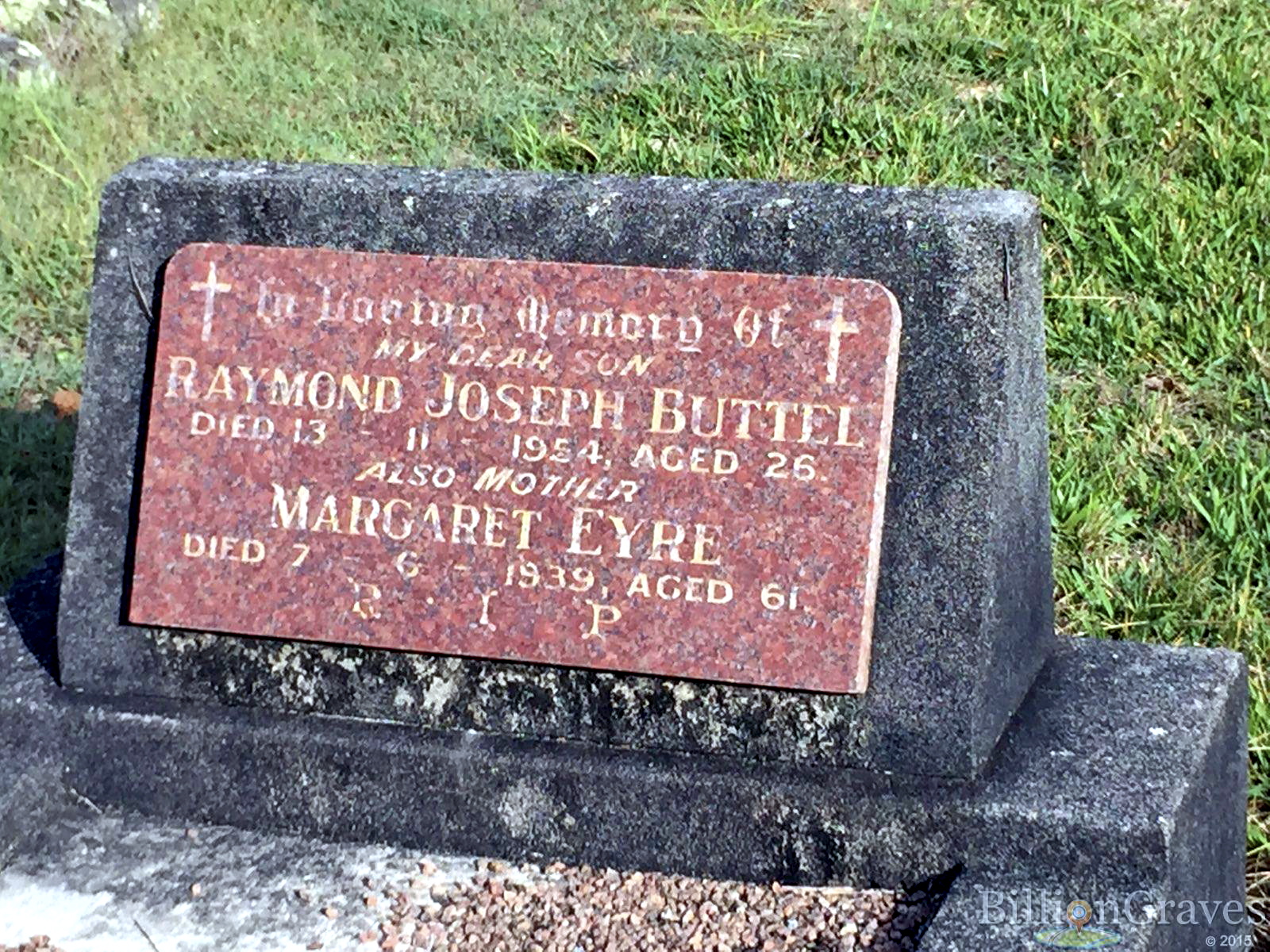
Raymond Joseph BUTTEL
03/04/2024
Raymond Joseph BUTTEL
New South Wales Police Force
Regd. # 6427
Rank: Constable
Stations: ?, 21 Division – death
Service: From? ? 1928? to 13 November 1954= ? years Service
Awards: No find on It’s An Honour
Born: ? ? 1928
Died on: Saturday 13 November 1954
Age: 26
Cause: Motor vehicle accident – Off Duty – Pedestrian – Heavy rain
Event location: corner of Condamine Street and Kentwell Road, Manly
Manning River Times and Advocate for the Northern Coast Districts of New South Wales (Taree, NSW : 1898 – 1954), Monday 15 November 1954, page 2
Obituary
An off-duty police constable was fatally injured when hit by a car at the corner of Condamine Street and Kentwell Road Manly, on Saturday night ( during heavy rain ). He was Constable Raymond Joseph Buttel, 26, married, of Ocean View Road Harboard, who was attached to No. 21 Division.
A police constable was “well under the influence” when knocked down and killed by a car at Manly, City Coroner F. McNamara said today.
Rollo Keith Glassop, driver of the car that killed the constable, had not been criminally negligent, he added.
Mr. McNamara held an inquest on Raymond Joseph Buttel, 26, of Ocean View Rd., Harbord, who was killed near the Warringah-Manly Golf Club on November 14.
Buttel was attached to 21 Division.
A Government Analyst’s report produced by police today showed the content of alcohol in the dead man’s blood was .215 pc.
Const. Maurice Jones ( # 8503 ? )(Darlinghurst) said he was at the clubhouse with Buttel that afternoon. He saw him have four middies of beer.
The coroner said there was scientific proof Buttel had consumed equivalent of 12 to 13 middies of beer.
The City Coroner (Mr. F. McNamara) yesterday found no evidence of criminal negligence against a motorist whose car killed a police constable.
Mr. McNamara said that on the evidence the constable had been very much under the influence of liquor.
Mr. McNamara was inquiring into the death of Raymond Joseph Buttel, 26, of Ocean View Road, Harbord.
Buttel was struck by a car driven by Rollo Keith Glassop, insurance ‘ agent, of Balgowlah, on November 13.
The accident occurred in Condamine Street, North Manly, near the Manly-Warringah Golf Club.
Constable Angus Gray ( # 6814 ? ), of Manly, said Glassop told him; . “I saw a pedestrian commencing to walk across; the road. He hesitated, so I continued on. “I was almost on him when he began to lope across the road at an angle of 30 degrees away from me. “I swung away from him, but some part of the car struck him.”
Constable Maurice Jones ( # 8503 ? ), of Darlinghurst, said he and Buttel were at the Manly – Warringah Golf Club house for three hours drinking beer.
A report by the Government Medical Officer (Dr. S. Sheldon) said there was .215 per cent, alcohol in Buttels body. Mr. McNamara said there was scientific proof Buttel had consumed 12 or 13 middies of beer and was very much under the influence of liquor.
Mr. McNamara’ returned a finding of accidental death.
MRS. EDNA GRACE BUTTEL and MRS. AGNES BUTTEL, wife and mother of the late loved Raymond Joseph Buttel, wish to express their GRATITUDE to relatives, friends and neighbours for their sympathy cards, letters and telegrams, and beautiful floral tributes brought in the tragic loss of their husband and son. Please accept this as our personal thanks.
BALL died on a Thursday after being struck by a passing motor vehicle, whilst struggling with an offender on Crawford St, Cannington. BALL was born 15 March 1969 and joined the police force on the 18th of December 1995.
Constable Peter Ball Memorial Youth Award
Constable Peter Ball was stationed at Gosnells Police Station and was on duty on 6 August 1998 when he was run down by a car while chasing a suspected car thief in Cannington. Peter died in hospital the next day, leaving behind a young wife and his 18 month old daughter.
Tributes and support from police and the public followed. Peter was given a State Funeral and memorial services are held each year to commemorate him. Memorial rose gardens were also established at the Gosnells and Cannington Police Stations, where he had worked.
Constable Peter Ball Memorial Youth Award
The award aims to recognise young people, youth groups or organisations that have:
Improved safety or promoted the prevention of crime
Enhanced the profile of young people
Increased opportunities for young people
Who is Eligible?
Youths or a group of young people aged 12 to 25, living in the City or not-for-profit organisations or groups supporting youth activities in the City.
Prize: $1000 + plaque
Nominations
Entries can be submitted any time during the year with submissions closing at the end of September. Award presentations will take place at the Australia Day Ceremony on 26 January each year.
Nominations should be no more than two A4 pages and where appropriate, include supporting material such as photos, media clippings, pamphlets etc.
Applications will only be eligible for one category per program. A separate Application Form is required for each entry. Previous winners are not eligible to nominate the same project for a period of 3 years effective 2016.
Send to:
The Safe City Constable Peter Ball Memorial Award
City of Gosnells
PO Box 662
Gosnells WA 6990
For more information please contact the Safe City Initiative 9391 6022 or Email Safe City.
Plans for new medal to recognise slain, seriously injured WA police
Nicole Cox
EXCLUSIVE
Every slain and seriously injured WA police officer would be automatically honoured with a special commendation medal to mark their selfless community sacrifice, under a new plan to be mooted at the WA Police Union conference today.
The idea, which is modelled on an award offered by Victoria Police, has been raised by outgoing union deputy vice-president Jon Groves and has won support from the state opposition and families of officers killed in the line of duty.
Opposition Leader Mark McGowan will unveil a proposal at the police union’s annual conference on Monday for a WA medal, similar to the Victoria Police Star and the US military decoration the Purple Heart, to acknowledge officers killed or seriously injured while on duty.
Under the concept, fallen officers including Constable Damien Murphy, who was run down and killed by a drunk and drugged driver in Craigie in 2007, would be posthumously awarded the medal, along with those who sustain life-changing injuries – like Senior Constable Matt Butcher, who was left partially paralysed by a “flying headbutt” during a brawl in Joondalup in February 2008.
It would apply to all work-related injuries, including psychological illnesses, regardless of whether the conditions first manifestedon or off-duty.
“The Victorian Government has struck a medal for police officers who are seriously injured or killed in the line of duty and it recognises the sacrifice, valour and contribution of those police officers,” Mr McGowan told Fairfax Media.
“It’s only awarded rarely, but it is an appropriate recognition and certainly gives families of those who have died in the line of duty some additional recognition of their mother or father, husband or wife.
“It’s also for those who are seriously injured in the line of duty – so officers who put their lives on the line and get injured as a consequence…that they are appropriately recognised for that.
“It is rare recognition, but appropriate recognition and I think that should happen here in WA.”
Mr Groves said a medal that acknowledged officers killed and maimed in the line of duty – and not only acts of bravery – was needed to highlight their community sacrifice and the risks that police officers come up against every day of their working lives.
“We need a medal that recognises the police officers in this state who have paid the ultimate price – either with their lives or their health – in serving the community,” he said.
“It’s something tangible for those who have been kicked out the door of WA Police, due to work-related illness or injury, to have in their hands to remind them of the good times and the good work they did for the community.”
WA policeman Simon Bowen was five years old when his father WA Detective Sergeant Geoff Bowen was killed by a parcel bomb at the National Crime Authority in Adelaide in 1994.
Detective First Class Constable Bowen, who has served with WA Police for seven years, welcomed the idea saying a special medal would validate the ultimate sacrifice his father made.
“I think it’s a great concept in not only is it a keepsake, but it’s something else in the present that will identify the sacrifice and the memory,” he said.
“It’s a small token that you can just marvel at and look at it and say, for my situation, the memory of Dad is never going to be forgotten not only by me but by the blokes that he used to work with and generations to come.
“It’s a small bit of recognition. It would be humbling.”
Tracey Ball, who was widowed when her husband Constable Peter Ball was run down by a car and killed while chasing a suspected car thief in Cannington in August 1998, welcomed the police medal proposal.
The couple’s daughter, Brianna, now 17, was only 18 months old when her father died in the line of duty.
“Brianna was just 18 months old so she really has no memories of her dad,” Ms Ball said.
“She’s very proud of him but she never really knew him, she never got the chance. So to have something physical and tangible that links who he was as a police officer, I think would be extremely important to her.
“My granddad served in World War I and we have his medals. Having those medals, we used to do the Anzac Day parade and we were so proud and patriotic. To have chance to have that for someone in the police force, I think would be awesome.
“I know the defence forces award medals posthumously and with Legacy the kids go on camps with the armed forces kids who talk about their dads’ medals whereas the police kids don’t have that, they don’t have anything.”
A WA Police spokesman said the force already offered several Police Commissioner’s awards for bravery and conduct including the Cross for Bravery, commendations and a group citation for conduct.
In addition, there is also the WA Police Medal for diligent and ethical service, service medals, the Commissioner’s Medal for Excellence, a Certificate of Outstanding Performance and a WA Police Cadet Medal.
The spokesman said the Western Australia Police Cross for Bravery could be awarded to officers killed or seriously injured after a specific act of bravery and members killed in the line of duty were also recognised on the WA Police Memorial Honour Roll and the National Memorial Honour Roll.
He said the “existing awards and medals are quite comprehensive” but declined to comment about the proposal for a medal for officers killed or seriously injured in the line of duty.
“I am unaware of any proposals for new medals and the department does not make a habit of commenting on speculation or possible proposals,” he said.
Comments:
les bassednean,
that is all well and good, but what do those officers who put their body on the line for their state, and then get arrested, interrogated, humiliated, insulted and shamed get?
Mrs Elliott Watt (9038)
I wonder if the medal will be awarded to officers with psychological injuries who have died from these injuries like PTSD, depression and anxiety? My husband died on duty from depression after 15+ years service….surely he, and other officers like him deserve to be recognized too?
Long overdue Perth,
This issues has been raised for quite literally decades that I have been aware of, and yet the Dep’t has chosen to ignore the injured in the hope they will leave. It is only if you suddenly become high-profile media interest then they cannot ignore you.
The embarrassing fact is as things stand, all the officers who came to Matt Butcher’s aid can be recognised, but there is literally nothing that can be given in acknowledgement to Matt himself as there was no “clever act” they can use for a special commendation. And not even Toxic Tony could spin a believable one for the actions of an unconscious man. This has been raised at the highest levels in emails that were ignored and not replied to.
If they finally come to the table on this one, great! Allow retrospectivity, even better. The men and women who put their life on the line so you can be safe deserve nothing less!
We must also acknowledge that violence in the community as a whole is greater these days. That is not something for which the Government or the Police Service can take responsibility; it is a problem for society as a whole. For whatever reason, more and more people in the community are likely to display acts of extreme violence. We have seen tragic examples of that within the past few years. It is a deep-seated problem for the community. In part, it relates to the amount of violence shown on television which is resulting in much more normalisation of levels of violence in the community. We must tackle that problem from a fundamental perspective if we are to be successful in fighting it.
I touched earlier on the issue of young offenders in the community. We have seen tragic examples recently of young offenders who, in many respects, cannot be expected to take full responsibility for their actions. One example is the absolute tragedy of the death of Constable Peter Ball last week, whose funeral was held today, and who was allegedly killed as a result of the activities in part of a 13 year old offender.
BALI-BOMBING survivors are concerned some victims will miss out on travel assistance to mark the 10th anniversary.
Prime Minister Julia Gillard confirmed today that she will travel to the holiday island to attend a memorial service on October 12 and will offer victims of the attack free flights to commemorate the day.
The assistance package will include airfares, ground transport, accommodation, travel insurance and visa costs, in line with the package provided for the first anniversary.
Assistance will be granted to family members of the 88 Australians who died.
Those seriously injured are also eligible and will be able to take a partner, child or a close relative and a support person if required for medical reasons.
But, the definition of “serious injury” has sparked concerns by survivors such as Peter Hughes and Tracey Ball, as well as Kingsley Football Club president Keith Pearce.
Mr Hughes, who sustained burns to more than 50 per cent of his body, said he was worried some people may miss out on assistance because their pain will not be deemed serious enough.
“I am happy they are offering what was offered for the first anniversary,” he said. “But I don’t think they should be singling out people. I just want everyone to be able to go back and pay their respects.”
Government sources said the definition would include psychological injuries.
Mr Hughes said he had asked the Prime Minister several weeks ago about the funding package and then wrote to her this week.
Tracey Ball, widow of Constable Peter Ball who died chasing a suspected car thief in August 1998, was also injured in the bombings along with her sister Melinda Kemp.
The pair, who were on a family holiday at the time, are concerned the assistance package will not extend to their mum and dad.
Mrs Kemp said while their father was not injured, he was left scarred by the event.
She said he had the grim task of searching makeshift morgues looking for them, a task no father wanted to endure.
Last night the Kingsley Football Club, which lost seven players in the horrific attack, held a legends match to commemorate the 10th anniversary as well as help raise money for anyone who wanted to go back.
Mr Pearce, whose son Duane was one of the players who did come home, said the club had been inquiring for months about government financial assistance and in the end decided to organise their own fundraiser to help those who couldn’t afford the travel costs.
“What is meant by seriously injured?” he said. “Is that physically or mentally, what does it mean? And how serious is serious? It should be available to everyone.”
Services will be held in both Bali and Canberra on October 12, with Governor-General Quentin Bryce to lead the service in the nation’s capital.
“It was a moment of horror that had a profound effect on Australia as a nation and on the lives of survivors and the family and loved ones of those who died,” Ms Gillard said in a statement on Sunday.
“Time has healed many of the physical wounds caused by the bombings but it can never diminish the sense of wrong we feel at this act of terror.
“Forgetting would be the ultimate injustice – and we will never forget.”
The memorial service in Bali will be held at the Garuda Wisnu Kencana Cultural Park and the Canberra service will be held in the Great Hall of Parliament House.
Front Inscription In memory of Constable Angela Rose Taylor 24274, aged 21 years, City Watch-house, who died on 20th April 1986, as a result of injuries received when a car bomb exploded outside the Russell Street Police Complex on the 27th March, 1986.
The 1986 Russell Street bombing which tragically killed Constable Angela Rose Taylor and seriously injured 21 others.
The explosion was caused by a car bomb hidden in a stolen 1979 Holden Commodore, parked deliberately on the busy city street.
Twenty-one-year-old Const Taylor was crossing the road on a staff lunch run and only a metre away from the car bomb when it exploded. She died in hospital a month later. Const Taylor was the first policewoman to die in the line of duty.
This was Victoria’s first encounter with terrorism. Three men were convicted and two sentenced to life imprisonment.
May you forever Rest In Peace.
On March 27 1986, shortly before midday, Constable Taylor left the Russell Street Police Complex to collect lunches for her colleagues. As she stepped on to Russell Street, she passed within 1 metre of a car packed with gelignite. At this time, the gelignite was detonated and the car exploded, showering the area with shrapnel. Angela suffered severe burns to 70% of her body and was hospitalised as a result. However, she died on 20 April 1986.
Stanley Taylor and Craig Minogue were convicted and imprisoned over the bombing which was motivated by an intense hatred of police.
Victoria Police Association Journal March 2006 p 10 & 11
It is 20 years since a car bomb exploded outside the Russell Street Police Complex – two decades since Constable Angela Taylor was mortally wounded as she crossed over Russell Street from the City Watchhouse. The Police Association Journal editor Shirley Hardy-Rix spoke to Angela’s parents, Marilyn and Arthur Taylor to mark the anniversary of Angela’s death.
Arthur & Marilyn Taylor
“It can seem like yesterday or it can seem like 20 years. But missing Angie is still as strong today as it was then; it’s just not accompanied with the pain.”
These are the words of a mother talking about a loved daughter 20 years after the criminal act that shocked the country and changed the Taylor family forever. Marilyn and Arthur Taylor admit that not a day goes by when they don’t think of their only daughter “not in a morbid way but in a joyful way”.
“We’ve made it a pleasant experience. Ange was always so full of joy and life it would be wrong of us to have a negative attitude. She has left us with so many lovely, lovely memories. It was so lovely to have had her for those 21 years – I’ve got to be glad about that,” says Marilyn.
“Something will trigger a memory and you think of some of the things that Angela did,” adds Arthur. “She fitted so much into those 21 years. She didn’t leave any gaping holes, she filled them all in.”
Sitting in their comfortable suburban home , Marilyn and Arthur remember their Ange, the protector of her brothers Michael and Byron. Arthur is usually a man of few words but when it comes to talking about his daughter the stories flow.
“From an early age she had a sense of what was right and what was wrong,” recalls Arthur. “When Mike was young he was knock-kneed and wore leg callipers. One day some of the boys pushed him over and started to laugh because he couldn’t get up. Angela was about four. She went inside and got the broom and chased them up the street, laying into them. When I asked her why she did that, Angie said what they did wasn’t right. It wasn’t fair. From an early age she had a sense of fair play and right and wrong.”
Marilyn remembers the good student who was a keen participant in school plays, was on the school debating team and the school council. But Angela left school at the end of Year 10 which was a disappointment to her parents. Then when the family moved to Melbourne from Canberra in 1982 Angela decided she wanted to join the police force. She didn’t want to join in Canberra because she didn’t want to spend her life guarding parliament house.
Angela wanted to do police work. Her determination saw her finish years 11 and 12 in one year. Angela Taylor went on to be the dux of her squad at the Police Academy in November 1984.
“That made me very proud. Her graduation day was the part in my life when I was at the pinnacle, the top of the mountain. I’ve never been right up there since. I was so proud that she had helped others in her squad get through. She didn’t just do it for herself,” says Marilyn. She and Arthur were the proud parents on graduation day and happy participants in the celebrations that marked the beginning of what should have been a long and successful career.
In March 1986, Angela Taylor had just finished her probation and was working at the City Watchhouse. On March 27 – Easter Thursday – just on one o’clock, an explosion rocked Russell Street. A car bomb was detonated by a team of criminals. Angela was walking across Russell Street at that instant. Her injuries were horrendous and she would never recover. On April 20, after a long and courageous battle, Angela Taylor died.
“It is almost like we lost Angie twice. From the time of the bombing she never spoke to us again. Each of those dates is intermixed,” says Marilyn.
That day Marilyn Taylor was working at a small shop in South Melbourne. She heard on the radio that a bomb had exploded and a woman had been injured.
“I thought, ‘thank God it’s not my Ange’. I didn’t think of her as a woman, just as my Ange, my girl.”
When Marilyn Taylor walked down to the bank she saw a police car and just knew. It might have been a mother’s intuition. Marilyn wasn’t surprised to see the two police who came to tell her the news.
Arthur was also working that day and was later than usual getting home because he’d stopped to get some hot cross buns on the way. He was listening to the radio and heard the news that a policewoman was injured. He thought his daughter was safe because she was in the watchhouse.
“There was a car in the driveway and a couple of senior police. The penny dropped. I’m not a talkative person but I couldn’t shut up. I didn’t want to hear what they had to say so I just kept on talking. My worst fear was that she was dead – that’s what I didn’t want to hear.”
What followed was a rollercoaster. Marilyn and Arthur say they were carried on by events. They had no control. Their whole motivation was to be at the hospital. Each day they would get up and drive to the hospital. At the end of the day they would drive home and collapse into bed.
In 1986 Marilyn and Arthur weren’t offered any counselling to help cope with their grief. “I thought if I saw a counsellor they would make it better – make me better but that is not what it does.”
Since Angela’s death many of those who knew their daughter have drifted out of their lives. “It is such a painful thing for so many people. Even the ones who loved Angie sometimes find it difficult to talk to Arthur and me. And it is not that they don’t care about us, it is just too painful.”
The Police family haven’t forgotten Angela Taylor and this is a great comfort to her family. The Angela Taylor Memorial Foundation was established and the dux of every graduating squad receives the Angela Taylor Award.
These initiatives have all been part of the healing process.
Every year there is the Angela Taylor Fun Run. Marilyn and Arthur are always there to welcome the winners over the finish line and present trophies. It is an important day for them. Marilyn admits in the early years she only went along because she had to but now she wouldn’t miss it.
“At first I did it because I had to – now I do it because I want to and I don’t know when that page turned. Everyone who comes along – they are all special. It gives us a lot of pleasure.”
Marilyn and Arthur receive great comfort out of the services held on National Police Remembrance Day. It is a special day in their calendar. In recent years they have become close to the Senior Police Chaplain, Jim Pilmer.
“We love Jim. He’s a special man. He is one of God’s chosen. He is a genuine man who gives great comfort to those people in the greatest pain. I love his services and we love going along to the Remembrance Day evening service. I like to hear the list of names read out and pray with the families and then go to the little chapel for private prayer. It is a closure for the day.”
Today Marilyn and Arthur are doting grandparents and spend time with their five grand-daughters. Four of these girls bear Angela’s name – Brooke Angela, Laura Angela, Alyssa Rose and Alex Jasmine Rose.
“They give another dimension, but nothing fills the hole of Angie,” says Marilyn.
In their garden are three Angela Taylor roses. They would love to see the rose named in honour of their daughter at the Police Academy and in each police station garden across the state.
Marilyn & Arthur Taylor with the Angela Taylor Rose
The men responsible for the Russell Street Bombing were brought to justice. Marilyn and Arthur did attend the final day of the committal hearing at the Melbourne Magistrates’ Court across the road from the scene of the bombing.
Marilyn refused to look at the faces of the men who killed her daughter. Arthur attended the sentencing at the conclusion of the Supreme Court trial. Marilyn couldn’t face it.
“That’s how we keep a positive attitude. We don’t want these people to have any other part of my life. They’ve taken away more than is almost possible to cope with. They are not going to get in because I am not going to hate them because that would be soul destroying for me and those I love,” says Marilyn.
“We’ve avoided getting angry. Sometimes it is very hard to avoid getting angry and hating. It is such a negative emotion it would take over our lives and that wasn’t going to happen,” adds Arthur.
Marilyn and Arthur Taylor are wonderful people. They are filled with love when they could be torn apart by hate. They look at all that has been done in their daughter’s memory and are filled with pride.
“We are very proud and very humbled by the legacy of having the unit at the Royal Melbourne Hospital dedicated to Angie and all the other memorials they have put up in her name. I know there are a lot of people who do a lot of work and put in a lot of time and effort into not letting Victorians forget these wonderful people who get up in the morning and put on the blue uniform because they love to do it.”
Just like its namesake, the Angela Taylor Rose is vibrant, feminine and distinctive.
Clusters of deep cream and pink buds unfurl slowly to reveal sweetly scented, creamy-white flowers with a distinctive pink edging and prominent golden-yellow stamens.
Named in honour of Constable Angela Rose Taylor, who died as a result of the 1986 Russell Street police complex bombing, this rose is available by special arrangement with rose breeder John Nieuwesteeg.
The distributor, Garden Express, donates $2 from each rose sold to the Victoria Police Blue Ribbon Foundation. The foundation perpetuates the memory of police killed in the line of duty through the support of community projects across the state.
Shortly after 1.00 pm Thursday, 27 March 1986, a massive explosion occurred near the southern entrance to the Russell Street Police Complex when a car bomb was detonated. As a result of this act three people were injured, damage was caused to the façade of the police building and the central business district was thrown into confusion for hours as emergency workers struggled to cope with the disaster. Later Forensic tests showed the bomb had consisted of 50 sticks of gelignite packed into a motor car and surrounded by small pieces of metal which were meant to act as “shrapnel”. The investigation into the setting of the bomb began at once and continued for months. During that time two of the injured – Magistrate Ian West and Constable Carl Donadio recovered from their wounds. However Constable Angela Taylor who had suffered extensive burns to her body died at the Royal Melbourne Hospital 20 April 1986.
The Russell Street Bombing refers to the 27 March 1986 bombing of the Russell Street Police Headquarters complex in Russell Street, Melbourne, Victoria, Australia. The explosion was caused by a car bomb hidden in a stolen 1979 Holden Commodore.
The blast seriously injured 21-year-old Constable Angela Taylor, who died on 20 April, becoming the first Australian policewoman to be killed in the line of duty. A further 22 people were injured. The explosion caused massive amounts of damage to the police HQ and surrounding buildings, estimated at more than A$1 million.
The Age newspaper reported that the blast had such an impact because of the open-floor design of the offices acted like a claymore mine, sending more shrapnel as the blast ripped through the floors, seemingly adding more pressure to the blast as it followed its path. The station has closed down and been converted into apartments.
In the course of the investigation, a group of people including Stan Taylor, Peter Reed, Craig Minogue and Rodney Minogue were apprehended. The motive for the bombing seems to have been revenge against the police, as the bombers had previously been arrested and still resented their jail terms. In court, Taylor, Reed and Craig Minogue were convicted; Rodney Minogue was eventually acquitted on appeal.
On 7 October 1985, gelignite and detonators were stolen from the Tryconnel Mine at Blackwood. On 25 March 1986, a Holden Commodore was stolen. Both crimes were later found to provide equipment needed for the construction of the bomb.
On 25 April 1986, ten Victoria Police officers raided the Kallista home of Peter Michael Reed at 5.45 am. It was alleged that upon attempting to enforce the arrest by forcing entry to the premises, Reed produced a .455 Smith and Wesson revolver and fired at police, seriously injuring Det Sgt Wylie. Reed was then fired upon by Det Sgt Quinsee and arrested. Reed was charged with attempted murder, recklessly causing serious injury, using a firearm to prevent apprehension and possessing explosives in suspicious circumstances in addition to charges related to the Russell Street bombing. Reed later stated at his trial in unsworn evidence that:
“the police started the shooting and I only used his firearm in self defence.”
On 30 May 1986, police arrested Stanley Brian Taylor during a 2 am raid on his Birchip home. Brothers Craig and Rodney Minogue were arrested in a Swan Hill motel at 5.15 am later that day.
The crown did not allege that any person played any particular role in the bombing, but that each of them were members of a team which planned the bombing and caused the bomb to explode. Evidence against the accused was as follows:
Gelignite and detonators used in the construction of the bomb were of the same type as those stolen from Tryconnel Mine.
Gelignite was found at Reed’s house wrapped in newspaper containing fingerprints belonging to Rodney Minogue.
Craig Minogue owned a pair of side cutters which produced cuts similar to those found on detonator wires.
A file with traces of brass deposits matched with brass deposits found at the bomb site.
a block of wood from which a wooden part of the bomb had been sawn was found at Craig Minogue’s premises.
tinned copper wire, similar to that used with detonators found at the bomb site, was found at Craig Minogue’s premises.
residue of gelignite matched residue found at a previous address of Craig Minogue in Lower Templestowe.
evidence from a witness that Craig Minogue called around Easter 1986, to ask about the use of detonators.
a witness testified that Craig Minogue was seen driving a 1979 Holden Commodore around the CBD prior to the explosion.
Published: 18:10 EST, 24 March 2016 | Updated: 19:26 EST, 24 March 2016
The young policewoman killed after a car bomb exploded in front of the force headquarters in Melbourne has been remembered 30 years after the tragedy – and awarded a service medal.
Constable Angela Rose Taylor, 21, died from her injuries 24 days after the bombing of Russell Street police headquarters on Easter Thursday, 27 March 1986.
She was the first policewoman to be murdered in the line of duty in Australia.
Her brother Michael Taylor paid tribute to the young officer at a memorial service on Thursday opposite the old Russell Street station, saying that she always had ‘a disdain for injustice’.
He recalled how as a three-year-old she fended off bullies by swinging a broom because they were teasing him over his leg calipers.
‘She had a strong belief we should all be treated equally,’ Mr Taylor said.
Constable Taylor was posthumously awarded the National Police Service Medal at the memorial which was attended by officers, family and friends wearing pink roses in her memory.
It was given to her parents Marilyn and Arthur by Chief Commissioner Graham Ashton on behalf of Governor General Sir Peter Cosgrove.
Two men were convicted of the horrific crime which left Constable Taylor dead and 22 others injured.
One of the bombers, Craig Minogue, could soon apply for bail as his 28-year non-parole period comes to an end this year.
His co-accused, Stanley Brian Taylor, 59, was jailed for life with no minimum set.
An arrangement of pink roses was seen at the memorial service to honour the young policewoman
Constable Taylor was was posthumously awarded the National Police Service Medal and it was given to her parents Marilyn and Arthur by Chief Commissioner Graham Ashton
Former police member Carl Donadio ( centre )who was injured in the blast looks on during a memorial service to honour Constable Taylor
Mr Ashton said while any parole decision is up to the parole board, he hoped Minogue ‘stays behind bars’.
Minogue, who was almost illiterate at the time of his arrest has gone on to complete a bachelor of arts degree, and has also obtained his Masters and PHD behind bars.
He also runs a website, on which he apologises for his behaviour in 1986.
‘I understand the pain and suffering that I have caused. I am very sorry for the crimes of my past, and I regret those actions very much and wish that I had not done them,’ he wrote on the site.
‘Thirty years is a very long time in prison, I was 23 when I came in and I will be 53 when I am eligible for release.
‘I hope to be able to somehow pass on to others the value that I have found in education and learning during that time.
‘That contribution I can make depends to a large extent upon others, and whether or not I am going to be given a chance to make a positive contribution,’ he said.
Lawyer tearfully recalls Russell street bombing 30 years ago
Constable Taylor’s parents unveil a plaque in her honour in the RMIT Alumni Courtyard in Russell Street in Melbourne
A rose could be seen on a poster at the memorial service to honour Constable Angela Taylor
But Detective Inspector Bernie Rankin does not believe Minogue is reformed.
‘I am not convinced that he is the reformed Craig Minogue he is making himself out to be,’ he told 60 Minutes recently.
He went on to explain how Minogue murdered a man not long after being sent to prison for his part in the Russell Street bomb case.
‘Now if Craig Minogue is released tomorrow who’s to say it is not the old Craig Minogue who gets released.
‘What if you take his parking spot, you know, what if you bump into him in a bar?
‘He is trying to get parole and he is trying to demonstrate to a parole board he is no longer a risk,’ he said.
Mr Rankin held back tears when remembering the death of Ms Taylor three weeks after she was injured in the bomb blast.
He helped put out some of the fire on the 21-year-old officer’s clothes and hair.
‘She was thrown across street dreadfully burnt,’ he said.
‘She was a fine young woman that lost her life,’ he said choking back tears after remembering the day, April 20, he found out she had passed away in hospital.
The police officer remembers the bombers had ‘a strong desire to kill as many people and injure as many people as possible’ with their contraption.
In fact the blast could have been a lot worse, a police investigation at the time found not all of the explosives found set into the car went off as was planned because the detonator was used wrong.
At 15 seconds past one on Easter Thursday afternoon in 1986 Russell Street, Melbourne best resembled a warzone
One of the bombers, Craig Minogue (pictured both), could soon apply for bail as his 28-year non-parole period comes to an end this year
One of the bombers, Craig Minogue (pictured both), could soon apply for bail as his 28-year non-parole period comes to an end this year
‘He is trying to get parole and he is trying to demonstrate to a parole board he is no longer a risk,’ he said.
Mr Rankin held back tears when remembering the death of Ms Taylor three weeks after she was injured in the bomb blast.
He helped put out some of the fire on the 21-year-old officer’s clothes and hair.
‘She was thrown across street dreadfully burnt,’ he said.
‘She was a fine young woman that lost her life,’ he said choking back tears after remembering the day, April 20, he found out she had passed away in hospital.
The police officer remembers the bombers had ‘a strong desire to kill as many people and injure as many people as possible’ with their contraption.
In fact the blast could have been a lot worse, a police investigation at the time found not all of the explosives found set into the car went off as was planned because the detonator was used wrong.
Constable Taylor’s parents pose with an Infinity Rose which was presented to them by former police member Carl Donadio who was injured in the blast.
Man jailed thirty years ago for a Melbourne car bomb which killed a young policewoman is up for parole – but one officer who was there doesn’t think he’s reformed
Convicted killer Craig Minogue may be eligible for parole this year
Minogue was jailed for his part in the Russell Street bombing in 1986
A car bomb exploded near a police station killing a female officer
He also killed a fellow inmate once he was put behind bars
Published: 02:09 +11:00, 21 March 2016 | Updated: 07:43 +11:00, 21 March 2016
A killer who has served thirty years behind bars for his part in the detonation of a bomb outside a metro police station may soon be eligible for parole.
Two men were convicted of the crime, Stan Taylor was sentenced to life without parole, and Craig Minogue was given 28 years without parole, which has now been served.
At 15 seconds past one on Easter Thursday afternoon in 1986 Russell Street, Melbourne best resembled a warzone.
Convicted killer, Craig Minogue, pictured, may be eligible for parole this year after serving 30 years behind bars
Minogue was sentenced to 28 years without parole for his part in the notorious Russell Street car bombing on Easter Thursday in 1986 (wreckage from the explosion)
A car bomb parked strategically outside the police complex exploded killing 21-year-old police woman Angela Taylor and 22 officers and civilians.
Minogue, who was almost illiterate at the time of his arrest has gone on to complete a bachelor of arts degree, and has also obtained his Masters and PHD behind bars.
He also runs a website, on which he apologises for his behaviour in 1986.
‘I understand the pain and suffering that I have caused. I am very sorry for the crimes of my past, and I regret those actions very much and wish that I had not done them,’ he wrote on the site.
‘Thirty years is a very long time in prison, I was 23 when I came in and I will be 53 when I am eligible for release.
‘I hope to be able to somehow pass on to others the value that I have found in education and learning during that time.
‘That contribution I can make depends to a large extent upon others, and whether or not I am going to be given a chance to make a positive contribution,’ he said.
Detective Inspector Bernie Raking, pictured, was at the police station when the bomb went off. He does not believe Minogue is reformed
But Detective Inspector Bernie Rankin does not believe Minogue is reformed.
‘I am not convinced that he is the reformed Craig Minogue he is making himself out to be,’ he told 60 Minutes recently.
He went on to explain how Minogue murdered a man not long after being sent to prison for his part in the Russell Street bomb case.
‘Now if Craig Minogue is released tomorrow who’s to say it is not the old Craig Minogue who gets released.
‘What if you take his parking spot, you know, what if you bump into him in a bar?
‘He is trying to get parole and he is trying to demonstrate to a parole board he is no longer a risk,’ he said.
Minogue – pictured- only admitted to his part in the Russell Street bombing for the first time in 2012, Rankin believes that was a move to prove he had reformed
The car bomb did not explode as planned, and could have been a lot more devastating, police say
Mr Rankin held back tears when remembering the death of Ms Taylor three weeks after she was injured in the bomb blast.
He helped put out some of the fire on the 21-year-old officer’s clothes and hair.
‘She was thrown across street dreadfully burnt,’ he said.
‘She was a fine young woman that lost her life,’ he said choking back tears after remembering the day, April 20, he found out she had passed away in hospital.
The police officer remembers the bombers had ‘a strong desire to kill as many people and injure as many people as possible’ with their contraption.
In fact the blast could have been a lot worse, a police investigation at the time found not all of the explosives found set into the car went off as was planned because the detonator was used wrong.
Minogue killed fellow inmate and convicted killer Alex Tsakmakis shortly after going to prison but was not given any additional sentencing
In 1992 Prue Bird (pictured), the grandaughter of Paul and Julie (pictured) Hetzel known accomplices of Minogue went missing, child killer Leslie Camilleri came forward 17 years later
Paul Hetzel was a member of Taylor and Minogue’s gang, he helped police gain convictions, but in 1992 his partner’s granddaughter vanished.
Seventeen years later convicted child killer Leslie Camilleri came forward claiming to have killed Prue Bird of his own accord. Mr Hetzel believes she was taken from them in revenge.
‘I thought this is pay back just felt sick in the guts.’
Mr Hetzel said Minogue had threatened shortly after the explosion.
‘He was saying about that any bastard ever spoke about it and that, you know, they will be killed.
‘And that’s when he said wouldn’t it be a shame if anything happened to your little Prue.’
Mrs Hetzel (pictured left) and her husband Paul (pictured right) believe Prue was killed in an act of revenge as Mr Hetzel had given evidence against his fellow gang members in the bomb investigation
Minogue denies any involvement in the girl’s disappearance and murder. But police are not convinced.
‘There is no doubt in my mind Camilleri commit crime with others and that this crime is a payback for the Russell Street bombing,’ Detective Senior Sergeant Brent Fisher told 60 minutes.
Minogue has said he intends to repay the community for his crimes by accepting the sentence, admitting his guilt and apologising, by making an effort to rehabilitate himself and by not re-offending upon release.
Minogue was not handed down extra time for the murder of his fellow inmate Tsakmakis in prison.
He is currently being held in a medium-security prison in Victoria.
The deadly bomb blast shattered precinct windows and shook up the policing community sparking a wide search for those responsible
Russell Street bomber, Stanley Taylor, has died in custody aged 79.
He was sentenced to life in prison for the 1986 car bomb explosion that killed a female police officer and injured 21 others outside the Melbourne police office on Russell Street.
Corrections Victoria confirmed a prisoner of that age died of natural causes at St Vincents Hospital on Wednesday.
Taylor had been ill for at least a year, according to numerous media reports.
A career criminal, Taylor was known for having a hatred for authority.
Before the bombing, he had served 17 years in prison for numerous bank robberies.
Eight years after getting out, he would commit one of the most brutal acts of terror in Victoria.
The car bomb was set up to explode at 1pm, precisely the time most people would be heading out to get their lunch.
It was stuffed with almost 60 sticks of gelignite and timed for maximum destruction.
Constable Angela Taylor, 21, was on her way to pick up lunch for her office when she was in the direct firing line.
She died of her injuries 24 days after the bombing, becoming the first Australian police woman to die in the line of duty.
The explosion was so large that debris was found three blocks away.
Police were led to Taylor and his accomplices when they were able to rebuild the car used in the attack, and found it had been stolen.
Alongside Taylor in 1988, Craig Minogue received life with a minimum of 28 years and Rodney Minogue was jailed for eight years with a minimum of six in 1988.
Another man, Peter Reed, was found not guilty but was later jailed for 13 years, with a minimum of 11, of the attempted murder of police during the investigation of the bombing.
Craig Minogue will be up for parole by the end of this year.
As with all deaths in custody, Taylor’s death will be referred to the coroner.
Stephen is NOT mentioned on the Police Wall of Remembrance- BUT SHOULD BE
The Canberra Times
Saturday 8 December 1979 Page 3
Youth charged
SYDNEY: A 17-year-old youth was charged on two counts of murder last night after the deaths of an off-duty policeman and a companion hit by a car in Burwood early yesterday.
Constable StephenNaylor, 28, of Five Dock police station, and Mr Peter Petracco, 32, of Marrickville, were hit by a car which mounted the kerb as they were leaving a company Christmas party in Parramatta Road.
SYDNEY: A youth aged 17 had called, ” See what I can do, copper, see what I can do “, after driving toward six men and killing two of them, one a policeman, a Children’s Court was told yesterday.
The youth appeared before Mr Blackmore, SM, in the Metropolitan Children’s Court on 12 counts, including two of murder at Burwood last Friday.
Mr C. Phegan, prosecuting, said the incidents occurred after the youth left a party to sleep in his car after an earlier altercation with his host.
Mr Blackmore allowed the Press into the hearing, but ordered that the youth’s name and address not be published.
Mr Phegan asked that the charges be adjourned to Glebe Coroner’s Court on December 19, for mention.
Mr K. G. Hickey, for the youth, asked for bail for his client after agreeing to the remand date.
Mr Phegan, asking that bail be refused, said the youth had an altercation with his host at a party.
” As a result he left the party intending to sleep in his car “, Mr Phegan said.
” It is further alleged he was involved in an altercation with off-duty police officers who were joined by a number of civilians “.
Mr Phegan said the youth drove his car along the footpath on Parramatta Road. There were six men on the footpath and the youth drove towards them. Four jumped out of the vehicle’s path.
The car had hit Mr Peter Petracco, 32, and Constable first-class Stephen Naylor, 29, fatally injuring both.
The youth was remanded without bail until December 19.
Richard Baxter, FB – Support Aussie Cops, on 23 December 2011, recalls a work mate by the name of Stephen NAYLOR being attached to Burwood ( NSW ) being murdered about 1979.
The Northern Minder ( Charters Towers, Qld ) Wednesday 4 March 1931 page 2 of 8
POLICE SERGEANT KILLED
HEAD CRUSHED TO PULP.
SYDNEY, March 2.
Sergeant Angus McNight of Auburn division, who was on holidays at Narrabeen, was knocked down by a car in Pittwater Road last night, and killed. His head was crushed to pulp, his neck broken and left leg fractured in two places.
McNight, who is 48 years of age, was one of the best known members of the force, and had 26 years service. He was a married man, and leaves a wife and family.
The Biz ( Fairfield, NSW ) Friday 6 March 1931 page 3 of 8
POLICE SERGEANT KILLED.
Sergeant Angus Lester McKnight, 43, who was in charge of the Auburn police station, was killed in a motor accident at Narrabeen on Sunday night. He was walking along the Pittwater-road when he was struck by a car travelling in the opposite direction. The motorist sought medical assistance, but it was found that the man was already dead. The body was taken to the Manly morgue.
Sergent McKnight, who lived in Glenview-avenue, Earlwood, was for many years attached to the Criminal Investigation Branch, and was later transferred successively to Regents street, Newtown, and then to the Auburn district. He is survived by Mrs. McKnight and two sons.
The Sydney Morning Herald Monday Thursday 20 February 1930 page 12 of 20
PICKETING CASES.
Police Evidence.
PIT ENDANGERED BY FIRE.
WALLSEND, Wednesday.
The cases in which 73 men are charged with continuing in an unlawful assembly at Ashtonfields Colliery on the morning of January 10 were further heard by Mr. Reed, Acting S.M., to-day.
It had been expected that the men who were stripped and otherwise assaulted during the picketing of Ashtonfields would be in the witness-box this afternoon, but police evidence corroborating the account of the affair given by Inspector Graham took up the whole of the day.
The Court will resume at 9 a.m. to-morrow, and it is expected to complete the cases before the end of the week.
POLICE EVIDENCE.
Constable Raymond Vincent Hurtz said that when extra police arrived at the colliery shortly after 9 a.m. they were hooted and jeered at by about 300 men. Many logs had been placed across the roadway. The crowd did not leave till 11 a.m.
Plainclothes Sergeant George Emmett said that when the men arrived at the colliery along the railway line defendant James Dorrington was at the head of them. The men were saying, “We’ll get some of these scabs,” and similar things. About 7 a.m. he saw a sulky and harness burning, and several youths throwing sticks on the flames.
Witness identified certain of the defendants as men he had seen among the crowd. One of the policemen, he said, was surrounded because the men thought he was a newspaper reporter. They said they would not have any reporters about except their own men.
Sergeant John Marsh Ravelll said that he heard one man in the crowd say, “I would take any of those-on.”
Sergeant William Wood said that some of the men entered the engine-room of the colliery, and it was very difficult to get them out. Later men were calling out, “Bring the —– out, and we will give them what we gave the 16 back in the bush.” Some of the men insisted that police cars had been brought into the colliery to take non-union labourers away, and there was a rush of men towards the tunnel. Witness heard some men calling out, “Lulu, you lazy —-; you never worked when you were a wheeler;” and “You black —–,” to Constable Humphries.
FIRE AT TUNNEL ENTRANCE.
Sergeant A. A. J. Wilmott said that the crowd at one time appeared to intend going down the mine tunnel after the non-union labourers. No non-union labourers were there at the time, and witness advised a man, who appeared to be leading the crowd, not to let them go down, and they did not. While the crowd was there a fire occurred at the tunnel entrance, which witness regarded very seriously. Pit props were destroyed, and there was a chance that the flames would sweep into the tunnel itself.
Sergeant Jackson, of Maitland, said that after the crowd arrived at the mine he found a number of men around a hut in the bush. They claimed that there were two non-unionists in the hut, but a constable prevented them from entering. When the men went away a fire was discovered outside one of the walls of the hut. He had later to escort two of the Ashtonfields employees to safety. About half a mile on the way to East Maitland he was met by several hundred men, who called out, “Give us that ginger-whiskered scabby old —-,” and tore clothing from a man named Burrows before witness could bring them to order.
Constable William C. Marr said that two distinct fires were lighted outside the bush hut.
Constable W. E. McAlpine said that about midnight on the eve of the picketing he saw the defendant, M. Hill, march more than 100 men out of West Wallsend in the direction of Minmi.
Mr. W. V. W. Thompson, of the Crown Law Office, appeared for the prosecution, and Mr. Warland, of Messrs. Reid and Reid, Newcastle, for the defendants.
The Sydney Morning Herald Monday 7 July 1947 page 1 of 16
SHIPBOARD FRACAS
Seaman Stabbed
NEWCASTLE, Sunday. Sergeant C. Hall, of Newcastle police, to-day shot a member of the crew of the Fort Romane in the left hand and left thigh after another member of the crew had been stabbed with a knife.
The seaman stabbed was William Gow, 29. He was admitted to hospital suffering from punctured wounds in the back and right thigh.
Police say that, after the stabbing, the seaman with the knife took refuge in a cabin. The ship’s master, Captain Birge, then called the police.
Sergeant Hall and Constable R. Hurtz arrived, and called to the seaman to come out of the cabin, but he refused.
When the police opened the door the seaman is alleged to have rushed at them with a knife in his hand.
Sergeant Hall fired once, and the bullet passed through the seaman’s left hand and left thigh.
Sergeant Hall and Constable Hurtz then grappled with the seaman and wrested the knife from him. The seaman was admitted to hospital and, under police guard, received treatment for his wounds.
Later, a man was charged at Newcastle Police Station.
Newcastle Morning Herald and Miner’s Advocate Thursday 14 October 1948 page 2 of 6
Police Promotions SYDNEY, Wednesday.– The Police Department to-night announced the following promotions Senior constable to be sergeant third class: R. V. Hurtz (Newcastle),
Newcastle Morning Herald and Miner’s Advocate Tuesday 15 March 1949 page 3 of 6
POLICE TRANSFERS The following transfers of police in the North-eastern Division have been notified: Sergeant R. V. Hurtz, from Newcastle to Officer-in-Charge at Charlestown;
Newcastle Morning Herald and Miner’s Advocate Wednesday 1 April 1953 page 8 of 12
£10 FINE FOR MILK THEFT Richard Charles St. John, 18, labourer, was fined £10 at Belmont Court yesterday for having stolen three bottles of milk, valued at 2/9, the property of Robert Aspinall, at Charlestown on Sunday. Mr. T. H. D. See, S.M., told St. John, who pleaded “Guilty.” that he took a serious view of the offence.
Sergeant Hurtz, of Charlestown, said that about 7.30 a.m. on Sunday St. John drove his car in Griffith-street, Charlestown, and a younger person got out of the car and took the milk from Aspinall’s residence. A man called out and the one who took the milk jumped into the car, which St. John drove off quickly.
In the past three weeks 41 pints of milk had been stolen in the area, Sergeant Hurtz said.
Newcastle Morning Herald and Miner’s Advocate Tuesday 2 February 1954 page 2 of 8
Stolen Safes In Bush A man exercising trotting horses at Whitebridge yesterday morning saw an office safe in the bush and some papers burning inside it.
Police found the safe had been taken from the Whitebridge railway station. It contained a small sum of money and documents. The money was missing when the safe was found and the documents were on fire.
Another safe containing about £83 which was taken from the Co-operative Butchery. Pacific Highway, Charlestown, at the week-end was found intact near the premises yesterday morning.
Detective Sergeant Pollock, Detective Pratt and Constable Morris, of the Scientific Section, with Sergeant Hurtz and Constable Luxford, of Charlestown, are inquiring.
Newcastle Morning Herald and Miner’s Advocate Tuesday 23 March 1954 page 6 of 10
NEWCASTLE COURT BEFORE MR L. E STAPLETON, S.M. ASSAULTED POLICEMAN. – Charles Redman, 45 miner, was fined £20 for having assaulted Sergeant R. V. Hurtz at Charlestown on Saturday, and £5 on each of three further charges of having behaved offensively, having resisted Sergeant Hurtz in the course of his duty, and having used indecent language.
Sergeant Hurtz said that about 6.15 pm.. he had seen Redman in the hall of the Charlestown Hotel. He had called out: Come on gentlemen.” Redman had replied: “It’s you, you mug. I’ll go when I like.”
Hurtz said he had taken Redman out to the footpath. Redman had shaped up and swung a punch at him. He had caught hold of Redman, who had struggled violently. He had got Redman to the vicinity of his motor-cycle outfit, but Redman had broken away.
Hurtz said: “I got into holts with him and we both fell to the footpath. He kicked me on the knee.” Hurtz said Redman had been drinking.” He added: “I had him up once here in another case and he’s had it in for me ever since.” Redman said he could not remember what happened.
The Argus ( Melbourne ) Saturday 13 August 1955 page 3 of 42
You wouldn’t do it to a dog – but HE did
SYDNEY, Friday: A motorist who dumped an injured dog in the bush after running over it will have to pay £21/4/ for cruelty.
The motorist, Richard Charles St. John, of Lambton rd., Charlestown, was fined £15 and ordered to pay £6/4/ costs on a charge of having cruelly ill-treated the dog.
Mrs. Wilhemina Howard, of Kahibah, said that she saw a man leave a car and carry a yelping fox terrier in a bag across the road and throw it into a gully.
She took the number of the car.
Her husband recovered the dog and took it to a vet.
It had a broken foreleg and other injuries.
Sergeant Hurtz of Charlestown, said St. John had admitted that his car had struck the dog.
Memorial Location: NSW Police Memorial Wall – Police Centre, Sydney – details were added to Wall at the 2nd dedication ceremony on Sunday 25 September 2016
Ray SCHUBERG
RAY is NOT mentioned on the Police Wall of Remembrance * NOT JOB RELATED
Senior Constable Ray Schuberg died about 5.30pm on the 24 November 1997 when life support was turned off at Wollongong Hospital after being bashed by Christopher O’Rourke who is a football coach for Figtree, during the early hours of Sunday morning, 23 November, 1997, in Crown St, Wollongong.
Ray was Off Duty at the time of the event and struck his head on the footpath after being punched by O’Rourke.
IT will be mate against mate on Sunday when the Wollongong branch of the NSW Police Association holds its second annual charity rugby league match in North Wollongong.The match, for the Chief Inspector Graham Donnelly Memorial Cup, pits the Wollongong Police Station Falcons against the Lake Illawarra Police Station Lions to help raise funds for NSW Police Legacy and local PCYCs.
Several trophies will be presented on the day along with the Chief Inspector Graham Donnelly Memorial Cup.
They are for the Sergeant Nick Skomarow Player of Match, Senior Constable Ray Shuberg Memorial Touch Game and the Sergeant Colin Stevenson Memorial Tug of War.
All trophies are named after police officers who had died in the last decade.
Part of the proceeds of the day go to help the families, widows and children, of these officers.
Recent wet weather meant the game has been moved to the soccer ground near the PCYC in North Wollongong. The gates will now open at 2pm on Sunday with the main game starting at 3pm.
Sergeant Robert Minns said it was also a family day with activities for children and a display of new and vintage police vehicles.
“Last year we raised $6000 with the goal of $10,000 this year.
“It is a gold coin donation to come and watch,” Sgt Minns said.
He said PCYC did great work in the community and the NSW Policy Legacy helped hundreds of people each year.
He said it helped a lot more people than many realised.
WOLLONGONG and Lake Illawarra police officers battled it out during a sports day to honour fallen comrades and raise funds.
The Graeme Donnelly Memorial Cup Fund-raiser for Police Legacy (Police Bushfire Appeal) and PCYC on October 22 drew more than 800 spectators and raised almost $6000.
The event was a fitting memorial day for Kiama’s Chief Inspector Graeme Donnelly, Sergeant Nick Skomarow and Senior Constable Ray Schuberg.
It involved a fierce tug-of-war won by the heavyweight Wollongong team, which had three members weighing more than 120 kilograms each. The Wollongong team also won the Senior Constable Ray Schuberg Memorial touch football game.
Senior Constable Schuberg died in 1997, and a memorial trophy was made in his honour for touch football between the emergency services, but hasn’t been played since 2002.
The main game of rugby league featured Wollongong recruiting guest player, former Australian representative Paul McGregor, while the Lake Illawarra team turned to former Australian halfback John Simon.
Both teams had a few other ring-ins and the game was played hard, like police football used to be played.
The Wollongong Falcons did well to hold out a strong Lake team and win the game by only two points. The Sergeant Nick Skomarow Man of the Match award went to Fletcher Wyver.
Inspector Donnelly and Sergeant Skomarow‘s families attended and presented the awards.
Publication: Wollongong Advertiser
Section: Sport
Page: 39
Wollongong and Lake Illawarra police officers battled it out during a recent sports day to honour fallen comrades and raise funds for worthy organisations.The Graeme Donnelly Memorial Cup Fund-raiser for Police Legacy (Police Bushfire Appeal) and PCYC on October 22 drew more than 800 spectators and raised almost $6000.The day was a fitting memorial day for Kiama’s Chief Inspector Graeme Donnelly (Wollongong Local Area Command), Sergeant Nick Skomarow (Wollongong LAC) and Senior Constable Ray Schuberg.The fun included a fierce tug-of-war competition won by the Wollongong team, which had three members weighing more than 120 kilograms each.
The Wollongong team also won the Senior Constable Ray Schuberg Memorial touch footy game.
Senior Constable Schuberg tragically died in 1997 and a memorial trophy was made in his honour for touch footy between the emergency services but it hasn’t been played for since 2002.
Organisers were “thrilled” to use the trophy again and remember “a good copper who loved his touch footy”.
In the main game of rugby league Wollongong recruited former Australian representative Paul McGregor, while the Lake Illawarra team turned to former Australian halfback John Simon.
Both teams had a few other “ring-ins” and the game was played hard and tough, like police footy used to be.
The Wollongong Falcons did well to hold out a strong Lake team and win the game by only two points.
The Sergeant Nick Skomarow Man of the Match award went to Fletcher Wyver.
The families of Inspector Donnelly and Sergeant Skomarow attended the event and were presented awards.
On 22 October the Wollongong and Lake Illawarra Branches of PANSW conducted a sports day. The day was fitting memorial day for C/Insp Graeme Donnelly, Sergeant Nick Skomarow as well as the late S/Cst Ray Schuberg. The captains of the teams were Phil Bunker for Wollongong and Paul Winston for Lake Illawarra. Both members did a great job in putting the teams together and playing their part in organising the event.
There were close to 800 spectators on the day when the main game started with approximately $6000 dollars raised. Most of this money went to Police Legacy and moved into the Police Bush Fire Appeal. An amount was donated to the local PCYC club as well. There were some great local sponsors of the day including H.Parsons Funeral Directors, Collegians Rugby League Club, PANSW Panel Solicitor Chris Nikolovski Lawyers, Cleary Bros, West Wollongong Rotary and other local companies.
The day involved a Tug a War competition. The Wollongong team stacked with nine members who were all over the 100kg mark. The Wollongong team made the tonne and some more on top. The Lake team had no chance with an average weight of about 85kg except a couple of their team but they know who they are. Wollongong team defeated the Lake team in record time but when it was suggested it should be the best of five attempts both teams walked off exhausted. The Captain of the Wollongong Team Anthony Collier, when he received the trophy, acknowledged the good fight the Lake team put up but they had no chance against the big Wollongong Team.
The next part of the day was the S/Cst Ray Schuberg Memorial Touch Footy Game. Ray worked at Wollongong. He was a great street Police Officer and a good bloke who loved his touch footy. Ray tragically died in 1997 and a memorial trophy was made in his honour for touch footy between the emergency services but hasn’t been played since 2002. This was a great time to use the trophy again and remember a good copper that Ray was.
Again this was a hard fought game with a speedy Brain Rice and Pete Roncato the standouts for the winning Wollongong Team. Daryl Smith formed Lake and now PTC and Cate Johnston from the PCYC were the standouts for the Lake Team.
The game was won by Wollongong with all members again looking pretty exhausted. The captain of the winning team Darrell Buckman, who wasn’t working at Wollongong when Ray died but was informed of the tragic circumstances of his death, stated it was a great honour to play in the touch footy game and to honour and remember Ray.
The main game of rugby league was one tough game with some massive hits ups which got the emotions of both teams boiling over at times. It was played like rugby league of old, nothing fancy. The Wollongong Team’s guest player was former Australian centre Paul McGregor who has still got it. The Lake Illawarra Team had former Australian half back John Simmon who still has the ball skills. The coaches were Commissioned Officer Delegate Brian Wyver who was the patron on the day and Life Member of the Wollongong Falcons Police Rugby League Club. Wollongong also had Former Sgt Barry Doherty as manager and Joe Davidson as head masseur who is the father of two NSW Police Officers, Jackie and Matt. Lake coach was Det/Sgt Steve Worthington who was a tough second rower in first grade for the Illawarra Steelers in his youth.
Both teams had a few “ring ins” along the way, which made the game even more interesting. The score went back and forth over the three quarters of 20 minutes each with Paul and John weaving their magic for both teams. Due to the high intensity and the average age of both teams there were a lot of bench changes. In the end the Wollongong Falcons won by two points which showed how close the game was.
The Sgt Nick Skomarow Man of the Match award went to Fletcher Wyver. Captain Phil Bunker took possession of the Graeme Donnelly Memorial Cup and thanked all the players for their efforts and for the big turnout by the spectators.
The families of Graeme and Nick were in attendance with Graeme’s son Brad Dean playing a good strong game. Graeme’s wife Kerry was presented with Graeme’s Police Board and Nick’s wife Coralie was presented with a framed “Wall to Wall” board. It was great game and a great day for a great cause.
The second annual Graeme Donnelly Cup will be held on Sunday the 10th of August 2014 and will no doubt be bigger and better than last year.