Ernest Edward McCROHON

Ernest Edward McCROHON

Late of  14 Keir Avenue, Hurlstone Park, NSW


Grandson to John McCROHON – NSWPF – # ????

Uncle to Victor Harry McCrohon – NSWPF – # 5009

Great Uncle to Vicki Alexis McCrohon – NSWPF – NSWPF – P/W 0123 – Class 120 ( 1964 ) & Rejoinee P/W 0202 – Class 141 ( 1974 )


New South Wales Police Force

Regd. #  ‘Q‘ 9403

For the purposes of this website ‘Q‘ represents those Police joining between 1 March 1862 ( commencement of NSWPF ) – 23 February 1915 ( Commencement of NSWPF current numbering system )


Rank: Probationary Constable – appointed 1 April 1912

Constable 1st Class – appointed 1 July 1920


Final Rank:  Sergeant 2nd Class – Death


Stations?, Central Police Station – 1 Division, Belmore ( 1916 ), Regent St – 2 Division, Newtown – 5 Division ( ? – 26 March 1939 ), Wagga Wagga ( 27 March 1939 ‘ Sgt ‘ – ? ),

13 Division,  Clarence St Police Station – Death


ServiceFrom  1 April 1912  to  17 March 1944 =  31 years, 11 months, 16 days Service


Awards:   No find on It’s An Honour


Born:   21 September 1887 – Barraba, NSW

Died on:   Friday  17 March 1944 during the evening

Age:  56

Cause:   Collision – hit by train

Event location:   Hurlstone Park, NSW

Event date:   Friday  17 March 1944


Funeral date:   Monday  20 March 1944

Funeral location:   Rookwood Crematorium, NSW


Funeral Parlour: Walters and Son, Dulwich Hill


Buried at:   Cremated ?


 Memorial located at:   ?
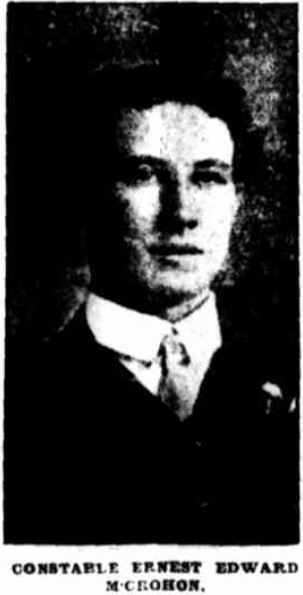
Constable Ernest Edward McCROHON<br /> the young policeman, who at Newtown a fortnight ago, had a sensational chase after four suspects and about 3a.m. on Saturday, arrested a man who had been behaving in a suspicious manner. On handcuffing his man, after a struggle, he found that he had a revolver in his hip pocket.<br />
Constable Ernest Edward McCROHON
the young policeman, who at Newtown a fortnight ago, had a sensational chase after four suspects and about 3a.m. on Saturday, arrested a man who had been behaving in a suspicious manner. On handcuffing his man, after a struggle, he found that he had a revolver in his hip pocket.


ERNEST is NOT mentioned on the Police Wall of Remembrance * NOT JOB RELATED


FURTHER INFORMATION IS NEEDED ABOUT THIS PERSON, THEIR LIFE, THEIR CAREER AND THEIR DEATH.

PLEASE SEND PHOTOS AND INFORMATION TO Cal


May they forever Rest In Peace


The Sydney Morning Herald of

18 March, 1944 reported the following double tragedy surrounding the death of Sergeant McCrohon.


POLICE SERGEANT  KILLED – MAN DIES GIVING  FIRST AID.

Police Sergeant Edward McCrohon, 56, attached to No. 1 Police Station, was killed by a train last night while crossing the railway track between Hurlstone Park and Canterbury stations.

John Whitfield, a railway employee, who was a passenger on the train, collapsed and died as he began to give first aid to McCrohon.

Sergeant McCrohon was on his way home when he was killed.


The sergeant was born on 21 September, 1887 and joined the New South Wales Police Force on 1 April, 1912. He served at Metropolitan Divisions 1, 2, 5 and 13, as well as at Wagga Wagga. At the time of his death he was stationed at No. 1 Division (Central).

trove.nla.gov.au/ndp/del/article/17883834


Sydney Morning Herald (NSW : 1842 – 1954),

Monday 20 March 1944, page 8

McCROHON. – The Relatives and Friends of the late Ernest Edward McCrohon ( Police Sergeant, No. 1 Division ), of 14 Keir Avenue, Hurlstone Park, are invited to attend his Funeral to leave our Funeral Chapel, This Monday, at 11 a.m., for the Crematorium Rookwood.

Walters and Son, Dulwich Hill Terminus.

LM1676

https://trove.nla.gov.au/newspaper/article/17863922#


Army News (Darwin, NT : 1941 – 1946),

Monday 20 March 1944, page 2

WHILE CROSSING THE RAILWAY LINES between Hurlstone Park and Canterbury railway stations on Friday night, Sergeant Edward Ernest McCrohon, 56, of the Clarence Street police station was struck by a train, and killed.

When John Whitfield, 62, night officer at the Belmore railway station who was a passenger on the train, alighted to give assistance, he had a sudden seizure and collapsed. He died beside the body of the police sergeant.

https://trove.nla.gov.au/newspaper/article/47690819#


Daily Advertiser (Wagga Wagga, NSW : 1911 – 1954),

Tuesday 28 March 1939, page 4

PERSONAL

Sergeant E. E. McCrohon, formerly of Newtown, Sydney, took up duty in Wagga yesterday in succession to Sergeant Kidd, who has been transferred to Newtown.

https://trove.nla.gov.au/newspaper/article/143641736


Sun (Sydney, NSW : 1910 – 1954),

Saturday 23 December 1916, page 5

BRAVE CONSTABLE

EFFORT TO SAVE CHILD

Mr. H. Richardson Clark, Parramatta coroner, at an inquest at Bankstown on the dead body of a boy named Thomas Adamson, aged 11½ years, who was drowned in a waterhole in Punchbowl, through getting out of his depth while searching for his sister’s shoe, complimented a brave constable.

The waterhole is in a very secluded position, about eight feet in diameter, and very deep, with no shallow approach, so that directly the hole is entered the water, is about six feet deep, and the sides of it are of clay, being extremely slippery.

The Belmore police were informed of the accident, and Constable McCrohon proceeded to the place with all speed.

He there found a man who was fishing for the boy with a rake, whereupon the constable immediately disrobed and took a header right into the hole.

Before he went in the man with the rake warned him against diving in, as it was dangerous, but notwithstanding that the constable dived right in and brought up the child at once.

The evidence at the Inquest was that the constable knew nothing whatever of the waterhole, and had never seen it before, and that after he recovered the body he and Dr. Miller worked upon it three-quarters of an hour to restore life, but unfortunately without success.

Dr. Miller, in his evidence, stated that he thought the conduct of the constable was most praiseworthy, as had there been any rocks or snags or old stumps in the waterhole McCrohon might have broken his neck when he dived in.

The coroner, in finding a verdict of accidental death, said that he had great pleasure in concurring with the opinion of Dr. Miller as to the conduct of Constable McCrohon, and that he would bring it under the favorable notice of the Inspector-General of Police.

https://trove.nla.gov.au/newspaper/article/223383214


Sun (Sydney, NSW : 1910 – 1954),

Thursday 29 April 1915, page 4

MIDNIGHT STRUGGLE.

ALLEGATIONS AGAINST POLICE

At the Newtown Police Court yesterday, in a case in which Charles Joseph Wall, aged 27, was charged with assault, the evidence of Constable McCrohon was that while he was arresting a man at midnight of April 21, his prisoner resisted, and Wall and others tried to drag the prisoner free.

Finally witness was forced to let the man go, and he then arrested Wall.

Sergeant J. D. Scott said that at the police station Wall accused the constable of having assaulted him. Witness, at his request, looked at Wall‘s mouth, but it was not cut, and there was no sign of blood.

Wall, in defence, said he did not assist the prisoner to escape, all he did was to put his hand on McCrohon and say: ” Constable, let him go quietly. ” McCrohon was then down and was hitting the prisoner as he lay on the ground.

After the prisoner escaped, witness said to the policeman: ” I think you hit that man terrible with the baton. I think it is my place to go up and give evidence against you. ” McCrohon then arrested witness; and in the station he got witness by the mouth and shook him. His mouth was cut, and he was spitting blood.

Sydney Alexander Colls, a barman at the Oxford Hotel, Newtown, said that Wall did not interfere with the constable while the latter was struggling with his prisoner. The defendant was not intoxicated.

Sergeant Moran said he saw no injury. Defendant was shouting and was abusive.

The magistrate ( Mr. Payten ) said that he would not ask for any evidence to be called in rebuttal of the allegations against the police, but as the department might deem it necessary to hold an inquiry, he ordered a copy of the depositions to be forwarded.

In regard to the case itself, he did not think that the probability was that the constable, while violently struggling with his prisoner; could say that Wall was the man who assaulted him when there were other men there too.

No assault was disclosed that would merit punishment.

The case was dismissed.

https://trove.nla.gov.au/newspaper/article/229330809


Other articles involving McCROHON:

https://trove.nla.gov.au/newspaper/article/229243434

https://trove.nla.gov.au/newspaper/article/239753085

https://trove.nla.gov.au/newspaper/article/245911889


Sun (Sydney, NSW : 1910 – 1954),

Friday 19 December 1913, page 2

PLUCKY POLICEMAN.

CAPTURE OF RUNAWAY HORSE.

The plucky action of Constable McCrohon led to the timely capture of a runaway on the Newtown railway bridge last night. A horse in a spring cart, driven by Clarence O’Loughlan, of 163 Lennox-street, Newtown, bolted from the bottom of the Newtown Tramway Depot yard, and, when heading for King-street, had put on a fine turn of speed.

McCrohon, who was crossing the bridge, noticed the galloping steed, and without hesitation caught the horse’s head as it dashed by. He was dragged a little distance, but brought the runaway to a stop before any harm was done.

Many people were about at the time, and the constable’s bravery was favorably commented upon.

https://trove.nla.gov.au/newspaper/article/229354676


Sun (Sydney, NSW : 1910 – 1954),

Wednesday 2 July 1913, page 4

TORE THE POLICEMAN’S PANTS. —

Constable McCrohon was in King-street, St. Peters, on June 21, and when he saw Aubrey Harrison, aged 27, urge a dog to attack a horse in a cart he asked Harrison for his name and address. The man refused, and as the policeman closed with him, Harrison called to the dog, and it tore the officer’s trousers.

On the way to the watchhouse the prisoner used indecent language.

At the Newtown Police Court to-day Harrison was charged with offensive behavior, using Indecent language, assaulting McCrohon, and damaging his uniform. He was defended by Mr. L. Gannon.

Harrison denied the truth of the Charges.

The magistrate ( Mr. Smithers ) imposed fines and costs amounting to £7 11s 6d. The option was two months’ gaol.

In regard to a request that time be allowed to pay the magistrate said he would grant seven days to pay in three cases, but as far as the charge of indecent language was concerned he would, if he had the power, order Harrison to gaol.

Filthy language, he said, was the outcome of a filthy mind, and seemed to be part of the nature of a man who used it.

https://trove.nla.gov.au/newspaper/article/229679782


Evening News (Sydney, NSW : 1869 – 1931),

Wednesday 4 June 1913, page 14

RECOGNISING BRAVERY.

A few weeks ago Constable McCrohon of the Newton Police, captured a burglar under sensational circumstances, and the total municipal council at the instance of Alderman Lewis, sent a letter to the Inspector-General of Police expressing its appreciation of the bravery of the constable.

At the last meeting of the council a communication was received from Mr. Day stating that he was pleased to know of the council’s views in the matter, which coincided with his own, and he had ordered a favorable entry to be made on the constable’s record sheet.

https://trove.nla.gov.au/newspaper/article/113358852


Daily Telegraph (Sydney, NSW : 1883 – 1930),

Wednesday 16 April 1913, page 18

MEN RAN AWAY.

CONSTABLE FIRED FOUR SHOTS.

About 2 o’clock yesterday morning Constable McCrohon and Watchman Taylor, who were in King-street, Newtown, noticed two men outside Selig’s pawn office. Being suspicious concerning the men, because of the early hour; the constables went towards them. The men made off immediately, one of them dropping an iron bar about 3 foot long.

They ran down Bucknell street towards McDonaldtown railway station.

Constable McCrohon hurried after the men, calling upon them to stop. They took no notice of his command, and he fired over their heads without effect upon their movements. Three more shots were fired, but the men disappeared and have not been traced since.

An examination of the premises near where the men were first soon showed that nothing had been interfered with.

https://trove.nla.gov.au/newspaper/article/238937172

https://trove.nla.gov.au/newspaper/article/229847876


NSWBDM:

Birth:   35058/1887

Death: 1489/1944


First published on 11 August 2014.

Updated 21 February 2026 with Constable 1st Class rank date and various calculations.


Cornelius Martin CARROLL

Cornelius Martin CARROLL

aka  Con

( late of 8 St David’s Road, Concord )

New South Wales Police Force

Regd. #   ??

Rank:  Detective Sergeant 3rd Class

Stations: ?, Burwood, Petersham ( O.I.C. – Detectives )

ServiceFrom  24 February 1915  to  6 June 1939 = 24+ years Service

Awards: No Find on It’s an Honour

Born? ? 1888 in Ireland

Died on:  Tuesday  6 June 1939

Cause:  Struck by a Motor Vehicle

Event location:  Parramatta Rd, near Ross St, Camperdown

Age: 50

Funeral date:   Thursday  8 June 1939 @ 8am

Funeral location: St Mary’s Church, Concord

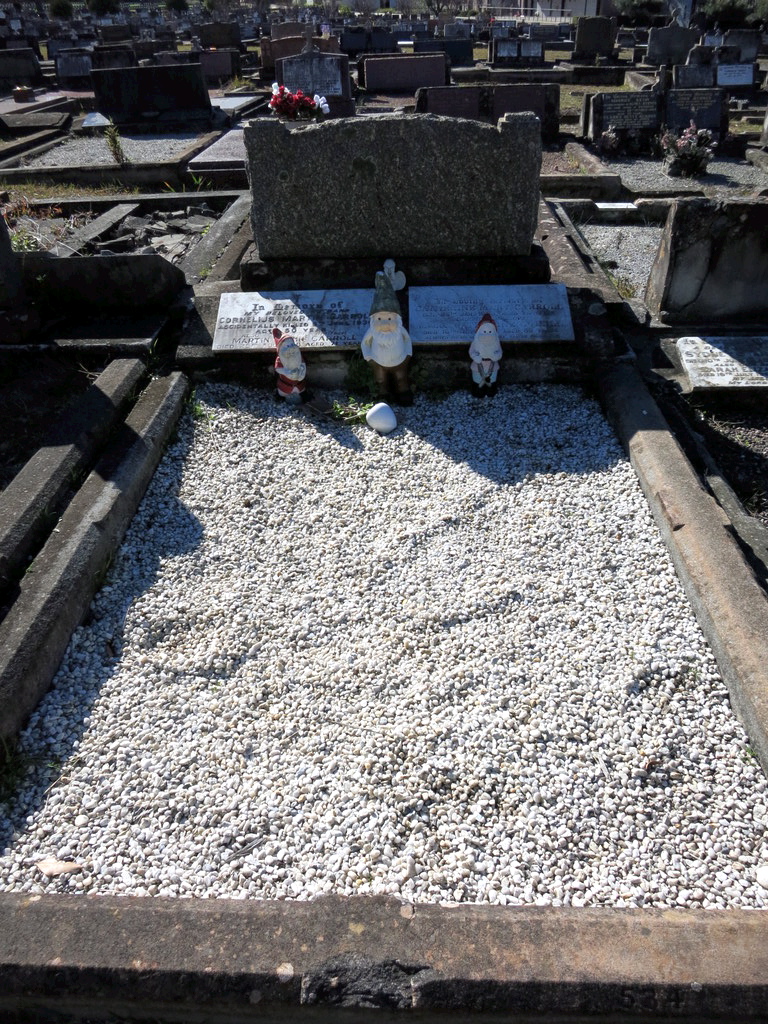
Buried at:  Rookwood Catholic Cemetery @ 2.30pm

Section:  Mortuary 2 – 12  533

Lat / Long:  -33.88171, 151.05267

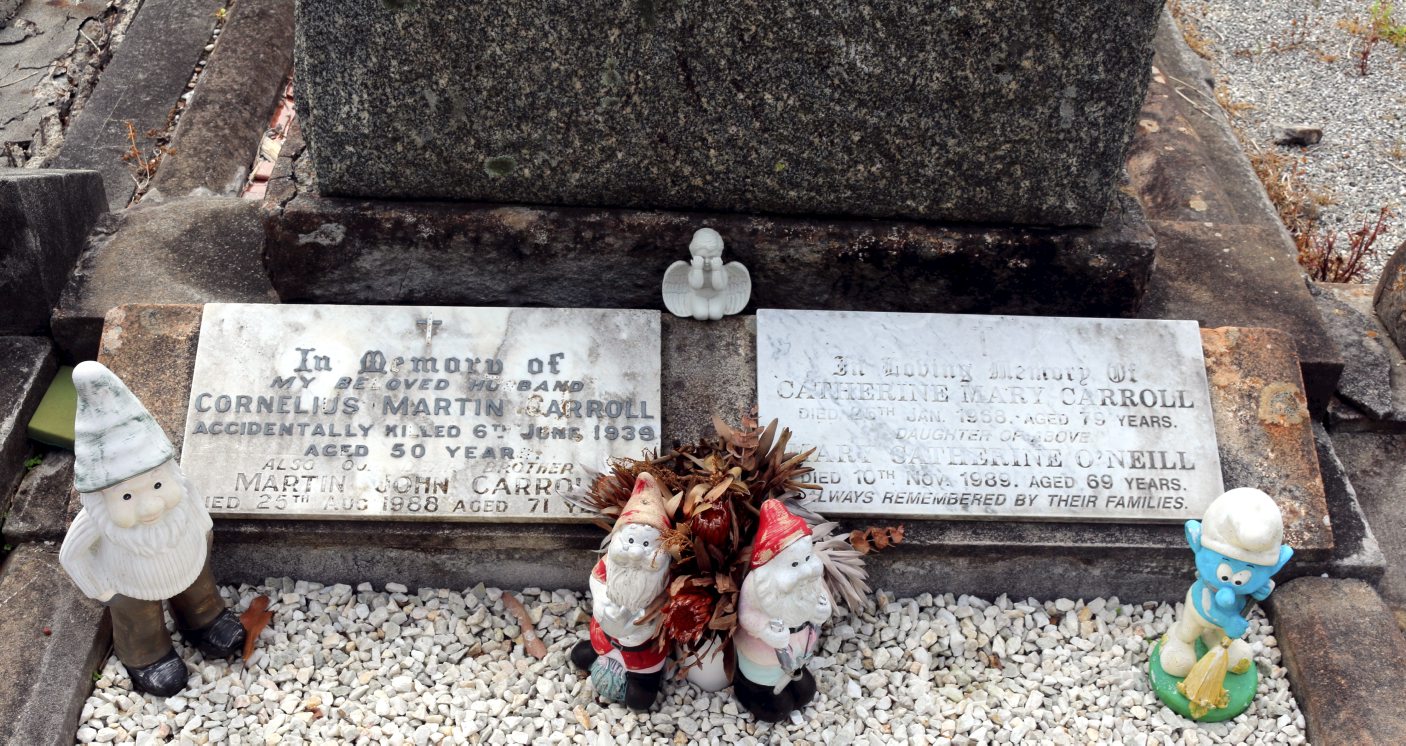
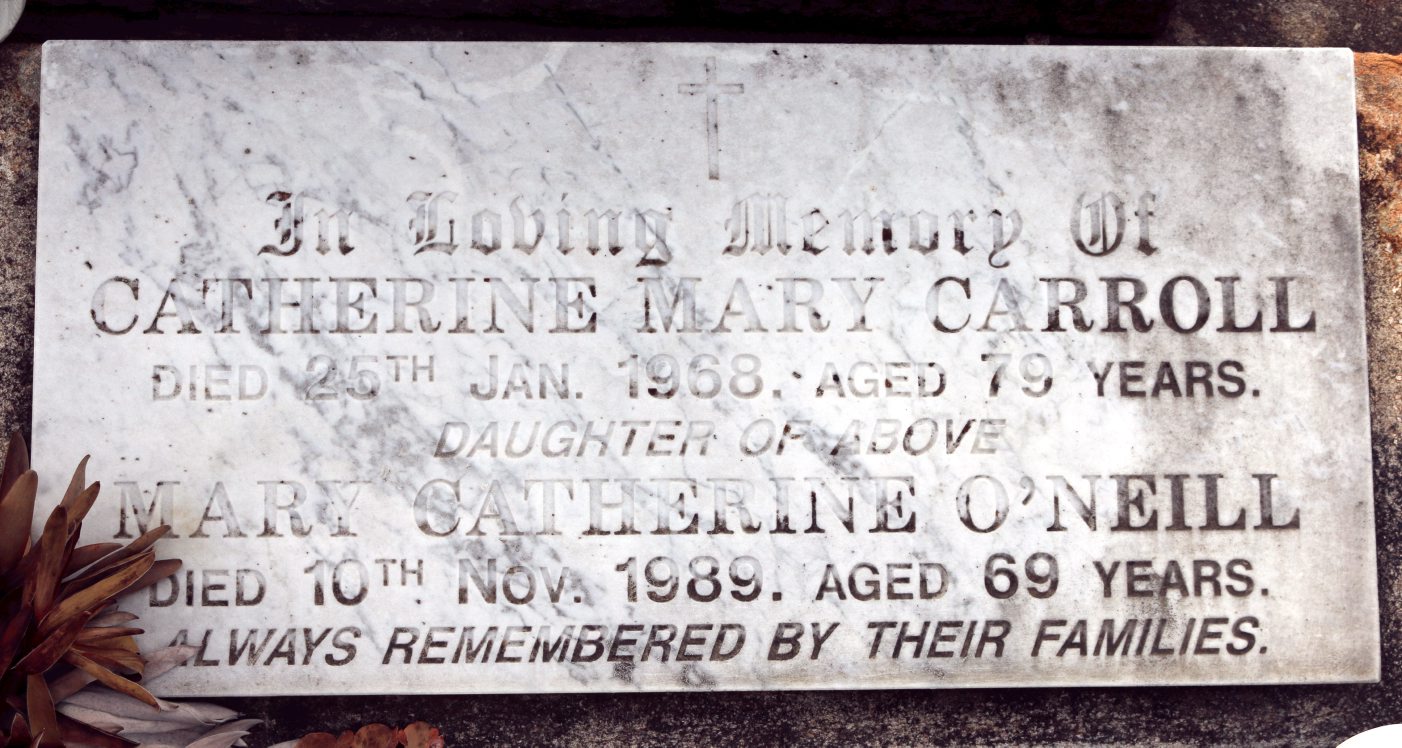
 In memory of my beloved husband Cornelius Martin CARROLL. Accidentally killed 6th June 1939. Aged 50 years. Also our beloved brother Martin John CARROLL Died 25th August 1988 aged 71 years

 CORNELIUS IS mentioned on the Police Wall of Remembrance

About 6pm on 6 June, 1939 Detective Sergeant  ‘ Con ‘ Carroll, the Officer in Charge of Detectives at Petersham, left his station to meet with an informant near the Sydney University.

In Parramatta Road near Ross Street, Camperdown he was accidentally hit by a car and was killed instantly. A report of the death was published in the Sydney Morning Herald of 7 June,1939.


DETECTIVE KILLED – Knocked Down by Car.  1939

Detective Sergeant Cornelius Carroll, 50, of St David’s Road, Concord was knocked down and killed by a motor car in Parramatta Road near Ross Street, Forest Lodge last night. Detective Sergeant Carroll had been in the police force 25 years, mostly in the Burwood and Petersham areas. He was in charge of the detectives at Petersham.

Detectives Brown and Rowland were informed that Detective Sergeant Carroll was either walking across the road or had just alighted from a tram when the accident occurred. The driver of the motor car did not see him until the impact, which fractured Detective Sergeant Carroll’s skull and limbs, killing him instantly.

Detective Sergeant Carroll’s body was taken to the Royal Prince Alfred Hospital by the Central District Ambulance. Detective Brown who was a close friend did not know whose death he was investigating until Detective Sergeant Carroll’s papers were found at the city morgue.

http://trove.nla.gov.au/newspaper/article/17604312

Anyone who witnessed the accident is asked to communicate with Detective Parmeter or Detective Wiggins at the Camperdown police station.


The sergeant was born in 1888 and joined the New South Wales Police Force on 24 February, 1915.

At the time of his death he was stationed at Petersham.

He was buried at Rookwood Catholic Cemetery.


As an aside, there was a Cornelius Daniel CARROLL who joined the NSW Police Force, as a Police Cadet, on the 12 February 1941.  Cadet # 309.

It is not known if C.D. Carroll is related to Cornelius CARROLL who died in June 1939.


The Sydney Morning Herald

Thursday  8 June 1939    p8

CARROLL – June 6 1939 suddenly Cornelius John ( Con ) Carroll detective sergeant of police dearly loved husband of Catherine Mary Carroll and father of Martin Josephine (Greta) Mary and Cornelius ( Conny ) aged 51 years Requiescat in pace.

http://trove.nla.gov.au/newspaper/article/17612052


Crookwell Gazette

Wednesday  21 June 1939    p 1

FULLERTON NEWS

SERGT. CARROLL’S DEATH SUCCUMBED TO INJURIES

On June 6 th. Detective-Sergeant Cornelius Carroll (“Con” to every one) had just signed off from duty at 6 p.m. and was waiting on the Parramatta Road, near the University, Sydney, for a bus to take him home to Concord, when he observed that a car coming along was one he was looking for.

On the impulse he stepped in front of the car to stop the driver, but the car crashed right into Carroll, who was flung and carried 100 yards.

He was picked up and given medical attention but died very shortly afterwards from his injuries.

The driver had gone on and escaped.  ( This doesn’t appear to be true – after reading other articles stemming from the Coroners Court )

The funeral on Thursday went from Burwood R.C. Church to the R.C. portion of Rookwood Cemetery.

The cortege was headed by the Sydney Police Band playing The Dead March. Over 200 police followed as a tribute of respect to a comrade who had always been popular in the Force for his geniality and readiness to do a good turn.

He was well known to the “underworld,” who regarded him as a “holy terror.”

Con Carroll was liked and known to many of the people of the Fullerton district, as up to a few years ago he was a frequent visitor to his parents-in-law, Mr. and Mrs. Philip Horgan, of Cartwright’s Creek, he having married their eldest daughter. Besides his widow, he is survived by his four children, Martin, the Misses Gretta and Mary and Cornelius.

Detective Carroll was born in Ireland 51 years ago and always retained a great love for his native country and his church. He came to Sydney as a young man and had been in the Police Force in the Sydney district ever since his arrival in Australia. He had resided at Davis Street, Concord, for many years. The sudden tragedy came as a great shock to his aged mother-in-law, Mrs.

Mary Anne Hogan, who always looked upon the deceased as one of her own sons.

http://trove.nla.gov.au/newspaper/article/221299636


The Sydney Morning Herald

Tuesday  11 July 1939    p16

DETECTIVE’S DEATH.

Finding of Accident.

The City Coroner Mr Oram at an adjourned inquest yesterday into the death of Detective sergeant Cornelius John Carroll, 50, of Davidson Street Concord who was knocked down by a motor car in Parramatta Road Forest Lodge on June 6, found that he was killed accidentally.

In previous evidence it had been stated that Carroll was on his way to keep an appointment with a female informer near the University grounds when he met his death.

In announcing his finding Mr Oram said that he could not commit the driver of the car for trial on a charge of manslaughter. Evidence was conflicting but it seemed to suggest that the car that struck the dead man was travelling in excess of 30 miles an hour in a built up area when the accident occurred. It was a border line case but there was no evidence that the driver displayed gross carelessness amounting to criminal negligence.

http://trove.nla.gov.au/newspaper/article/17616515


Other readings can be found at:

http://trove.nla.gov.au/newspaper/article/17595388

http://trove.nla.gov.au/newspaper/article/133740103

http://trove.nla.gov.au/newspaper/article/133733182


The Newcastle Sun ( NSW )

Tuesday  12 September 1939     p 8

SERGT.’S DEATH IN ACCIDENT

Motor Driver Fined For Negligence

SYDNEY. Tuesday

A trail of broken glass for 120 feet and a blood trail 33 feet long were described by Constable Cecil Stanley Jardine in the Traffic Court to-day when Archibald William Johnson, of Ashfield. was convicted by Mr. Wood. S.M., of negligent driving and fined £7.plus 23s 6d costs and expenses.

The charge arose out of an accident in Parramatta-road, Forest Lodge, on June 6, which resulted in the death of Detective-Sergeant Cornelius John Carroll, of Petersham. James Aubrey Gibson told of a man crossing the road as though to board a tram when a car approached fast. It had dim lights. The man put a hand up but the car hit him and carried him along the road 40 or 50 yards.

Johnson, who is a printer, pleaded not guilty. He said he eased to about 12 miles an hour and then increased speed to about 30. He felt a bump and saw a form disappear in front of the radiator. ” I applied the brakes and drew into the side, ” said Johnson.

Mr. Wood said he would recommend the Transport Department to test whether Johnson was fit to drive a car. Either he had not been paying proper attention or there was a defect in his vision.

http://trove.nla.gov.au/newspaper/article/167327081


Riverine Herald ( Vic. )

Friday  17 February 1933     p3

DETECTIVE WOUNDED.

Accidental Discharge of Revolver.

SYDNEY, Thursday

Although wounded in one shoulder when his companion’s revolver was accidentally fired last night, Detective Cornelius Carroll insisted on carrying on with the task of searching for burglars in a house before going to hospital.

When Mr W. T. Coggins, of Chalmers Rd, Strathfield, returned home last night he saw lights burning in the house and rang the police on a neighbor’s telephone.

Detective Carroll, Detective Clifton and Constable Gordon answered the call. Sir Coggins and Constable Gordon went to the rear of the dwelling, while Detectives Carroll and Clifton approached the front.

Carroll, with revolver drawn, was walking a few yards in front. Clifton was drawing his revolver from its holster when it went off, and the bullet, ricocheting off a brick wall, buried itself in the fleshy part of Carroll’s right shoulder.

Carroll took part in a search of the house, saying that the wound was a mere scratch. The burglars had decamped, however, taking £20 worth of clothing.

Examination at the hospital revealed the detective’s injury was not serious, but the bullet was still embedded.

So little did Carroll think of it that he rang the Burwood police station to inform officers there of his injury, joking with his mates and asking them to send him along a pair of slippers.

http://trove.nla.gov.au/newspaper/article/116480254


Goulburn Evening Penny Post

Friday  3 March 1933     p 2

Detective Carroll, who was shot accidentally during a raid in search of suspects at Ashfield, is Cornelius John Carroll, a son-in-law of Mr. and Mrs. Philip Hogan, of Cartwright’s Creek, Fullerton. ” Con. ” is often to be seen in Crookwell when on a visit to his wife’s parents. His genial nature and his coolness and pluck are outstanding attractions of this big, genial Irishman.

http://trove.nla.gov.au/newspaper/article/102864809


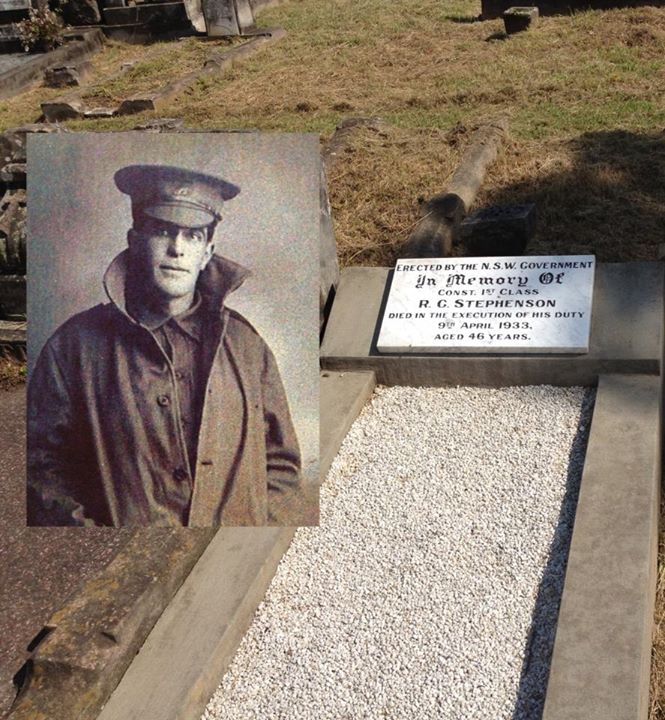
Ruston George STEPHENSON

Ruston George STEPHENSON

New South Wales Police Force

Constable 1st Class

Joined NSW Police Force on 9 July 1912

Stationed at Newtown Police Station

Motor Vehicle Accident – Pedestrian

Died  Newtown

46 old

Born  1886

Died  9 April, 1933

Funeral  13 April 1933

Buried in Rookwood Cemetery


Ruston George STEPHENSON - NSWPF - Killed 9 April 1933
Ruston George STEPHENSON – NSWPF – Killed 9 April 1933


On 8 April, 1933 Constable George Stephenson of the Newtown Police Station travelled with a group of other police to the Newtown Stadium. They parked the police vehicle in Erskineville Road and as the constable stepped out from behind the car he was hit by a passing motor cycle outfit. Constable Stephenson sustained severe injuries and died in hospital the following morning. An 18 month old child passenger of the motor cycle outfit, Fay Joyce Moon, was also killed in the accident.


The Northern Standard newspaper dated 13 April, 1933 reported that “Constable Stephenson who was killed by a motorist while on duty, was a famous athlete, and had a distinguished war record, winning the D.S.O and Military Medal. Five hundred uninformed men spontaneously attended his funeral [in Sydney] today.”


The constable was born in 1886 and joined the New South Wales Police Force on 9 July, 1912. At the time of his death he was stationed at Newtown. He was awarded the Distinguished Conduct Medal during World War 1.


Ruston joined the NSW Police Force in 1912 and in 1916 enlisted in the army, later joining the fight in France during the First World War.  He was awarded the Distinguished Conduct Medal for conspicuous gallantry in rescuing injured soldiers while under fire.  Remarkably, when he returned home, he rejoined the Police Force and continued to serve until his death at the then Newtown Stadium while performing general duties policing.


NEWTOWN LOCAL AREA COMMAND POLICE COMMEMORATION SERVICE

http://www.parliament.nsw.gov.au/prod/parlment/hansart.nsf/V3Key/LA20130508056

Page: 20259

Ms CARMEL TEBBUTT (Marrickville) [7.07 p.m.  8 May 2013]: Recently at Rookwood Cemetery I attended a memorial service to commemorate police officers from the Newtown local area command killed in the line of duty. The moving service was attended by Deputy Police Commissioner Nick Kaldis, Superintendent Simon Hardman, the commander of the Newtown Area Local Command, many other police representatives, and relatives and descendants of the police officers. Those attendees included Ms Avona Wallace, Mr and Mrs Norman Stephenson, Mrs Lynette Everton and Ms Edna Stevenson. Representatives from the emergency services and community members were also in attendance. The member for Campbelltown, Bryan Doyle, attended representing the Premier.

The five officers being remembered at the ceremony gave their lives to protect the community. They were Constable First Class John Wallace, Constable First Class Ruston Stephenson, Constable Lionel Guise, Detective Inspector Reginald Stevenson and Constable Pashalis Katsivelas. The ceremony to mark the sacrifice of these officers reflected on the enormity of their contribution to the community, as well as the impact of their death on their families. It is often said, and it is true, that police officers leave their homes for each shift uncertain of what any day may bring and whether they will return at the end of the day. We owe these men and women our deepest gratitude for the risks they face and take every day in their job. At Rookwood Cemetery we visited each of the graves of those officers who lost their lives in the line of duty and behind each individual was an illuminating life story.

We began at the grave of Constable First Class Ruston Stephenson, who died 80 years almost to the day of the commemoration. Constable Stephenson joined the Police Force in 1912, and four years later enlisted in the army, later joining the fight in France during the First World War. He was awarded the Distinguished Conduct Medal for conspicuous gallantry in rescuing injured soldiers while under fire. Remarkably, when he returned he rejoined the Police Force and continued to serve until his death on 9 April 1933 after a tragic accident involving a motorcycle at the then Newtown Stadium while performing general duties policing.

We were also told the story of Detective Inspector Reginald Hugh Stevenson—I was honoured on the day to meet his widow, Ms Edna Stevenson, who still had strong memories of the incident that led to Inspector Stevenson’s death. Detective Inspector Stevenson joined the NSW Police Force as a cadet in 1943 at the age of 17. In an act of extraordinary selflessness, Detective Inspector Stevenson was on annual leave on 9 December 1974 when he decided to go to work to assist in the planned arrest of a dangerous offender in Newtown, at the time telling his wife, “I don’t want my boys doing this on their own.” During the operation he was shot in the chest after leading his team in pursuit of the offender.

Detective Inspector Stevenson partially recovered and was awarded the Queen’s Commendation for Brave Conduct and the Queen’s Police Medal for Distinguished Service. However, he died in 1980 of a heart attack, deemed to be the result of the injuries he sustained on duty in 1974. These officers are just a few of many across New South Wales whose lives have been cut short as they have gone about performing their duty. I pay tribute to them all. They will not be forgotten and local events such as this are a powerful reminder of their sacrifice.

I also take this opportunity to acknowledge two Marrickville police officers, Sergeant Stewart and Constable Steele, who on Monday of this week rescued an intellectually disabled person from a house fire in Marrickville. Thankfully, those two officers who took huge risks survived and are quite rightly being hailed as heroes by their colleagues and the community. It is yet another example of the risk our police men and women take every day in order to keep the community safe. I take this opportunity to pay tribute to them.


[divider]


Joseph McCUNN & Clifford James BUSH

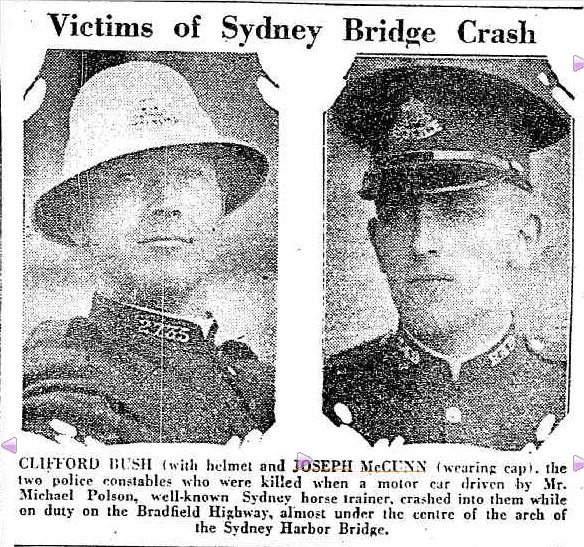
Constable Joseph McCUNN

23 old


Constable Joseph McCunn


Constable Clifford James BUSH

26 old

Constable Clifford James BUSH


New South Wales Police Force

both Stationed:  Clarence St Police Station

Struck by a Motor Vehicle

Dawes Point

Event  & Death  5 August 1932

Funeral  8 August 1932

both buried, side by side, in the Church of England portion of Rookwood Cemetery.


On the evening of 5 August, 1932 Constables McCunn and Bush were performing special traffic duty at the southern end of the Sydney Harbour bridge. During the operation they were on foot and stopping passing vehicles, using a torch. A vehicle appeared travelling from the northern side of the harbour and was signalled to stop by one of the constables. The vehicle did not stop, however, and struck both constables with considerable force. Constable Bush died instantly and Constable McCunn died about an hour later at the Royal North Shore Hospital.


The Mercury newspaper of 9 August, 1932 described the funeral of the two constables as follows:


CONSTABLES’ FUNERAL – An Impressive Spectacle Viewed by 100,000 Persons.

Sydney, August 8 – There have been few more impressive spectacles in Sydney than the funeral to-day, amid affecting ceremonial, of Constables Joseph McCunn and Clifford James Bush, who met their deaths in tragic circumstances while on duty on the Sydney Harbour Bridge, and whose remains were laid to rest side by side under great ramparts of beautiful flowers in the Church of England portion of the Rookwood Cemetery. Pathetic figures in the vast assemblage at the gravesides were the men’s widows, one of whom collapsed during the service, and had to be carried to her motor-car. One hundred thousand persons or more, with bared heads, viewed the long and impressive cortege. The police force was represented by 500 or more men and officers of all ranks. Among the others present was the ex-Commissioner of Police, Mr. James Mitchell.


Constable McCunn was born in 1909 and joined the New South Wales Police Force on 30 October, 1929. At the time of his death he was stationed at No. 11 Division ( Petersham ).


Constable Bush was born in 1906 and joined the New South Wales Police Force on 26 October, 1927. At the time of his death he was stationed at No. 1 Division  ( Central Police Station ).


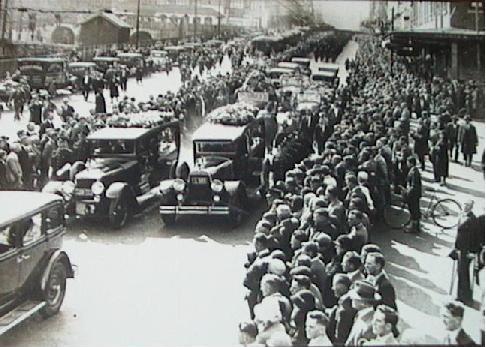
Constable Joseph McCUNN & Constable Clifford James BUSH funeral procession.


The Sydney Morning Hearld

Saturday  6 August 1932  page 13 of 22

TWO CONSTABLES KILLED ON BRIDGE.

Car Driver Arrested

Two constables were killed on the Harbour Bridge last night, when a motor car which, it is alleged, they had signalled to stop, crashed into them.

They were:-   Constable Clifford James Bush, 26, of the Clarence-street Police Station.   Constable Joseph McCunn, 23, of the same station.

The driver of the car was subsequently arrested and charged with manslaughter.

The two police were on special patrol duty near the southern pylon shortly before 9 o’clock last night. They were engaged in checking the tail lights on passing motor cars and frequently stopped and cautioned motorists whom they considered were travelling at too fast a speed or were infringing any other traffic regulations. They were both standing in the centre of the bridge roadway, one watching in either direction. Traffic was exceptionally light at the time.

A large sedan car swung on to the bridge from the northern end, and the police watched the dazzling headlights crossing the harbour. As it approached them, one of the constable, the Police alleged, signalled the driver to stop. The car crashed into the two men, with a terrific jar.

TERRIBLE INJURIES.

The two police, it is assumed, were struck by the bumper bars of the vehicle, which were ripped off by the force of the impact. One constable was flung to one side of the roadway, and the other in the opposite direction. Bush was hurled bodily into the iron railing on the side of the bridge, and his body was found lying in a crumpled heap in the gutter. He had been terribly mangled. Both his legs were broken in two places, and the flesh had been shockingly lacerated. His head had struck the iron work, and he had died instantly.

His companion was lying on his back on the road. He had received frightful injuries to his body, concussion, compound fracture   of both legs, and extensive abrasions.

Constable Pike, of the George-street North police, who was on duty at the toll office, saw the two bodies lying on the roadway. He rushed to the scene, and called an ambulance. He was more than 300 yards away from the two men when he noticed a motor car, the radiator of which had been crushed back against the engine, and the windscreen and lights had been shattered. According to his story, the three men inside the car were apparently unaware that they had hit anything.   The engine was still running. All the men appeared to be dazed.

The two constables were taken to the Royal North Shore Hospital in the Central District Ambulance. Constable McCunn was admitted immediately for attention, but died later in the night.

The Metropolitan Superintendent of Police, Mr. Mackay, happened to be passing at the time, and attracted by the long queue of cars and onlookers, he pulled in to make investigations, and immediately took charge of the inquiries.

It was learned that the three occupants of the car, who are well-known city men, had been returning from a function at a North Sydney golf club when the accident occurred. They were taken to the George-street North police station for interrogation, and were later interviewed by the Commissioner of Police, Mr. Childs, and the Chief of the Criminal Investigation Branch, Mr. Prior. Detective-sergeant Almond and Detectives Alford, McDermott, Robinson, and Gregory were assigned to the case.

The victims of the tragedy, both of whom are married, will be accorded a police funeral.

MAN CHARGED.

Early this morning, Michael William Polson, of Cook-road, Randwick, was charged with having feloniously and maliciously slain the two policemen. He was admitted to   bail in £100 on each charge. The police   state that the other two men in the car were John Ferrier, of Manly, and Joseph Bannister.

http://trove.nla.gov.au/ndp/del/article/16898012?searchTerm=joseph%20mccunn&searchLimits=l-decade=193|||sortby=dateAsc|||l-australian=y#pstart1154988


The Maitland Daily Mercury ( NSW )

Saturday  6 August 1932  page 1 of 10

” It Was a Perfectly Clear Accident ” — Counsel

TWO DEAD       No Negligence COURT SEQUEL SYDNEY, Saturday.

At the Central Court today, Michael William Polson (48) appeared on a charge of having feloniously and maliciously slain Constables Clifford Bush and Joseph McCunn. He was also charged with having driven a motor car on Bradfield Highway in a manner dangerous to the public.

Detective-Sergeant Allmond said the two constables were on duty on the Harbour Bridge last night when the car failed to stop, and crashed into them. Both were killed. Witness said defendant was a well known man. He had an excellent reputation and a good record as a motor driver.

Mr. Dovey, for Polson, said It was a perfectly clear accident, in no way due to criminal negligence on the part of his client, ” who, more than anyone else, regrets the unfortunate happening. ”

Polson was remanded until August 22 on bail of £200.


TERRIFIC BLOW

Earlier Press reports of the double fatality show that it occurred with distressing suddenness.

The constable were patrolling the roadway of the bridge, Seeing the car approaching, they stepped towards the centre of the roadway, apparently to stop it. The car continued forward, and struck both constable. One was hurled 10 feet to one side, and the second policeman 20 feet on the other.

The force of the impact was so severe   that the front portion 0f the   car was badly damaged – the radiator was knocked out of position, the headlights were smashed, and the bumper bars torn off.

LYING ON ROADWAY .

Constable Pike, who was on patrol   duty on the southern approach, did   not actually see the accident, but observed two forms lying on the roadway, near the pylon. He ran forward, passing the car, which had come to a standstill, and picked up one of the constables.  Realising that one was dead, and the other in a dying condition, he raced back to the police watch house to telephone for medical assistance.

The driver of the car, and two passengers, one of them an estate agent, and the other the father of a prominent golfer, accompanied the police to No. 4 Police Station, where they were questioned.

http://trove.nla.gov.au/ndp/del/article/126534648?searchTerm=joseph%20mccunn&searchLimits=l-decade=193|||sortby=dateAsc|||l-australian=y

Polson was a racehorse trainer


The Sydney Morning Herald

Monday  8 August 1932  page 7 of 14

BUSH and McCUNN -The Funerals of the late

CONSTABLES CLIFFORD JAMES BUSH and JOSEPH McCUNN will leave the Private Mortuary Chapel of Mrs P Kirby and Son Ltd, 265 Elizabeth street Sydney THIS MONDAY at 1.15 p m  for the Church of England Cemetery Rookwood. The Dean of Sydney Rev. Dean Talbot will conduct the services at the Chapel and graveside.

Mrs P KIRBY and SON LTD,  Motor Funeral Directors

Phone M2221-2 265 Elizabeth street, Sydney


McCUNN

The Relatives and Friends of Mrs ELINOR McCUNN and ADRIAN are kindly   invited to attend the Funeral of her dearly beloved HUSBAND and his FATHER, Constable JOSEPH McCUNN which will leave the Private Mortuary Chapel of Mrs P Kirby and Son Ltd, 265 Elizabeth street Sydney THIS MONDAY at 1.15 p m     for the Church of England Cemetery Rookwood

Mrs P KIRBY and SON LTD

Motor Funeral Directors

Phone M2221-2 265 Elizabeth street Sydney


McCUNN – The friends of Misses ANNIE and JEAN McCUNN are kindly Invited to attend the funeral of their dearly beloved BROTHER Constable Joseph McCunn which will leave the Private Mortuary Chapel of Mrs P Kirby and Son Ltd 265 Elizabeth street Sydney THIS MONDAY at 1.15 p m for the Church of England   Cemetery, Rookwood.

Mrs P KIRBY and SON LTD

Motor funeral Directors

Phone M2221-2 265 Elizabeth street Svdney

http://trove.nla.gov.au/ndp/del/article/16901524?searchTerm=joseph%20mccunn&searchLimits=l-decade=193|||sortby=dateAsc|||l-australian=y


News ( Adelaide, SA )

Monday  8 August 1932  page 6 of 8

Clifford BUSH & Joseph McCunn

http://trove.nla.gov.au/ndp/del/article/128947996?searchTerm=joseph%20mccunn&searchLimits=l-decade=193|||sortby=dateAsc|||l-australian=y


The Sydney Morning Herald

Tuesday  9 August 1932  page 10 of 14

PUBLIC FUNERAL.

Two Constables.

IMPRESSIVE SCENES.

There have been few more impressive spectacles in Sydney than the funeral yesterday,  amid affecting ceremonial, of Constables Joseph McCunn and Clifford James Bush, who met their deaths in tragic circumstances while on duty on the Sydney Harbour Bridge, and whose remains were laid to rest, side by side, under great ramparts of beautiful flowers in the Church of England portion of Rookwood Cemetery.

Pathetic figures in the vast assemblage at the gravesides were the men’s widows, one of whom collapsed during the service, and had to be carried to her motor car.

An unobtrusive figure in the assemblage was that of Mr. Michael W Polson, who was accompanied by Messrs. J. B. Ferrier and J. Bannister. The floral tributes, which were conveyed in several cars, and which were placed on one car in striking pyramidal form, included two massive wreaths from Mr. Polson.

One hundred thousand people or more, with bared heads, viewed the long and impressive cortege as it proceeded from Mrs. Kirby’s funeral parlours in Elizabeth-street, along that thoroughfare, under the railway bridge into Hay-street, and thence along Pitt street, and past Central Square to the   Mortuary Station, en route to Rookwood, where there was another vast concourse. Drawn together by a common bond of sympathy, the spectators occupied every vantage point. From countless windows in the city, thousands of people momentarily stayed their daily course to watch the passing of the cortege.

As an imposing official ceremonial, impressive in the quiet dignity of its pageantry, it   was a striking expression of a city’s sympathy and respect for two men who had died at their posts.

From the funeral parlours to the hearses, side by side, and through an impressive avenue lined by the police as a guard of honour,   to the gravesides, six stalwart, broad-shouldered constables carried each of the coffins.   Mounted constables headed the cortege. Then came the Police Band, with muffled drum; then a big detachment of uniformed police, and immediately in front of the hearses, the Deputy Premier (Mr. Bruxner) and the Chief Secretary (Mr. Chaffey), representing the State Government; the Commissioner of Police (Mr. Childs), and the Under Secretary.

Chief Secretary’s Department (Mr.   Harkness). Walking on both sides and at the rear of the hearses were small detachments of police. Next came several cars laden with floral tributes; another long file of uniformed police, plainclothes men, police roundsmen, representing the Sydney Press; representatives of the Central District Ambulance ; a big body of Sydney’s fire fighters,   whose helmets glittered in the bright sunshine, and the representatives of other allied establishments.

Every now and again there ran down the long line of officers and men the swelling and sinking notes of the Funeral March as the bandsmen walked with slow, measured steps behind the brilliant cavalcade of men sitting their horses like statues. Thus, amid   striking manifestations of respect for their memory, were the two constables laid to rest, with the hymn “Abide With Me” being softly rendered.

The Police Force was represented by 500 or more men and officers of all ranks. Among the others present was the ex-Commissioner of Police (Mr. James Mitchell).

DEAN TALBOT’S TRIBUTE.

Dean Talbot, in his address at the graveside, said the city had been deeply grieved at   the deaths of these two men; the scene that day was a touching expression of its sorrow. The men whose passing the city mourned were the representatives of a force which, with   untiring vigilance, protected the lives and the property of the community. The police, in the execution of their duty, were frequently in danger, and were conspicuous in such circumstances by their heroism and bravery. The police of New South Wales had won the admiration of all law-abiding citizens, and it was in that spirit of admiration, mingled with feelings of sorrow, that the community had that day paid its striking   tribute. Those whom they mourned that day had been taken with tragic suddenness. The community sympathised with their relatives, and trusted that God would comfort them in their great grief.

The chief mourners were the widows of the two men and their families, and a large number of relatives.

http://trove.nla.gov.au/ndp/del/article/16914234?searchTerm=joseph%20mccunn&searchLimits=l-decade=193|||sortby=dateAsc|||l-australian=y#pstart1155021


Newcastle Morning Herald & Miners’ Advocate

Tuesday  9 August 1932  page 5 of 10

LARGE CROWDS     Funeral of Constables    HARBOUR BRIDGE SMASH SYDNEY, Monday. Thousands of people assembled in Elizabeth and Oxford Streets this afternoon, to witness the funerals of Constables Clifford James Bush and Joseph McCunn, who were struck by a car and fatally injured on the Sydney Harbour Bridge on Friday night. The crowd was so dense that traffic was disorganised.

After a short, impressive service in the chapel of the funeral parlours, the coffins were carried to the waiting hearses,   and preceded by a detachment of mounted police, the cortege moved off for the mortuary station. Immediately behind the mounted police came the Police.   Band, and 400 police representing all ranks. Among the members were the Commissioner of Police (Mr. W. H. Childs), the principal administrative officers in the metropolitan area, the Chief  Fire Officer ( Mr. Nance ) and 100 members of the Metropolitan Fire Brigades.

The hearses travelled side by side, and were followed by six cars laden with floral tributes. Two magnificent wreaths were sent by Mr. M. W. Polson, the driver of the car which was involved in the fatal smash. Mr. Polson also attended the funeral.   There was another large crowd at the Rookwood Cemetery. The Chief Secretary ( Mr. F. A. Chaffey ) and the Minister for Transport ( Mr. M. F. Bruxner ) represented the State Government.

BRIDGE LIGHTING RESTORED.

One result of the tragedy is that the authorities have directed that until further notice the bridge shall be fully illuminated. A few weeks ago the Transport Department issued instructions that   the number of lights should be reduced by two-thirds in order to save £4000 a year in the cost of electricity.

http://trove.nla.gov.au/ndp/del/article/136595976?searchTerm=joseph%20mccunn&searchLimits=l-decade=193|||sortby=dateAsc|||l-australian=y


The Canberra Times

Tuesday  23 August 1932  page 1 of 4

BRIDGE FATALITY

Trainer Charged with Manslaughter

SYDNEY, Monday.

At the Central Court, today, Michael William Polson, horse trainer, was charged with having feloniously slain Constables Joseph McCunn and Henry James Bush on the Harbour Bridge on August 9 and with having driven in a manner dangerous to the public.

He was remanded until August 30. It was stated that the coroner’s  inquiry would be held on that day.

 http://trove.nla.gov.au/ndp/del/article/2299510?searchTerm=joseph%20mccunn&searchLimits=l-decade=193|||sortby=dateAsc|||l-australian=y


The Dubbo Liberal & Macquarie Advocate ( NSW )

Tuesday  30 August 1932  page 1 of 6

HARBOUR BRIDGE TRAGEDY

Polson on Manslaughter Charge

Sydney, Tuesday.

The Coronial inquiry commenced today into the deaths of Constables Clifford James Bush (26) and Joseph McCunn (23), who were killed on the Harbour Bridge on the night of August 5.

Michael Polson, horse trainer, who was charged with manslaughter, was present in court.

Detective Robinson told the court that Polson said to him, ” I didn’t see them. I did feel a bump and the car seemed to get out of control. I had difficulty in stopping. The light on the bridge is very bad, and I was not driving at more than 25 miles an hour. ”

Raymond Mcintosh stated that he noticed the two constables standing 10 to 12 feet from the railing. They were in the shadow between the lighted lamps, and appeared to be comparing notes, and not aware of the approach of the car. Witness said there was a crash, and he saw one of the   constables hurled into the air.

The inquiry is proceeding.

http://trove.nla.gov.au/ndp/del/article/131604227?searchTerm=joseph%20mccunn&searchLimits=l-decade=193|||sortby=dateAsc|||l-australian=y


 The Sydney Morning Herald

Wednesday  31 August 1932  page 12 of 20

BRIDGE TRAGEDY.

Policemen’s Deaths.

POLSON DISCHARGED BY CORONER

The City Coroner (Mr. May) yesterday found that Constables Clifford James Bush and Joseph McCunn met their deaths from injuries accidentally received through being knocked down by a motor car on Bradfield Highway on the evening of August 5.

When Mr. Barry (for the police) stated that there was no further evidence to offer on charges of manslaughter and dangerous driving against Michael William Polson, the driver of the car, the coroner ordered that he should be discharged.

Mr. May said that no doubt the widows, with their children, would have the deepest sympathy of everyone. The two young constables had left their homes full of health, and in doing what they conceived to be their duty met an untimely end. He reminded them that Mrs. Bush was a widow for the second time.

He added that he considered that the Crown had taken the right course, but there was no evidence that Polson drove in a manner dangerous to the public or at a speed dangerous to the public.

Detective Robinson said he interviewed Polson and Ferrier and Bannister, who were with him, on the night of the accident. Polson said he did not see the constables. He felt a bump, and after that the car seemed to get out of control. He had difficulty in stopping the car, and when he did stop it Ferrier got out and went back. He returned and said there had been an accident.

Witness said Polson told him that he had been to the Manly Golf Club playing in a competition all day. They did not return direct from the golf club to the city. They stopped for about half an hour at Furlong’s Hotel. Polson told him he did not have a drink there, but the others might have had a couple.

Detective Robinson added: ” Polson said he was not going faster than 25 miles an hour at the time of the accident. He said he was not a fast driver. I asked him how he came to run the constables down. He replied that he did not know. He did not see them. The lights on the bridge were very bad. ”

“NO SIGNS OF LIQUOR.”

In reply to Mr. De Baun, for Mrs. McCunn, witness said he did not detect any sign of liquor on Polson when he saw him after the accident.

The following questions were asked Polson by Detective Robinson at an interview on the night of the accident, and were contained in a statement handed to the coroner:

” Your statement in respect to the amount of liquor you had is somewhat at variance to the statement by Mr. Ferrier and Mr. Bannister in respect to you having a drink at Furlong’s Hotel on the way from the club – Mr. Polson: I may have had a lager there, but I am sure I did not have two lagers. They may have been paid for, but I did not have them.

Did you purchase the two bottles of liquor which were in your car at the time of the accident? – No. I did not. They do not belong to me.

Mr. Ferrier states that you purchased the liquor at the club-house about 7 p.m. – Polson ( to Ferrier, who was present at the interview ) : I am sure you are making a mistake.   I had no need to purchase liquor.

Raymond Edgar Mcintosh, engineer, said he was driving across the bridge in the direction of Newcastle on the night of the accident. The constables were standing together in a shadow between two lighted lamps. Witness was 50 yards away when he first noticed them. He saw their faces, which appeared like two discs suspended in the air. A second or two later he realised they were policemen.

Witness said he noticed a car approaching from the north end of the bridge. The constables had their backs to it. They seemed to be unaware of the approach of the car, and witness realised that an accident would be certain. There was a crash, and he saw one of the constables being hurled in the air. At the time of the accident every third light on the bridge was lighted. The car which struck the policemen continued on for 100 or 150 yards before pulling up.

SUPERINTENDENT MACKAY.

Superintendent Mackay said he questioned Polson on the bridge, and added: “I said to Poison, ‘It appears to me that you have had a drink.’ He said, ‘Yes; I have been to the Manly Golf Club, and had a couple of lagers there.’ I then said to Bannister, ‘You also appear to have partaken of drink.’ He said, ‘Yes, I was with Polson at the golf club. We had a presentation there. Afterwards we had some drink.’ Ferrier did not appear to have had drink, and I did not question him. I said to Polson, ‘What speed were you doing?’ and he replied ‘Between 25 and 30 miles an hour.’ I said to him, ‘Did you not see the constables?’ and he said, ‘I did not see them, and I was looking ahead at the time. I had no idea I struck them. This is a dreadful affair. I wish to – the bridge had not been built.’ ”

Witness said he asked Polson and the others questions in the presence of Dr. Angus Murray. Afterwards he took Dr. Murray aside, and the doctor said to him, “They have had drink, but in my opinion they are not under the influence to such an extent as to render Polson incapable of driving a car.”

Witness added that when he (witness) was on the bridge the visibility was bad. Extra caution should have been taken in driving a car on the bridge on that night.

Bannister told witness that he thought a piece of the bridge had fallen on them.

In reply to Mr. Dovey (for Polson), witness said the observant motorist would have seen the constables as objects rather than as men. Any speed over 25 miles an hour was excessive on that night. The proper speed was between 15 and 20 miles an hour.

Superintendent Bennetts said the constables had received their instructions. Their duties should not necessarily have brought them together. All traffic constables were issued with white gloves, but he did not know whether the two constables had them on on the night of the tragedy.

Constable Charles Ernest Pike, who was on duty at the bridge on the evening of August 5, said he approached a car driven by a man he now knew as Polson. The engine of the car was racing and the car was moving slowly ahead. Witness applied the hand brake, and asked Polson where he was going. He replied that he was going home. Witness asked Polson if he knew there had been an accident.   Polson replied that he did not, and asked where it was. A man he now knew as   Bannister, who was in the back of the car, said there was a bump, but he thought it was only a rise in the roadway.

Witness added that the men in the car, with the exception of Polson, smelt strongly of intoxicating liquor.

CLASH WITH WITNESS.

Edward Hatton, taxi-driver, said he crossed the Harbour Bridge between 8.45 p.m. and 9 p.m. on the evening of August 5. He said he saw the constables 60 or 70 yards away. He saw another car approaching him.

Mr. Barry: Did you tell Detective Robinson that that car was travelling at 60 to 70 miles an hour? – Perhaps I did.

To the Coroner witness said the car was travelling at a good speed.

In reply to Mr. Dovey, witness said he called on Mr. Polson on the night following the bridge tragedy.

Mr. Dovey: You told him you could do him a lot of good and a lot of harm?

Witness: I did not.

Did you tell him you were broke? – No.

Are you broke? – No. I have a bob or two.

After that, you called on Mr. Hickey at his office? – Yes.

Uninvited? – No.

Witness said he did not call on Mr. Polson unasked.

Mr. Dovey: Who Invited you to call on Mr. Polson? – I do not know the man’s name.

You were ordered out of Mr. Hickey’s office?

– No, I was not.

You telephoned me at my private home?

Yes

Didn’t I tell you I thought you were a bad man, and would have nothing to do with you? – Yes.

Later, you came out to my home? – Yes.

And I told you I thought you were a blackmailer? – Yes.

And I threatened to get the police? – You had a stick: otherwise I would have punched you on the nose.

Have you ever been convicted? – That has nothing to do with the case.

Then, Mr. Dovey said (to the Coroner) : “I say openly in this court that the witness is nothing more or less than a blackmailer.”

Detective Robinson, recalled, said the white gloves of the constables were found in their bags at one of the toll houses.

To Mr. De Baun, John Ferrier, secretary of the Manly Golf Club, said he was of the opinion that the car was not travelling at more than 20 miles an hour. He knew that something had happened when the glass on the windscreen broke and pieces flew over Bannister and himself. Polson immediately began to pull up and came to a stop 80 to 100 yards away. Witness got out of the car and ran back. The liquor found in the car was purchased by him.

Mr. Dovey: Were you perfectly sober? Witness: Perfectly.

Joseph Bradshaw Bannister, bookmaker, said he was with Polson in the front of the car. He estimated the speed at between 20 and 25 miles an hour.

Mr. Barry appeared for the police to assist the coroner; Mr. W. R. Dovey (instructed by Messrs. John Hickey and Quinn) appeared for Polson; Mr. De Baun and Mr. Leonard ( instructed by Messrs. McCulloch and Buggy ) for the relatives of Constable McCunn; and Mr. Buggy for the relatives of Constable Bush and the Police Association.

http://trove.nla.gov.au/ndp/del/article/16920886?searchTerm=joseph%20mccunn&searchLimits=l-decade=193|||sortby=dateAsc|||l-australian=y


Goulburn Evening Penny Post

Monday  10 October 1932  page 2 of 4

POLICE FUND Under the direction of Superintendent Mackay and Sergeant Lendrum, the fund to buy homes for the widows of Constables McCunn and Bush, who were killed by a motor car while on duty on the bridge, is growing rapidly. Receipts already total £300.

http://trove.nla.gov.au/ndp/del/article/99539698?searchTerm=mccunn&searchLimits=l-decade=193#pstart9854434


James BREMNER

 James BREMNER

( late of 264 Bourke Street )

New South Wales Police Force

Regd. # ?  


Rank:  Inspector

Stations?, No. 3 Division Darlinghurst ( O.I.C. for 17 years )  


ServiceFrom  ? ? about 1864  to  2 January 1901 =  


Awards?  


Born? ? 1841

Died on:  Wednesday  2 January 1901

Cause:  Horse accident – pedestrian

Event date:  Tuesday  1 January 1901

Event location:  Centennial Park

Age?  


Funeral date:  Thursday  4 January 1901

Funeral location:  Presbyterian portion of Waverley Cemetery

Buried at: Presbyterian portion of Waverley Cemetery

General Vault, Section 16

 Memorial at?


JAMES IS mentioned on the Police Wall of Remembrance

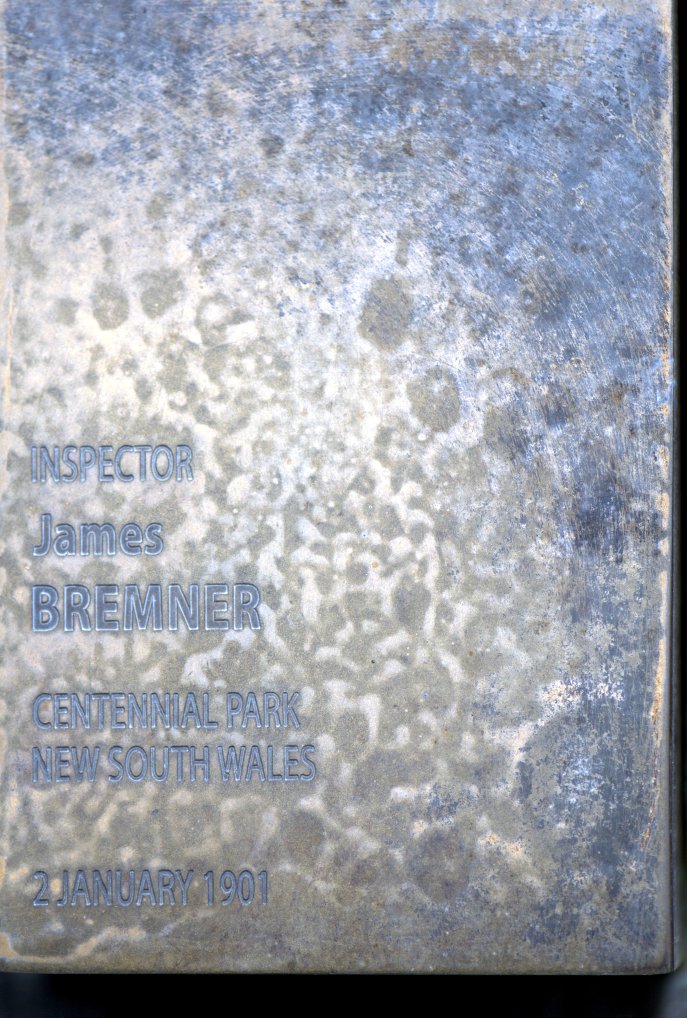
National Police Remembrance Wall Touch Plate


FURTHER INFORMATION IS NEEDED ABOUT THIS PERSON, THEIR LIFE, THEIR CAREER AND THEIR DEATH.

PLEASE SEND PHOTOS AND INFORMATION TO Cal


The inspector was knocked down and killed by a military horse during Commonwealth of Australia celebrations at Centennial Park, Sydney ( 1 January 1901 ). At the time he was supervising 200 police who were maintaining order amongst a large crowd awaiting the Commonwealth Day Procession. As the procession began, a trooper’s horse took fright and bolted into the crowd. Inspector Bremner was knocked down, sustaining severe spinal injuries. He was conveyed to St Vincent’s Hospital where he died at 2.15am the following morning. He had been due to retire a few weeks earlier but stayed on to assist with the Commonwealth of Australia celebrations.


The inspector was a well-known policeman in Sydney. He had arrived in Sydney from the north of Scotland some 37 years earlier and had almost immediately joined the police (about 1864). He had been the officer-in-charge of No. 3 Division for seventeen years, supervising the police stations at Randwick, Waverley, Botany and Woollahra. He was apparently a huge man of about twenty stone in weight. He left behind a widow but no children.


The Sydney Morning Herald of 4 January, 1901 reported on the very impressive funeral which was afforded the inspector.


FUNERAL OF THE LATE INSPECTOR BREMNER.

The funeral of the late Inspector James Bremner, who died at St Vincent’s Hospital on Wednesday from injuries received in the discharge of his duties during the swearing in ceremony of the Governor General at the Centennial Park on the previous day, took place yesterday afternoon. The interment was made in the Presbyterian portion of Waverley Cemetery. The cortege left the late residence of the deceased, 264 Bourke Street, at 3pm. The popularity and respect in which the deceased officer was held were marked by the large presence of all classes of the community, who assembled at the place of departure and along the whole line of route. Moreover, numerous evidences of mourning were displayed throughout Oxford Street. At Darlinghurst Law Courts voluntary guards of honour were formed by the bandsmen of the Irish Rifles and St George s Regiment, who were playing in the neighbourhood. Opposite Marshall’s Brewery a number of blue-jackets who were returning from the review lined up and saluted the coffin as it passed. Passing Centennial Park the same tribute of respect was paid by the troops encamped there…


The inspector was born in 1841 and joined the New South Wales Police Force about 1864. At the time of his death he was the Officer-in-Charge of No.3 Division (Darlinghurst).