Ann Jane BRIMBLECOMBE
Ann Jane BRIMBLECOMBE
Victorian Police Force
aka Senior Ann
Regd. # 21795
Rank: Senior Constable – appointed in ? ? 1985
Stations: Force Reserve – Russell Street, Kew,
Russell St police women’s Division ( 1981 ), Community Police Squad ( Melbournes’ East ),
Force Reserve – Russell St ( 1993 ), Wangaratta ( 1995 – 16 August 2006 ) – Death
Service: From ? ? 1979 to 16 August 2006 = 27 years Service
Awards: National Medal – granted 26 March 1998
April 2006 – received a Community Service award from Wangaratta Council
Born: 8 December 1957
Died on: Wednesday 16/08/2006
Age: 49
Cause: Single Motor Vehicle Collision -v- tree – Driver – Non Urgent Duty in fog
Event location: Omeo Hwy ( Larsens Cutting ) about 2.5 kms south of Eskdale
Funeral date: 21 August 2006
Funeral location: Holy Trinity Cathedral, Wangaratta
Buried at: Eldorado Cemetery, Eldorado, Victoria
Memorial: 1/ Ann Brimblecombe Memorial Award – School Road Safety
2/ Ann Brimblecombe paediatric rooms at Wangaratta Hospital’s paediatric unit
Memorial at: Wangaratta Police station, 21 Handley St – Commemorative plaque
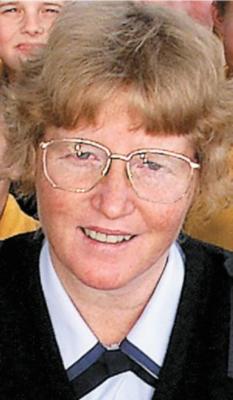
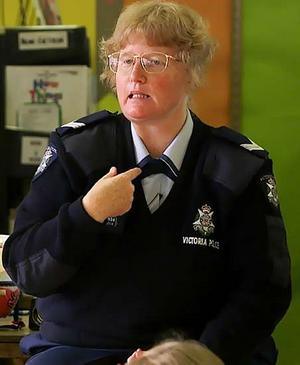
[alert_green]ANN IS mentioned on the Police Wall of Remembrance[/alert_green]
Grave Location:
[codepeople-post-map]
FURTHER INFORMATION IS NEEDED ABOUT THIS PERSON, THEIR LIFE, THEIR CAREER AND THEIR DEATH.
PLEASE SEND PHOTOS AND INFORMATION TO Cal
May they forever Rest In Peace
Ann Brimblecombe’s life was one well spent with almost 1000 mourners turning out to Wangaratta’s Holy Trinity Cathedral yesterday to bid the Victorian policewoman farewell.
Killed in a car accident at Larsens Cutting near Eskdale, last Wednesday, Sen-Constable Brimblecombe was known about the North East for her work in schools as a bicycle education officer.
The service, conducted with full police honours, reflected her jovial nature, her sense of community and voluntaryism and most of all, her strong relationship with the region’s children.
Her older brother, Peter Brimblecombe spoke of her love for sport, the Geelong Football Club, her idol Gary Ablett and of the North East as her “spiritual home”.
“After graduating from Chadstone College, she attended teachers’ college at Bendigo and after getting her degree there were no primary teaching jobs available,” he said.
“It was then she made the decision to join the Victoria Police.”
Mr Brimblecombe said his sister had eight nephews and nieces and remembered all their birthdays, was highly active in the Wangaratta bowls club, and taught adult literacy.
“Her other great loves were dogs and chocolate,” he said.
“She was old fashioned, quirky, bright and bubbly, she had a daggy sense of humour.
“Ann was a one and only.”
The service was attended by Chief Commissioner of Victoria Police Christine Nixon and Victorian Police Minister Tim Holding.
Most knew her as Senior Ann, and pupils of Wangaratta West, Chisholm St Primary, Wangaratta Primary, Cathedral College, St Monica’s Primary in Wodonga, St Patrick’s at Wangaratta, Moyhu Primary, Everton Primary, Wangaratta West, Yarrunga, Appin Park Primary and Bright P-12 College formed a guard of honour.
Wangaratta Primary teacher David Capper paid tribute.
“She had a terrific sense of humour, she used to make the kids do her Prince Philip walk and make them say ‘just like Senior Ann’ whenever she taught them anything,” he said.
Beth Hutchinson, of Beechworth, said her daughter India-Rose, 11, taught by Senior Ann, had asked to attend the service.
“She really got through to the kids, we were ever so grateful — she’s such a loss to the community,” Ms Hutchinson said.
– By Riccarda Burley, August 22, 2006
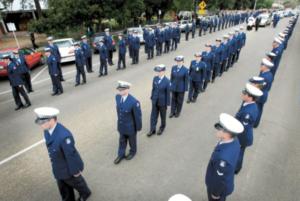

`Senior Ann`
Tragically killed performing road safety in active duty
August 16, 2006
Member of the Wangaratta Police complex
——-
Commemorates Senior Constable Ann Brimblecombe placed in the Wangaratta Paediatric Unit. The memorial plaque was officially dedicated at Batchelor’s Green on the 10th May 2012.
Senior Constable Brimblecombe was a Wangaratta Highway Patrol member who was killed in a car crash in August 2006 while travelling from Wangaratta to Mitta Mitta to give a bicycle safety lecture. She was affectionately known as “Senior Ann” by children as she ran bicycle education programs throughout the North East.
Address of plaque:
21 Handley Street, Wangaratta Police Complex, Wangaratta, 3677, Victoria, Australia

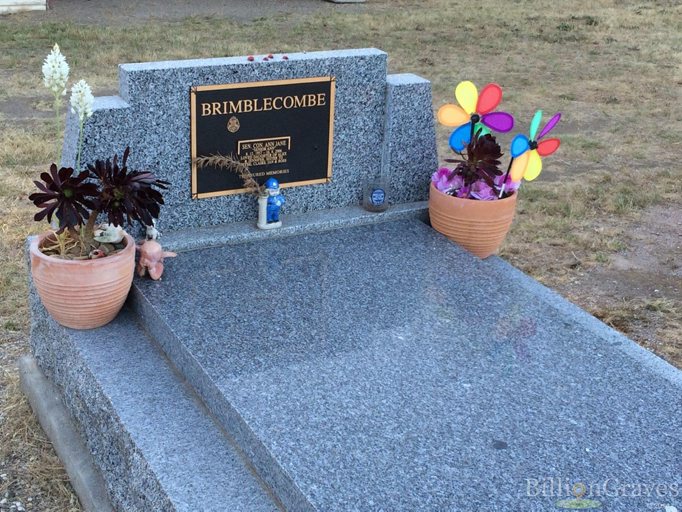
SEN.CON. ANN JANE
“SENIOR ANN”
8.12.1957 – 16.8.2006
Loved daughter of Alex and Jennifer. Sister to Peter, Claire, Ian & Ross
Treasured Memories
‘Safety – Think It .. Do It’ to win $2,000 for your school
A message about safety at your school or in the community could win your school $2,000 and also have them receive the Ann Brimblecombe Memorial Award. The ‘Caring About Regional Safety’ (CARS) program, which is now in its eighth year, is a primary school based competition that gets kids thinking about safety.
CARS began as a way to both commemorate the valuable work that Senior Constable Ann Brimblecombe did with primary school children and also help ensure her messages about safety are ongoing. Tragically ‘Senior Ann’ as she was affectionately known by hundreds of school children, died as the result of a motor vehicle accident in August 2006.
Get Your Class Involved
The competition is open to all local primary schools in NE Victoria and Southern New South Wales and asks children to actively think about safety and create a promotional poster. It could be safety at home, in the school yard or even when they are travelling.
Teachers may like to encourage students to think about a safety message that they are individually interested in or have the class decide on a safety theme that everyone can concentrate on.
Teachers should collate all their students’ posters (ensuring that each students name, class and school are written on the back) and send to the CARS Action Team before the competition closes each year.
To help stimulate the students, a representative of the police force will be available to visit every school to talk to students about safety. If your school would like to organise a visit or if you would like to find out more about CARS contact:
CARS Action Team – Senior Sergeant Michael Connors
Wangaratta Police Station
1 Handley Street, Wangaratta VIC 3677
Phone: 0357 230 830
Safety Sam – Think It .. Do It
‘Safety Sam’ is our mascot to help promote the ‘Safety- Think It .. Do It’ message. If the winning poster has the image of Safety Sam included in it, the students who created it will (pending parental approval) win a ride in a police car as well as a ride in a police boat. Download an image of Safety Sam here.
https://www.wawcu.com.au/IN-THE-COMMUNITY/Events-Promotions/CARS-School-Safety-Initiative.aspx
Canberra United Twitter Account
10 December 2016

Congratulations @ashsykes91, winner of the Ann Brimblecombe Memorial Medal for Player of the Match! #BlueRibbonCup #MCYvCBR pic.twitter.com/HZjAC0OM5c
The Blue Ribbon Cup – Melbourne City v Canberra United
–
Melbourne City & Canberra United will play for the Blue Ribbon Cup on Saturday in their second meeting of the 2016/17 Westfield W-League season.
The Blue Ribbon Cup is held in partnership with the Victoria Police Blue Ribbon Foundation, which perpetuates the memory of members of the Victorian Police Force killed in the line of duty, by supporting worthwhile community projects within the State.
This will be the first edition of the W-League Blue Ribbon Cup, with the player of the match to be awarded the Ann Brimblecombe Memorial Medal.
Senior Constable Ann Brimblecombe passed away on duty in 2006 when her vehicle ran off the road while travelling from Wangaratta to Mitta Mitta.
Senior Constable Brimblecombe was a serving member of the Victorian Police Force for over 26 years, and was promoted to Senior Constable in 1985 after six years in the force.
Canberra United Head Coach Rae Dower, a former member of the Queensland Police Force for over 20 years, said that the occasion adds something of a personal feel to the matchday.
“It’s a lovely initiative from Melbourne City, the Blue Ribbon Cup, played for between the two teams,” she said.
“And with nearly 21 years in the Police service I’ve lost a lot of friends on the job, unfortunately, but also with some illnesses; a lot of emergency services personnel commit suicide after they retire, or whilst they’re still on the job.”
“So it certainly will be a more personal touch, and probably gives us a little more incentive to go on and win that as well.”
More information on the Blue Ribbon Foundation can be found at http://www.remember.org.au/, including information on the projects managed by the organisation, and an honour roll of those who have served.
– See more at: http://www.canberraunited.com.au/article/the-blue-ribbon-cup—melbourne-city-v-canberra-united/camla3n5avhj1y2g4ax87nq9a#sthash.9P5iK5hl.dpuf
2016
Published in The Border Mail o – See more at: http://tributes.bordermail.com.au/obituaries/bordermail-au/obituary.aspx?pid=181073547#sthash.1Mi0dvMF.dpuf
Tribute for a special sister
Rosemary bushes for Ann Brimblecombe
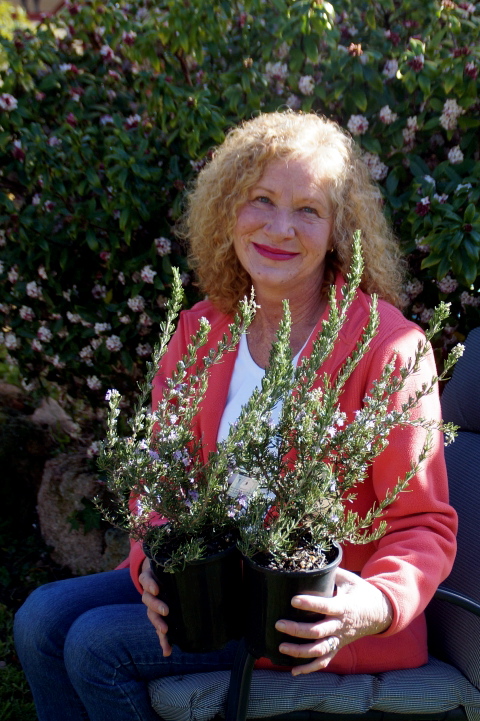
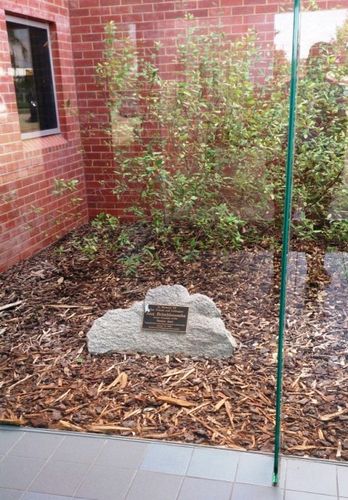
TWO rosemary bushes will be planted next to an existing commemorative plaque for Senior Constable Ann Brimblecombe.
The plants will be installed at Wangaratta Police station by Ann’s sister, Claire Lewis, on Tuesday on the 10th anniversary of Ann’s death.
The former Wangaratta police officer, affectionately known as ‘Senior Ann’, was tragically killed in a car accident at age 49 in 2006, on her way from Wangaratta to Mitta Mitta to present a bike safety session.


Ann Brimblecombe’s students teach police a thing or too
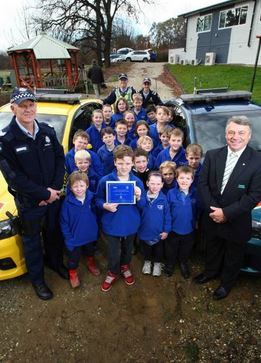
A COMPETITION designed to give children safety awareness is teaching Victoria Police a thing or two, too.
This year’s Ann Brimblecombe Memorial Award was launched yesterday at Wooragee Primary School, the winner of last year’s safety awareness competition.
The award, in its 7th year, commemorates Sen-Constable Ann Brimblecombe, the North East’s road safety in schools officer, killed in a car accident in 2006.
She was the state’s only such officer and there hasn’t been another in the North East since.
Her memory lives on through this competition, which involves North East and Albury pupils creating posters with safety messages.
Sgt Michael Connors, of Wangaratta highway patrol, encouraged children to talk about all aspects of safety.
He said their observations gave police greater insights and were often “completely different to what the police are thinking”.
“I can’t stress enough how important that is. You couldn’t gauge how many kids have been saved by Ann Brimblecombe’s message,” he said.
Wooragee’s winning entry focused on stranger danger. Other themes were cyber-bullying, kitchen safety and phoning while driving.
The winning school receives $2000 from WAW Credit Union.
Wooragee Primary School principal Christine Varker said the children were already brain-storming ideas.
She said the competition had changed how pupils thought about safety and they “now talk about much broader issues than just road safety.”
The school will spend its prize money on building a chicken coop.
“They’ve even considered the safety of the chickens,” Ms Varker said.
“They’ve ensured it will be fox and wedge-tail eagle-proof.”
http://www.bordermail.com.au/story/1643056/ann-brimblecombes-students-teach-police-a-thing-or-too/
Ann’s presence still being felt
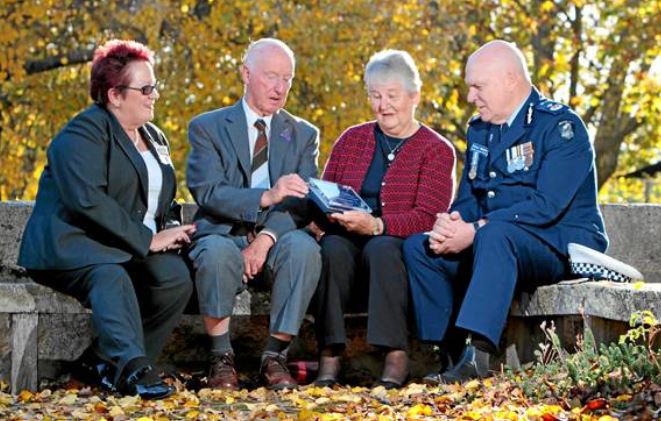
THERE couldn’t be a more appropriate way of paying tribute to Sen-Constable Ann Brimblecombe than what was unveiled yesterday.
The Wangaratta police officer died in 2006 while on duty after her car veered off the road when travelling to Mitta to give school children a bicycle safety lecture.
Children’s safety was close to her heart and it’s because of her that the Wangaratta Hospital’s paediatric unit has now become a safer place.
In tribute to Sen-Constable Brimblecombe, the unit received a $30,000 donation from the police Blue Ribbon Foundation for security doors and a refurbishment to their baby room.
Jennifer Brimblecombe said her daughter didn’t like a fuss being made over her.
“She’d be thrilled to bits for the honour but she was just very happy doing her work, hoping it would stick with all the children as they grew up,” she said.
“You can’t get around the fact she’s not here but at least her work is being carried on.”
Sen-Constable Brimblecombe’s passion for educating stemmed from her original ambition to become a schoolteacher.
“She actually couldn’t get a job when she finished a teaching course. She tried very hard for a while then the next thing we knew she applied for the police force,” Mrs Brimblecombe said.
Soon after she was offered a position to teach, but instead chose the police force.
“She was a very dedicated girl. When she decided she wanted to do something that was her focus completely,” Mrs Brimblecombe said.
Unveiling the plaques to commemorate the memorial was one of the last tasks for deputy police commissioner Kieran Walshe, who will retire after 44 years of service on July 1.
He said the Victorian police force was often described as having “a ringside seat at the greatest show on earth” but it still had its lows.
“When you are in a position of authority and leadership and you hear of these things, like what happened to Ann Brimblecombe and others, they’re lowlights in the organisation,” he said.
“But when you think of the Ann Brimblecombe paediatric rooms, it just really epitomises what Ann was about.”
Funding for the urgent care unit at Benalla Hospital was also revealed in memory of Sen-Constable Simon De Winne, who died in 1998 after colliding with a tree while trying to pull a car over for a traffic offence.
http://www.bordermail.com.au/story/6387/anns-presence-still-being-felt/
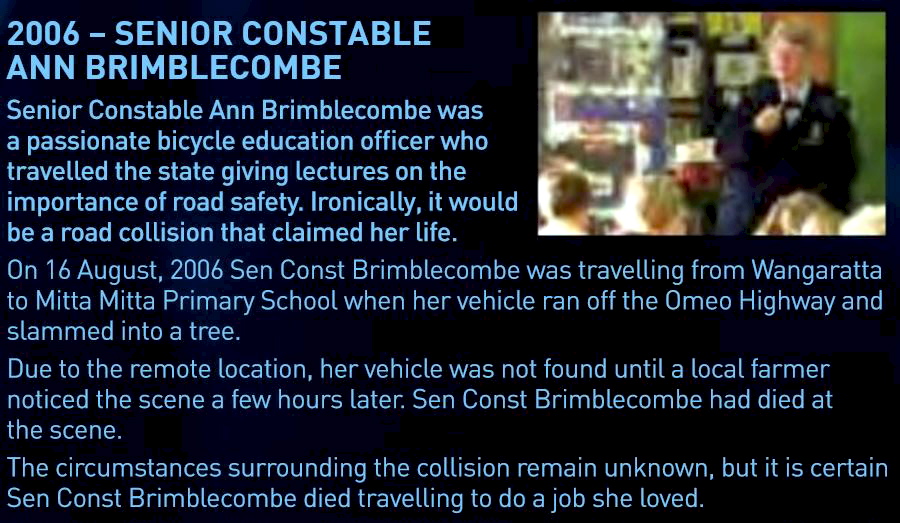
Traffic award honours memory of local officer
Release date: Tue 17 July 2007
Last updated: Tue 17 July 2007
The Wangaratta community joined forces to honour one of their most beloved police officers and continue her dedication to road safety with the launch of the Ann Brimblecombe Memorial Award today at Yarrunga Primary School.
Senior Constable Ann Brimblecombe was Victoria’s only dedicated Road Safety in Schools officer, making her “truly one of a kind” according to her colleagues.
Tragically, S/C Brimblecombe was killed in a vehicle collision in August 2006 on her way to Mitta Mitta Primary School.
Assistant Commissioner (Region 4) Bob Hastings said the award was a fitting tribute to S/C Brimblecombe.
“One of Ann’s strengths was her commitment to road safety and the impact she had on hundreds of young lives in the area,” A/C Hastings said.
“I’m very proud to launch the Ann Brimblecombe Memorial Award and I strongly believe it will continue her work in road safety.
“Victoria Police is grateful for the support of WAW Credit Union and local schools in this initiative, which allows the community to be actively involved in promoting and developing the road safety message.”
The award was the idea of a number of Wangaratta police members after Region 4 Division 5 Superintendent Jock Menzel suggested they look at a way of honouring S/C Brimblecombe’s memory.
It invites schools to ‘Care About Road Safety’ (CARS) by identifying a road safety issue and developing an action plan to combat it.
The school that submits the entry judged to deliver the most benefit to their school community will also receive $2000 from WAW Credit Union.
A/C Hastings spoke at today’s launch about the impact S/C Brimblecombe had on the community.
“Ann had her own way of passing on the road safety message, trying to make it as fun as possible and as a result her messages would be remembered,” A/C Hastings said.
“There would be many occasions where Ann would purchase small toys or action figures on her own initiative, in an effort to show kids a message she was trying to get across, such as toy rollerblades and the correct way to lace them up.
“If you went to her class, you would probably remember the big board game of safety she invented so children could remember the rules of road safety. The message at number 100 was ‘You made it to school safely – well done!’.”
A/C Hastings also reflected on S/C Brimblecombe’s generous nature and her ability to make everyone feel special.
“Ann was awarded prize money at one point by the Wangaratta Council Youth Representatives and approached Senior Sergeant Bill Gore to check she was allowed to keep it, then spent it on prizes for the kids at schools,” he said.
“She had a way of making sure nobody missed out and when there were kids who maybe needed a helmet for riding their bike to school but perhaps couldn’t afford it, Ann always made sure they had the right equipment.
“She also received money from the North East Community Road Safety Council each year to communicate the road safety message through schools and Ann always spent this money on equipment to ensure ‘her’ kids were on safe bikes.”
In an effort to promote road safety, WAW Credit Union has also lent their support to the award.
“As part of our Community Support policy, WAW Credit Union actively looks for ways to support worthwhile projects in the areas our service centres operate,” said WAW spokesperson Linda Butler.
“The work S/C Ann Brimblecombe did within our region’s schools was invaluable and so we were very excited to be asked to be part of the Caring About Road Safety initiative.
“WAW knows that these sort of activities are certain to keep the memory of Ann and the work she did ongoing for many years to come and we applaud Victoria Police and the Blue Ribbon Foundation for their work in this area.”
A/C Hastings urged all students to think about how they could best make a positive impact on their school.
“This competition is about the school community so think about the ways you can improve road safety around it,” he said.
“A safer bus shelter, a fence around your school crossing to ensure children don’t spill out on to the roadway, road signs, anything else that you can think of that will make your school safer – put it together in a submission and send it in.
“We’ll never know how many young people are alive today because of Ann’s work over the years and Victoria Police and its partners in this competition hope to see this work continue.”
Natalie Webster
Media Office
http://www.police.vic.gov.au/content.asp?Document_ID=11671
Dedicated policewoman killed in crash
August 17, 2006
THICK fog is believed to have caused a single-vehicle crash that killed a country policewoman dedicated to teaching children about road safety.
Senior Constable Ann Brimblecombe, 49, was on duty and travelling from Wangaratta to Mitta Mitta yesterday when her vehicle ran off the Omeo Highway about 2½ kilometres south of Eskdale and struck a tree.
Senior Constable Brimblecombe, a bicycle education officer, was on her way to give a lecture at the time.
Police believe she left Wangaratta at 7.30am and at some stage her car left the road in foggy conditions. It was discovered by a farmer about 11am.
She had been a police officer for 27 years and had worked at force reserve in Russell Street before being stationed at Kew.
In 1981 she was stationed at the Russell Street policewomen’s division and also served in the community police squad in Melbourne’s east. She was promoted to senior constable in 1985 and while she returned to force reserve in 1993, she transferred to Wangaratta in 1995 where she had worked ever since.
Yackandandah Primary School, where Senior Constable Brimblecombe had spent the two days before her death teaching road safety, was in shock after learning of the tragedy.
Principal Kathy Petzke said the pupils looked forward to Senior Constable Brimblecombe’s annual visit.
“It was quite an interactive program she provided with a lot of home-made props … We’re all very shocked about what has happened yet grateful for the important role she played.”
Wangaratta police acting Inspector David Ryan said her death was a great loss not only to Victoria Police, but also to the general school community.
Assistant Commissioner Bob Hastings said Senior Constable Brimblecombe regularly travelled long distances as part of her job. “She was always a very cautious and safe driver … she was well prepared and knew the country and the terrain,” he said.
“I went to visit Ann’s parents and spoke with her mum and dad and brother and sister there and they are handling it as well as can be expected.”
Police Association secretary Paul Mullett said Senior Constable Brimblecombe was a well-respected member who would be sadly missed.
Police Minister Tim Holding yesterday expressed sympathy to Senior Constable Brimblecombe’s family. “Our thoughts also go out to her friends and fellow officers,” he said. “We honour her service and are greatly saddened by the tragic circumstances of her passing.”
http://www.theage.com.au/news/national/dedicated-policewoman-killed-in-crash/2006/08/16/1155407884303.html
Phillip Gordon FLEMING
Phillip Gordon FLEMING
Victoria Police Force
Police Academy Squad 11 of 1967
Regd. # 15731
Rank: Commenced training – 10 October 1967
Probationary Constable – appointed 4 March 1968
Stations: Russell St, Flemington, Collingwood ( June 1969 )
Service: From 10 October 1967 to 19 February 1971 = 3+ years Service
Awards: Victoria Police Star – granted on 5 April 2007 ( posthumously )
Born: 31 January 1949 at Creswick Hospital, Victoria.
Died on: Friday 19 February 1971
Age: 22
Cause: Motor Vehicle accident – passenger – front seat
Funeral date: ?
Funeral location: ?
Buried at: ?
Memorial at: Frankston Hospitil, Hybrid Interventional Theatre, Peninsula Health, Frankston, Victoria
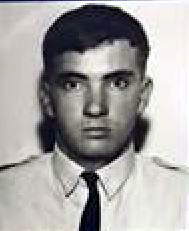
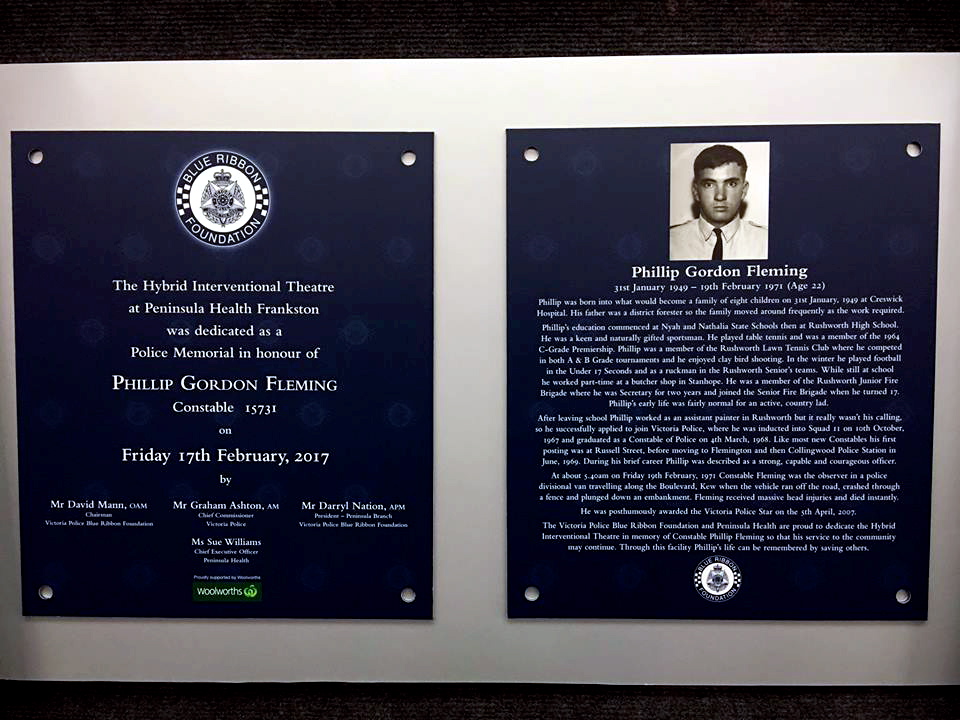
[alert_green]PHILLIP IS mentioned on the Police Wall of Remembrance[/alert_green]
Funeral location: ?
FURTHER INFORMATION IS NEEDED ABOUT THIS PERSON, THEIR LIFE, THEIR CAREER AND THEIR DEATH.
PLEASE SEND PHOTOS AND INFORMATION TO Cal
May they forever Rest In Peace
About 5.40am on Friday 19 February 1971, Constable Fleming was the observer in a police divisional van travelling along the Boulevard, Kew, when the vehicle ran off the road, crashed through a fence and plunged down an embankment. Fleming received massive head injuries and died instantly.
He was posthumously awarded the Victoria Police Star on the 5 April 2007.
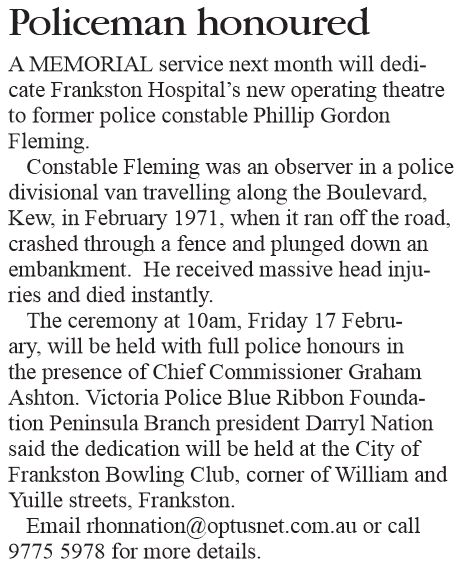
Tuesday 17 January 2017 Page 12

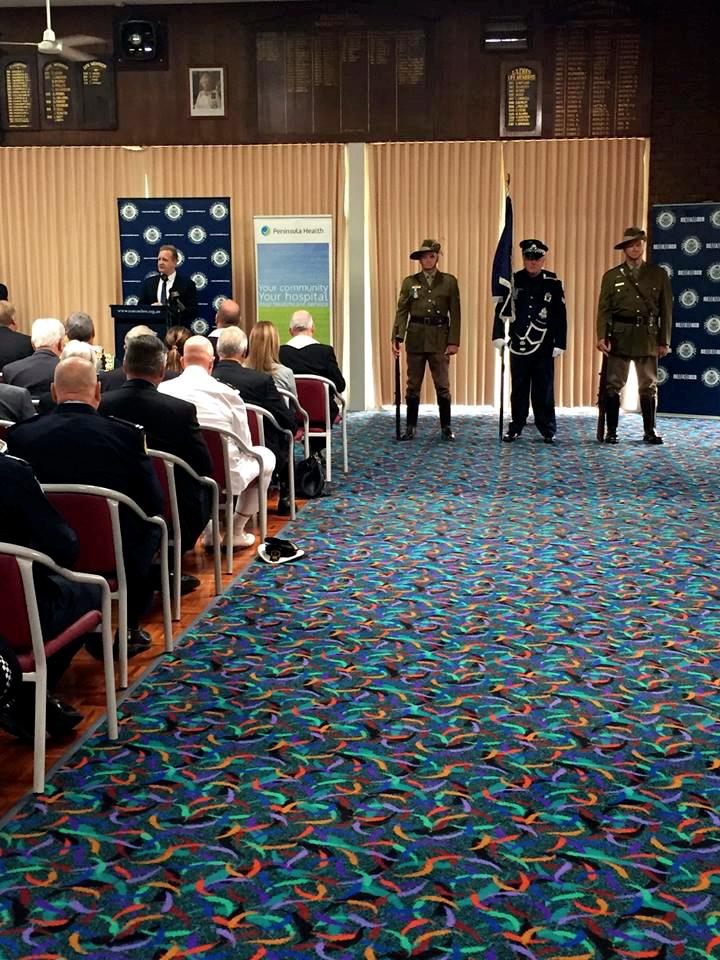
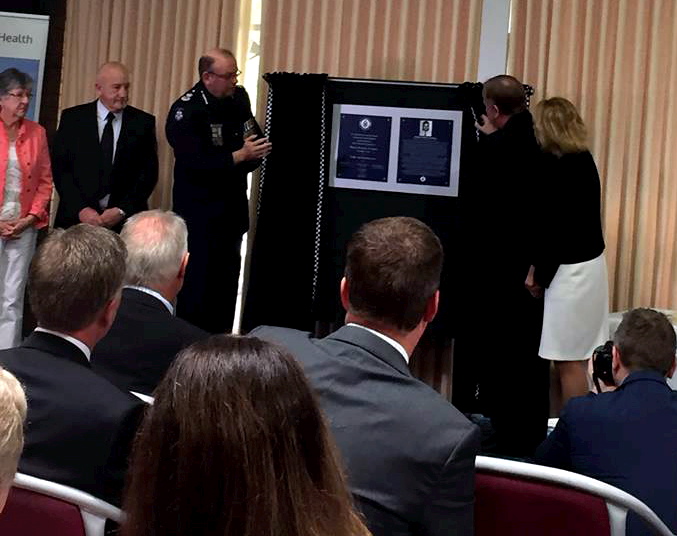
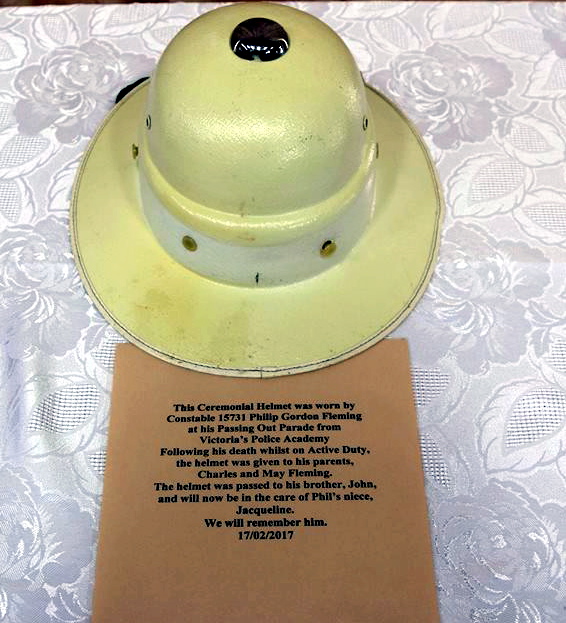
The Mornington Peninsula Branch of the Blue Ribbon Foundation together with our local police, Chief Commissioner and other distinguished guests today hosted a dedication to Constable Phillip FLEMING 15731 who was killed on duty in a motor vehicle accident on 19 February 1971.
The ceremony with Police Honours dedicated a purpose built emergency operating theatre at Peninsula Health as a permanent memorial to Constable FLEMING.
The service was a moving tribute to his memory and the creation of this new state of the art facility at Peninsula Health will ensure his memory lives on.
I take this opportunity to thank the Blue Ribbon Foundation, business and community alike for enabling the creation of this important medical facility.
Brett Coloe
A/Inspector
A committed officer takes the exit ramp
-
John Silvester
THE sight of the apparently unflappable senior policeman giving calm television updates as the state burnt provided just a measure of reassurance as we faced our greatest natural disaster.
On Black Saturday, and in the days and weeks that followed, Deputy Commissioner Kieran Walshe was the front man, running the police response, from initial evacuation to the grim process of identifying victims.
With the death toll by late Saturday standing at 16, he knew it would get ”much worse”, but no one could have imagined the count would rise to 173.
Much has been said about then chief commissioner Christine Nixon choosing to head to a North Melbourne pub for a meal on the night of February 7, 2009, as Victoria burned.
But little has been said about how Walshe ran the emergency operation, providing strong leadership for police out in the carnage and a measured tone for the community trying to come to terms with an event almost beyond imagination.
What few knew at the time was that, behind the carefully constructed professional facade, the deputy commissioner was in turmoil as – like so many – he had been touched by those fires.
The father of four daughters, he had feared early on that his son-in-law’s family had been caught in one of the blazes. The worst was confirmed the next day. ”His mother and brother were victims who were lost in the Strathewen fires,” he says.
”I was trying to provide support for my daughter and her husband, but at the same time we had a job to do. I believe that if you take on a role, then you have to step up during the testing times.”
It has been part of the philosophy that has sustained him during his 44-year career, which has seen him rise from a 16-year-old police cadet to a deputy commissioner who served under three chiefs.
Big, broad and bald, with a copper’s handshake and a friendly manner, the senior policeman, now 61, will retire at the end of next week, proud at what he has achieved and confident the force has moved on from the poisonous office politics that previously infected its top ranks. This included assistant commissioner Noel Ashby’s bugged conversations that showed him trying to damage rival Simon Overland’s chances of becoming the next chief commissioner, and then deputy commissioner Sir Ken Jones’ well-documented spat with Overland.
”I have always believed that you must remain loyal to the organisation and to your leader,” says Walshe. ”So it was particularly disappointing when certain members of the executive showed less than true loyalty to the chief commissioner.”
The manner of Simon Overland’s forced resignation last year still grates. ”He had the organisation on the right track and was totally committed to the Victoria Police. The way he left remains one of the low points of my career.”
He says he also enjoyed working with Nixon. ”Christine has a different, more relaxed, management style. She recognised people’s skills and trusted them to do a job.”
Many kids flirt with the idea of joining the police. Most grow out of it. Walshe didn’t. Ever since he was nine, growing up in Bendigo, his career path was set. His father knew many of the local coppers, who left a lasting impression on the youngster, and as soon as he was old enough he moved to Melbourne to join.
It was 1968 and Australia was just starting to feel comfortable about decimal currency; former fighter pilot John Gorton was prime minister; and Richard Nixon moved into the White House.
As a cadet, Walshe was sent to get experience at busy stations, including Northcote, where he no doubt got under the feet of the head of the crime section, a certain Detective Senior Sergeant Fred Silvester. After graduating, he went to Russell Street before transferring to Collingwood, where he experienced firsthand the dangers of his job.
On a night shift in 1971, the Ford divisional van he was driving along The Boulevard in Kew smashed through a fence and plunged 45 metres down an embankment. When he regained consciousness he tried to help his partner, Constable Phillip Fleming, who was motionless in the passenger seat. Walshe radioed for help then clambered back up the hill, his head badly gashed. What he didn’t yet know was that his partner had been killed on impact.
Walshe, now finishing up as Victoria’s traffic chief, says that having been involved in a fatal accident (”losing a mate … you carry it your whole life”) taught him the consequences of each road death.
”There is the victim, the family and the friends. The effect is devastating to so many people. I think it is one of the reasons I have been passionate about road policing.”
Walshe moved around busy inner-city stations before moving to Ascot Vale and the CIB (criminal investigation branch). ”I tried to treat each investigation as a learning experience and a chance to build your skills.”
By the 1980s, he was in charge of the air wing, which he built up from one helicopter and two fixed-wing aircraft to a service that provided emergency rescues, ambulance response, transport, traffic observation, drug crop identification and criminal surveillance. Despite not being a pilot, he was once given a million dollars and told to go out and buy a single-engine helicopter. Considering the number of lame buys senior police have made over the years, including spending a fortune on a computer system with the power of a crystal set, it is a wonder he didn’t come back with a blimp.
His career – in which he has moved through all ranks and most areas of the force – proved to be the perfect grounding for high office. This included a stint with the ethical standards department, an area that he thinks too many police avoid as they ”don’t see it as a good career move”. While there are still police (including some elite investigators) who refuse to work in ESD, dubbing it ”The Filth” or ”The Toecutters”, Walshe says a spell in the area improves leadership skills. ”You learn to recognise the early warning signs of when someone might be about to make some poor decisions.
”ESD deals with serious criminal and disciplinary matters. We accept that when someone in the community commits a crime they should be prosecuted and we should have the same attitude when it comes to police.”
From 1999, Walshe also spent two years at Seymour, where he found a new respect for country police. ”Country policing is so different to metropolitan policing. There is no sense of anonymity as you live in the same community where you work. Everyone knows you are a police officer.” He sees police in Victoria’s 99 one-person country stations as ”the last bastion of authority. The house is usually next door to the station, so you are expected to be available 24/7.”
Like many, Walshe watched the aftermath of the terrorist attacks on New York’s World Trade Centre, soon realising it would change the face of policing. In 2005, he was made assistant commissioner counter terrorism and was involved in Australia’s two biggest terrorism investigations, Pendennis and Neath. ”These were significant disruption exercises. It remains of great concern that these cells were operating not only in Australia, but specifically Melbourne.”
He says there has been a marked shift in the expectations of police recruits today. ”It is a generational thing. The vast majority are as committed to serving the community as we were back in 1968, but more of them see it as a job rather than as a career. That never entered my mind when I joined, as I fully expected to stay until I retired – although I didn’t dream I would last 44 years.”
”When Ken [Lay] was appointed Chief Commissioner, I knew the time was right for me to go. There are some things I want to do while I am still fit enough to do them.” These include travel with his wife, Denise, and spending time with his family, including his eight (soon to be nine) grandchildren.
Mate and long-time colleague Lay told us, ”Kieran has had a magnificent career. I was his subordinate and he was the sort of boss you would die for. When we were peers I always appreciated his wise counsel and as my deputy he has been rock solid and loyal.
”You always know where you are with him. He will look you in the eye and tell you what he thinks. I will miss his wise advice, and the organisation will miss his leadership.”
JOHN SILVESTER
Crash helps me understand road trauma: Walshe
Updated
Victoria’s top road safety policeman, Kieran Walshe says a fatal crash he was involved in 40 years ago puts him in a better position to understand road trauma.
Constable Phillip Fleming was killed when a police van driven by Kieran Walshe crashed in Kew, in February 1971.
Deputy Commissioner Walshe has spoken publicly about the crash for the first time, ahead of the launch of the international decade of action for road safety.
He has rejected allegations he was driving inappropriately and has told ABC Local Radio, he is able to do his job well, because of his experience.
“I live with it, I deal with it. I think it makes me a better position to understand what other people endure when they experience and go through road trauma,” he said.
“I think it helps me be a little bit more passionate about the message that I need to make sure I give to the community of Victoria.”
He has spoken out because of questions from former officers about his ability to do his job.
“Obviously, for some reason, someone wants to challenge my reputation, or challenge my credibility to do my job,” he said.
“I dispute that. I think that I’ve done my job and continue to do my job very well and you never get over these things.”
http://www.abc.net.au/news/2011-05-11/crash-helps-me-understand-road-trauma-walshe/2713054
Senior Victoria Police in more controversy
Liz Hobday reported this story on Wednesday, May 11, 2011 18:30:00
MARK COLVIN: There’s been more controversy around senior figures in Victoria Police today, with revelations that the state’s top traffic cop was the driver in a fatal car crash in Melbourne 40 years ago.
The facts of the accident have resurfaced, just days after the State Government ordered an independent inquiry into the upper echelons of police.
Liz Hobday reports.
LIZ HOBDAY: Deputy Commissioner Kieran Walshe was driving a police wagon at a notorious accident spot on Kew Boulevard in 1971, when he lost control of his vehicle. The van ran off the road and plunged down an embankment, killing his passenger and good friend 22-year-old constable Phillip Fleming.
Kieran Walshe was 19 at the time, and says he woke up in hospital.
KIERAN WALSHE: I have no actual recollection of what took place at the time the vehicle left the road.
LIZ HOBDAY: A coronial inquest delivered an open finding.
KIERAN WALSHE: There has been a thorough investigation. There is no evidence to implicate or any impropriety in the way I drove the vehicle.
LIZ HOBDAY: The revelations emerged in the Herald Sun this morning, two days after the Victorian Government ordered an inquiry into the actions of those at the top of the force, after a string of controversies.
Kieran Walshe says he doesn’t know who told the newspaper about the crash, or why.
KIERAN WALSHE: I don’t know what their motivations are. All I can say is that I can only assume there’s some endeavour by somebody to discredit me.
LIZ HOBDAY: Kieran Walshe says he didn’t tell Chief Commissioner Simon Overland about the crash when he got the job of deputy commissioner, regional and road policing.
KIERAN WALSHE: Simon Overland has only been in Victoria Police for a little over eight years, nine years. It wasn’t something that I thought it was necessary to go and say to him. This happened 40 years ago.
LIZ HOBDAY: The Police Association’s Greg Davies says the latest story won’t affect morale; the problem is more the numerous inquiries now underway.
GREG DAVIES: Well we’ve got obviously at least three inquiries running at the moment into the police force, we’ve got turmoil at the top levels, that has to have a cascading effect to other levels of senior management, down all the way to the youngest constable.
LIZ HOBDAY: And he says retired officers could be behind the latest story.
GREG DAVIES: As far as who might be behind it, well we can only speculate. I’d be more inclined to think it would be a retired police officer than a current serving one.
LIZ HOBDAY: The latest inquiry into senior management at Victoria Police, is expected to report to Government within six months.
MARK COLVIN: Liz Hobday.
http://www.abc.net.au/pm/content/2011/s3214226.htm
Road safety cop Kieran Walshe’s tragic secret
Deputy Commissioner Kieran Walshe lost control of the police divvy van he was driving 40 years ago as it was travelling on The Boulevard in Kew.
The Falcon van crashed through a fence and plunged 45m down a steep embankment, killing Constable Phillip Fleming, 22, about 5.40am on February 19, 1971.
Mr Walshe decided to tell his story to reject recent claims by former police officers that he was driving inappropriately on what has for decades been one of Melbourne’s most notorious street racing black spots.
“That’s not something that I ever did. It was not in my nature to drive in that manner and there is just no evidence to say that I did,” he told the Herald Sun.
Listen now: Kieran Walshe describes the accident
Mr Walshe said Chief Commissioner Simon Overland was not aware of his involvement in the crash when he appointed him head of the traffic branch, but was now, and was happy for him to continue in the role.
Mr Walshe said: “I have been subjected to a thorough investigation. I have been subjected to a coronial inquiry and at no stage was there any evidence identified that gave any indication of any inappropriate behaviour on my part.”
Coroner Harry Pascoe recorded an open finding in 1971, saying from the evidence available it was not possible to determine if Constable Fleming’s death was “accidental or otherwise”.
The former officers this week claimed they were raising the issue only because Mr Walshe was recently put in charge of road safety policing in Victoria.
“The question arises how he, with any credibility, can criticise people in their 20s for hoon-type behaviour on Victorian roads,” one of them said.
But Mr Walshe, 60, said yesterday that having been involved in the fatal accident made him better able to do his job.
“I certainly have a greater appreciation than other people would who haven’t been involved in trauma like I have been,” he said.
“It makes me more passionate about the message I am trying to deliver out there – anybody can be involved in road trauma.”
The death of Constable Fleming continued to haunt Mr Walshe.
“When you are the driver … and you lose a close mate it has an impact … that you carry for the rest of your life. It’s just a really difficult thing that you have to live with,” he said.
Mr Walshe was quizzed by accident investigator Sen-Constable James Kenneday about why he was driving on The Boulevard.
Mr Walshe replied: “I don’t remember.”
The issue comes as the administration of VicPol has become a major political issue. Premier Ted Baillieu this week appointed Jack Rush, QC, to examine, among other things, the effectiveness of the senior structure of police command.
http://www.heraldsun.com.au/news/road-safety-cop-kieran-walshes-tragic-secret/news-story/00f94028c421a3b511654b5b3b5bdf16
Susanne Elise JONES nee GOTTSCHALK
Susanne Elise JONES nee GOTTSCHALK
Australian Federal Police Force
Regd. # 3390
Rank: Probationary Constable – appointed ? ? ?
Constable – appointed ? ? ?
Detective Leading Senior Constable
Detective – 1988
Stations: Joint AFP / VicPol task force, Legal Projects & Planning Section, Drug Operations, Melbourne Airport, Joint Organised Crime Task Force – death
Service: From ? January 1983 to 6 February 2017 = 34 years Service
Awards: National Medal – granted 22 December 1998
1st Clasp to National Medal – granted ?
AFP Service Medal
30 Year Clasp to AFP Service Medal
Australia Day Achievement Medallion
Born: 13 March 1963
Died on: Monday 6 February 2017
Age: 53
Cause: Depression – Suicide – Service firearm – shot
Event Location AFP building, La Trobe St, Melbourne ( bathroom )
Funeral date: Tuesday 21 February 2017 @ 10am
Funeral location: Victoria Police Academy Chapel, 1 View Mount Rd, Glen Waverley, Victoria
Buried at: Springvale Botanical Cemetery, Tuesday 21 February 2017 @ MD
Grave location: Row EC, Grave 58
Memorial at: ?

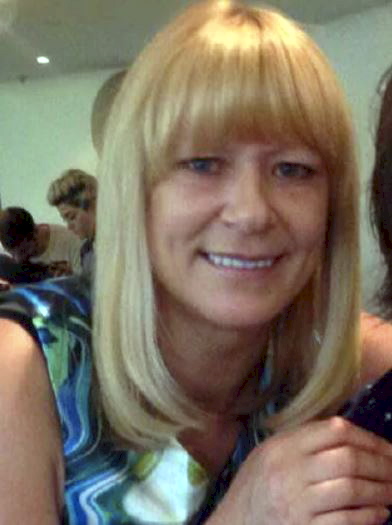
[alert_red]SUSANNE is NOT mentioned on the Police Wall of Remembrance * BUT SHOULD BE
Funeral location: [codepeople-post-map]
FURTHER INFORMATION IS NEEDED ABOUT THIS PERSON, THEIR LIFE, THEIR CAREER AND THEIR DEATH.
PLEASE SEND PHOTOS AND INFORMATION TO Cal
May they forever Rest In Peace
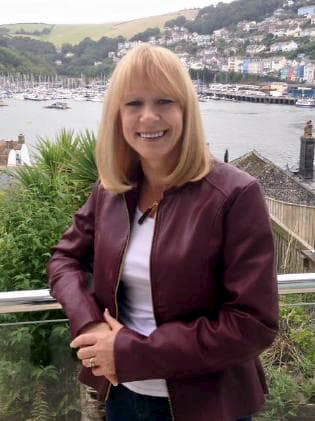
Detective Leading Senior Constable Susanne Elise JONES
AFP Service Number: 3390
13 March 1963 – 6 February 2017
As previously advised, Detective Leading Senior Constable Susanne Jones passed away on 6 February 2017.
Susanne Jones (nee GOTTSCHALK) joined the AFP in January 1983 and was initially attached to a joint AFP/VICPOL task force, she then moved to work in Legal-Projects and Planning Section, Drug Operations and at Melbourne Airport gaining a wide range of experience that enabled her to achieve the designation of Detective in 1988.
During her extensive career that continued at the Melbourne Office, her duties covered the full range of investigation operations including Criminal Assets Confiscation and Professional Standards. Her most recent posting was with the Joint Organised Crime Task Force.
During her 34 years of service Detective Leading Senior Constable Jones was awarded the National Police Service Medal, National Medal with clasp, AFP Service Medal with 30-year clasp and an Australia Day Achievement Medallion.
Funeral Details Follow:
Date: Tuesday, 21 February 2017
Time: 10:00am
Location:
Victoria Police Academy Chapel
1 View Mount Road, Glen Waverley, VIC
Dress:
Uniform members – Full Ceremonial uniform with tunic and medals. Plain clothes members – Lounge suit or equivalent with medals.
*****
Spare a moment today to think about Susanne and her family during this time and please share your kind thoughts and messages of support for her family.
If you or anyone you know has been affected by this tragedy please reach out and ask for help. Blue HOPE stands ready.
Date of passing: 06 February, 2017
JONES (nee Gottschalk), Susanne Elise
Detective Leading Senior Constable – AFP 3390
Passed way on Monday Feb 6th, 2017.
Loved daughter of Dorothy and Klaus (both dec),
Sister of Angelica,
Loved mother of Cameron and Christian,
Wife of Terry,
Friend to many.
Always loved and remembered.


Order of Service
A Service to celebrate the life of Susanne Elise Jones will be held at The Victorian Police Academy Chapel, 1 View Mt Rd, Glen Waverley on Tuesday 21st February, 2017 commencing at 10am. At the conclusion of the service, a burial will be held at the Springvale Botanical Cemetery.
In the gentle care of
Greenhaven Funerals
9569 0534
JONES, (GOTTSCHALK)

Supporting Notices

Our family wish to thank the Luther College Community for their love and support through this difficult time.
*
*

http://tributes.heraldsun.com.au/notice/373372030/view
Australian Federal Police officer dies after shooting at Melbourne headquarters
AN AUSTRALIAN Federal Police officer has died after suffering a gunshot wound at the crime-fighting body’s Melbourne headquarters.
The female officer was rushed to hospital in a critical condition after suffering a gunshot wound at the ( 383 ) Latrobe St building at 5.45pm.
She died a short time later.
AFP Commissioner Andrew Colvin said the circumstances around the tragic incident are being investigated by Victoria Police who will prepare a report for the coroner.
“Our colleague’s death is not believed to be suspicious,” he said.
“My thoughts are with her loved ones and the broader AFP family who are dealing with the loss of one of our own today.
“We are offering support to her family and the wider AFP workforce.”
The AFP confirmed this morning that the death was ‘not accidental’.
A Victoria Police statement last night read: “Police are not looking for anyone else connected to the shooting. Police are investigating the incident.”
FOR HELP, INFORMATION AND SUPPORT CALL:
LIFELINE ON 13 11 14
BEYOND BLUE ON 1300 224 636
Originally published as Officer dies after AFP HQ shooting
http://www.news.com.au/national/victoria/australian-federal-police-officer-dies-after-shooting-at-melbourne-headquarters/news-story/2f50ed8b8c7f8e0400a22e2b44996564
Sunrise – Tuesday 7 January 2017
Attention current and former Australian Federal Police members. Please don’t suffer in silence. We stand ready to help you. If you would like to confidentially tell your story or speak with someone who has a first hand understanding of what you are going through please reach out to us. We can get you the help you need. Please contact Mark (former AFP member) at mark@bluehope.org.au
Stuart RawlinsAs a former Qld Police Officer/Det who left due to mental illness (which i kept a secret for fear of the sigma that comes with) it is very disappointing to see this type of thing still going on. I have created a website www.healthymindhealthyfuture.com and a Facebook page Healthy Mind Healthy Future where I now write articles about my mental health journey to help others. I also explore different ways to improve my mental health which is the basis of a lot of my articles. Please feel free to share and/or have a read, if i can help some of my Police family, even just one then it has been worth it. Kind Regards Stu Rawlins Ex Sgt/Det 10909.

D’Arne De LEO
D’Arne De LEO
aka Dee
Victoria Police Force
Academy Squad 14
Regd. # 40129
Rank: First Constable
Stations: ?, Benalla ( 2.5 years), Fitzroy ( 3 mths) – death
Service: From ? ? ? to 12 January 2017 = ? years Service
Awards: No find on It’s An Honour
Born: ?
Died on: Thursday 12 January 2017
Age: 40’s
Cause: Motor vehicle accident – stationary motor cycle rider hit from behind by truck
Event location: Cnr Boronia Rd, & EastLink freeway on-ramp, Wantirna, Victoria
Funeral date: Thursday 19 January 2017 @ 2pm
Funeral location: Chapel of Victoria Police Academy, View Mount Rd, Glen Waverley
Buried at: Springvale Botanical Cemetery ( Police memorial Lawn ) at 3.45pm with Police Honours
Memorial at: ?
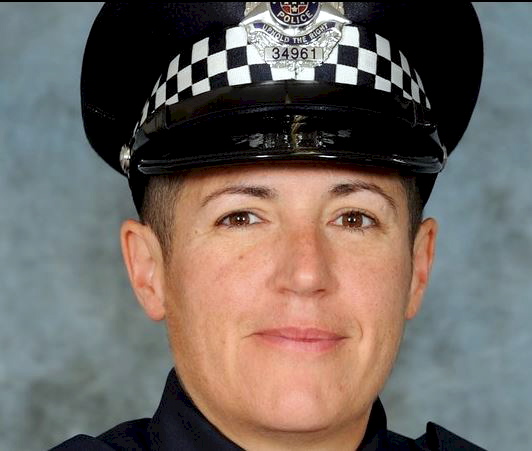
[alert_red]D’Arne is NOT mentioned on the Police Wall of Remembrance * BUT SHOULD BE
[alert_yellow]D’Arne is NOT mentioned on the Police Wall of Remembrance[/alert_yellow] *NEED MORE INFO
Funeral location: [codepeople-post-map]
FURTHER INFORMATION IS NEEDED ABOUT THIS PERSON, THEIR LIFE, THEIR CAREER AND THEIR DEATH.
PLEASE SEND PHOTOS AND INFORMATION TO Cal
May they forever Rest In Peace
Supporting Notices


Truck driver charged over Vic cop’s death
A mechanical investigation will be done on the truck that killed a Victorian police officer while she was on her way to work on her motor bike.
Samandeep Singh, 26, appeared in the Melbourne Magistrates’ Court on Friday charged with culpable driving over the death of the officer on Thursday morning.
Victoria Police identified D’Arne De Leo as the woman who died in the crash at an EastLink freeway on-ramp in Wantirna just before 9am.
She was hit and trapped under the truck, dying at the scene despite the efforts of emergency services.
Singh was also charged with driving a motor vehicle in a manner that was dangerous to the public, thereby allegedly causing Ms De Leo’s death.
His lawyer Chen Yang said a 10-week mechanical investigation needed to be done on Singh’s truck, and CCTV footage would be prepared formatted for the court.
Singh, who was dressed in hi-vis clothing, did not apply for bail and he was remanded in custody to reappear for a committal mention on May 4.
Valued former Benalla police officer killed in a crash between motorbike and truck
Former Benalla police officer First Constable D’Arne De Leo had only moved to Melbourne three months ago, before she was killed in a motorcycle crash.
The truck driver accused of causing her death after running a red light has been assessed as suicidal, a court has heard.
Police allege Ferntree Gully man Samandeep Singh, 26, drove through a red light at Boronia Road, Wantirna and crashed into the back of the woman’s motorcycle on Thursday morning, trapping her underneath his truck.
First Constable De Leo died at the scene.
Singh has been charged with culpable driving causing death and dangerous driving.
He appeared in the Melbourne Magistrates Court on Friday.
Defence lawyer Chen Yang said a forensic medical officer diagnosed his client as having “suicidal ideation” after he was arrested.
It was Singh’s first time in custody.
Fairfax Media understands police have not yet interviewed Singh, who will be re-assessed by a psychiatrist or psychiatric nurse to determine whether he requires medication.
He did not apply for bail. Magistrate Andrew McKenna remanded him to appear in court on May 4.
First Constable De Leo worked at Benalla for two-and-a-half years before a transfer to Fitzroy three months ago. She was aged in her 40s and lived in the eastern suburbs.
Benalla Acting Inspector Ash Mason said First Constable De Leo was a well-respected and valued general-duties member who was only at the beginning of her career. “She had a huge career ahead of her and it’s a huge loss,” he said.
“She just wanted to get in, do her job and do it really well.”
Police Association assistant secretary Bruce McKenzie said the union was thinking of her family and the officers who had to attend the crash.
“One of our members has tragically lost her life simply by travelling to work,” he said.
“We have the greatest sympathy for her family at this time.
“We also feel for her police family and for her colleagues who attended (Thursday) morning’s tragic scene. She had only been in the force for a relatively short time.”
If you are troubled by this report or experiencing a personal crisis you can call Lifeline 131 114 or beyondblue 1300 224 636 or visit lifeline.org.au or beyondblue.org.au
http://www.bordermail.com.au/story/4404382/valued-officer-killed-in-crash/
The Police Association Victoria
16/01/2017 4:30:00 PM
Last Thursday our member, First Constable D’Arne De Leo, was tragically killed in a crash while riding her motorcycle on her way to work.
Our thoughts and greatest sympathies are with her family, friends and colleagues – please know that we will always be here to support you.
If you wish to do so, please feel free to leave a message of support for First Constable D’Arne De Leo’s loved ones, in the comments below.
http://statuscope.co/au/Last-Thursday-our-member-First-Constable-DArne-De-Leo-was?id=a3085fbf
Michael James ISLES
Michael James ISLES
aka Mick ISLES
Queensland Police Force
Regd. # 2753
Rank: Senior Sergeant
Stations: ?, Warwick, Allora, Cloncurry, O.I.C. – Ayr – Missing On Duty
Service: From ? ? ? to Wednesday 23 September 2009 ( Missing whilst On Duty since this date ) = 35+ years Service
Awards: National Medal – granted 2 December 1994 ( Sgt )
1st Clasp to National Medal – granted 5 May 2000 ( SnrSgt )
Queensland Police Service Lantern Award for his interactions with the youth population in Cloncurry, Qld
Born: ?
Died on: ?
Age: 58
Cause: PTSD – Suicide – Missing whilst On Duty. Body never recovered ( 3 Dec 2022 )
Funeral date: ?
Funeral location: ?
Buried at: ?
Memorial Service at: Burdekin PCYC, Ayr, Qld on 5 November 2011 @ 10.30am
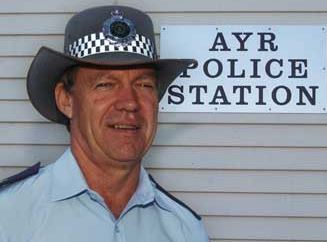
[alert_red]MICK is NOT mentioned on the Police Wall of Remembrance * BUT SHOULD BE
[alert_yellow]MICK is NOT mentioned on the Police Wall of Remembrance[/alert_yellow] *NEED MORE INFO
Funeral location: ?
FURTHER INFORMATION IS NEEDED ABOUT THIS PERSON, THEIR LIFE, THEIR CAREER AND THEIR DEATH.
PLEASE SEND PHOTOS AND INFORMATION TO Cal
May they forever Rest In Peace
Queensland Police Senior Sergeant Mick Isles signed on duty on the morning of Wednesday 23 September 2009, went to work in uniform and has never signed off. We are awaiting response from Queensland Police Commissioner Ian Stewart to adding Senior Sergeant Mick Isles to the Police Honours Roll and officially acknowledging his (Mick’s) signing off. How can that be unreasonable?
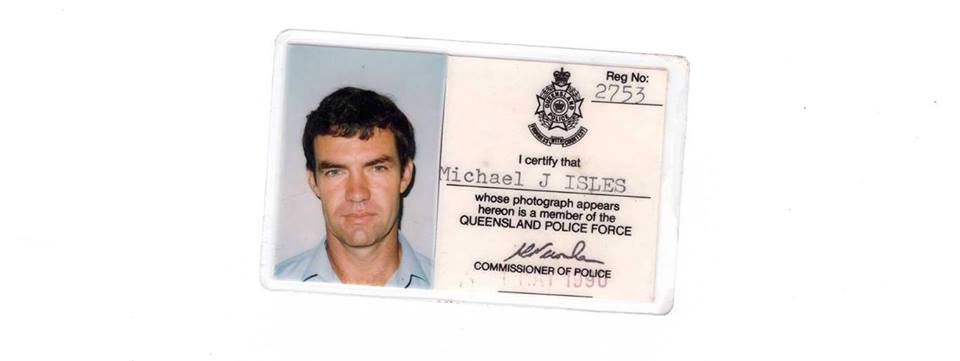
https://www.facebook.com/groups/1877418772495439/?fref=nf
2 Jan 2017 – Isles to Queensland Police Commissioner: addressing criteria under Queensland Police Honour Roll Policy, responding to AC O’Regan correspondence
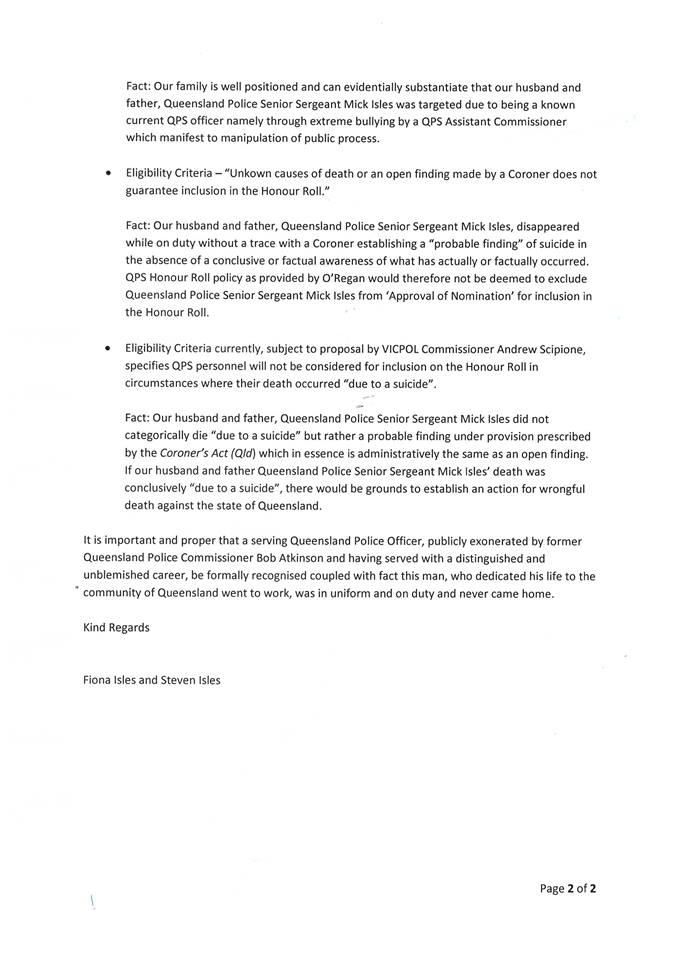
A trait of my father’s, an honourable trait through his commitment, belief and passion in people was more-or-less to always look for the good in people, even when I was a child and assaulted by an adult, my father convinced me to look for the good in the assailant, as there was obviously greater reason to why he was like that, an upbringing or similar. I found myself doing precisely that eventually, after the anger had moved on, I looked to for the good in this individual and many years later made peace in speaking with him and seeing that he had grown and changed and was no longer the same person.
As life has progressed even with some of the trials, especially more recently, I have found myself retreating a little over the last couple of years and trying to remove myself from stressful situations.
I guess, now I am finding there needs to be some happy medium and in an ideal world, my father’s trait would be admirable however in a world where many through generations have strayed from strong morals and treating your neighbour as you, yourself, would like to be treated.
For me both physically and mentally, I have softened over recent years in my zest, interest and drive for life. This in part has seen me too readily trust in individuals and some have resulted in individuals using the apparent lack of energy and zest as an avenue to access a perceived vulnerability and to take advantage.
For mine, in approaching 2017, simply applying much of life experience and the honourable person my father was, I can only aim to regain touch with the inner mongrel I had to find to navigate some of the situations that were thrown my and my family’s way.
This coming year, in order the finalize some matters close to my heart that have come so far, I will dance with the devil while maintaining strong morals however only extend a hand of trust, respect or offer of friendship where it is over time earned.
May those close and many that have shared some of this journey with me be able to toast achievements even beyond boundaries that have been set by individuals and bureaucracy.
29 Dec2016 – Isles to Queensland Police Union President Ian Leavers
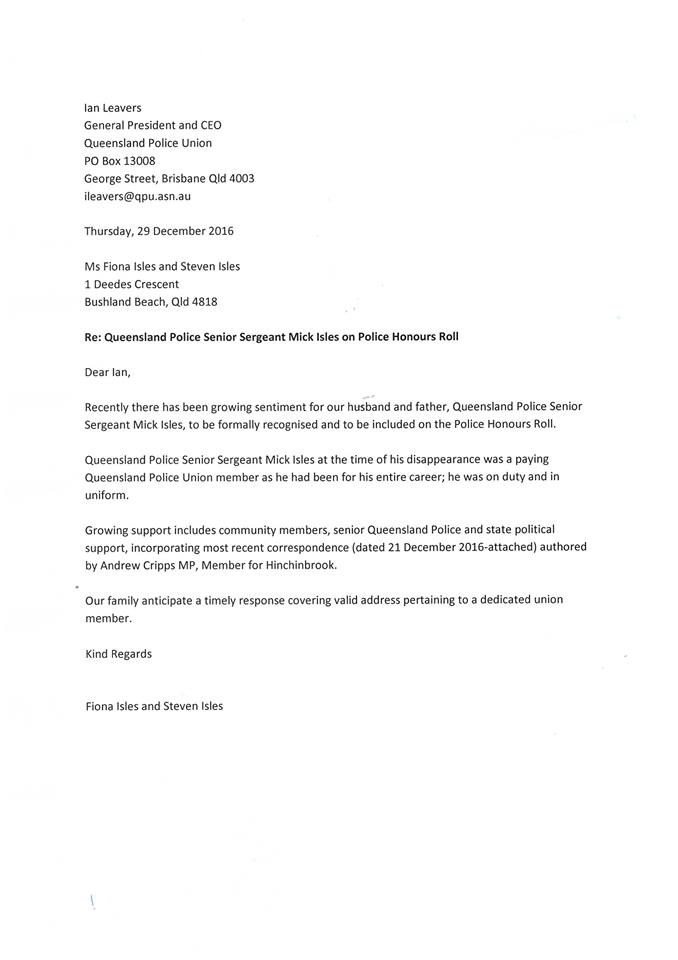
Daily Mail Australia
‘Weather beaten’ man spotted at remote Queensland creek may be police sergeant Mick Isles missing for five years
- Reports of a man resembling a missing North Queensland policeman
- Senior Sgt Mick Isles of Ayr has been missing since 2009
- A couple saw a ‘weather beaten man’ resembling Isles at a remote creek
- Sgt Isles vanished from his home and has never been found despite extensive searches
- A ‘reluctant’ coroner declared Isles dead at a 2012 inquest
By Candace Sutton for Daily Mail Australia
Published: 15:35 +11:00, 13 January 2015 | Updated: 21:50 +11:00, 13 January 2015
A couple who spotted a ‘weather beaten man’ at a remote creek in northern Queensland have contacted police saying they believe he may be missing Senior Sergeant Mick Isles, who disappeared in mysterious circumstances five years ago.
Graziers, Bill and Elizabeth Tudehope were on a remote road at Landers Creek on the Burdekin River near Millaroo last Sunday when they saw the man who was of the same age and height as the missing police officer, the Townsville Bulletin reported.
Sgt Isles has not been seen since September 23, 2009 after leaving his home in the far northern Queensland town of Ayr for a workshop 80km north in Townsville. He never arrived.
Six days later, his police issue Toyota Aurion was found at Eight Mile Creek, 170km south. The latest sighting of Sgt Isles is at a location between Ayr and Eight Mile Creek.
Following his disappearance, police conducted extensive searches for the 58-year-old, using trackers, the stock squad and the State Emergency Service.
Apart from one alleged sighting by a truck driver soon after his disappearance, Sgt Isles has never been seen again until now.
At the time of his disappearance, Sgt Isles was on only his third day back at work after a lengthy period of sick leave following a Crime and Misconduct Commission investigation which had exonerated him of drug trafficking and money laundering allegations.
His wife, Fiona, reported her husband’s failure to return home after finding an undated note on the last page of a used notebook.
The note read, ‘This is nobody’s fault but mine. I feel old and have lost the will to do anything. I feel a failure and a loser, particularly to my family whom I love so much’. The note was signed ‘Mick + Dad’.
A shot gun and ammunition were found to be missing from the Isle’s family home.
Officers found a police uniform shirt stuffed under the front passenger seat of Sgt isles’ abandoned car and in the boot, along with a hessian bag, was a blanket and a box of ammunition that was missing 16 cartridges, a pair of uniform pants and a belt.
The car keys were on the front driver’s side floor of the vehicle and a set of senior sergeant epaulettes had been placed in the centre drink console.
At a 2012 inquest, Queensland State Coroner Michael Barnes found Senior Sergeant Michael Isles ‘intentionally took his own life‘ on the day he was reported missing. Mr Barnes said: ‘I sincerely regret the distress this will cause his family’.
The Townsville Bulletin reported that on Monday northern Queensland police have sent a team of detectives to the Burdekin river area to interview the couple who made the report.
Mr and Mrs Tudehope said they saw a man walking along a sugar cane train track mid-morning last Sunday and they asked him if he wanted a lift.
‘He wasn’t interested in talking to me and didn’t want any help,’ Mr Tudehope said.
They contacted Sgt isles son Steven, who travelled to the couples’ property and then contacted police.
Memorial for missing officer
Jeremy Sollars | 21st October 2011
THE life of former Warwick and Allora police officer Mick Isles will be remembered at a special memorial service to be held in north Queensland next weekend, his family has announced.
Senior Sergeant Isles – who has been missing since September 2009 – was a popular figure in the region during his service here, which ended in 1989.
Mystery still surrounds his disappearance and his family suspect foul play, but the Queensland Coroner last month issued an interim death certificate ahead of an inquest set down for next March.
Snr Sgt Isles (pictured) was on duty and driving from Ayr to Townsville for training when he vanished, but his family still hold out hope his remains at least will be found, if not the people they believe may be responsible for his death.
Son Steven Isles yesterday released details of the memorial service to the Daily News, saying he and his mother and sisters had been deeply moved by the support they had received from locals who remembered their beloved Mick.
“We still think at times that by some magic he might walk through the door tomorrow,” an emotional Steven said.
“But we are realists and we have little choice other than to accept the coroner’s ruling, but it’s an interim and an open ruling and we don’t yet know what may come out of the inquest.”
Mr Isles said the death certificate meant his mother, Fiona, could finalise matters relating to the estate after being forced lean on her children for financial support.
The Isles family has been critical of the hierarchy of Queensland Police, which they say failed to fully investigate Mick’s disappearance and repeatedly gave them the cold shoulder and little respect.
Snr Sgt Isles was police officer-in-charge at Ayr and was reported missing on October 2, 2009. Five days later his police-issued Toyota Aurion was found on a rough track near Ravenswood, 120km southwest of Townsville.
Steven Isles believes that people involved in his disappearance drove the vehicle there as a diversion.
Snr Sgt Isles had been cleared of corruption allegations the previous July and had been struggling to deal with the aftermath, but Steven Isles said his father had shown no signs of being suicidal in the days before his disappearance.
The memorial service will be held at the Burdekin PCYC in Ayr on November 5, at 10.30am.
http://www.warwickdailynews.com.au/news/memorial-service-for-missing-police-officer/1145260/
Burdekin PCYC facility named after missing policeman
Part of the new Ayr PCYC building has been named after missing officer Mick Isles. His wife Fiona Isles says the dedication is an honour but feels the family have been let down by the QPS.
The family of missing Burdekin police officer Mick Isles has spoken out at the opening of a new PCYC facility in Ayr today.
The PCYC’s function room has been named after the Senior Sergeant who disappeared in September 2009.
Mick Isles’ wife Fiona feels proud that the work of her husband has been recognised by the community and believes he would have been humbled by the honour.
“Mick would be very proud in fact he’s such a humble person he’d be standing there saying ‘there must be someone more deserving than me’ he’d be that sort of guy”.
Senior Sergeant Isles was last seen driving an unmarked police car, his clothes and the vehicle were later found at a property in Ravenswood, south of Townsville.
Looking back on the past 18 months Mrs Isles feels she was let down by the police service and says the family was not offered any help or counselling until her son insisted they provide it.
“It was rather pathetic They did do it only because he forced their hand.
My family weren’t offered any sort of counselling, my daughters whatever, they had to go looking for their own”.
Eighteen months on the family of Senior Sergeant Isles remain hopeful that he will be found.
“Our family would never give up hope. We keep looking we keep looking, I keep going out to the spot where he disappeared and hope there’s something that may materialise” says Mrs Isles.
A pre-inquest hearing into the case will be held later this year.
http://www.abc.net.au/local/stories/2011/04/13/3190657.htm
Search resumes for missing policeman Mick Isles
JOHN ANDERSEN | October 2nd, 2010
A SEARCH by police of rugged bushland where missing policeman Senior Sergeant Mick Isles‘ abandoned car was found has failed to find any trace of the man last seen alive on September 23 last year.
Police wound up the two-day search around noon yesterday. A police spokesperson said the search focused on an area about two kilometres out from where Sen-Sgt Isles‘ unbadged, police-issued Toyota Aurion was found at the end of a little-used bush track at a spot called Eight Mile Creek on Hillsborough Station.
This week’s search involved police cadets, veteran officers and the horseback mounted stock investigation squad from Charters Towers.
A police spokesperson said the search for Sen-Sgt Isles would be ongoing.
“The QPS will never stop looking for Sen-Sgt Isles. The QPS is also helping the coroner with his investigation. As this investigation is ongoing, further searches may be conducted in the future,” she said.
The spokeswoman said the Forward Commander for the search was assisted by 10 police officers from general duties and specialist areas, and 28 police recruits from the North Queensland Academy.
The two-day search was conducted in hot and trying conditions. One police officer told the Townsville Bulletin that conditions for recruits and officers walking the hilly countryside on foot were extremely hot.
“They’ll be pretty knocked up,” she said.
“This was a routine search which had originally been planned for July.
“We had some rain back then and it threw things out a bit, so we’re here now seeing if we can find anything,” she said.
Sen-Sgt Isles‘ car was found at Hillsborough Station on September 28, five days after he was last seen alive. Nothing has been heard of him since.
TownsvilleBulletin.com.au
Sacked cop claims victimisation
The Sydney Morning Herald
Evan Schwarten
September 10, 2010 – 11:20AM
AAP
A sacked Northern Territory cop has launched action against two police forces, claiming he’s been victimised since the apparent suicide of his father.
Steven Isles, a constable with NT police since 2003, has lodged an unfair dismissal claim with Fair Work Australia over his sacking by NT Police Commissioner John McRoberts in July.
Mr Isles was on sick leave for almost three years before his dismissal following a dispute with superiors over police procedures.
However, he said he was ready and willing to come back to work in 2008 but NT police refused a request to institute a return-to-work program, similar to those offered in other jurisdictions, to support him during the transition.
Mr Isles has also made a formal complaint to Queensland’s Crime and Misconduct Commission, alleging he’s been targeted and slandered by senior police since speaking out over the treatment of his father, Senior Sergeant Mick Isles, who disappeared in north Queensland last September.
He alleges senior officers in Queensland and the NT colluded to discredit him in both jurisdictions in order to pave the way for his dismissal.
This included officers making unsubstantiated claims he was suffering from a mental illness and spreading rumours of his involvement in his father’s death, he alleges.
“I personally have been victimised and targeted and the subject of slanderous action taken by senior staff and personnel,” Steven Isles told AAP.
A CMC spokeswoman confirmed a complaint had been received on August 31 and was currently under assessment.
Both NT and Queensland police declined to comment on the matters.
Sen Sgt Isles went missing three days after returning to work at Ayr police station, south of Townsville, following a year-long absence while he was under investigation over allegations of corruption.
His vehicle was found abandoned in bushland west of Townsville but his body has not been located and Queensland’s coroner is investigating the apparent suicide.
Steven Isles has been critical of his father’s treatment, including the length of time it took to clear him of the allegations and the lack of support from within QPS.
He claims senior police responded to his stand by spreading rumours and false allegations about him.
In March this year the QPS notified Mr Isles his weapons licence would be revoked after several officers filed affidavits stating they believed he was suffering from a mental illness and that he’d made threats to knee-cap Police Commissioner Bob Atkinson.
The loss of the weapons licence would have been grounds for his dismissal in the NT.
However, Queensland’s Civil and Administrative Tribunal last month reinstated the licence after police were unable to produce sufficient evidence to support the claims.
Mr Isles then voluntarily surrendered his weapons licence.
http://www.smh.com.au//breaking-news-national/sacked-cop-claims-victimisation-20100910-1541t.html
The Workers Compensation Act of 1987 and 1998 clearly states that an action by an employer that is unreasonable is an offence.
An Investigation that is dragged out for three years is clearly unreasonable when they are supposed to be completed in 90 days. The Ombudsman can give an extension, but it also must be reasonable. Murders are usually solved within three months. If any of us as investigators take too long to complete a matter, then we face serious managerial actions so why not the investigators of internal matters?
Has there ever been a 173 or 181 issued to an investigator of an internal matter that has failed or not been successful? I’ll bet not, but then again old Reg has been wrong before. Fact is allegations can hurt a person, but more so hurt a good honest hard working officer because of the pride that comes with sound integrity. To be put through such an ordeal for such a long period with such a minor and disproportionate outcome, is plain disgusting and I hope in the end an enquiry into the matter of the good Sergeant reveals this.
This sort of delay in an internal investigation, also does damage to the family unit, especially the wife who like for most of us has to endure watching their husbands become withdrawn and gutted even after the allegations are proven untrue.
https://www.australianpolice.com.au/tbl
Parliamentary Crime and Misconduct Committee : Report No. 81 – A report on a review by the Parliamentary Crime and Misconduct Commissioner of the actions and holdings of the Crime and Misconduct Commission in relation to the investigation of Senior Sergeant Michael Isles. http://www.parliament.qld.gov.au/view/committees/documents/PCMC/reports/PCMC81.pdf approx. 246KB
It would be an interesting read for those of you without an investigators background and I recommend it to anyone with a genuine interest in this matter. For those of you not bothered to read the report here is the full wording of the conclusion, on page 29 of the report.
CONCLUSION
p29
My review of the actions and holdings of the CMC in relation to the investigation of Sen Sgt Isles revealed that, in regards to the concerns raised by Mr Steven Isles, Senior Sergeant Michael Isles and Mr Terry O’Gorman, the investigation was conducted appropriately but not in a timely manner.
My conclusions in relation to the major issues of concern identified in Mr O’Gorman’s letter to the Committee of 18 May 2009 are as follows:
As to whether there was a proper basis for the issue of a search warrant against Sen Sgt Isles – the CMC received information which suggested that an unidentified Queensland Transport or QPS officer had issued driver’s licences to associates of the principal target for $4000 per licence. The CMC made appropriate enquiries before seeking the search warrants from the Magistrate. Those enquiries established that all testing and issuing of driver’s licences in the area was conducted by
QPS officers at the Ayr Police Station. The CMC ascertained that four of the principal target’s associates had obtained HR licence upgrades in the relatively recent past and that those tests had been conducted and the four licences upgraded by Sen Sgt Isles.
The CMC considered that comments made by the principal target suggested that the person of interest may have been involved as the conduit for the communication and flow of funds and information between the principal target and the subject police officer. Telephone billing and call charge records established a high frequency of telephone contact between the person of interest and Snr Sgt Isles and a fair amount of contact between the person of interest and the principal target.
I do not consider the CMC’s actions in seeking search warrants based upon this information, to be inappropriate. In my view the CMC did consider all relevant and available facts and materials before seeking the search warrants from the Magistrate.
Certain matters which might be regarded as adverse to the issuing of the warrants sought were disclosed in the applications for the search warrants. Other matters were not disclosed in the applications for the search warrants but I do not consider it to have been inappropriate that these matters were not disclosed.
As to concerns about the public manner of the execution of the search warrant – I have concluded that Snr Sgt Isles was not detained in an extremely public manner. It was in his own office at the Ayr Police Station that Sen Sgt Isles was detained and the warrant executed upon him.
The search warrant was not executed at a time and manner where unnecessary embarrassment was occasioned to Senior Sergeant Isles. If anything, it appears that steps were taken to avoid causing unnecessary embarrassment to Sen Sgt Isles. Further, in my view it would not have been operationally appropriate for the CMC to delay executing the search warrants on Snr Sgt Isles.
As to concerns about the return of property seized at the time of the execution of the warrants – the CMC obtained an Order in Relation to Thing Seized under the provisions of section 696 of the PPRA permitting the property to be retained. Therefore, notwithstanding the initial indications by CMC officers that the mobile telephone would be returned within three or four working days, in light of the order obtained by the CMC and Sen Sgt Isles’s written consent to the CMC keeping the property until the conclusion of any investigation or proceeding involving the property, it is difficult to conclude that the CMC’s retention of the telephone was inappropriate.
Conclusion
Page 30
The CMC’s retention of the mobile telephone for a further eight days after 29 April 2009 when Sen Sgt Isles was advised that the investigation regarding matters concerning him had been completed, may be regarded as inappropriate.
I have concluded that the CMC’s investigation of Snr Sgt Isles was not conducted in a timely manner. The time it took to prepare the draft investigation report, make the determination as to whether there was evidence capable of supporting any action in respect of Snr Sgt Isles, and to advise him of that decision, was excessive.
Steven Isles, in his letter to the Committee of 1 April 2009 advises that the continued and tardy investigation at the hands of the CMC has and continues to have a very marked impact on the health of my father, Michael Isles, mother, Fiona Isles, and also a number of other family members who were present at the time of executing the search warrant and the like.
It is not surprising that an unduly protracted investigation of allegations as serious as these would have such an effect.
Mr O’Gorman’s letter refers to previous complaints concerning the time taken over such investigations involving serving police officers. The CMC is well aware of such criticisms in the past and should have made a greater effort to complete this investigation within a reasonable time frame.
However it should be noted that I have no adverse comments in terms of the quality of the investigation itself it was appropriately thorough and professionally carried out with suitable recognition of the seriousness of the allegations against Sen Sgt Isles and the QPS more generally.
Petition calls for resignation of Qld police commissioner
Updated
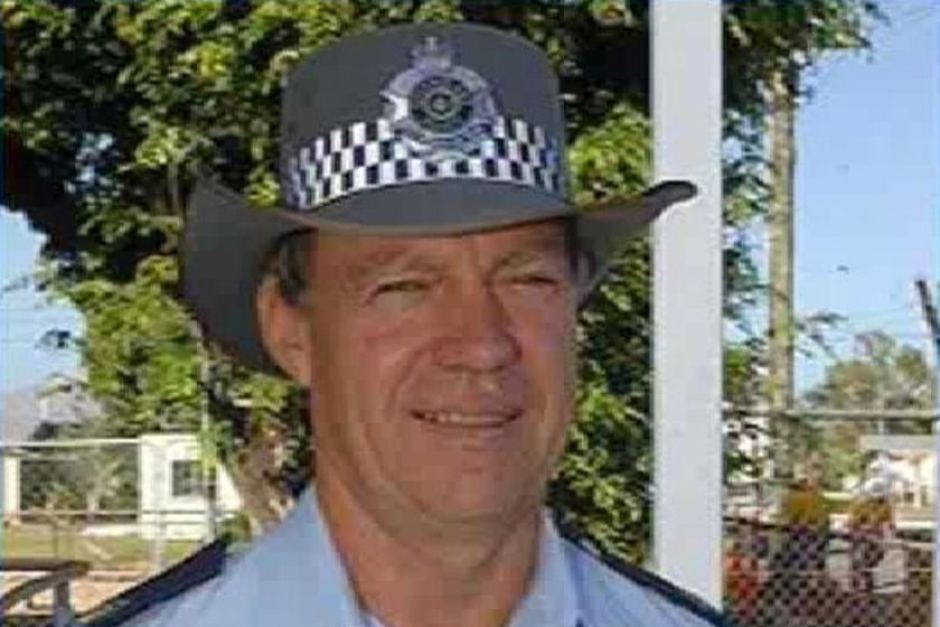 The son of a missing police officer has launched a petition calling for the resignation of Queensland’s police commissioner Bob Atkinson.
Senior Sergeant Mick Isles has not been seen since September when he went missing from Ayr in north Queensland.
Steven Isles believes his father was bullied by the Queensland Police Service and says an overhaul is needed.
“I’m actually in the process of starting a 5,000 kilometre trip throughout Queensland, rallying for support to move a no-confidence motion in commissioner Atkinson’s continued service as the chief executive officer of the Queensland Police Service,” he said.
The ABC has approached the Commissioner’s office for comment.
The Police Union is not commenting.
Family of missing police officer Mick Isles turns to witchdoctor
news.com.au 1 November 2009
AFTER exhausting all conventional options, the family of Mick Isles has turned to an Aboriginal tracker and self-professed witchdoctor to find the missing Queensland police officer.
Arnhem Land-based tracker and witchdoctor Victor Huddleston and his son Victor Nathaniel Huddleston have arrived in Queensland and tomorrow will begin searching bushland around Ravenswood, where Senior Sergeant Isles‘ abandoned car was found in late September.
An exhaustive search involving police, army and SES personnel was launched shortly after Snr Sgt Isles‘ disappearance on September 23 but failed to find any trace of the missing policeman.
However, Mr Huddleston believes he and his son will find Snr Sgt Isles within two or three days, even though any footprints left by him a month ago will have disappeared.
“I will know where he is because I will see his spirit,” Mr Huddleston told AAP.
Mr Huddleston has been involved in a number of searches in the Northern Territory and says he has never failed to find the person he’s looking for.
“When I get close to the place I will see the clear picture,”he said.
“It always works, whenever I am serious about it.”
Senior Sergeant Isles‘ son Steven travelled to Mr Huddleston’s community last week to seek his help after learning of his reputation through a police contact in the Northern Territory.
He said having spent time with Mr Huddleston in his community at Ngukurr in Arnhem Land, he was confident in the witchdoctor’s abilities.
“We have no expectations, but we are approaching with open arms,” he said.
“We’re here to establish whatever we can, to identify what has happened and potentially even finding my father, if he is there to be found.”
Search for missing policeman Mick Isles scaled back
By David Barbeler
AAP News.com.au
October 05, 2009 08:20am
*
THE search for a missing senior police officer in north Queensland has moved into a scaled down third phase, with police to visit property owners in the Ravenswood area.
Senior Sergeant Mick Isles, 58, who is stationed at Ayr in north Queensland, was last seen leaving his home in an unmarked police car at 7.30am (AEST) on September 23.
The car was found near Ravenswood several days later, but an extensive air and ground search, which included 45 Australian Defence Force Personnel, has not been able to locate him in the past 12 days.
A police media spokeswoman said, contrary to some media reports, police were not suspending their search but instead were focusing their attention on property owners.
“Police will visit all neighbouring stations in the area, providing property owners and workers with pictures of Sen Sgt Isles and checking all water holes and water courses for signs of unexplained human activity,” the spokeswoman said.
Yesterday, police said temperatures in excess of 30 degrees Celsius in rocky terrain with lots of steep inclines and gorges had left many searchers exhausted and had had an effect on numbers.
The matter is now in the hands of the state coroner.
Acting Commissioner Ian Stewart said the state coroner had become involved along with the northern coroner and they were now directing the investigation.
Sen Sgt Isles‘ son Steven Isles, a police officer in the Northern Territory, said the family was deeply worried about his father’s welfare.
“Our family is obviously quite distraught. We wake up every morning hoping we are going to hear some good news,” Mr Isles said.
He said his father suffered from severe depression brought on by a delay in the joint Crime and Misconduct Commission (CMC) and police investigation into allegations made against him.
The CMC investigated Sen Sgt Isles over allegations of receiving payments for improperly issuing driver’s licences and money laundering.
The investigation exonerated Sen Sgt Isles on September 18, but took more than a year.
“The delay in the joint CMC and police investigation certainly impacted on my father,” Mr Isles said.
A Facebook site called Help Find Mick Isles, set up by the family, has attracted the support of more than 4700 well wishers.
Coroner directing search for missing policeman
Updated
The investigation into the disappearance of a North Queensland policeman is now in the hands of the state coroner.
Senior Sergeant Mick Isles, 58, left his home at Ayr, south of Townsville, to attend a police training session on September 23.
His unmarked police car was found near Ravenswood several days later, but an extensive air and ground search has not been able to locate him.
Police and SES volunteers will continue scouring the area today and will review search efforts this afternoon.
Acting Commissioner Ian Stewart says police are no longer in charge.
“The state coroner has become involved [with] the northern coroner and they are now directing the investigation,” Acting Commissioner Stewart said.
The Crime and Misconduct Commission (CMC) says it has investigated allegations against the missing officer but they could not be substantiated.
Police Minister Neil Roberts says he will not comment on reports the officer’s family is pursuing legal action after he was cleared by the CMC.
“I can understand the family is going through a very traumatic time at the moment and I don’t want to make any comment on any proposed legal action or not,” Mr Roberts said.
“In the end, individuals have a right to pursue whatever action they feel is appropriate.
“At the moment though, the Queensland Police Service is obviously very concerned, just as the family is, for the welfare of Sergeant Isles, and a lot of resources and effort is going into trying to locate him.”
http://www.abc.net.au/news/2009-10-04/coroner-directing-search-for-missing-policeman/1090024
Isles family to sue State Government
Townsville Bulletin
EMILY MACDONALD
October 2nd, 2009
THE family of missing Ayr police officer Senior Sergeant Mick Isles has set up a trust fund to finance a legal fight.
Sen-Sgt Isles disappeared on Wednesday last week, just two days after he returned to work following an exhausting nine month Crime and Misconduct Commission investigation from which he was cleared.
The move comes as police phase out the search and rescue component of their response and instead launch a missing person investigation.
Police have also confirmed they are investigating why Sen-Sgt Isles disappearance wasn’t reported when he failed to turn up at a planned training session in Townsville.
Son Steve Isles would not elaborate on the exact nature of the legal action, but said his father was suffering depression at the time of his disappearance as a result of the events which had played out over the past year.
”It’s a trust fund which has been established for legal action which is pending,” he said.
”It’s certainly a fund which has been established in the pursuit of justice which the family feels will prevail no matter what the outcome of the search.
”The fund has been established due to the overwhelming requests from the public.
”The family has been humbled and warmed by the compassion of people who have come forward and will do so much in our time of need.”
* ISLES TOOK A GUN WITH HIM
* SOLDIERS JOIN SEARCH FOR MICK ISLES
* AYR COP CLEARED OVER MISCONDUCT ALLEGATIONS
Mr Isles said the family was grateful for the support of those conducting the search, including the police service.
”They are our best hope of getting him home safe at the moment,” Mr Isles said.
However, he urged all organisations to review their procedures when dealing with an employee suffering from a mental illness.
Sen-Sgt Isles left Ayr to attend a training course in Townsville on the Wednesday morning, but it wasn’t until 7pm that evening that his wife, Fiona, raised the alarm despite his non-attendance at the course.
”It is certainly alarming when the police make arrangements for that person to attend training and no one follows up on seeing where that person is or touching base to make sure if they are okay,” Mr Isles said.
Northern Police Region operations co-ordinator Chief Superintendent Mike Keating said the circumstances surrounding Sen-Sgt Isles‘ disappearance would be fully investigated.
”That’s part of the inquiry that we have to go through,” he said. ”The full circumstances of when he left Ayr, where he was going to and discovering where he went to and why he didn’t get to where he was expected to be. So that clearly will be a matter of some interest in that investigation.”
Supt Keating said police were still hoping for the safe return of their colleague but were preparing for the potential of a coronial investigation.
An extra 40 people will be tasked to the search and rescue efforts at Ravenswood today where the car driven by Sen-Sgt Isle’s was found abandoned on Monday.
The 100-strong team will search the less likely areas in the 63km square radius from where the vehicle was found but in the absence of further evidence, efforts will be scaled back in that particular area.
The Sydney Morning Herald 2 October 2009
From community pillar to recluse: missing cop’s downward spiral
Two weeks before his father vanished, Steven Isles travelled from his home in the Northern Territory to the family home in Ayr.
A fellow policeman, Steven knew his dad, Senior Sergeant Mick Isles, was suffering.
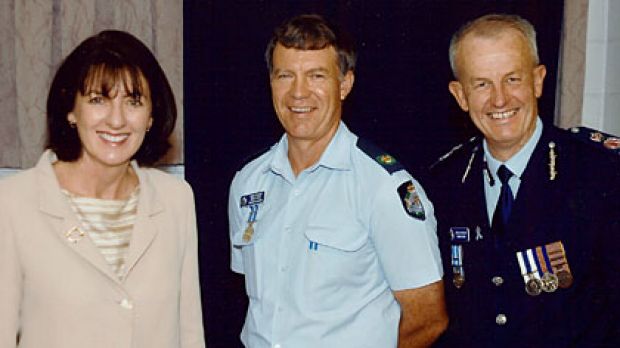
For 13 long months Senior Sergeant Isles, a seasoned general duties officer and pillar of the local north Queensland community, had carried a terrible shame.
Mistakenly caught up in a corruption inquiry linked to drug trafficking and the fraudulent issue of driver’s licenses, he had not recovered from the humiliation of being arrested in front of members of his local Lions Club.
A 35-year veteran of the force, he had been planting trees in July last year when senior police acting on behalf of the Crime and Misconduct Commission detained him for questioning. His house and his workplace were also raided.
He was officially cleared on September 18, but family say few in the town or the confines of Ayr police station ever believed he had done anything wrong in the first place.
And yet the damage was done, Steven Isles said yesterday, eight days after Senior Sergeant Isles, 58, removed his uniform, dumped his police car and took off into rugged bush 80 kilometres from home.
“Over the past 10 months I’ve watched him age in the face five years. He became reclusive, he was too embarrassed to show his face in public,” Steven Isles said.
“My father is a very proud, very strong, very humble man. He did not ever want to be the centre of attention.
“It was like taking a senior public servant or a politician and arresting them at a press conference. Everyone is entitled to a presumption of innocence.
“Even after he was cleared people would come up to him in the street to congratulate him and he hated that. He would say to me, ‘Why are people congratulating me? I didn’t do anything.’
“I have no doubt the police process and the CMC process is behind these recent developments.”
The family, represented by outspoken civil libertarian Terry O’Gorman, is taking legal action against the CMC and has set up a fighting trust – The Justice Fund.
Wife Fiona, daughters Lisa, 31, Nicole, 24, and son Steven, 29, have traversed the state with Senior Sergeant Isles during his lengthy police career serving in Brisbane, the Darling Downs, Cloncurry, Bowen and the Gulf of Carpentaria.
He had returned to work after a period of stress leave just two days before he vanished.
On September 23, as Sydney awoke to an eerie red sky and dust storms tracked north towards Brisbane, Senior Sergeant Isles pulled out of the driveway of his Young Street house about 7.30am in a silver police-issue Toyota Aurion sedan.
Having just returned to the job, he was being retrained in defensive skills and had been due to attend a course at Townsville police station that morning.
Instead, he drove 80 kilometres in the opposite direction, to the remote Hillsborough cattle station.
His car was found abandoned – ignition keys on the passenger side floor – about half a kilometre off a dirt track six days later. His uniform had been removed, leaving him in just a singlet and boots, and investigators say he was carrying no mobile phone.
“Certainly there were no signs that something like this was about to unfold,” Steven Isles said.
“He had had a difficult time but he was not someone who would ask for help.
“He was two years from retirement. I think the way [the CMC investigation was handled] bewildered him but this is completely out of character for him.”
Police on Wednesday called in the army and State Emergency Service to help scour 63 square kilometres of bushland near to where Senior Sergeant Isles‘ car was found.
Northern Region Chief Superintendent Michael Keating said if no new information came to light today, it was likely the land search would be suspended and police would move into “an investigation phase with the view to providing a report for the coroner.”
That is not something Steven Isles or his family is ready to consider. A Facebook page set up by Nicole Isles this week imploring people to “please keep your eyes peeled for my dad” has attracted 3200 members and growing.
“We are absolutely lost but we will not give up hope. We are doing everything we can,” Steven Isles said.
“Members of the community have come to us with dreams they’ve had. We’ve consulted a clairvoyant. We are open to absolutely anything at this point, anything that will lead us to our father.
“He could be disoriented, he’s probably hungry and sunburnt… [but]I would certainly hope he might feel compelled to find someone close by to bring him to a place of safety.
“Once he’s found, getting him better can take as long as it needs to.”
Senior Sergeant Isles is about 180 centimetres tall, of a medium build, with brown wavy hair and hazel eyes. Anyone with information is asked to contact Crime Stoppers on 1800 333 000.
If you or someone you know needs help with depression, contact SANE Australia on 1800 187 263.
Possible sighting of missing police officer
AAP September 28, 2009 08:15pm
A MAN matching the description of a missing Queensland policeman has been sighted near Townsville.
Police have appealed for more information after members of the public reported seeing a man dressed in civilian clothing and matching the description of Senior Sergeant Mick Isles walking along the highway near Toonpan, about 30km south of Townsville.
Grave fears have been held for Snr Sgt Isles since he went missing last Wednesday.
Snr Sgt Isles is stationed at Ayr, in north Queensland, and was last seen leaving his home in an unmarked police car at 7.30am on Wednesday.
Officers located the silver Toyota Aurion sedan at a remote property near Ravenswood.
The man sighted on the highway is described as caucasian in appearance, aged in his late 50s, approximately 178cm tall, with greying hair.
He was wearing a short sleeved checked shirt, grey dress shorts with a thin black belt, white socks and black shoes.
He was also carrying a small carry bag.
Police have asked members of the public to remain vigilant for any sightings of any person along the Flinders Highway and in the Toonpan area that may fit the description of Snr Sgt Isles.
It wouldn’t surprise me in the least that when they find Isles, they will charge him with Illegal Use of a Motor Vehicle.
Police locate car driven by missing officer
POLICE have found a car believed to have been driven by a missing police officer.
Grave fears are held for Senior Sergeant Mick Isles who has been missing since early Wednesday.
Snr Sgt Isles is stationed at Ayr, in north Queensland, and was last seen leaving his home in an unmarked police car at 7.30am on Wednesday.
A police spokesman said officers had located the silver Toyota Aurion sedan, with Queensland registration number 060KVD, at a remote property near Ravenswood.
The owners of the property called police this morning after locating the vehicle.
Police have arrived at the scene, and an aerial and ground search is underway.
There has been similar investigations run here in NSW where a bodgey complaint gets lodged for what ever reason and then warrants are obtained to dig up something and then when nothing is found they go down the managerial path and find that the person who was alleged with a serious criminal offence is now only guilty of not signing a diary. It stinks and has been going on for years, destroying careers of very highly regarded officers. Most of all as in this case the family also get hurt, but I am sure, like here in NSW the QLP Senior Executive have not given a rats about the wife and kids.
Royds does this story sound familiar with one of your close mates????
I hope an pray that the good Sergeant has just decided to take some time out as he has a family who will be left in pain forever should something terrible happen.
. . . . .
What you say is so true but to not invite the Senior Sergeant to the opening of his own Police Station is about as low as you can go.
QPS management should hang their head in shame as something like this is all it takes to tip someone over the edge and destroy a long career and a family.
. . . . .
Police sources said Sen-Sgt Isles left a note in a downstairs safe thanking his wife and their three children for their support and for standing by him.
https://www.australianpolice.com.au/tbl
Sen-Sgt Mick Isles son pleads for information
September 25th, 2009
LATEST: THE son of Burdekin police officer Senior Sergeant Mick Isles has delivered a tearful plea for information about his missing father.
Police hold grave fears for the safety of 58-year-old Sen-Sgt Isles after he disappeared two days ago.
The former officer-in-charge of Ayr Police Station was recently cleared following a Crime and Misconduct Commission investigation.
He was last seen leaving his Graham St home about 7.30am Wednesday.
Son Steve Isles, a police officer in the North Territory, choked back tears as he spoke to the media in Ayr this afternoon.
He said he had spent the past fortnight with his parents in Ayr to help his father cope with depression.
Police Commissioner Bob Atkinson travelled to Ayr today to support Sen-Sgt Isles‘ family, fellow police officers and staff.
Sen-Sgt Isles was last seen driving a police service vehicle, an unmarked 2009 model silver Toyota Aurion sedan, with Queensland registration number 060 KVD (pictured below).
He is of caucasian appearance, about 180cm tall, with a thin build, brown hair and hazel eyes.
Police do not believe Sen-Sgt Isles is a danger to the public but urge against approaching the vehicle.
Anyone who may have seen the vehicle or has any information relating to Snr-Sgt Isles location should contact Townsville Police on 4759 9777 or Crime Stoppers on 1800 333 000.
Missing cop had just returned to work
DANIEL HURST
September 25, 2009 – 2:12PM
A senior sergeant who vanished in north Queensland two days ago had only returned to work this week, having taken stress-related leave during a Crime and Misconduct Commission investigation.
Senior Sergeant Mick Isles, who is based in Ayr, near Townsville, was last seen driving away from his home in a police service vehicle on Wednesday morning.
He was reported missing the same day.
His disappearance comes two months after the CMC cleared him of allegations he received payments for drivers’ licences improperly issued at the Ayr police station.
brisbanetimes.com.au understands Senior Sergeant Isles had just returned to work on Monday. It is believed he signed out the police car on Wednesday morning to go to training in Townsville.
A police statement said the force held “grave concerns for his welfare”.
“We do not believe Senior Sergeant Isles is a danger to the public; however, we urge the public to not approach the vehicle, but to contact police immediately if they see the vehicle, or have any information relating to Senior Sergeant Isles‘ location,” the police statement said.
Senior Sergeant Isles has been a police officer for 35 years, having served as officer-in-charge of various stations including at Ayr, according to a Townsville Bulletin report.
He has previously won a Queensland Police Service Lantern Award for his interactions with the youth population in Cloncurry.
Queensland Police Union president Ian Leavers described the officer as well respected.
“He is a very highly regarded officer,” he said through a spokesman.
“We feel for his family who are enduring a terrible time while he is missing.”
People are urged to be on the lookout for an unmarked 2009 silver Toyota Aurion sedan with ( Qld ) registration plate number 060KVD.
Senior Sergeant Isles is about 180cm tall, of a medium build, with brown hair, hazel eyes and a Caucasian appearance.
Anyone with information can contact Crime Stoppers on 1800 333 000.
http://www.brisbanetimes.com.au/queensland/missing-cop-had-just-returned-to-work-20090925-g5n8.html
Townsville Bulletin
I would just like to thank the QPS and the CMC for their unprofessional, victimising, deplorable, and degrading treatment of my husband, myself and my family. With only two years to go in the service, Mick held the QPS in high esteem for the past 35 years, but you have successfully changed all of that. Thank you for wrecking our lives. I take heart in `What goes round, comes round’. We are so very fortunate to have had the most remarkable PUBLIC support.
Posted by: Fiona Isles of Ayr 12:20pm Monday 11th May 2009
Now I question the usefulness and effectiveness of (1) the hierarchy of the QPS and (2) the integrity of our so called watch dog, the CMC. This is contrived rubbish – whose ego was at stake here? I worked with this officer in many community matters and have not found anyone more honest or dedicated to his job and to improving the lot for Qld. I am disgusted. I have lost faith in the Qld police, who have barely considered this man’s years of exemplary service and the CMC who have run with gossip to enact such dire consequences. Shame on you all. …and you sit in the seats of justice!
Posted by: R B Stewart – prefer unpublished of Central Queensland 09:27pm Saturday 9th May 2009
http://www.townsvillebulletin.com.au/article/2009/05/09/52695_news.html
Townsville Bulletin
May 9th, 2009
Senior-Sergeant Mick Isles has been cleared by the Crime and Misconduct Commission (CMC), however the fight to clear his name has just begun.
For nine gruelling months, Sen-Sgt Isles has been the subject of a CMC investigation into the suspected improper use of a number of drivers’ licences.
The long-serving officer, who is currently on voluntary sick leave, was never officially stood down from policing duties.
The CMC yesterday confirmed its investigation was unable to substantiate an allegation that Sen-Sgt Isles had corruptly received payments for drivers’ licences improperly issued at Ayr Police Station.
However, the authority said it had referred evidence of `serious maladministration of the Ayr police station, including issues of drivers’ licences’ to the Queensland Police Service (QPS) for further investigation.
CMC spokeswoman Karen Crook said Sen-Sgt Isles was advised of the outcome of its investigation last week, however the Lantern Award-winning police officer only received a letter from the public watchdog on Wednesday “ the same day Ayr Police Station was officially opened by Police Minister Neil Roberts and Deputy Commissioner Kathy Rynders.
Sen-Sgt Isles had not been invited to the ceremony.
Brisbane-based solicitor and Australian Council for Civil Liberties president Terry O’Gorman is acting on behalf of the Isles family to make an official complaint about Sen-Sgt Isles‘ treatment through Queensland’s Parliamentary Crime and Misconduct Committee (PCMC).
Mr O’Gorman told the Townsville Bulletin he was prepared to take the matter even further, if needed.
He said it appeared an unjustified search warrant had been taken out against Sen-Sgt Isles.
“It was carelessly taken out. In any event, on the face of it, as it appears to us, it was unjustified and we want the PCMC to inquire into the circumstances that led to this search warrant being taken out,” Mr O’Gorman said.
“I’m not saying that he should have received any preferential treatment above anyone else, but I am saying that when the CMC are involved in taking out a search warrant, they should exercise “ whether it’s a police officer or anybody else “ much greater care and ensure the facts on which they take out a search warrant are significantly verified, or in effect they can stand a royal commission.”
Sen-Sgt Isles was not able to comment yesterday due to legal issues. However his son Steve Isles, who serves as a police officer in the Northern Territory, said the manner in which his father had been treated was `deplorable’.
“As far as the investigation’s concerned, it’s good to finally see some justice in bureaucracy,” Mr Isles said.
“This goes some way towards vindicating my father of serious criminal allegations, but it does nothing to remove a lot of the mud that will still stick.”
Mr O’Gorman said the CMC needed to answer why it took it so long to complete its investigation.
The watchdog has blamed the delay on the fact Sen-Sgt Isles was on extended sick leave and he had refused to communicate with them – an allegation strongly denied by the Isles family.
“If you are a police officer and your life is effectively put on hold, it’s just unacceptable. On the face of it, this clearance could have been given five, six or seven months ago,” Mr O’Gorman said.
QPS Deputy Commissioner Rynders this week said Sen-Sgt Isles had not been invited to the official opening of his station due to a `miscommunication’ between him and the regional office.
Mr O’Gorman said they must have known his client had been cleared by the CMC well before the station was opened, as the letter sent to Sen-Sgt Isles was dated April 29.
“It just emphasises the slight in not inviting him was not a mere oversight. It was clearly more than that.”
In a short statement from QPS yesterday, a spokeswoman said police would proceed with issues raised by the CMC.
Mr O’Gorman said it added insult to injury for Sen-Sgt Isles.
“All that’s come out of this is a terse statement that there’s no evidence, but then cop this for your troubles “ we’re now going to look at you because your paperwork may not be up to scratch.”
Sen-Sgt Isles, who has been a police officer for 35 years, was nominated for the Townsville Bulletin’s North Queensland Police Officer of the Year award last year.
Sen-Sgt Isles has been in charge of several police stations since 1985. He was also awarded a Queensland Police Service Lantern Award, for youth action commitment in Cloncurry.
www.townsvillebulletin.com.au/article/2009/05/09/52695_news.html
Loreto FINUCCI
Loreto FINUCCI
aka Laurie
New South Wales Police Force
[alert_yellow]Regd. # 21624[/alert_yellow]
Rank: Probationary Constable – appointed 26 October 1984
Constable – appointed 26 October 1986
Senior Sergeant – death
Stations: ?, Cabramatta 1987 / 1989 ( Foot Patrol ) 34 Division, State Technical Investigation Branch – death
Service: From ? ? pre October 1984 to 15 November 2006 = 22+ years Service
Awards: National medal – granted 30 August 2000
Born: 3 October 1962
Died on: 15 November 2006
Age: 44
Cause: Heart attack
Funeral date: 22 November 2006
Funeral location: ?
Buried at: Liverpool Catholic Cemetery, Liverpool, NSW
Location: Crypt-All Saints Stage 4-Level 2–
Section: CR*SAINTS4*2**
Lot: 1240
Lat/Lng: -33.91977, 150.91079
Memorial at: ?

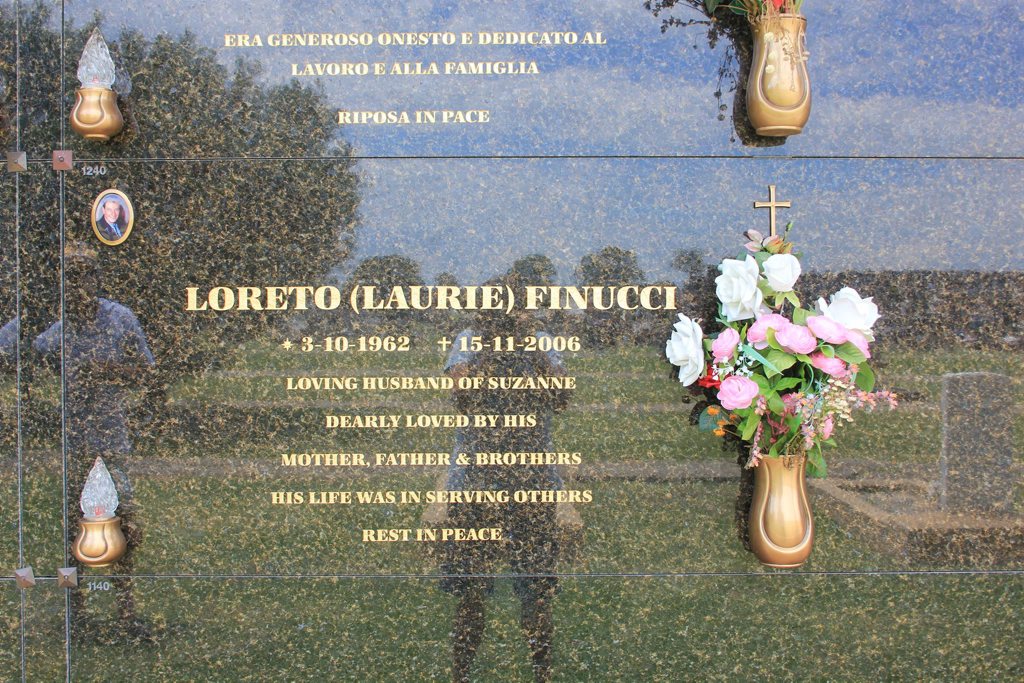
[alert_red]LORETO is NOT mentioned on the National Police Wall of Remembrance * BUT SHOULD BE
[alert_green]LORETO IS mentioned on the NSW Police Wall of Remembrance[/alert_green]
Funeral location: ?
FURTHER INFORMATION IS NEEDED ABOUT THIS PERSON, THEIR LIFE, THEIR CAREER AND THEIR DEATH.
PLEASE SEND PHOTOS AND INFORMATION TO Cal
May they forever Rest In Peace
On 15th November 2006 the senior sergeant was in Canberra to attend a Conference of the National Counter Terrorism Committee on behalf of the New South Wales Police Force in his capacity as Police Technical Unit National Capability Advisor. He collapsed and passed away at his accommodation while preparing to attend the conference.
The senior sergeant was born in 1962 and was sworn in as a probationary constable on 26th October 1984. At the time of his death he was attached to the State Technical Investigation Branch. He is listed in the official New South Wales Police Honour Roll.
George SHIELL
George SHIELL
( late of Sorrell-street, Parramatta )
New South Wales Police Force
Regd. # ?
Rank: Constable 1st Class – appointed December 1902
Stations: Lawson, Broken Hill, Parramatta Police
Service: From 2 January 1891 to 7 December 1912 = 22 years Service
Awards: ?
Born: ? ? 1860
Event location: Pennant Hills Rd, Parramatta
Event date: 27 November 1912 about 9pm
Died on: Saturday 7 December 1912 at Parramatta Hospital
having never regained consciousness since being struck ON Duty
Age: 43
Cause: Traffic Accident – Pedestrian – Concussion of the brain
Funeral date: Monday 9 December 1912 between 11.30am – 2pm
Funeral location: From Parramatta Hospital, past Parramatta Police Stn
Buried at: Presbyterian section, Mays Hill Cemetery, cnr Great Western Hwy & Steele St, Parramatta
Memorial at: ?

[alert_red]GEORGE is NOT mentioned on the Police Wall of Remembrance * BUT SHOULD BE
FURTHER INFORMATION IS NEEDED ABOUT THIS PERSON, THEIR LIFE, THEIR CAREER AND THEIR DEATH.
PLEASE SEND PHOTOS AND INFORMATION TO Cal
May they forever Rest In Peace
The constable was knocked down by a young man riding a bicycle in Pennant Hills Road, Parramatta on 27 November, 1912. He was taken to the Parramatta Hospital where he passed away on 7 December. He was on duty at the time. The following brief article appeared in the Barrier Miner newspaper of the 9 December, 1912.
“DEATH OF A CONSTABLE – RESULT OF A BICYCLE COLLISION.
On November 27 Constable G. Sheill [sic], while on duty on the Pennant Hills Road, was run into from behind by a cyclist named Francis Mobbs, who was on his way to the chemists for medicine for a sick relative. The constable was thrown heavily on the roadway, his head striking the metal with great force. He was conveyed in an unconscious condition to the Parramatta Hospital, where he remained in a very bad way until Saturday morning last, when he succumbed to his injuries. The deceased officer, who was 43 years of age and had been 22 years in the police force, leaves a widow and three children. He was previously stationed at Lawson and Broken Hill.”
The constable was born in 1860 and joined the New South Wales Police Force on 2 January, 1891. He was stationed at Parramatta. He is not listed in the official New South Wales Police Honour Roll.
Cumberland Argus and Fruitgrowers Advocate (Parramatta, NSW : 1888 – 1950), Wednesday 11 December 1912, page 2
Death of Constable Shiell.
A Fatal Collision,
Constable George Shiell died in the Parramatta District Hospital early on Saturday morning. He had been a patient since the evening of November 27, on which day he was run down by a cyclist, and sustained severe concussion of the brain which proved fatal. The facts as narrated at the time in ‘The Argus’ were that Shiell was on duty on the Pennant Hills Road on the evening of the 27th, when Frank Mobbs, riding into Parramatta with all speed on a cycle, to obtain medication for his sister, ran into the constable with considerable force.
Shiell, who was a heavy man, fell back wards, his head striking the hard metal road very severely. He did not move after he. fell, and Mobbs went to his assistance. The constable was then unconscious, and was removed in a cab to the Parramatta Hospital. He never regained consciousness, and died ten days after the accident happened. The funeral was impressively carried out on Monday morning, Mr. E. L. Maitland, S.M., adjourning the Parramatta Police Court front 11.30 a.m. until 2 p.m., as a mark of respect. The arrangements were entrusted .to Mr. Ralph Metcalfe. The solemn procession was formed up in front of the police station, the coffin being brought to the hearse, from the Hospital morgue. Troopers Porter and Wilkinson, mounted, headed the cortege. which marched to the mournful strains of the Dead March in Saul and other appropriate music. This thrilling lament was exquisitely and most feelingly played by the fine police band, consisting of some 18 musicians, under the direction of Capt. Bentley and Sergeant Mankey. The drums were draped in black as a token of sorrow for the comrade departed. The band was followed by a body of police under the command of Inspector Trenchard, amongst whom were Sergeant MacMillan, Sergeant Hynes, Senior-Constables Gillies, Nelson, Robertson, Allison, McDonald, Trevillian, and Freeland, and some IS members of the force. Also present were notice ex Senior Constable May and West, and ex Constable Denman, Buchanan, Sergeant Cawood and others. The pall bearers were Constables Kelly, Sheddon, Bruce and Wilson, and the chief mourners were Mr. and Mrs. Shiell. jun., Miss Venables and Mr. Potts, near relatives of deceased. The procession marched via George and Church streets to the Western-road cemetery, where the mortal remains of the departed officer were reverently laid to rest in the Presbyterian portion of the burial ground. The funeral service was conducted by the Rev. John Paterson, and the police band played very movingly by the grave-side. Beautiful floral tributes were sent in, one wreath under a glass cover bearing a card stating that it was ‘a token of esteem and deepest sympathy from his brother comrades of the Parramatta police.” The other bore the word, ‘Asleep,’ and was addressed ” With deepest sympathy, from the employees of Yolhnann’s ?, Ltd.’
http://trove.nla.gov.au/newspaper/rendition/nla.news-article86140032.txt
INQUEST
http://trove.nla.gov.au/newspaper/article/86142424
Cumberland Argus and Fruitgrowers Advocate (Parramatta, NSW : 1888 – 1950), Saturday 22 February 1919, page 6
MARRIAGE.
FISHBURN — SHIELL — January 25, 1919, at St. Paul’s, Castle Hill, by the Rev. W. J. Roberts, Frank Walter, only son of Mr. and Mrs. W. Fishburn, Castle Hill, to Florence Janet, only daughter of the late Constable George Shiell and Mrs. Shiell, Sorrell-street, Parramatta.
http://trove.nla.gov.au/newspaper/rendition/nla.news-article86117174.txt
Evening News (Sydney, NSW : 1869 – 1931), Thursday 28 November 1912, page 6
RUN DOWN BY A CYCLIST.
Constable George Shiell, of Parramatta, was run down by a cyclist, at the Pennant Hill road, about 9 o’clock last night. The cyclist was hurrying Into Parramatta for medical assistance for his sister, when the accident happened, and he went to the assistance of Shiell, who was unconscious, and had him conveyed to Parramatta Hospital. The constable was still unconscious this morning, suffering from concussion of the brain.
http://trove.nla.gov.au/newspaper/rendition/nla.news-article117679279.txt
Department of the Attorney-General and of Justice,
Sydney, 7th February, 1906.
HIS Excellency the Governor, with the advice of the Executive Council, has been pleased to appoint the undermentioned
Members of the Police Force to exercise, within the Licensing Districts preceding their respective names, the authority
conferred by section 19, subsection 1, of the ” Liquor (Amendment) Act, 1905,” viz.:—
District. Penrith Station: Lawson
First Class Constable George Shiell
http://trove.nla.gov.au/newspaper/article/226406236
Police Department,
Inspector-General’s Office,
Sydney, 3rd February, 1906.
INSPECTORS OF SLAUGHTER-HOUSES.
BY virtue of an authority vested in me by an order of His Excellency the Governor-in-Council, I have appointed the undermentioned members of the Police Force as Inspectors of Slaughter-houses and of Cattle intended to to slaughtered :—
Name. George Shiell
Station. Lawson …
Police District. Penrith
http://trove.nla.gov.au/newspaper/rendition/nla.news-article226406072.txt
Department of Public Health, N.S.W.,
Sydney, 29th February, 1904.
IT is hereby notified, for public information, that the undermentioned Sanitary Inspectors have been appointed by the Local Authorities under the ” Public Health Act, 1902,” for the Police Districts named :—
Police District. Lawson.
Name of Sanitary Inspector. First Class Constable George Shiell
http://trove.nla.gov.au/newspaper/article/226392815
Barrier Miner (Broken Hill, NSW : 1888 – 1954), Friday 20 April 1894, page 4
CIRCUIT COURT.
The Criminal Calendar.
The following is the list of criminal cases to be dealt with by Mr. Justice Foster at the Circuit Court, which
opens on Monday :
James Lees White and George Shiell, manslaughter.
http://trove.nla.gov.au/newspaper/article/44127253
Barrier Miner (Broken Hill, NSW : 1888 – 1954), Thursday 22 March 1894, page 1
THE SOUTH TRAGEDY.
THE INQUEST.
CONSTABLE WHITE’S EVIDENCE.
THE inquest on the body of John Jeremiah Considine, who was killed at South Broken Hill on Sunday morning, was resumed at the Town Hall this afternoon before Mr. A. N. Barnett, district coroner.
Constables J. L. White and George Shiell were present in custody. Alderman John Souter was foreman of the jury.
Mr. A. J. Hall appeared for the relatives of the deceased.
The first witness was Constable James Lees White, who appeared with his head bandaged.
The Coroner said before administering the oath that the witness was not obliged to answer any questions which might bear on any future proceedings.
The witness said : – I was stationed in charge at South Broken Hill ; I am relieved from duty ; I have been in charge at South Broken Hill from the middle of October last ; I was on duty at South Broken Hill on the night of March 17 ; Constable George Shiell was also on duty ; I saw the deceased Considine on the morning of the 18th at about a quarter past 12 o’clock ; he was in the back yard of Hegarty’s Hotel; he came from the back of the hotel with two men named McLennon into South-street ; be came to the gate of the yard of the hotel ; the three men appeared to be the worse for liquor, the two McLennons more so than Considine ; as they came to the gate I said, “Good night, Considine ; don’t you think it is about time you were getting home?’ ; one of the McLennon’s said, ” Oh, yes, come on, Jack ” ( meaning Considine ) ” we’ll go;” Considine replied, ” No, I won’t – I’ll go home when I think fit ;” he then put his hand up to his ( witness’ ) face, and, spreading it out, said, ” Now, White, you appear to be watching me ;” he still kept putting his hand up, and said, ” Now, White, I warn you if Shiell or Shiner comes to arrest me you had better come well prepared or you’ll go down.” I replied, “There’s nobody talking about arresting you.” He replied, “Never mind, I’ve warned you ; take what meaning you like out of it ;” one of the McLennons got him by the arm then, and said, ” come on, Jack, never mind;” he replied, “you go away, Hughie, and mind your own business,” and pushing McLennon in the chest, knocked him down ; Constable Shiell then stepped over to the kerb side of the footpath and beckoned with his finger saying, ” Look here Jack, I want to speak to you ;” Considine passed me, and went over to Constable Shiell, putting his hands up in a threatening attitude, saying : ” You, Shiell, you’re only a ……… thing, a …… sneak, and a ….. crawler. Shiell replied, backing away from him towards the fence of the hotel, and Considine said, with his hands up in a fighting attitude, ” I’ll drop you.” He backed Shiell against the fence up to within about two feet or a yard from Hegarty’s Hotel; Shiell drew his baton and struck at him, and I also drew my baton, believing there would be a row ; I believe he struck Shiell; he rushed at Shiell, and I struck him with my baton over the forehead ; he sidled backwards and then started to run along South street and into Patton-lane ; he entered Hegarty’s Hotel by a small gate off Patton-lane, and ran through the yard into the passage of the hotel, followed by myself and Constable Shiell ; finding there was no light in the passage of the hotel, we didn’t enter ; called the landlord, Mr. Hegarty, who came out and gave me a candle ; at this time I heard a noise as if a door was being opened and shut ; lit the candle and proceeded along the passages of the hotel and searched them, but failed to find anybody ; found that the door of the hotel leading into South-street was closed, but unlocked ; remarked to Hegarty, ” He’s got away, we must let him go and take proceedings on Monday “; after speaking to Hegarty for about three minutes at the side door of the hotel, Hegarty either remarked, ” Here he’s coming ” or ” Here’s somebody coming,” could not say which ; Hegarty took the candle, and going inside closed the door ; it was Considine coming, and he appeared to increase his pace as he came towards us, saying, “Now, I’ll smash your ….. brains out;” the McLennons were at this time standing near the entrance gate of the hotel, 20 yards off; when Considine came within 10 paces of me I saw he had something in his hand which he was carrying low down, as if it were a rifle; he struck at Constable Shiell and then swung round at me ; I then saw that what he had was not a rifle, but a bar of iron or an octagon drill, about 4ft. or 4ft 6in. long ; he swung it round in both hands with terrific force at me ; I closed with him to try and avoid the full force of the blow, but the iron struck me over the left ear, and I fell on my back out on to the footpath ; I produce the cap I was wearing at the time showing, it cut through just where I got the blow over the ear ; I was partly dazed for a few seconds; I raised myself on my left elbow, and looking round saw Considine chasing Shiell down along the police station fence in Patton-street ; I got up, staggered across the street, and went into the.police station; I had previously tried to arrest Considine for riotous behavior ; I saw Shiell at the police station; we got our revolvers and went out into Patton-street with a view to effecting his arrest ; we saw him standing in South-street, against Krantz’s store, about 30 or 40 yards from us ; we went towards him and he started to move away towards the direction of his house or towards Hebbard-lane ; I called out, ” Considine stand, or I’ll shoot;” he then started to run ; the period between this time and when I got up off the path was about three minutes ; he ran, and I called out again, ” Considine stand or I’ll shoot”; he was 20 yards off ; he increased his pace and replied “Shoot away, I can do you,” or ” I can do for you,” I’m not sure which ; I then fired a shot from about 10 paces behind him into the ground before him to frighten him ; he still kept running and as he turned into Hebbard-lane I fired another shot at his feet ; it didn’t appear to take effect, as he still kept running, and as he turned into his own block, he partly looked back over his shoulder at the time to see if I was pursuing him ; after getting into his own block he turned round and faced me, and came towards me with his hands up in front of him about level with his face ; I ran into, him, striking him with my left shoulder, knocking him down ; he then said, “I give in,” and with the assistance of Constable Shiell I put the handcuffs on ; we picked him up between us and conveyed him some yards when his knees gave way, and he suddenly fell down, saying, ” I’m done ;” I fired three shots, the third one being fired as he turned out of Hebbard-lane into his own block ; I fired the third shot at his knees as he was running and looking back at me ; after I fired the first shot Shiell also fired, but without apparent effect ; after I fired the second shot Shiell responded, and this also didn’t appear to take any effect ; as I fired the third shot Shiell immediately fired also, Shiell being about a yard behind me ; Considine appears to be in the act of turning round and coming towards me ; cannot say in what direction Shiell fired when deceased fell down I ran for cab over in Hebbard-street, as he appeared to be badly wounded ; left Considine with Shiell ; told the cabman to come to Hebbard-lane, and when I came we put the deceased into the cab he was then alive, but breathing heavily ; before removing Considine to the cab Mr. Pound and a man named Reid came and assisted us to put the deceased in the cab ; the cab went down to the police station ; Constable Shiell came out and went in the inside with the deceased; I got on the box with the driver, and told him to drive as fast as he could into town ; we reached Dr. Thomson’s surgery in Argent-street at about 12.45 ; I called Dr. Thomson; he came out and examined Considine and said he thought life extinct; he bandaged my head, and we then drove to the hospital and put the body of the deceased in the morgue; the revolver produced is in the same condition as it was when I used it ; it is loaded in three chambers; three cartridge: were exploded.
By the Coroner : When I fired the last shot the deceased had not turned towards me, but was running sideways from me, exposing his right side, and with his face towards me.
By Mr. Hall : I had known Considine for four or five months ; I had heard that the police did not care about interfering with him, especially if he was under the influence of liquor ; I cannot say he was a peaceable citizen, because I saw him picking a quarrel at a banquet two nights before ; I used to be on fairly friendly terms with Considine, and never spoke to him officially before ; I did not see the deceased before on that evening ; I was exceedingly civil to him when I advised him to go home; I spoke to him in friendship, because I knew that in liquor be was apt to get into trouble ; I saw neither Carney nor O’Leary present at the time ; I am certain it was McLennon who caught hold of Considine by the arm and ordered him to go home ; it is untrue that Considine said to me, “You are a white man,” and, turning to Shiell, said “You are a crawler,” and that thereupon Shiell struck him on the head with a baton; he kept calling Shiells ” crawler ” and walking towards him, and it was when Shiell had backed to within a yard of the fence that he struck Considine with his baton ; I believe he struck him on the neck or the jaw; I also struck him ; the small wound caused by me over the eye was afterwards mistaken for a bullet wound ; it did not bleed profusely; when Considine came the second time I recognised him at a distance of 20 yards ; he increased his pace when he got close; notwithstanding that the peak and the button on my cap are uninjured, I consider that the clean cut on toe side of the cap was caused by the blow with the bar ; I was leaning away from him when he struck at me, and I got so close in that he could not give full force to the blow ; I cannot say what conversation Shiell and I had when we went into the station ; Shiell was very much excited, like myself ; my revolver was unloaded, and I had to load it; Constable Shiell took Constable Shiner’s revolver; I don’t know whether he had to load it ; I decline to answer the question as to who first suggested the use of revolvers on the ground that it may incriminate me; I have had no instructions whatever about the regulation revolvers ; my experience is that a revolver does not carry high with a fine sight ; it was between 30 or 40 yards from where I fired the first shot to where he fell ; while we were coming up from the police-station towards Considine I said to Shiell, ” If he attacks us again whatever you do don’t shoot him in the body, fire low” ; when I first called on Considine to stop I believe he had the bar still in his possession ; when the last shot was fired he was between 15 and 20 yards away ; I did not see him drop or fling away any weapon; it was in consequence of his second attack that we went to arrest him immediately instead of waiting until Monday ; before I left the ground I gave instructions that the weapon should be searched for ; Constable Shiner afterwards told me that he could not find it; I know Considine was a married man ; his wife told me on the Friday evening that she was not living with him ; while I was on the way to the cabdriver’s I met a man named Ohllson ; I don’t remember what I said to him ; I refuse to say whether I told him what I had done ; when we came out with revolvers there were some people standing with Considine; I don’t know who they were ; I don’t think the blow I gave the deceased with the baton would be sufficient to cause the bloodstains on the collar of the shirt produced.
The examination of Constable White concluded at 5.15.
The Coroner at this stage said he was justified in telling the jury that once they were convinced that the deceased met his death by being shot down by one constable or some constables, the only questions they had to consider were :-(1) Was he, or were they, in the execution of their duty, or, even when, trying to arrest were they in the execution of their duty ; and (2) were they justified in shooting him in order to bring him within the reach of justice. Any questions that went beyond that were, in his opinion, irrelevant.
Dr. Seabrook, of the hospital, said that White had a true contused wound above the left ear ; such a wound could have been caused by a heavy blunt instrument, and would be likely to affect the brain for the time being, together with depression of the nervous and physical systems ; also examined Constable Shiell, who had the ninth rib on the left side fractured.
Constable Shiell said he was on duty at South Broken Hill on Sunday morning, and saw Considine at the rear of the South Broken Bill Hotel. The evidence was mainly corroborative of that given by Constable White ; Shiell added that White called to Considine, “Stand, or I will shoot “; the latter replied. ” Shoot away I will do for you “; Considine commenced to run, and White fired ; witness immediately fired over the man’s head, thinking he would surrender ; White and witness again fired ; after the second lot of shots, before any more were fired, Considine was on his own block : he turned round to the left and looked at them sidewise, when White delivers his last shot ; when he turned his full front towards them Considine raised both hands as if he was going to rush or throw something at them ; witness fired at his legs about the knees, with the intention of crippling him, in order to effect the arrest ; this was immediately after White’s last shot.
The inquest was at 6.30 adjourned until 10 a m. to-morrow.
http://trove.nla.gov.au/newspaper/rendition/nla.news-article44127456.txt
Barrier Miner (Broken Hill, NSW : 1888 – 1954), Tuesday 24 April 1894, page 4
THE CIRCUIT COURT.
The South Tragedy.
Evidence For the Crown
Continued.
In the charge against James Lees White and George Shiell of feloniously killing John Jeremiah Considine at
South Broken Hill on March 18, the following further evidence was taken this afternoon :
James Carney, laborer, employed on the Proprietary mine, went to Hegarty’s at 11p.m.; he there met Considine, who was an old acquaintance of his ; he had two drinks with the deceased ; Considine was neither drunk nor sober; witness did not know-him to be a quarrelsome man in drink ; he went out of the hotel and through the back yard with Considine, the two McLennons and O’Leary ; .Considine was leading ; Constables White and Shiell were standing near the gate on the footpath ; White said to Considine, “It is time you were home Considine ;” deceased replied “I will please myself;” witness then went down the yard ; on returning. he saw O’Leary, Considine, and the two constables ; he heard deceased say to White, ” You are a white man, White, I believe ;” Shiell then hit Considine with his baton on the head; Considine reeled and staggered back against the fence ; both constables then drew their batons and followed him up; he got away from them and ran along South lane ; witness remained at the gate with O’Leary, and saw Considine running through the backyard into the hotel; the two policemen followed shortly afterwards ; he next saw the constables standing outside the side door of the hotel with Hegarty ; he walked towards them ; when about six or seven yards away from them he saw a man coming down South-street, near James’ shop ; he heard Shiell say, ” Here he comes ; we will have him this time ;” :witness identified the man as Considine as he approached the constables ; he had no weapon in his hand ; the constables walked two or three paces towards Considine, and witness saw the latter hit White on the head with his right hand ; deceased did not first hit Shiell ; he was in the habit of wearing a ring on his right hand ; White fell down on the footpath near the tree-guard ; Shiell went towards the police-station, and White followed him;. witness, O’Leary and Considine crossed Patton-street and walked along the footpath past Krantz’ ; they stood near Hebbard-lane for a short time ; a man named Donohue had followed them up and joined them ; Donohue remarked, “There come the two constables; I can see their revolvers shining ” ; the policemen were just coming out of the station ; witness told Considine to go home ; blood was streaming down Considine’s face; he left and walked towards Hebbard-lane on the opposite side of the street ; he was walking slowly and one of the constables said “Stand, Considine, or we will shoot ” ; Considine began to walk pretty smart, and the constables again called out , to him to stand ; he replied “Shoot away” ; the police were then about 12 or 15 paces behind him, and they fired, two shots in quick succession ; when they all entered the lane two more shots were fired; witness believed the deceased and the police were then running ; after Considine had turned on to his allotment the constables, who were also on the block, fired the last two shots ; White ran into Considine and knocked him down ; the constables handcuffed the deceased and walked him a few yards ; Considine then exclaimed, “I’m done,” and fell ; witness had known deceased get into trouble with other people, but always through their fault. By Mr. Moriarty : Witness was an intimate friend of Considine’s; he did not know that two evenings before the tragedy Considine had driven his wife out of the house, nor that on the Friday previous he turned her out at 4 a m. ; in his evidence before the coroner; witness did not mention that Donohue was present when the police came up with their revolvers; he did not offer to assist White when he was knocked down, neither did Shiell, who merely walked over to the police station ; he could not say who broke Shiell’s ribs ; he could not say where White got the blow from Considine ; White was the first man deceased attacked; Considine came from James,’ the butcher’s, right across, the street to Hegarty’s; he met White first and knocked him down ; Shiell would not have to cross Considine to get to the police station ; when deceased struck White he was quiet, and made no remark then or afterwards about it ; when Considine told the police to “Shoot away” he did not add, “I can do for you;” when Considine fell witness was 25 yards away; he would not swear that deceased did not face the police when on his own property. By Mr. Edgar : He would swear that Considine did not face the police in a threatening attitude ; he might have turned slightly.
James O’Leary, smelter hand, was at Hegarty’s Hotel on the evening in question at 10.30 ; he had two whiskies there ; he. saw Considine, the two McLennans, and James Carney there ; the McLennans were the worse of drink; Considine seemed right enough ; they all left the hotel together by the back entrance, Considine being a little bit ahead ; at the gate they met the accused ; when Considine got to the gate White said, “You ought to be at home, Considine’ he replied, ” I will go when I like,” and added that they “had been watching him this good bit ;”? deceased also said, ” If you come to take me come prepared or you will go down ;” turning to Shiell, he exclaimed, ” You are a crawler,” and to White he said, ” You are a white man ;” the McLennans said nothing to Considine, and witness did not ask Considine do anything to either of them ;. after Considine had addressed the constables in the manner stated Shiell struck him with his baton ; the blow staggered him, but he recovered, and both constables rushed in ; they tried to hold Considine, but he got away and ran around the corner into the lane; afterwards he saw the police conversing with Hegarty at the side door ; he saw Considine coming across from James’ butchers shop, passing a cab en route ; he hit White, but witness did not see him hit Shiell ; White fell, and Shiell went over to the police station ; White got up and followed Shiell ; Witness and Carney joined Considine, and they moved off towards Krantz’s ; deceased at this time had nothing in his hand ; when they got below Krantz’s Michael Donohue joined them ; Considine had a cut over his eye, from which blood was flowing ; witness saw the constables coming from the direction of the police station ; Considine crossed the street towards his own place, and the police called out, ” Stop, Considine, or we will shoot”;, they, then fired two shots, and when deceased got into the lane they fired two more ; two more shots were fired when Considine got on his, own block ; when the last shots were fired Considine was about eight yards from the police; he fell, but witness was not sure that a policeman did not run into him first. By Mr. Moriarty : Considine had no iron bar with him ; he may have had a ring on his finger.
Christopher Conlon, cab-driver, was next examined.
Case proceeding.
[The continuation of the evidence will appear in the Third Edition.]
Barrier Miner (Broken Hill, NSW : 1888 – 1954), Thursday 26 April 1894, page 3
THE SOUTH TRAGEDY.
His Honor’s Summing-up. The Functions of Police Constables.
The Legal Use of Firearms.
James Lees White and George Shiell, police constables, were charged, on remand from the previous day, that they did, on March 18, at South Town, feloniously slay John Jeremiah Considine.
The jury, which earlier in the morning had been driven to the scene of the tragedy under the charge of the Deputy-Sheriff ( Mr. G. A. Mills ), was brought into court at 10 o’clock.
His Honor said the jury would understand that the question they were now trying was one of manslaughter ; the Crown did not bring the prisoners up on the murder charge.
The question was whether on the whole of the evidence, subject to the law, the prisoners, or either of them, were guilty of the offence. Manslaughter was the unlawful slaying of a human being. The case was one of enormous importance both to the prisoners and the community, and also the police force of the colony. He was glad to find from the evidence of Sub-inspector Johnston that it had not been found necessary to cause the police here to habitually carry firearms. The unfortunate necessity becomes only justifiably resorted to in cases where there were men so degraded and villainously murderous as to be prepared to take the life of the police simply because they were police, and treated them in such a manner as to endanger life. The police were bound to protect our liberties at the risk of their lives, but were also given the power to protect their lives just the same as private individuals. They must be treated in the matter of self defence just as private individuals. The police had a perfect right to take the life of a person if necessary to do so in defence of their lives; but only in case of necessity. Here it was important to consider what “necessity” was. It was not merely a necessity appearing to the mind of an excitable man, but such a necessity as would appear to persons in the calm contemplation of the matter. A man was not excused because he had taken fright and thought he was going to have his life taken. Whether life was taken by a policeman or an ordinary civilian, the law invariably held a careful and jealous investigation as to how it was taken and whether the circumstances were such as to justify the taking of life in self-defence. Under the strict interpretation of the law; ” justification” was not a proper term. All the law did was to “excuse” a man who took the life of a fellow creature in self defence.- In this case he had no doubt that the jury would have full regard to the point he had drawn their attention to, i.e., that the only ground on which a man could be excused in taking life was that it was done from an absolute or clearly apparent necessity.
And that necessity must be this : It was not sufficient that the accused himself should think it was necessary, but he must think so reasonably and justifiably. The jury had a difficult task to determine whether the circumstances were such as to make it reasonably necessary for a man to take life in his own defence.
The law was not otherwise in regard to killing in the execution of duty by an officer of justice. Bearing that in mind, they would have to deal with this difficult case like others of a similar character. With regard to the matter of self defence, he did not think the question was really raised on the part of the prisoners.. He did not think it was set up that the killing was done by them in necessary self-defence of themselves. It appeared that the prisoners had from the first stated that .they did it in order to effect the arrest of a felon endeavoring to escape from them. As to the evidence of the witness Pound, he had to draw attention to the fact that what White stated to Pound was not evidence against anyone but White himself ; it was not evidence against Shiell. Nothing one prisoner said in the absence of the other was evidence against that other. It was necessary that the jury should also consider, although the excuse was set up of having taken life in endeavoring to apprehend a felon, whether in fact the object was to retaliate for injuries already received by the constables. If it was retaliation, the law made no excuse whatever. The law made this much allowance, that if a man was severely injured, and whilst still in hot blood seized a weapon and took the life of the person who attacked him, it would not hold him guilty of murder, but of manslaughter of a high character – of a very aggravated kind indeed. It was, therefore, a matter of the most serious importance to consider whether they were satisfied that Pound had given the proper statement of what took place, or whether White was doing so. Pound stated, if they recollected, that the prisoner said to him after the shooting took place, that he had shot Considine; and when Pound asked why he had done so, White replied, “If he had done to you what he did to me, you would have done the same.” Did the jury believe that Considine was shot because of the injuries which he caused to White? If they did so, he would be guilty of manslaughter of an aggravated kind. If he had taken firearms when cool and took life he would be guilty of murder, but if he did it in a time of excitement he would be guilty of aggravated manslaughter indeed. The law would admit self-defence, but not retaliation of any kind. Retaliation involved punishment, and.the law; insisted that punishment should be left to the proper courts of justice and should not be placed in the hands of private individuals or persons other than courts of justice. A good deal depended on what the jury thought of the evidence given by Pound as compared with that given by White. White alleged that he said, “If you had been placed in the same position as I was you might have done the same,” which bore no indication that he acted under feeling from injuries received. They must be very careful in regard to the recollection of witnesses, as witnesses very often differed as to the exact words used. The words were of very great importance in this case, and the jury must be convinced beyond reasonable doubt that they were used. In approaching the consideration of this case he had no doubt that they would do so with a judicial mind, setting naught down in malice and extenuating nothing except by the evidence; that they would neither show favor to the prisoners because they were constables, nor entertain feeling of any kind against them. The well-being and liberty of members of the community required that constables and police officers in general should be supported in the proper discharge of their duty, and the well-being of the community also required that they should be restrained from the excesses of that duty. He had told them that manslaughter amounted, not to the killing by malice prepense, but to killing without lawful excuse. Every killing was presumed to be murder unless from the circumstances it was reduced either to manslaughter or excused as homicide. The fact that a man was killed raised the prima facie presumption that he had been murdered. The jury would have to be satisfied beyond reasonable doubt that the Crown case was proven ; they would be required to have that certainty which would influence them in their personal affairs. Here he would draw their attention to the rules which had been put in in evidence in this case : the rules given to the constables as regulating the performance of their duty. If these rules were contrary to law they would not justify a constable in acting under them ; but they were, when taken as a whole, a fair condensation of the general law with regard to the use of arms by the police. They were not like an act of Parliament, in which each clause might be taken by itself .and have the force of law. When taken as a whole and considered as the advice given to constables as to what the law was, they might be taken to be fairly correct ; but they were not to be taken clause by clause. One part of the rules must be taken with the other. He considered that very great caution should be given to officers with regard to acting under the regulations : they must have regard to the whole of them as a whole. One part might seem to justify the police in using firearms, and yet another part might restrain them ; and they must act under the part which would restrain them. In rule 90 it was very properly laid down:- ” If a constable endeavors to apprehend a person who has committed a felony, whom he is by a proper warrant authorised to apprehend for a felony, and such person flies knowing the intention to arrest for such felony and with a view to prevent such arrest; he may be lawfully killed provided he cannot be otherwise apprehended.” The duty of a constable was to apprehend but not also, as it would be made to appear, to apprehend the person the instant he saw him. He was not justified in shooting a man down because he was running away unless it appeared to him that the person would fully and wholly escape unless he did so. ” At what particular period of a struggle or pursuit the impossibility of overtaking the person son flying becomes manifest must depend upon the circumstances of each case.” That was perfectly correct, and should be most carefully borne in mind. It had a most important bearing on this case, and was perfectly correct law. ” If the constable is better mounted than the person he is endeavoring to arrest, or the place where the parties are is such that assistance is likely to be obtained before the escape can be fully accomplished, or if in any other way there is reasonable ground for supposing that the arrest can be accomplished in that particular pursuit, the officer ought not in any of these cases to take life.” It was not to be supposed that a constable could shoot a felon who refused to stop when called upon. He would draw attention to the words immediately following those quoted: ” He is not, however, bound to let a felon or person whom he is authorised by warrant to arrest for felony escape from him because he may have reason to think that he can find him easily at some other time.”. That did not mean that if the man tried to get out of his sight he was entitled to shoot him ; it meant that he was not authorised to let him escape altogether rather than shoot him. If there were reasonable grounds for supposing that the arrest could be accomplished in any other way the officer should not take life. That would be the most difficult part of the jury’s duty. Rule 90 said : ” It is his duty to arrest the person whom he is so authorised or commanded to arrest as soon as he sees him, and if he cannot overtake him he may kill him.” Taken by itself this paragraph was not true. It was not the duty of a constable to apprehend a person as soon as he saw him, or shoot him. It was certainly his duty not to allow the man to have an opportunity of getting away altogether, even if compelled to take life. A man charged with an offence was bound to give himself up to the officers of justice when called upon, whether guilty of the offence or not. He drew attention particularly to this clause because, although in certain cases, it should br understood by the police that it did not justify them in shooting a man as soon as they saw him if he did not surrender, although in certain cases that shooting might be justifiable. If a constable caught sight of a bushranger in the bush, and called upon him to surrender, and did not have sufficient means of preventing his escape, the officer would be justified in shooting him and killing if necessary. The man would in that case bring it on himself by not surrendering when called upon. Common sense showed us this : a man must not set the law at defiance ; he must submit when called on and allow the case to be investigated. The rule further stated :-” Constables ought in all cases to be extremely cautious in resorting to extreme steps, but when necessity occurs they must perform their duty, and the law will protect them. Should the officer be resisted and his own life placed in jeopardy he may then kill, not for the purpose of preventing an escape, but in self defence.” There was only one other part of the rules to which he would refer. In the 89th section it was stated that there must be an apparent necessity to which the constable is reduced in arresting or detaining a felon before using firearms. ” Apparent ” sometimes meant ” seeming ;” but the 95th section of the rules would show that was not what was meant here. The section in question stated that ” the importance or necessity of this proceeding must be dearly apparent.” Apparent had there its proper meaning : not ” seeming ” but ” clear.” The law which applied on this ground required a policeman to do his duty even if it was necessary to take life, and it held him harmless in such cases. He would now proceed to the matter of the case before him. Was Considine killed ? How was he killed ? and by whom ? Was he killed by the two prisoners or either of them, both of them acting for a joint purpose at the time ? The prisoners had set up the defence that they were acting together and killed to prevent escape. The Crown did: not seem to dispute that a felony had been committed by Considine. The question was, Were the prisoners endeavoring to apprehend Considine after he had committed a felony in order to bring him to justice ? Or did they endeavor to shoot him because he struck them and injured them, and they were smarting under the injuries ? If the latter they were not justified in law. As he said before, the contradictory evidence on the point affected the prisoner White alone, That depended on whether they believed the exact evidence of Pound, or whether they thought the statement by White, that that was not the exactly correct expression, was to be, preferred. They must be satisfied that Pound’s recollection was correct before the evidence could act in any way against White. Even if they were satisfied that the words used by Pound were the words used by the prisoner White then the evidence did not seem to be sufficient to warrant the conclusion that the killing was done while smarting from injuries, and not for the purposes of apprehension. A prisoner might give as faithful evidence as a man who was not a prisoner. Two stories had been set up in this case. In the first place it was alleged that there was a scuffle in the early part of the case, which scuffle was not directly material in arriving at a conclusion. At the same time the facts might throw light on the subsequent scuffle, which was material. It was not contended that the first scuffle constituted a felony. A felony was committed when actual bodily harm was inflicted ; and if bodily harm was inflicted by Considine in the first scuffle he was a felon, and the police were justified in apprehending him when he came back. When Considine came back on the second occasion he committed a felony and justified the constables in apprehending him and even in taking his life if necessary in order to prevent escape. If Considine had nothing in his hand when he struck the prisoners, as stated by witnesses, how came the mark which were on the coat and cap, and how were Shiell’s rib broken and White’s head injured ? He had no doubt they would believe the evidence of the doctors, and it was for them to say whether the prisoners’ evidence, which was consistent with the doctors, or that of Crown witnesses, which conflicted, was the more reliable. Unfortunately for the prisoners, it was not this question alone which had to be tried. It was not a question whether Considine had an iron bar in his hand or not ; that might be a question if the accused were charged with murder. That question did not arise here, where the accused were only indicted for manslaughter. Supposing every word told by the prisoners was true, had they reasonable grounds for believing that it was impossible to prevent the escape of Considine without shooting him ? The offence was a very serious one even in its mildest form. This case was a precedent ; a good law in this would be good law in others. It would never do to lay down the rule that members of the community might be shot down by the police merely because they thought they could escape. On the other hand they must not discourage officers in the discharge of their duty in preventing the escape of felons. .It was for the jury to decide whether the prisoners had acted honestly and under a proper view of the circumstances. His Honor then reviewed the evidence at length. The evidence of John McLennan, the first witness, detailing the preliminary scuffle with the police, was merely introductory. The witness Wake, who was aroused by the noise of the scuffle, was to the effect that Considine and his companions were under the influence of drink. The witness stated that Considine pushed one of his companions who asked him to go home, but would not swear that he had knocked him down. He, however, said he saw a man lying on the ground 9ft. from the window, and from the rest of the evidence it seemed that this man must have been McLennan’s brother. With regard to Hegarty’s evidence, there was an important matter testified to by him and other Crown witnesses which the jury would have to consider seriously. This evidence was that the constables, when they saw Considine had escaped after the first scuffle, said, “He’s gone now; well summons him.” That might lead the jury to suppose that the constables knew that Considine would not attempt to escape, but on the other hand, they must consider that Considine had not then committed the more serious offence of assault on the police. The remark might lead the jury to the implication that the police knew that Considine would not attempt to escape; and that might very seriously affect their consideration of the question whether the police believed that Considine would endeavor to escape after committing the more serious assault. The witness Carney had given very strong evidence, and it was for the jury to consider whether they would credit the whole of it. The general account given by him was similar to that given by the constables, but it differed materially in important details. Carney said he did not see Considine hold up his hands to Shiell in a threatening attitude, as deposed to by the accused ; and he said that Shiell struck the first blow with his baton. If the constables’ story were true, and Considine came at Shiell in a threatening manner, the latter would be quite justified in striking him first.. Then Carney’s evidence differed from the constables’ in that it stated that Shiell ran away after the assault. It was for the jury to say whether the constables’ story was not more consistent with the doctor’s evidence that Shiell’s rib was broken. A man with a broken rib would not be able to move quickly. If the jury believed that Carney had not told the truth on this point, and did not credit his evidence where opposed to that of the police, it might materially affect their verdict. Carney also differed from the police as to the distance the accused were from Considine when they fired at him ; but a mistake might easily be made as to distances. Carney also denied hearing Considine say, when the police called on him to stop, ” I’ll do you,” or ” I’ll do for you.” If they believed, the evidence of the constables on this point, it might be held to justify the police in shooting Considine, especially if they found that the accused believed Considine to be a powerful man, dangerous in drink, and that there was a probability of his escape. The evidence as to the firing of the shots, was immaterial. The question for the jury was, Did the constables fire at Considine with a common intent ; and if so, was that intent justifiable or not ? It was for the jury to say whether they believed Carney or Shiell as to Considine approaching the latter in a threatening attitude and as to the latter running away ; and if they believed the doctors’ evidence as to Shiell’s injury, the evidence of the constable on the latter point was the more reliable. The evidence of O’Leary and other companions of Considine was much the same as Carney’s and he need not go into it fully. The doctors’ evidence showed clearly that a felony had been committed by Considine, and believing that, the jury would probably consider the evidence of the constables on that point as matter of truth. If they found that a felony had been committed, the other most important point remained, Was it necessary to shoot Considine in order to effect his arrest ? Then they must consider the other important point whether the constables went with their revolvers for the purpose of apprehending Considine and bringing him to justice or, in the passion of the moment, to retaliate on him for the injuries.he had inflicted on them. With regard to that there was the most important evidence of the witness Pound, but it only told, against White.
Mr. Edgar : There is Ohlssoo’s evidence also.
His Honor said he would read the evidence, Ohlsson said that White remarked to him just after the affair, ” I have just shot Considine – the brute.” That was no doubt relied on by the Crown to show that White had acted in the heat of passion. But it was only human nature that a man – and a constable was, after all, only a man -should be angry under the circumstances. He could hardly have been otherwise after receiving such a blow as the evidence showed he had received. White had not denied using the remark.
Mr. Moriarty : He Bays he has no recollection of using it.
His Honor said White might have used the remark, not knowing that Considine was dead at the time.
Having gone through the whole of the evidence – as will be reported in length in the Second Edition – the jury retired precisely at 12 noon.
http://trove.nla.gov.au/newspaper/rendition/nla.news-article44120576.txt
*At this time ( 8 December 2016 ) I am unable to find a result for this Court case.
Other articles – The Maitland Daily Mercury, dated Tue 13 Feb 1906 – mention Constable James Lees White as being Stationed at Scone.
The Tamworth Daily Observer, dated Wed 9 Dec 1914 have Senior constable James Lees White, of Weston, as the victim of an attempt murder at Sawyer’s Gully.
They Sydney Morning Herald, dated Thu 25 Jan 1923, whereby Sergeant James Lees White, served with NSWPF for 33 year 3.5 months, received his Imperial Service Medal at Government House on Wednesday 24 January 1923. He was also responsible for the arrest of a man who had shot dead his brother, and re-arrested him subsequently when, after being liberated from gaol, he ran amok and fired on the sergeant.
The Sydney Morning Herald – Monday 21 April 1952. WHITE, James Lees ( ex-Sergeant of Police ) – April 20, 1952, at his residence, 164 Belmore Rd, Randwick, and late of Kurri Kurri and Weston, dearly loved husband of Clara and loving father of Jack ( Fairfield ) and Frank ( Kurri Kurri ), aged 90 years.
Beloved father-in-law of Iris ( Mrs Jack White ) and Agnes ( Mrs Frank White ), and dear grandfather of Jim and Gloria, Max and Zara, Colette and Frank, and great grandfather of Jeffrey.
WHITE – The Relatives and Friends of the late James Lees White ( ex-Sergeant of Police), are kindly invited to attend his Funeral; to leave our Chapel, 151 Alison Rd, Randwick, this Monday, after Service commencing at 10.45am for Eastern Suburbs Crematorium. By request, no flowers. Wood Coffill Ltd, Funeral Directors, FX1296
Joseph William GILHOLM
Joseph William GILHOLM
New South Wales Police Force
Regd. # ‘ Q ‘ 5869
For the purposes of this website ‘Q‘ represents those Police joining between 1 March 1862 ( commencement of NSWPF ) – 23 February 1915 ( Commencement of NSWPF current numbering system )
Rank: Constable
Stations: ?, Camden Haven, Kerrabee, Gloucester, Forster O.I.C. – Death
Service: From 26 September 1889 to 22 February 1902 = 12+ years Service
Awards: No find on It’s An Honour
Born: ? ? about April – June 1866 of Rothbury, England
Died on: Saturday 22 February 1902
Age: 36
Cause: Injuries received when thrown from horse returning from the Taree races on Duty. 5 broken right ribs, rupture of lower lobe of left lung, laceration to right kidney.
Event date: Saturday 15 February 1902
Event location: Brown’s Creek hill – between Racecourse & Taree, NSW
Death date: Saturday 22 February 1902
Death location: Manning River District Hospital, Taree @ 10.30am
Inquest date: Taree Court on Saturday 22 February 1902
Funeral date: Sunday 23 February 1902 @ ?pm
Funeral location: Dawson River Cemetery, Lansdowne Rd, Cundletown, NSW
Buried at: Dawson River Cemetery
Unmarked Grave, Exact Location Unknown.
31°53’19.6″S 152°30’08.8″E
Memorial at: ?
( 2016 ) JOSEPH is NOT mentioned on the Police Wall of Remembrance * BUT SHOULD BE
In 2017, Joseph’s name was added to the National Police Wall of Remembrance
FURTHER INFORMATION IS NEEDED ABOUT THIS PERSON, THEIR LIFE, THEIR CAREER AND THEIR DEATH.
PLEASE SEND PHOTOS AND INFORMATION TO Cal
May they forever Rest In Peace
THIS MAN WAS KILLED ‘ON DUTY’ BUT IS NOT MENTIONED ON THE POLICE WALL OR REMEMBRANCE
Manning River Times and Advocate for the Northern Coast Districts of New South Wales (Taree, NSW : 1898 – 1954),
Wednesday 26 February 1902, page 3
Death of Constable Gilholm.
MAGISTERIAL INQUIRY.
A Magisterial Inquiry was held at the Court House, Taree, on Saturday afternoon last, by the District Coroner, Mr. W. N. Dove, P.M., concerning the death, in the M. R. D. Hospital at 10.30 that morning, of Constable J. W. Gilholm, of Forster, who received injuries while returning from duty at the Taree races on the previous Saturday afternoon.
Sergeant Hogan deposed: I am a Sergeant of Police, stationed at Taree. I have seen the body of Joseph William Gilholm, now lying dead at the Taree Hospital this day. He was 36 years of age, and was a native of Rothbury, England. He has been a member of the N. S. W. police force for over 12 years, and was till the time of his death in charge of Forster police station.
On the evening of the 12th instant he arrived at Taree station, for special duty at the Taree Show. On the morning of the 15th. about 8 a.m., I gave him instructions to attend the Taree races that day, with other mounted men.
About 8 p.m. on the 18th I saw deceased in the Taree Hospital. He was then conscious, and lying in bed. He complained of great pain in his chest and body, pointing more particularly to his left side. I asked him how the accident occurred. He said he and Constable Stein were riding home to Taree after the races were over, and that as they were coming near Brown’s Creek a man named McInherney joined them. After crossing Brown’s bridge slowly, he and McInherney started off in a canter ; and after going a short distance, his horse shied off the road. He said a little further on something struck him on the head and knocked him on to the back of the saddle; and that was the last he remembered. I said to him : ” Were you and McInherney racing ? ” He said ” No ; McInherney was on the road, and I was on the side..”
I have seen deceased from three to five times a day since, and was present when he died. He made no complaints against any person. He was quite conscious up to within half-an-hour of his death. The only complaints he made were of great pain, and he could not get his breath. I have known him about 10 years, and have always found him a sober man. He has left a wife and three children. He is possessed of no property, and no banking account. He owns one horse, and some furniture at the police station. His life was insured, but the premiums have not been paid for the last four years, in the Widows’ Fund.
John William Gormley deposed: I am a duly qualified medical practitioner, and am Government Medical Officer residing at Taree. I have seen the body of Constable Gilholm, and have held a post mortem examination thereon.
On Saturday, 15th. instant, on returning from the races, I found the constable doubled up upon the side of the road. I asked Constable Stein and McInherney, who were with him, to take him to the Hospital at once. This, was done. I saw him put into a sulky, and went on to the Hospital to get everything ready for, his reception.
I received him into the Hospital that evening and at once directed Dr. Curtayne to be sent for. We had a consultation then the next morning we had a farther consultation, with Dr. MacQueen. I was then in attendance on the man till to-day, when he died.
The post-mortem disclosed that five ribs on the right side were fractured, and had penetrated the lung. On the left side there was a rupture of the lower lobe of the lung. The right kidney was also lacerated as to be almost divided at the upper third. I consider that death was due to the resulting shock. During the time that deceased was in the Hospital he received every attention. The man was too ill from the first – to enable a diagnosis to he made. He could not be moved about. Deceased was a splendidly built man. The injuries disclosed by the post-mortem, were necessarily fatal. There was no sign of drink on the deceased, and I had seen him a few minutes before leaving the race-course, and he was then quite sober.
When approaching Brown’s’ Creek bridge on the evening of the 15th, I saw deceased’s horse shy off the road to the left, and a moment after I saw deceased all doubled up on the ground. I did not see what he struck, but I hurried on, and when I got to where he was I saw it must have been the stay of the telegraph post. He seemed to duck to getaway from the obstruction. I am of opinion, from what I saw, that he was compressed between the stay and the saddle. The injuries I discovered at the post-mortem could have been thus brought about.
Frederick Ernest Stein deposed ; I am a constable, and reside at Cundletown. On the 15th inst. I was on duty at Taree races, with the deceased ( Constable Gilholm ) and other constables. Deceased and I left the course to return to Taree a little after 6 p.m. We were riding our troop horses. When near Brown’s Creek hill, John McInherney joined us. McInherney was talking to deceased, and we rode along at a walking pace to the bridge. It was then raining sharply, and when we got on to the bridge McInherney and deceased cantered on. Neither had waterproof coats. I stopped behind, keeping my horse at a walking pace, soon after they left me, when they had gone 20 or 30 yards, deceased’s horse left the road, and swerved towards the fence on the left hand side, and dashed under the strut of the telegraph pole. Deceased struck the strut, and fell backwards over the horse’s rump. I was at that time about 70 yards behind them. McInherney kept on up the main road. I went to Gilholm‘s assistance, and found him unconscious on the ground ; He was lying on his face, with deep cut over the right eye. This was bleeding freely.
McInherney came back and at the same time Dr. Gormley drove up, and I asked him to see the deceased. Constables McKenna and Dowsett also rode up. Deceased was taken to the Hospital, and was admitted not more than 15 minutes after the accident, and was at once attended by Dr.Gormley. I saw Gilholm on the course often during the day. I saw no sign of drink on him. I have known him about 10 years. The horse deceased was riding seemed to be quiet. He was in the procession with the Premier, and so far as I know was quietly, ”
John Joseph McInherney deposed : I am a farmer, and reside at the Lansdowne River. On Saturday, 15th inst., I was at the Taree races. I left the course about 6 p.m. and rode towards Taree. On my way in I overtook Constables Stein and Gilholm. I joined them, and rode with them to the foot of the hill at Brown’s bridge. When we crossed the bridge Gilholm and I started at a canter. He was on my left hand. We went about 60 yards, when his horse galloped past me riderless. I looked around and saw Gilholm lying on the ground ; I went back. Stein was with Gilholm, and Dr. Gormley arrived immediately afterwards.
We put Gilholm into a sulky, and took him to the Hospital. I have not seen Gilholm since. We were not racing. Nothing was said about our racing. It had just started to rain, and that is why we cantered. I was a bit ahead of Gilholm, and saw nothing of how be fell, Gilholm was perfectly sober. I did not in any way jostle Gilholm, or force him out off the road. The accident occurred close to the end of the bridge fence.
The Coroner found ” That the deceased, Joseph William Gilholm died at the Manning River District Hospital on Saturday, 22nd February, 1902, of shock arising from injuries to the lungs, ribs, and kidneys, caused by his being accidentally thrown from his horse while on duty. ”
The funeral took place at the Dawson Cemetery on Sunday afternoon, when the cortege was a very large and representative one, The Rev. R. H. Phillips conducted the service.
http://trove.nla.gov.au/newspaper/article/172468922
NSW Government Gazette – Event date – 1 February 1899 – Event place: Kerrabee
Joseph William Gilholm – Constable – Gloucester Station – Port Stephens Police District
Inspector of Slaughter-Houses as of 15 January 1900
http://trove.nla.gov.au/newspaper/article/221012009
NSWBDM – Death – 3219/1902 – Father = Edward. Mother = Elizabeth
NSWBDM – Marriage – 5447/1884 ‘possibly’ married Mary L MOORE at Inverell in 1884
Alfred Francis STONE
Alfred Francis STONE
New South Wales Police Force
Regd. # ‘ Q ‘ 2722
For the purposes of this website ‘Q‘ represents those Police joining between 1862 ( commencement of NSWPF ) – 23 February 1915 ( Commencement of NSWPF current numbering system )
Rank: Probationary Constable – appointed 13 April 1876
Sergeant – OIC of Taree
Stations: ?, West Maitland ( Senior Constable ), Taree ( 22 October 1897 – 14 May 1899 )
Service: From 13 April 1876 to 14 May 1899 = 22+ years Service
Awards: No find on It’s An Honour
Born: ? ? 1847? in Canada
Event location: Nabiac Sawmill, Bullock Wharf, Wallamba River, Taree ( 19 miles from Taree )
Event date: Wednesday 10 May 1899 about 4.30pm
Died on: Sunday 14 May 1899 about 11am
Age: 52
Cause: Thrown from Police Horse Regd. # 801 whilst On Duty
Funeral date: Monday 15 May 1899
Funeral location: ?
Buried at: Dawson River Cemetery, Taree. Portion: RC Row: F/53
Taree’s Dawson River Cemetery is approximately 6km from the CBD. Take the Manning River Drive towards Cundletown and, at the airport, turn left onto Lansdowne Road. From here it is 0.6km to the cemetery lane and a further 0.5 km to the cemetery.
Memorial at: ?
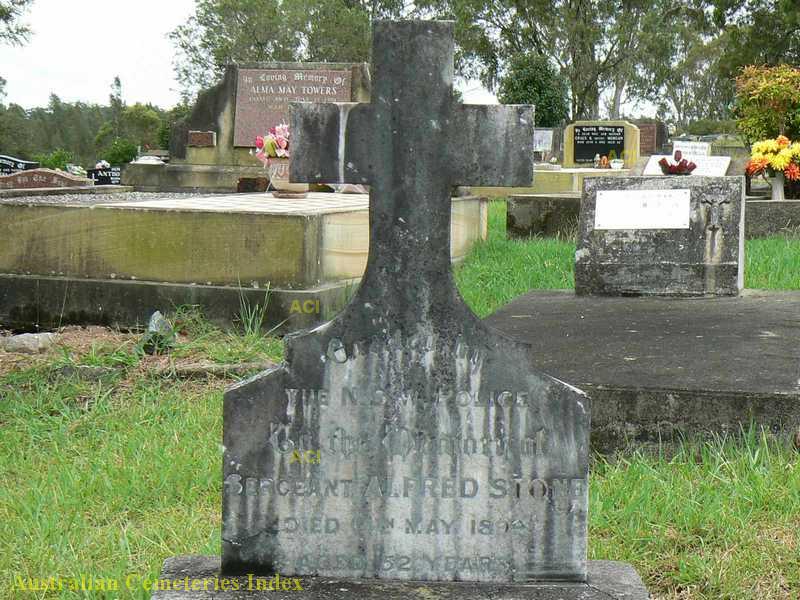
Alfred is NOT mentioned on the Police Memorial * BUT SHOULD BE
This incident came to light in November 2016 and to date ( June 2018 ) his name has still not be included on the Wall of Remembrance
All members are advised that the death of Sergeant 2nd Class Alfred Francis Stone at Nabiac on 14 May 1899 has been endorsed as occurring in the execution of duties.
Sergeant 2nd Class Stone will be added the NSW Police Force Roll of Honour and associated memorials.
Sergeant 2nd Class Stone will be commemorated during the 2025 National Police Remembrance Day service.
Funeral location: ?
FURTHER INFORMATION IS NEEDED ABOUT THIS PERSON, THEIR LIFE, THEIR CAREER AND THEIR DEATH.
PLEASE SEND PHOTOS AND INFORMATION TO Cal
May they forever Rest In Peace
Manning River Times and Advocate for the Northern Coast Districts of New South Wales (Taree, NSW : 1898 – 1954),
Saturday 10 February 1900, page 4
Memorial to Sergeant Stone.
It will be remembered when the late Sergeant Stone was buried at the Dawson Cemetery, in May last, a movement was made in the police force to erect a memorial headstone and iron railing. This has now been accomplished — the railing being set on brick in cement. The stone is a white marble cross, standing on a brick and cement base, the lettering being in lead, as follows :— ‘ Erected by the N.S.W. Police to the memory of Sergeant Alfred Stone. Died 14th May, 1899 ; aged, 52 years.”
The expenses have been borne by the police in the north-eastern district— and their memento is a credit to their kindness of heart and forethought.
The work was executed by Mr. David Mudford, of Cundletown.
Constable Stein acted as Secretary and Treasurer to the movement, and very great credit is due to him for the successful manner in which he carried it out. Mr. Mudford, we understand, did not charge for his labor in erecting the memorial stone and railing, and the late sergeant’s comrades feel greatly indebted to him for his kindness.
Manning River Times and Advocate for the Northern Coast Districts of New South Wales (Taree, NSW : 1898 – 1954),
Saturday 20 May 1899, page 5
Magisterial Inquiry.
THE LATE FATAL ACCIDENT.
On Wednesday morning last, at 11 o’clock, the District Coroner ( Mr. T. B. Boyce, J.P. ), held a, Magisterial inquiry at the residence of Mr. G. C. Hickson, Bullock Wharf, Wallamba River, touching the death of Alfred Francis Stone, Sergeant of Police. The inquiry lasted about two hours, and was then adjourned to Taree for the purpose of taking Dr. Gormley‘s evidence. Inspector Baker was present at the inquiry, and examined the witnesses.
The following was the evidence adduced : —
John Joseph Walsh deposed : I am an engineer in the employ of Mr. Hickson, at the Bullock Wharf Sawmills, Nabiac. I remember the afternoon of Wednesday, 10th instant. About 4 o’clock I saw Sergeant Stone ride up to the mill, which was then in full work — the engine and saws making the usual noise. I afterwards saw him in the mill, and bid him ” Good-day, ” and saw his horse tied up to a post of the mill. The Sergeant was in his uniform, and was thoroughly sober. About half-past 4 I saw the Sergeant come round to the front of the lathe-room, in which I was working. He was then leading his horse, and was about three or four yards from where the horse had been hanging up. He stopped the horse, and put the bridle over its head, put his foot in the stirrup, and mounted the horse, with his left foot in the stirrup, but before he was able to get his right foot in the stirrup, and become properly seated, the horse bolted at full gallop for about 10 yards, when he began to buck. The horse gave about two bucks, which took him. about twelve yards further, when the Sergeant was thrown off, falling sideways on to his head on a log. I heard the fall, and his head strike the log. I ran up to him, only being about fifteen yards from him when he fell, as I feared he would come off when I saw the horse bucking. He was lying on his back, with his eyes wide open. I picked him up— that is, lifted his head up and found a large cut on the left side of his head, at the back, about two and a half inches long, with blood pouring from it. I had deceased’s head on my knees. Several other of the mill hands came, and we bandaged his head up. He was unconscious. We then carried him to Mrs. Greenaway’s. Subsequently he spoke, but in a rambling manner. Before he was removed to Mrs.Greenaway’s a messenger was sent for Dr. Gormley, who arrived about nine o’clock in the evening. During the evening he muttered ” Oh, my head ” — but was quite delirious. I helped to lift him into a wagon the next afternoon, to be conveyed to Taree. Whilst doing so he said ” Don’t hurt me. ” He still seemed to be delirious.
Noel Eller Gorton deposed : I am a middle man at the Bullock Wharf Sawmills. I remember seeing Sergeant Stone ride up to the mill on the afternoon of Wednesday, 10th instant. He hung his horse up to the mill, walked in, and stood by the boards for a little time. He passed through then to the other end of the mill. When he was coming back we had just finished cutting the piece of timber we were at, and I met him and was speaking to him. I asked him if the affairs of the late Mr. Thomas Cocking, on whom an inquest had been held, were settled, as there was some money due to me in connection with the funeral. The Sergeant replied that he had been speaking to Mr. Flett about the matter, but it was not quite settled. The Sergeant was perfectly sober. I then went back to work, and deceased went to his horse. I saw him take the bridle off the post. The next I saw was the horse bucking over the skids, with the saddle and bridle on. Walsh, the previous witness, then called ” The man has got a fall,” and I went out to where he was. The Sergeant was laying on the ground unconscious, bleeding from a bad cut in the back of the head. He was bandaged up, and then removed to Mrs. Greenaway’s. I had known Sergeant Stone for about ten years.
Daniel Underwood Greenaway deposed : I am a bench hand at the Nabiac Sawmills at Bullock Wharf. I remember Wednesday afternoon, 10th instant. I saw Sergeant Stone leading his horse near the mill, and afterwards hang it up at the mill. The horse seemed to be fidgetty after being hung up, evidently from the noise of the mill. The sergeant after hanging his horse up walked through the mill. When coming back he talked to Mr. Gorton, the previous witness. He then went to his horse, and took it away, leading it from the mill. I saw no more of him, until I saw the horse in the air, and the Sergeant falling off. He came down on his head and shoulder on a log. I went to him shortly after, and saw Mr. Walsh holding his head up. There was a cut on the back of his head, which was bleeding freely, and he was unconscious. He was removed to my mother’s place, but did not appear to get any better — being about the same all through., Dr. Gormley arrived about half-past 8 o’clock, and attended to him, and saw him again early the next morning. He was removed the next afternoon — Thursday, the 11th instant— to Taree, never having regained consciousness. I did not consider the horse a dangerous one to ride. I saw the Sergeant riding it up towards the mill, and it was then going quietly. It was also ridden away after the accident, and after making a bit of a jump went quietly.
Frederick Ernest Stein deposed : I am a police constable stationed at Cundletown. I knew the police horse that Sergeant Stone was riding up to the time of his death. Its number was 801. The Sergeant had been riding the horse since the 20th February last, when it arrived at Taree from Maitland. I have seen him riding it, and ridden along side of him — being all day with him on the 7th April — and have seen him mount and dismount the horse without any trouble. I never saw the horse near any sawmill, or other going machinery. Sergeant Stone told me when we were riding together, that the horse was a bit too good for him, as he was inclined to buck. He also said “ I am getting old.” This was said casually, whilst talking about the horse, after I had remarked that it appeared to be a good one. Sergeant Stone was twenty-two years in the force, and had been stationed at Taree since the 22nd October, 1897, He was 52 years of age. He was a native of Canada, and has left a widow – his second wife – and a family of four sons and two daughters by his first wife. His life was insured — the total value of his policy now being £242, in the National Mutual Life Association. Bullock Wharf is 19 miles from Taree— and Sergeant Stone was in the habit of making frequent patrols here. I have seen the entry in the Duty Book at the Taree Police Station of Wednesday, the 10th May, instant, showing that Sergeant Stone left the station that morning at 10 o’clock ; on patrol to Nabiac. Deceased’s full name was Alfred Francis Stone.
The inquiry at this stage was adjourned to Taree, where it was resumed at 8 p.m., when
John William Gormley deposed ; I am a duly registered medical practitioner and Government Medical Officer, residing at Taree. On Wednesday evening, the 10th instant, I received a telegram asking me to go to Nabiac to attend Sergeant Stone, who had met with an accident. I went out and saw him at Mrs. Greenaway‘s house, close by the Bullock Wharf Sawmill. I found him in a semi-conscious condition, but unable to give any account of how his accident occurred. He was suffering from injury to the head, and had a scalp wound at the back of his head. I remained at Nabiac for the night, and in the morning he seemed if anything a little better. I then returned to Taree and had a conveyance sent to bring him in. He remained in the same condition until Friday morning, when he became more unconscious, in which state he remained until Sunday morning, dying about 11 ‘o’clock. The immediate cause of death was pressure on the base of the brain. A fall from a horse would cause such an injury — especially if he fall on his head. There was no evidence of the skull being fractured.
FINDING
The presiding magistrate recorded the following finding: — “ I am of opinion that the deceased, Alfred Francis Stone, came to his death at Taree, on Sunday, the 14th. May, 1899, through pressure on the base of the brain, caused by deceased having been thrown from his horse at Bullock Wharf, Wallamba River, whilst in the execution of of his duty as a police officer, on the afternoon of Wednesday, the 10th instant, and that the occurrence was purely accidental. ”
http://trove.nla.gov.au/newspaper/rendition/nla.news-article171618993.txt
Newcastle Morning Herald and Miners’ Advocate (NSW : 1876 – 1954) ,
Thursday 18 May 1899, page 8
Newcastle Morning Herald and Miners’ Advocate (NSW : 1876 – 1954) ,
Tuesday 16 May 1899, page 8
Peter S BALL
Peter S. BALL
Western Australia Police Force
Regd. # 9734
Rank: Constable
Stations: ?, Cannington, Gosnells
Service: From 18 December 1995 to 7 August 1998 = 2+ years Service
Awards: No find on It’s An Honour
Born: 15 March 1969
Event date: 5? August
Died on: Thursday 6 August 1998
Event location: Crawford St, Cannington
Cause: Motor Vehicle Accident – pedestrian ( during an arrest )
Age: 24
Funeral date: Wednesday 12 August 1998
Funeral location: ?
Buried at: ?
Memorial at: 1 / Memorial Rose Gardens at both Gosnells & Cannington Police Stations
2/ The Safe City Constable peter Ball memorial Award, Gosnells Council, WA
[alert_green]PETER IS mentioned on the Police Wall of Remembrance[/alert_green]
Funeral location: ?
FURTHER INFORMATION IS NEEDED ABOUT THIS PERSON, THEIR LIFE, THEIR CAREER AND THEIR DEATH.
PLEASE SEND PHOTOS AND INFORMATION TO Cal
BALL died on a Thursday after being struck by a passing motor vehicle, whilst struggling with an offender on Crawford St, Cannington. BALL was born 15 March 1969 and joined the police force on the 18th of December 1995.
Constable Peter Ball Memorial Youth Award
Constable Peter Ball was stationed at Gosnells Police Station and was on duty on 6 August 1998 when he was run down by a car while chasing a suspected car thief in Cannington. Peter died in hospital the next day, leaving behind a young wife and his 18 month old daughter.
Tributes and support from police and the public followed. Peter was given a State Funeral and memorial services are held each year to commemorate him. Memorial rose gardens were also established at the Gosnells and Cannington Police Stations, where he had worked.
Constable Peter Ball Memorial Youth Award
The award aims to recognise young people, youth groups or organisations that have:
- Improved safety or promoted the prevention of crime
- Enhanced the profile of young people
- Increased opportunities for young people
Who is Eligible?
Youths or a group of young people aged 12 to 25, living in the City or not-for-profit organisations or groups supporting youth activities in the City.
Prize: $1000 + plaque
Nominations
Entries can be submitted any time during the year with submissions closing at the end of September. Award presentations will take place at the Australia Day Ceremony on 26 January each year.
Nominations should be no more than two A4 pages and where appropriate, include supporting material such as photos, media clippings, pamphlets etc.
Applications will only be eligible for one category per program. A separate Application Form is required for each entry. Previous winners are not eligible to nominate the same project for a period of 3 years effective 2016.
Send to:
The Safe City Constable Peter Ball Memorial Award
City of Gosnells
PO Box 662
Gosnells WA 6990
For more information please contact the Safe City Initiative 9391 6022 or Email Safe City.
Plans for new medal to recognise slain, seriously injured WA police
EXCLUSIVE
Every slain and seriously injured WA police officer would be automatically honoured with a special commendation medal to mark their selfless community sacrifice, under a new plan to be mooted at the WA Police Union conference today.
The idea, which is modelled on an award offered by Victoria Police, has been raised by outgoing union deputy vice-president Jon Groves and has won support from the state opposition and families of officers killed in the line of duty.
Opposition Leader Mark McGowan will unveil a proposal at the police union’s annual conference on Monday for a WA medal, similar to the Victoria Police Star and the US military decoration the Purple Heart, to acknowledge officers killed or seriously injured while on duty.
Under the concept, fallen officers including Constable Damien Murphy, who was run down and killed by a drunk and drugged driver in Craigie in 2007, would be posthumously awarded the medal, along with those who sustain life-changing injuries – like Senior Constable Matt Butcher, who was left partially paralysed by a “flying headbutt” during a brawl in Joondalup in February 2008.
It would apply to all work-related injuries, including psychological illnesses, regardless of whether the conditions first manifested on or off-duty.
“The Victorian Government has struck a medal for police officers who are seriously injured or killed in the line of duty and it recognises the sacrifice, valour and contribution of those police officers,” Mr McGowan told Fairfax Media.
“It’s only awarded rarely, but it is an appropriate recognition and certainly gives families of those who have died in the line of duty some additional recognition of their mother or father, husband or wife.
“It’s also for those who are seriously injured in the line of duty – so officers who put their lives on the line and get injured as a consequence…that they are appropriately recognised for that.
“It is rare recognition, but appropriate recognition and I think that should happen here in WA.”
Mr Groves said a medal that acknowledged officers killed and maimed in the line of duty – and not only acts of bravery – was needed to highlight their community sacrifice and the risks that police officers come up against every day of their working lives.
“We need a medal that recognises the police officers in this state who have paid the ultimate price – either with their lives or their health – in serving the community,” he said.
“It’s something tangible for those who have been kicked out the door of WA Police, due to work-related illness or injury, to have in their hands to remind them of the good times and the good work they did for the community.”
WA policeman Simon Bowen was five years old when his father WA Detective Sergeant Geoff Bowen was killed by a parcel bomb at the National Crime Authority in Adelaide in 1994.
Detective First Class Constable Bowen, who has served with WA Police for seven years, welcomed the idea saying a special medal would validate the ultimate sacrifice his father made.
“I think it’s a great concept in not only is it a keepsake, but it’s something else in the present that will identify the sacrifice and the memory,” he said.
“It’s a small token that you can just marvel at and look at it and say, for my situation, the memory of Dad is never going to be forgotten not only by me but by the blokes that he used to work with and generations to come.
“It’s a small bit of recognition. It would be humbling.”
Tracey Ball, who was widowed when her husband Constable Peter Ball was run down by a car and killed while chasing a suspected car thief in Cannington in August 1998, welcomed the police medal proposal.
The couple’s daughter, Brianna, now 17, was only 18 months old when her father died in the line of duty.
“Brianna was just 18 months old so she really has no memories of her dad,” Ms Ball said.
“She’s very proud of him but she never really knew him, she never got the chance. So to have something physical and tangible that links who he was as a police officer, I think would be extremely important to her.
“My granddad served in World War I and we have his medals. Having those medals, we used to do the Anzac Day parade and we were so proud and patriotic. To have chance to have that for someone in the police force, I think would be awesome.
“I know the defence forces award medals posthumously and with Legacy the kids go on camps with the armed forces kids who talk about their dads’ medals whereas the police kids don’t have that, they don’t have anything.”
A WA Police spokesman said the force already offered several Police Commissioner’s awards for bravery and conduct including the Cross for Bravery, commendations and a group citation for conduct.
In addition, there is also the WA Police Medal for diligent and ethical service, service medals, the Commissioner’s Medal for Excellence, a Certificate of Outstanding Performance and a WA Police Cadet Medal.
The spokesman said the Western Australia Police Cross for Bravery could be awarded to officers killed or seriously injured after a specific act of bravery and members killed in the line of duty were also recognised on the WA Police Memorial Honour Roll and the National Memorial Honour Roll.
He said the “existing awards and medals are quite comprehensive” but declined to comment about the proposal for a medal for officers killed or seriously injured in the line of duty.
“I am unaware of any proposals for new medals and the department does not make a habit of commenting on speculation or possible proposals,” he said.
Comments:
-
les bassednean,
that is all well and good, but what do those officers who put their body on the line for their state, and then get arrested, interrogated, humiliated, insulted and shamed get?
-
Mrs Elliott Watt (9038)
I wonder if the medal will be awarded to officers with psychological injuries who have died from these injuries like PTSD, depression and anxiety? My husband died on duty from depression after 15+ years service….surely he, and other officers like him deserve to be recognized too?
-
Long overdue Perth,
This issues has been raised for quite literally decades that I have been aware of, and yet the Dep’t has chosen to ignore the injured in the hope they will leave. It is only if you suddenly become high-profile media interest then they cannot ignore you.
The embarrassing fact is as things stand, all the officers who came to Matt Butcher’s aid can be recognised, but there is literally nothing that can be given in acknowledgement to Matt himself as there was no “clever act” they can use for a special commendation. And not even Toxic Tony could spin a believable one for the actions of an unconscious man. This has been raised at the highest levels in emails that were ignored and not replied to.
If they finally come to the table on this one, great! Allow retrospectivity, even better. The men and women who put their life on the line so you can be safe deserve nothing less!
Parliament.wa.gov.au Wednesday 12 August 1998
Mr DAY: ……….
We must also acknowledge that violence in the community as a whole is greater these days. That is not something for which the Government or the Police Service can take responsibility; it is a problem for society as a whole. For whatever reason, more and more people in the community are likely to display acts of extreme violence. We have seen tragic examples of that within the past few years. It is a deep-seated problem for the community. In part, it relates to the amount of violence shown on television which is resulting in much more normalisation of levels of violence in the community. We must tackle that problem from a fundamental perspective if we are to be successful in fighting it.
I touched earlier on the issue of young offenders in the community. We have seen tragic examples recently of young offenders who, in many respects, cannot be expected to take full responsibility for their actions. One example is the absolute tragedy of the death of Constable Peter Ball last week, whose funeral was held today, and who was allegedly killed as a result of the activities in part of a 13 year old offender.
Costs a concern for Bali survivors
- 4 years ago August 19, 2012 12:15PM
BALI-BOMBING survivors are concerned some victims will miss out on travel assistance to mark the 10th anniversary.
Prime Minister Julia Gillard confirmed today that she will travel to the holiday island to attend a memorial service on October 12 and will offer victims of the attack free flights to commemorate the day.
The assistance package will include airfares, ground transport, accommodation, travel insurance and visa costs, in line with the package provided for the first anniversary.
Assistance will be granted to family members of the 88 Australians who died.
Those seriously injured are also eligible and will be able to take a partner, child or a close relative and a support person if required for medical reasons.
But, the definition of “serious injury” has sparked concerns by survivors such as Peter Hughes and Tracey Ball, as well as Kingsley Football Club president Keith Pearce.
Mr Hughes, who sustained burns to more than 50 per cent of his body, said he was worried some people may miss out on assistance because their pain will not be deemed serious enough.
“I am happy they are offering what was offered for the first anniversary,” he said. “But I don’t think they should be singling out people. I just want everyone to be able to go back and pay their respects.”
Government sources said the definition would include psychological injuries.
Mr Hughes said he had asked the Prime Minister several weeks ago about the funding package and then wrote to her this week.
Tracey Ball, widow of Constable Peter Ball who died chasing a suspected car thief in August 1998, was also injured in the bombings along with her sister Melinda Kemp.
The pair, who were on a family holiday at the time, are concerned the assistance package will not extend to their mum and dad.
Mrs Kemp said while their father was not injured, he was left scarred by the event.
She said he had the grim task of searching makeshift morgues looking for them, a task no father wanted to endure.
Last night the Kingsley Football Club, which lost seven players in the horrific attack, held a legends match to commemorate the 10th anniversary as well as help raise money for anyone who wanted to go back.
Mr Pearce, whose son Duane was one of the players who did come home, said the club had been inquiring for months about government financial assistance and in the end decided to organise their own fundraiser to help those who couldn’t afford the travel costs.
“What is meant by seriously injured?” he said. “Is that physically or mentally, what does it mean? And how serious is serious? It should be available to everyone.”
Services will be held in both Bali and Canberra on October 12, with Governor-General Quentin Bryce to lead the service in the nation’s capital.
“It was a moment of horror that had a profound effect on Australia as a nation and on the lives of survivors and the family and loved ones of those who died,” Ms Gillard said in a statement on Sunday.
“Time has healed many of the physical wounds caused by the bombings but it can never diminish the sense of wrong we feel at this act of terror.
“Forgetting would be the ultimate injustice – and we will never forget.”
The memorial service in Bali will be held at the Garuda Wisnu Kencana Cultural Park and the Canberra service will be held in the Great Hall of Parliament House.