I remember my husband spending 3 nearly whole days in 45*C + heat scrubbing a farmers ute to give back to his widow. It had sat in full sun for nearly a week and as the OIC in a country town you do it yourself – and he wouldn’t let me help, he always wanted to protect me from the nasty side of the job. 3 days stressing it was pristine, immaculate; nothing left to distress the farmers family further. He didn’t realise the toll it took on himself. He was Beginning to realise he was battling inside his own mind with these thoughts….I still remember him saying to me ” Everyday. Everyday I get kitted up and think how easy it would be. “
It will be 8 years this year. And still no closer to acknowledging those already lost, and helping, saving, those suffering.
So sad….Everyday I think, how easy it would be. Easy it would be to stop talking and start doing. Helping. Acknowledging. Remembering. Sharing. Supporting. And stop this waste!
The Perth Coroner’s Court has heard that exposure to a number of critical incidents, including fatalities, could have contributed to a police officer’s suicide.
The Coroner has begun an inquiry into the death of Elliot Peter Watt, 36, at the Collie police station in 2008.
Sergeant Watt, who was the acting officer-in-charge of the station, had four sons.
His body was discovered in the station’s armoury alongside his police-issue firearm.
The Coroner is investigating what impact the daily access to firearms had on the sergeant and whether WA police had adequate mental health safety checks in place.
His wife, Emma Watt, told the court her husband was deeply affected by his work.
Mrs Watt told the inquiry her husband’s mental health started to deteriorate when he was stationed in Kondinin and he had to attend a number of critical incidents with limited or no back up.
She said these included a serious car accident involving children, a farmer’s suicide and an unsuccessful attempt to resuscitate a footballer.
Mrs Watt said he was never offered counselling by WA Police and bottled up his emotions.
Earlier today, the court was told Internal Affairs investigated Sergeant Watt’s death and found there was no single work related incident that triggered his death.
The family’s lawyer said the critical incidents were just as likely to contribute to the suicide as any family problems.
The inquiry also heard Sergeant Watt was depressed in the the years leading up to his death and was looking for another job.
The wife of a policeman who shot himself while on duty at a WA country police station has described how he broke down the night before crying and said he had enough of work but didn’t know what was wrong.
Elliott Peter Watt, 36, took his own life with a police pistol in the armoury of Collie police station on December 22, 2008 – his first day back after a three week break.
An inquest is now examining the tragedy and whether strategies can be used to avoid a repeat of the police suicide.
Today, Emma Watt described how her husband, a father of four, had displayed a dramatic change in his behaviour in the days leading up to his return to work, showing feelings of agitation, withdrawal, and finding a lack of pleasure in the things he used to enjoy.
She said his dislike of going to work had reached the point where she had to wake him up for work, prompt him to shower and lay out his uniform with the belt through the loops and items in his pockets so that he would attend.
The night before he killed himself, she had asked him what was wrong, she told the inquest today.
“He just looked at me and said ‘I just don’t know’,” she said.
“He said that just everything was getting to him… he said he had enough as far as work went…. (but) he didn’t want to leave us financially with no income.”
Mrs Watt said he had eventually withdrawn from her again, prompting her to call Lifeline in hysterics.
The inquest has heard earlier evidence that Acting Sen. Sgt Watt had dealt with “critical incidents” during one stint at a country police station including the failed resuscitation of a young man.
He had also attended a serious car crash in which a child was badly injured and the suicide of a farmer in his car after which he had to clean the blood-stained ute and return it to the farmer’s wife.
The inquest heard Acting Sen. Sgt Watt, who had 15 years experience in the police force, worked by himself for extended periods while stationed at country towns and had $35,000 worth of annual leave owing when he died – the equivalent of about five months’ leave.
Mrs Watt today said she had believed her husband was depressed. But she rejected suggestions his state could have been solely due to the domestic pressures of having young children and a relatively new and senior job.
She said she had not called a doctor because her husband, who she described as quiet and private, had been angry when she once suggested he could be depressed.
However, after her call to Lifeline on December 21, 2008 she had made plans to visit a GP with her concerns – a visit she had unfortunately scheduled for two days after her husband shot himself.
Mrs Watt said she had assumed the police force looked after its officers and that annual checks would be conducted on their mental health.
She told the inquest she would have contacted the police force’s health and welfare division earlier in the year with her concerns about his increasing mood swings but that she had been unaware of the division.
Mrs Watt said her husband was unlikely to ask for assistance from within the police force, but she believed information about the health and welfare division should also be provided to partners of police officers.
The inquest has heard an internal police investigation found there was “no one specific incident” that seemed to prompt Acting Sen. Sgt Watt’s suicide, though the investigator agreed his involvement in critical incidents could have affected him.
The report instead suggested non-work issues could be to blame.
The inquest heard training and education about stress management was required for police but they were also expected to ask for assistance.
Det-Sgt Judith Seivwright, who conducted the internal police report on the suicide, denied suggestions that officers feared asking for counselling or assistance would be viewed negatively by senior officers.
The inquest continues.
Readers seeking support and information about suicide prevention can contact Lifeline on 13 11 14
COUNTRY policeman Elliott Watt cleaned up after a farmer’s suicide, tried unsuccessfully to resuscitate a young footballer and was brought to tears by a child’s injuries from a car crash in the months before he told his wife he did not want to go to work anymore.
The senior sergeant shot himself at the Collie police station in Western Australia’s southwest after telling his wife everything was getting to him.
In an inquest that is throwing a spotlight on the difficult work of police in isolated rural stations, Watt’s widow, Emma, said her husband killed himself because he did not want his moods affecting their three children. He took his life three days before Christmas 2008.
The night before, Watt broke down and told his wife everything was getting to him and he had had enough of work.
Giving evidence yesterday, Mrs Watt said she had to get her husband out of bed each morning, make sure he had a shower and make him get dressed and go to the station.
She had earlier told the court about three critical incidents her husband had been involved in while he was the officer in charge at Kondinin, a town of 300 people 275km southeast of Perth.
She said she had found her husband crying after attending a car accident in which a child was injured. He had tried unsuccessfully to resuscitate a young football player, and he had to clean the ute of a farmer who had killed himself in it with a shotgun.
She said her husband had become withdrawn after the transfer to Collie.
She said he had expressed feelings of “nothingness”, played less with the children and could not sleep or concentrate.
The next morning, Watt showered and dressed himself. “That’s why the day he died was so unusual,” she said.
Later that day, he took a gun from the station’s armoury and shot himself.
If you are depressed or contemplating suicide, help is available at Lifeline on 131 114.
The Police Union says it is unfortunate the suicide of a police officer had to be the catalyst for reform in WA’s police service.
The coronial inquest into the death of Acting Senior Sergeant Elliott Watt concluded yesterday.
Sergeant Watt shot himself at the Collie Police Station in 2008.
Coroner Alistair Hope has recommended WA police conduct annual health and wellness reviews on every police officer in the State.
The President of the Police Union Russell Armstrong says more resources are needed.
“Not enough staff within health and welfare, four clinical psychologists for nearly 6000 people and we’re dealing with 24/7 critical incidents,” he said.
“And that is not enough staff, so it’ll have to be resourced and resourced very quickly.
“It’s long overdue and should have been put in place a long time ago,” he said.
Office of the State Coroner, Western Australia – Annual report – 2011 – 2012
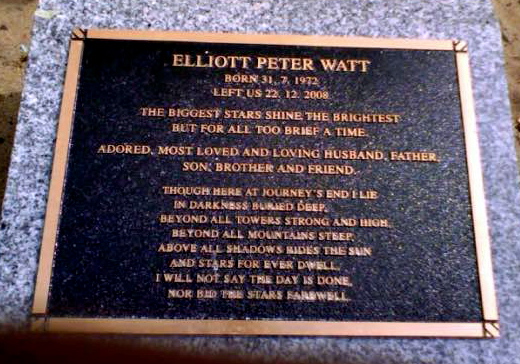
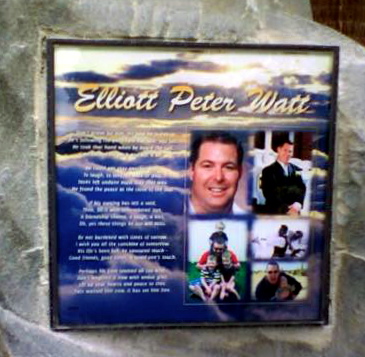
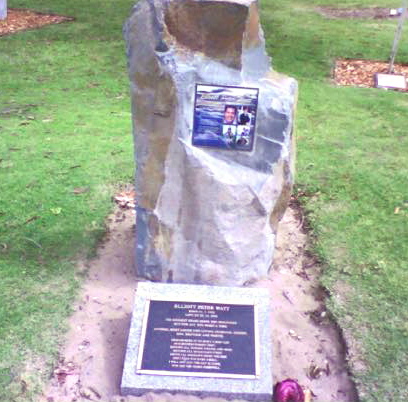
Elliott Peter WATT
The State Coroner conducted an inquest into the death of Elliott Peter Watt (the deceased) with an Inquest held at Perth Coroner’s Court on 13‐16 February 2012. The State Coroner found that death occurred on 22 December 2008 at Collie Police Station, Collie, as a result of gunshot wound to the head in the following circumstances ‐
The deceased was an acting Senior Sergeant of police with Western Australian Police (WA Police) at the time of his death on 22 December 2008. The deceased was born on 31 July 1972 and so was 36 years of age at the time of his death.
The deceased died at the Collie Police Station as a result of a self inflicted gunshot wound. At the time he was the relieving Officer in Charge of the Collie Police Station, the day of his death
was his first day back at work after a period of three weeks long service leave.
On the day of his death the deceased worked from 8am and had been conducting his normal duties as the Officer in Charge of the Police Station throughout the day. It appears that he was last seen at about 3:45pm.
The deceased was discovered in the armoury at 4:25pm having died of a gunshot wound to the head.
The deceased used the Glock pistol which had been allocated for his own use to shoot himself while alone in the armoury of the Collie Police Station.
None of the police officers on duty at the Collie Police Station heard the shot being fired and none were alert to the possibility that the deceased might be about to take his own life prior to his doing so.
The State Coroner found that the death arose by way of Suicide.
The State Coroner observed that it was important that families of serving members are alert to the available services as it is often family members who are most aware of changes in a person suffering from mental health problems.
In that context the State Coroner made the following recommendation –
I recommend that WA Police take action to better promote information in relation to available services to families of serving members.
The State Coroner observed that the deceased’s colleagues were not alert to his deteriorating mental condition. This was in large part because the deceased concealed his condition from them, but it is also clear that they had received little training in the management or identification of persons suffering from depression.
Evidence at the inquest revealed that for officers taking on senior management roles, while training in respect of these issues is available, it is at present not a mandatory requirement.
The State Coroner made the following recommendation –
I recommend that training in respect of the identification and management of officers suffering from stress or depression should form part of the training for police officers entering management roles.
The State Coroner made the following recommendation in respect to improving the recording of conversation with the Health and Welfare Branch of WA Police in the context of evidence relating to contacts which had not been recorded or filed –
I recommend that WA Police ensure that there is in place appropriate computer software which will enable the recording of all contacts to the Health and Welfare Branch relating to individual officers where concerns have been expressed as to the welfare of those officers.
The State Coroner observed that the evidence in this case has highlighted the fact that policing can be a demanding and stressful occupation.
The deceased was described as a very good officer who was generally highly regarded and yet none of his work colleagues had any real appreciation of his deteriorating mental health.
In the State Coroner’s view there needs to be some form of regular health review or wellness review of every police officer in WA Police.
In this context the State Coroner made the following recommendation –
I recommend that WA Police put in place a system which would ensure that in respect of every member there is some form of wellness review conducted or at least offered each year which will identify significant changes in physical and mental health.
A letter dated 20 March 2012 addressed to the Minister for Police invited the Minister to respond to the State Coroner’s recommendations. At the time of publishing the annual report a response had not been received from the Minister’s office. http://www.coronerscourt.wa.gov.au/_files/Coroners_Court_Annual_report_12.pdf
I remember my husband spending 3 nearly whole days in 45*C + heat scrubbing a farmers ute to give back to his widow. It had sat in full sun for nearly a week and as the OIC in a country town you do it yourself – and he wouldn’t let me help, he always wanted to protect me from the nasty side of the job. 3 days stressing it was pristine, immaculate; nothing left to distress the farmers family further. He didn’t realise the toll it took on himself. He was Beginning to realise he was battling inside his own mind with these thoughts….I still remember him saying to me ” Everyday. Everyday I get kitted up and think how easy it would be. ”
It will be 8 years this year. And still no closer to acknowledging those already lost, and helping, saving, those suffering.
So sad….Everyday I think, how easy it would be. Easy it would be to stop talking and start doing. Helping. Acknowledging. Remembering. Sharing. Supporting. And stop this waste!
Retired WA policewoman seeks compensation
AAP
A POLICEWOMAN and mother-of-four who fell into financial ruin after the accumulated psychological trauma of her work forced her to medically retire has appealed to Queen Elizabeth II in her bid to seek redress.
Wendy Kennedy, 49, served in the West Australian force for 15 years, seeing horrendous crimes such as a woman who had been stabbed and thrown through a window by her partner.
She saved people from ending their own lives, but other times, nothing could be done.
The images are burnt into her mind and still haunt her.
She lists off the many times she was in mortal danger – a broken bottle attack while working pregnant as Katanning’s first female police officer, running from a man who came at her with a machete, seeing an axe about to fall on her before her partner jumped on the assailant.
It still rattles her to recount the time a car ploughed into her mounted police colleague as they patrolled a dark Perth highway at 2am.
“I watched him go over the car,” Ms Kennedy told AAP.
“We didn’t wear hard hats. There was no requirement – our uniform was an Akubra hat.”
His head hit the cement. He was convulsing, his head in blood, his horse was hurt.
“I thought ‘my partner’s dying’.”
She rushed to his aid and he thankfully pulled through, but no-one asked her if she was okay and she was sent straight back to work.
Ms Kennedy, who suffers post-traumatic stress disorder, says the mental health of officers is not properly monitored, and she’s backing the Medically Retired WA Police Officers Association in calling for regular wellness checks, particularly after traumatic jobs.
Such checks were a key finding from an inquest into the death of Collie policeman Elliott Watt, 36, who fatally shot himself in the station’s armoury in December 2008 on his first day back from long service leave.
For Ms Kennedy, her psychological health is turning a corner thanks to the support of the association and her psychologist Joseph Presti.
And after not being well enough to work for the past 12 years, she’s now managing four hours a week as a personal trainer.
Her clients, who have become friends, understand if she has to reschedule because some days are better than others when you suffer from PTSD.
But she’s so broke, she’s on the brink of being evicted.
Even her superannuation fund was closed after fees ate up all that was in there.Sick of asking for help from Centrelink, Ms Kennedy has gathered strength to fight for the recognition and financial redress she feels she deserves after all of her public service.
“I put on my life on the line and I’ve seen the most gruesome stuff,” she said.
“I shouldn’t have to live like this.”
She’s preparing her first application for an ex-gratia payment from the state government, with the WA Police Union officially declaring her case has merit.
The rare act-of-grace payments are currently the only way medically retired officers are financially acknowledged, although they are usually for physical injury, and while a worker’s compensation scheme is now finally on the cards for police, it won’t be retrospective.
Like all WA police, she’s not considered an employee of the state, so Ms Kennedy has written to the woman she promised to serve – the Queen.
Australian readers seeking support and information about depression can contact the Depression Helpline (from 8am to midnight) on 0800 111 757.
Readers seeking support and information about suicide prevention can contact Lifeline on 13 11 14.
An inquest into the death of Sergeant Elliott Peter Watt (who, at the time of his death in December 2008, was a serving WA police officer) was undertaken in February 2012. The Watt Inquest outlined that Sergeant Watt had deteriorating mental health, characterised by:
Irritable moods, generally quite snappy and grumpy;
Pushing his wife away, threatening separation;
Expressing unhappiness in areas of his work and life;
Isolation;
No motivation;
Being short-tempered and moody; and
Becoming completely absorbed in computer games
109
.
It was noted that Sergeant Watt had experienced three specific traumatic incidents in his career, being: the attendance at a car accident that had involved young children; the attendance at a suicide by a farmer in which Sergeant Watt had to clean the utility involved before returning it to the family; and the prolonged, attempted resuscitation of a young footballer, who later died
110
.
It appeared that as Sergeant Watt’s job responsibilities increased, his stress levels increased and his mental health declined. Despite an informal mental health assessment by his senior management
111
,
none of Sergeant Watt’s colleagues “had any real appreciation of his deteriorating mental health”
112
.
The coroner made several very important comments regarding police officer health and safety as it was noted that “serving police officers can be
vulnerable to serious mental health problems as a result of their work”
113
. The coroner noted that:
Being transferred to certain locations can place pressures on police officers;
Police officers “face regular exposure to stressful situations including violence inflicted on them and others, trauma and death scenes”
114
;
109
Coroner’s Court of Western Australia,
Inquest into the death of Elliott Peter Watt
, Government of Western
Australia, Perth, 2012.
110
Ibid, p. 10.
111
Ibid, p. 17.
112
Ibid, p. 36.
113
Ibid, p. 29.
114
Ibid.
33
“The health and welfare of serving police officers requires ongoing monitoring and support”
115
;
“It is the responsibility of the Health and Welfare Services of WA Police to educate and train personnel in the management of stress, and in particular, post-trauma stress”
116
;
“Officers involved in critical incidents may suffer problems months or even years after those incidents and so there is an ongoing need to monitor [police officer] health and wellbeing”
117
; and
It is vital that “families of serving members are alert to the available services as it is often family members who are most aware of changes in a person suffering from mental health problems”
118
.
The inquest outlined four recommendations:
1.
WA Police must take action to better promote information in relation to available [mental health] services to families of serving Members
119
;
2.
Training for police officers entering management roles should include identification and management of officers suffering from stress or depression
120
;
3.
WA Police is to ensure that appropriate computer software is in place to enable the recording of all contacts to the Health and Welfare Services relating to individual officers where concerns have been expressed about the welfare of those officers
121
; and
4.
WA Police must put in place a system which would ensure a wellness review be conducted (or at least offered) to every member, in order to identify significant changes in physical and mental health
122
.
The coroner was adamant that there needed to be some mechanism within WA Police to regularly review the mental and physical health and wellbeing of every WA Police officer
123
. Significant changes such as “an increase or decrease of over 10kg in weight over a 12 month period, significant deterioration in fitness, unexplained mood changes or an officer becoming more isolated from his or her colleagues” were flagged as being important to note within these welfare checks
124
. The coroner also acknowledged, to some extent, the stigma associated with admitting to suffering from stress or from mental health problems and the likelihood this declaration has on promotional opportunities.
The recommendations outlined in the Watt Inquest were also referred to within the Toll of Trauma Inquiry
If pelicans could cry – the passing of the pelican man
By Justine Frazier and Jonathan Atkins
Sixty year old Lance Ferris died on Sunday the 14th of October, 2007 at Lismore base Hospital after suffering a stroke on Saturday.
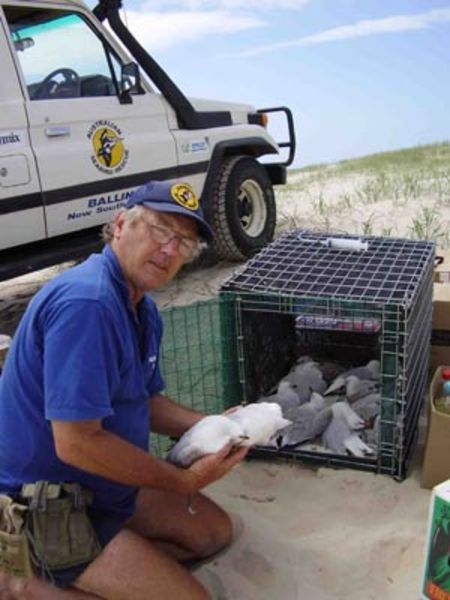
Lance Ferris from Australian Seabird Rescue collects dead birds from the beach areas of Evans Head. It is thought the birds died from botulism after eating dead fish.
The man many of us fondly knew as the “Pelican Man” has passed away leaving a massive whole in the community. Sixty year old Lance Ferris died on Sunday the 14th of October, 2007 at Lismore base Hospital after suffering a stroke on Saturday.
Lance dedicated his life to the rescue, rehabilitation and preservation of seabirds, turtles, and in particular the magnificent pelican and it was through his many years as a dedicated volunteer, using his own money and whatever donations he could find that Australian Seabird Rescue (ASR) came into existence in Ballina, New South Wales in 1992.
Close friend Marny Bonner said, “We’re receiving emails and phone calls from all over Australia from people who are so deeply saddened and shocked.”
Marny Bonner says, “Lance has always had huge compassion for Australia wildlife, his entire life has been rescuing and rehabilitating wildlife. It wasn’t until he noticed not one but two pelicans with hooks in their legs, on the same day, that he realised that there was a problem out there. So he borrowed a boat and had a look around the Richmond River and found that 37 out of 100 pelicans were injured.”
After surveying other estuaries, Lance Ferris realised that what was needed was a huge education program campaign and the passion began.
“We got good support from the North Coast community and some important sponsorship. Over the last 15 years we’ve managed to reach 20,000 children, so there will be a lot of children upset about losing the Pelican man.”
Since that time, ASR volunteers have been involved in the rescue and rehabilitation of seabirds and shorebirds, marine turtles and to date, have rescued over 1000 Australian Pelicans.
Lance Ferris never lost his passion the rescuing injured seabirds.
Marny Bonner believes, “Ultimately that’s what claimed him, his passion for wildlife led to him not looking after himself as well as he might have. It led to many, many hours in loss of sleep trying to save those little lives.”
“I would like to absolutely commend the staff at Lismore base Hospital who worked so hard with Lance. It was a very upsetting time for everybody because everybody knew who he was and knew how hard he’d worked to save so many lives and yet there was nothing we could do to save this most important life,” says Marney Bonner.
In 2004 as president of Australian Seabird Rescue, Lance led the volunteer organisation to win the inaugural National Coastcare Community award.
In an earlier life Lance worked a police officer based in Casino and was a member of APEX. He also worked as a teachers aid for children with disabilities, was a well respected musician and a member of the Sonset Orchestra and could be found at any given weekend at the Lismore Car Boot Markets. Ballina Mayor, Phillip Silver says the death of Lance Ferris is a huge loss for the community.
“I guess in many ways he was ahead of his time in terms of the recognition of that vulnerability of the environment and the water animals. Because he was doing it 20 years ago when it was certainly happening but people weren’t thinking about it,” said mayor Silver.
ASR is always looking for more volunteers and as Marny Booner says “the pelicans have lost their best friend, if pelicans could cry, there would be a wailing around the nation that could not be ignored. It will take an army of volunteers to replace Lance Ferris”.
Jason Ferris believes his Dad would never really let on if he was feeling unwell.
Jason recalls, “At 3am on Saturday morning he sent out a bunch of emails with instructions regarding seabird rescue, so we suspect over the last week or so, he was aware something was going on.”
“My Dad’s always run pretty close to the edge. Dad lived and breathed seabird rescue 24/7. I would often find him sleeping in all sorts of places in the back cars, on seats… his focus was never on his own health, more on the animals in care,” said Jason.
A passion that Jason and Lance shared was music.
“I developed an interest in music as a result of Dad. Dad was really an amazing musician and beautiful singer. In my 20’s he and I started playing music together around the North Coast. Definitely some of my most treasured memories of Dad,” said Jason.
As much as it can be…it will be business as usual for Australian Seabird Rescue.
According to Jason, “Dad’s put 13 or 14 years into this organisation, you can’t just pull the plug. He would be most unhappy with me if that happened.”
In 2003, ABC TV’s Australian Story took a look at a Ballina based former police officer called Lance Ferris, who’s dedicated his life to fixing the plight of the pelicans… read more
ABC North Coast reported when Lance Ferris and his team of seabird rescuers headed to Victoria for a series of training sessions with wildlife carers… read more
A public memorial service will be held for Lance Ferris.
“Thank you to the ABC crew for your lovely, sincere tribute to Lance, and thanks to all who phoned to share the ways in which Lance touched their lives. Lance’s life and work will be commemorated at the WildlifeLink Sanctuary in Ballina this Friday 19/10 at 11am. All are welcome to join us. The centre will be open from 10am. It is located at the end of North Creek Rd, which runs off the Pacific H’way as it heads out of Ballina towards Bangalow. On behalf of Jason’s family and Australian Seabird Rescue volunteers, thank you for your condolences and support… Marny.”
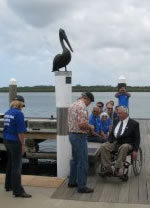
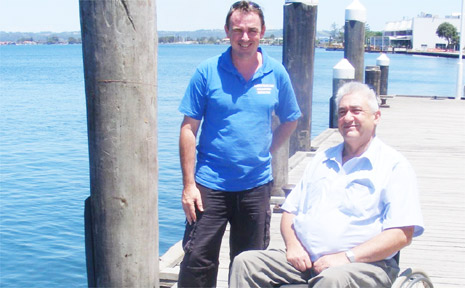
LANCE FERRIS WHARF: Ballina’s mayor, Cr Phillip Silver, (right) with acting general manager of Australian Seabird Rescue, Keith Williams, announcing the naming of the wharf at Fawcett Park as the Lance Ferris Wharf.
IT’S official.
The wharf at Fawcett Park is now the Lance Ferris Wharf, named after the late Lance Ferris – the Pelican Man – who founded Ballina-based organisation Australian Seabird Rescue.
And work is currently being undertaken on the design for a statue of a bronze pelican to be perched on the jetty in Ballina’s CBD.
Ballina’s mayor, Cr Phillip Silver, was due to make the official announcement on the naming of the wharf at the inaugural Lance Ferris Memorial Dinner scheduled for December 12.
But with last week’s decision by Australian Seabird Rescue to postpone the dinner, the announcement was made early.
He said council wanted to recognise the work of Mr Ferris, who died in October 2007, aged 60.
After Mr Ferris’ death, council resolved to rename Fawcett Park as Lance Ferris Park. But that move was knocked back by the NSW Geographical Names Board following objections.
There won’t be any problem with the naming of the wharf, Cr Silver said, as it is a piece of council-owned infrastructure.
Keith Williams, acting general manager of ASR and partner of Mr Ferris’ daughter, Rochelle Ferris, welcomed the decision to name the wharf after Lance.
He said the move not only acknowledged the work of Mr Ferris but also the Richmond River which Mr Ferris was so passionate about.
“This is a fantastic,” he said on behalf of the family and the broader family of ASR volunteers.
He is the father of Finn, Lance’s grandson, who was born just over a month ago.
Mr Williams said he enjoys taking Finn to the wharf.
“This (naming the wharf) is to say ‘your granddad was someone really special’. And much of the respect (for Lance) comes from the community – you can’t manufacture that,” he said.
A local artist has been commissioned to create the life-size bronze statue of a pelican which will be installed on the wharf early next year.
Cr Silver said the council had budgeted $10,000 for the statue, which had come from the staff operational budget.
He said he hoped the pelican would become an icon for Ballina now that nothing stood in the way of the demolition of the Big Prawn at the southern entrance to the town.
“Whether it (the pelican statute) evolves to be an icon of the town is a function of the community,” he said.
Cr Silver has already suggested Ballina could rebrand itself, replacing the seahorse, so the shire can be Ballina bypass-ready. Work on the new highway route is expected to be finished by 2012.
He said a rebranding of the shire wouldn’t be expensive, as things like stationery stocks would be used up in time.
Meanwhile, the Lance Ferris Memorial Dinner will be held on June 5 next year, World Environment Day.
Mr Williams said anybody who had purchased a ticket would receive a full refund.
This Friday, 24 September, 2010, Mayor Phillip Silver will unveil a sculpture at Fawcett Park, Ballina, to commemorate and acknowledge the work of the late Lance Ferris.
The sculpture is dedicated to the coastal conservation work carried out by Mr Ferris, affectionately known as ‘the Pelican Man’.
“In fostering and supporting local art, council commissioned a local artist to create a unique bronze sculpture that is befitting of the animal conservation work carried out by Lance. The artist behind the sculpture is Wollongbar-based sculptor Frank Miles,” Cr Silver said.
As part of the commemoration Cr Silver will also be officially name the wharf in Fawcett Park ‘Lance Ferris Wharf’.
“It is an appropriate place to acknowledge Lance’s work which started in earnest in 1992 on the sand spit opposite the Fawcett Park wharf after he noticed pelicans were injured by fishing line and hooks,” Cr Silver said.
“The pelicans were rescued, rehabilitated and released. The work soon extended from pelicans to other coastal birds as well as marine turtles.
“Lance was passionate about educating the community in preserving and protecting the coastal environment and all marine wildlife, and it’s fitting that we not only acknowledge his work but also raise awareness for the continued operation of the organisation he founded, the Australian Seabird Rescue.
“Based in Ballina, the volunteer organisation continues to operate around Australia to protect and rescue seabirds and shorebirds.
“This is also largely due to the continued dedication of the Ferris family and the support they receive from volunteers and the community in enduring Lance’s legacy.”
Lance Ferris family members representing the Australian Seabird Rescue service will be present at the unveiling ceremony which will take place at 11am at the wharf in Fawcett Park.
A recent unveiling on 24th September of Frank Miles life-size bronze pelican “Steptoe”, (pictured left) commissioned by the Ballina Shire Council, at the Fawcett Park Wharf. This wharf was renamed on the day to the “Lance Ferris Wharf” in honour of the late Lance Ferris the towns’ famed ‘Pelican Man’. This was a very exciting moment for Frank as well the Australian Seabird Rescue Service and Lance’s family members.
If there’s one Australian bird that we’ve all watched with awe it’s the pelican.
But as we’ve admired this bird we are mostly oblivious to the tragedy that the nation’s most popular hobby, fishing, is visiting upon our feathered friends.
Accidental hooking by recreational fishing, discarded hooks and fishing line have become the birds’ most lethal enemy. Bills, legs and wings are being hooked or entangled. The result, all too often, is a painful death.
Tonight’s Australian Story is about one man, a Ballina based former police officer called Lance Ferris, who’s dedicated his life to fixing the plight of the pelicans.
With spectacular physical agility, he “bribes” the pelicans with fish and then dives to catch injured animals so they can be treated and saved.
Over the past 12 years, often living well below the poverty line, he has rescued and rehabilitated hundreds of birds and conducted educational workshops in schools and fishing clubs up and down Australia’s east coast.
Featuring stunning wildlife images, Australian Story retraces the rough, tough and exciting life of Lance Ferris.
We see first hand his unconventional but effective pelican catching methods and the extent of this problem along with the solutions he has employed.
REX HUNT: Hello. I’m Rex Hunt. Tonight’s Australian Story is about a man who has dedicated his life to solving the problems sometimes unwittingly created by us anglers. He is Lance Ferris – known as ‘The Pelican Man’ for his incredible work in saving these magnificent birds from terrible injuries. And his efforts are changing attitudes on the water. This is Lance’s story.
EVAN KOSACK – VET:Lance and the fishermen in the area started out being at loggerheads a little bit.
LANCE FERRIS: I don’t think they believed that the problem was as bad as it was. Pelicans torn to pieces, basically, by fishing tackle.
EVAN KOSACK – VET: Lance was telling people, basically, that their beloved hobby was causing a lot of damage and that they were acting irresponsibly. Lance is not the norm.
ANTHONY MUYT: He’s very independent, he’s very focused, he thinks outside of the square. He’s a bit of a mad scientist. He was just some joker who rolled up and was jumping off boats into pelicans. They thought he was nuts at first – thought he was a madman. He is extremely professional. He likes perfection. He’ll work at something until he has it.
DEBBI DEVINE – SAM’S MUM :I look at him sometimes and I think, “Wow. This grown man – the way he is with these animals.” It’s amazing. It’s like they’re his children.
LANCE FERRIS: We were on an excursion with the children from the special school. I noticed a pelican in a park that had a hook buried in its leg. So, I grabbed some fish from a bait shop and the bird came up to me and I grabbed it, held it and looked down at it, and I thought, “The hook’s in the left leg. “I’m sure the bird that I saw “before I got the bait had a hook in the right leg.” I was absolutely positive of it. I made up some posters to hang in shop windows – “Wanted, a pelican with a hook in its leg.” I thought, “There’s another bird out there. I know there’s another one.”
MARNY BONNER: There are many, many people that would go, “Oh, gee. “Gee, fancy seeing two pelicans in one day, you know, “both with hook injuries,” and continue about their business. But the interesting thing is that it engaged Lance’s curiosity such that he went out and searched to see if there was an even bigger problem.
LANCE FERRIS: That led us into going out on the island to see if there were other pelicans out there. 108 birds on the island, there were, with 37 tangled up in fishing line on our first visit.
MARNY BONNER: For Lance, standing there with binoculars in hand observing bird after bird after bird coming into his vision with crippling, cruel injuries would be very overwhelming.
LANCE FERRIS: I was in shock and horror. I couldn’t believe how bad the situation was. I went back to the boat and cried for half an hour. I just couldn’t believe… I’m no bronze Anzac hero. I might have been in the police force, but that doesn’t mean to say you don’t get cut up when you see so much damage. There were some with amputated wings and gangrene in their legs. It was a horrible thing. Being a wildlife carer for some years, at that stage, I was just amazed that I wasn’t aware of it and nor had it been brought to our attention by any member of the public or any other wildlife people.
ROCHELLE FERRIS: He was so devastated by that, but he was also looking at the bigger picture, and he sat back and thought, “You know, how many estuaries are there in Australia “that are so populated by humans? “And I’m only looking at this one.” And the problem just blew out in his head.
LANCE FERRIS: I knew we had a major problem on our hands. I had caught a couple and I’d caught them, I suppose, relatively easily, but when I saw so many I just got back to the boat and thought, “How do I cope with so many injured? “How can I catch that many? “They’re everywhere.”
MARNY BONNER: Lance fell asleep that night surrounded by crippled and injured birds and woke up and he was still surrounded by crippled and injured birds, and was compelled to do something – to start action right there and then.
LANCE FERRIS: It was three months and I had that 37, but as I was getting that 37, more became entangled as I went.
ROCHELLE FERRIS: The focus on getting out there and attending to all these sick pelicans really did take over his life.
MARNY BONNER: That was the dawning of the obsession and the birth of Australian Seabird Rescue.
LANCE FERRIS: I didn’t really think about it changing my life at that time.
MARNY: In the early days, some of these injuries were quite old. They had had longstanding chronic injuries and they did require a lot of treatment. And to his amazement, the local vets were extremely interested and extremely supportive.
LANCE FERRIS: I had to look closely at the pelicans to see a line trailing under a wing, or a hook somewhere.
MARNY BONNER: Because it’s difficult to see injuries on pelicans, people don’t notice. I believe pelicans don’t look sick when they are injured. Pelicans can’t cry.
LANCE FERRIS: Everybody believed that the hook would rust away in two or three days. We’ve done some tests on all different sorts of hooks and it’s at least six months before the hooks rusted away. So there were lots of things that make people not sort of bother.
ROCHELLE FERRIS: He was so concerned and frustrated by the lack of interest from the community that these birds were just all being tangled and no-one seemed to care.
LANCE FERRIS: But it’s not all bad out there. There are some people who really have the right concept. If the bird’s quiet and fairly well under control, we give everyone that opportunity to, say, pat a pelican or to have a close contact with it.
MARNY BONNER: Lance experienced quite a lot of loneliness in his childhood. He didn’t have a lot of affection in it. He is essentially a shy person and a bit of a loner.
LANCE FERRIS: I can remember vividly as a boy, after I’d found a little frog with a broken leg, I think we taped it up with a matchstick, and for the life of me I can’t remember whether it survived or not.
MARNY BONNER: That’s what I saw in Lance when I first met him, was this uncanny ability to really spend a lot of time thinking about how he could improve life generally for a particularly severely disabled child. Lance had his fairly demanding job of teacher’s aide with disabled children. The realisation of the enormity of the problem on Pelican Island did change Lance’s life, but I don’t think he was conscious of that at that time. He was merely solving the problem on the day.
LANCE FERRIS: But then there were cutbacks with the school and then came the word that said, There’s no more work. I’m sorry, we have to put you off. There’s no more funding. We don’t have enough children. And I had to drive away from the place. And I…I won’t forget that day.
I wept all the way home. I was at a little cattle dairy, a converted place. The very next day the landlord drove down the paddock and I went up and I said, “About the rent…” He said, Oh, yeah. He said, I was gonna tell you about that. He said, I really like what you’re doing with the pelicans and things. That’s fantastic, that’s a really good thing. And he said, And you’ve rescued my cattle out of the bogs here from time to time, “and I’ve decided not to charge rent anymore. Oh. You know, sort of looking around waiting for lightning to strike and pinching myself to see if I was awake. I was just ecstatic.
MARNY BONNER: Days rolled into weeks, and weeks rolled into months, and he was spending more and more time doing everything he possibly could to catch all the birds. And so it just became increasingly consuming of his time and his resources – all his resources. So it became a situation for Lance where if there was a choice of providing food for himself or getting fish to catch an injured pelican, the fish for catching the injured pelican always came first.
LANCE FERRIS: And I thought, “Oh, no, what am I doing?” And I thought, This is absolutely crazy. No-one would ever believe this, for starters, and this is just madness. I looked at the pelicans in the cage and they were eating, you know, the best fish at 10 a box and I just thought, I don’t think I can do this anymore. But then I took my shoes off and plodded round in the grass under the tree and found a bowl of bush nuts, macadamia nuts. I pigged out till I just couldn’t eat another macadamia and I’m sitting there going, Yes. Yes, I’m right. I looked at the pelicans. It’s alright, fellas. Everything’s under control.
MARNY BONNER: When I first met Lance he was living very, very frugally. And if he was unable to pay his electricity bill or his gas bill he would simply accept that and go scrummage around the tip or something and come out with some ingenious way of getting hot water for himself. Or he would just not eat cooked food.
LANCE FERRIS: And I thought, Well, I’ve got no power. And the answering machine – it was the biggest problem, because it was the mainstay of Seabird Rescue when I wasn’t there. I had some electronic knowledge and I had a little solar panel. And I had an old battery. It worked like a dream. Nobody knew my predicament. Nobody knew how we were running the show. It still looked OK on the surface. You know, if we sort of still had some credibility – I had an answering service – Oh, well, they must be alright. You know, so it gave me a feeling of, I suppose, wellbeing.
That first one, as I held it in my arms, I was awe-struck by the majesty of it. I think the immense size of the bird, no-one would realise that a pelican is as gentle as it is.
MARNY BONNER: A beautiful, benign creature that doesn’t deserve the treatment that it gets. If pelicans could cry, there would be a wailing across the nation that could not be ignored. We could open a tackle shop on the hooks and line and sinkers and traces and lures that we have extracted from the pelicans we’ve caught to date, easily.
LANCE FERRIS: Everyone loves Percy Pelican, and they don’t want to see anything injured irrespective of what species it is.
ROCHELLE FERRIS: And pelicans were dying and, you know, no-one really counted and knew how vast the problem was. The people from one estuary don’t really communicate with the people from the next estuary what they’ve seen.
In a small percentage of cases, there are people who deliberately hook pelicans. But again, it’s never an approach of accusing or retribution – always a case of education. And for him to do something about that, he needed money to do it. You know, it’s not… He was broke as it was. So he needed to get that information out there to make them aware.
MARNY BONNER: Lance’s move from the dairy to the house on the same property was quite timely in a way because Seabird Rescue really required a bit more space to accommodate volunteers. But clearly there’s no point continuing to rescue birds if you don’t do something about the cause of it. How do you start re-educating millions of fisherfolk and hundreds and hundreds of waterside residents in such a way that they stay on your side, that they will work with you and not be offended? There is no room for blame or guilt or anything else.
LANCE FERRIS: I had to get volunteers and I had to get public support to address the whole of the coastline, and I knew that media was the way to go. So I hammered every media outlet – television, newspaper – everything that I could get my hands into. A lot of it was rejected. Then one of the local papers said, Would you like to do a column? So I got the column going and things just took off from there. Quite often we were getting phone calls from the TV stations locally, and saying, Can we do a story on this?
ROCHELLE FERRIS: After Dad’s first media exposure and the call backs he got from that, and people recognising him in the street and patting him on the back and saying, Good job, he twigged. He said, I’m onto something here, and this is going to make the difference. From that day on, every time there was a really badly injured pelican, he would be on the phone to them so quick. So this media coverage that went to all those communities was priceless in being part of the solution and making them open their eyes and, yeah, pick up their tackle.
LANCE FERRIS: I could see that educating the children was really important.
MARNY BONNER: Kids these days are growing up with the environmental message. Getting to the kids and educating the kids is one of the most important activities that we do. They’re the ones that will carry that message. On many an occasion we see them run off and tug on Dad’s shirt or Mum’s shirt and say, You mustn’t drop that, Mum. Mustn’t drop that, Dad. Have to pick this up now. And….the parents are kind of shamed into being more environmentally responsible than they might otherwise have been.
ROCHELLE FERRIS: I guess when Dad started to realise that the problem was so national, he knew he needed volunteers. He couldn’t pay them – he can’t pay himself. Once word got out, it definitely made a difference. There was some real dedicated people.
LANCE FERRIS: The volunteers come from all walks of life. They all have their own areas of expertise, if you like. We’ve got Jenny, who’s just absolutely marvellous. She’s got a lovely, lovely rapport with the birds.
MARNY BONNER: Young Sam in particular was a fairly troubled child when Lance first met him – so much so that Lance thought that he was even beyond his ability to rescue him, if you like.
SAM DEVINE: I was just playing up in class, then he just started doing talks at the school about Seabird Rescue. I could talk to him and he would help me with my work… ..when I was having trouble.
MARNY BONNER: He’s turned around from a child who did not want to cooperate or be involved in school work or achieve anything.
SAM DEVINE: If it wasn’t for Lance I probably would be in a behavioural class.
LANCE FERRIS: Anthony was a person that came up here to study science with a background of being a member of the police SWAT team.
MARNY BONNER: He was a very quick learner, but more importantly, he was most definitely an action man. He’s almost a younger, more energetic Lance, if you like.
It’s very important to have volunteers that won’t be too offended if we’re not always as socially adept as we ought to be. We both suffer from burnout, from exhaustion, and in so doing, Lance in particular might sometimes forget to pay attention to his manners or be as thoughtful of that person or as considerate of that person as he…as he might be.
He is consumed by this calling. The unfortunate consequence of that kind of dedication is that Lance can neglect important relationships in his life.
ROCHELLE FERRIS: Having Marny in Dad’s life has been his Rock of Gibraltar. And, you know, they’ve had their quarrels, and people do. If Marny wasn’t in his life – God, I would have so much on my hands.
MARNY BONNER: It’s been very difficult for everyone that’s close to Lance. Even acquaintances frequently become offended, um, by his lack of presence.
ROCHELLE FERRIS: I wanted to throw a tantrum and get so angry because he’d missed my birthday or he’d forgotten Mother’s Day or, you know, just everything else in his life seemed to fade out.
MARNY BONNER: Those of us that are close to Lance can really joke that, you know, maybe if we pierced our ears and hung a jag hook in one and a lure in the other, he might look at us intensely and say, How are you?
LANCE FERRIS: We started recording all the problems that happened to the pelicans. It was very difficult for us to convince National Parks or Fisheries or anyone in the first few years that there was a problem.
ROCHELLE FERRIS: He gathered so much information over time about pelican behaviour, but he needed that notoriety from the scientific community to understand what he was talking about and for him to be able to approach them on their terms, academically.
LANCE FERRIS: Marny’s got the letters after her name, so too has my daughter, being a marine biologist, and that was a blessing to me. I had the information. They basically put it together and shaped it.
ROCHELLE FERRIS: It was really good for our relationship, writing that paper together, to get a bit of recognition from him from what I’d studied and learnt. And I wasn’t this little girl anymore who was wide-eyed and looking at everything he did, and I…I had something to give him.
LANCE FERRIS: When the report on the impact of fishing was accepted, or when they called for more copies at NSW Fisheries, I was just overjoyed. I thought, Finally! We’re gonna have to start working fairly quickly. As fast as we catch ’em, they’re getting entangled now. RecFish Australia included some of our concepts in their code of conduct for fishermen, and NSW Fisheries handed us one of their ex-service boats. Petrol companies offered fuel for the vehicle. A telephone company offered us a mobile phone. The council offered us free ferry journey. And the Coastcare, under the Natural Heritage Trust, gave us two grants so far of 26,000, which has enabled me to get to the schools and teach the children. I look back at the road we’ve travelled and people are taking more care. Well, I mean, some fishermen who used to say, Shoot the bastards… ..come up to me in the pub and say, You owe me a beer, mate. I caught one of your bloody pelicans. And don’t tell anybody about it either. I gave him a fish too after I took the hook out.
MARNY BONNER: People began to call us when they noticed other things on the beach. Well done. And so the turtles were added to the repertoire of pelicans, seabirds.
LANCE FERRIS: To see trained personnel at strategic locations all around the coast of Australia – that would be the ultimate goal. In July we have to vacate the premises we’re in at the moment. We were in big trouble. It was very, very heart-warming to realise the strength of the support we got from the council. The council has offered us some land for free and also a second-hand house. It’s been a fairly hard road. I guess Marny and I will have to start really getting on really, really well together, and not fighting on occasions.
MARNY BONNER: I do have grave concerns about his emotional and physical health because there is so little balance in his life. He does not take the time to rescue himself, I suppose. But I can’t live that life for him. The best thing that I can do is be his best friend.
LANCE FERRIS: I couldn’t have done this without her – there’s no doubt about that – irrespective of the rocky road that we’ve been along.
MARNY BONNER: He’s extremely important to me. He sets a fine example constantly of what can be achieved with patience, sheer determination, a great deal of tolerance and, above all, extraordinary compassion for creatures that can do nothing to alleviate their own suffering.
CAPTION: Lance and SeaBird Rescue are currently homeless while they wait for clearance of the council owned land and rebuilding. The latest injured pelican tally is 595.
NSW Police Memorial unveiled at Eastern Suburbs Memorial Park by Police Commissioner Andrew Scipione
Laura Aubusson Southern Courier
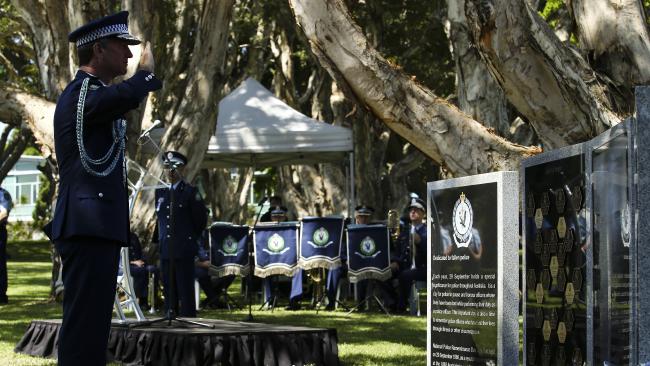
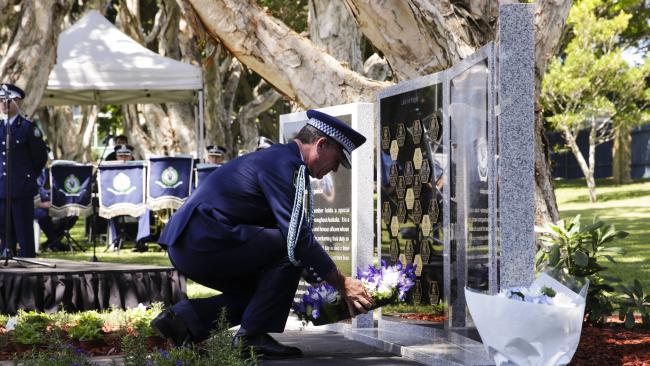
NSW Police Commissioner Andrew Scipione officially dedicates a new memorial honouring fallen officers at the Eastern Suburbs Memorial Park. Picture: Justin Lloyd
Matraville’s Themalis (Tim) Macarounas had only served as a police officer for a few months before he was killed on duty.
Five months after the 22-year-old graduated, he was driving in a pursuit of a stolen car along Oxford St when his wheels locked after braking and crashed into a light pole.
He died from his injuries on October 20, 1987.
Constable Macarounas is one of 31 names engraved on a new memorial at the Eastern Suburbs Memorial Park honouring officers killed on duty and resting in the park from the Eastern Beaches, Eastern Suburbs, Waverley and Rose Bay Local Area Commands — including four colonial officers.
NSW Police Commissioner Andrew Scipione unveiled the memorial during a ceremony on Monday.
Constable Macarounas’ parents, Helen and Arthur were at the service. The couple visit their son’s grave every couple of weeks.
They said their son was a talented athlete — he played many sports and represented the South Sydney district in the Harold Matthews Shield and SG Ball rugby league teams — but he was too short to enter the police force straight out of school.
It wasn’t until height restrictions were abandoned, that he was able to tryout.
“We were so proud of him when he graduated,” Mr Macarounas said.
“He was a community-minded. He had an interest in helping other people.”
Constable Macarounas’ funeral was attended by 600 mourners.
“He was everything to us. Not only to us but to his friends,” Mrs Macarounas said.
“There was something in him. Whoever met him, felt it. I can’t explain it, there was 600 people there. He was only 22. I get goosebumps when I talk about it.”
The Local Police Memorial is the second of its kind in the state. Woronora Memorial Park, Sutherland, had one installed in April.
NSW Police Commissioner Andrew Scipione said the memorial would “stand as a beacon of hope, a beacon of sacrifice and commitment, from the police force to the community”.
NSW Police Commissioner Andrew Scipione has officially dedicated a new memorial honouring fallen officers in the Eastern Suburbs of Sydney this afternoon.
The Commissioner was joined by local police, families, friends, and colleagues, for the dedication of the NSW Police Memorial, led by Police Chaplain, Father Paul O’Donoghue, at Eastern Suburbs Memorial Park today (Monday 30 November 2015).
The memorial honours 31 NSW Police officers who were killed on duty within the Eastern Suburbs, Eastern Beaches, Botany Bay and Rose Bay Local Area Commands, or who were cremated or laid to rest at Eastern Suburbs Memorial Park.
Commissioner Scipione said the plaques and memorial wall are a wonderful way to honour local officers who have made the ultimate sacrifice.
“The NSW Police Memorial at Eastern Suburbs Memorial Park gives family, friends, colleagues and members of the public a place to come and reflect on the lives and achievements of the officers who died while serving the community,” Commissioner Scipione said.
“The men and women of the NSW Police Force serve the community each day – all the while not knowing what potential adversity they may face yet understanding they may have to risk their own life to save another.
“As we unveil the plaques today we honour their courage and sacrifice, and send our thoughts to those families who have lost a loved one – they will never be forgotten.”
The names of the 27 local fallen officers, who died on duty since 1862, are inscribed on the wall of the memorial.
An additional four colonial police, killed prior to the inception of the NSW Police Force, will also be remembered in the form of separate plaques within the memorial garden.
The NSW Police Memorial is a joint project of the Southern Metropolitan Cemeteries Trust and the NSW Police Force.
Officers honoured on the NSW Police Memorial at Eastern Suburbs Memorial Park:
Senior Constable Henry Stark Murrow, killed on duty at The Rocks on 4 October 1897, aged 35
Constable David Sutherland, killed on duty at Potts Point on 3 June 1889, aged 24
Inspector James Bremner, killed on duty at Centennial Park on 2 January 1901, aged 60
Sergeant 2nd Class James MacDonnell, killed on duty at Warren on 26 December 1911, aged 57
Constable 1st Class Joseph John Hush, killed on duty at Roseville on 6 November 1919, aged 39
Constable Frederick William Wolgast, killed on duty at Centennial Park on 21 January 1921, aged 29
Constable Owen Edwin Bell, killed on duty at Goulburn on 27 February 1927, aged 43
Constable Norman Thomas Allen, killed on duty at Bondi on 3 January 1931, aged 29
Constable Ernest Andrews, killed on duty at Bondi on 3 January 1931, aged 23
Sergeant 3rd Class (Rtd) Patrick William Matthew Carmody, killed on duty in Sydney on 19 April 1931, aged 41
Constable 1st Class Duncan Hughie McCallum Murphy, killed on duty at Paddington on 27 September 1940, aged 45
Detective Constable Victor Donald Ahearn, killed on duty at Matraville on 11 August 1946, aged 40
Sergeant 3rd Class Noel Ainsworth McCarthy Porter, killed on duty at Hillston on 19 September 1946, aged 45
Constable 1st Class John Hawkes Malone, killed on duty at Medlow Bath on 1 May 1947, aged 34
Constable Allen Boyd Patch, killed on duty at Bowral on 5 February 1949, aged 26
Constable William John Lord, killed on duty at Randwick on 23 December 1958, aged 24
Constable Eric Peter Oliff, killed on duty at Wyong on 18 April 1962, aged 23
Detective Sergeant 2nd Class John Joseph McEntee, killed on duty at Waverley on 27 February 1972, aged 47
Senior Constable Lindsay Vincent Gilfeather, killed on duty at Waterloo on 15 October 1977, aged 31
Detective Inspector Reginald Hugh Stevenson, killed on duty at Newtown on 19 January 1980, aged 53
Constable Mark Ian Postma, killed on duty at Ashfield on 23 February 1987, aged 22
Probationary Constable Themelis Arthur Macarounas, killed on duty at Paddington on 20 October 1987, aged 22
Constable 1st Class Juan Carlos Hernandez, killed on duty at Redfern on 1 December 1992, aged 33
Probationary Constable Geoffrey Joseph Daley, killed on duty at Vaucluse on 27 December 1966, aged 24
Constable 1st Class Wayne Allen Rixon, killed on duty at Roseberry on 13 January 1985, aged 27
Probationary Constable Dana Therese Heffernan, killed on duty at Randwick on 17 April 1987, aged 20
Constable Glenn Edward McEnallay, killed on duty at Hillsdale on 3 April 2002, aged 26
Colonial police honoured:
Inspector Peter Prosser, killed on duty in Sydney on 25 January 1839, aged 26
Constable John Connell, killed on duty in Sydney on 23 November 1841, aged 21
Corporal Stephen Kirk, killed on duty in Heathcote on 12 November 1845, aged 33
Trooper Luke Dunn, killed on duty in Heathcote on 21 November 1845, aged 33
Daniel Arthur STILLER
23/02/2016
Daniel Arthur STILLER
aka Dan
Queensland Police Force
Regd. # ?
Rank: Sergeant
Stations: Hendra Police Station before transferring to South Brisbane Traffic as a Senior Constable.
2007 Dan was promoted to the rank of Sergeant and transferred to the Oxley District Division Traffic Branch, working out of Mount Ommaney Police Station – HWP Cyclist
Service: From? ? 2002to 1 December 2010
New South Wales Police Force
Regd. # 32276
” Possibly ” in PREP Class 272
Rank: Constable
Stations: ?, Bankstown ( late 1990’s ),
Service: From? ? 1997to14 July 2001= 4 years Service with NSW Police force
Awards: Queensland Police Service medal – posthumously
Queensland Police Service Award for Meritorious Service – posthumously
Born: 6 January1977
Died on: Wednesday 1 December 2010
Death location: Bruce Hwy, approximately 15km south of Mt Larcom, Qld
Cause: Motor cycle collision – rider -v- jacknifing semi trailer
Age: 33
Funeral date: Thursday 9 December 2010 @ 10.30a,
Funeral location: St Peter Chanel Catholic Church, Chaprowe Roadn The Gap
Buried at: Settlement Road, and on to a private interment
Memorial at: Sergeant Dan Stiller Memorial Reserve, Heathwood, 4110. Stapylton, Johnson & Paradise Rd & Logan Motorway, Qld
Lat: -27.6425
Long: 152.986389 Note: GPS Coordinates are approximate.
Sergeant Dan Stiller died when his motorcycle was struck by a truck.
[alert_green]DAN IS mentioned on the Police Wall of Remembrance[/alert_green]
Details of Death:
On 30th November 2010 Sergeant Stiller departed Brisbane on escort duty with another officer, escorting an oversized load from Brisbane, destined for Rockhampton in central Queensland. Sergeant Stiller was riding a Qld Police Service motorcycle and the other officer was in a marked police sedan. That afternoon they rested at Miriam Vale over night and recommenced at 6am on 1st December 2010. In this escort, Sergeant Stiller was the lead escort, behind a pilot vehicle which was approximately 500 metres in front, and the police sedan was to the rear of Sergeant Stiller. Approximately 15 kilometres south of Mt Larcom on the Bruce Highway, in heavy rain, at 7am on 1st December 2010 three articulated vehicles were travelling south and were advised by the pilot of the load travelling north that there was an oversized load ahead, and to pull to the side of the road to make room. In doing so one of the articulated vehicles, whilst braking, lost control of the vehicle, causing it to ‘jack knife’, and travel onto the incorrect side of the road. The articulated vehicle collided head on with Sergeant Stiller, who was travelling in the centre of the northbound lane. Sergeant Stiller was killed instantly as a result of the impact. Sergeant Stiller has been posthumously awarded the Queensland Police Service Medal and the QPS Award for Meritorious Service.
Funeral location: ?
FURTHER INFORMATION IS NEEDED ABOUT THIS PERSON, THEIR LIFE, THEIR CAREER AND THEIR DEATH.
A police officer has been killed while escorting an oversized truck along the Bruce Highway in central Queensland.
Sergeant Dan Stiller, 33, was killed when the motorcycle he was riding was struck by a truck on the highway about 15 kilometres south of Mount Larcom at about 7am.
The crash closed the highway in both directions near Mount Larcom for more than five hours.
Deputy Commissioner Ross Barnett said it appeared the truck jack-knifed before it hit Sergeant Stiller, who was escorting a wide load and convoy along the Bruce Highway.
‘‘The tragic loss of a young promising officer of Sergeant Stiller’s calibre will be felt right throughout the organisation, particularly among those who were fortunate enough to work with him,’’ he said.
Mr Barnett said another police officer, in a police sedan, was also involved in the wide load escort but that officer was not injured.
Sergeant Stiller’s wife, also a police officer, was ‘‘naturally devastated’’ and was receiving the support of her colleagues and close friends, Mr Barnett said.
Premier Anna Bligh said Sergeant Stiller’s death was a ‘‘tragic reminder’’ that police put their lives on the line every day.
“Our thoughts, my thoughts, and think those of all Queenslanders are with his family. This is a very sad day for them,’’ she said.
“It’s also a very sad day for the police service. It’s been almost four years … since we’ve seen a Queensland police officer lose their life in the course of their duties.
Opposition leader John-Paul Langbroek also paid tribute to Sergeant Stiller.“This is a very sad day for our state’s police service and our greater Queensland community,” he said.
“I know each day that every one of Queensland’s 10,702 police officers go to work, they work in challenging and sometimes dangerous situations.’’
Police will prepare a report for the coroner.
The 33-year-old sergeant, originally from New South Wales, was an officer with the Oxley District Traffic Branch. Police are investigating the death of their colleague.
The investigating will be overviewed by the Ethical Standards Command.
11 comments so far
To my mate Dan,
You were a great guy, an excellent policeman and will be truly missed.
My condolences to your lovely wife Julie and your family.
Commenter
Ben G
Location
Sydney
Date and time
December 01, 2010, 2:06PM
My deepest condolences to his family. I am very very sorry for your loss.
Commenter
Marie
Location
Brisbane
Date and time
December 01, 2010, 2:22PM
My deepest sympathies go out to this young man’s family and friends. My respect and condolences go to all his brothers and sisters in the force.
Commenter
Roy
Location
Brisbane
Date and time
December 01, 2010, 2:56PM
Dan. Incredibly sad to hear this news, you were a great guy and I will always remember your smile. Condolences to Julie and Dans family.
Commenter
Steven Cooper
Location
Melbourne
Date and time
December 01, 2010, 3:18PM
Proud to have served with Dan in NSWPF, a friendly, lovely, smiling man taken from this world too soon. Our thoughts are with his family and friends. xoxo
Commenter
Kate Y
Location
Sydney
Date and time
December 01, 2010, 4:10PM
My Deepest sympathies to those who have lost a loved one, while serving the community.
Something must be done about the way these extra wide loads are allowed to travel at high speed along the highways. The escort system and rules are NOW Broken and Inadequate. Attitude seems to be anything goes as long as there is an escort. As a regular car driver on the Burnett and D’Aguilar highways, I have often seen very close calls several times as the escorts often do not give enough warning to oncoming vehicles for a heavy load that now often spreads across the two lanes , travelling at maximum legal speed. The loads seem to be getting wider and larger and more frequent with all the huge mining plant being shipped to and from Central Qld mines.
I was almost unable to pull up recently travelling north at Collinton, almost running into the bridge as I tried to avoid a large load, with an escort barely 100m in front of it. If I had been in a semi, I or the escort most likely would not be here. The wide load was simply going too fast downhill to be safe.
Most escorts do a fine job, but the loads are just getting too big and fast to be safely controlled, in all circumstances. Cars can pull up safely, but heavy vehicles coming in opposite direction must often have difficulty stopping and getting off the road.
Commenter
Vini Vidi
Location
Queensland
Date and time
December 01, 2010, 4:57PM
Such a tragic loss of a great police officer and all round good bloke. Dan, I’m proud to have called you a colleague and friend. My thoughts and prayers are with your family and friends. You will live on in our hearts.
Commenter
Refidex
Location
Queensland
Date and time
December 01, 2010, 5:22PM
The military and emergency services are two of few workplaces in this country where families and colleagues send their loved ones and mates out to the job with a greater fear that they will not return safely than most of us can understand. You have my profound thanks and my deepest respect.
Commenter
Les Hawken
Location
Melbourne
Date and time
December 01, 2010, 6:36PM
a terrible loss that should have been avoided. why was a motorcycle doing this duty with the poor weather we have been experiencing lately. these wide load escorts are normally two pilot vehicles and three patrol cars. also in this weather the shoulder on most central queensland roads is far too soft to move a semi trailer off the bitumen onto grass where they get stuck as has happened on the beef road recently and had to get towed back onto the road by the prime mover pulling the wide load. not really an acceptable situation. who would have accepted responsibility if the the semi had tipped over in the mud.
Commenter
andrew
Location
brisbane
Date and time
December 01, 2010, 7:47PM
The Police Force has lost another great Officer. Dan, you gave us plenty of laughs and you will be missed. NSW Police Force Class 272 – Delta (PREP of 1997) will always remember you. Our thoughts are with your wife, family, and friends. Rest easy now mate, your shift is done. We’ll take it from here.
Commenter
Rebecca C
Location
Wollongong NSW
Date and time
December 02, 2010, 8:53PM
Rest in Peace my mate Sgt Dan Stiller. You will never ever be forgotten. A great Police Officer. A great Highway Patrol Officer. A true professional in every way. A loving husband that will be truly missed. My thoughts and prayers are with Julie, both families, your QPS mates and your NSWPF mates. I am shattered. Till we meet again.
This has been issued to all media on behalf of Sergeant Dan Stiller’s wife, Julie;
A born and bred Brisbane-boy, Dan Stiller grew up knowing one day he would be able to combine his love of motorbikes with his job. In 2007, after 10 years as a police officer, he did just that when he was promoted to a Sergeant at the Oxley District Traffic branch.
On Wednesday December 1, Sergeant Dan Stiller paid the ultimate sacrifice doing what he loved.
Dan Stiller was born on January 6, 1977 in Brisbane to a large family.
An exceptional swimmer, Dan still holds the swimming record at Nundah Primary School – something he continued to boast about even as an adult – and received a scholarship to Nudgee College because of his swimming talents.
Growing up, Dan knew he wanted to become a police officer, and in 1997 he was accepted by the New South Wales Police Force, where he served for four years before applying and being accepted to the Queensland Police Service.
On graduating into the QPS in 2002, Dan served at the Hendra Police Station before transferring to South Brisbane Traffic. In 2007 Dan was promoted to the rank of Sergeant and transferred to the Oxley District Division Traffic Branch, working out of Mount Ommaney Police Station.
I can still recall the first time we met, which was during orientation at the Hendra Police Station. I saw him across the room and I was immediately attracted to him.
It wasn’t long after that we were sharing our first motorbike together, and we have been inseparable since. We married on August 9 2008. Coming from a large family, Dan was ecstatic on hearing that he was going to be a dad.
No words aptly describe Dan. He was a fun person, extremely loving and caring and had a fabulous sense of humour.
His quirks and comments made me laugh. He was capable of making anyone laugh or feel better on a down day, and I learnt very early in our relationship that he was just as beautiful on the inside as he was on the outside.
Queensland Police ServiceOur apologies to those who commented on this previously. We’ve had a technical hitch, and had to repost it, which means your comments were lost.
Gary Anthony HilesAs a member of the Oxley District Traffic Branch, I am very proud to say that I knew Dan and can say that he was an outstanding Police Officer. He was professional, knowledgeable and helpful. He died doing what he loved and has left a hole in our office. You will never be forgotten. Rest in peace mate.
Miche MaraeaI have a large family myself, so I can acutely imagine their loss and how it is to be without one of your own, especially during this festive season! I wish his entire family peace and love!
John MarksI am a Police Officer too and will never forget that feeling when I knew what I was heading out to that morning. My sincerest heartfelt condolences go out to Dan’s family, friends & colleagues. RIP Sgt Dan STILLER.
Jenelle ReghenzaniSo so sad what a fine young man to loose his life at such a young age…….RIP and my sincere condolences to his family. May god look over you and protect you in this sad time! I have so much respect for the QPS they have helped me over the years in some very hard times and I truly appreciate their dedication and hard work!
Barbara Ann JohnstonMy heartfelt sympathy to Dan Stillers family and loved ones and work mates. Carry on and live with the pride and happy memories of life shared with him…. as i am sure he would want you to do. Sometimes a loved one is taken from us way too early, but the love in our hearts and the happy memories, nothing or no one can ever take away. RIP young man…. another QPS HERO
David WicksMy thoughts are with his family. Yet another life lost doing a thankless motorcycle officers job. RIP. To the others still riding – be safe.
Vicki Leethe tears in your eyes can be wiped away but may the love in your hearts always stay…sincerest condolences to all Dan’s family, friends and colleagues, a special heartfelt one to his wife and unborn child. xo
Lisa RichardsHeart breaking for all involved. reading those beautiful words you can feel the love they shared for each other. im sure their child will bring joy and love to sgt stillers wife and their family. Taken way to soon. RIP SGT DAN STILLER
Lisa RosierHeartfelt condolences to Dan’s wife and his family both personal and professional. Dan has crossed over to the other side where he watches over his loved ones and waits to guide them on their journey to the other side.
Cheryl Wkit is always heart breaking when we lose one of our finest.
Julie, you will be able to tell your little one that their daddy was the best. Condolences to you and Sgt Stiller’s family,his friends and colleagues.
Barbara StoneSgt Dan Stiller will always be remembered with pride and love. He was certainly taken too soon. My thoughts and prayers are with the Stiller family, their colleagues and friends at this very sad time.
Carrie DavidsonJulie…words cannot describe how sorry I am for your loss. My thoughts are with you and Dan’s family, friends and collegues. The Police service will not be the same without him.
Elle OzDan – The Man!!!! Remember……..Oh I really couldn’t believe it when I turned on the TV that day, I still can’t believe it. You were always the life of the class with that smile that lighted up any room. I am so proud to have gone through the NSWPOL Academy with you it is yet another tragedy where a great Police Officer was once again taken from us. I will be thinking of you this Thursday as I attend the Remembreance Day Parade here in Townsville I will be thinking of you, Glen and Pete xo
Tim RobThe Dan Stiller Reserve is a fitting monument to this man. If you don’t know where it is, Google it and visit it! If you love bird watching, 105 species have been seen there in the last year or so. No facilities and unfortunately the reserve is over-run by morons on trail bikes during the weekend, but it is one of the special places of Brisbane, wild yet accessible.
Tim RobSome complete moron(s) has/have destroyed the memorial. I dont have words – well polite ones anyway – to describe what I think about these idiots. This is a senseless act of vandalism that demonstrates just how moronic they are. If you destroyed the memorial and are reading this then please know that any reasonable person thinks that you are a complete f-wit.
Jillian OliverI had the honour to work with Dan when he first started. He was a great officer and great person. It was a highlight to be working the truck with him. I valued his friendship and think of him often. My prayers and thoughts are with his family.
Wildlife corridor to be named after fallen policeman Dan Stiller, killed by jack-knife truck on highway
Sarah Vogler and James O’Loan
The Courier-Mail
December 07, 20109:27PM
A FALLEN policeman will have a wildlife corridor in Brisbane’s southwest named after him.
Sergeant Dan Stiller, 33, died on duty last Wednesday while leading a police escort along the Bruce Hwy in central Queensland.
He was killed when a semi-trailer jack-knifed and collided with him, becoming the first officer in over three years to die on the job.
Brisbane Lord Mayor Campbell Newman today bestowed on Stiller the rare honour.
“Sergeant Dan Stiller coordinated combined police and council enforcement operations against illegal trail biking while working at the Oxley Traffic Branch,” Cr Newman said.
“It is therefore fitting that we name the 122 hectares we’ve protected against illegal trail biking the Sergeant Dan Stiller Memorial Reserve.
“It will be a place not just to remember Sergeant Stiller, but other members of the police force who have been killed on duty.”
The reserve lies at Larapinta, near Parkinson, and is bounded by the Logan Mwy, Johnson Rd and Paradise Rd.
Police Commissioner Bob Atkinson said Stiller’s wife Julie and the entire police service appreciated the honour.
“The QPS is very appreciative of this recognition by the Brisbane City Council,” Mr Atkinson said.
“It is a fine and fitting tribute to a very professional and dedicated officer and will help in terms of his colleagues dealing with his loss.
“Having discussed this with Dan’s wife Julie, I believe she is also very grateful for this initiative.”
Cr Newman said the bushland would be transformed into a valuable environmental and wildlife corridor and is currently being fenced and marked as bushland reserve.
The land was acquired by council over the past two years, primarily to protect it against illegal trail bikers.
The land grab was part of the Bushland Acquisition Program, which protects vital wildlife corridors in some of Brisbane’s most environmentally sensitive areas from future development.
Council expressed its sympathy to Stiller’s wife Julie, his family and to his colleagues in the police force, particularly the Oxley Traffic Branch.
The funeral for Sgt Stiller will be marked by a motorcade and mounted police this Thursday.
His death sent shockwaves through the Queensland Police Service.
This Thursday’s funeral will be at St Peter Chanel Catholic Church, The Gap, at 10.30am.
“The cortege, including the QPS Pipes and Drums, the Mounted Police Unit and a procession of motorcycle police, will proceed from the church on Chaprowe Road to Settlement Road, and on to a private interment,” police said today.
The interment is for close friends and family only.
Sgt Stiller is survived by his wife Julie, also a police officer, who is pregnant with their first child.
Mr Atkinson has previously described Stiller as ” a dedicated traffic officer, committed to the safety and security of all Queenslanders”.
Dan Stiller was so determined to become a police officer that he didn’t let an initial knock-back extinguish his dreams, mourners in Brisbane have been told.
Hundreds of people, including his pregnant wife Julie, gathered today to farewell Sergeant Stiller, who died when a truck jackknifed and hit him as he escorted a wide load south of Rockhampton last week.
He was the first Queensland police officer killed on the job in more than three years.
Queensland Police Commissioner Bob Atkinson told mourners of the 33-year-old’s efforts to join the service.
‘‘His initial knock-back from the police service only hardened his resolve, and extra study saw his future guaranteed,’’ Mr Atkinson said.
‘‘In the words of his wife Julie: ‘As a boy, Dan always wanted to grow up and be a police officer. This, mixed with his ultimate love of motorcycles, made the traffic branch the place he was destined to be’.’’
Sgt Stiller met his future wife, a police detective, during a posting at Hendra police station in Brisbane’s inner north in 2002.
‘‘She remembers well the first motorcycle ride they shared soon after (meeting) and they were inseparable ever since,’’ Mr Atkinson said.
The couple married on August 9, 2008 and only recently announced they were expecting their first child.
Sgt Stiller was overjoyed about becoming a father and wasn’t shy about showing his love for his wife, Mr Atkinson said.
‘‘His love for Julie was complete and total,’’ he told mourners.
Mr Atkinson described Sgt Stiller as a dedicated, competent traffic officer whose work helped lower the road toll.
Sgt Stiller started his career with the NSW police service in 1997.
He moved back to his home state of Queensland in 2001 and joined the service as a recruit.
He was sworn in in early 2002 and two years later was transferred to the south Brisbane traffic branch where he was promoted to senior constable.
‘‘He achieved his destiny when he passed the police motorcycle course and became a full-time police motorcyclist in the traffic branch,’’ Mr Atkinson said.
‘‘His outstanding policing skills and leadership were rewarded in 2007 when he was promoted to the rank of sergeant and transferred to the Oxley District Traffic Branch.’’
REMEMBERED: A monument dedicated to Sergeant Dan Stiller, who died last December, was unveiled at a ceremony attended by his wife Julie Stiller last Wednesday. Sgt Stiller’s family and friends also planted trees as a living memorial.
AN environmental corridor in Pallara has been named in honour of fallen policeman Sergeant Dan Stiller in a moving ceremony held last week.
Sgt Stiller’s wife Julie, along with his family, friends and colleagues gathered for the official naming of the 122 hectare Sergeant Dan Stiller Memorial Reserve on Wednesday afternoon, which also included the unveiling of a memorial.
Sgt Stiller’s brother, John Stiller addressed the crowd and said his family were truly honoured by the mark of respect the memorial offered.
“If you knew Dan you’d know that whatever he put his mind to he committed to it 110 per cent,” he said.
“I am extremely proud of my brother, and this reserve will serve as a lasting tribute.
“It will also serve as a place for friends and family to visit and share quiet thoughts.”
The memorial was unveiled by Lord Mayor Campbell Newman and Parkinson Councillor Angela Owen-Taylor.
The Lord Mayor said Dan had been instrumental in working with council to deal with illegal trail biking while working at the Oxley Traffic Branch.
“Sergeant Dan Stiller co-ordinated combined police and council enforcement operations against illegal trail biking while working at the Oxley Traffic Branch,” he said.
“It is therefore fitting that the 122 hectares we’ve protected against illegal trail biking be named the Sergeant Dan Stiller Memorial Reserve.
“It will now be a place not just to remember Sergeant Stiller, but also other members of the police force who have been killed on duty.”
Cr Owen-Taylor said she had worked closely with Sgt Stiller on road safety and illegal trail biking and she felt this was a fitting tribute.
“The dedication of this bushland to Sergeant Dan Stiller is significant as it is the place where Operation Trailblazer started in July 2008,” she said.
Sgt Stiller was killed on December 1, 2010, by a jack-knifing truck while escorting a wide load on the Bruce Highway near Mount Larcom.
The Police Remembrance Day march and ceremony held at Browns Park in North Ipswich on Thursday.
IPSWICH police paid tribute to fallen detectiveDamian Leeding and Sergeant Daniel Stiller in a moving Police Remembrance Day ceremony yesterday.
A strong contingent of about 100 uniformed, plain-clothed and dog-squad officers gathered at the North Ipswich Reserve from about 9.45am, marching to the beat of the Salvation Army drummers along The Terrace, past Riverlink Shopping Centre, then up Downs St to Browns Park.
Ipswich’s Police Remembrance Day ceremony is held each year at the James Sangster Memorial, which was built in honour of the police officer who died in an attempt to rescue members of the Jackson family from floods in 1893.
There are now 139 names on the Queensland remembrance list – dating back to Laidley Constable Matthew Connolly in 1861 – all of whom died in the line of duty.
However, it was the two most recent additions to that list that drew special mention at the ceremony, led by Southern Region police chaplain Malcolm Twine.
The chaplain began with a prayer for all the men and women who have given their lives while serving the community.
Detective Senior Constable Damian Leeding was shot in the face with a shotgun after responding to an armed robbery at the Gold Coast suburb of Pacific Pines, on May 29 this year.
Family members turned off his life support three days later.
Sergeant Daniel Stiller was killed in a traffic crash while assisting in an oversized-vehicle escort near Rockhampton on December 1, 2010.
The 33-year-old’s wife was pregnant with their first child at the time. Superintendent Garth Pitman said the rain which persisted through the ceremony could not drown police pride.
“We’ll march in the rain if we have to,” he said while delivering the commissioner’s address.
Representatives of Ipswich City Council, the Ipswich RSL, Queensland Fire and Rescue Service and Neighbourhood Watch joined retired police and members of the community in laying wreathes next to the Sangster monument
Policeman Dan Stiller memorial vandalised at Pallara
Kate Kyriacou
The Courier-Mail
August 08, 20121:26PM
Sgt Dan Stiller, tragically killed on duty in a traffic accident, and his wife Julie.
A MEMORIAL commemorating a police officer killed in the line of duty has been vandalised.
Oxley detectives are investigating after the memorial to Sergeant Dan Stiller, located in a reserve on Wadeville Rd, Pallara, was damaged late Tuesday.
Sergeant Stiller, 33, killed in 2010 at Mt Larcom when the wide load truck he was escorting crashed and hit his police motorcycle.
Police said the statue was damaged shortly after 5pm, when a thick glass panel covering a photograph of Sgt Stiller was smashed.
Investigators are now looking to identify three teenaged boys who were seen in the area at the time. Two of the boys were on scooters and the third on a skateboard.
They were last seen walking towards Lillypilly St, Heathwood.
In 2010, the park was renamed Sergeant Dan Stiller Memorial Reserve in tribute to the well-respected traffic officer.
A memorial dedication and bushland reserve naming of 122 hectares bordered by Paradise Road, Johnson Road, Stapylton Road and Wadeville Street occurred on 9 March 2011 in honour of fallen Police Officer, Sergeant Dan Stiller.
A number of Dan’s colleagues turned up in honour of the occasion
Lord Mayor Campbell Newman and I unveiled the memorial in Dan’s honour.
Unveiling the Bushland Reserve Sign, named after Sgt Dan Stiller
The bushland reserve dedication and naming was commemorated with a planting
A 17 year old male has been ordered to pay full restitution to restore the Sergeant Dan Stiller Memorial at Heathwood.
The Brisbane City Council memorial in honour of Sergeant Dan Stiller was unveiled in March 2011.
It was an absolutely despicable act by vandals to destroy a public memorial, let alone a memorial dedicated to a Police officer who put his life on the line for our community each day he stepped out in uniform.
I worked closely with Sgt Dan Stiller to tackle illegal trail bike riding in Parkinson Ward and the Oxley Police District, and our community owes him for the service and care he provided us.
Residents have indicated to me they have supported the public appeal to assist Police.
Further to a thorough investigation by Queensland Police, the offender was brought to justice in the Richlands Magistrates Court on Tuesday 28 August, and ordered to pay full restitution.
I conveyed to Police the full cost of the damage and now the offender is being made to face the full consequences under law for his disgraceful behaviour.
I assure residents and Dan’s family, friends and work colleagues, we are working is to ensure restoration of the memorial occurs as quickly as possible and it will be as protected as much as possible.
Brisbane City Council dedicated the 122 hectares of bushland within the reserve in recognition of Sgt Dan Stiller’s commitment to the community in reducing illegal trail bike riding which was impacting severely on residents’ peaceful enjoyment of their own homes.
I met on site with Police Superintendent Maurice Poiner and stonemason Pete Macfarlane ahead of the photo of Sgt Dan Stiller being reinstalled into the memorial.
The Sergeant Dan Stiller Memorial Reserve is bordered by Wadeville Street, Paradise Road, Johnson Road and Stapylton Road.
THE State Coroner has begun investigating a fatal crash involving a police officer escorting a wide load on the Bruce Highway at Mount Larcom.
Coroner Michael Barnes began hearing evidence in Brisbane on Wednesday into the adequacy of police investigations into the collision which killed Dan Arthur Stiller.
Sgt Stiller, who was escorting a wide load carrying a large piece of mining equipment, died when a prime mover jack-knifed about 7am on December 1, 2010, on the highway between Gladstone and Rockhampton.
Mr Barnes will examine the “adequacy and appropriateness” of regulations and guidelines surrounding wide-load transports within Queensland.
He will also investigate whether police motorcycles should be used as wide-load escorts.
John Edward Dodd, the truck driver involved in the crash, was found not guilty of careless driving by a Brisbane magistrate handed last month.
Magistrate Jacqueline Payne found Dodd had reacted as any reasonable and prudent driver would have.
THE State Coroner has recommended a raft of reforms on how wide loads are escorted on busy Queensland roads following two fatal crashes within six months involving oversized escorts.
Queensland Police Sergeant Daniel Stiller was escorting a wide load on the Bruce Hwy at Mount Larcom when a prime mover jack knifed and crashed into his motorbike.
The 33-year-old died at the scene on December 1, 2010.
About six months later on May 17, 2011, Kenneth Roland Owens was travelling on a single lane section of the Bruce Hwy at Glenorchy, near Maryborough, with his wife and two friends.
A prime mover was travelling in the opposite direction and carrying a miner’s hut, which was so wide it protruded into the southbound lane.
Mr Owens hit the corner of the hut and was killed.
Following an inquest into the deaths, State Coroner Michael Barnes handed down his findings on Friday.
He was satisfied in Mr Owen’s case the driver transporting the wide load was safe and the oversized load satisfied guidelines.
Mr Barnes said while it was likely the lights and markers on the wide load could have distracted Mr Owens, there was no evidence to show why he did not avoid the corner of the miner’s hut.
But in Mr Stiller’s death, Mr Barnes found the blame for fatal accident could be partially contributed to how the wide load escort was carried out.
He found radio communications from the lead escort to other trucks approaching the wide load was confusing and trucks were not given clear instructions.
“Those escorting the wide load gave insufficient regard to the need for other vehicles to get completely off the road when the highway was only of two lanes and the difficulty this would pose for heavy vehicles,” Mr Barnes states.
Mr Barnes also found the driver behind the wheel of the truck which crashed into Sergeant Stiller did not slow sufficiently as he approached the wide load.
The State Coroner recommended wide load grants should not be issued if other transport is available, such as shipping to Gladstone and Mackay ports.
He has also recommended a review of placing police on motorcycles for wide escorts because of the increased risk of death or injury.
Mr Barnes also recommended a public awareness campaign about dealing with wide loads and more explicit signage.
A new section has been added to Dan Stiller Memorial Reserve in Parkinson to the south of Brisbane. It is well worth a look as it has good tracks and an interesting lagoon in the north-eastern corner. We recommend a weekend walk as there is quite high road noise from Logan Motorway in places.
“Dan” is a very interesting reserve that we have visited numerous times, and currently 152 bird species have been recorded there. Interested people may like to download our (updated today) birders guide from:
My wife Marg and I will be leading a BQ walk to “Dan” on May 10th, and will be delighted to meet you.
Tim
Quote from BQ website
” This will be the fist BQ visit to Dan Stiller Reserve for 2015. Meet at 7 am at the gate near the end of Axis Place (UBD 239, E6). This section of the reserve is relatively new and until recently had no good tracks. BCC has made a loop track that includes a section with close proximity to a lagoon on a minor tributary of Oxley Creek. It is also possible, time permitting, to see a large ex-sandmining lake that apparently will become part of an expanded reserve in the future. The track is well made and an easy walk. Boots are recommended for safe access to the edge of the lagoon. There are no toilet facilities in this reserve.
We will meet for morning tea at the park on Lincoln Green Drive (UBD 238, H16) where toilets are available.”
AN Albury man, who today lost a Quarter Sessions appeal against convictions for resisting arrest and assaulting a constable, alleged that he was bashed by police.
James William Gehrig, 53, woodcutter, of Prune lane, Lavington, an Albury suburb, told the Court he was about to go to bed on October 17 when police arrived.
They said, ” you have been kicking up a bit of a disturbance and are drunk, ” he added.
Gehrig said he told them it was his brother who had caused the trouble.
The next he knew he was being hit on the head with a baton.
Gehrig said he fought off the constables and kicked one in the knee.
When he reached the police station, another constable punched him under the chin while he was still wearing handcuffs.
When the handcuffs were taken off, he was knocked to the ground, and ” they stuck the boot into me, ” Gehrig said. He had been kicked and punched almost senseless. One policeman had jumped on his chest.
‘ In hospital ‘
Dr. Felix Favaloro, Albury doctor, had treated him, and he had spent eight days in hospital.
Dr. Favaloro told the Court that when he examined Gehrig, he had a swollen face, blackened eyes, and numerous bruises on the back and shoulders, four broken ribs, and a probable contusion of the lung.
Constable Leslie George Robinson and Constable John Raymond Curtin( # 7287 ) denied that Gehrig had been punched or kicked inside 0r outside the police station.
Constable Robinson said Gehrig had kicked him in the face, chest, and stomach.
Gehrig’s ribs might have been broken when he fell on him during a scuffle, he said.
Judge Brennan reaffirmed the Court of Petty Sessions convictions on November 13 on charges of resisting arrest, assaulting Constable Robinson, and causing malicious damage to a pair of police trousers.
He varied the sentence 0n the assault charge from 12 months’ good behaviour bond to a 10/ fine. He confirmed fines on the other two charges of 10/ each.
Justyn had returned to the family home to help care for his younger brother who had a brain tumor but Justyn died 10 days after arriving.
His brother, Christopher, died from that brain tumor 9 weeks to the day, after Justyn had died.
May they both forever Rest In Peace
Justyn’s parents would like to remind people about the very real danger of DVT, due to immobility, which the Coroner attributed directly Justyn’s job. Get away from that type writer, out of that seating position and exercise those legs.
Newcastle Herald 2 March 2012
LIMOND, JUSTYN RAYMOND Passed away suddenly at North Rothbury 28th February, 2012 Aged 36 Years
Loved son of STEPHEN and ADELLA. Loving brother of CHRISTIAN, LACHLAN, BENNETT, BRONWYN, TED and SHAUNA. Loved partner of KATHY.
Family and Friends of JUSTYN, the LIMOND, PAGE and MILLER FAMILIES are warmly invited to attend his Funeral to be held in All Saints Anglican Church, Singleton, TUESDAY 6th March 2012 commencing at 11.30am followed by Private Family Burial. By request no flowers, donations may be left at the Church to aid the Singleton Cancer Appeal.
In the care of Chapmans Funerals Singleton 6572 1089 a.f.d.a.
* Despite the fact that the current aerial view of the cemetery with Google map does NOT show a row of graves, there is, in fact, a 5th row of graves and the ‘peace’ marker is the location that the boys graves are located at.
Rank: Commenced Training at Redfern Police Academy, with Class 088, on Monday 14 August 1961 ( aged 27 years, 0 months, 7 days )
Probationary Constable – 14 September 1961
1st Class Constable – appointed 1 April 1967
Senior Constable – appointed 1 April 1971
Sergeant 3rd Class – appointed 1 February 1978
Sergeant 2nd Class – 31 August 1984 ( Central Police Station )
Sergeant 1st Class – 9 August 1986
Chief Inspector – February 1989 ( Fairfield & Cabramatta )
Chief Inspector – Patrol Commander ( Cabramatta ) until Optional Retirement in April 1991
Stations: Central ( No. 1 Division ), Darlinghurst ( No. 3 Division ) to Liverpool ( 22 Division ) in November 1963, Merrylands ( 26 Division ), Cabramatta, Fairfield, Cabramatta ( 34 Division ) – Optional Retirement
Service: From 14 August 1961 to ? April 1991 ( Optional Retirement ) = 31? years of Service
Awards: Queen’s commendation for Brave Conduct – granted19 October 1965 ( rescue of two people from their burning vehicles after a collision – whilst standing in fuel )
Commissioner’s Commendation – rescue – 1965 ( rescue of two people from their burning vehicles after a collision – whilst standing in fuel )
Peter Mitchell Award, a perpetual trophy, for selfless & brave conduct – 1965 ( as above )
George Lewis Trophy “for the most courageous act by a member of the NSW Police Force in 1965” ( as above )
Australian Defence Medal
Commissioner’s Commendation – for pursuing & arresting an armed prison escapee – 1971
Commissioner’s Commendation – pursuit and arrest of an offender of a fatal shooting at Cabramatta – 1977
1st Clasp to National Medal – granted 7 November 1988 ( SenSgt )
Australian National Police Service Medal
Born: Tuesday 25 June 1935 in Alice Springs, N.T.
Died on: Thursday 22 September 2011
Cause: Dementia
Age: 76 years, 2 months, 28 days
Funeral date: Wednesday 28 September 2011 @ 10.30am
Funeral location: SOUTH CHAPEL, ROOKWOOD CREMATORIUM, ROOKWOOD
Buried at: Cremated
1976 Bill Espie standing next to Father Smith celebrating his 50 years of ordination – Charlie Perkins on far left next to Mrs Smith – Noel Hampton and David Woodford on far right
Memorial location 1: NSW Police Academy, Goulburn
Memorial 1 description: Framed picture & literature in relation to Bill’s Service
Memorial date: 29 October 2015 @ 1pm
Former Det Sgt Peter Croucher & Former Sgt Sue Bytheway
Memorial location 2: Hartley St School Museum, 39 Hartley St, Alice Springs, N.T.
Memorial 2 description: Plaque
Memorial date: 29 July 2017
BILL is NOT mentioned on the Police Wall of Remembrance * NOT JOB RELATED
Bill Espie reading his Queen’s Commendation for Brave Conduct.
Former Police Commissioner Ken Moroney
Former Detective Sergeant Peter Croucher
WEDNESDAY 28 SEPTEMBER 2011
CREMATION CEREMONY FOR RETIRED CHIEF INSPECTOR WILLIAM ‘BILL’ LEONARD ESPIE. Born 250635 – 220911
SERVICE AT THE SOUTH CHAPEL, ROOKWOOD CREMATORIUM, ROOKWOOD, 10.30AM.
POLICE FUNERAL.
RETIRED POLICE COMMISSIONER KEN MORONEY GIVING THE EULOGY.
Bastion of culture and community October 15, 2011 .
Bill Espie was one of several talented Aboriginal men born in the Northern Territory in the mid- to late 1930s who went on to make, each in his own way, his mark on Australia and to contribute to the progress of his people. Espie was the first, destined for an exemplary police career in which he became the highest-ranking police officer of Aboriginal descent in all the Australian police forces. He was followed by Charlie Perkins, who became a famous activist; Professor Gordon Briscoe, an academic and activist for his people; the artist John Moriarty; Vince Copley, chairman of Indigenous Cricket; and Brian Butler, in Aboriginal aged care.
William Leonard Espie was born in Alice Springs on June 25, 1935, one of seven children to a mixed-race Arunta woman, Edith Espie, who was part of the stolen generation, and Victor Cook, a European who had moved from South Australia to work in Alice Springs as a labourer.
Espie’s sister Ellen said the family lived in a good house in Alice Springs and their parents did their best for them. Like Perkins and Briscoe and several others, Espie came under the benign influence of an Anglican priest, Father Percy Smith, who arranged for the boys to go to St Francis House at Semaphore in Adelaide, an indigenous boys’ home.
Espie, known then as Buckshot by the boys, went to school in Port Adelaide and showed himself to be an outstanding tennis player, facing at one time Lew Hoad and Ken Rosewall. He completed his Intermediate Certificate, then trained as a maintenance fitter.
In 1955, he joined the Australian Army, became a sapper in the engineers and was appointed a field engineer. He served at Marginal during the atomic testing. Along the way, he married Irene Zachary and served in the army until 1961. At 26, Espie decided to go to Sydney. He entered the NSW Police Force as a recruit and did his training at the Redfern academy, where he was noted as ”a good all-rounder”.
He became a probationary constable on September 18, 1961. Assigned for 12 months to Darlinghurst, he experienced a profound culture shock – the place could have not been more different from Alice Springs – but he managed the situation and was then transferred to Liverpool.
During the following 16 years, he was to serve there, at Merrylands and Cabramatta.
Espie quickly came to notice for his discipline and attitude to his work. Former police commissioner Ken Moroney said: ”It was in these early formative days of his career that Bill deservedly earned the respect not only of his senior officers and peers but, as important, of the community in which he worked. Long before the words ‘community-based policing’ became the fashion of the day, Bill Espie’s life skills and worldly experiences had seen him well versed in the importance of effectively communicating with people at all levels. What you saw was what you got and there were no in-betweens. You knew exactly that he meant what he said and he said what he meant.”
What Espie did in practical terms did not escape official notice either. In March 1965, he went to the scene of a collision and found both vehicles burning fiercely. Without hesitation, he went in and rescued a trapped man from each of the burning cars. For that, he earned a Commissioner’s Commendation and the Queen’s Commendation for Brave Conduct.
Commissioner Norman Allen also awarded him the Peter Mitchell Award, a perpetual trophy, to recognise his selfless and brave conduct. On top of that, he received the George Lewis Trophy ”for the most courageous act by a member of the NSW Police Force in 1965”.
In 1971, he received another Commissioner’s Commendation for pursuing and arresting an armed prison escapee.
A further Commissioner’s Commendation came in 1977 when he received a report of a man leaving a crime scene following a fatal shooting at Cabramatta. He was able to secure the crime scene and pursue the man, whom he arrested. The man was charged with murder and prosecuted.
In December 1980, Espie was awarded the National Medal for service and was later awarded the First Clasp of the National Medal.
Transferred to Central Police Station in the city, he became a sergeant second class in 1984 and sergeant first class in 1986. Arranging a transfer back to Fairfield, he continued performing well and, in February 1989, became a chief inspector. He served as patrol commander at Cabramatta until his retirement in April 1991.
Bill Espie is survived by his long-term partner, Maureen Ola, brothers Robert and Linton, sisters Ellen and Peg, his children Marita, William junior, Bettina and John, 11 grandchildren, great grand-daughter Sienna and nephews and nieces.
Bill Espie: Police hero from Alice Springs
By JOHN P McD SMITH
Bill Espie, born in Alice Springs in 1935, holds the unique distinction of being the highest-ranking Aboriginal police officer in any Australian police force.
In March 1965 he attended a two vehicle collision with both vehicles on fire.
He rescued a man from each burning car, putting his own life at distinct risk.
For this act of bravery Bill was awarded the Queen’s Commendation for Brave Conduct as well as the Commissioner’s Commendation.
1965 Newspaper clipping reporting on Bill Espie’s heroic act to save two men for which he was awarded the Queen’s Commendation for Brave Conduct
Bill’s mother Edie Espie was one of a group of Aboriginal women in Alice Springs who wanted their children to have a better chance in life.
Others like her were Hetti Perkins, Dido Cooper, Tilly Tilmouth, Melva Palmer and Millie Woodford who accepted assistance from Father Percy Smith to help further the education of their children at St Francis’ House in Adelaide.
All these mothers had one thing in common, and that was their determination to do the best for their children. They were strong women.
Bill Espie’s nickname was “Buckshot” or “The Wasp”. All the Aboriginal boys who lived at St Francis’ House had nicknames.
Peter Tilmouth was called “Truck” because every Saturday he would go with the local greengrocer doing deliveries in his truck.
David Woodford was known as “Woody”.
This is Bill Espie’s account of his life. He passed away on September 22, 2011.
John P McD Smith
1976 Bill Espie standing next to Father Smith celebrating his 50 years of ordination – Charlie Perkins on far left next to Mrs Smith – Noel Hampton and David Woodford on far right
This story involves three components, St Francis House, Father Smith and Mrs Smith and me.
The identity of “me” is not important as “me” could well have been any number of young Aboriginal children who grew up in Alice Springs in the thirties.
My Aboriginal mother, through no fault of her own, could not have raised me in the way that she would have wished, due mainly to economic and social barriers.
Fancy phrases of course, but simply meaning being poor and not being fully accepted in the community.
My mother had a choice; bring me up herself in an environment which offered no more than a twenty percent chance of being successful, or to let me grow up under the watchful eye of Father Smith who was the first resident Anglican priest in Alice Springs in 1933.
No doubt at great pain my loving mother chose the latter.
After spending a few years at St John’s Hostel in Alice Springs, I travelled with five other young Aboriginal boys to St Francis’ House a Semaphore.
This was to be my home for the next seven or eight years, again for most of the time under the care of Father and Mrs Smith.
It was to become my fortress, my haven against an outside community who did not fully accept persons of Aboriginal descent.
It was also to become a place where friendships would flourish, ambitions take shape and my character develop. It was a place where I would gain an education so that I may at least obtain future employment.
Looking back one would ask, how? How could a big rambling one-hundred-year-old house containing some twenty or so young Aboriginals, who came from far and wide, possibly help me in achieving my goals?
I expect the logical answer would have been: “I really don’t know.”
Perhaps calling this beautiful old house “St Francis’ House” might help in some way, but we all know that names alone will not press the magic button. The next obvious question was of course: “Well, what was it then that made this house so successful?” A place where I would achieve some of my ambitions.
The accolades must of course go in the main to Father and Mrs Smith who brought about the concept of St Francis’ House by an overwhelming desire to help young Aboriginal children take their place amongst the general community with pride and qualifications to reach attainable goals both in the present and future.
Their private lives were non-existent due of course to their dedication in what they were doing was justified and correct. It was this dedication and commitment that made St Francis’ House a success.
Of course there were other factors that must be considered when judging the overall effectiveness of St Francis’ House.
Those factors were “the boys”, the occupants or to be more explicit the Aboriginal boys themselves.
The same boys who slept three, four, five in a room; and if it was a ghost story night or someone had imagined seeing the ghost of Captain Hart (the original owner) wandering the halls prior to bedtime, then it was six to a bed – not unreasonable I would think!
These same boys depended on each other for guidance, support, company; but most of all I think each and every one craved for that family environment, and because of the actions of Father and Mrs Smith it was achieved.
The individual personalities of each of the boys also contributed towards the overall aura of the house. Their continuing effort to “fit in” within the community and their sense of humour in day to day activities made life unique and gave the house a “soul”.
Even though the function of this house has long since gone one would still hope the “soul” still haunts the corridors, hallways and rooms we affectionately remember as St Francis House … who knows?
Group of boys ready in Alice Springs in 1944 – Bill Espie, John Palmer (Back), Noel Hampton, Charles Perkins, Malcolm Cooper (standing in front or Mrs Smith), Mrs Isabel Smith, Father Percy Smith
John P McD Smith picks up the story.
1950s Aboriginal Football Team Alice Springs: Bill Espie in back row 4th from left
After completing his Intermediate Certificate at Le Fevre Boys High School Bill Espie trained as a maintenance fitter. For a short time he returned to Alice Springs to be with his family, but he soon realised that there wasn’t much of an employment future for him there.
In 1955 he joined the Australian Army and was appointed a field engineer.
He served at Maralinga. The world was opening up to him.
After his marriage to Irene Zachary, Bill decided to go to Sydney where he was accepted into the NSW Police Force.
He trained at the Redfern academy becoming a probationary constable in 1961. During his career Bill served at Darlinghurst, Liverpool, Merrylands and Cabramatta.
He became an effective communicator as a police officer and was very good at dealing with different types of people and situations.
After rescuing the two men Bill merely said: “There wasn’t time to think, I just had to get the men out.” They were saved from a firey death.
His commendations, which also included the Peter Mitchell Award, in 1971 Bill received another Commissioner’s Commendation for pursuing and arresting an armed escapee.
Towards the end of his career Bill was awarded the National Medal for meritorious service to which later was added the First Clasp.
By 1986 Bill was a sergeant first class. Then in 1989 he became a Chief Inspector and served as patrol commander at Cabramatta until his retirement.
Chief Inspector Bill Espie
He deeply appreciated the chance he was given in life, which was manifested by his exemplary service. Much of his memorabilia is on perpetual display at the NSW Police Academy at Goulburn. He passed away in September 2011.
John P McD Smith is the son of Father Percy Smith (1903-82), first resident Anglican priest in Alice Springs in 1933. John has written his father’s biography, “The Flower in the Desert.”]
Posted: April 5, 2019 at 8:48 am
4 Comments (starting with the most recent)
NB: If you want to reply to a previous comment, start your comment with this notation: @n where n is the number of the comment you want to reply to.
Dwayne
Posted April 11, 2019 at 9:20 am
Enjoyed this story and the footy team photo is great. Would love to know who some of the other players are – if anyone around town knows.
James T Smerk
Posted April 5, 2019 at 4:12 pm
What a bloke. A life well lived.
Nathan
Posted April 5, 2019 at 9:51 am
Bill lived a life of service to the community. I think his own words are very strong: “My mother had a choice; bring me up herself in an environment which offered no more than a twenty percent chance of being successful, or to let me grow up under the watchful eye of Father Smith.”
Inspiration
Posted April 5, 2019 at 9:49 am
What a great story, Father Smith did a lot for the local Indigenous people here in the Alice.
My brother was one who went to Adelaide, Peter Tilmouth.
All the boys taken, all became great mates.
The Espie family was well respected here in the Alice and what an honour to have this man Bill Espie recognised, letting others know of his achievements. A story worth mentioning.
Constable William Leonard Espiewas awarded the Queen’s Commendation for Brave Conduct and Departmentally commended for initiative and courage displayed in effecting the rescue of two men from motor vehicles which had collided at Cabramatta on the 18th March, 1965. Both vehicles were burning fiercely and one was in immediate danger of exploding when the Constable, standing in burning petrol, succeeded in extricating the two men from their respective vehicles. Within seconds of the rescue one vehicle became a blazing inferno.
Bill Espie was born in Alice Springs. He was in the Army for six years and remained in Sydney upon completing his service. He joined the Police Force in 1961.
Interviewed by Shirley McLeod 5th September 2005
Shirley McLeod: Good morning Bill. Bill Espie: Good morning Shirley.
Thank you very much for giving us your valuable time.
Bill Espie: My pleasure.
Shirley McLeod: First of all I’d like to ask you, what’s your full name?
Bill Espie: My full name is William Leonard Espie, E-S-P-I-E.
Shirley McLeod: And what suburb do you live in?
Bill Espie: I live in Croydon.
Shirley McLeod: Croydon, right. I’ll just go a little bit into your early life. I see here that you were born in Alice Springs, were you?
Bill Espie: Yeah I was, yes. I was born, strange as it may seem, in a tent outside the Alice Springs hospital back in 1935.
Shirley McLeod: And what were your parents doing there?
Bill Espie: Mum was a general hand, a cook, she had many jobs. When she grew up there as a young girl, there was about a hundred people in Alice Springs and that was about it. So — my father was a grader driver in the bush.
Shirley McLeod: Right. Now, you went to Alice Springs Primary School and then you went to La Favure Tech College, that’s in Alice Springs is it?
Bill Espie: No, the Tech College is in Adelaide. The schooling in Alice Springs was very limited when I was growing up. You only had a primary school, no high school.
Shirley McLeod: And what, you would have gone to it at the age of 15 or 14?
Bill Espie: 15, 16… 15.
Shirley McLeod: And what did you do at Tech?
Bill Espie: It was a different type of Tech as they know now. It was just a high school but they called it a Technical College.
Shirley McLeod: Well we had some in Sydney, Technical College. We had North Sydney Technical, Boys Technical High School I think it was called.
Bill Espie: Usually you had to get your intermediate at those schools.
Shirley McLeod: Yes. So you did that in Adelaide?
Bill Espie: Did that in Adelaide.
Shirley McLeod: And you stayed there and you got the equivalent to your intermediate certificate?
Bill Espie: Yes.
Shirley McLeod: And what did you do after that?
Bill Espie: Well then I went back to Alice, worked as a fitter in the Department of Roads for four years prior to joining the Army.
Shirley McLeod: And where did you join up in the Army?
Bill Espie: I joined in Adelaide. So I went from — stayed in Adelaide for a couple of years and then I was fortunate enough to go to Maralinga where the atom bomb tests and came back to Sydney and stayed here for the rest of my six years.
Shirley McLeod: Right. What sort of work were you doing in the Army?
Bill Espie: I was in the engineers. So it’s like an Engineering Corp that I was in.
Shirley McLeod: All right, well we’ll get to the Police Force. Why did you decide to join Police Force?
Bill Espie: Again, it was just a change of direction. Six years in the army seemed to be long enough for me. And it wasn’t quite what I wanted so someone suggested to me why don’t you join the Police Force, well, I will. So I joined the police and never regretted it.
Shirley McLeod: Where did you join up?
Bill Espie: At Bourke Street in the City.
Shirley McLeod: Is that where the Mounted Police are now?
Bill Espie: Yes.
Shirley McLeod: I’ve been there a couple of times. And you did your training there didn’t you in those days?
Bill Espie:Yes, I done six weeks. I was lucky to get in actually because when I, when I came to the office, the sergeant that was behind said to me, ‘hop up on the scales.’ I was three pound light. And he says, ‘we can’t take you.’ And I said, ‘well I’m fit enough, I just left the Army.’ He said, ‘no you gotta have the right weight.’ but he said, ‘I’ll tell you what you do.’ He said, ‘come back and see me at 3 o’clock,’ this was obviously in the morning, it was in morning. ‘Come back and see me, but in the meantime go down to that fruit shop down in Bourke Street and eat 20 bananas.’ This is a true story. ‘Eat 20 of bananas,’ and he said, ‘then go to a tap and a drink as much water as you can until you start to be sick.’ I thought he was joking. He said, ‘do it if you want to join the Police Force.’ So I did, I ate 20 bananas, this was over about a two-hour period. Drank so much water out of this tap, I was bloated, looked like I was pregnant, went back and seen the sergeant and I tipped the scales at three and a quarter pound. He said, ‘you’re in.’
So — and the bananas (.. unclear ..) with me for a fortnight.
Shirley McLeod: Oh dear. So you did your training and Bourke Street.
Bill Espie:Bourke Street.
Shirley McLeod: And how long were you training there?
Bill Espie:Well in those days it was six weeks initial training and then one day a week for a year. So that’s the way they used to do it back in ‘61.
Shirley McLeod: And the initial training was also shooting?
Bill Espie:You’re shooting, and law…
Shirley McLeod: Hmm. And typing?
Bill Espie:And typing down at Harris Street in the Ultimo, typing. With your fingers underneath a cover that you couldn’t see and couldn’t cheat. But they didn’t want much, only wanted — can’t remember now — but it was some paltry amount of 20 words a minute or something like that.
Shirley McLeod: You’ve done your training, where was your first posting?
Bill Espie:Darlinghurst. I spent two years at Darlinghurst initially.
Shirley McLeod: Was that a culture shock to somebody from…?
Bill Espie:That was a, well I was going to say terrible culture shock, but it wasn’t, it was an interesting culture shock. Being smothered in Alice Springs in the quietness of the bush and then hitting Darlinghurst — when Darlinghurst was Darlinghurst — it was a shock but a nice one. For me it was interesting.
Shirley McLeod: Where was the Police station in Darlinghurst?
Bill Espie:Right opposite the Court of Sessions Court in Taylor Square.
Shirley McLeod: All right. Cabramatta. How did feel, the first time you came to Cabramatta, you’ve come from Fairfield anyway so you knew it fairly well. Cabramatta didn’t have such a bad name in those days did it?
Bill Espie:No, I think no. It had a, you know, it was just a normal suburb. Policing wise it was just a normal suburb. Because when I first came there were a lot of nationalities, English, Spanish you know. They had a big — in Aleck Street Cabramatta, they had a big migrant hostel where there was quite a number of nationalities living there.
Shirley McLeod: They were a mixed nationality then, were they? What year would that have been about ‘57?
Bill Espie:That was in ‘65, ‘63-‘65. There must have been 10, 12 nationalities living in the hostel. They had the old army huts for accommodation.
Shirley McLeod: Did you have problems there, did the police, were the police called in there very often?
Bill Espie:Strange as it may seem, no. No, it was well run. The people were intermingling with one another. Occasionally you’d get a fight caused by different nationalities, but very rare, very rare.
Shirley McLeod: But Cabramatta was, in later years became very much different and you were here working at the time that the south-east Asian migrants came in here.
Bill Espie:No I was here for… didn’t… in the last three years of my working with the police, that’s when they were here in Cabramatta. Say from — I didn’t take too much notice of it because I wasn’t, until I became the officer in charge, I wasn’t sort of really aware of the extent that we had. So that was in 19… say, 1987, ‘88. It was starting to become noticeable that it was gonna be an Asian suburb so to speak.
Shirley McLeod: How did that affect you?
Bill Espie:I don’t think it really affected me that much because we, we didn’t get an over problem for the first couple of years. There were minor skirmishes, minor problems that could be solved there and then on the spot. Didn’t hit the news as much as it did when the drugs were involved in Cabramatta. So we hardly ever hit the newspapers for the first two or three years that I knew. And then all of a sudden it started to change. That’s when them drugs started to come in and I was lucky enough you know, I retired prior to that occurring.
I was at Cabramatta when we only had a little call box you know, a little seven by seven (feet) box.
Shirley McLeod: Where was that?
Bill Espie:There were four of us stationed.
Shirley McLeod: There was one at Fairfield like that before the police station was built. There was one here at Cabramatta too?
Bill Espie:Yes. Cos when I first came in ‘63, you might know — one the people you’ve interviewed, Baz Lawler — he was there a (.. unclear ..)..
I haven’t interviewed him yet, I’m going to.
Bill Espie:And, it was a little call box, seven by seven (feet). And when it rained you’d get wet, it would come in underneath the floorboards, you know. We were in that for about two or three years. But there was only four of us then, that was in ‘63 to about ’70, then the police started to come and things started to improve. The more police came the more improvements we had.
Shirley McLeod: Have you had, I suppose you’ve had some very funny incidents over your many years as a policeman. Can you remember anything specifically?
Bill Espie:Oh yes.
You don’t have to mention names if you don’t want to, just incidents.
Bill Espie:I think the funniest episode was I was on my way to work when I lived in Liverpool and coming to the intersection, this car was on my right and I noticed two people sitting in the car with ski masks on. And being very astute I thought, well that’s funny, it’s hot (laughs). So, they had, they were both holding what appeared to be shot guns and I stopped to give way to ‘em, because I couldn’t believe my eyes. This was about 10 to 3 (2:50pm) in the afternoon, going to work, afternoon shift. So they turned the corner and stopped a hundred yards up the road outside the Post Office and they both bounded out and sure enough, they both had shot guns. So, I had an old car, an old the Gemini that could hardly run and it was famous around the police and they all knew it was mine. So I stopped just behind this car containing the crooks, so to speak and I said, I’ll nab thee when you come out of the Post Office. But I had another bad habit of leaving my gun at home and I realised when I stopped my car and took position behind my car, I didn’t have a gun. So I said, I’m not going to be a fool, I’ll race across the street and ring for the police to come. By this time they’d come out of the Post Office with bags. So I got… raced back to my car, they had an old car as well and they couldn’t start it.
Shirley McLeod: You hadn’t fixed it?
Bill Espie:No, but they couldn’t start their car. Their car was an old bomb too. You know, real brainy armed robbers. So I said, I’ll have thee now. Then their car roared into life, so I got back into my car, I said, I’ll follow you. My car wouldn’t start because it was a bomb.
Shirley McLeod: Sounds like comic capers.Bill Espie:Comic capers. And finally it kicked over, their car kicked over, they put it into gear and somersaulted, you know how you jack-knife down the street? And here are these two crooks getting away from me, jack-knifing down the street. I’m in my car jack-knifing after them, we must have done it at no more than 10 kilometres an hour. And in the end my car just blew — just stopped. The engine blew it was so old. They went down the street getting away from me and when they got to the corner they put the old forefinger up into the sky towards me and turned the corner. I was more insulted by the actions of the finger than the robbing.
From Peter Croucher The original Cabramatta Police Station in 50s 60s early 70s. It was a call box in it’s time with barely enough room for three police. When I was stationed there in 1968, Sgt Bill Turner was the boss, Bill Espie, pictured above, had not long received the Police Medal for Bravery. If we were lucky to have an afternoon shift, the day shift would walk outside to let the others in. If it rained we’d sit on the bench desk with our feet on the chair so’s we could keep our feet dry from the rain water running across the floor. Peter Croucher
Bill [William Leonard] Espie, one of several talented Aboriginal men born in the Northern Territory in the mid to late 1930s who went on to make, each in his own way, a mark on Australia and to contribute to the progress of his people, has died in hospital, aged 76.
Espie was the first of these men destined for an exemplary career: he became the highest-ranking police officer of Aboriginal descent in all the Australian police forces.
He was followed by Charlie Perkins, who became a famous activist and then public service bureaucrat; Professor Gordon Briscoe, an academic and activist for his people; the artist John Moriarty; Vince Copley, chairman of Indigenous Cricket; and Brian Butler, in Aboriginal aged care.
Espie was born in Alice Springs, one of seven children to a mixed-race Arunta woman, Edith Espie, and Victor Cook, a European who had moved from South Australia to work in Alice Springs as a labourer.
His sister Ellen said the family lived in a good house in ”the Alice” and their parents did their best for them. Like Perkins and Briscoe and several others, Espie came under the benign influence of an Anglican priest, Father Percy Smith, who arranged for the boys to go to St Francis House at Semaphore in Adelaide, an indigenous boys’ home.
Espie, known then as Buckshot by the boys, was educated at Le Fevre High School, where he was a good sportsman, playing soccer, football and excelling at tennis, playing against state champions. He was even used in practice hit-ups against world champions such as Lew Hoad and Ken Rosewall.
He completed his intermediate certificate, then trained as a maintenance fitter. In 1955, he joined the Australian Army, became a sapper in the engineers and worked as a field engineer. He served at Maralinga during the atomic tests. Along the way, he married Irene Zachary, and served in the army until 1961.
At age 26, Espie decided to go to Sydney. He entered the New South Wales Police Force as a recruit and did his training at the Redfern academy, where he was noted as ”a good all-rounder”. He became a probationary constable on September 18, 1961.
Assigned for 12 months to Darlinghurst, he experienced a profound culture shock – the place could have not been more different from Alice Springs – but he managed the situation and was later transferred to Liverpool. During the following 16 years, he was to serve there, at Merrylands and Cabramatta.
Espie quickly came to notice for his discipline and attitude to his work. Former police commissioner Ken Moroney said: ”It was in these early formative days of his career that Bill deservedly earned the respect not only of his senior officers and peers but, as important, of the community in which he worked. Long before the words ‘community-based policing’ became the fashion of the day, Bill Espie’s life skills and worldly experiences had seen him well versed in the importance of effectively communicating with people at all levels. What you saw was what you got and there were no in-betweens. You knew exactly that he meant what he said and he said what he meant.”
What Espie did in practical terms did not escape official notice, either. In March 1965, he went to the scene of a collision and found both vehicles burning fiercely. Without hesitation, he went in and rescued a trapped man from each of the burning cars – earning a Commissioner’s Commendation and the Queen’s Commendation for Brave Conduct.
Commissioner Norman Allen also awarded him the Peter Mitchell Award, a perpetual trophy, to recognise his selfless and brave conduct, and he received the George Lewis Trophy ”for the most courageous act by a member of the NSW Police Force in 1965”.
In 1971, he received another Commissioner’s Commendation for pursuing and arresting an armed prison escapee.
A further Commissioner’s Commendation came in 1977 when he received a report of a man leaving a crime scene after a fatal shooting in Cabramatta. He was able to secure the crime scene and pursue the man, whom he arrested. The man was charged with murder and prosecuted.
In December 1980, Espie was awarded the National Medal for service and was later awarded the First Clasp of the National Medal.
Transferred to Central Police Station in Sydney, he became a sergeant second class in 1984, and sergeant first class in 1986. Arranging a transfer back to Fairfield, he continued performing well and, in February 1989, became a chief inspector. He served as patrol commander at Cabramatta until he retired in April 1991.
Espie is survived by his long-term partner, Maureen Ola, children Marita, William jnr, Bettina and John, 11 grandchildren, a great-granddaughter, his brothers Robert and Linton, sisters Ellen and Peg, and nephews and nieces.
Born: Wednesday 29 November 1922 – Wollongong, NSW
Died on: Saturday 19 September 2015
Cause: Illness
Age: 92 years, 9 months, 21 days
Funeral date: Thursday 24 September 2015
Funeral location: H. Parsons, Warilla Chapel, 101 Woolworths Avenue, Warilla
Buried at: Albion Park Cemetery, Croome Rd, Albion Park Rail, NSW
Memorial location: Frank Smithers Park, 248 Tongarra Rd, Albion Pk – dedication ceremony – Tuesday 20 December 2016
Some of those from Police, Council and family who attended the unveiling today. Tuesday 20 December 2016
FRANK is NOT mentioned on the Police Wall of Remembrance *NEED MORE INFO
Funeral location: [codepeople-post-map]
Frank was in the Shellharbour Hospital system in February 2015 for unknown problems.
Frank SMITHERS
NX149974, N105257
Albion Park RSL Sub Branch Members are requested to attend the service of their late esteemed comrade.
Frank Smithers at Parsons, Warilla on Thursday 24 September at 12 noon. Blazers / medals to be worn.
Auth. D Hamilton
Hon. Sec.
SMITHERS FRANK of Albion Park
Passed away in hospital after a long battle, surrounded by his family on September 19, 2015.
Loved husband of Ellie.
Loved father of Annette and Jac, Joyce, Sandra and stepfather of Joy, Terry, Deidre.
Grandfather of 14, great grandfather of 24 and great great grandfather of 3.
Former serving councillor of Shellharbour Council for 23 years and 2 terms served as Deputy Mayor.
Police officer for 35 years.
Aged 92 Years
Always loved and sadly missed
Relatives and friends are invited to attend Frank’s funeral service to be held in the Chapel, Parsons Funeral Home, 10 Woolworths Avenue Warilla on Thursday 24th September, 2015 at 12noon. Following the service his funeral will proceed to Albion Park Cemetery, Croome Road, Albion Park Rail.
Naming Reserve 133, Lot: 1 DP: 908823, 248 Tongarra Road Albion Park, after former Alderman Frank Smithers (10729032)
MOTION
: Murray/Marsh
1. That reserve 133, Lot:1 DP: 908823, 248 Tongarra Road Albion Park, be named Frank Smithers Park in recognition of former Alderman Frank Smithers dedicated service to the community of Shellharbour in accordance with Council’s Naming of Council Assets after Individuals policy.
2. That the name Frank Smithers Park be referred to the Geographic Names Board for exhibition in accordance with its policy.
3. That, if approved, appropriate signage be installed at the site denoting the new name and an appropriate ceremony be held when signage is installed.
Councillor Marsh proposed the following addition to the MOTION, which was accepted by the Mover:
4. That the signage include information about Alderman Frank Smithers.
RESOLVED: Murray/Marsh
1. That reserve 133, Lot:1 DP: 908823, 248 Tongarra Road Albion Park, be named Frank Smithers Park in recognition of former Alderman Frank Smithers dedicated service to the community of Shellharbour in accordance with Council’s Naming of Council Assets after Individuals policy.
2. That the name Frank Smithers Park be referred to the Geographic Names Board for exhibition in accordance with its policy.
3. That, if approved, appropriate signage be installed at the site denoting the new name and an appropriate ceremony be held when signage is installed.
4. That the signage include information about Alderman Frank Smithers.
This park was to be ‘unveiled’ on Friday 16 December 2016 but due to poor weather, has been postponed. The park was officially ‘unveiled’ on Tuesday 20 December 2016.
Illawarra Mercury ( Wollongong ) Friday 22 November 1935 p11 of 14
UNANDERRA NEWS
The following pupils of Unanderra Public School passed the Primary final examination; Jenny Bird, Jack Brough, Arthur Callaway, Bob Catterall, Bert Coleman, Tom Franklin, Bruce Jay, Betty Jolliffe, Wallace Mason, Molly Rodgers, Frank Smithers, Joyce Stevenson, Tim Sweeney, John Timothy, Nancy Todman, Bill Wadey, Ken Watson.
*It is not known if this article is referencing the same Frank Smithers at Unanderra Public School, or if the policeman Frank Smithers actually attended this school, but the time frame is correct.
It appears that Frank and Eileen Ruth Smithers divorced in 1962. 2854/1962
Harley Gerard DONOHUE
23/02/2016
Harley Gerard DONOHUE
New South Wales Police Force
Regd. # 12918
Rank: Sergeant
Stations: ?, Traffic Branch, Part time diver with Water Police, Hurstville – death
Service: From 11 December 1967 to ?
Awards: National Medal – granted 29 November 1983
1st Clasp to National Medal – granted 16 September 1993
Born: 23 May 1945
Died on: 27 January 1996
Cause: Cancer
Age: 50
Funeral date: ? ? 1996
Funeral location: Woronora Crematorium
Buried at: Cremated
Memorial plaque at Woronora Cemetery
Location
Section
Position
DD REMEMBRANCE PLAQUE MEMORIAL
7
0015
MEMORIAL
Harley Gerard DONOHUE
Harley Gerard DONOHUE
HARLEY GERARD DONOHUE
JOHN DUNCAN, KAREN BRANFIELD, HARLEY DONOHUE
[alert_yellow]HARLEY is NOT mentioned on the Police Wall of Remembrance[/alert_yellow] *NEED MORE INFO