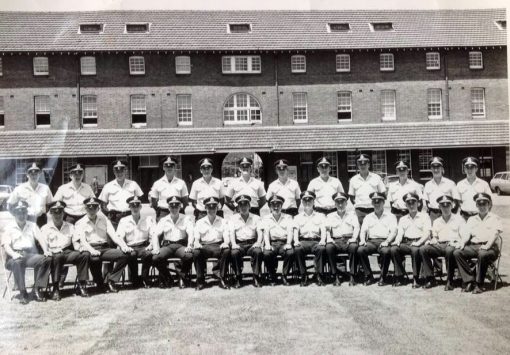
Det Cst 1/c Graham CLARK, P.C. Cst 1/c Stephen GORDON, Det Cst 1/c John DAVIDSON, Det Cst 1/c Stephen McCLELLAND, Det SenCon John LARKIN, Det SenCon Dennis HOLDMAN, Det SenCst Ted McCARTHY
Middle Row
Det SenCon John BRENNAN, P.C. Cst Bill BRANDER, Det SenCon Stephen LIVERSIDGE, Det SenCon Bill SUTTON, P.C. Cst 1/c Rod BRYAN, P.C. Cst 1/c Peter WHALAN, P.C. Cst 1/c Shayne McANULTY
Front Row
Det Sgt 3/c Jim THORNTHWAITE, Det Sgt 3/c Ken WATERS, Det Sgt 2.c Allen HALLIDAY, Det Sgt 1/c Russ COOK , Det Sgt 3/c Ray HALLAM, Det Sgt 3/c Brian BORTHWICH, P.C. P/W Const 1/c Jenny COUPER
Mark DAVIDSON & John Stuart DAVIDSON
Daily Telegraph – 15 January 2025
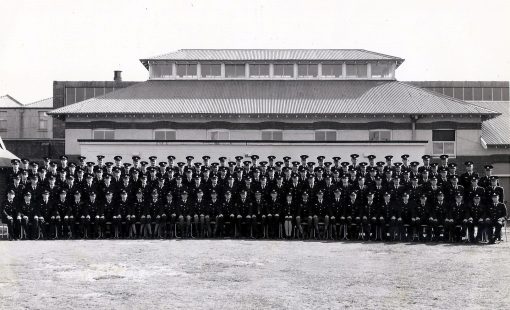
Class 127
Al Sparkes
20 January 2025
I have done my best to copy this article from the Daily Mail, a UK News Paper. Its a story about many stories about Davo, the great man. Unfortunately, the actual article is behind a pay wall and I cannot share it from the web. Many thanks to Ray Lambie for his contribution to the story. Unfortunately I wasnt able to place the photographs in with the story but have attached them as best I could.
Two anecdotes repeatedly come up when old cops remember legendary detective inspector John Davidson, who died in a Sydney aged care facility last week aged 75.
One is how Davidson walked into an Independent Commission Against Corruption inquiry hearing dressed in a bright red suit in the early 1990s.
‘If I’m going to a circus,’ the always colourful and wildly eccentric character said, ‘I’m going to dress like a clown.’
The second vignette is how Davidson seized a .357 Magnum revolver from Neddy Smith after arresting the notorious gangster in a foiled armed robbery and kept to it carry as his own sidearm.
The suit stunt, which occurred when ICAC was investigating the relationship between NSW police and criminals, showed Davidson’s disdain for dealing with what he once called the ‘complaint industry’.
The revolver story was part of a more significant narrative – how Davidson brought to an end one of Australia’s most infamous criminal careers by putting Smith permanently behind bars.
But the tale also has an intriguing twist: one of Smith’s accomplices claims the handgun Davidson took as a trophy that day was actually his and that Smith had been carrying a shotgun.
John Stuart Davidson – ‘Davo’ to his colleagues – was a genuine hard man of the NSW Police Force who served with particular distinction as a member of the ‘Breakers’, or Special Breaking Squad.
Tall and powerfully built, he instilled fear in the felons he pursued and gained a reputation for doing whatever it took to send serious wrongdoers to jail.
He further stood out due to his neatly clipped goatee and a sartorial style which sometimes saw his suits complemented by a pair of crocodile skin or red leather shoes.
Davidson was accused of fabricating confessions and planting evidence to secure convictions against suspects he knew or believed were guilty, earning the nickname ‘Front End Loader’ among some crooks and lawyers.
But unlike his corrupt decade-older contemporary Roger Rogerson – who Davidson dismissed as ‘a poisoned, evil little man’ – no one ever credibly claimed he took a bribe. His desire to deliver a particular version of justice was insatiable.
At the top of Davidson’s hit list of targets was Rogerson’s sometime partner in crime Arthur Stanley ‘Neddy’ Smith, a convicted rapist, major heroin dealer and prolific armed robber.
Smith, who was diagnosed with Parkinson’s disease in his mid 30s, claimed crooked cops including Rogerson had given him a ‘green light’ in the early 1980s to commit whatever offences he liked, except murder.
In October 1987, Smith and Glen Roderick Flack were accused of stabbing to death a man called Ronald Flavell during a drunken road rage incident at Coogee in Sydney’s eastern suburbs.
Both were granted bail and Smith spent much of the next year staging drug rip-offs and other small jobs before turning his attention back upon stripping payroll deliveries at the end of a gun.
‘I kept going back to the armed robberies,’ Smith wrote in his 1993 memoir Neddy. ‘Perhaps I had a death wish. Perhaps I just loved the adrenalin buzz. And perhaps it was just because it was so bloody easy.’
The last big score Smith planned was to intercept the Botany Council Christmas payroll – $160,000 in wages and holiday pay, all in cash – which was to be delivered on December 22, 1988.
Smith, then 44, asked 32-year-old Flack to take part in the robbery. They roped in clean-skin Richard John ‘Harry’ Harris, a 27-year-old boxer and bouncer who had impressed the pair by standing up to them one night in the city at the British Ex Services Club.
The afternoon the heist was to go down in Sydney’s inner-south, Smith cased the Botany Council chambers in Coward Street with Flack and Harris.
Unfortunately for Smith, the trio was spotted by then detective sergeant Davidson, who was driving home to the Sutherland Shire with fellow detectives Wayne Temby and Alan Conwell.
Davidson immediately recognised Smith and Flack but none of the Breakers knew Harris. Those involved have always insisted this random sighting was simply good police work and not the result of a tip-off.
The next morning, Davidson led a team of detectives backed up by the Special Weapons and Operations Squad who lay in wait for the robbers from dawn.
Four SWOS members including Davidson were inside the council chambers, with detective Allan Sparkes on the third floor in an over-watch position, while other police cars were stationed nearby.
Davidson instilled fear in the felons he pursued and gained a reputation for doing whatever it took to put wrongdoers behind bars. He is pictured in 1991 with a birthday cake featuring a likeness of the .357 Magnum he seized after arresting Neddy Smith three years earlier
Davidson would later say his men had ‘the adrenalin running out of their ears’ as they waited for the arrests to go down.
About 7.30am, Harris pulled up in Coward Street in a Ford Econovan with Smith and Flack in the back. Harris then left on foot and returned half an hour later in a Ford Falcon station wagon which he parked across the road behind a bank.
Smith and Flack could not see out of the van and were communicating by walkie-talkie radio with Harris, who was acting as their ‘cockatoo’ and had to be taken out before his accomplices.
When the payroll arrived, a fresh complication arose. Council staff eager to pick up their wages had begun appearing on the footpath and had to be ushered inside.
Once those employees were out of harm’s way, a prearranged signal was given and detectives Ray Lambie and Craig McDonald from the Armed Hold-Up Squad moved on Harris.
The getaway driver was sitting on a loaded .38 police-issue Smith & Wesson it was later revealed had been stolen from a cop’s house in November 1985 but caused little trouble.
In the station wagon police found a black balaclava, baseball cap, walkie-talkie and a kit bag containing a mouth guard – an unexpected item Lambie said Harris later explained.
‘When we were interviewing him he said, “Look, I know I had a gun but I would never have pulled you blokes on – I would have just put my mouth guard in and duked it out”,’ Lambie recalled.
‘He was not a massive bloke, so far as height was concerned, but he was so built that we couldn’t put his arms together at the back to handcuff him.’
McDonald had been amused by Harris’s take on what might have happened if he tried to fight his way out.
‘I told him, “It’s no good trying to punch on when I’ve got a Remington 870 shotgun in my hands”,’ McDonald said.
When Harris was secured, Davidson and the rest of the SWOS team came out of the council chambers to take down Flack and Smith in the van.
‘I ran out with a shotgun and said, “Police! Come out with your hands up”,’ Davidson later told a court.
Smith gave his own self-serving version of what happened in his book Neddy, starting with the armoured truck pulling up to the kerb.
‘The guards got out and started to get the tins,’ he wrote.
‘Just as I was about to pull the door open and take the money from the two guards – it would have been over in seconds – a voice called out: “You, in the back of the van. It’s the police here. Put down your weapons and come out of the van with your hands raised above your heads”.’
Smith said he paused for a second, stunned his plot had come undone, as a cop said: ‘Come out or we will commence firing into the van.’
‘It was the worst feeling I had ever had, like getting caught with your trousers down, so to speak,’ Smith wrote. ‘It wasn’t fear I felt, but disgust at being caught. Trying to escape was useless.’
Council staff watched from the windows – one even took photographs – as Smith slid open the van’s side door before he and Flack put their hands above their heads and stepped out.
‘Guns were pushed up against our heads,’ Smith wrote in Neddy. ‘One cop was nearly frothing at the mouth, he pressed his pump-action shogun up against my neck so hard. He was really uptight.’
Smith said that cop warned him, ‘You weak c***, why don’t you have a go so I can kill you?’ before he and Flack were thrown on the ground and their hands cuffed behind their backs.
‘A shotgun was again pressed against my neck and my hands pulled up as far as they would stretch,’ Smith wrote.
‘Then one low a***hole started to kick me in the face. He was screaming at me all the time: “You f***ing maggot, now I’ve got you. It’s taken me 10 years, now I’ve got you.’
Smith didn’t name that detective but he was referring to Davidson.
‘The boss of the SWOS came over and stopped the crazy cop from kicking me in the face,’ Smith wrote.
‘Then the police started going silly, hugging each other, jumping up and down, slapping their hands together and yelling: “You f***ing beauty, we have got Neddy Smith”.’
Smith, Davidson later said, was ‘rattling around like a a battery toy on the footpath and it wasn’t just his Parkinson’s disease’.
Davidson would claim a council clerk was asked at the scene if he had witnessed any police misconduct during the arrests. According to Davidson, the clerk told him he had seen Smith ‘trying to bite a police officer’s shoe’.
When journalist Neil Mercer was researching his recently published book The Kingpin and the Crooked Cop, which traces the criss-crossing careers of Smith and Rogerson, he asked Davidson if Smith had been given a good kicking at Botany.
‘He might have got a boot in the head – I didn’t see it happen,’ Davidson told Mercer.
A court would hear Smith wanted to know of one of the arresting officers: ‘Why didn’t you shoot me? I’d be better off dead.’ The officer allegedly answered: ‘Well, if you hadn’t dropped the gun, we may have.’
Years later, solicitor Chris Murphy – who despised Smith perhaps even more than Davidson – quoted the detective as having said that pinching Smith was ‘the best day of my life’.
In the van, police found two black balaclavas, a walkie-talkie and carry bag, as well as a sawn-off 12-gauge shotgun and a loaded Ruger Blackhawk .357 Magnum.
It was this stainless steel-barreled, wooden gripped, six-shot revolver which Davidson later checked into the SWOS armoury then signed out to use as his personal sidearm.
Smith faced further indignity back at the Sydney Police Centre in Surry Hills where he was photographed wearing only a T-shirt and boxer shorts.
‘I took his freedom, his gun and then pulled his pants down and took a mugshot in his undies to humiliate him,’ Davidson told his son Mark, according to the Daily Telegraph.
Smith wrote in Neddy: ‘The police centre was like a zoo – and I was the only animal attracting visitors.’
‘The only difference between me and real animals was I didn’t get any peanuts for my performance. The police were continually photographing me.
‘One fool of a policeman tried to get me to pose for photo with him. He stood beside me, then went to put his arm on my shoulder. “F*** off fool, I’m not a f***ing trophy”.’
Smith’s solicitor Val Bellamy arrived at the police station but had almost nothing to do. ‘I knew I didn’t need him, I was finally at the end of my road,’ Smith wrote. ‘There was no way I could get this blue fixed up, no way at all.’
Smith pleaded guilty in September 1989 to conspiring to commit armed robbery and was sentenced to 13 years in jail with a minimum eight years. He also admitted possessing the .357 and sawn-off shotgun.
At the sentencing hearing Davidson had described Smith as ‘by reputation one of the most violent and feared criminals in the state’.
Flack had pleaded guilty a month earlier to his role in the bungled stick-up and got 12 years with a non-parole period of seven.
Smith would spend the rest of his life in prison. He was found guilty in February 1990 of Flavell’s murder and sentenced to life then refused to give evidence against Flack, who the Crown alleged inflicted the fatal wound.
The case against Flack fell apart and he walked on the murder charge. Flack has largely stayed out of the limelight in recent decades and has always tried to avoid publicity but has told associates the firearm Davidson took was his and not Smith’s.
Lambie had not previously heard that claim and said physical descriptions of a gunman wielding a similar weapon in previous robberies matched 195cm (6’5″) tall Smith rather than the much smaller Flack.
‘The issue with the silver pistol was that it turned up in a number of robberies,’ he said. ‘That was the signature for Smith as far as I was aware.’
Retired armed robber Graham ‘Abo’ Henry, who ran with Smith through much of the 1980s and was no friend of Flack’s, said he had not seen his onetime confederate carry such a fearsome handgun.
‘On most occasions if I ever did anything with him all he had him was usually a police .38,’ Henry said of Smith.
‘I’ve never ever seen him with a f***in’ Magnum, ever. I had one but he f***in’ didn’t. I had a big silver c***. That could have been mine for all I know.’
Whoever previously owned the revolver, its new custodian wore the weapon – far more powerful than a standard police .38 – tucked into the back of his belt.
Lambie insisted Davidson had approval from his superiors to carry the imposing hand cannon while he was at work.
‘I remember seeing the report he put in to take possession of it as his own personal weapon for protection purposes because he’d been threatened by organised criminals,’ he said.
Davidson would go on to command Task Force Magnum which was formed in 1991 to investigate a spate of hits on armoured vans and other armed robberies.
He was quizzed about the .357 while giving evidence at a murder trial in July 1995, a year after retiring with a stress-related illness, having spent a quarter of a century on the force.
Davidson said the revolver had been used in several robberies before the Botany Council payroll attempt and he had carried it for almost two years.
‘I wanted to show Neddy Smith he couldn’t beat me, couldn’t buy me, and when it was all over I took his gun,’ he said. ‘I hated and despised the man and it was the final thrust, if you like, of pulling him off his throne.’
Attempts were made during the trial to challenge Davidson’s credibility and portray him as something of a cowboy.
He agreed with Greg Woods QC, representing one of two men charged with murder, that he had fired two shots from the .357 into the air while arresting drug dealer Danny Landini.
Davidson denied such actions were irresponsible. ‘It got his attention,’ he said.
Dr Woods: ‘Burwood is fairly densely populated?’
Davidson: ‘Not in the sky it’s not.’
Davidson also told Clive Steirn, a former fraud squad detective turned barrister representing the other accused killer, he had never admitted giving perjured evidence.
Steirn: ‘You have admitted to being a mug lair.’
Davidson: ‘I’ve been called that’.
Stroking his trim white beard, Davidson added, ‘I’ve also been called the Kentucky Fried Colonel.’
Davidson might have left the police force – he spent much of his time pursuing his passion for fishing on the NSW north coast – but he continued to make headlines.
In 1996, a serial conman and fantasist named Danny Shakespeare (or Page, or Baxter, or McPherson) made wild allegations against him at the coronial inquest into the May 1985 disappearance of hit-man Chris Flannery.
Shakespeare ludicrously claimed he had seen Davidson shoot Flannery dead with a .38 revolver at Geelong racetrack six months after his last known sighting. After spouting this nonsense, Shakespeare got into his lawyer’s BMW and drove off.
Davidson attended Smith’s 1998 trial for the July 1983 murder of brothel keeper Harvey Jones, not as a witness but as interested observer.
Smith had told a cell-mate at Long Bay’s Special Purpose Centre of Jones’s last moments ‘I blew his heart out with a big .357’ – five years before the Botany attempted robbery.
Wearing a leather jacket with snake heads stitched on either side of his chest and one below the back collar, he offered to buy Smith’s wife Debra a cup of coffee from a stall run by volunteers at the Darlinghurst courthouse. She told him to ‘p*** off’.
Forensic analysis of two bullets picked out of Jones’s ribs when his remains were dug out of a beach at Botany in March 1995 had determined they could have been either .357s or .38s.
For what it’s worth, Henry – who detested Smith at least as much as Davidson by the time they parted ways – has long maintained of his erstwhile collaborator: ‘He never shot any c***.’
Smith was convicted of Jones’s murder and died in September 2021 at Long Bay jail aged 76, having been cleared of six other underworld killings.
Rogerson died in Prince of Wales Hospital at Randwick on January 21 last year aged 83, while serving a life sentence for the May 2014 murder of drug dealer Jamie Gao.
Following the Wood Royal Commission into the NSW Police Service (1995-1997) Davidson was charged with several criminal offences.
He was accused with three other cops of having fabricated evidence and faking the confession of a cabaret singer arrested over a 1991 robbery.
Davidson told this reporter the tension waiting for the jury’s verdicts was better than backing horses.
Upon his acquittal and that of his former colleagues in April 2002, Davidson attacked what he called ‘the complaint industry that has blown up over the last decade’.
In March the next year he and four others were cleared of assaulting and fabricating evidence against an offender known as the Kareela Cat Burglar who had been arrested in June 1984.
All five officers had originally been commended for their roles in convicting the thief, whose criminal record included the sexual assault of a five-day-old boy in a Melbourne hospital.
Chris Murphy, who often sparred with Davidson when he was in the witness stand, summed up his old adversary in a Sun-Herald column published in March 1995:
‘The unorthodox detective in the conveniently blood-red shoes thought he was doing God’s work for him. Even when God forgot.
‘When he couldn’t get a signed confession out of a tough guy, he usually had verbal admissions by the time he got his quarry to court. Not that they always stuck.
‘Among the pure and the putrid in the police, Davidson’s methods brought him a varied reputation but nobody denies him his hour of glory.’
Giving Davidson a slight promotion in rank, Murphy concluded: ‘While others held the gate open for murderer Neddy Smith to rampage through the 1980s, Chief Inspector Davidson had his teeth at his tail.’
* Story behind any Nickname:
Nothing further, than what is recorded above, is known about this person at the time of publication and further information and photos would be appreciated.
This afternoon we bid farewell to one of our retired officers, Al Lukes.
His service in Port Macquarie was one of the best I have ever attended.
The Rural Fire Service were well represented and their Chaplin conducted a wonderful service.
Retired Police from Taree, Coffs Harbour and Port Macquarie were also well represented.
Retired Chief Supt Ian Campbell gave Als eulogy on behalf of the Retired Police Port Macquarie Branch in which Al was the Chairman and leader for many years.
May you Rest In Peace Al, you are already sadly missed.
On Sunday he had dinner with is next door neighbour and went home early evening.
His neighbour rang him several times yesterday morning ( Monday ) but did not get a response so in the early afternoon he went down to Al’s house. He found him still in bed and unresponsive.
His cause of death is not known at this stage but it will be determined in the coming days.
I will advise of funeral arrangements when they are known but that will be later this week or possible next week.
I have spoken to his sister Kathy and offered her our assistance if she requires it.
Al lived alone and his sister is his only surviving relative as far as we can establish.
Al was a man who was committed to providing service to the community. Firstly as a Police Officer, then as Chairman of the Mid North Coast Branch of the RFPA. He was a dedicated RFS volunteer and for many years he ran a support service for emergency workers suffering the effects of PTSD and similar type work related medical conditions.
Al was a very selfless man.
RIP Al Lukes.
Class 146 – Redfern Police Academy. Sworn In on Monday 10 March 1975. They didn’t have a March Out because the Parade ground was flooded. They were Sworn In in one of the Class rooms. Martin BETCHER ( Back Row, 2nd from left )
Alastair Martin LUKES AKA Al LUKES Al is the 5th person ( from the left )
Al LUKES & C/Supt ?
Alastair Martin LUKES AKA Al LUKES
* Story behind any Nickname:
Nothing further, than what is recorded above, is known about this person at the time of publication and further information and photos would be appreciated.
Lionel passed away at home in Corowa on Tuesday January 14, 2025, aged 78 years.
He was the dearly loved father of Rosemary, Bernadette, Brendan, and Andrew and grandfather and great grandfather to their families.
Lionel was a dear friend to Angela and special brother of Annie.
Dearly loved, sadly missed.
The funeral service for the late Mr Lionel Smith will be held on Friday February 7, 2025, at St John’s Anglican Church, Federation Avenue, Corowa at 2.00pm.
Thereafter private cremation.
It is with deep sadness and heavy hearts that we announce the passing of our beloved father, Lionel Leslie Smith. He was a loving father, grandfather, uncle, & friend who touched the lives of so many with his kindness, wisdom, and wit.
He will be greatly missed but forever remembered by all who knew him.
A funeral service to honour and celebrate his life will be held at 2pm Friday, 7/2/2025 at the St Johns Church in Corowa NSW.
Friends and family are invited to join us in remembering him.
Following the service, there will be a wake/celebration of life at Club Corowa, to share memories and support one another during this difficult time.
Dad wanted a more light hearted dress code at the service so, for the day it will be his favorite combo, blue denim jeans & white button up shirts.
For those who plan on attending the wake, could you please RSVP by messaging a thumbs up emoji followed by the number of people in your group to this Facebook account directly or, via text to either 0438447201 or 0427968905.
This will help us ensure we have adequate seating, food and alcohol for those attending.
At the service there will be a box for people to place letters in.
We ask that anyone who has a great/wild story with Lino please write it down so the family can enjoy them over the following funeral day.
We are incredibly grateful for the love and support we’ve received from family and friends, and we hope you can join us in celebrating his life.
It’d also be greatly appreciated if you could share this post around as Dad knew so many people however only has a few of them added on Facebook.
Rest in peace, Dad.
You will forever be in our hearts.
* Story behind any Nickname:
Nothing further, than what is recorded above, is known about this person at the time of publication and further information and photos would be appreciated.
“possible” relation in ‘the job‘: O.R. BLYTON, NSWPF # 8715?
NSW Police Training Centre – Redfern / Police Training College – Penrith – Class # ? ? ?
New South Wales Police Force
Regd. # 8038
Rank: Commenced Training at either Police Training College Penrith or Police Training Centre Redfern – Police Academy on Tuesday 12 April 1955 ( aged 19 years, 5 months, 5 days )
Probationary Constable – appointed ? ? ?
Constable – appointed 17 May 1956
Constable 1st Class – appointed 17 May 1961
Detective – appointed ? ? ?
Senior Constable – appointed 17 May 1966
Leading Senior Constable – appointed ? ? ? ( N/A )
Sergeant 3rd Class – appointed 28 January 1971
Sergeant 2nd Class – appointed 18 August 1978
Final Rank: = Sergeant 2nd Class
Stations: Redfern ( 7 Division ) GDs ( 9 May 1955 – 24 August 1956 ),
Dubbo GDs ( 25 August 1956 – 5 February 1958 ),
Baradine GDs ( 6 February 1958 – 2 February 1961 ),
Mudgee GDs ( 3 February 1961 – 18 July 1963 )( Cst 1/c ),
South District – Captains Flat GDs / O.I.C. ( 19 July 1963 – 12 June 1971 ),
Jerilderie O..I.C. ( 13 June 1971 – 9 August 1973 ),
Forster O.I.C. ( 10 August 1973 – 8 May 1985 ) ,
Hornsby Police Station GDs ( 16 Division )( 9 May 1985 – 30 June 1989 ) – Retirement
Time employed ( Paid ) with NSW Police: From: 12 April 1955 to 30 June 1989 = 35 years, 5 months, 7 days
Service ( From Training Date ) period: From 12 April 1955 to 30 June 1989 = 35 years, 5 months, 7 days Service
Retirement / Leaving age: = 53 years, 7 months, 23 days
Time in Retirement from Police: 35 years, 5 months, 7 days
Awards: No Find on the Australian Honours system – although:
National Service Medal – granted 22 March 2017
Police Long Service and Good Conduct Medal – granted 20 February 1978
Commended for Courage and Efforts in the arrest of armed male at Home Rule, via Mudgee between 29 July – 1 August 1961.
Former Forster police officer, Ronald (Ron) Arthur Blyton was farewelled by family and friends at a service conducted by Great Lakes Funerals earlier this month, Monday, January 6.
Nothing further, than what is recorded above, is known about this person at the time of publication and further information and photos would be appreciated.
A new senior officer will start his duties today, as Inspector Daniel Skelly opts for a sea change and takes over as the officer-in-charge of the Raymond Terrace sector.
Inspector Skelly has moved from Dubbo up to the Port Stephens-Hunter PD, as Chief Inspector Al Janson ( # 28475 ) takes up a position further south on the Central Coast.
Inspector Skelly says he is looking forward to getting to know the local community and improving the liveability of the area.
“I’m eager to start and take on the role of Raymond Terrace OIC, whilst looking at parts of customer service to help ensure the community receives the best service when dealing with local police.”
Commander, Superintendent Gillies, would like to thank Chief Inspector Janson for his years of service and wealth of knowledge at Port Stephens-Hunter PD and wishes him all the best with his new appointment.
Great experience: Inspector Dan Skelly finishes duties at Dubbo Police Station, counting his five years working in the city a “privilege”. Photo: BELINDA SOOLE
NSW Police Inspector Dan Skelly embraced his role as a country cop but with life throwing him a “curveball” recently he’s reluctantly saying goodbye to the region.
EMERGENCY SERVICES Inspector Dan Skelly departs Dubbo
Dubbo Photo News
By JOHN RYAN
PHOTO: DUBBO PHOTO NEWS/JOHN RYAN
Dan Skelly says he didn’t want to move here, but now calls Dubbo home.
DAN SKELLY leaves Dubbo after five years as a police inspector working in the Orana Mid-western Police District.
From a media perspective, he’s taken phone calls night and day, on or off-duty and has been willing to help at any time to get the best messages out to the community.
He’s also been involved in plenty of behind the scenes community work and he’ll be sorely missed by the many people he’s assisted, on the job or not, during that time.
Most cops who grow up on the coast don’t put in transfers to come out west, where the summers are hot and the beaches are, almost non-existent.
Inspector Dan Skelly hadn’t heard of Dubbo’s Sandy Beach until he arrived in town so after having Newcastle and the Central Coast beaches his playground, he didn’t think much of it.
“I was transferred into Dubbo from Wyong and when I first got here, being a boy from Newcastle, my goal was to get back. Every time I’d travel back to the coast I’d pass the 100k speed sign at the bottom of Mugga Hill thinking, ‘one day I’m going to pass this for the last time’.
“Five years later it’s a different ball game. I’ve called Dubbo my home, I’ve got my immediate family here, my wife and my son, but when I pass that sign this week going back to work on the coast I’ll pass it with a heavy heart because I’ve been privileged to work with some great people in Dubbo and I’ve also been privileged to make friends with a lot of good people,” he said.
He said Dubbo’s community vibe has really hit home, with so many locals he’s met who spend so much of their time working for the betterment of the city rather than for their own personal gain.
He says that volunteer work makes the city far more liveable.
“When I first came here I couldn’t wait to go. Now, I wish I could stay,” he said.
Inspector Skelly said it’s a story you hear from so many police who grew up in Sydney or along the coast and then get told they’ll be working west of the Sandstone Curtain. They loathe those travelling orders but then after being thrown in the deep end, they make it work better than they ever believed possible.
He says while it can be difficult initially, being transferred as part of the job can be a blessing in disguise, forcing you out of your comfort zone and never regretting it.
“I’d never been to Dubbo in my life. I had to look on the internet to see the best way to get here, but yes, it does force you out of your comfort zone and it makes you go out and experience other things, it becomes the new normal in your life,” he said.
Dan Skelly is leaving town not for a promotion or the prospect of an exciting new job, but for medical reasons.
He had a sudden and surprising diagnosis of Leukemia in December last year and he’s preparing for a stint at Sydney’s Royal Prince Alfred Hospital next month for treatment.
“Because of that treatment I’ll be off work for six months and the police have been kind enough to transfer me back to the Newcastle area where all my extended family live,” he said.
“The support I’ve had has been tremendous. I can’t speak highly enough of my boss, superintendent Peter McKenna and western commander Geoff McKechnie, all the senior management staff at Dubbo and all the troops at Dubbo police station have all been fantastic with their support.
“All the other people that I’ve met in the community have also been great, they’ve really rallied and been very interested in my progress during this time of adversity,” he said.
Inspector Skelly said he’ll get better, and he’ll be back, waiting until the travelling and gathering restrictions brought about by the COVID-19 pandemic have eased.
“When all the embargoes have been lifted as far as social distancing is concerned, I certainly will be having a few drinks with some people back here in Dubbo,” he said.
“Where I come from in Newcastle, I was lucky enough to grow up when it was still really a large country town and people had attitudes similar to those in Dubbo where everyone says g’day as they walk down the street.
“The good part of the community here is 100 per cent behind the police. People are always there willing to help us, it’s just a different and slower pace of life out here that I’ve become accustomed to and really cherish,” he said.
Article Name: EMERGENCY SERVICES Inspector Dan Skelly departs Dubbo
DRIVING DOWN CRIME: Orana Mid-Western Police Inspector Dan Skelly is the new officer in charge of the Narromine, Warren and Wellington sectors. Photo: JENNIFER HOAR 13 February 2018
* Story behind any Nickname:
Nothing further, than what is recorded above, is known about this person at the time of publication and further information and photos would be appreciated.
Class 152 were Sworn In on Monday 27 September 1976
17348 LARRY RAYMOND HILL M 17349 PAUL STEWART PARMENTER @ BOMBA M 17350 MICHAEL KENNETH ROBINSON M 17351 PETER FRANCIS MOSS M 17352 JOHN FRANCIS PURCELL M 17353 GEORGE MAXWELL SHIPWAY M 17354 C.L. JENKINS F 17355 GARRY ALWYN DOBSON M 17356 G.B. PARKER M 17357 COLIN MICHAEL KELSON / COL / PUSSA M 17358 M.B. THOMPSON M 17359 P.L. MAYGER M 17360 JULIE E. ESTELLE HERON / JULIE HERON F 17361 D.J. ISEMONGER M 17362 G.F. WARD M 17363 WARREN J GEANEY M 17364 I.R. BERRY M 17365 G.S. REICHART M 17366 T.A. BOON M 17367 C.J. BRAID M 17368 A.J. HETHERINGTON M 17369 WILLIAM K. HARVEY @ BILL HARVEY M 17370 B.W. EMMS M 17371 W.A. AITKEN / JOCK AITKEN M 17372 J.F. McGROGAN M 17373 G.L. BOOTH M 17374 W.J. MAGANN M 17375 M.J. SLADDEN M 17376 G.E. RICHARDSON M 17377 P.R. CAMPBELL M 17378 T.J. REJNOWICZ M 17379 J.M. EGAN M 17380 T.O. HARVEY M 17381 G.A. HOOK M 17382 C.J. HILLSLEY M 17383 J.S. TRITTON M 17384 K.J. POWER M 17385 R.T. BEATON M 17386 JEANIE B. RILEY F 17387 I.J. SKEWES M 17388 S.M. WILKINSON M 17389 GEORGE A. SAWYER M 17390 J.R. WITCOMBE M 17391 M.A. HERNANDEX M 17392 A.J. HILLIER M 17393 D R SMITH M 17394 MARK JOSEPH KOHUTEK M 17395 GARRY COLIN JAMES KEIR M 17396 DAVID CHARLES UPSTON M 17397 ROBERT JAMES ERSKINE M 17398 STEPHEN NORMAN ARCHER M 17399 MICHAEL ALEXANDER COWNIE @ MICK M 17400 IVER SANDRO PEDERSEN M
Prior to joining the NSWPF, Tony worked at the Prince Henry Hospital, Sydney.
* Story behind any Nickname: A play on his surname.
Nothing further, than what is recorded above, is known about this person at the time of publication and further information and photos would be appreciated.
Passed away suddenly on Monday, 9th December 2024. Beloved partner of Gloria. Terry will be sadly missed by his loving family and many dear friends.
Aged 91 Years
Forever in our Hearts
Relatives and friends are invited to attend Terry’s funeral service to be held at H.Parsons Funeral Home, 125 Manning Street, Kiama on Thursday, 19th December 2024 at 2:00 pm.
Kiama mourns the loss of local legend and olympian, Terry Nicoll
11 December 2024, 1:49 PM
Terry Nicoll is onto his next glory, after a lifetime of Olympic triumphs and community service.
Kiama is mourning the passing of one of its most prominent locals, Terry Nicoll, who died on Tuesday 10 December at the age of 90. Terry was a well known member of the community, a decorated athlete, and a man of unwavering dedication and spirit.
Born and raised in outback NSW, Terry’s journey to Olympic glory began amidst the rugged landscape of sheep and cattle stations, where he developed exceptional horsemanship. His natural affinity for riding became the foundation for his success in the modern pentathlon, a challenging event combining fencing, swimming, show jumping, shooting, and running.
Terry’s Olympic story began when Australian swimming coach Forbes Carlisle noticed his potential and encouraged him to train for the Melbourne 1956 Olympics. After refining his skills in fencing and pistol shooting, Terry excelled at the Pre-Olympic Pentathlon trials, earning a coveted spot on the Australian team.
Though his Olympic career was brief, Terry went on to compete in World Championships in Mexico City and Leipzig, continuing to make his mark on the international stage.
After retiring from competitive sport, Terry dedicated himself to public service, joining the NSW Police Force in 1957. Over two decades, he served with distinction – mentoring and inspiring others. He also represented NSW in Police and Emergency Services games, adding to his collection of accolades.
In his later years, Terry and his wife Gloria settled here in Kiama, where he became an integral part of the community. Active in the Kiama Men’s Probus Club and Probus Choir, Terry remained a vibrant and inspiring presence.
Terry Nicoll’s life was a testament to perseverance, discipline, and community spirit. His legacy will endure in Kiama and beyond, inspiring future generations to reach for their dreams. He is survived by his wife Gloria and will be deeply missed by all who knew him.
Sergeants Course 1 of 1979 – Class 2 – Feb – March 1979 Sergeant’s Course class 2 of 1979. Back Row – Darryl Somerville, Len De Audney, Bob Parry, Russell Reid, Ron Bloxham, Peter Woodman, Bob Raymond, Ian Bowyer-Smyth. Middle Row – John Lappan, Des Trute, Cecil Shears, Harry Delaforce, Warren Taylor, Jack Rumley, Don Sykes, Thomas Powick. Front Row – Mervyn Masterton, Terry Nicoll (Instructor), John Symons (Instructor), Bruce Gould (Director), Bryan Binns (Instructor), Peter Moffatt (Instructor), Graham Frazer, Michael Milham.
PISTOL INSTRUCTION
In September, 1960, the Police Association made representations to the Police Department that police undergo pistol practice at least once a year. In country districts at the time, pistol practice and instruction was carried out by superintendents’ drivers during station tours. Arrangements were now underway to train some police as pistol instructors for police in the metropolitan area and an order was placed with the Government Printer for 30,000 targets.
Approximately 70,000 rounds of .32 calibre ammunition were needed for 1960-1961 pistol practice. Expenditure for metropolitan pistol practice was expected to be about 900 pounds. This was based on the assumption that each member would fire 10 rounds from a .22 calibre target pistol and 10 rounds from his service pistol.
Instruction classes were to last two hours. The lessons were to cover firearms safety, pistol practice and pistol maintenance. Wynyard Railway pistol range was available to city police on request to the Commissioner of Railways, while police in outer divisions would be able to practice at army establishments and other authorised ranges. \Trainee Police at the Police Training
Centre received pistol practice using target pistols and their service revolvers, with additional practice being undertaken during their refresher course.
Some police who acted as pistol instructors in the late 1950s and early 1960s were,
Constable D.G. McInnes, 7 Division, pistol instructor to police in outer metropolitan police divisions in December, 1954 and January, 1955.
Constable W. Stanford, qualified as a pistol instructor for Parkes District after attending an armoury course from the 2nd to 6th July, 1962.
Constable R.G. Brown, qualified as a pistol instructor for the North Eastern District between 1st and 5th July, 1963.
Constable R. Gilmour, became a pistol instructor for the Dubbo District, after completing a course at the armoury from the 1st July, until the 5th July, 1963.
Constable G.T. Spurr, Broken Hill, attended a course from the 7 June, 1965, and qualified as a pistol instructor for Broken Hill Sub-District.
Constable 1Class Nicoll was required to attend a 5 day pistol instructors course late in June, 1965. Constable Nicoll qualified as a pistol instructor and was required to act as an assistant pistol instructor during metropolitan pistol practice in July, 1965.
Extract from pages 272 & 273 of NSW Police Heritage story.
Constables Nicoll and Michelson, applied for two Department target pistols in 1963. One was a .22 calibre Smith & Wesson K22 revolver and the other was a .22 calibre Hammerli self loading pistol. These pistols were required by Nicoll and Michelson for use in the Modern Pentathlon Championships being held in Melbourne in August, 1963.
In 1964, the two constables again borrowed pistols from the Police Department for use in the championships being held in March of that year.
Another accomplished target pistol shooter was Detective Sergeant 2Class Merchant, of the Scientific Bureau who was captain of the Police team selected to compete in the Dunlop Shield Police Pistol competition.
The competition was held in conjunction with the Queensland Police Centenary in 1964.
The competition was shot over 25 metres and 50 metres, with centre fire and rim fire pistols.
Merchant’s team members used their own .32 calibre service pistols as well as two .22 calibre Ruger self loading pistols and two .38 calibre revolvers.
Target pistol matches were also held between the Police Department and the Commonwealth Bank.
A competition between the two organisations was held on the 2nd May, 1961, at Sydney Pistol Club, La Perouse.
Sydney Pistol Club was established in 1953.
The Commonwealth Bank management approved the donation of a trophy for annual competition between the Police and the Commonwealth Bank.
The pistol competition was seen to be beneficial in providing pistol training for bank employees while at the same time providing a social activity within the bank. There had also been an accident where an employee of another bank was shot because of inadequate pistol training and the pistol match between the Commonwealth Bank and the Police Department was considered a way to improve firearms safety within the banks.
In 1962, another match took place between the Commonwealth Bank and the Police Department at Sydney Pistol Club. Members of the Police team were, Constable 1Class G. Green of 6 Division, Sergeant 3rd class A. Hall of Police Training Centre, Sergeant 3rd Class N. Merchant from the CIB, Sergeant 3rd Class R. Sutherland of the Fingerprint Branch, Sergeant 2nd Class J. W. Christie of the Police Armoury, and a team member named Mills, whose rank at the time is unknown me.
The Commonwealth Bank team consisted of Messrs Roberts, Lee, Harvey, Whiting, Worthington and Doolan. Sergeant Major N. Groth, Eastern Command Provost Corps, was appointed Range Master for the match.
The Police team won the competition and the Managing Director of the bank, Mr. E.B. Richardson, CBE, presented the trophy to the Commissioner of Police, N.T.W. Allan, who accepted the trophy on behalf of the police team. The match was shot over 15 yards with .32 calibre service pistols and consisted of slow fire and rapid fire phases with 10 rounds fired in each phase. During the rapid fire phase of the event, the targets turned away and then turned back to face the shooter for three seconds, similar to the duelling phase in what became the centre fire match in pistol clubs.
Extract from pages 275 & 276 of NSW Police Heritage story.
How Tarzan, Strickland and Cuthbert made sure Terry Nicoll competed at Melbourne 1956
When Melbourne 1956 Olympic modern pentathlete Terry Nicoll was a child in the late 1930s, his father took him to a theatre in Sydney to watch the newsreels. The show included a film about the Berlin Olympics and at the end of it, the greatest athlete in the world Jesse Owens spoke directly into a young Australian boy’s heart.
“I still remember today, that his face came on the screen, and covered the whole screen, and he just simply said: “You win a race, they put a gold medal around your neck, you become the Olympic champion”. That went through me like a knife in my chest, and from then on all I wanted to be was an Olympian,’’ Terry recalled, more than 80 years later.
George Terence ‘Terry’ Nicoll was born and bred in Randwick, Sydney, the eldest of 11 children, and named after his father George, an avid swimmer and captain of the Coogee and Clovelly Surf Clubs.
Terry inherited the competitor’s spirit and recalls racing his brothers and sisters around the block for bragging rights from an early age. He played cricket and rugby at Waverley College, to no great acclaim, but left at 15 to help support his family.
He found work out in north-western NSW, as a stockman on properties around Moree, Mungindi and Collarenebri. In his spare time, he tried his hand on the local rodeo circuit as a bull and bronc rider.
Back in Sydney in his late teens, he joined the Bronte Surf Life Saving Club and began competing there. To improve his swimming, he turned to 1936 Olympian Evelyn Whillier, then coaching at Bronte Baths.
Fellow swimming coach Forbes Carlile turned up one day, having become the first Australian to compete in the Modern Pentathlon at the Helsinki 1952 Olympics. He had heard that young Terry was “a bit of a horseman’’ and promptly recruited him to train for the Modern Pentathlon for the next Olympics in Melbourne.
“He told me about all the events of the modern pentathlon and said that one of them was fencing. I asked him how many chain of fence you had to put up, and he said “Not that kind of fencing – it’s sword-fighting”,’’ Terry recalled.
Another 1952 Olympian John Gibson proceeded to teach Nicoll the art of fencing, equestrian instructor Diana Gould converted him from a rodeo rider into a showjumper, while local distance star Al Lawrence (who won the bronze medal in the 10,000m at the 1956 Olympics) assisted him to develop his running.
He worked nights as a taxi driver to leave the days free for his training.
“Most blokes found the riding the hardest, but for me it was the running,’’ Terry recalled.
Despite taking up Modern Pentathlon little more than three years before the Melbourne Olympics, Terry performed well at the Olympic trials and was one of three men selected to compete at the Games, joining Neville Sayers and Sven Coomer.
However, his long-held dream of becoming an Olympian was almost shattered, along with his nose, when he had a serious horse-riding accident while training in Melbourne just six weeks before the Games.
“The horse shied at a gate post and I came off, and then he kicked me in the face and cut my nose completely in half,’’ Terry said, adding that his helmet had saved him from a worse injury. “I woke up in hospital.’’
He needed surgery to repair his nose and a plaster cast was placed across his face to aid the healing process.
After a few of days he was released from hospital back to the Olympic village and gently began to ease himself back into training.
However, he said it was only with the assistance of Tarzan, and Australia’s wonder women Shirley Strickland (later de la Hunty) and Betty Cuthbert, that he was able to make it to the starting line for the competition.
Terry recalls sitting on the edge of the Olympic pool trying to figure out how he could swim with the plaster on his face, when “an enormous man in a red tracksuit” came up to him and asked if he was that pentathlete and whether he still intended to compete at the Games.
“I told him that I would compete if I could find a way to swim, and he said he was working with the US team and offered to help me,’’ Terry said. “We got in and he helped me work out a way to swim with my head out of the water.’’
It was only when they emerged from the pool that Terry asked for the kind stranger’s name and discovered that he was being coached by the 1924 and 1928 Olympic 100m freestyle champion Johnny Weissmuller, then a Hollywood star after playing Tarzan in a series of popular movies.
Running was also difficult as he could not breathe through his nose, but he said Shirley knocked at his door in the village at 6am every morning to take him for a walk or run, and when she was unable to attend, Betty came with him instead.
By the time the Games began Terry felt he was back in “pretty good shape”. He vividly recalls marching in the Opening Ceremony, before the Duke of Edinburgh, at the Melbourne Cricket Ground.
The Australian team officials had schooled the athletes to tip their hats and turn their eyes right to acknowledge the duke when they marched past him, but with almost 300 athletes in the team, they decided they needed someone in the team to blow a whistle to signal the salute, and handed the whistle to Terry, placed roughly in the centre of the athlete ranks.
He performed that duty and wishes to this day that he had kept the whistle as a souvenir rather than returning it to the team officials.
When the opening day of competition arrived, he felt ready for the first of his five events – the cross-country riding – but he fell victim to more bad luck when his horse fell after clearing one of the jumps, and then bolted.
The rules required him to remount and complete the course within a timed period, but first he had to chase down his horse and the time ran out before he could finish.
That meant he received no points for the horse-riding event and was effectively eliminated from contention, but he continued through the next four days to complete the other four disciplines, finishing second in the fencing and in the top five in the Swimming, for an overall placing of 35th. His persistence also allowed the Australian Equestrian team to finish 8th overall.
Despite his bad luck, the experience left him “mad keen to go to the next one in Rome”.
In the meantime, he joined the NSW Police and was assigned to the mounted unit where he spent the next six years. His father died during that period, leaving him with “five brothers to try to keep on the straight and narrow’’ and younger siblings who needed financial support.
However, it was another horse-riding accident that ended his chances of going to a second Olympic Games. While riding in Wilberforce, he jumped his horse through a hedge but it was hiding a steel post, and they both fell and slid across a muddy hillside, the horse landing on him.
His competitive fires still burned and he recovered in time to contest the 1962 World Modern Pentathlon Championships in Mexico City, where he finally had the chance to shine and finished tenth in the world. He also competed at the 1965 World Championships in Leipzig, East Germany, and finished 13th. He regards that as the best performance of his career, competing against the might of the European and Eastern Bloc pentathletes.
“The standard was so high – three of the fellas in that field were sub-four minute milers,’’ he said.
At 32, he retired from Modern Pentathlon but found another competitive outlet in Masters Swimming, winning 19 gold medals over the next 30 years. He was also a regular medallist at the Australian and World Police Games into the 1980s.
He frequently helped out with training squads at the Prince Alfred pool near Central Station in Sydney, which is how he was roped into coaching Dawn Fraser for her Masters comeback in 1986.
Stationed for much of his police career in the eastern suburbs of Sydney, he could often be found swimming from Bronte Beach to Wedding Cake Island and back, and was at one stage inspired by his friend, the Channel King Des Renford, to complete an English Channel crossing with him. They started training but Renford’s failing health prevented them from doing the trip.
Terry retired from the NSW Police at 55, having reached the rank of Acting Inspector, and moved to Kiama on the southern NSW coast. But he could be found on his local golf course even as he approached his 90th birthday, his competitive spirit undaunted after a lifetime of sporting achievement.
Terry Nicoll: A Lifetime of Dedication to Sport and Service
Brooke Pittman
25 March 2024, 1:27 PM
Terry Nicoll is a friendly Kiama local and former Australian Olympian who competed in the 1956 Melbourne Games. He is renowned for his prowess in the modern pentathlon, Terry’’s athletic journey began amidst the vast landscape of outback NSW, where he honed his riding skills while working on sheep and cattle stations.
The modern pentathlon comprises five disciplines; fencing, swimming, show jumping, shooting and running. Terry had a keen interest in horse riding, picking it up from a very young age and carrying it with him throughout his life which helped his performance in the Olympics as a young adult.
Terry’s path to Olympic glory took an unexpected turn when he was approached by Forbes Carlisle, Australia’s esteemed Olympic swimming coach. Encouraged by Carlisle, Terry took his skills from the bush to the pool, embarking on a rigorous training regime in preparation for the games
Terry’s riding skills were exemplary and he took to improving his fencing and pistol shooting skills with determination. His dedication paid off when he clinched victory in the Pre-Olympic Pentathlon trials, securing his spot on the Australian team for the Melbourne Olympics.
Another chance encounter with legendary swimmer Johnny Weissmuller left Terry with the invaluable advice to modify his swim stroke. Terry’s Olympic journey was not without hurdles, and he was unfortunately unable to participate in the subsequent Olympic games. However, as he continued to excel in the world of pentathlon he was then able to compete in the World Championships in Mexico City and Leipzig.
Beyond his sporting achievements, Terry’s commitment to public service and his community is equally commendable. Terry joined the NSW Police Force in 1957, he served with distinction for over two decades, imparting his knowledge and skills as an instructor and mentor. Representing NSW in various Police and Emergency Services games, Terry’s competitive spirit never waned, earning him accolades nationally and internationally.
Now 90 years old, Terry lives in Kiama with his wife Gloria, where he continues to be active in the community. Terry contributes to organisations like the Kiama Men’s Probus Club and Probus Choir and he and his wife love to play golf.
As a symbol of perseverance and dedication, Terry Nicoll’s legacy extends far beyond the Olympic arena, inspiring future generations to strive for excellence in all endeavours.
Several weeks ago, Paris Olympian Genevieve Janse Van Rensburg had the privilege to meet 1956 Modern Pentathlon Olympian Terry Nicoll at a NSW Olympic function.
Gen got to spend some time learning about Terry’s journey to pentathlon and they discussed how much has changed between their respective Games. How incredible to have the oldest, and one of the youngest athletes in the room to be representatives of Modern Pentathlon.
Terry NICOLL with Ben WATERWORTH – Olympians Association NSW Dinner – 2024
Senior Constable Terry Nicoll, former Olympic and world decathlon contestant. June 25, 1970. (Photo by Alan Gilbert Purcell/Fairfax Media via Getty Images).
Senior Constable Terry Nicoll, former Olympic and world decathlon contestant. June 25, 1970. (Photo by Alan Gilbert Purcell/Fairfax Media via Getty Images).
* Story behind any Nickname:
Nothing further, than what is recorded above, is known about this person at the time of publication and further information and photos would be appreciated.
NSW Police Training Centre – Redfern – Class # 171
New South Wales Police Force
Regd. # 19669
Rank: Commenced Training at Redfern Police Academy on Monday 13 April 1981 ( aged 26 years, 7 months, 14 days )
Probationary Constable – appointed 26 June 1981 ( aged 26 years, 9 months, 27 days )
Constable – appointed 26 June 1982
Constable 1st Class – appointed 26 June 1986 ( Seniority date = 28 March 1987 )
Detective – appointed ? ? ?
Senior Constable – appointed ? March 1991
Leading Senior Constable – appointed ? ? ?
Sergeant 3rd Class – appointed ? ? 1995
Sergeant 2nd Class – appointed ? ? ?
Final Rank: = Sergeant
Stations: ?, Central ( 1 Division ), Kings Cross, Darlinghurst, Traffic Branch ( HWP )( January 1983 ), Inner City Cycles ( February 1986 – August 1990 ), GDs – South Region ( August 1990 – July 1991 ), Traffic Branch – Sydney ( July 1991 – May 1993 ), GDs at ? ( May 1993 – 1997 )( Duty as a Domestic Violence Officer, Police Rescue Squad, Project Officer with the Gay & Anti Violence Team ), Surry Hills LAC ( 1997 – ? )( Civil Disobedience Unit )( Bail & Custody Sgt ), Sydney District HWP ( Sgt ) – Retirement :
Educator – Western Sydney University CSU ( January 2012 – ? )
Time employed ( Paid ) with NSW Police: From: 13 April 1981 to 8 January 1998 = 16 years, 8 months, 26 days
Service ( From Training Date ) period: From 13 April 1981to 8 January 1998 = 16 years, 8 months, 26 days Service although, in his eulogy, it was stated he left the NSWPF in July 2002 – although the NSWPF posted that he Retired on 8 January 1998.
Retirement / Leaving age: = 43 years, 4 months, 9 days
Time in Retirement from Police: 26 years, 10 months, 19 days
Awards: National Medal – granted 7 May 1994 ( SenCon )
National Police Service Medal – granted ? ? ?
NSWP Diligent & Ethical Service Medal ( with 15 year Clasp ) – granted ? ? ?
NSW Police Commissioners Commendation for Courage – granted ? ? c1994 ( Event: 2 June 1993 – Whilst in the Pitt St Mall, Sydney CBD, Stephan, whilst in plain cloths and on restricted duty, witnessed an offender commit a Bag Snatch from a pregnant woman. Whilst the woman was being dragged along the Street, Stephan tackled the offender and during a struggle – both Stephan and the offender crashed through a plate glass window of Katies Fashion store. Stephan and the offender received several lacerations. The bag was recovered and the offender, later, sentenced to 6 months gaol. )
Commanders Certificate for Courage – granted ? ? c1994( Event – as described above )
ADF ( Australian Defence Medal ) – granted ? ? ?
ASM ( Australian Service Medal )( 1945 – 1975 )( South East Asia ) – granted ? ? ?
Stephan’s family wish to express how grateful they are for the support, love and thoughts of their family, friends and those who knew Stephan.
* Story behind any Nickname:
18 old
Prior to joining the NSWPF – Stephan Served with the R.A.N. ( Royal Australian Navy ) HMAS Lewin. Joined at the age of 15.
Medic at the end of the Vietnam War and discharged when he was 18.
Michelle, Joel & Stephan
Joel & Stephan
Joel & Stephan outside of the old Central Police Station, Sydney CBD
Police Commissioner Mike FULLER & Stephan
26 years old
Joel, Stephan & Michelle at Steph’s 70th birthday.
Nothing further, than what is recorded above, is known about this person at the time of publication and further information and photos would be appreciated.
Nothing further, than what is recorded above, is known about this person at the time of publication and further information and photos would be appreciated.
Just three months ago at the young age of 28, our dear friend Kalem was diagnosed with stage and grade 4 cancer, turning his own life and the lives of those close to him upside down.
He was recently married 2 years ago to the love of his life and just bought his own home a year ago. He is also a loving husband, son, brother, and friend to so many, as well as a dedicated police officer who has spent his life serving and looking out for others, including many of us. Now, he is facing the toughest battle of his life.
There is hope in the form of a clinical trial drug, even if it just gives him more time, but unfortunately Kalem has not been able to secure a place in the trial and is unlikely to do so. However, we can still access the drug privately, but each dose costs $10,000 AUD and must be taken every three weeks. To see if the treatment is effective, he needs between 3 to 5 doses. There is also a chance that access to the drug will be denied depending on other medical factors. If this is the case, all donations will go towards helping the Saras/Fuda family with other treatment options and costs or be refunded as per Gofundme T&C’s.
Kalem is one of the best individuals we all know – his kindness, dedication to those around him, and strength are unmatched, and every dollar raised will go directly towards giving him a fighting chance.
Please consider donating, and if you’re unable to, sharing this page to friends and family will mean the world to us. Together, we can give Kalem the opportunity he needs to continue his fight.
Thank you for your support, love, and generosity.
Updates (1)
28 October 2024 by Benjamin Cannon, Organiser
We did it, and we did it together. $50,000 raised in just 3 days was unimaginable before the weekend started, and it is the reality today as the response from everyone has been nothing short of amazing. We cannot thank you all enough, and the Saras/Fuda family are also extremely grateful, as are all extended family and friends.
We should have an update on Kalem in the next week or two, pending the results of a liver test where we are hoping to see reduced Bilirubin levels. Updates will be posted here on the campaign site, so please keep an eye out for those.
Once again, thank you to everyone who donated and shared the campaign. We could not have done it without you all.
PARISH PRAYER REQUESTS
Recently deceased: Phil Smith
For the dearly departed: Carlo Esposito, Nicola Nadile, George Downie, Angelina Pardo-Adan, David Morrow, Toshio Sato, Marianna Scuglia, Rosa Araujo, Ivan Ceccato, Rocco Marafioti, Mary Cumbo,
Domenica & Francesco Barbaro,
Please pray for the sick: Joe Luezzi, Kalem Saras, Anthony Attard, Roy Cutrone, Frances Perri, Paul Refalo, Pat Brush, Bob Burke, Miriam & Vansen Tsueng, William Chapman, Rocco Scardino, Kia Benete, Nathan Luezzi, Greg Lambert, David Tierney, Yvonne Bolland, Brenda Riley, Henry Field, Aura Krakowszky
If you would like someone to be included among these requests, please use the Mass offering envelopes found in the foyer of the Church or email the office kenthurst@parracatholic.org
Funeral Service – Castlebrook Memorial Park, Rouse Hill, NSW Monday 16 December 2024
Funeral Service – Castlebrook Memorial Park, Rouse Hill, NSW Monday 16 December 2024
Nothing further, than what is recorded above, is known about this person at the time of publication and further information and photos would be appreciated.