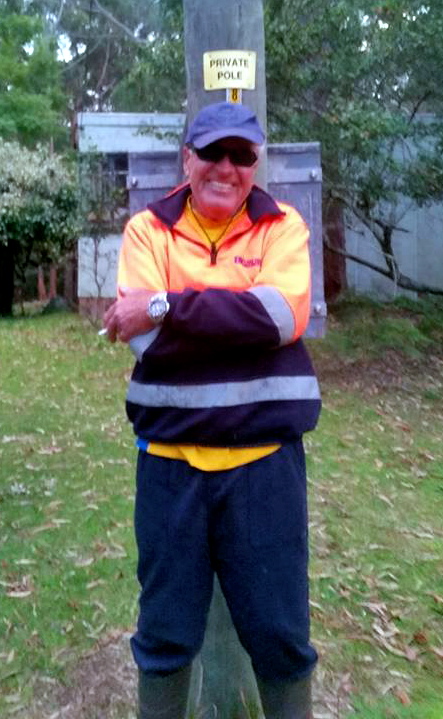
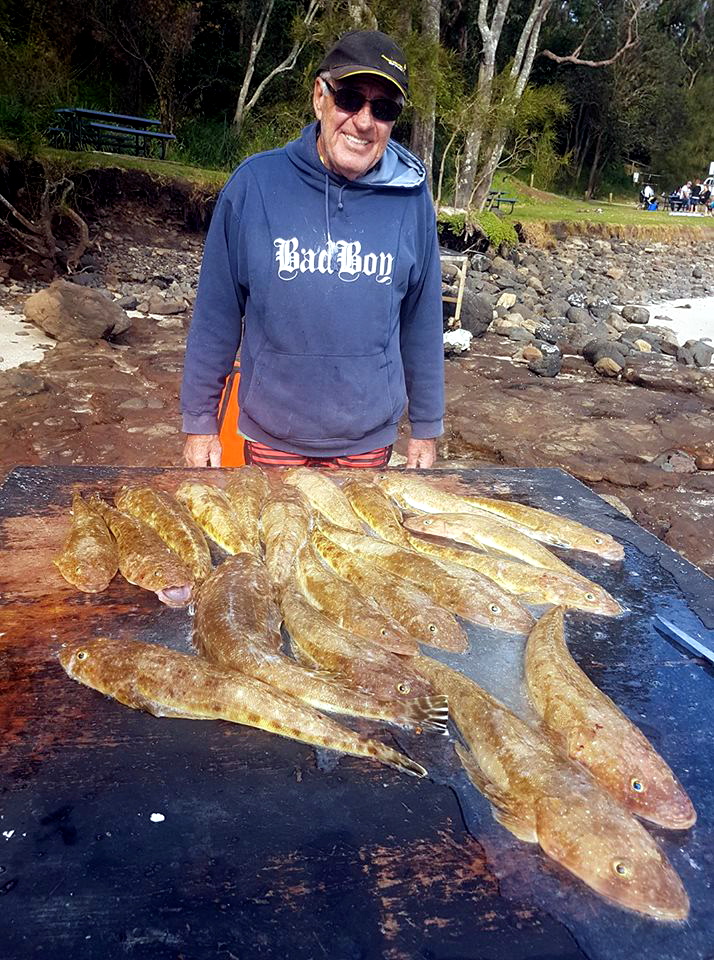
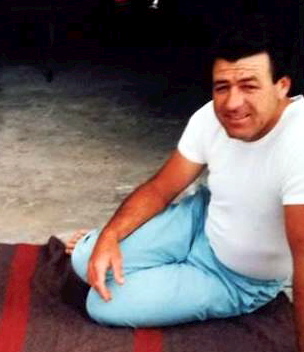
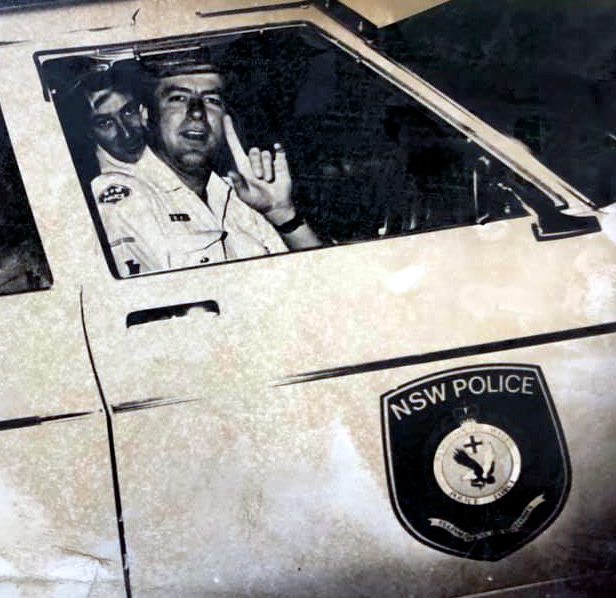
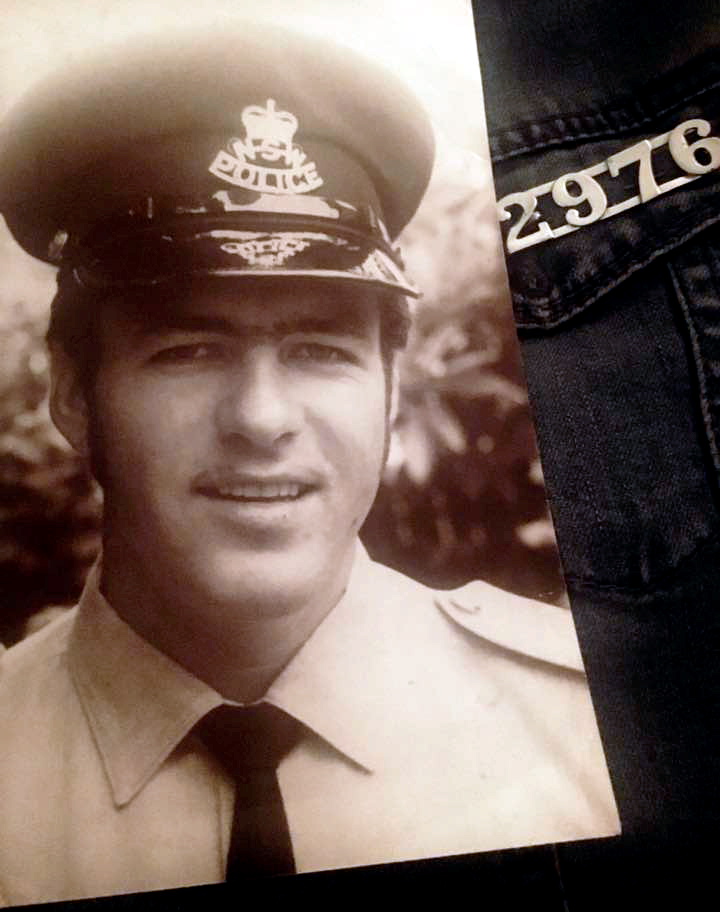
A much loved brother, son-in-law, brother-in-law, uncle, nephew, cousin and great mate to many.
The family and friends of Adam are warmly invited to attend a celebration of his life, to be held in The Chapel, 444 Pacific Hwy Belmont (parking via Henry St), on Friday 31st May, 2019, service commencing at 3pm.
Published in The Newcastle Herald from May 25 to May 29, 2019
Thanks for the laughs mate, for your honesty and integrity, for the gutsy determination that drove you. Always enjoyed being with you, work or sport. When I think of you / I smile RIP.
My thoughts and prayers to Rache and your beautiful children.
Colin Chaffey,
Jewells,
New South Wales
May 25, 2019
One of the funniest people I have ever met. And just a real great bloke.
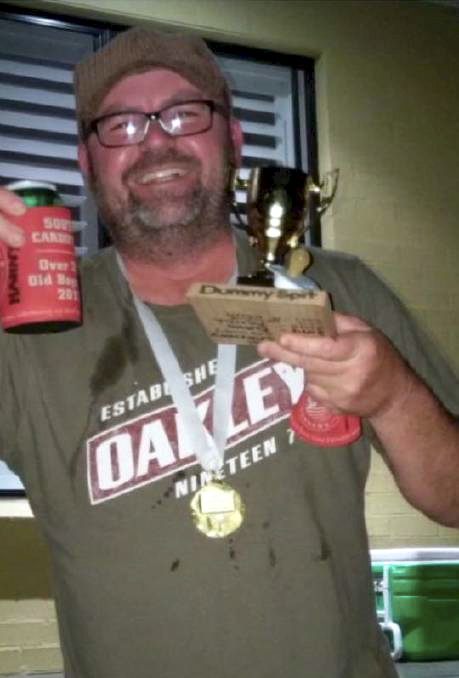
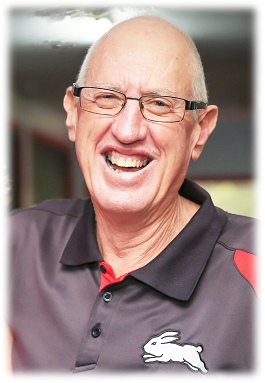
South Cardiff footballer Adam Hahn has been remembered as a ‘likeable, genuine bloke’
Max McKinney
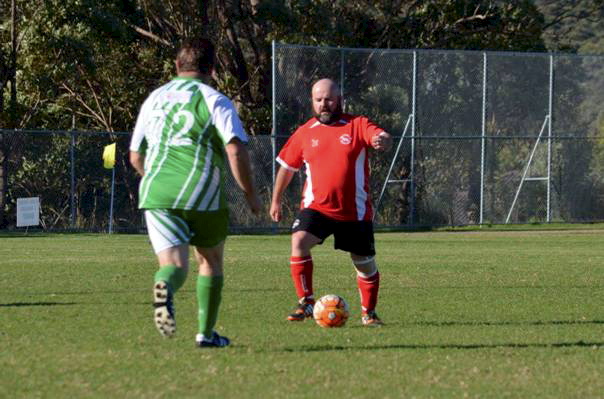
A father of three who died while playing in an over-35s soccer match at the weekend has been remembered as “one of the most likeable, genuine blokes you would come across”.
Adam Hahn suffered what is believed to have been a heart attack about 10 minutes before the end of his South Cardiff team’s match at Kurraka Reserve in Fletcher on Saturday.
The 49-year-old collapsed without warning on the field and – despite the best efforts of those on the scene, including a nurse who used a defibrillator and later paramedics – could not be revived.
The incident has rocked South Cardiff Junior Football Club, which the over-35s side are a part of, and shattered players and those associated with the team.
“He was just a character,” team-mate Ian Nesbitt said.
“A very intelligent man, but just a character.
“A larger than life sort of fella – he was only a little bloke. He was just one of the boys, loved drinking VB like it was going out of fashion.”
Mr Hahn, a Garden Suburb resident who ran a handyman business, leaves behind a wife and three children.
He grew up Windale, and spent many years working as a police officer, and later, police prosecutor. He was also a regular writer to the Herald’s letters page.
Mr Nesbitt, who was on the bench at the time, said his team-mate had shown no signs of any medical problem before the tragic incident.
“I was actually discussing who to pick as man of the match, and Adam’s name came up so I was kind of focused on him,” he said.
“And he just simply fell to his knees and then fell flat on his face, and that was it. He wasn’t even running, he was standing still.
“There wasn’t too many people who saw it. I ran out onto the park, I kind of knew something was going on. We initially thought he was having some sort of seizure.”
Players commenced CPR, and an off-duty nurse who was at the fields assisted in administering Maryland Fletcher Football Club’s defibrillator before paramedics arrived, but it was to no avail.
Mr Hahn had been part of the South Cardiff over-35s team for the past 11 years.
Grieving team-mates gathered at the club’s training ground on Wednesday night to mourn his loss and offer support to each other.
Macquarie Football has arranged for a group counselling session to be held for affected players and officials this Saturday
“There are blokes struggling,” Mr Nesbitt said.
“It was pretty harrowing with that scene, and just wondering what the hell was going on, on Saturday.
“We thought it might benefit to get everybody together as a group … there were a few tears and a chance for everybody to talk about it.
“There were a lot of guys who weren’t saying anything on Saturday, so the idea was to try to get that out and encourage everybody to either talk to your wife, talk to your family, talk to us, talk to your mate.”
South Cardiff Juniors president Cindy Redpath said the club’s teams would wear black armbands during this weekend’s matches as a tribute. A minute’s silence will also be held before each game.
“There’s a lot of people that are quite affected, very upset,” she said.
“It’s been a tragic, tragic event.
“He was one of the most likeable, genuine blokes you would come across. It’s a big shock.”
Ms Redpath said a gala day was being planned for later this year as a fundraiser, but a 100-club raffle would be held during Saturday’s matches with all proceeds going to Mr Hahn’s family.
Yesterday was a day full of highs and tragic lows.. 2 minutes before Mel came into check point 4, I received a call letting me know about the sudden tragic loss of a great mate and team mate Adam Hahn (Hahny) who died playing the game he loves during our soccer game.
Having to stay strong for Mel while trying to come to terms with the news was one of the hardest things I have ever had to do.
My thoughts and condolences go out to Rachel, Eli and Seth. Words can’t possibly express what you are going through at this sad and tragic time..
To my Southy O35 Brothers, knowing how I’m feeling not being there, would be nothing in comparison to the traumatic experience you guys dealt with at the game.
Hahny you were one of the good ones mate. Your quick Witt and stories were legendary mate. Our conversations and great laughs are going to be sorely missed.
The team has lost a larger than life character and will find it hard to go on without you mate. But we will. It’s what you would want.
Vale Hahny “you Goober”
Cheers mate. Green Dream
Colin Thomas GIBBONS
31/05/2019
Colin Thomas GIBBONS
AKA Gibbo, Col
Late of Mudgee
NSW Redfern Police Academy Class # 106
New South Wales Police Force
Regd. # 11906
Rank: Commenced Training at Redfern Police Academy on Monday 21 February 1966 ( aged 24 years, 4 months, 6 days )
Probationary Constable – appointed 4 April 1966 ( aged 24 years, 5 months, 20 days )
Constable – appointed 4 June 1967
Constable 1st Class – appointed 27 August 1974
Senior Constable – appointed 27 August 1978
Final Rank = Senior Constable
Stations: ?, South Coast District ( 1967 ), Mudgee ( 1977 – 1981 ), Cronulla, George St North, Bega, Eden, Batemans Bay
Service: From 21 February 1966 to4 April 1985 ( Resigned ) = 19 years, 1 month, 14 days Service
Age at Resignation: 43 years, 5 months, 20 days
Time in Retirement: 34 years, 1 month, 27 days
Awards: National Medal – granted 15 November 1982 ( SenCon )
Born: Wednesday 15 October 1941
Died on: Thursday 30 May 2019
Age: 77 years, 7 months, 15 days
Cause: Pancreatic Cancer
Event location: Dubbo – Lourdes Private Hospital
Event date: Thursday 30 May 2019
Funeral date: Friday 7 June 2019 @ 11am
Funeral location: St Luke’s Anglican Church, Bayly St, Gulgong, NSW
Wake location: Gulgong RSL, NSW
Funeral Parlour: Macquarie Valley Funerals & Monuments, Mudgee 6372 2331
Good evening caught up with an old Mudgee stalwart Colin Thomas Gibbons at Lourdes Hospital at Dubbo Col is in a bad way and his family are with him worked at Mudgee during early 80’S and he was one of the last old school coppers when telling hoodlums to get home their reply was yes Mister Gibbons he was very active with The Mudgee VRA and his family were overwhelmed today to have the Commissioner of the VRA MR Mark Gibson visit Col and his family today and I thank you Sir for your visit. May our thoughts and prayers be with Col and his family
Col Gibbons / Gibbo / Dad / Pop / Grandpa
“A silent #Mudgee legend gave his time to save many a life as a #police office and active member of the volunteer #rescue squad today bids us farewell” Over the past months our dad has fought the biggest fight of his life. A fight that sadly came to an end this morning with his true loves, mum and his kids by his side. Next week will give us all the opportunity to celebrate Cols amazing life and I encourage all those that know our family to come along and show your support to mum (Ella) Saraha-Jane, Johnny, Susan, Sharron (Gibbo) and our extended family.
God Bless You Big Fella – May You Continue to protect us from above
Susan McateerThis wonderful man is literally my hero. He Saved my life and I will never ever forget what he did for me. My heart is broken for his family and friends. So so sadly he will be missed ????
Ronald James SMITH
31/05/2019
Ronald James SMITH
AKA ?
Late of ?
NSW Redfern or Penrith Police Academy Class # ? ? ?
New South Wales Police Force
[alert_yellow]Regd. # 9140[/alert_yellow]
Rank: Probationary Constable – appointed 17 November 1958
It is with regret that we advise of the passing of Barry Antill, a NSW member of the 2nd Contingent to Cyprus (1965-66).
Barry passed away on 11 May 2019, aged 80 years.
His funeral will be held at 11am on Tuesday, 23 May 2019 at the Richmond Chapel, Parkview Funeral Home, 43 Holland Street, Goonellabah (near Lismore) NSW.
On behalf of the UNOPAA National Executive, our National Committee, our NSW Branch and all members of UNOPAA, I would like to acknowledge Barry’s service, particularly to overseas peacekeeping, and to express our sympathy to his family, his contingent colleagues and his friends.
P McD
Peter McDonald National Secretary/Treasurer
United Nations & Overseas Policing Association of Australia (UNOPAA)
In loving memory of …. Barry Antill …. Sadly, Barry passed away on Saturday 11th May 2019, aged 80 years.
He is survived by his daughter Toni-lea and grand-daughters Tashara-lea and Morgan-lea.
In lieu of flowers donations to St Vincent’s Hospital Renal Dialysis Unit would be appreciated and may be left at the service.
IT’S evident from the number of social media posts that there are many in our community who well remember – some for better reasons than others – one time local cop Barry Antill.
Barry, who died last week on the North Coast in his 80th year, was a member of a team of detectives stationed in Lithgow in the 1960s and 70s.
It was a less uptight time with a better class of crooks, no “Ice Age”, and when the cops interacted both officially and socially with the general community where they worked and resided.
Most became household names.
Barry ended his police career as Detective Superintendent in charge of the Northern Rivers Command and set up home at Goonelebah.
AFTER spotting a log on the railway tracks laid by a would-be assassin, Albert Patrick Rowley not only saved the Queen, he slowed his train so carefully he prevented her rolling out of bed.
While the so-called “Lithgow Plot” to assassinate Queen Elizabeth, revealed by The Daily Telegraph yesterday, may have been a national secret, among the Rowleys it was the stuff of family legend.
Mr Rowley and train driver Robert Arthur Walkington, who also played a part in preventing a catastrophic derailment near Lithgow in 1970, were later awarded Imperial Service Medals, issued from St James’s Palace.
Both men have since died but their families yesterday recalled how their heroic actions, revealed this week, prevented the derailment of the Royal Train carrying the Queen and Prince Philip to Orange on April 29.
Had they failed to see the log and continued travelling at full speed the train would have almost certainly derailed, according to experts consulted at the time.
Mr Rowley’s daughter Trish Bellini said yesterday: “He was certainly up there in the front of the train. He told us he was driving the Queen, he had his Queen on board and he spotted the log.
“He said she never flew out of her bunk. It was very secret. He said to me ‘I drove very, very slowly’. He was a beautiful man. He was a very humble man.”
Mr Rowley, who died in 1990, started work on the railways as an 11-year-old. His job was to wake up workers for their early shifts.
His granddaughter Kara Pryor has proudly kept the medal and her grandfather’s Royal Train boarding pass at her Sydney home.
Mr Walkington was also one of the top train drivers in the state and assigned to the royal visit.
His brother Norman was unsure yesterday whether he was in the Royal Train or the sweeper train which travelled ahead.
“There was a great deal of hush, hush about it. I think he drove the train that was supposed to clear the track, they awarded him the Imperial Service Medal for his actions,” Mr Walkington said.
“It wasn’t until the 1980s that I knew anything about it. Special forces came to see him and frightened the living daylights out of Mavis, my sister-in-law. He never really spoke to me or the family about it.”
Paperwork relating to the investigation has been stored in archives and RailCorp was unable to provide any information about the drivers yesterday due to “process and procedures”.
“It worried me a lot that sort of thing could happen in a sleepy little town,” former Chief Superintendent Barry Antill, who investigated the case, said yesterday.
A retired senior detective, Detective Superintendent Cliff McHardy, 81, has claimed that unidentified conspirators put a wooden log on a railway track to try to derail the official train transporting the Queen and Duke of Edinburgh from Sydney across Australia’s Great Dividing Range of mountains. Since the original story, two other officers have come forward to corroborate this. They are former Chief Superintendent Barry Antill, 70, and former Detective Senior Sergeant Doug Bentley, 69.
According to Bonnie Malkin and Andrew Pierce in the London Daily Telegraph of 27 January, this incident lacked the precision and detailed planning of some other better known assassination attempts on world leaders. As for the train, after it struck the log it was merely forced to slow and came safely to a halt at a level crossing.
The report says “the so-called Republican plot” was revealed when retired Detective Superintendent Cliff McHardy, 81, decided to break his silence in an interview in his local newspaper to try to clear-up one of the great unsolved mysteries of his long police career. He said that on 29 April 1970, The Queen and the Duke were travelling by train to Orange in New South Wales.
When the train entered a winding cutting near Lithgow, two hours to the west of Sydney, it struck a large log wedged across the rails. From his investigations she concluded this was an act of deliberate sabotage to force the train off the tracks. Fortunately the train driver was moving unusually slowly.
“If the train had reached its normal speed it would have plunged off the tracks and into an embankment,” Mr. McHardy said. The log became stuck underneath the front wheels for 200 metres before the train, largely undamaged, came to a halt at a level crossing.
…tracked checked one hour earlier….
A security “sweeper” train had checked the line an hour before and had found nothing. He concluded that the assassins had knowledge of the official train’s schedule.
He told The Daily Telegraph: “The log had been moved onto the line in darkness, by one or two people who had prior knowledge of the area,” he said. “Vandals couldn’t have been involved because there’s no pub nearby, so you couldn’t put it down to hoodlum behaviour. It was pre-planned.”
Mr McHardy and two detectives interviewed witnesses including railway employees and local people but no arrests were made. The Lithgow Mercury says Australian Irish Republican Army sympathisers were among those questioned. Mr McHardy said the incident was covered-up by the government which issued a suppression order.
“They said keep it out of the press because The Queen is still out here and if it had broken the next morning there would have been all sorts of trouble and we can do without that in a small country town,” said Mr McHardy.
He said that he had decided to speak out now in the hope that “it would prompt the people responsible to come forward and own up”.
The rest of the trip unfolded without incident and hundreds of well-wishers turned out in Orange to greet the young Queen and Duke. A spokesman for Buckingham Palace declined to comment but said the archives for the trip showed no records of the train hitting a log.
On the night of 29 April 1970, an event occurred on the rail corridor through Lithgow that had the potential to change the course of world history (reports Orange‟s Central Western Daily,22January 2009).
“It was an incident on such a scale of international significance that an ironcast wall of secrecy was thrown up by Federal and State authorities when they responded to a curious media who had been hearing whispers‟something was amiss,”writes Len Ashworth, editor of the Lithgow Mercury, a sister paper to the Orange paper.
When Det Sgt Cliff McHardy received a phone call that night the implications were immediate; someone had made a serious attempt to derail the Royal Train that was conveying Queen Elizabeth and Prince Phillip to Orange. Long retired after 11 years in charge of Lithgow detectives, McHardy –who left the Force with the rank of detective superintendent – has now recounted his memories of the frantic investigations and bemoaned the fact that the culprit was “one that got away‟.
On the night of the drama the Queen and the Duke of Edinburgh were travelling on what was known as the Commissioner’s Train. The security largely consisted of uniformed police who were ordered to man every railway station along the route and railway personnel on duty at every level crossing. On board were members of the Royal entourage and federal and special branch police. The schedule was for the train to spend the night under tighter security in a siding at Orange, ready for a two-and-a-half hour visit next day. The train almost did not make it. As it passed at speed through a winding cutting at Bowenfels the locomotive struck a large log that had been placed across the tracks.
The train continued under brakes for about 200 metres with the log wedged under the front wheels before finally coming to a halt at the level crossing near Bowenfels station.
When Det Sgt McHardy and Detectives Barry Antill and Doug Bentley arrived they found the hardwood log had not splintered under the heavy impact and had deep indentations from the locomotive wheels. But the locomotive had remained on track and largely unscathed.
The attempt to derail the train was no spur-of-the-moment example of vandalism taken to the extreme. Whoever was responsible had surveyed the area as marks indicated where the log had previously been resting at the top of the embankment in an area not often frequented by the public. It had been rolled from there onto the tracks and manoeuvred into place, possibly by more than one person.
The offenders had also been aware of the time schedule for not only the Royal Train but a security “sweeper‟ locomotive that had gone through a short time earlier to guard against just such an incident. The obstruction was placed on the tracks sometime between the passing of the sweep and the arrival in the cutting of the train carrying the British Monarch and her husband to Orange.
There were numerous suspects and theories but the perpetrators of the attempt to derail the Queen’s train were never found.
While the hunt for the culprit was underway Government officials were as much concerned about the embarrassment to Australia if the story leaked as they were with the incident itself.
Government gags were placed on the release of any information to the public. “I was constantly reassuring my superiors that the local media would cooperate if we asked them to,”McHardy said. “I told them that the editor of the Lithgow Mercury, Bede Leighton, was man of total integrity who would abide by his word when told anything in confidence. “They were used to dealing with the Sydney media and remained sceptical. ”But the official suppression order worked and there was never a mention of the incident, even though most Lithgow railwaymen knew of the incident. They obeyed from their department to say nothing.
Barry Antill, of the City of Lismore RSL sub-branch, selling poppies at the Goonellabah Shopping Centre for Remembrance Day tomorrow.
By Kimberley Smith news@northernstar.com.au
AT 11am tomorrow we pause to remember the sacrifice of the men and women who served our country in wars and conflicts during the past 100 years.
In the lead-up to November 11 every year, local RSL sub-branches sell red poppies, pens and badges to help the organisations which undertake welfare work.
NSW State President of the Returned Services League Don Rowe said the RSL had worked hard for the welfare of the veteran community and every dollar raised by poppy sales would go to that cause.
“I urge all Australians to wear a poppy with pride and respect for those who answered the call of their country,” he said.
Mr Rowe said the death of the first Australian in combat in Afghanistan last month was a special reason to pause on Sunday.
Today and tomorrow, volunteers will be at shopping centres and businesses in the hope of selling $2 poppies to Australians who would like to make a small, yet significant, contribution.
The Far North Coast Legacy Club makes its contribution by supporting widows and dependants of deceased ex-servicemen who live on the Far North Coast, helping them with health and welfare issues.
Tomorrow ceremonies will be held in most towns on the Northern Rivers for communities to come together and remember.
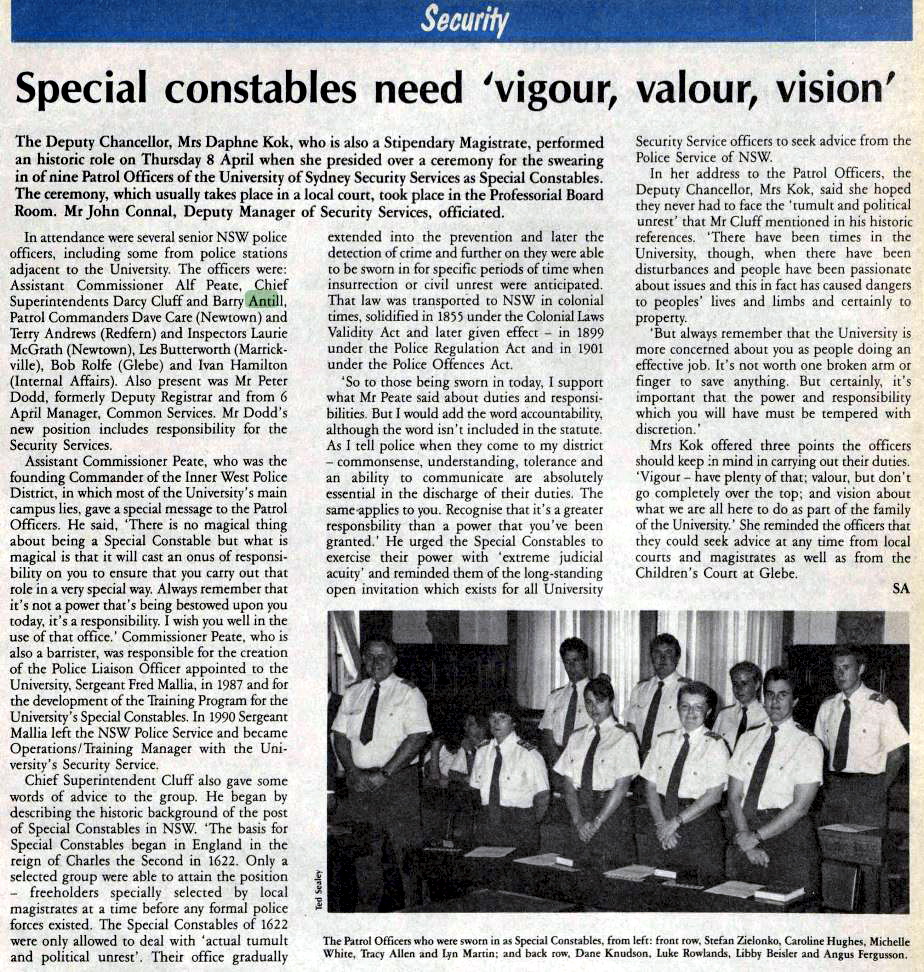
Barry ANTILL: The University of Sydney News 20 April 1993 page 61
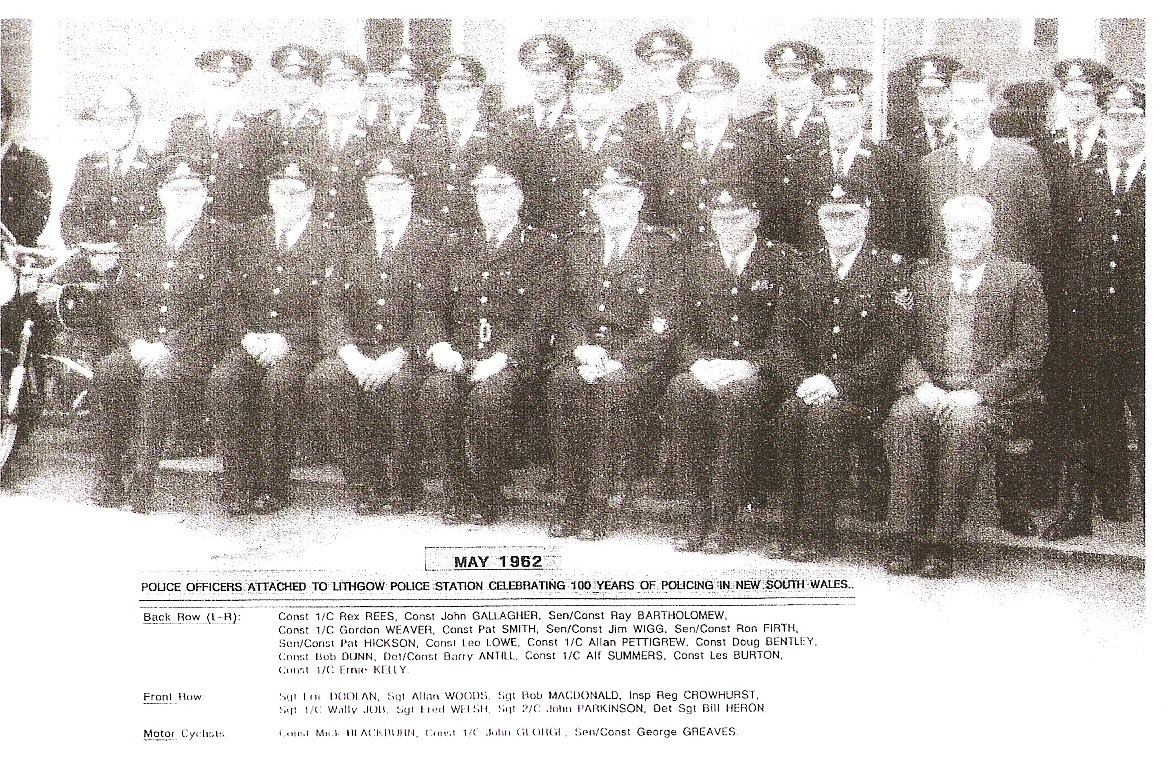
MAY 1962 Police Officers attached to Lithgow Police Station celebrating 100 years of Policing in New South Wales. Back row ( L-R): Cst 1/c Rex REES, Cst John GALLAGHER, SenCon Ray BARTHOLOMEW, Cst 1/c Gordon WEAVER, Cst Pat SMITH, SenCon Jim WIGG, SenCon Ron FIRTH, SenCon Pat HICKSON, Cst Leo LOWE, Cst 1/c Allan PATTIGREW, Cst Doug BENTLEY, Cst Bob DUNN, Det Cst Barry ANTILL # 8798, Cst 1/c Alf SUMMERS, Cst Les BURTON, Cst 1/c Ernie KELLY Front Row (L-R): Sgt Eric DOOLAN, Sgt Allan WOODS, Sgt Bob MacDONALD, Insp Reg CROWHURST, Sgt 1/c Wally JOB, Sgt Fred WELSH, Sgt 2/c John PARKINSON, Det Sgt Bill HERON Motor Cyclists: Cst Mick BLACKBURN, Cst 1/c John GEORGE, SenCon George GREAVES
Mark Anthony GARNER
31/05/2019
Mark Anthony GARNER
AKA BAM BAM
Late of ?
NSW Goulburn Police Academy Class # 227
New South Wales Police Force
ProCst # 98395
Regd. # 23922
Rank: Commenced Training at Goulburn Police Academy on Wednesday 1 April 1987
Probationary Constable – appointed 26 June 1987
( was still a ProCst in 1989 )
Final Rank = Detective Senior Sergeant
Stations: ?, Nyngan, Bourke ( SenCon – Sgt ), Castle Hill, Negotiators Course, State Protection Security Unit ( S.P.S.U. ), Tweed Heads – Retirement
Service: From 1 April 1987 to 21 November 2011 ( Suspended ) – 21 November 2013 ( Retired ) = 26+ years Service
Awards: No find on It’s An Honour
Born: Tuesday 18 February 1964
Died on: Sunday 19 May 2019
Age: 55
Cause: Heart attack in his sleep
Event location: ?
Event date: ?
Funeral date: Friday 31 May 2019 @ 11am
Funeral location: Tweed Valley Cemetery, 813 Eviron Rd, Duranbah, NSW
Wake location: Currumbin RSL, 165 Duringan St, Currumbin, Qld
Funeral Parlour: ?
Buried at: ?
Memorial located at: ?
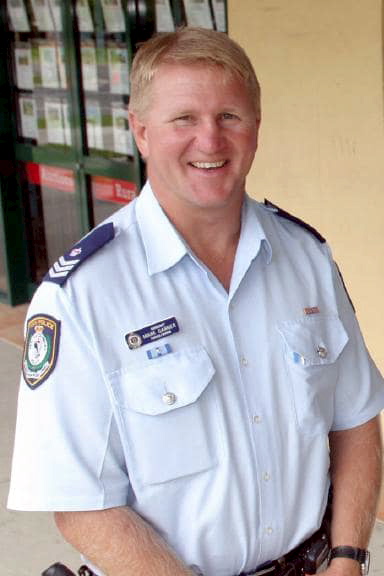
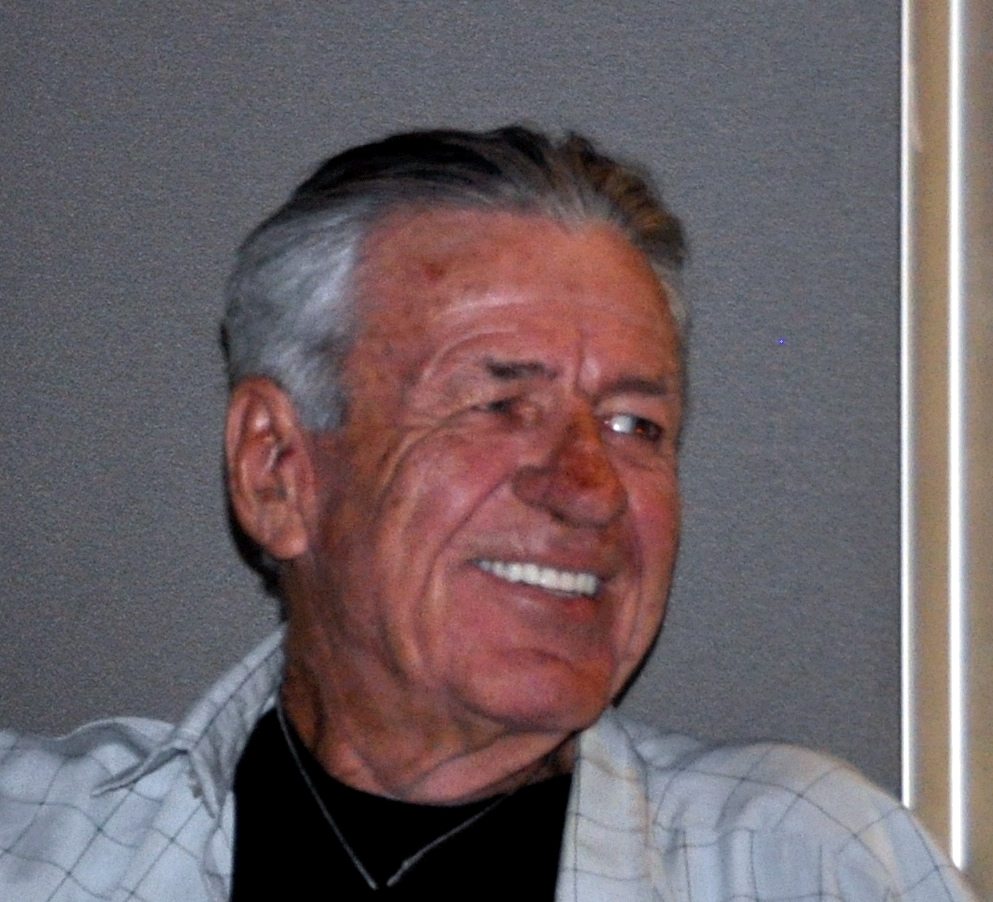
Mark Garner in 2004
Mark Garner on 22 April 2015
BAM BAM is NOT mentioned on the Police Wall of Remembrance *NEED MORE INFO
Funeral location: [codepeople-post-map]
FURTHER INFORMATION IS NEEDED ABOUT THIS PERSON, THEIR LIFE, THEIR CAREER AND THEIR DEATH.
Bam Bam played NSW Police Football and was widely known and liked and was a great bloke.
He suffered a heart attack in his sleep.
Inquest into the death of Brenton Hasler at Tweed Heads on the 30 November 2006.
Finding handed down by Deputy State Coroner MacMahon on 30 January 2008.
On Thursday 30 November 2006 police were conducting an operation on the Pacific Highway at Sextons Hill near Banora Point in northern New South Wales. The operation was directed, in part, at detecting unregistered and wanted vehicles.
Automated Number Plate Recognition (ANPR) equipment was being used to assist in this process. S/C Mahaffy was the ANPR operator and S/C Hamilton positioned himself some 225 meters further north along the Pacific Highway at a stopping site. The stopping site was just south of Terranora Road. The operation commenced at about 0830.
S/C Bowmer was also to assist in the operation.
The traffic was very heavy and on his arrival S/C Bowmer decided to facilitate traffic flow by arranging for the traffic lights at the intersection of Terranora Road and the Pacific Highway to be turned off and the traffic managed manually.
S/C Bowmer parked the police vehicle he was driving at the ANPR stopping site near that of S/C Hamilton. As this was occurring a rider was travelling on the Pacific Highway on a Honda VFR 750 motorcycle. He was negotiating through the traffic and was overtaking vehicles on the nearside on the incorrect side of the edge line. This was contrary to the motor traffic laws.
S/c Mahaffy, who advised S/C Hamilton, observed this.
As a result S/C Hamilton stopped what he was doing and walked onto the road and directed the rider to stop. The rider refused and accelerated away.
S/C Hamilton yelled to S/C Bowmer to stop the rider and S/C Bowmer having returned to his vehicle followed him. By this time the rider was out of sight.
S/C Bowmer proceeded along the Pacific Highway looking for the rider. After examining a number of side streets S/C Bowmer observed a bike on Darlington Drive, Banora Point, just off the Pacific Highway. He exited the Pacific Highway and followed it.
The bike rapidly increased speed and S/C Bowmer decided to commence a pursuit and did so with lights and sirens operating. Shortly before the intersection of Lochlomond Drive and Darlington Drive the bike left the road and collided with a tree.
S/C Bowmer came on the scene shortly thereafter and provided assistance to the rider. CPR was commenced and an ambulance was called.
On arrival the ambulance officers found the rider to be unconscious, without pulse and not breathing. CPR was continued and he was taken to Tweed Heads Hospital however the rider was declared to be life extinct shortly after his arrival at the hospital.
Elizabeth Alice Hasler subsequently identified the deceased as being her husband Brenton Craig Hasler.
On 2 December 2006 an autopsy was performed at the Department of Forensic Medicine, Newcastle, by Dr. K. Lee, a senior specialist forensic pathologist. Dr Lee found that the cause of Mr. Hasler’s death was multiple injuries.
Legislative Provisions.
The role and function of a Coroner is contained in section 22, Coroners Act, 1980 (the Act).
That section, in summary, provides that at the conclusion of an inquest the coroner is to establish, on the basis of the evidence available, the identity of a deceased person together with the date, place and the cause and manner of their death.
Life Extinct Certificate, Dr. B Beal, Tab 1. 5 Identification Statement, Tab 2. 6 Autopsy report, 2 April 2007, 10.at Tab 66.
Section 13 (1) (a) of the Act provides, in addition, that a coroner has jurisdiction to hold an inquest if it appears to the coroner that a person has died a violent or unnatural death.
Section 13A (1) (b) also provides that a coroner who is the State Coroner or a Deputy State Coroner has jurisdiction to conduct an inquest where it appears that deceased died, or there is reasonable cause to suspect that the person has died, as a result of or in the course of a police operation. Section 13A (2) provides that where the jurisdiction to hold an inquest arises under both section 13 and section 13A an inquest is not to be held except by the State Coroner or a Deputy State Coroner.
On the facts as set out above it is apparent that Mr. Hasler’s death was one that came within the meaning of section 13(1)(a) in that it occurred as a result of injuries he sustained in circumstances that appeared to come within the definition as a result of or in the course of a police operation, in this case a police pursuit.
As such either the State Coroner or a Deputy State Coroner is required to conduct the inquest into his death.
Issues for Inquest:
In this inquest the identity of Mr. Hasler together with the date, place and direct cause of his death are not in dispute.
On the evidence available I am comfortably satisfied that Brenton Craig Hasler died on 30 November 2006 at the Tweed Hospital and that the cause of his death was multiple injuries sustained by him when the motorcycle he was riding left the road and collided with a tree.
The manner, or circumstances, of Mr. Hasler’s death was, however, the subject of examination in the course of the Inquest.
The issues inquired into during the course of the inquest were as follows:
• Was Mr. Hasler the rider of the motorcycle that failed to stop when directed to do so by S/C Hamilton?
• Were the circumstances sufficient to justify the commencement of a pursuit?
• What was the applicable police policy?
• Did S/C Bowman comply with the policy, as he understood it, during the course of the pursuit and should he, at any time, have discontinued the pursuit?
• What caused Mr. Hasler to lose control of the motorcycle and did the manner in which S/C Bowman conducted the pursuit cause, or contribute to, that loss of control of the motorcycle?
• Following Mr. Hasler suffering his injuries was assistance provided to him in timely manner?
• Were the NSW Police critical incident guidelines complied with?
• Are there any recommendations that should be made in accordance with section 22A?
The Evidence:
During the course of the inquest evidence was taken from the following witnesses
• Senior Constable Brett Andrew Mahaffy (the officer operating the ANPR equipment on the Pacific Highway),
• Senior Constable Troy Anthony Hamilton, (the officer who directed the rider of the motorcycle to stop),
• Michael Francis Murphy (a truck driver in traffic near the ANPR site at the time that the motorcycle rider was directed to stop),
• Sergeant Mark Anthony Garner (a police officer in traffic near the ANPR site at the time that the motorcycle rider was directed to stop),
• Bruce Roy Austen, (who was driving on Darlington Drive in the opposite direction to that of the Mr Hasler and Senior Constable Bowmer and saw the motorcycle lose control)
• Kellie John, (who saw the collision of the bike with the tree from her lounge window which overlooked the park in which it occurred),
• Mark Raymond Rabjones (who saw the incident from his driveway and provided assistance to Mr. Hasler following the collision)
• Senior Constable Paul Bowmer (the officer who conducted the pursuit of the motorcycle rider),
• Inspector David Richard Driver (the officer responsible for the investigation of the death of Mr. Hasler in accordance with the critical incident guidelines).
In addition statements from witnesses not called to give evidence, relevant police policy and guidelines, maps, vehicle inspection reports and diagrams were also made available.
Was Mr. Hasler the rider of the motorcycle that failed to stop when directed to do so by S/C Hamilton?
S/C Hamilton, after the rider of the bike failed to stop as directed, followed in the direction the rider had taken. He subsequently arrived at the site where Mr Hasler had been injured. During evidence he was asked whether Mr. Hasler’s bike was the bike ridden by the rider that had failed to stop as directed. He thought that it had been and explained why he had come to that conclusion.
Sergeant Garner, who had seen the bike on the Pacific Highway and had also seen S/C Hamilton direct it to stop. Sergeant Garner also attended the crash site and had the opportunity to observe Mr. Hasler’s bike. He also was of the view that the bike was the same as that he had observed on the Pacific Highway and gave his reasons during the course of giving evidence.
I accept the evidence of S/C Hamilton and Sergeant Garner on this point and am satisfied that Mr. Hasler was the rider who failed to stop when directed to do so by S/C Hamilton at the ANPR stopping site that morning.
Were the circumstances sufficient to justify the commencement of a pursuit?
Mr Hasler was directed to stop by S/C Hamilton and failed to do so. He then accelerated away. S/C Hamilton gave him the direction to stop as a result of information he had received from S/C Mahaffy. S/C Hamilton then yelled to S/C Bowmer stop the bike after which S/C Bowmer followed the bike. S/C Bowmer did not know why S/C Hamilton wanted the bike to be stopped and gave evidence that when he was able to stop the rider he intended to administer a random breath test while waiting for S/C Hamilton to attend.
There was some debate during the course of the inquest as to when the pursuit of Mr. Hasler commended and I will return to that debate later however on the evidence it is my view that Mr. Hasler’s failure to stop as directed by S/C Hamilton was sufficient to justify efforts to be taken to apprehend him notwithstanding the fact that the officer doing so might not initially know the reasons for S/C Hamilton’s request that they do so.
In any event I accept S/C Bowmer’s evidence that he observed Mr. Hasler accelerating his motorcycle in Darlington Drive to a speed that was well in excess of the speed limit applicable. I consider that at that point S/C Bowmer had sufficient cause based on his own observations, subject to the application of the relevant protocols, to seek to apprehend Mr. Hasler.
What was the applicable police policy?
The guidelines for police pursuits are contained in the NSW Police Safe Driving Policy (the Policy).
The policy deals with the qualifications and experience of police officers authorised to engage in a pursuit and the vehicles that may be used. The evidence, which I accept, is that S/C Bowmer was appropriately qualified and experienced and his vehicle was also appropriately classified to conduct a pursuit. The Policy, at Part 6, deals with Urgent Duty and Pursuits. An urgent duty is defined as being duty ‘which has become pressing or demanding prompt action’.
A pursuit is defined as commencing ‘at the time when you decide to pursue a vehicle that has ignored a direction to stop’
On the commencement of urgent duty or a pursuit the relevant officer is required to make certain notifications to senior officers at VKG and thereafter undertake those duties or the pursuit in accordance with any instructions given by the appropriate senior officer.
Evidence was given at the inquest that the Policy underwent and adjustment by the introduction of a Coded System of Safe Driving from 11 November 2005
That system made it permissible for an officer to perform urgent duty ‘without first informing police radio in the execution of a traffic stop.
However, should the driver of the other vehicle attempt to avoid apprehension or appears to be ignoring requests to stop, and a decision is made to pursue the vehicle – then a pursuit has commenced’.
At inquest there was a difference of opinion as to how the relevant policies were to be applied to the circumstances that occurred 30 November 2006.
One view, that held by Counsel assisting and Inspector Driver was that when S/C Bowmer left the ANPR site with the intention of stopping Mr. Hasler a pursuit had commenced and, as a consequence, the obligations provided for in the guidelines came into force. The other view, the one held by S/C Bowmer and apparently other officers, was that he (S/C Bowmer) was able to commence urgent duty until he approached the motorcycle for the purpose of a traffic stop. If, having indicated to the vehicle that it was to stop, he formed the view that other vehicle was attempting to avoid apprehension or appearing to ignore his request to stop, he would have to decide, as he did in this case, if he was going to commence a pursuit. He was of the view that it was only at that time that he would have had to advise VKG that he was in pursuit. In this case the motorcycle rider had refused to stop.
I accept that S/C Bowmer did not know this however it must have been implicit in the circumstances of the ANPR operation and in S/C Hamilton’s call to ‘stop the bike’. That was the basis of S/C Bowmer’s actions in following him.
It was clearly the intention of S/C Bowmer to stop the rider. To follow him to administer a random breath test whilst awaiting S/C Hamilton’s attendance seems to me to be somewhat artificial. I consider that on a reasonable interpretation of the policy the pursuit commenced at the time S/C Bowmer left the ANPR stopping site with the view of stopping the bike.
On that interpretation he was at that time obliged to inform VKG of the pursuit and to implement the other instructions contained in the policy.
As I indicated during the course of the inquest I am not, nor do I intend to be, critical of S/C Bowmer in respect of his interpretation of the policy. It is clear from the findings of other Coroners and the various interpretations placed on the policy during the course of this inquest that the issue of the interpretation of the policy has been a live one for some time.
The introduction of the Coded System of Safe Driving in November 2005 does not, in my view, clarify the obligations of officers that find themselves in such situations. Indeed it is my view that it probably makes it more confusing by adding another element to the equation. The policy needs to be clear and unambiguous so that officers responsible for its implementation are able to act with confidence in situations that they are required to face in their duties. I propose to make a recommendation pursuant to section 22A on this subject.
Coded System of Safe Driving ,2. See Decision of SDSC Magistrate Milledge in William Spence 1 July 2004 and DSC Magistrate Pinch in Colin John Holmes 29 November 2004.
Did S/C Bowman comply with the policy, as he understood it, during the course of the pursuit and should he, at any time, have discontinued the pursuit?
S/C Bowmer gave evidence that having entered Darlington Drive he observed the motorcycle ahead of him and formed the view that the rider was exceeding the speed limit. He also formed the view that the rider had probably seen him and was seeking to avoid apprehension.
At that time S/C Bowmer decided to commence a pursuit. He attempted to contact VKG to advice of the pursuit but was initially unsuccessful but was able to do so some 9 seconds later.
From the VKG records it would seem that there was a period of 21 seconds form the first attempt to advise of the pursuit to the time that S/C Bowmer advised VKG of Mr. Hasler’s collision and of the need for an ambulance.
The shortness of the pursuit is also emphasised by the recordings contained in the in-car video recordings from S/C Bowmer’s vehicle. The pictures in that recording commence at 9.15.37 with a view of Mr Hasler’s motorcycle 160-180 meters ahead of the police vehicle about to take a left hand bend. The motorcycle is then out of sight. At 9.15.51 a splash of water is observed (as Mr. Hasler’s motorcycle passes through a storm water drain).
The inquest has had the opportunity to traverse the route that was travelled and to observe that part of the pursuit that was recorded on the in-car video. We have also had to evidence of a number of witnesses who observed aspects of the pursuit. A police pursuit is, in its nature, dangerous. It is required to be conducted with skill by the officer involved in order to ensure the safety of the general public who might be in the area (particularly-as in this case where it is a residential area), the police involved in the pursuit and, of course, those that are being pursued.
As far as the manner in which S/C Bowmer conducted the pursuit is concerned the evidence establishes to my complete satisfaction that it was performed in a competent fashion and during its short duration no event occurred that would, in my view, have required it to be terminated. There was, as I have indicated above, some delay in S/C Bowmer accessing VKG to advise that a pursuit had commenced however this was minimal and had, as far as I can see, no bearing on the course of the pursuit.
Counsel assisting has suggested that whilst she does not criticise S/C Bowmer she suggests that looked at in hindsight and taking into account all the now known circumstances perhaps the commencement of the pursuit by S/C Bowmer was not appropriate. I feel however that I must try and put myself into the circumstances that existed on 30 November 2006. I cannot second-guess S/C Bowmer. It seems to me that S/C Bowmer’s do not warrant any criticism whatsoever.
having regard to S/C Bowmer’s understanding of the policy, and having regard to the circumstances in which he found himself, I am satisfied that the NSW Police Safe Drive Policy was complied with.
Following Mr. Hasler suffering his injuries was assistance provided to him in timely manner?
What caused Mr. Hasler to lose control of the motorcycle and did the manner in which S/C Bowman conducted the pursuit cause, or contribute to, that loss of control of the motorcycle?
Mechanical defect did not contribute to the incident see evidence of Graeme Bruce Lawrie expert vehicle examiner ‘there was no mechanical defect or failure with the vehicle that may have been a contributing factor towards the collision.’
Mr Hasler lost control of the motorcycle when he was unable to negotiate the bend in Darlington Drive. (See evidence of Michio Justin McMillan).
‘It is obvious from the physical evidence available that the motorcycle rider, Hasler, has not anticipated or negotiated this bend. Hasler has braked hard and after skidding the motorcycle has left the road and mounted the raised concrete cutter onto the grass.
’ Mr Hasler was travelling at a great speed. I accept the calculations of S/C Craig Stewart Norton that the motorcycle was travelling at between 129km/h and 135km/h as being indicative of that speed.
Also: Bruce Roy Austin, ‘very, very fast’ Kellie John from her lounge-room: ‘I could hear the bike coming, I assumed it was a bike, it was very loud and so I turned around to look out my window because I was thinking – I could hear them coming very fast and I was thinking how are they going to slow down to go through the roundabout’
S/C Bowmer’s pursuit did not contribute to the loss of control. Statement 21/03/2007 para 2319 Statement 28/12/2006 para 13 and 14. McMillan statement 28/12/2006 para 12. Norton statement 12/01/2007 para 8. Austin 6/11/2007 89 23 John 6/11/2007 98 at 35
I have had the benefit of observing the in-car video and hearing the evidence of those who were present. It is undisputed that S/C Bowmer was travelling some distance behind Mr Hasler and at a slower speed.
It is not suggested, and I find that it was not the case, that S/C Bowmer’s driving or the manner in which he conducted the pursuit contributed to Mr Hasler losing control of the bike.
I am satisfied that the cause of the collision was due to the motorcycle being ridden at excessive speed for the conditions and that on reaching the bend in the road Mr. Hasler was unable to negotiate it thereby losing control, mounting the gutter and thereafter continuing for some time until colliding with a tree.
Were the NSW Police critical incident guidelines complied with?
The relevant policy is the Guidelines for the Management and Investigation of Critical Incidents. That policy was tendered in evidence.
In accordance with the policy Inspector David Richard Driver was appointed to investigate the circumstances of Mr Hasler’s death. That investigation was a detailed and thorough one and a number of recommendations were made that go to police procedures that should be given serious consideration. The investigation identified a number of non-compliances with the guidelines. These are identified in Inspector Drivers report. They did not, in my view, affect the integrity of the investigation of Mr. Hasler’s death. It is, however important that such guidelines be complied with strictly in all critical incident situations as compliance ensures that the best evidence is available for any review that subsequently takes place and, at a minimum will free officers involved from any unjustified criticism.
Formal Finding:
Brenton Craig Hasler died on 30 November 2006 at the Tweed Heads Hospital. Mr. Hasler’s death resulted from multiple injuries he received when the motorcycle he was riding left the road at speed and collided with a tree during the course of a police Section 22A Recommendation:
To the Commissioner of Police:
1. That the NSW Police Safe Driving Policy and the Coded System of Safe Driving be integrated and reviewed and clarified with a view to ensuring that ambiguity as to the obligations officers who are required to engage in traffic stops, urgent duties and pursuits are removed.
2. That consideration be given to the inclusion of a knife in the equipment carried by highway patrol vehicles to assist officers who find themselves needing to free persons who might be trapped in motor vehicle collisions or other such situations.
For the purposes of this website ‘Q‘ represents those Police joining between 1 March 1862 ( commencement of NSWPF ) – 23 February 1915 ( Commencement of NSWPF current numbering system )
Rank: Probationary Constable – appointed 9 July 1892
?
Final Rank = Superintendent
Stations: ?, Nymagee, Albury Mounted Police,
Service: From 9 July 1892 to? ? ? = ? years Service
Awards: ?
Born: ? ? 1871, Albury, NSW
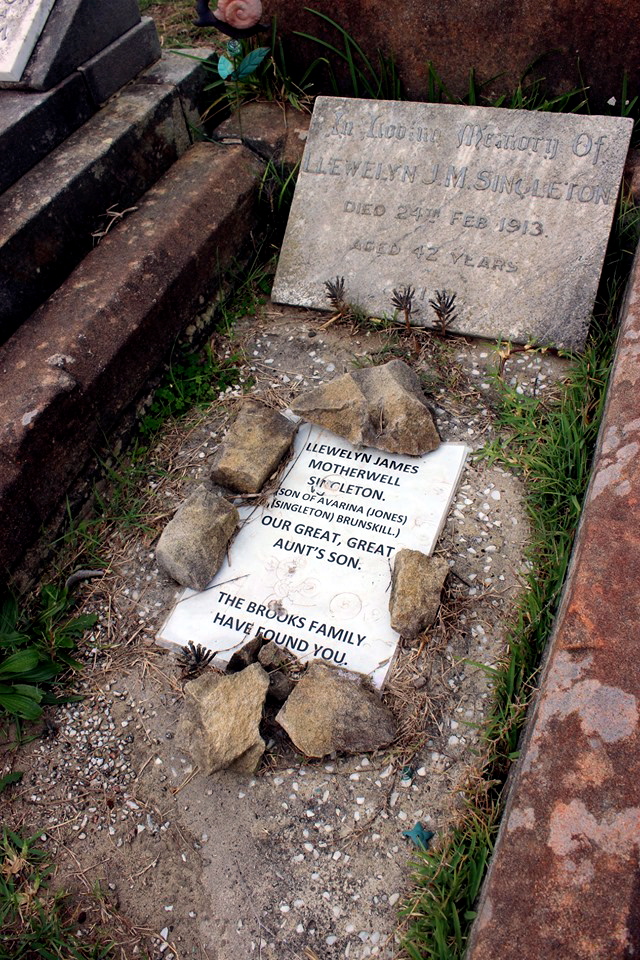
Died on: Monday 24 February 1913
Age: 42
Cause: Heart disease
Event location: ?
Event date: ?
Funeral date: ? ? ?
Funeral location: ?
Wake location: ?
Funeral Parlour: ?
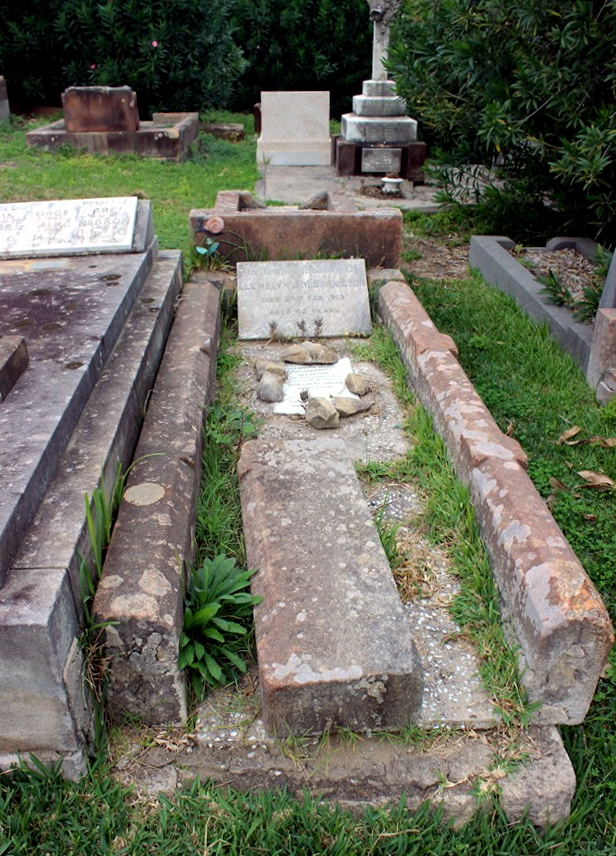
Buried at: Waverley Cemetery,
Grave GPS: ?
Memorial located at: ?
[alert_yellow] LLEWELYN is NOT mentioned on the Police Wall of Remembrance[/alert_yellow] *NEED MORE INFO
Funeral location: TBA
FURTHER INFORMATION IS NEEDED ABOUT THIS PERSON, THEIR LIFE, THEIR CAREER AND THEIR DEATH.
Sun (Sydney, NSW : 1910 – 1954), Wednesday 17 January 1912, page 3
GREEN – SINGLETON.
A very quiet wedding was celebrated on Monday evening at St. John’s Church, Darlinghurst, the contracting parties being Mr. T. H. Green and Miss Estella Overina Jones Singleton, third daughter of the late Superintendent James Singleton, of Albury, and Mrs. Singleton, of Combooah, Darlinghurst.
The bride wore a pretty cream silk frock, showing a lace tunic, and a picture hat, and was given away by her brother, Mr. Llewellyn Singleton.
Her sister, Miss G. Singleton, acted as maid of honor, and Mr. John Singleton Ross ( cousin ) was the best man.
The Grave stone clearly states that the date of death is 24 February 1913BUT the above article about his 3rd daughter – Estella Overina Jones SINGLETON getting married, states ” …… the late Superintendent James Singleton….” – that article being dated 17 January 1912.
The following notifications were contained in a special “Gazette” issued under the Public Service Act:—
APPOINTMENTS.—
Robert Hughes to be clerk of petty sessions and registrar of the District Court at Hillston; First-class Constable Llewellyn James M. Singleton to act as cleric of petty sessions at Nymagee; Constable Stephen Joyce to be acting-gaoler at Wellington Gaol, and his wife, Ellen Joyce, to be acting-matron at the same gaol; Joseph Henry Powell to be bailiff of the warden’s court at Wagga Wagga ; George Pulton Smyth King to he crown land agent for the metropolitan land district; Andrew Wilson, as caretaker of the bridge over the Murray River at Swan-hill; ………
* NOT known if the below relates to the same person who was a member of the Police:
Mention is made of Llewelyn Singleton of the Royal Hotel, Newbridge being granted a renewal of a publicans licence in the Licensing Court on Friday 20 June 1902.
Northern Star (Lismore, NSW : 1876 – 1954), Thursday 24 April 1952, page 5
LIQUOR LOADING WATCHED BY CONSTABLE
SYDNEY, Wednesday.- A police constable told the Liquor Royal Commission today he had seen beer loaded on a lorry from the cellar of the New Brighton Hotel, Manly.
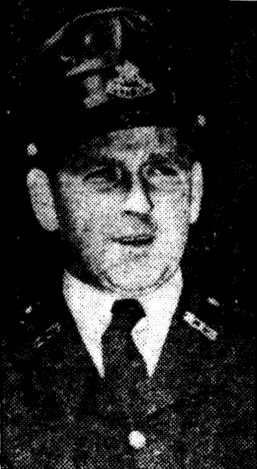
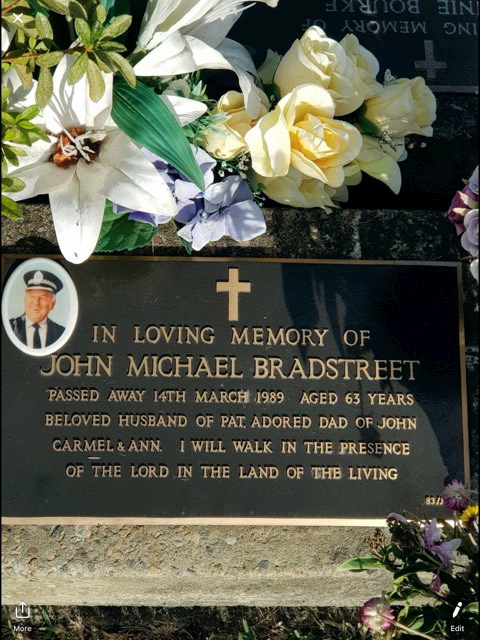
Constable John Michael Bradstreet, of Manly police, said this had occurred on December 10 at 5.30 a.m. At the same hour, two days later, the lorry was standing outside the hotel again.
The lorry carried the name of West, of Botany. When Cyril Gardner Maloney, licensee of the New Brighton Hotel, was recalled to the witness box, he denied the constable’s allegations.
Maloney also denied being paid £250 in cash for beer by a Riverview cafe waiter. He said he had never seen the waiter.
The Riverview Cafe manager, Lars Egon Samuelson, was questioned on his allegations that in September or October last year he had bought 470 dozen bottles of beer from the New Brighton Hotel.
Samuelson said his books had shown 171 dozen bottles of beer a month under the name “Bert” and 193 dozen under the name of “Mac”.
A certain amount of this beer was accounted for by supplies from the Maitland and Morpeth Hotel. Sussex Street, and Bank Hotel, Newtown, while the remainder had been purchased and delivered to the Riverview Cafe by Victor Phillip Taffa, wine and spirit merchant, of Haberfield, a Mr. Patterson and a Mr. Jones.
When giving evidence before the Commission earlier this month, Ernest Alexander Ireland, managing director of the Riverview Cafe, said he had got beer from the Bank and Maitland and Morpeth Hotels. Samuelson yesterday told the Commission he had made two visits with Riverview employees to obtain bottled beer from the New Brighton Hotel, Manly. The last time was on the Friday before Six-Hour Day, he said.
Asked how he remembered that particular date, Samuelson said he thought it was discussed at the Riverview with one of the staff. He had not tried to get beer from other hotels when he ceased getting supplies from the New Brighton Hotel, Manly.
The Riverview now had 600 dozen bottles of beer in stock. It had come from sources he had disclosed.
He had paid 33/- a dozen to the New Brighton and 35/ a dozen for other black market beer.
Samuelson told Mr. J. W. Smyth, Q.C. ( for the U.L.V.A. ) he had been determined, when he first appeared before the Commission, to conceal where he had got beer, except from Cavill’s, the House of Hayes, Duke of Edinburgh and New Brighton Hotels.
Samuelson agreed with Mr. Smyth that he was determined for some reason to shelter somebody.
Mr. Smyth: There was no reason why you should commit perjury unless you were trying to shelter somebody?
Samuelson: No.
Samuelson said he had realised in the witness box that unless he gave the Commissioner some information he would go to gaol. He admitted that he had to “put someone in” or go to gaol.
Cyril Gardner Maloney, licensee of the New Brighton Hotel, Manly, said he could not understand Constable Bradstreet‘s evidence about beer leaving the hotel on December 10. Maloney said it definitely did not happen.
He said he did not know of any occasion which would involve his sending away large quantities of beer from the hotel. Empty boxes had been sent away.
Cecil Thomas Kinnear, of Sylvania, a waiter at Riverview Cafe, said about five or seven months ago he had picked up between 140 and 150 dozen bottles of beer in cases at the New Brighton and loaded it into two covered wagons. Two men named Sid Moore and Bert Lockwood had been with him.
The beer had been collected on Samuelson’s instructions.
Kinnear said that at the hotel he had told Maloney he was there to pick up liquor for the Riverview. Maloney had replied: ‘I think it’s all ready down below.’
The beer, which was packed in cases in the cellar, was carried to the street by two men.
Kinnear told the judge he paid between £240 and £250. The money, which was in £10 notes, had been counted in Maloney’s presence.
Mr. Justice Maxwell then ordered Maloney to come forward to the body of the court, and asked: “Is that the man ?”
Kinnear: Definitely, it’s the man who got the money.
Mr. Whitlam ( assisting the Commissioner ), then asked Maloney to give his version of the incident. Maloney, who told the judge he had had a good look at the witness, said he had never seen him before in his life.
Judge: You heard the details of his handing you £250 in notes. That did not happen ? Maloney: No.
When Herbert George Lockwood was brought into the court, Maloney said he had never seen him before.
Walter Taylor, secretary of Goulburn and District Trades and Labour Council, said Tooths and Toohey’s beer had not been available in Goulburn hotels for two years.
Mudgee beer could be bought for 4/_ a bottle and Springfield beer for 3/6 a bottle.
He had reported complaints of saloon and lounge bars being open while public bars were shut to the local licensing officer, Inspector Freeman.
However, the police officer had taken no notice.
Taylor said he had heard of people obtaining bottled Tooths and Tooheys beer after hours. He had not reported this to local police because it would have been of no avail.
Taylor said a resolution making allegations against certain members of the police force had already been submitted to the Attorney-General.
Mr. Justice Maxwell said he would like inquiries made because of the suggestion that the police were lax in their duty.
Government Gazette of the State of New South Wales (Sydney, NSW : 1901 – 2001), Friday 29 November 1974 (No.143), page 4612
Department of the Attorney-General and of Justice
HIS Excellency the Governor, with the advice of the Executive Council, has pursuant to subsection (2a) of section 119 of the Liquor Act, 1912, approved of Inspectors Third Class John Michael Bradstreet and Andrew Gallagher being appointed to assist the Metropolitan Licensing Inspector in the exercise and discharge of his powers, authorities, duties and functions under that Act, as from 31st October, 1974.





 Had they failed to see the log and continued travelling at full speed the train would have almost certainly derailed, according to experts consulted at the time.