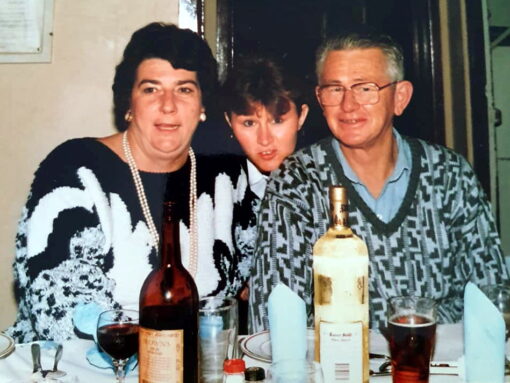
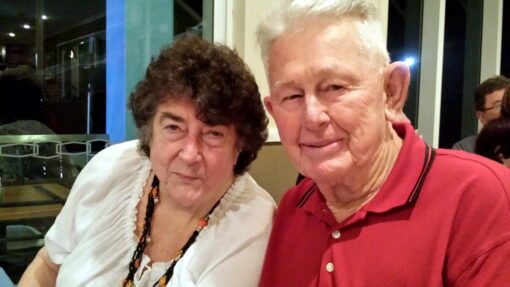
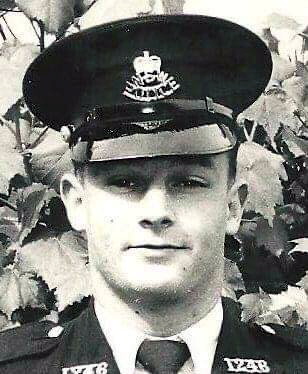
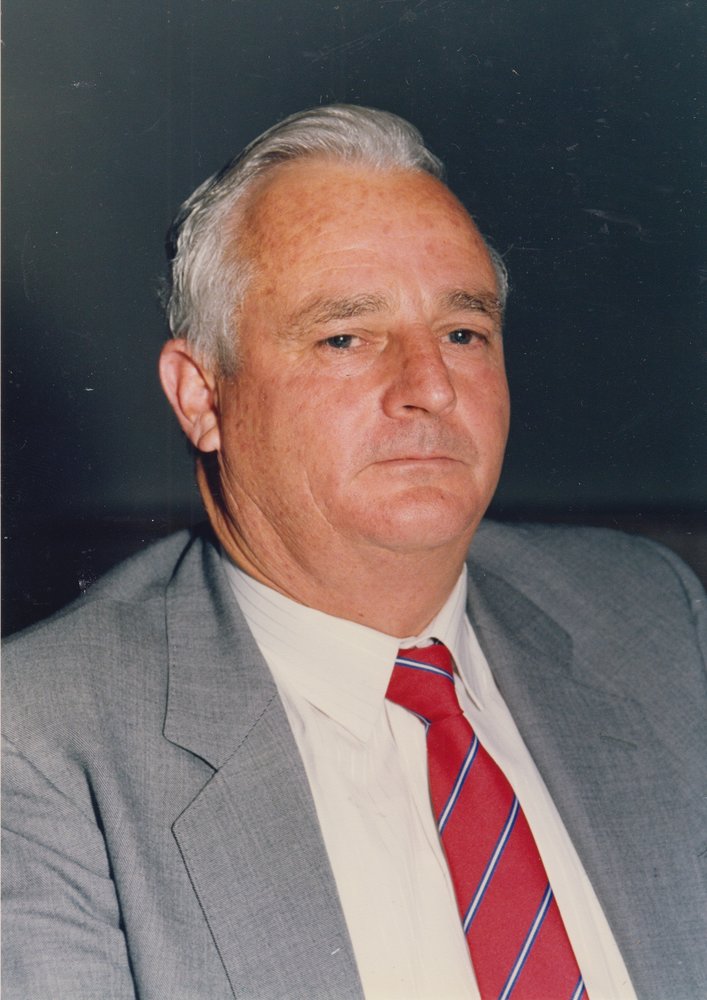
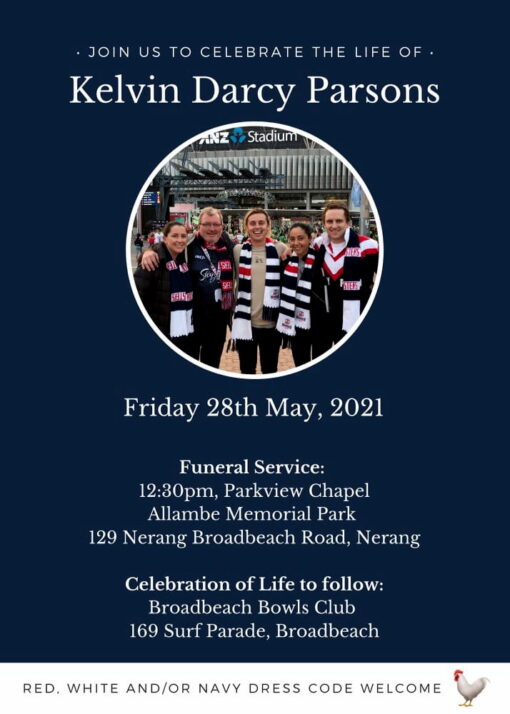
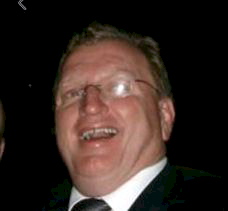
Beloved husband of Marjorie (dec). Loving father and father-in-law of Ian, Lee and Glenn. Cherished Pop of Casey and Amy & Poppy Rex of Chloe.
Passed away May 23rd, 2021 Late of West Ryde.
Aged 89 Years Forever in our hearts
Family and friends of Rex are warmly invited to attend his Funeral Service to be held in the North Chapel of Northern Suburbs Crematorium, Delhi Road, North Ryde on Friday June 4th, 2021 commencing at 11.15am.
Delhi Road, North Ryde 2113
CASSILLES, Marjorie Lorna
Passed away August 3, 2010
late of West Ryde.
Beloved wife of Rex, loving mother and mother-in-law of Ian, Lee and Glenn. Cherished Nan of Casey.
Sadly missed by all her family and friends.
Aged 78 Years
Forever in our hearts
The relatives and friends of MARJORIE are warmly invited to attend her Funeral Service to be held in the South Chapel, Northern Suburbs Crematorium, North Ryde on Monday 9 August, 2010 commencing at 11am.
MANNINGS FUNERALS ALL SUBURBS
Proudly Australian Owned and Family Operated 9555 …9555 … www.mannings.com.au
Member FIA
Date listed:7/8/2010Publication: The Daily Telegraph
NSW POLICE DEPARTMENT SERGEANT’S COURSE No. 1 OF 1970 BACK ROW: D. O. MARSH, F. W. PITCHFORD, K.A. AITKEN, R. G. RUDGLEY, B. J. O’BRIEN, E. J. WALMSELY, J. A. MORGAN, N. N. HOBBS, G. H. ROWE, W. H. MAIR, R.A. CASSILLES MIDDLE ROW: R. W. KING ( DRILL INST. ), K. D. SCHUBERT, C. J. JURD, R. J. BIRKS, A. J. ARNDELL, M. SMITH, W. J. HADRICK, B. N. MURPHY, R. W. DUNN, R. J. BEHAND, G. HARVIE. R. B. GOULD ( INSTRUCTOR )
FRONT ROW: No data
I have not found any information on this man, his life or career.
He does not rate a mention on Trove or the Australian Honours system.
He was not a NSW Police Cadet.
The family have provided a streaming link, for those wishing to watch the service.
Nothing further, than what is recorded above, is known about this person at the time of publication and further information and photos would be appreciated.
NSW Police Training Centre – Redfern / Police Training College – Penrith – Class # ? ? ?
New South Wales Police Force
Uniform # 446
Regd. # ‘Q‘ 8848
For the purposes of this website ‘Q‘ represents those Police joining between 1 March 1862 ( commencement of NSWPF ) – 23 February 1915 ( Commencement of NSWPF current numbering system )
Service: From Friday 5 June 1908 to Thursday 18 April 1935 = 36+ years Service
Rank: Commenced Training at ? Police Academy on ? ? ?
Probationary Constable – appointed 5 June 1908 ( aged
Birth: Oliver H BROOK Birth: 14032/1886 to Edward G BROOK & Helenia B at Goulburn, NSW
Marriage: Oliver H BROOK to Ada M THEEUFF at Waverly, NSW. # 9573/1909
Death: Oliver H BROOK # 1626/1950. Father: Edward George BROOK. Mother: Helena BOOTH. Balmain, NSW
Death of Ada May BROOK nee THEEUFF ( Wife ) # 5685/1972. Father: William. Mother: Unknown. Sydney, NSW
Birth of Eric Oliver BROOK: ( Son ) # 33584/1910 Father: Oliver Heathcote BROOK. Mother: Ada May BROOK. Waverley, NSW
Death of Eric Oliver BROOK: ( Son ) # 3633/1973 Father: Oliver Heathcote BROOK. Mother: Ada May BROOK. Sydney, NSW
Australian Star (Sydney, NSW : 1887 – 1909),
Tuesday 5 November 1907, page 7
CYCLING AND CHRISTIANITY
Oliver brook’s conversion GOULBURN, Monday
Oliver H. Brook, the converted cyclist, attended the evening service of the Goldsmith-street Methodist Church on Sunday, occupying a seat on the rostrum. He read the lessons. In the course of a short address he said the professional cyclist was confronted with a set of circumstances that were “questionable and corrupt in the extreme,” and that was one reason why he could not be a professional cyclist and a Christian.
Brook appealed specially to the young men of the congregation, and implored those who had not decided for Christ to do so. Then he asked any who would do so to stand up, but there was no response. He stated there would be a prayer meeting after the service, and that he would like all young men who cared to hear about God to stay.
There was a fair congregation, but the heavy rain doubtless interfered with the attendance.
Last night Constable *Brook saw a man and woman in the Domain both carrying parcels.
He stopped them and found the man’s parcel contained the dead body of a child, and some blood-stained clothing. The woman stated that the child was born alive on Sunday night, but when she awoke yesterday morning it was dead.
Bricks were attached to both parcels.
The couple were arrested on a charge of concealment of birth.
*Unsure if this article is in relation to Constable Oliver Heathcote BROOK.
Evening News (Sydney, NSW : 1869 – 1931),
Thursday 24 September 1908, page 3
LANGUAGE AND ASSAULT.
Constable Brook, the one time champion cyclist, was the prosecutor in a case at the Water Police Court this morning.
He had arrested Charles Chapman, 27, fishmonger, on a charge of using indecent language in Liverpool street on September 18, and Joseph Nava, 26, bricklayer, for assault, on the same date. The cases were heard together.
The constable said when be went to arrest Chapman for using language Nava and others interfered. Nava wrenched his arm back causing him pain.
The accused, who denied the charges, were each fined 10s, or seven- days.
BROOK – THEEUFF.- July 7, 1909, at Waverley, Sydney, by the Rev. Cocks, Oliver, eldest son of Mr. G. Brook, of Waverley, to May, third daughter of Mr. and Mrs. J. Theeuff, of Broken Hill.
For assaulting Constable Oliver Heathcote Brooks while in the execution of his duty at Sydney on Saturday last a laborer, David Hession, aged 26 years, was at the Water Police Court today sentenced to six weeks hard labor by Mr. J. L. King, S M.
It was stated for the prosecution that the accused was with another man on Saturday, when one of them was heard using indecent language, whereupon the constable asked them to move on.
The accused, who was under the influence of liquor at the time, then struck the constable a heavy blow with his hand.
Accused pleaded guilty, and said he had a few drinks in, and did not know what he was doing.
The Royal Shipwreck Relief and Humane Society’s 35th annual meeting and distribution of awards for acts of bravery will take place at the Sydney Town Hall on the evening of the 26th inst.
The list of those who are to receive either medals or certificates is comprised solely of Australians who have risked their lives in saving others. On this occasion five Australian mariners are to be presented with silver medals from the King of Italy for an act of bravery in rescuing men, women, and children at Messina at the time that, city was destroyed by earthquake. Another Australian is to receive a bronze medal and certificate from Lloyds, London, and a silver medal and certificate from the South Holland lifeboat institution. The acts of bravery performed by the following have been recognised, and each will receive the society’s award at the annual meeting.
CONSTABLE OLIVER HEATHCOTE BROOK.
On December 3, 1911, a young lady named Miss Rosenberg was bathing on Tamarama Beach, when she was carried out fully 70 yards from the beach by the very strong undertow then running, and was rapidly being carried farther out. On Constable Brook’s attention being drawn, he, although not a very good swimmer, at once went to her assistance, and reaching her, managed to swim back a short distance, but owing to her struggles he was compelled to wait and hold her above water until rescued by the Life Saving Club, both being very exhausted.
James Jones, a one-handed man, was carried out by the undertow at Bondi yesterday.
Constable Brook, ex-champion cyclist of New South Wales, saw the man throw up his hand, and swam to his assistance, and after a desperate struggle, succeeded in bringing him ashore.
Mr. Edward George Brook, who died at his residence, Heathcote, Cross Street, Waverley, on Wednesday at the age of 63, was the father of Constable Brook, of Sydney, the well known ex-champion cyclist, and of Sapper William Brook, a good swimmer as well as a brave soldier, who was killed in action about a month ago.
For the last few years Mr. Brook suffered from a weak heart.
His end was hastened by the death of Sapper Brook.
BROOK, Oliver Heathcote.— March 7, 1950, at Balmain Hospital, loved husband of May Brook and dear father of Eric.
BROOK.- The Relatives and Friends of Mrs. May Brook, Mr. and Mrs. Eric Brook and Family, of No. 5 Melody Street, Coogee, are kindly invited to attend the Funeral of her beloved Husband and their dear Father and GrandfatherOLIVER HEATHCOTE BROOK ; to leave our Chapel, 810 George Street, Sydney, Tomorrow (Thursday), at 10.30 o’clock, for Eastern Suburbs Crematorium.
In the Will of OLIVER HEATHCOTE BROOK late of 18 Duncan Street Maroubra in the State of New South Wales Police Constable deceased.
Application will be made after 14 days from the publication hereof that Probate of the last Will and Testament dated 1st May 1929 of the abovenamed deceased may be granted to Ada May Brook the Executrix named in the said Will, with leave reserved to Thomas Augustus Magney the Executor named therein to come in and prove and all notices may be served at the undermentioned address.
All Creditors in the Estate of the deceased are hereby required to send in particulars of their claims to the undersigned.
MAGNEY & MAGNEY. Proctors.
79 Elizabeth Street. Sydney.
Nothing further, than what is recorded above, is known about this person at the time of publication and further information and photos would be appreciated.
Cal
30 August 2021
Updated 18 February 2026 with true Date of Birth and calculations.
Charles Percy Lloyd BEBB
13/09/2021
Charles Percy Lloyd BEBB
AKA Percy BEBB
Late of 5 Waratah St, Arncliffe, NSW
NSW Police Training Centre – Redfern / Police Training College – Penrith – Class # ? ? ?
New South Wales Police Force
Regd. # ‘Q 8794
For the purposes of this website ‘Q‘ represents those Police joining between 1 March 1862 ( commencement of NSWPF ) – 23 February 1915 ( Commencement of NSWPF current numbering system )
Service: From? ? 1908 to21 October 1934 = 26 years, 7 months, 14 days Service NOT including Academy time
Rank: Commenced Training at ? Police Academy on ? ? ?
Probationary Constable- appointed 7 March 1908 ( aged 21 years, 7 months, 17 days )
Constable – appointed ? ? ?
Constable 1st Class – appointed ? ? ?
Detective – appointed ? ? ? ( NO )
Senior Constable – appointed ? ? ?
Leading Senior Constable – appointed ? ? ? ( N/A )
Sergeant 3rd Class – appointed ? ? ?
Sergeant 2nd Class – appointed 15 June 1928
Sergeant 1st Class – appointed ? ? ?
Final Rank = Sergeant 1st Class
Stations: George St North Police Stn ( 1908 ), Water Police, Traffic Branch, Water Police ( 2nd time ), Redfern ( 7 Division ), St George ( Licencing Officer ), North Sydney ( Special Duty ) – ( Metropolitan Police Force ) – Death
Retirement / Leaving age: = 48 years, 3 months, 2 days
Time in Retirement from Police: NIL
Awards: No Find on the Australian Honours system
Certificate of Merit by the Royal Humane Society, NSW – Actions involving a drowning rescue at Bronte, NSW, on 11 November 1911
Born: Monday 19 July 1886, NSW
Died on: Sunday 21 October 1934
Age: 48 years, 3 months, 2 days
Cause: Peritonitis stemming from appendicitis operation 10 days earlier.
Event location: North Sydney Hospital, NSW
Event date: ?
Funeral date: Tuesday 23 October 1934
Funeral location: St David’s Church, Arncliffe, NSW
Funeral Parlour: W. N. BULL, King St, Newtown, NSW ( Undertakers )
Sydney Mail and New South Wales Advertiser (NSW : 1871 – 1912),
Wednesday 20 October 1909, page 61
MARRIAGE:
BEBB — GARDEN.— September 15, at St. John’s, Glebe Point, by the Rev. S. S. Tovey, B.A., Charles Percy Lloyd Bebb to Maggie Garden ( DOB: 25 Nov 1888 ).
The Royal Shipwreck Relief and Humane Society’s 35th annual meeting and distribution of awards for acts of bravery will take place at the Sydney Town Hall on the evening of the 26th inst.
The list of those who are to receive either medals or certificates is comprised solely of Australians who have risked their lives in saving others. On this occasion five Australian mariners are to be presented with silver medals from the King of Italy for an act of bravery in rescuing men, women, and children at Messina at the time that, city was destroyed by earthquake. Another Australian is to receive a bronze medal and certificate from Lloyds, London, and a silver medal and certificate from the South Holland lifeboat institution. The acts of bravery performed by the following have been recognised, and each will receive the society’s award at the annual meeting.
CONSTABLE CHARLES PERCY LLOYD BEBB.
On November 11, 1911, while bathing in the surf at Bronte a man named Maurice Maher became cramped and perfectly helpless a considerable distance from the beach, and was rapidly being carried further out. He shouted for assistance, and Constable Bebb swam out, partially dressed, with the line, which he lost in the breakers. He, however, swam on and reached Maher, and with the assistance of Constable Conley, who had also swam out, he was safely got to the shore.
New South Wales Police Gazette and Weekly Record of Crime (Sydney : 1860 – 1930),
Wednesday 30 May 1928 (No.22), page 348
Watches and Jewellery Reported Stolen, Missing, Etc.
Date: 22 May 1928:
Owner: Charles Percy Lloyd Bebb, 5 Waratah St, Arncliffe, NSW
Description: A gold fine curb link albert, with a gold shield shaped medal, inscribed ” St. Patrick’s Day Tug of War, C.P.L. Bebb “. A gold shield shaped meal, inscribed ” Two races, C.P.L. Bebb “. A bronze medallion for life saving, inscribed ” Awarded to C.P.L. Bebb ” attached.
Sergeant Charles Percy Bebb, of Waratah Street, Arncliffe, one of the most popular members of the metropolitan police force, died last Sunday at the North Sydney Hospital, aged 48 years.
A week previously he was operated upon for appendicitis, but peritonitis developed and he did, not rally.
Sergeant Bebb was only recently promoted to first-class rank.
As a member of the water police he saved many from drowning and by kindly care and aid prevented many distressed persons taking their lives.
During the deceased’s connection with the force he had been associated with nearly every branch of the service.
Starting at George Street North, he later joined the Water Police, and was familiar with every point of the harbour.
Then to the Traffic Branch, where he was well-known in connection with the issue of licenses and vehicle registration.
Back later to the Water Police figuring prominently in many of the unfortunate bridge tragedies.
Still, later as officer to Redfern division, and latterly to St. George as licensing officer.
At the time of his sudden illness he was on special duty at North Sydney.
The deceased, who is survived by a wife and two daughters, was Vice-President of St. David’s Church of England Men’s Society, Arncliffe, and also treasurer, synodsman, and parish Councillor of the church.
He was also a member of the I.O.O.F. Lodge.
The funeral services at St. David’s, Church, Arncliffe, and at the Woronora Crematorium, on Tuesday, were largely attended.
Inspector ( George Gilbert ) Fergusson ( # ‘Q‘ 8769 ) represented the Commissioner of Police, and Inspector ( Henry ) Chinner ( # ‘Q‘ 7932 ) the metropolitan superintendent.
The police band and 80 policemen in uniform were present.
Inspector Jones, of Kogarah, was in charge of arrangements, and was assisted by Sergeant Redding.
The large gathering present included many ex-policemen and colleagues and friends.
The services were conducted by the Rector, Rev. Pitt-Owen, assisted by the Rev, W. J. Siddens.
The chief mourners were Mrs. M. Bebb (wife), and two daughters, Mr. J. Harold Bebb (brother), and Mrs. Bebb, Mrs. S. R. White (mother), Mr. and Mrs. Hendren (sister) of Lithgow, Mr. John Bebb, Mr. S. R. White, Mr. A. Wray, Mr. H. H. Youngman (uncles), and their wives.
The WIFE and FAMILY of the late CHARLES PERCY LLOYD BEBB, of Arncliffe, wish to return THANKS to the many kind friends and relatives for letters, cards, and floral tributes in their
BEBB. — In loving memory of Charles Percy Lloyd Bebb who departed this life October 21 1934. Always remembered. — Inserted by his loving wife and daughters Maggie and Esther.
BEBB. — In loving memory of Percy who passed away October 21, 1934.
These postcards came from old albums owned by Charles Percy Lloyd Bebb (known as Percy) and Maggie Gardner.
Percy was born in 1886 to parents Joel and Esther (nee Harrold); Maggie was born in 1888 to John and Sarah (nee Isaac).
Their families lived in Glebe; they both attended St John’s Church there.
Both were given their albums by their parents – Percy on his 20th birthday in 1886.
The cards date from the beginning of their friendship in 1904, continue through their courtship until their marriage in 1909; after that, they are mostly Greeting types for birthday and Christmas.
They follow Percy’s path from Glebe Fire Brigade to CSR at Broadwater Richmond River and finally to NSW Police Force.
Mostly these cards date from 1904 to around 1910. A lot are between Maggie and Percy – in their courtship they seem to have written very frequently. A lot of the messages are concerned with their own and the other’s health – perhaps there was nothing else to write about. Or fishing; both families seemed to be very keen fishing people.
Unfortunately a lot of these cards are age spotted from being stored in the old albums with porous green paper; or damaged through posting or handling.
While I have discarded the worst ones, some that otherwise seem historic or attractive I have retained, hoping they will still be appealing to someone. So please let the photos been your guide as to description. Always happy to combine.
NSWPF No 8794, Charles Percy Lloyd Bebb joined the NSW Police Force 7 March 1908. He had achieved the rank of Sergeant when he died 21 October 1934.
Constable Charles Percy Lloyd Bebb was awarded a Certificate of Merit by the Royal Humane Society of NSW for actions involving a drowning rescue at Bronte on the 11th November 1911.
From a newspaper report of 25 April 1932 he is mentioned as trying to revive a man who had jumped from the Sydney Harbour Bridge. Unfortunately he was already dead when his body was retrieved from the water.
He was probably stationed first at NSW Mounted Police Barracks Bourke St Redfern, then at Central Police Barracks Liverpool St, and later was stationed at Newcastle and West Maitland (1917).
2 REAL PHOTOS NSW MOUNTED POLICE BARRACKS BOURKE ST REDFERN c1908 #10
One shows the front façade of the Police Barracks, the other has several small vignettes showing Mounted Police on horseback, undergoing training, in formation etc. One is dated 18.3.08. As Percy only joined the Police Force 7 March 1908, it is possible this was his first posting. Both photos are faded.
Esther Jane BEBBBorn: 9 July 1912, Died 21 November 2001 ( Aged: 89 years, 4 months, 12 days )
Maggie BEBBBorn: 25 November 1888, Died 29 November 1973 ( Aged: 85 years, 4 days )( This was Charles’ wife. Seems that one of the daughters was also named Maggie )
All are cremated with the Ashes of all being in the same niche’ at Woronora Cemetery, Sutherland, NSW.
Nothing further, than what is recorded above, is known about this person at the time of publication and further information and photos would be appreciated.
Cal
29 Aug 2021
Updated 25 May 2025 with Date of Birth and calculations stemming thereof.
Timothy STARR
13/09/2021
Timothy STARR
AKA ?
Late of Marrickville, NSW
Police Training Centre – Redfern / Police Training College – Penrith / Belmore Barracks Class # ? ? ?
New South Wales Police Force
Service 1: Regd. # ‘Q‘ 4668
Service 2: Rejoinee # ‘Q‘ 5025
For the purposes of this website ‘Q‘ represents those Police joining between 1 March 1862 ( commencement of NSWPF ) – 23 February 1915 ( Commencement of NSWPF current numbering system )
Service 1: From 20 March 1884 to? ? ? = ? years Service
Service 2: From 16 September 1885 to 6 October 1905 = 20+ years Service
Rank: Commenced Training at ? Police Academy on ? ? ?
Probationary Constable- appointed 16 September 1885
Constable – appointed ? ? ?
Constable 1st Class – appointed ? ? ?
Detective – appointed ? ? ? ( NO )
Senior Constable – appointed ? ? ?
Final Rank = Senior Constable
Service 1: Stations: ?,
Service 2: Stations: Darlinghurst ( 3 Division ), Paddington, Marrickville ( 1902 – Death )
Retirement / Leaving age: = 46
Time in Retirement from Police: 0
Awards: No Find on the Australian Honours system
Born: ? ? 1859 – Killaloe, County Clare, Ireland
Emigrated to Australia around 1879
Died on: Friday 6 October 1905 @ 8.15am
Age: 46
Cause: Influenza leading to Pneumonia
“contracted through a chill he received whilst recovering the body of one of the boys who drowned in a waterhole at Marrickville on 23 September 1905 “
Event location: Lewisham Hospital, NSW
Event date: from 23 September 1905 – 6 October 1905 = ( 10 days )
Admitted to Hospital on the 2 October 1905
Funeral date: Saturday 7 October 1905 during the p.m.
Funeral location: St Bridge’s, Marrickville, NSW
Funeral Parlour: ?
Photos courtesy of Kevin Banister ( NSWPF # 16382 ) on 5 May 2021
Senior-Constable Timothy Starr, of the Marrickville Police Station, died in Lewisham Hospital on Friday from pneumonia, contracted through a chill he received while recovering the body of one of the boys who was drowned in a waterhole at Marrickville on September 23 last.
Deceased was a strict Catholic, the last rites of the Church being administered to him by the Very Rev. Father Frederick, C.P., who also visited him during his illness.
The late Senior-Constable Starr was a native of the County Clare, Ireland, and was 46 years of age.
He came to Australia about 26 years ago, and had just completed 20 years’ service in the police force.
He was first appointed to No. 3 Station, and subsequently to Paddington, where he was promoted to the rank of Senior-Constable.
Three years ago he was transferred to Marrickville.
Deceased was a popular officer, and was much respected and esteemed by the residents of the districts in which he had done duty.
He was a man of sterling character, and had the confidence of his superiors.
His wife predeceased him three years ago, and he has left one child — a little girl about six years old.
A Mass for the repose of the soul was celebrated in St. Brigid’s, Marrickville, by the Very Rev. Father Frederick, C.P., on Saturday morning.
The funeral left the church in the afternoon for the Waverley Cemetery, and after the Last Absolutions had been pronounced the coffin was carried to the hearse by four of the deceased’s comrades, the ‘ Dead March ‘ being played on the organ meanwhile.
Over 100 members of the Metropolitan Police Force, under Inspector McIntosh, marched in front of the hearse, which was also preceded by the Very Rev. Fathers Frederick, C.P., and P. B. Kennedy, O.F.M., who officiated at the grave.
The cortege was headed by the Police Band, under Senior-Constables Mankey and Hamilton, which rendered the customary funeral music.
The attendance at the funeral was very large, the crowd that gathered around St. Brigid’s Church being a very big one.
Father Frederick preached the panegyric at the grave.
Amongst those present were Senior Sergeants Griffiths ( Ashfield ) and Parkinson ( No. 1 Police Station ), Senior-Constables Orr ( North Sydney ), Graham ( Paddington ) and Phelan, and Constable Thomas Moloney ( No. 3 Station ), one of deceased’s oldest and most trusted friends.
STARR.—The Friends of Senior-constable TIMOTHY STARR are respectfully invited to attend his Funeral ; to leave St. Brigid’s R.C. Church, Marrickville, on THIS SATURDAY, at 1.30, for Waverley Cemetery.
W. J. DIXON CO., 120 Oxford-street; 183 George-street West.
STARR. — The Friends of Messrs. MICHAEL and THOMAS MOLONEY are respectfully invited to attend the Funeral of their late friend, Senior-constable Timothy Starr; to leave St. Brigid’s Church, Marrickville, on THIS SATURDAY, at 1.30, for Waverley Cemetery.
John Docksay, of Annandale-street, Darling Point, is the owner of a handsome retriever dog.
On the evening of October 11 Constable Timothy Starr happened to be in the neighborhood of the place mentioned, and the animal, without preliminary warning or ultimatum of any kind, bit him in the shin, not, however, in such a way as to prevent him from discharging his duty.
At the Paddington Police Court yesterday Docksay was proceeded against for keeping a dog that endangered Constable Starr‘s limbs.
The defendant could not account for the animal’s foolish behavior, though he held the opinion that it only desired to play with the constable on the occasion referred to.
He was, however, ordered to pay £2, with 4s,10d costs, in default levy and distress.
Whilst at Waverley, today, 5/5/2021, I paid my respects to –
SENIOR CONSTABLE TIMOTHY STARR
Marrickville Police – Pneumonia – 6 October, 1905
Resting Place – Waverley Cemetery, Waverley
On 23 September, 1905 the constable was on duty assisting with the recovery of the bodies of two brothers, Richmond Augustus Kirkland (12) and George Nelson Kirkland (14) who had been drowned while fishing in a waterhole at Daley’s Brickworks in Marrickville, when he caught a severe chill.
He ( STARR ) was taken to Lewisham Hospital where it was found that his condition had deteriorated to pneumonia, and he passed away on 6 October.
The Catholic Press of 12 October, 1905 reported on the constables death.
“SENIOR CONSTABLE STARR.
Senior-Constable Timothy Starr, of the Marrickville Police Station, died in Lewisham Hospital on Friday from pneumonia, contracted through a chill he received while recovering the body of one of the boys who was drowned in a waterhole at Marrickville on September 23 last.
Deceased was a strict Catholic, the last rites of the Church being administered to him by the Very Rev. Father Frederick, C.P., who also visited him during his illness.
The late Senior-Constable Starr was a native of the County Clare, Ireland, and was 46 years of age. He came to Australia about 26 years ago, and had just completed 20 years service in the police force.
He was first appointed to No. 3 Station, and subsequently to Paddington, where he was promoted to the rank of Senior-Constable.
Three years ago he was transferred to Marrickville.
Deceased was a popular officer, and was much respected and esteemed by the residents of the districts in which he had done duty. He was a man of sterling character, and had the confidence of his superiors.
His wife predeceased him three years ago, and he has left one child — a little girl about six years old.”
The constable was born in Killaloe, Ireland in 1859 and joined the New South Wales Police Force on 16 September, 1885. At the time of his death he was stationed at Marrickville. His death was recorded in the New South Wales Police Gazette of 27 December, 1905. He is not listed in the official New South Wales Police Honour Roll.
A MAN AND A REVOLVER. EXTRAORDINARY BEHAVIOR. TWO LIVES IN DANGER EFFECTS OF THE WAR FEVER.
Many of the residents of Rushcutter’s Bay, in the neighborhood of the power-house, were startled on Saturday night last by the unusual sound of arms being discharged in that quiet neighborhood. The facts in connection with the occurrence go to show that what might have been very grave consequences were escaped by sheer good luck, two lives having been seriously endangered.
It appears that at about 10.25 p.m., Mr. Benjamin Bernard, a resident of Elizabeth-street, Paddington, and engaged in business at 89½ King-street, Sydney, was walking along Bayswater-road, on his way home by that route. He passed the power house, and reached that open portion of the road opposite Rushcutter’s Bay Reserve. As he neared the hoarding on the right hand side of the road, he saw a man under the lamp post flourishing a revolver, and just when he got within a few yards of him the weapon was discharged in the direction of the reserve.
Mr. Bernard at once remonstrated angrily with the man upon the recklessness of his conduct, and gave him a strong warning not to repeat it, and then proceeded on his journey.
When he had gone 50 or 100 yards, he met Constable Timothy Starr, to whom he related the occurrence, saying that he thought, there was a man running amuck farther down.
The constable proceeded towards the power house, and after he had gone a few moments it occurred to Mr. Bernard that he had better go back, in case his assistance might be required.
He accordingly turned, and crossed over the road towards the Bayswater-road Hotel. As he stepped on the footpath he found himself face to face with the man, who evidently had escaped the constable.
The man instantly raised his revolver, and discharged it at Mr. Bernard’s head.
Mr. Bernard had seen the danger, and ducked to one side, and the bullet whizzed past over his shoulder. The man then passed on, leaving Mr. Bernard for the moment dazed. The latter’s blood, however, was now up, and he determined to close with the man, and for that purpose prepared to rush on him unawares.
Just then Constable Starr, who had heard the shot, flew past in the direction of the man, and immediately got close to him. The man thereupon turned round, and levelled his revolver at the constable. The latter almost instinctively raised up his cloak to ward off, as well as it could, the bullet which he was certain was coming. The trigger was heard being drawn, and the leaden messenger was awaited, but providentially it did not come.
The revolver would not work for just that instant, and before the man could do anything both the constable and Mr. Bernard were upon him, and had him soon pinned to the ground.
Starr quickly took the revolver out of his hand ; but had hardly got hold of it when it went off — fortunately in a safe direction.
The man was then taken to the Paddington Station, where he gave the name of Charles Willis, 29, groom, an Englishman, and said to be in the employ of Mr. McGrath, livery stable proprietor, Castlereagh street, Sydney.
On the way to the station his captors asked him for some explanation of his conduct, but he did not appear to be very coherent, or to quite understand his position.
He talked about being in the Transvaal, and being stuck up by the Boers, whom he had accordingly fired at.
In reply to the constable he also stated that he remembered having ” three rums ” that night, and was not quite sure how he got as far as Rushcutter’s Bay, since he resided in Sydney.
At the Paddington Police Court to-day, before Mr. Isaacs, S.M., Willis was charged with maliciously shooting at Benjamin Bernard, with intent to do grievous bodily harm, and a remand being asked for by the police, the case was adjourned till Thursday next.
The accused is a small man, of rather depressed appearance. There was nothing about him that would suggest him as a formidable opponent for the Boers. His memory of the events of Saturday night is very confused, and he can give no coherent account of the proceedings on that occasion.
The revolver is an old one, and bears on it the imprint, ” Presse, Laloux, and Cie, Liege. ”
Three discharged cartridges were found in it, and one undischarged.
James Ryan, 24, laborer, was sentenced to one month’s imprisonment, with hard labor, for assaulting ConstableTimothy Starr in the execution of his duty.
Nothing further, than what is recorded above, is known about this person at the time of publication and further information and photos would be appreciated.
Cal
28 Aug 2021
Dennis James BASS
13/09/2021
Dennis James BASS
AKA Sam BASS
Late of Nelson Bay, NSW
NSW Police Training Centre – Redfern – Class # 105
NSW Police Cadet # 1923
New South Wales Police Force
Uniform # 2010
Regd. # 11765
Service: From 24 February 1964 to? ? c1984 ( Resigned ) = 20 years Service
Rank: Commenced Training at Redfern Police Academy, as Police Cadet, on Monday 24 February 1964 ( aged 17 years, 2 months, 15 days )
Probationary Constable- appointed 9 December 1965 ( aged 19 years )
Constable – appointed 9 December 1966
Constable 1st Class – appointed ? ? ?
Detective – appointed ? ? ? ( YES )
Senior Constable – appointed 9 December 1974
Leading Senior Constable – appointed ? ? ? ( N/A )
Sergeant 3rd Class – appointed ? ? ?
Sergeant 2nd Class – appointed ? ? ?
Does NOT Appear in the 1984 ‘ Stud Book ‘
Final Rank = Detective Sergeant ?/Class
Stations: ?, Bankstown ( 19 Division )( about 18 months ), South District ( 1968 ), ‘ D ‘ District ( 1969 ), Crookwell ( GDs ), Brewarrina ( 3 years ), Liverpool ( 22 Division )( ‘A’ List )( old Police Stn in Moore St ), 21 Division ( about 1972 ), Ashfield Detectives, Petersham Detective, Vice Squad – C.I.B., Randwick Detective – Resignation ( c1984 )
After resigning, he worked for the Egg Corporation and later as a Manager of a Country Club.
Retirement / Leaving age: = ?
Time in Retirement from Police: ?
Awards: National Medal – granted 15 April 1981 ( Det SenCon )
( Due to current Govt. restrictions on ‘Gatherings’ due to Corona19 Virus Pandemic, some families may wish to have a Memorial Service / Wake with friends and family at a later date )
Funeral Parlour: France Family Funerals, Nelson Bay, NSW 02 4981 4488
Buried at: Cremated. Ashes to be scattered at Shoal Bay, NSW
Memorial / Plaque / Monument located at: ?
Dedication date of Memorial / Plaque / Monument: Nil – at this time ( August 2021 )
DENNIS is NOT mentioned on the Police Wall of Remembrance *NEED MORE INFO
FURTHER INFORMATION IS NEEDED ABOUT THIS PERSON, THEIR LIFE, THEIR CAREER AND THEIR DEATH.
Back Row ( L – R ) Patrick Philip CLEAR # 12440, Terence M. WALSH # 12771, Anthony R. REID # 13046, Donald Kevin MURRAY # 12315, Eric James GOLLAN # 14665, Nicholas J. STOVES # 11198
( L – R ) Dave DURANT, Frank BROWN, Sam BASS, Keith BYRNES, Noel PARKINSON, John CLARKE
In 2014 this group, from Class 105, celebrated their 50th anniversary although no longer teenagers and perhaps not so handsome. The photo is of the 50th anniversary. Back row left to right: Phil Martin, Neil Anderson, Geoff Towner, Maurie Green, Greg Parker, Ron Nunn and Col Irwin. Front row left to right: Geoff Wormleaton, Clive Steirn, Warren Chambers, Rudy Hereth and Sam Bass.
Sam Bass was my father. I just wanted to make a quick post to let everyone know of his passing and how much this group meant to him.
Last Sunday dad lost a battle he had been fighting and took his own life.
Anyone that knew Dad knew him as a lovable goofball with a giant heart that would give you the shirt of his own back.
Unfortunately, now one of the most beautiful and helpful human beings I’ve had the pleasure of knowing didn’t reach out for help when he needed it most.
My sister and I both served, and along with everyone in this group I’m sure we’ve all had more than our fair share of Friends lost to mental illness. I can tell you nothing I’ve experienced yet hits you quite like when it’s your father.
It’s ok to not be ok.
Please, please, please ask your mates how they’re doing, know YOU ARE NOT ALONE, and reach out to someone when you need.
Given the current circumstances we won’t be holding a funeral as such. Rather Sam will be cremated and once life is a bit less COVID crazy we scatter his ashes in Shoal Bay some time next year. Anyone is welcome.
Thanks to everyone in this group for allowing me to post and know that he loved you all and was on here multiple times a day.
Please feel free to send me a message on here if you feel you need and I’ll let everyone know more about the final goodbye when we do.
Regards
Mike Bass
BASS
Dennis James
BASS, Dennis James Of Nelson Bay
22 August 2021. Aged 74 years.
( Due to current Govt. restrictions on ‘Gatherings’ due to Corona19 Virus Pandemic, some families may wish to have a Memorial Service / Wake with friends and family at a later date )
Funeral Parlour: ?
Buried at: ?
Memorial / Plaque / Monument located at: ?
Dedication date of Memorial / Plaque / Monument: Nil – at this time ( August 2021 )
DENIS is NOT mentioned on the Police Wall of Remembrance * NOT JOB RELATED
FURTHER INFORMATION IS NEEDED ABOUT THIS PERSON, THEIR LIFE, THEIR CAREER AND THEIR DEATH.
4 row ( l to r ):
L. C. Bennett; D. W. Stolle # 9460; M. W. Kirk # 9512; R. C. Landers; B. Symons; A. Southall # 9527; John C. Dunbar # 9482; Peter J. Martin # 9528; B. K. Leaney # 9533; D. W. McLaughlin; J. R. Dorsett # 9498; P. W. Medway # 9444; J. McGregor # 9518; F. J. Ryder # 9506; Ray. N. Morris # 9517; P. R. Clemson # 9523; J. O. Parry; P. J. Woodward # 9478; D. C. Newton # 9480; Rod. L. Power # 9477; A. W. McDonald # 9510; B. A. Kearns; P. R. Leembruggen # 9530; R. G. Dunn.
3rd row ( l to r ):
E. H. Williamson # 9507; Syd. K. Isedale # 9490; T. G. Purcell # 9468; Allen J. Murphy # 9509; A. P. Lynch # 9500; R. W. Stone # 9488; M. C. Adams; H. J. P. Munro # 9484; J. E. Hawley # 9522; S. C. Heckenberg # 9487; H. T. Auliff # 9464; Barry A. Melouney # 9492; M. R. Turk # 9526; Anthony C. Frost # 9516; C. A. Hermanson # 9525; Edward ( Ted ) F. Doherty # 9446; W. McCormick # 9529; Ken. J. Williams # 9461; M. C. Moy # 9449; K. G. McNeill # 9455; A. D. Morris # 9469; R. L. Scarf # 9457; J.R. Press # 9462; R. J. Mahoney # 9514.
2nd row ( l to r ):
J. J. McNamara # 9465; T. J. Webber # 9504; B. A. Bennett # 9453; J. F. Bostock # 9535; R. N. Thornett; W. A. Allan; K. J. Hall; Mick R. Hay # 9452; Ken. Waters # 9494 or 9505; Keith Waters # 9494 or 9505; G. N. Crouch # 9532; R. C. Rogerson # 9536; D. S. McAfee # 9459; G. A. Wilson # 9470; B. Garland # 9511; J. Peterlin # 9503; Thom. C. Coleman # 9496; R. J. Canning # 9473; Victor A. Schweikert # 9458; R. Pearson; B. Kerrison # 9485; J. G. Kinnane; L. R. Kriss # 9483.
Front row – seated- ( l to r ):
Sergeant 3/c. Ben Hall; C. C. Greenham; G. R. Gibb # 9445; R. C. Jenner # 9486; J. C. McGingley; Darcy W. Cluff # 9463; R. J. Graham # 9467; David E. Nelson # 9481; F. B. McGoldrick; Ernest G. Mercer # 9515; E. W. Kelly; J. Kelly # 9531; Sergeant 1/c. Sligar # 8146; Sergeant 1/c. Barber # 4474; Sergeant 3/c. Porch; Miss. Sylvia W. Paull # P/W 0038; Mrs. Eileen. M. McLean # P/W 0037; Miss. June W. Fielding # P/W 0039; S. Favot # 9493; J. P. Boon # 9519; L. E. Ervine # 9497; R. T. Milligan # 9479; Denis W. Wardrobe # 9456; D. C. Rugers; H. V. Clarke.
Scientific Police – December 1979 Front Row L – R
Det Sgt 2/c A.J. WOOD, Det Sgt 2/c E.J. KELLY # 8227, Det Insp J.E. SNOWDEN # 5900, Det Insp J.E. MERRETT # 5596 ( O.I.C. ), Det Sgt 1/c R.R. BROWN, Det Sgt 3/c D.W. WARDROBE # 9456, Det Sgt 2/c B. GIBSON
2nd Row L – R:
Det Sgt 3/c L.K. CAMPBELL # 9618, P.C. Sgt 2/c J.H. SOILAND # 8462, Det SenCon J.R. HESLOP, P.C. Const S.J. HENKEL, Det SenCon D.J. HUGHES, Dets Sgt 3/c D.J. CHIVERS.
Det Sgt 3/c N.G. EZART, Det Sgt 3/c R.W. JOHNSON, Det SenCon W.F.W. DAY, Det SenCon E.L. OOSTERHOFF, Det SenCon M.R. EDWARDS, Det SenCon R.A. NAPIER, Det SenCon R.H. MUNDAY # 12657, P.W. Det SenCon V.L. FLEMING, Det SenCst R.J.W. BARBER, P.C. SenCst D.J. TYSOE, P.C. Cst 1/c T.P. BAKER, Det Cst 1/c R.B. MUSGRAVE, P.C. Cst 1/c P.A. SAMDEMAN, P.C. Cst 1/c J.A. AHERN, P.C. Cst 1/c P.J. HOLDER, P.C. Cst G.L. MURPHY, P.C. Cst G.C. RATCLIFFE, P.C. Cst G.J. CLAUSEN, P.C. Cst M. CONWAY
Canberra Times (ACT : 1926 – 1995),
Tuesday 29 July 1980, page 7
Signature spurious, witness says
SYDNEY: A second handwriting witness gave evidence in the District Criminal Court yesterday at the trial of Mr Ian Sinclair, a former Cabinet Minister, that signatures on the 1975 annual returns of three funeral companies were spurious.
Mr James Buglio, of Balgowlah Heights, told the court there were 15 gross dissimilarities between the genuine signature of Mr George M. Sinclair and those on the annual company returns.
Mr George Sinclair was auditor and financial controller of the three funeral companies and the father of Mr Ian Sinclair. He died in January, 1976.
Mr Ian Sinclair has pleaded not guilty to three charges of forging and three of uttering, each with intent to defraud, and three of making false statements in the annual returns.
The funeral companies are Allan Walsh (Hornsby) Pty Ltd, Allan Walsh Pty Ltd of Chatswood and G. Beavan Pty Ltd of Bowral.
Last Tuesday a police handwriting witness, Detective-Sergeant Denis Wardrobe, gave evidence that the signatures of Mr George M. Sinclair on the three company returns were not genuine. He could not say who was the author of the signatures.
Mr Buglio, a private document examiner, said many facets of the spurious signatures were totally alien to the writer of the genuine signatures.
There was poor line quality caused by the lack of speed in writing and indications that the pen had been lifted from the paper and then carefully replaced.
Mr Jack Hiatt, QC, for the Crown,
asked Mr Buglio whether the characteristics of the spurious signatures could
have been caused by the writer being seriously ill or having drugs, medication
or alcohol.
Mr Buglio said that this was ” extremely remote ” and ” nigh on impossible “. One would expect some deterioration, but there would still be some writing habits.
“You would not expect that a sick person would have the visual activity nor muscular control to replace the pen when it had been lifted”, he said.
In reply to Mr Murray Gleeson, QC, for Mr Sinclair, he agreed he had not known when he gave evidence at committal proceedings in January that cheques
used as a comparison to the annual returns were signed about a week before the date they bore.
Canberra Times (ACT : 1926 – 1995), Thursday 27 September 1979, page 32
5 — Forged signature alleged
On 12th April 1976 Ian Sinclair filed with the Corporate Affairs Commission Annual Returns for the year ended 31st December 1975 for Allan Walsh Chatswood, Allan Walsh Hornsby and G. Beavan.
These Returns were handwritten, all the writing on them being his writing with the exception of some signatures. The Returns contained information that each company held an Annual General Meeting on 31st December 1975 and that accounts were laid before each Annual General Meeting. In fact, no Annual General meeting of any of these companies was held on 31st December 1975 and no accounts could have been presented as none had been prepared. Ian Sinclair, at the time he filed these documents, was well aware of both these matters.
Each Return contains in it a certificate purporting to have been signed by George Sinclair as auditor of the company, certifying that the accounts for the year ended 30th June 1975 of each company had been audited.
When I took evidence from Mrs Dunkerley [ an employee of Mr George Sinclair ] she expressed doubts about the genuineness of the signature “George M. Sinclair” on the 1975 Annual Return of G. Beavan. I also showed the signatures on these documents to Miss Rene Jones who had worked for George Sinclair for forty-four years and who was familiar with his signature. She expressed doubt about these signatures, but was not certain.
I first asked Ian Sinclair about the signatures on the 1975 Annual Return of G. Beavan when I took evidence from him on 3rd July 1978. He identified for me his signatures on that document, and pointing then to the signature “George M. Sinclair” he said:
“That is my father’s signature, George Sinclair, Auditor. This is while he was ill, yes, that’s my signature.
Q. That’s your signature.
A. My signature as Director and my father’s as auditor. This was made up while my father was critically ill, and, I am afraid, only partly able to communicate.
Q. Can you recall when that document was prepared?
A. It would have been prepared at the time of my father’s serious illness
before his death.
Q. As I understand it, your father was seriously ill for some considerable time.
A. That’s right, but I mean this was in the last days. This was made up to 31st December. It was signed by him, this is certainly his signature here, George M. Sinclair, and it was prepared, it would have been before his death. In other words it was the beginning of January. It is a fairly faint hand at that stage”.
On 26th January 1979 I read out to Ian Sinclair what Mrs Dunkerley said about the signature on the G. Beaven Return for 1975, and he said, although I did not specifically ask him a question about this signature:
“My query is that I certainly had not signed my father’s signature on anything and I am concerned that there seems to be a suggestion with Exhibit 82 that it’s not his signature. I certainly didn’t put it there and I am at a loss to understand who would have put it there if my father didn’t put it there and that’s why I’m concerned”.
Later on the same day he said: “I certainly have not signed my father’s signature on anything at any time and if I ever have, and I didn’t in this instance, I’ve always put pp. I. Sinclair or I.S. or such. I haven’t on any of these documents for any of these companies”.
Since I commenced my Inquiry I have obtained possession of hundreds of cheques bearing the signature of George Sinclair, and I have seen his writing on numerous other documents. The three signatures, “George M. Sinclair”, on three Annual Returns appeared to me to be quite unlike the signature of George M. Sinclair found, for example, on the cheques in his personal account. On 26th July 1979 I showed these three original Annual Returns to Ian Sinclair, drawing his attention to the signatures purporting to be those of his father, and I asked him to tell me when those signatures were put on the documents. He told me that these documents were among papers left by his father at the time of his death, that his father had told him he had started to prepare the Annual returns and he wanted him to conclude them and file them.
Ian Sinclair told me that he had found these documents some time after the death of his father, i.e. after 20th January 1976.
When I asked him to point out to me the handwriting of his father on any portion of these documents he was unable to do so, and said that the signature was not exactly like his father’s normal signature but he presumed that they were signed before he died.
When I put to him that, apart from the signatures on these documents, all details were written by him, in his own handwriting, he agreed except that the ruling out of irrelevant portions of the forms was done by somebody else as, according to him, he did not have a ruler. He said that he had had discussions with his father about these companies and had believed that everything was in order, although he realised, in fact, no Annual General Meetings had been held and no accounts had been presented. He also agreed that what he was putting to me was that he had found three bland documents with the only writing on them being, in each case, the signature “George M. Sinclair”. He said that they weren’t just blank documents, however, as they were connected with papers relating to each of these three companies, and it was because of that that he was able to fill in the details on them.
There are in my custody files of George Sinclair relating to each of these three companies, Each file contains, amongst other things, in George Sinclair’s own handwriting information which was apparently included in the 1974 Annual Return of the company. Ian Sinclair told me that these documents were with a lot of other documents relating to these companies at his mother’s house. I asked him specifically whether he placed the signature “George M. Sinclair” on any of these documents and he denied doing this, claiming these signatures were on the documents when he found them and that the documents, apart from the signatures “George M. Sinclair” were, in each instance, blank.
When I put to him that he had lodged the documents without checking whether an audit had been carried out or an Annual General Meeting had been held, he told me that he presumed an audit had been carried out for each company be cause his father signed the form as auditor. He also said that his father’s signature varied from time to time and that he sometimes left things in blank. He again added that he knew the accounts had not been completed and an Annual General Meeting had not been held.
In the bundles of papers made available to me there was a file of George Sinclair’s containing a number of blank Annual Returns; none of these had been signed. The Annual Return of Sinclair Pastoral Company which was typed and signed by George Sinclair as auditor was filed on 15th January 1976, something which turned out to be of some significance.
I found it difficult to accept Ian Sinclair’s evidence that he had found three Annual Returns which were blank except for the signatures of his father and that he thereby felt en titled, because they were connected with documents to the companies, to complete them and file them. Although he knew that none of the companies had held an Annual General Meeting no accounts had been presented, and, obviously, despite his denials, that no accounts had been audited, he still lodged documents. Even if this explanation were true, it says little for his sense of responsibility as a director of these companies (as he believed himself to be) to file documents in such circumstances. I also found it difficult to reconcile this evidence with the evidence given by him on 3rd July 1978 that the 1975 G. Beavan Annual Return was prepared before the death of his father and that the signature “George M. Sinclair” was “certainly” the signature of his father.
Since I was not satisfied with these explanations, and the signature “George M. Sinclair” on these Annual Returns did not appear to me to be genuine, I arranged for Det Sgt Denis William Wardrobe, the Officer-in-Charge of the Document Examination Unit, Scientific Investigation Section of NSW Police Force, to examine these signatures and to compare them with signatures of George Sinclair on cheques signed by him. I also invited Det Sgt Wardrobe to compare the signatures with the signature “George M. Sinclair” appearing on the 1975 Annual return for Sinclair Pastoral Company. Det Sgt Wardrobe, after he had carried out his examination, told me that the signatures “George M. Sinclair” appearing on the Annual Returns of Allan Walsh Chatswood, Allan Walsh Hornsby and G. Beavan were not genuine signatures and bore the elements of forgery. He said that they lacked speed, were slowly written, shown by hesitancy, that the size of the letters was not constant, that they varied quite considerably, that they were written slowly and less skilfully than the signatures on each of the cheques, showing some similarity with the genuine signatures, and said that the only logical conclusions that he could find from the examination was that somebody has either had a genuine signature from which to copy or it was copied from memory by somebody who knew the signature of the person involved.
Amongst other signatures looked at by Det Sgt Wardrobe were signatures on cheques signed by George Sinclair within a few days of his death on 20th January 1976. In his opinion, none of those signatures showed any loss of fluency, despite the fact that they were written by a person close to death….
At the request of McGormly [ Mr Ian Sinclair’s counsel ] I permitted Ian Sinclair to have the signatures and documents examined by Det Sgt Wardrobe looked at by Mrs Patricia Schutz, a person who is a qualified handwriting expert. She examined these signatures, without being made aware of Det Sgt Wardrobe’s finding, and came to exactly the same conclusions as he did….
[ The documents ] were filed months after his father’s death and at a time when he realised that the affairs of these companies were in a mess. He obviously felt it necessary to file the documents himself; otherwise, he could have asked Mr Haylen, who was already at work trying to prepare accounts for these companies, to file them….
I do not accept Ian Sinclair’s explanation that, after his father’s death, he found three blank documents with three signatures purporting to be his father’s, although not looking like them, connected with three bundles of papers concerning the three companies. I also do not accept that these documents were completed before his father’s death and singed by his father. The circumstances of the matter, his unacceptable and inconsistent explanations, the lack of motive on the part of anyone else, including his father, to forge these signatures, coupled with his filling in and lodging documents he knew to be false, convinced me that these signatures were forgeries and that he was the author of them. It follows from this that I regard his denials to me as being false,, and deliberately so.
Nothing further, than what is recorded above, is known about this person at the time of publication and further information and photos would be appreciated.
Cal
23 August 2021
Updated 22 July 2025 with further links on the Scientific Police photo.
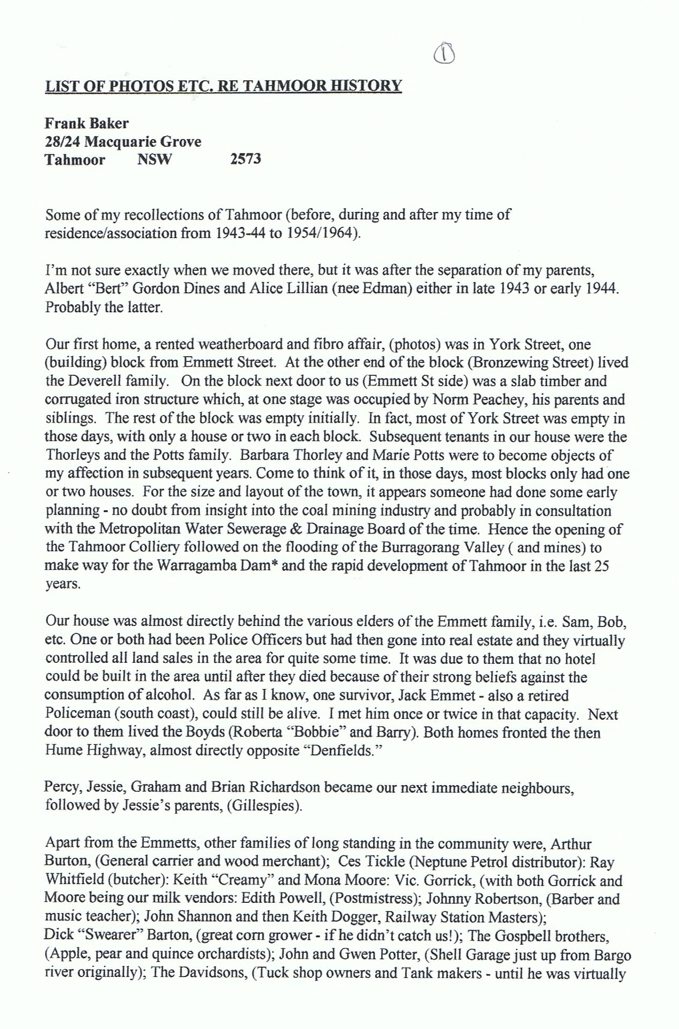
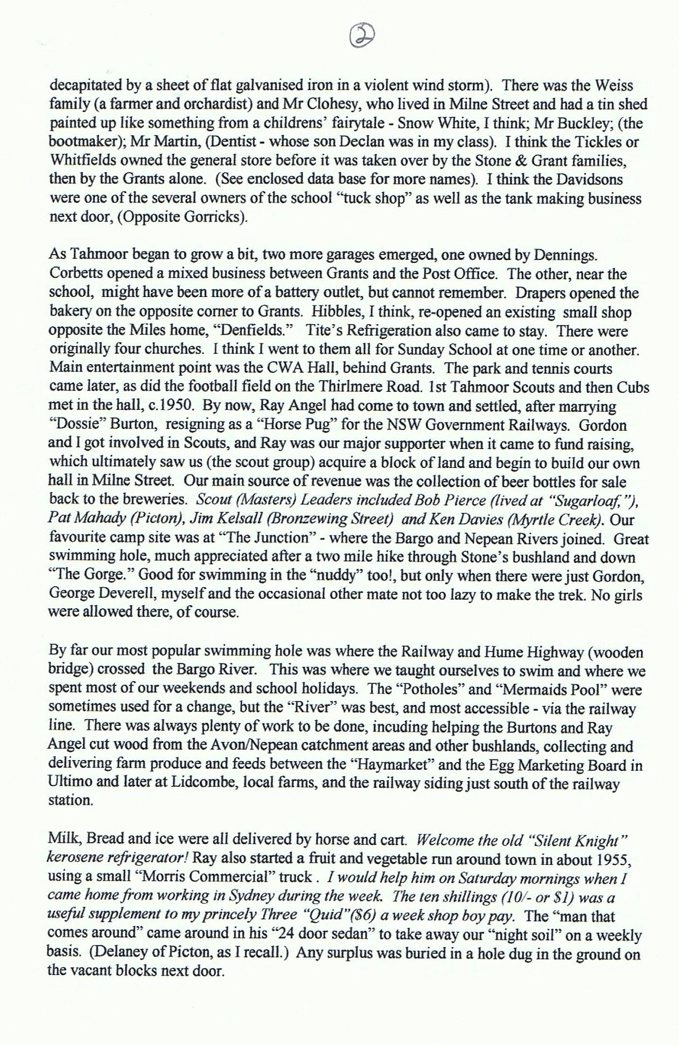
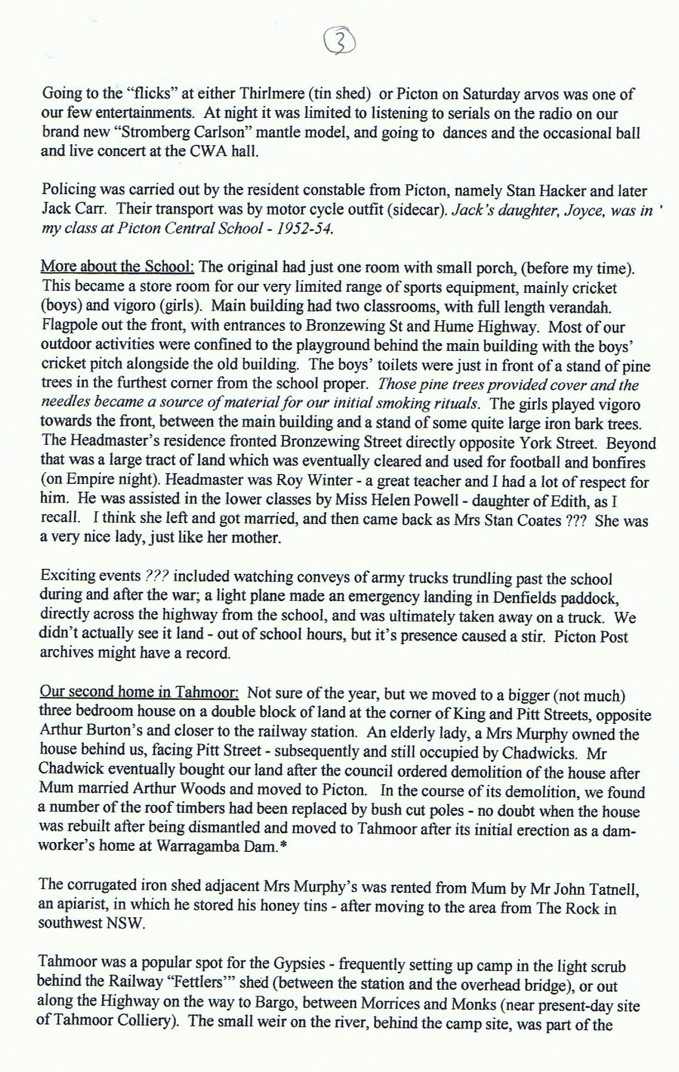
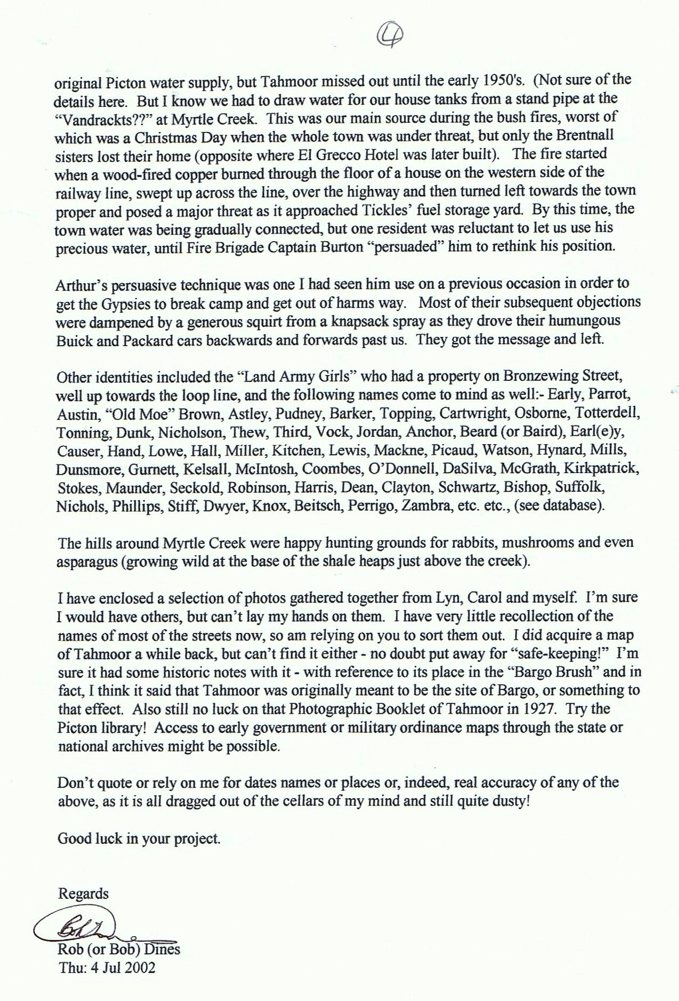
Robert John DINES
13/09/2021
Robert John DINES
AKA Bob DINES, Rob DINES, Dinesy
Late of Shoalhaven Heads Formerly of Taree, Penshurst and Tahmoor, NSW
NSW Police Training Centre – Redfern – Class # Initially ‘may have’ been part of Class 044 as a Cadet and ended up in Class 058 who were Sworn In on 17 November 1958.
NSW Police Cadet # 1262
New South Wales Police Force
Cadet # 1262
Regd. # 9125
Uniform # 1248
Service: From 3 January 1956 to? ? ? = ? years Service
Rank: Commenced Training at Redfern Police Academy as a Police Cadet on Tuesday 3 January 1956 ( Aged 16 years, 2 days )
Probationary Constable- appointed 1 November 1958 ( aged *18 years, 10 months ) *Bob must have gained 2 months Seniority whilst training at the Academy – most probably through academic methods as “usually” people could NOT become a Sworn Policeman BEFORE their 19th birthday. He ‘may have been officially a Sworn member but most probably wasn’t allowed onto the Streets until his 19th birthday ( I assume – Cal )
Constable – appointed ? ? ?
Constable 1st Class – appointed 1 November 1964
Detective – appointed ? ? ?
Senior Constable – appointed 1 November 1968
Leading Senior Constable – appointed ? ? ?
Sergeant 3rd Class – appointed 1 April 1974
Sergeant 2nd Class – appointed ? ? ?
Sergeant 1st Class – appointed 31 March 1983
Inspector – appointed ? ? ?
Chief Inspector – appointed ? ? ?
Superintendent – appointed ? ? ?
Chief Superintendent – appointed ? ? ?
Final Rank = ?
After Retirement, Bob owned a car wash for a number of years in Taree, NSW.
Stations: ?, Kogarah ( 1959 – 1961 )(Walked the beat (Beats #1 & 2 – from Kogarah to Carlton Rlwy Stn. to where there was a call box on the western side of the railway lines, then back to Kogarah, around the shops etc, and down the Princes Highway via Regent Street, etc. Did Station Reserve Constable duties, PD work on Car 23, etc. ), Hurstville ( 31 Division ) ( Sgt )( 1985 ), Peakhurst, Kogarah, ?
Retirement / Leaving age: = ?
Time in Retirement from Police: ?
Awards: Silver Jubilee Medal – granted 1 August 1977
National Medal – granted 22 August 1980 ( Sgt 3/c )
1st Clasp to National Medal – granted 15 May 1986 ( Sgt 1/c )
2nd Clasp to National Medal –granted 15 May 1986 ( Sgt 1/c )
Born: Monday 1 January 1940
Died on: Sunday 27 June 2021 @ 4.30pm with his youngest son, Stanley, by his side.
Age: 81 years, 5 months, 26 days
Cause: Cancer – Prostate
Event location: Shoalhaven District Memorial Hospital, Nowra, NSW
Event date: ? ? 2019
Funeral date: Tuesday 6th July 2021 at 1pm
Funeral location: The Chapel, Shoalhaven Memorial Gardens, Worrigee Road, Worrigee, ( Nowra ) NSW
( Due to current Govt. restrictions on ‘Gatherings’ due to Corona19 Virus Pandemic, some families may wish to have a Memorial Service / Wake with friends and family at a later date )
Funeral Parlour: Murphy’s Family Funerals, Nowra, NSW
Buried at: ?
Live Stream Link will become Live on the funeral date
Memorial / Plaque / Monument located at: A Meeting room in Police Bank Head Office, Sydney, NSW
Dedication date of Memorial / Plaque / Monument: Nil – at this time ( July 2021 )
NSW Police Cadet Robert John DINES
Constable Robert John DINES
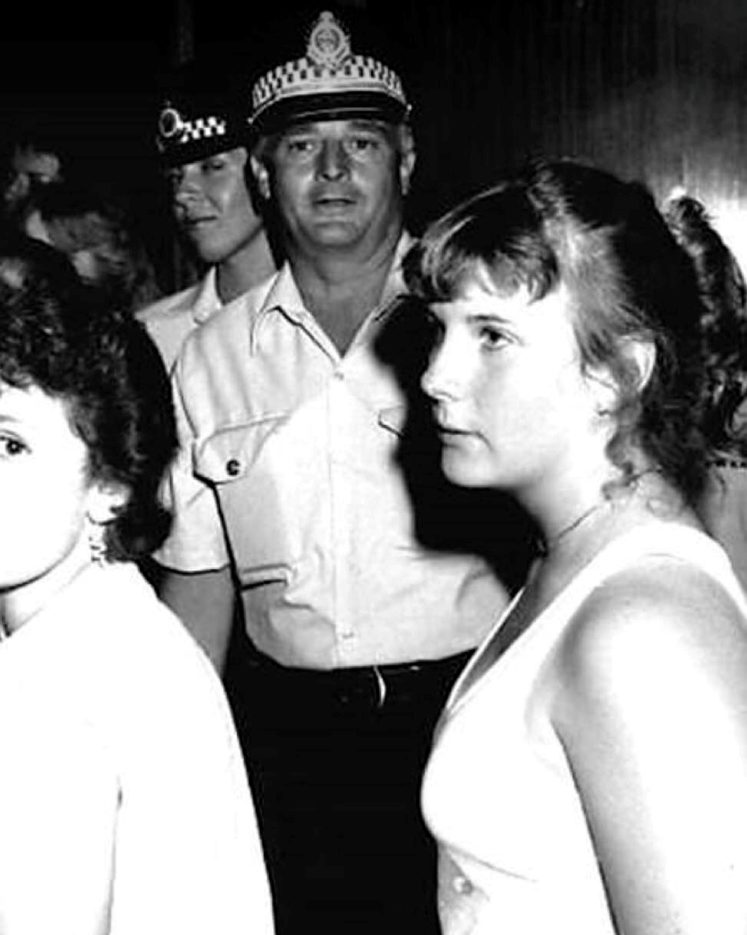
Sergeant Robert John DINES & Constable Cathy BARRETT # 19154 Class # 167 ( background ) at a Hurstville Blue Light Disco in 1983.
Robert John DINES AKA Bob DINES
BOB is NOT mentioned on the Police Wall of Remembrance *NEED MORE INFO
FURTHER INFORMATION IS NEEDED ABOUT THIS PERSON, THEIR LIFE, THEIR CAREER AND THEIR DEATH.
Bob’s wife of 47 years, Helen ( who was head Matron at Taree Base Hospital ) predeceased him with Cancer in 2010.
Bob, some years later, met up again with a childhood sweetheart, Moira, and they married in 2013 and moved to Shoalhaven Heads ( South Coast ) where Bob was an active member in the local Men’s Shed and would help out the guys on the Wollondilly Historical Facebook page with his wealth of knowledge.
Bob is described as a good guy and a great boss who told me, in 2019, that he is ‘getting on a bit but enjoy a pretty good life despite the old bones and prostate cancer etc.
A bloke who didn’t mind a drop of Traminer TR2.
Obituary of Robert John Dines
27th June 2021
Passed away peacefully at Shoalhaven District Memorial Hospital
Late of Shoalhaven Heads Formerly of Taree, Penshurst and Tahmoor
Beloved husband of Moira, formerly married to Helen
Much loved father and father-in-law of Bradley & Melinda, Phillip, Stan & Kelly
Loved and respected by the Doosey family
Adored Pop to his 4 grandchildren Harrison, Connor, Kirralee and Blake
Loving brother, uncle, cousin, mentor and mate to many
‘Forever in our hearts’
Aged 81 years
Robert’s funeral service will be held in The Chapel, Shoalhaven Memorial Gardens, Worrigee Road, Worrigee on Tuesday 6th July at 1.00pm Relatives and friends are invited to attend Due to COVID regulations guests are required to wear masks and register via QR code at the venue The service will be live-streamed on the day and can be viewed via the link on this page Please leave messages and condolences for the family on the tribute wall
Bob was one of our original Directors and throughout his 25 years of service on the Board he contributed immensely to where we are today, so much so, one of our meeting rooms in our Head Office is named in his honour.
On behalf of Police Bank, please accept our deepest condolences for your loss.
Sincerely, The Directors, Management and Staff at Police Bank
Phil Posted Jul 2, 2021 at 12:58 AM
Thank you for your condolences, I am sure he would be proud to have a room named after him.
Here is a brief history of the development of Police Bank.
1970-79
Rapid Growth of Services
The Credit Union employed its first full time administration officers in 1970 to meet the growing demand for services. By late 1971, membership had reached 2,583 and deposits grew by over half a million dollars from the previous year. By 1972 the organisation was lending nearly $50,000 per month.
Appointed Representatives Bob Dines became Chairman in 1970 with Arthur Sharp taking on the General Manager role the following year, a position he would hold for over a decade. Ian Pettit, Terry Seery, John Gorman, Bob Page, Merv Taylor and Alan Dahl joined as Directors in the early to mid seventies. Alan Dahl was elected Chairman in 1975 with the auditing firm, Nicholls & Thomas (Kevin Thomas principal), appointed in the same year.
Around this time the Credit Union appointed Dennis Neate as a ‘Field & Promotions Officer'(the forerunner to our Business Development Officers of today) to increase awareness of Police Credit Union across the state.
Photo taken at Govt. House, Escort receives thanks from King Karl Gustav of Sweden. Bob Dines in civvies on the end. 06 Apr 1982 was when King Karl Gustaf of Sweden ended his official visit to Sydney – probably the very last for which I wrote the Operation Orders. The photo was taken at Government house where the King had expressed his wish to personally thank the M/C escort squad before leaving for the airport. I didn’t normally get involved in this phase of such visits, but I was included as the “back room boy” who “looked after him,.” not just the usual flock of dignitaries and higher officials. My previous message gives the location.
Nothing further, than what is recorded above, is known about this person at the time of publication and further information and photos would be appreciated.
Cal
4 July 2021
Edwin Erskine MAY
13/09/2021
Edwin Erskine MAY
AKA ?
Late of Nambucca, NSW
Commenced Police Training at Belmore Barracks, Sydney
New South Wales Police Force
Service 1: Regd. # Q 2872
Service 2: Regd. # Q 7594
For the purposes of this website ‘Q‘ represents those Police joining between 1 March 1862 ( commencement of NSWPF ) – 23 February 1915 ( Commencement of NSWPF current numbering system )
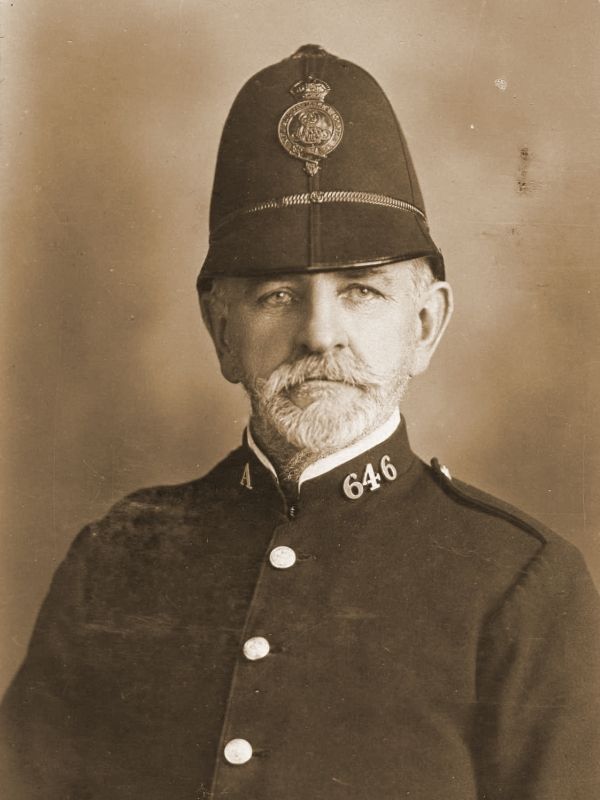
Uniform # A 646 ( most probably from Service 2 )
Service 1: From 8 January 1877 to 30 June 1889 ( H.O.D. – Contracted Blood poisoning ) = 13 years Service
Due to being ordered to exhume a buried leg, from the Coffs Harbour mutilation axe Murder of Mat Matteson a young Russian Finn, MAY contracted Blood Poisoning in his left arm which resulted in him nearly losing his life and having to undergo 11+ operations and remain in Grafton Hospital for about 4 months.
This eventually led to him being unfit for Duty.
Service 1 – Rank: Probationary Constable- appointed 4 August 1891 ( aged 21 )
Constable – appointed ? ? ?
Constable 1st Class – appointed ? ? 1881 ( Bullahdelah )
Detective – appointed ? ? ?
Senior Constable – appointed ? ? ?
Final Rank = Senior Constable
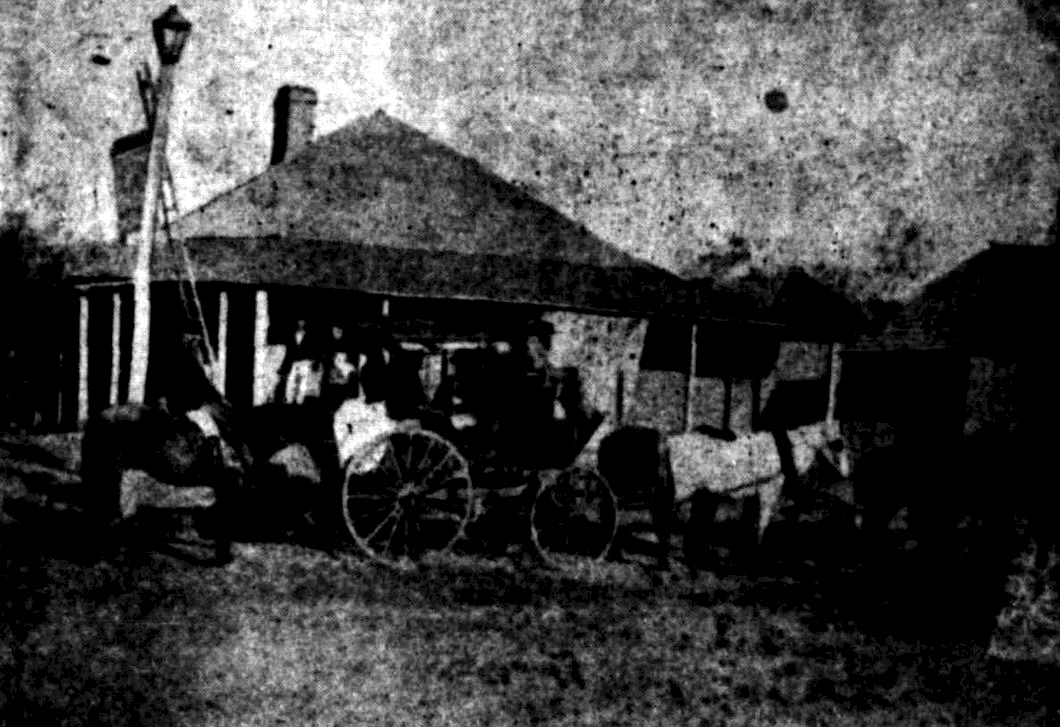
Service 1 – Stations: Dungog ( Cst )( 1877 ), Gloucester ( December 1877 – June 1880 )( December 1877 – it was the 1st Station there and the 1st Policeman there )( this was a hut on the site of the present Commercial Hotel *1877 ), Maitland ( June 1880 – 1881 ), Bullahdelah ( 1881 – ? ), Paterson ( ? – 1884 ), Boat Harbour ( Now Bellingen )( 1884 – 30 June 1889 )
Boat Harbour Station which was renamed Bellingen, Bellinger River – Discharged H.O.D. ( Service 1 )
Between being forced to leave ( Service 1 ) and rejoining ( Service 2 ), MAY was a member of the Transit Commission in Sydney and when their duties were taken over by the police, he again joined the force as a traffic officer.
The Transit Commission gave way once the Traffic Act came into force.
There are numerous articles on Transit Officer MAY – one naming him as Special constable Edwin MAY and these date between 5 June 1891 – 21 June 1889.
Service 2: From 4 August 1891 to? ? 1912 = 12 years Service
Service 2 – Rank: Constable 1st Class ( re-joinee )- appointed 4 August 1891
Senior Constable – appointed ? ? ?
Sergeant – appointed ? ? ?
Final Rank = ?
Service 2 – Stations: ? ( Traffic Duty for about 5 years ), Newtown ( 5 Division )( Station Duties re failing health ) – Retirement ( 1912 )
Total Service = 25 years
Retirement / Leaving age: = ? ? 1912
Time in Retirement from Police: ?
Awards: No Find on Australian Honours system
Born: ? ? 1853 – London, England emigrated to Qld in 1866
Died on: Saturday 5 J anuary 1935
Age: 82
Cause: ?
Event location: Bondi, NSW
Event date: ?
Funeral date: Monday 7 January 1935 @ 10.30am
Funeral location: ?
Funeral Parlour: W. Carter, Undertaker. 262 Oxford St, Woollahra, NSW
Buried at: Waverley Cemetery,
Grave location: Anglican – Section 19, Special B, Plot 10
Memorial / Plaque / Monument located at: ?
Dedication date of Memorial / Plaque / Monument: Nil – at this time ( June 2021 )
EDWIN is NOT mentioned on the Police Wall of Remembrance *NEED MORE INFO
FURTHER INFORMATION IS NEEDED ABOUT THIS PERSON, THEIR LIFE, THEIR CAREER AND THEIR DEATH.
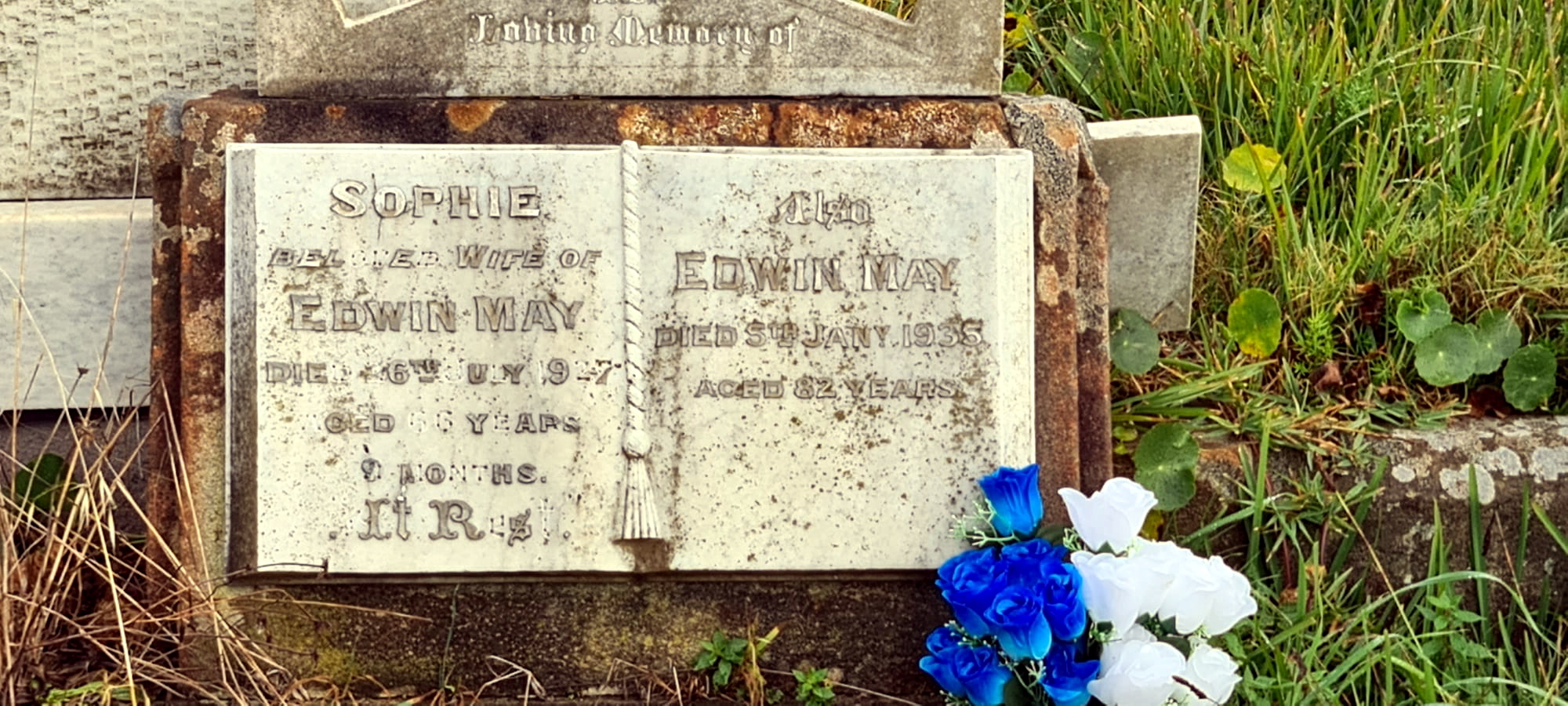
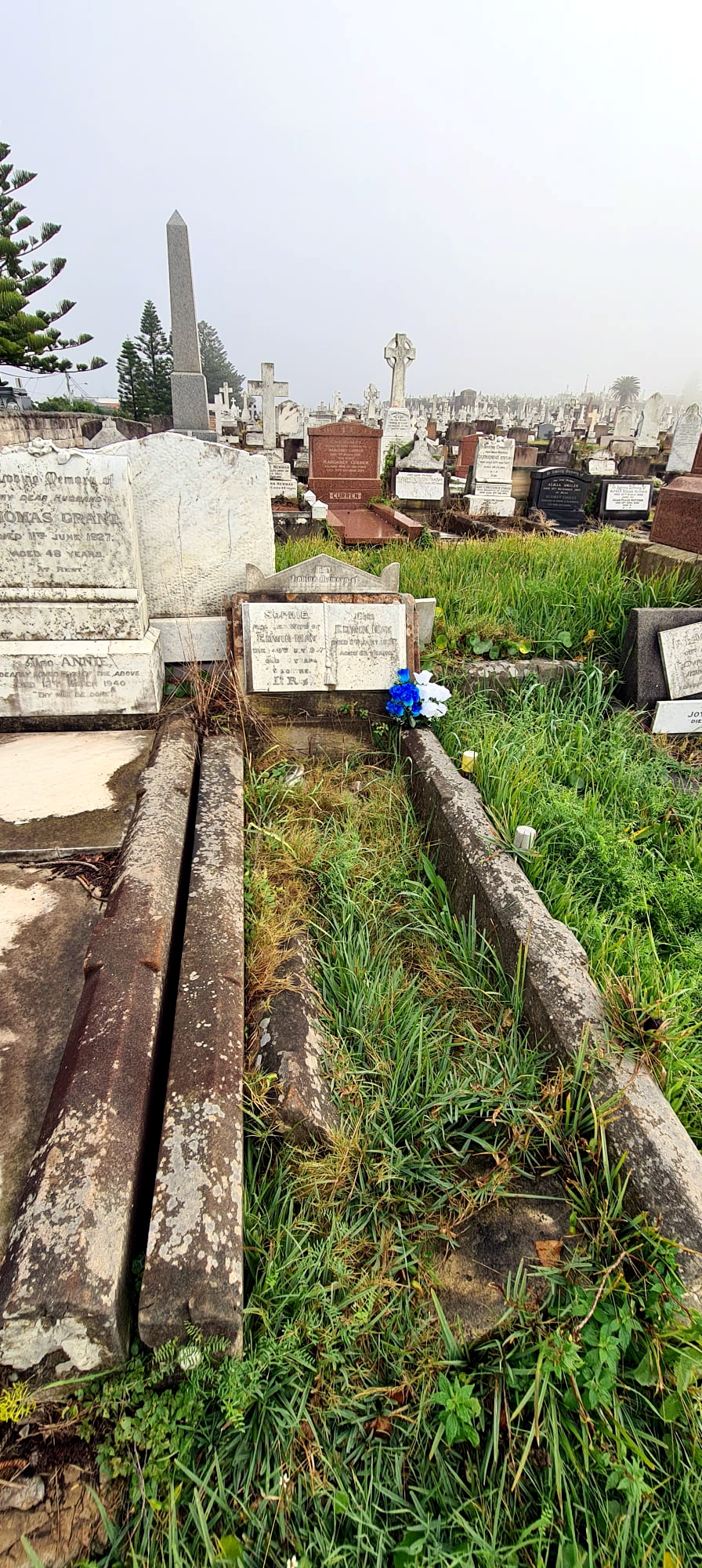
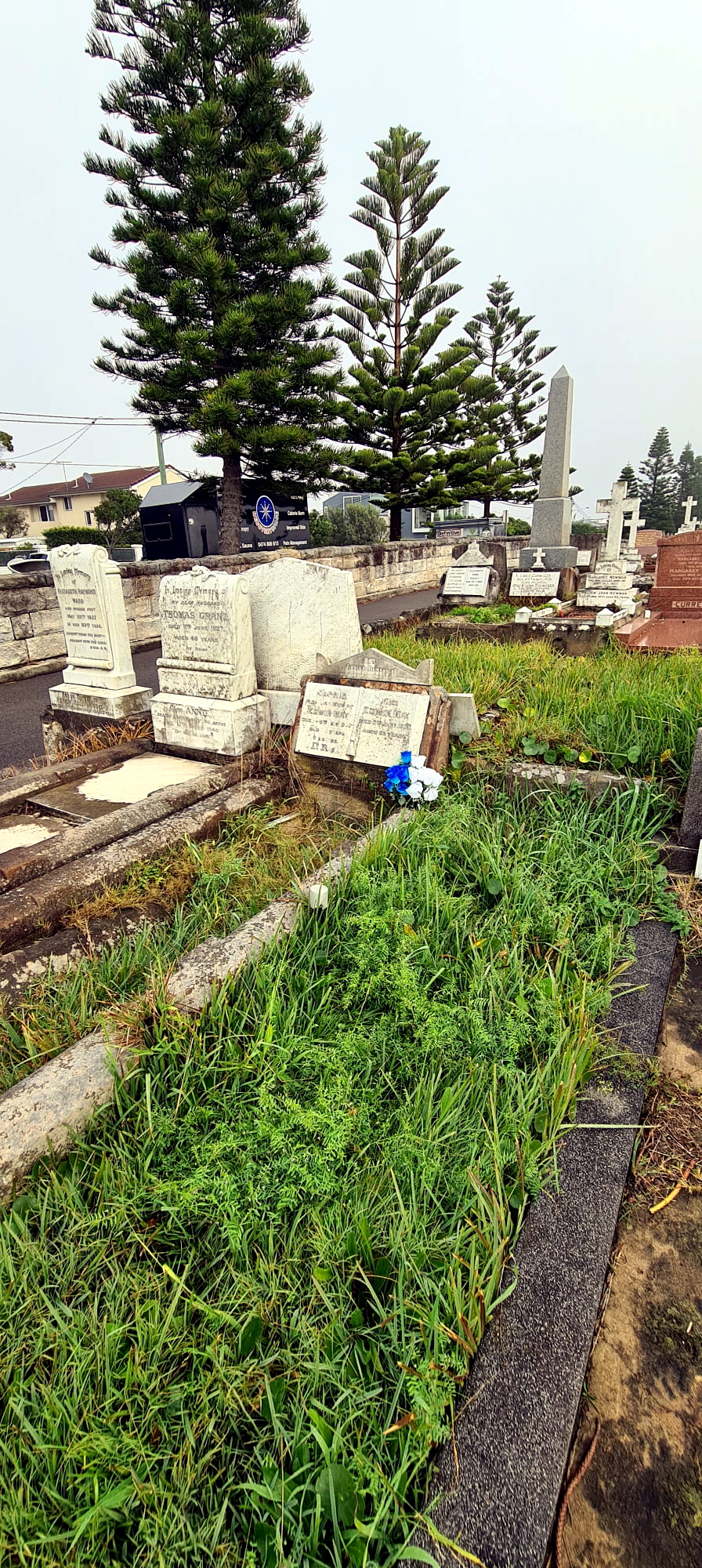
Whilst at Waverley cemetery today, 2/7/2021, I paid my respects to –
Senior Constable Edwin Erskine May.
Born c1853, St Giles’s, Middlesex, England.
Died 5/1/1935 at Waverley, NSW.
Edwin married 3 times.
He married Sophie May (nee Margetts (1861-1927) in 1881 in Maitland and they had 12 children.
Sophie is on the headstone and she died at Waverley.
His first wife Annie, married in Queensland, died in Maitland in 1880 and they had 6 children.
He married his 3rd wife in 1932. She died in 1932.
INSCRIPTION: SOPHIE Beloved Wife of Edwin May Died ?6th July 1927 Aged 66 years 9? Months At Rest Also Edwin MAY Died 5th Jan. 1935 Aged 82 years
Sydney Morning Herald (NSW : 1842 – 1954),
Saturday 30 March 1895, page 7
POLICE COURTS.
Charge against Constables.
In the Summons Division of the Central Police Court yesterday, before Mr. G.W. F. Addison, S.M., Andrew Travers and Thomas Scott, respectively, being constables of New South Wales Police Force, were proceeded against by Sub-Inspector Bell for misconduct, in having, on 16th March, used unnecessary violence to Patrick Maloney, a prisoner in their custody.
The cases were heard together.
Mr Carter Smith appeared for the defendants.
Sub-inspector Bell stated that he laid the informations against the respective defendants by instructions from the superintendent of Police.
He produced reports from defendants, a letter from Mr. Sleath, and one from Maloney.
The defendants were men of good character, efficient and good constables.
After the arrest Constable Travers applied to witness for a summons against Mr Sleath, M.L A.
If witness had acceded, the case would have been heard that day.
If witness had had his way, a summons would have issued, even though witness did receive a letter from Mr. Sleath.
Richard Sleath stated that on 16th March he was in Pitt street about 1 p.m., and saw the defendants opposite the Labour Bureau in a crowd.
They seemed to be engaged in a scuffle.
He saw Constable Travers next the wall with his right hand raised as if striking someone. There was a transit officer with the defendants.
Travers had the right and Scott the left arm of a man, and the transit officer pushed.
Just as witness got up the defendants seemed to stumble.
The prisoner, who was handcuffed, had blood on his face.
Witness saw Travers strike him about the face somewhere, and then catch him by the throat as if attempting to choke him.
Witness asked Travers to desist, but he threatened to tun witness in.
Witness walked to the police station with Travers.
When he threatened to run witness in Travers was so excited that froth came from his mouth. A few seconds later he said, ” Go away, or I’ll lock you up.”
Witness took Travers‘s number. He did not see the other defendant do anything, and had no complaint to make about him.
To Mr. Smith : He did not put his hand on Scott‘s shoulder, and did not remember the exact words used. Prisoner seemed to be resisting right through. Witness was not dragged out of the crowd by a man. He wrote a letter to the effect that Travers struck the man, but did not think he complained of both constables.
P. H. Stack, tram conductor, stated that he saw the defendants with a prisoner between them, and a transit officer behind.
Prisoner resisted all the time with all his force, using both legs and arms.
The man knocked one of the defendants down. Witness thought the constables exercised great patience.
He did not see either of them strike the prisoner. He saw Mr. Sleath rush into the crowd in a very excited manner, and put his face into the constable’s face. He also put his hand on the constable and followed him for some time. The man was not in any way ill-used.
To Mr. Smith : The man got twice as bad after Mr. Sleathcame along, jumping and leaping more than ever. Mr. Sleath was most excited.
W. Connelly gave corroborative evidence.
Transit officer Edwin MAY stated that he saw prisoner struggling with Travers in Pitt-street. Scott came up afterwards. Prisoner who was handcuffed, made a blow at Travers, knocking his helmet off ; and witness jumped off the tram, and went to assist Travers.
Prisoner, resisted violently, and at one time they were all on the ground together.
Near the station a man came and said, ” Come, I won’t allow this.” Witness and a constable told him to go away or he’d get locked up.
Someone shouted, ” That’s Mr Sleath the member. ” Someone then took Mr. Sleath away.
There was no violence used to the prisoner, who next morning pleaded guilty to all the charges, and said that he was mad drunk at the time. Mr. Sleath appeared as if he had had drink, and was very excited.
For the defence Constable Andrew Travers stated that no unnecessary violence was used to the prisoner witness had in charge three-quarters of an hour before Constable Scott came up. After Mr. Sleathinterfered the prisoner became more violent, and said, ” Old man, I’ll make them carry me. ”
North Coast Times (Bellingen and Coffs Harbour, NSW : 1888 – 1889),
Friday 28 June 1889, page 2
CONSTABLE MAY.
We regret to learn that Senior Constable Edwin MAY, of Nambucca, is about to be discharged from the police force on the 30th inst., he having just returned from Sydney, where he was subjected to an examination of three doctors, who have certified him as being unfit for further police duty.
It is to be hoped that after 13 years of faithful police duty, during which time he distinguished himself in the arrests of several murderers and other noted defenders, that the Government will certainly reward this worthy officer in accordance with his merit, as he now has to start afresh in the world with only the use of one arm, the loss of the use of the other arm, through an injury received whilst doing his duty, being now the cause of his discharge from the service.
We think that the public throughout the electorate should certainly make some move in the matter to show that they appreciate the services of this noted police officer, as we think he is deserving of some recognition at their hands, moreover as he now is compelled to leave the service where he has devoted the best part of his life to the interests of the public of this colony.
Senior Constable E. May has proved himself to be a most fearless officer.
When station on the Bellinger River, as it is still in the memory of many, the clever arrest of the New Zealand armed murderer John Caffrey, who, we may say, the moments this notorious murderer arrived on the Bellinger, was speedily deprived of his leaded revolver and quietly arrested by this clever officer, who, for that arrest, was accorded great credit and praise by the public press throughout the whole of the colonies.
We wish him prosperity in whatever sphere of life he may now have to follow.
He is also a member of the Masonic Order and we trust that he will not be forgotten by them now that their assistance is needed.
According to State Archives – Police Service Registers 1852 – 1913, Edwin first joined the NSWPF on 8 January 1877.
The above newspaper article, dated 28 June 1889 had him being forced out of ‘the job’ on 30 June 1889 after spending 13 years in ‘the job’.
He went out with a Pension.
Again, according to State Archives, the same person rejoined the NSWPF on 4 August 1891.
Northern Star (Lismore, NSW : 1876 – 1954),
Friday 19 July 1912, page 7
FAMOUS CRIMES RECALLED.
There are many of the older residents of both the Bellinger and Nambucca who will remember Constable Edwin MAY, who for several years was stationed at Bellingen, and subsequently at Macksville, about 20 years since. Senior-Constable May has just retired from the force, and referring to the fact the “Evening News” becomes reminiscent, and says :—
First-class Constable Edwin MAY, who is about to retire from the N.S. Wales police force on pension, had, during his career as a trooper in the country districts, rather exciting experiences, and it was through his instrumentality that many offenders against law and order were brought to justice.
During an interview with an “Evening News” reporter, MAY said he was a native of London, and arrived in Queensland in 1866, when he was but a youth. He gravitated from the northern metropolis to “out back.” when he became a stockman on Mooloolman Station, then owned by Mr. Augustus Barton, where he was employed for about 5 years. During his spare time, when not engaged in rounding up cattle, his occupation was breaking in horses, at which he became an expert. Tiring of this life, however, he severed his connection with the station, and proceeded to the Mount Perry Copper Mine in the Burnett district, where he followed for a time the occupation of a miner.
After some experience in the mining business, he started on his own account in carrying copper from the mine at Maryborough, which at that time was not connected with the railway system, and he continued up to 1876 to follow the same business.
JOINING THE FORCE.
He then came to Sydney and joined the Mounted Police.
After being trained at the old Belmore Barracks he was transferred to the Maitland district as a trooper under Mr. Morrison, the then superintendent.
Five years later he was made a first-class constable, and was sent to the Macleay district, and put in charge of Boat Harbour station ( now Bellingen ).
In July, 1885, came Constable MAY‘s opportunity of showing to his superior officers what his capabilities were.
COFF’S HARBOUR TRAGEDY.
The particulars of a most revolting murder at Coffs Harbour — at that time a small settlement on the coast — was reported to the authorities.
The particulars given were that a young man named Mat Matteson, a young Russian Finn, was missing, and on inquiries being instituted no trace of his whereabouts could be ascertained.
Constable MAY was deputed to investigate the matter.
On reaching a hut where the missing man and a countryman of his named Matthew Friske resided, the latter explained that his mate had left, and indicated to MAY the direction in which he thought the missing man had gone.
MAY, however, made an examination of the hut’s contents, and discovered an American axe which had, in his opinion, something like bloodstains on it.
Friske, in answer to a question, said that the stains were only rust.
At the same time MAY noticed a shirt hanging up, having on it apparently what were bloodstains.
When Friske was asked how the stains came to be on the shirt, which he claimed to be his own, he replied that the stains must have remained on it since he killed a pig a couple of months previously.
A BASKETFUL OF BONES.
At the same time MAY noticed some trees burning a little distance away. He and others went to investigate.
On stirring up the ashes nearly a basketful of fragments of a skull, jaw, leg, ribs, and other portions of a human body were discovered. They were so much charred that they could scarcely bear touching, as they crumbled away at the least pressure.
Friske was arrested by MAY on suspicion of having committed the murder.
ANOTHER GRUESOME FIND.
Later on, a boy on his way home from school discovered the leg of a man lying on an old road, with a sack covering it.
MAY, on being informed of that, picked the limb up and discovered that it had been chopped off at the knee.
When MAY had Friske in custody, he had a rather trying time, as there was no lockup near Coff’s Harbour, so he had to handcuff the prisoner to himself all night.
MAY was, however, rewarded for his trouble, for on the day following upon Friske‘s arrest he described to MAY how he had killed Matteson with an axe, and cut the body up and burned it with the exception of the right leg, which he threw away in the bush.
An inquest was held by Mr. T. C. McKell, P.M., the then coroner, and now a stipendiary magistrate at Newcastle, who ordered the limb to be buried.
The instruction was carried out, and after a lapse of three weeks the Attorney-General ( the late Mr. W. B. Dalley ) ordered that the leg should be exhumed and conveyed to Grafton in spirits for production at the trial of Friske.
CONTRACTED BLOOD POISONING.
In carrying out that portion of his duties MAY nearly lost his life, as he contracted blood poisoning in his left arm and had to go into Grafton Hospital for treatment.
He remained in the institution for about four months, and had no fewer than 11 operations performed on him, which resulted in him losing, for a time, the use of his arm, which gradually grew better.
Friske was executed in the Grafton gaol in December, 1885.
GREAT BARRIER MURDER.
The next episode in Constable MAY‘s career was in connection with what was known as the New Zealand “Barrier Murder.”
In June, 1886, a man named Robert Taylor, a resident, of Tryphena Bay, N.Z., was found murdered.
Two men named John Caffery ( other article name him as McCaffery ) and Henry Albert Penn were supposed to be concerned in the affair.
It was said they stole a small vessel, the Sovereign of the Seas, in which they cleared out from N. Z., accompanied by a young woman and a dog.
After three months at sea it was found that they had scuttled the vessel near Trial Bay, ( NSW ) after they had landed provisions somewhere on the coast between the Hastings and Manning.
The fact was first brought to light through a board being washed ashore near Port Macquarie, having on it the letters “reign.”
This led the authorities to believe that it belonged to the missing ‘Sovereign,’ and the police were naturally put on their metal to get hold of the persons charged with the murder, as a good reward was offered for their arrest.
Naturally anxious to gain the reward, MAY disguised himself as a swagman, with “bluey” up, and started out to do the “Sherlock Holmes” trick.
When near Deep Creek he met a man carrying a swag, and from the description of the wanted man as furnished by the “Police Gazette,” MAY formed the opinion he had come across one of the men, viz., John Caffery.
From the information supplied, Caffery was supposed to be an individual of most dangerous tendencies. His age was about 36, and a powerfully built man. He could, it is said, swing a 200lb. bag of flour with ease, and was described as a man of unbridled passions.
To him Ned Kelly was the ideal of a hero, and it was known that he had expressed the intention of some day seizing a craft, and making for Australia to join or organise a band of bushrangers.
Having in view the characteristics of the wanted man, MAY was naturally careful in his procedure, more especially as it had been reported that Caffery was armed with a loaded revolver.
“I feigned to be looking for work,” MAY told the reporter, “and I asked him where I could get a job. He said there was no work the way he came, so he and I agreed to go together to the Clarence district as mates, where we would probably, get a job of canecutting.”
After crossing the Bellinger punt, MAY had a good survey of his companion, to endeavour to find out where he carried his revolver, and having ascertained this, he revealed his identity as a N.S.W. constable, and quickly placed the handcuffs on the man, who denied being identical with Caffery.
In his swag was found a six-chambered loaded revolver, as well as eleven spare cartridges.
A few days after Caffery was lodged in the lockup, and when shown a photograph purporting to be his, he admitted he was Caffery, and gave information where his late companion Penn was to be found camped on the beach near Trial Bay.
EXTRADITION OF THE MURDERERS.
Both Caffery and Penn were extradited to New Zealand, where they were placed upon trial, found guilty of the murder, and eventually hanged.
For his share in the matter MAY was promoted to the rank of senior-constable, and was given a substantial portion of the reward offered for the arrest of the murderers.
ABORIGINAL AND HIS GIN.
Another arrest was made by MAY under somewhat exciting circumstances of an aboriginal named Sandy, for murdering his gin.
Although a warrant had been in existence for some nine months, it was found difficult to locate the man.
MAY received information which led him to believe that he was at the blacks’ camp at the Bellinger River. On going there he found him among a mob of thirty aboriginals and took him into custody, but before he was able to get his prisoner from the camp MAY had to point his revolver to keep the others at bay, as they threatened to kill him with their tomahawks.
Sandy was subsequently brought to Sydney, where he was tried for the crime before the late Mr. Justice Windeyer, found guilty of manslaughter only, and sentenced to twelve months gaol.
A CITY TRANSIT OFFICER.
In 1889, when MAY was stationed at Nambucca River, the arm which was previously injured while in the execution of his duty, became very weak, and he was compelled to come to Sydney for medical advice.
After being examined by the Government doctors, he was certified as being unfit for further service, and discharged from the force.
That was very unfortunately for him, as the Inspector-General, Mr. Fosbery, told him that he intended to promote him to sergeant.
In 1891 the arm was well again, when Mr. Fosbery found him employment under the old Transit Commission, with which body he was connected for about nine years, until the present Traffic Act came into force.
REJOINED THE FORCE.
MAY was then allowed to re-enter the force as a first-class constable, and did traffic duty for about five years.
Through failing health he was transferred to the Newtown division, where he did station duty right up to the time he went on leave, the other day, prior to finally severing his connection with the force.
Wingham Chronicle and Manning River Observer (NSW : 1898 – 1954),
Friday 25 October 1929, page 9
Reminiscences from Bygone Days.
Gloucester’s first police OFFICER.
Mr. Edwin MAY revisits Gloucester after Fifty Years.
Mr. Edwin MAY, father of the City Coroner, Mr. E. A. MAY, and who established the first police station in the Gloucester district, arrived at Gloucester on Wednesday last on a short visit.
In 1877 Mr. MAY was a constable stationed at Dungog, and was sent, with Constable David Cowan, of Stroud, up to Copeland to investigate the case of a man who had been killed there in a brawl.
Copeland was then known as Back Creek, Barrington, and there were about 1000 miners on the field.
FILLED MINISTER’S BOOTS WITH PORT WINE.
It continued to be called Back Creek until about two years after thee field was discovered, when Mr. Henry Copeland, member for the Northern Goldfields, visited the place. This was in 1878.
The miners gave him a wonderful reception and banquet, “filling him with champagne and even, his boots with Port wine.”
They then named the place Copeland in his honour, and Copeland it has remained to this day.
While here Mr. MAY received instructions to open a police station at Gloucester. This was in December 1877.
This first building was a hut on the site of the present Commercial Hotel.
He was appointed the Police Officer and acting Clerk of Petty Sessions. Mr. E. Sharpe was the first magistrate.
The following year 1878, a police station and court house were built at Copeland, the contractor being a man named Priddle.
EARLY GLOUCESTER.
At this time Gloucester had an hotel on the corner, where Phillips’ now stands, kept by a man named Harvey Robinson, who had married the widow of the previous licensee, Mr. Brown.
After Mr. MAY was here some months another hotel was established by George Gorton, who with a man, who was only known by the name of Long Jack, was drowned in the billabong opposite the town.
The first post office was near Street & Parish‘s store, and was kept by a man named Herkes.
Afterwards it was near McLean‘s blacksmith shop, the postmasters being Brideskirt and Studdart.
Mr. MAY remained in Gloucester till June 1880, when he was transferred to Maitland, and from thence to Bullahdelah in 1881, where he was promoted to first-class constable.
From there he went to Paterson and in 1884 to Boat Harbour — now Bellingen.
CAPTURED THREE MURDERERS
It was while in the North Coast district that Mr. MAY made a name for himself in the force by capturing, on different occasions, three men wanted for murder.
The first he laid by the heels was Matthew Frith, who was Wanted for the murder of his mate, Matthew Matterson near Coff’s Harbour in 1885.
Frith was sentenced to death by Judge Fawcett and paid the full penalty for his crime at Grafton Gaol, being the first execution at that place.
Mr. MAY remembers that the accused was defended by Mr. Gibson who was afterwards Judge Gibson, and who was killed in a motor accident.
On another occasion he arrested an aborigine for the murder of his gin, and despite the menaces of the whole tribe, brought his prisoner safely to the lock-up.
THE BARRIER ISLAND MURDER
But the most exciting episode of his career was the arrest of John McCaffrey, who with an accomplice, Henry Penn, murdered Robert Taylor at the Barrier Islands, New Zealand.
McCaffrey was the captain of the ketch, “Sovereign of the Seas,” which belonged to the Auckland firm of Henderson and Spraggin, and traded down along the New Zealand coast from Auckland, visiting the Barrier Islands.
McCaffrey had fallen in love with the daughter of a settler named Robert Taylor, but his attentions were unwelcome both to the daughter and the parents. He had said to the father and mother, “I will have Annie,” — which was the girl’s name.
Accompanied by Penn, who had with him a girl of 15 named Grace Graham, whom he had picked up in the streets of Auckland, McCaffrey visited the Barrier Island and went ashore in the dingy.
They went to Taylor‘s residence and the old man came to the door. Penn asked him for a pound of butter, when McCaffrey said, “We have come to get Annie,” — who was about 20 years of age.
The girl heard them and got away through a back window.
When McCaffrey found the girl was not there he gave Taylor five minutes to live if she was not found.
Penn then got hold of Taylor and forced him to his knees and McCaffrey blew his brains out with a revolver.
They afterwards got on board their boat and put out to sea and hoisted a black flag.
After three months at sea they came in sight of land, which they thought was America, but which proved to be the Queensland coast.
They travelled along south until they came off Sydney Heads, which McCaffrey recognised.
They then turned and went back north, and when between Trial Bay and Crescent Head — near the Macleay — they went ashore in the dingy and made a camp.
They then scuttled the vessel, which sank.
A fortnight after a gale came up and parts of the vessel were washed ashore at Port Macquarie, and recognised as parts of the “Sovereign of the Seas,” in which the New Zealand murderers had escaped.
All the police along the coast were instructed to keep a sharp look out for the fugitives.
Shortly after landing, the men quarrelled over the girl and decided to fight a duel on the beach with revolvers.
This was prevented by the girl who threatened McCaffrey with a loaded gun. McCaffrey then left them.
He made a swag out of a black rug and rolled it collar fashion. He came to the Macleay Heads and got across to the Nambucca side and walked on towards the Bellingen Heads.
At Deep Creek a contractor, George Moore, gave him a job for two or three days to paint the bridge. He then continued on his way towards Bellingen Heads.
Constable MAY decided that his best chance of coming in contact with the man, if he was in his district, was to disguise himself as a swagman.
Consequently the third day after he had received his instructions to keep a look-out for the wanted men, he packed his swag on an old pony and started away.
He went through Fernmount and crossed the punt at South Arm.
He met several people whom he knew, but in his disguise they did not recognise him.
He went on towards Deep Creek, and about five miles along the road he met a man carrying a swag collar fashion over his left shoulder.
Sergeant MAY said good day to him, and the man replied and said, “Are you looking for work? There is none the way I came, and I wouldn’t advise you to go that way.”
The man had a close cropped beard and was apparently about 35 years of age, and also had his ears pierced. In the description given of him, McCaffrey was wearing gold earrings, and was stated to carry a loaded revolver.
When he said there was no work, Constable MAY said, “Well I’ll go back, I can get work cane cutting on the Clarence. McCaffrey answered, “That’s where I’m making for, we’ll go mates if you like.” They shook hands on it, and Constable MAY said, “Take your swag off, and I’ll tie it on the old pony’.’ He said, “No, I’ll carry it. It is not heavy.”
Constable MAY said, “Please yourself.”
They walked side by side, the Constable being careful not to mention New Zealand, for he knew the man carried a loaded revolver, and would use it on the slightest suspicion.
They came to the punt, a hand one worked by a boy named Box.
McCaffrey then, for the first time, took his swag off, laying it down at his feet.
When the punt was half way over Constable MAY said, “I am a Constable and I am looking for a man of your description. I want to search you.” He put his hands up, but no weapon could be found. The Constable then picked up the swag and a fully loaded revolver rolled out. It had been in the fold of the swag and McCaffrey had had his right hand on the trigger the whole time they had been together.
As soon as it rolled out Constable MAY grabbed it, and handcuffed him.
McCaffrey said to him, “Had I known you were a Constable I would have shot you like a dog. I had intended to shoot you coming along the road, but I did not think you had enough on you to make it worth while. I had intended to shoot the police down one after another rather than they would take me, and then shoot my self.”
Constable MAY said to him, “Where is your mate, Penn?” McCaffrey said, “Penn is dead and the girl too. They were drowned, but I swam ashore.”
This was the first the police knew of a girl being with them.
Shortly after Constable McLennan, at Trial Bay, was telling Dr. Casement of the capture of McCaffrey and that Penn, and a girl with him, had been drowned, when the Constable’s son said, “Oh, there’s a man and a girl living on the beach.”
McLennan went down. They admitted their identity, and he arrested them.
The trio were eventually remanded to Auckland, where the girl turned Queen’s evidence and was acquitted and McCaffrey and Penn found guilty and hanged.
No one in New Zealandcould be found to hang the men, so the New South Wales hangman, Howard — known as “Nosey Bob” — went over and did the job.
The girl, Grace Graham, returned to Sydney where, known to the police as Zara White and many other aliases, she led a life of crime, dying about 8 years ago in Long Bay gaol.
After attaining the rank of Senior Constable, Mr. MAY retired from the force on account of an injury to the arm, and from 1880 to 1900 was a member of the Transit Commission in Sydney, and when their duties were taken over by the police, again joined the force as a traffic officer, being last attached to the No. 5 Newtown Station, finally retiring in 1912.
Mr. MAY has now reached the age of 79 years, yet is wonderfully active and retains the same keenness of memory that characterised him in the heyday of his life.
Constable MAY, with the Copeland Gold Escort at Gloucester, 1879.
MAY.— The Relatives and Friends of the late Mr. EDWIN ERSKINE MAY (late of N.S.W. Police), are kindly invited to attend his Funeral; to leave our Parlour, 262 Oxford-street, Woollahra, THIS ( Monday ) MORNING at 10.30, for Waverley Cemetery.
Nothing further, than what is recorded above, is known about this person at the time of publication and further information and photos would be appreciated.
Cal
30 June 2021
Vira Helen JENKINS nee Vira DEW
13/09/2021
Vira Helen JENKINS
nee Vira DEW
Wife to Retired Superintendent Eric DEW # ????
AKA ?
Late of ?
NSW Police Training Centre – Redfern / Police Training College – Penrith Class # ? ? ?
New South Wales Police Force
Regd. # Police Woman 006
Service: From? ? 1946 to? ? ? = ? years Service ? ? ?
Rank: Commenced Training at ? Police Academy on ? ? ?
Probationary Constable- appointed ? ? ?
Constable – appointed ? ? ?
Constable 1st Class – appointed ? ? ?
Detective – appointed ? ? ? ( NO )
Senior Constable – appointed ? ? ?
Leading Senior Constable – appointed ? ? ? ( N/A )
Sergeant 3rd Class – appointed ? ? ?
Sergeant 2nd Class – appointed ? ? ?
Final Rank = Sergeant
Stations: ?, School Lecturing Section – Sydney ( 4 Years ), School Lecturing Section – Newcastle ( 3 November 1952 – ? ), Newcastle – Retirement ( aged 56 )
Retirement / Leaving age: = 56
Time in Retirement from Police: 47 years
Awards: No Find on Australian Honours system
Born: ? April 1918
Died on: Saturday 15 May 2021
Age: 103 years,
Vira Dew is pictured on the left with another officer in navy blue uniform circa 1940s.
NSW Police Legacy 7 April 2021 Congratulations to NSW Police Legatee Vira Dew, who last week turned 103! Vira was one of the first policewomen to work in the Newcastle area. After retiring at the age of 56, she lived on a farm in Maitland with her husband, retired Superintendent Eric Dew, for several years. Vira is pictured here with Chief Inspector Tony Townsend, Snr Sgt Alyssa Willetts, and Det Snr Sgt Maree Maynard, who all visited to wish her well. Happy birthday Vira!
NSW Police Legacy 7 April 2021 Congratulations to NSW Police Legatee Vira Dew, who last week turned 103! Vira was one of the first policewomen to work in the Newcastle area. After retiring at the age of 56, she lived on a farm in Maitland with her husband, retired Superintendent Eric Dew, for several years. Vira is pictured here with Chief Inspector Tony Townsend, Snr Sgt Alyssa Willetts, and Det Snr Sgt Maree Maynard, who all visited to wish her well. Happy birthday Vira!
Cause: Natural – Old Age
Event location: ?
Event date: ?
Funeral date: ? ? ?
Funeral location: Uniting Church, 347 Ken Tubman Dve, Maitland, NSW
( Due to current Govt. restrictions on ‘Gatherings’ due to Corona19 Virus Pandemic, some families may wish to have a Memorial Service / Wake with friends and family at a later date )
Funeral Parlour: ?
Buried at: ?
Memorial / Plaque / Monument located at: ?
Dedication date of Memorial / Plaque / Monument: Nil – at this time ( May 2021 )
VIRA is NOT mentioned on the Police Wall of Remembrance * NOT JOB RELATED
FURTHER INFORMATION IS NEEDED ABOUT THIS PERSON, THEIR LIFE, THEIR CAREER AND THEIR DEATH.
Special Constables Sue Elliott ( P/W 0015 ) and Vira Jenkins ( P/W 0006 ) make the acquaintance of some of the ‘props’ they will use daring their lectures to school children.
Newcastle Sun (NSW : 1918 – 1954),
Tuesday 4 November 1952, page 10
” Women In Blue ” to Lecture In Schools
Two young women who will soon be familiar figures to all school children in the district are Special Constables Vira Jenkins and Sue Elliott.
Special Constables Sue Elliott and Vira Jenkins make the acquaintance of some of the ‘props’ they will use daring their lectures to school children. The puppets include a policeman, a small girl and a villain. Posters, cut-out paper figures and miniature road signals are also part of their equipment.
They started work yesterday with the Newcastle school lecturing section of the police force and will assist Constables D. Pike and R. Mann in covering the 266 schools in the district.
While on duty the women wear the navy uniform and wide – brimmed hat designed for women police. They will travel to schools by bus or in the utility belonging to the section. Both are from Newcastle.
Miss Jenkins, who was a nurse before she joined the police force six years ago, will be living at home for the first time for years. She has been four years with the school lecturing section in Sydney.
Mrs. Elliott is a policeman’s widow. She joined up only two months ago and has been in Sydney to train for the work.
With her six-year-old son, she is now living at Lambton.
Traffic Duty
As well as lecturing at schools on road safety, snake bite, fire hazards ” and anything else affecting the safety of children, ” Miss Jenkins said, they will also do traffic duty at school crossings. ”
As soon as we have learnt our lines, we will ‘use puppets in our lectures, ” she said. ” We have to rig up a special stage and dress the puppets.
They have been used now in Sydney for some time and are immensely popular with the kiddies. ”
Miss Jenkins said there were now 36 women in the N.S.W. Police Force, 18 in uniform and 18 in plain clothes. This was the maximum number allowed and had been specified by an Act of Parliament.
ON MONDAY Constables D. Pike and R. Mann, of the Road Safety Control branch, gave a demonstration at Mayfield West School and Special Constables Vira Jenkins and Sue Elliott, who accompanied them, concentrated on the infants’ department where the children were taught road safety by means of nursery rhymes and poems.
The balance of the results of the 1935 final examinations of the Technical Education Branch were made available to-day.
The letters, “A,” “B,” and “C” indicate the grade of pass in each subject. Then each subject. The letter “P” indicates a pass in early stages of subjects where the results are not graded. The passes are not given in order of merit. In the trades courses the pass shown is the grade award for all subjects embraced in the course.
Enrolments for the 1936 session will be accepted as from February 17.
Successful Newcastle District Pupils in Primary Final Examination
QUALIFIED FOR PROMOTION TO HIGHER SCHOOLS
OFFICIAL LISTS ISSUED HIGH PERCENTAGE OF PASSES
The result of the Primary Schools’ final examination issued to-day disclosed that the percentage of passes secured this year is very high.
DISAPPOINTMENT was expressed by some of the school teachers that children who passed very high in every subject but did not secure the necessary percentage of points in arithmetic failed to secure a pass.
The results of the bursary examination will not be made available for some time.
Nothing further, than what is recorded above, is known about this person at the time of publication and further information and photos would be appreciated.
Cal
250521
Kelvin Darcy PARSONS
13/09/2021
Kelvin Darcy PARSONS
AKA KEL
Late of ?
Brother to NSWPF Retired former Assistant Commissioner Peter Charles PARSONS # 16361
any Future Wake location: Broadbeach Bowls Club,169 Surf Pde, Broadbeach, Qld
any Future Wake date: Friday 28 May 2021 after Funeral Service
( Due to current Govt. restrictions on ‘Gatherings’ due to Corona19 Virus Pandemic, some families may wish to have a Memorial Service / Wake with friends and family at a later date )
Funeral Parlour: ?
Buried at: ?
Memorial / Plaque / Monument located at: ?
Dedication date of Memorial / Plaque / Monument: Nil – at this time ( May 2021 )
KEL is NOT mentioned on the Police Wall of Remembrance *NEED MORE INFO
FURTHER INFORMATION IS NEEDED ABOUT THIS PERSON, THEIR LIFE, THEIR CAREER AND THEIR DEATH.
Nothing further, than what is recorded above, is known about this person at the time of publication and further information and photos would be appreciated.
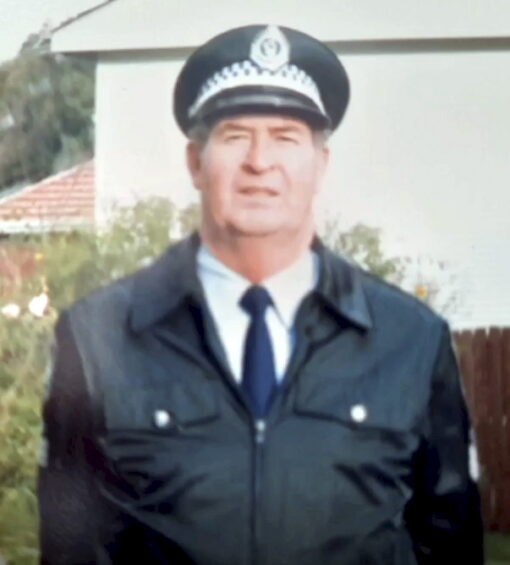
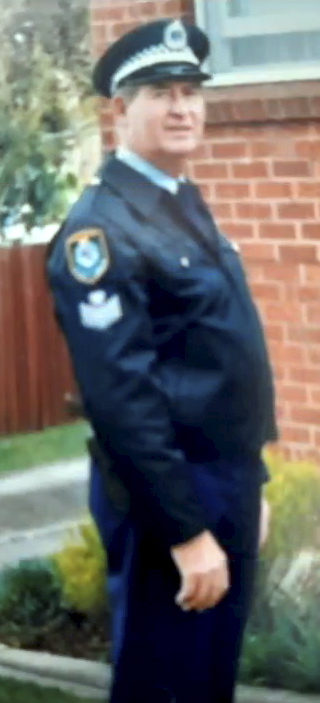
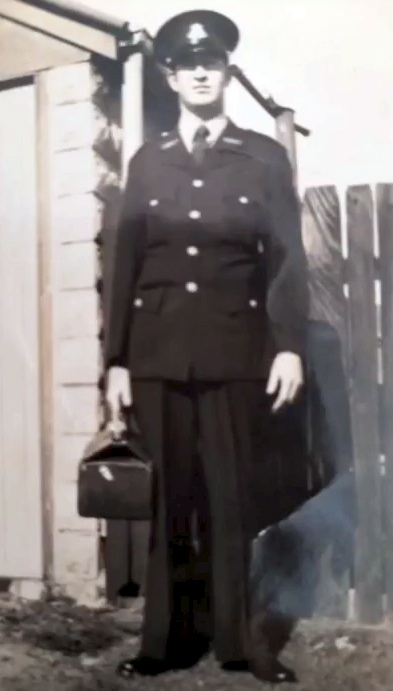
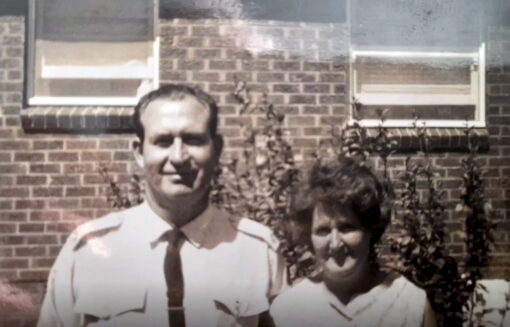
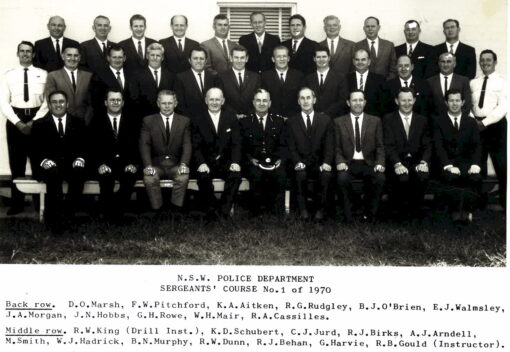

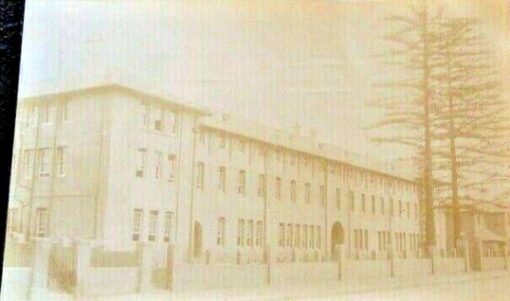
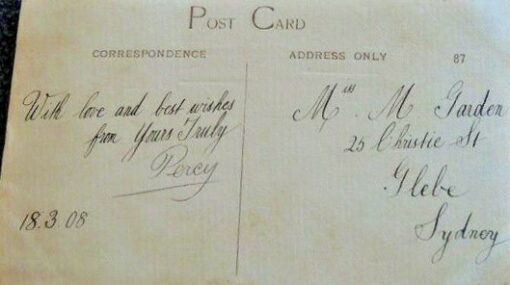

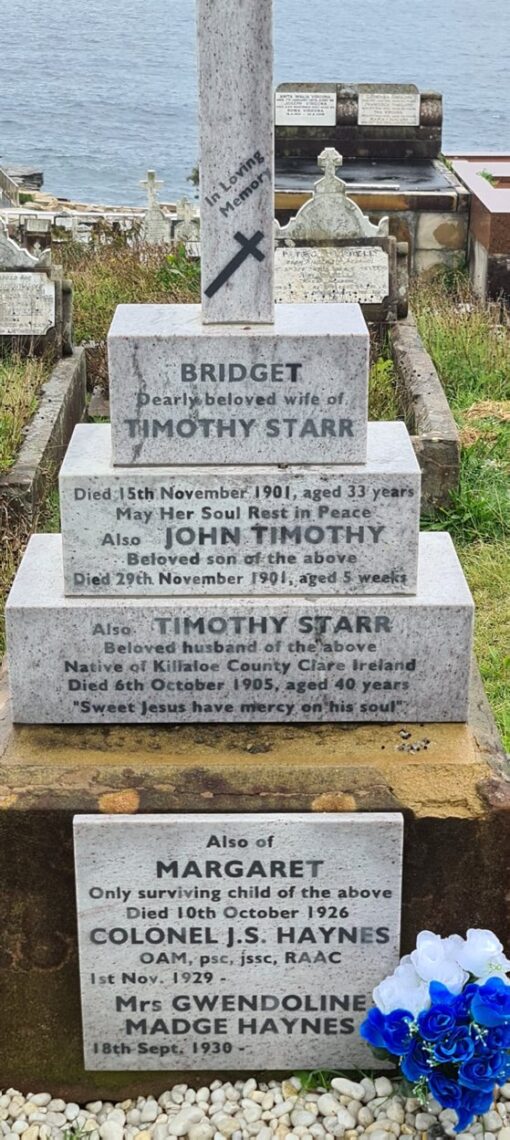
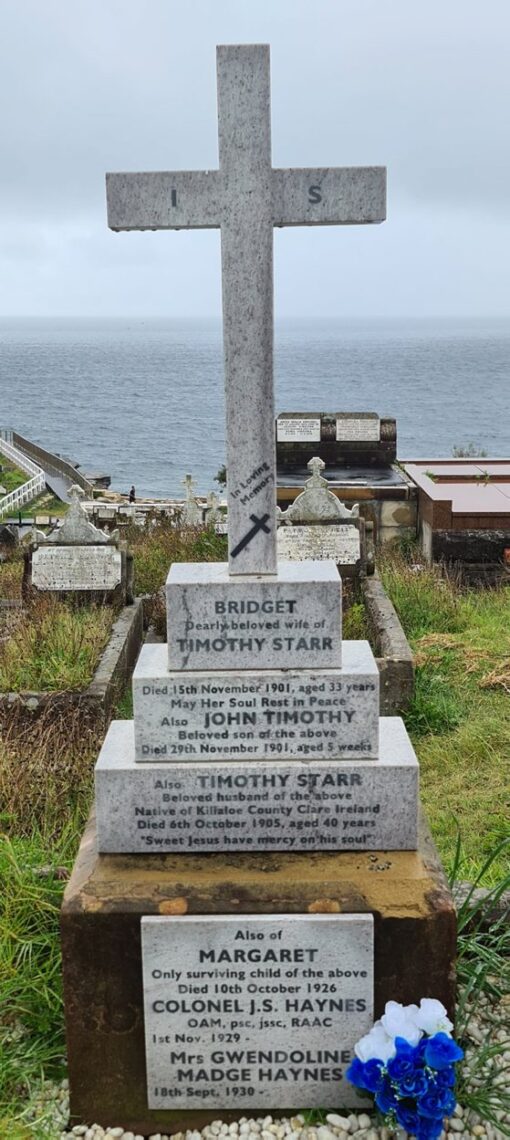
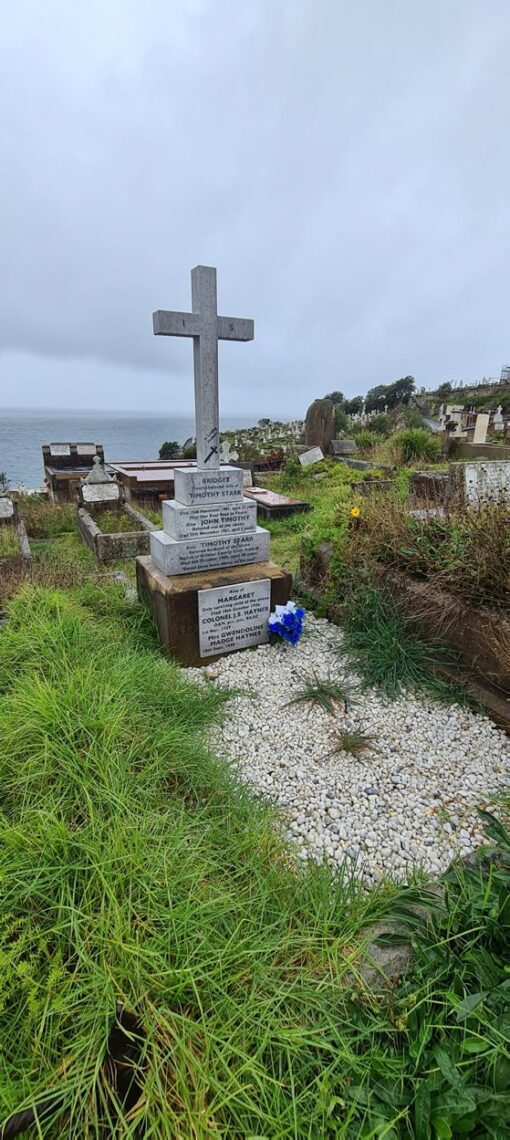
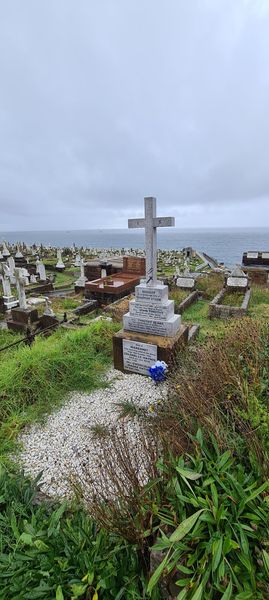




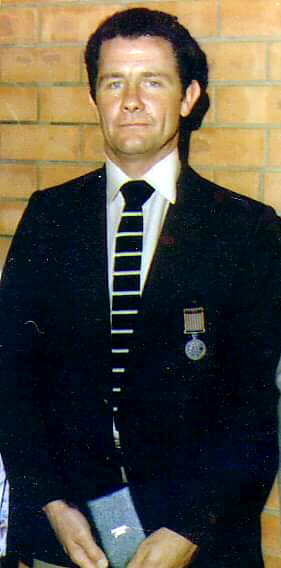

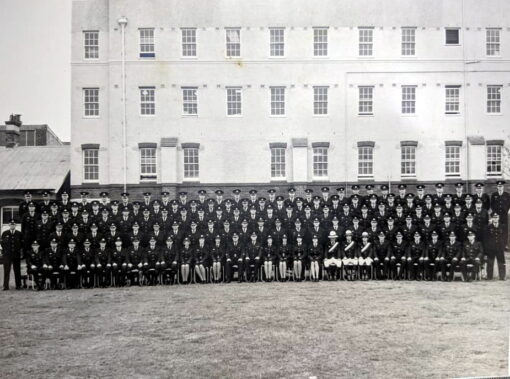
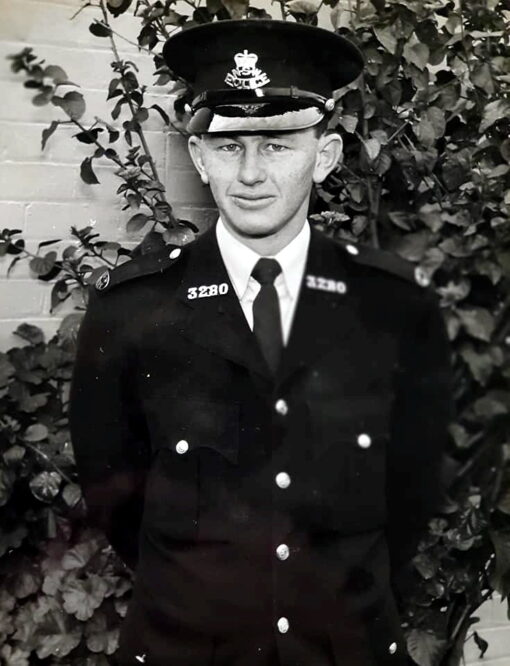
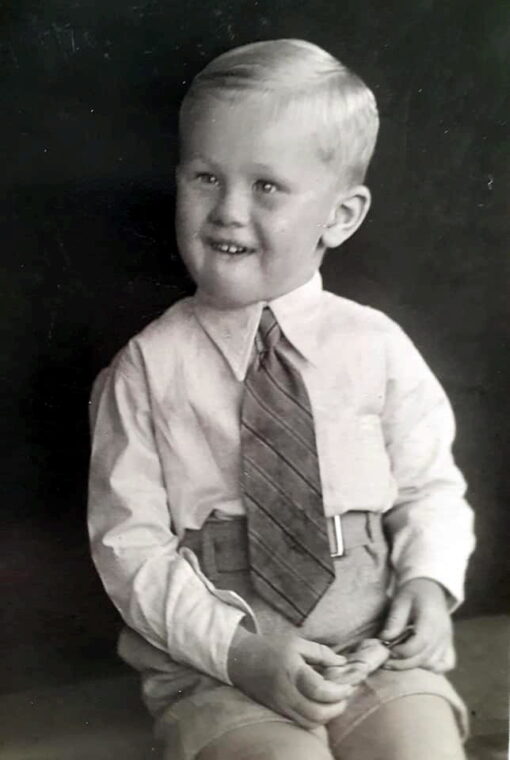
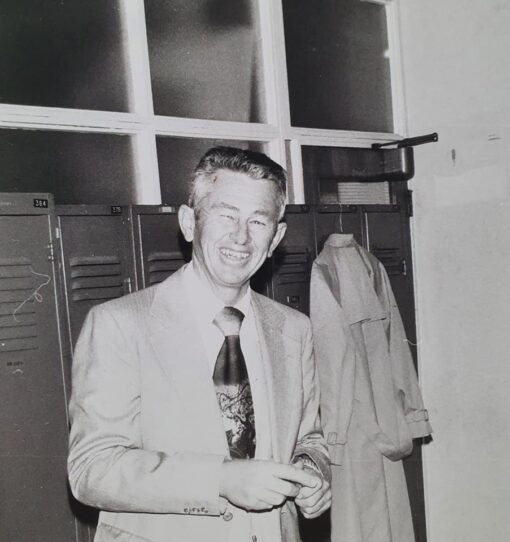

 Scientific Police – December 1979 Front Row L – R