OBITUARY.
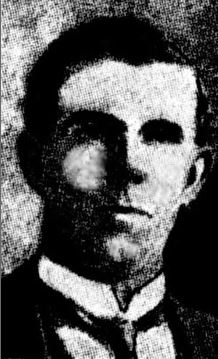
MR. GORDON C. FARNHAM.
The death of Mr. Gordon C. Farnham, licensee of the Club House Hotel, Wagga, caused great regret, as the deceased was well-known throughout the district. Mr. Farnham was present at the boxing contests in the Riverina Hall on Wednesday night, and after returning to his hotel ate a supper which included cucumber, and had an iced drink. Later not feeling too well he had a glass of brandy, but during the night he suffered considerably from internal pains. In the morning his condition was such that Dr. Martin was called in, and he diagnosed the case as one of gastritis and enteritis. The sufferer was removed to a private hospital, but although everything possible was done for him he passed away about 3 o’clock on Friday morning. Dr. Martin certified that death was due to food poisoning, and this was endorsed by the deputy coroner after a formal inquiry.
The deceased, who was an ‘Anzac,’ rose to the rank of sergeant-major in the 1st Divisional Engineers, and earned the coveted awards of the D.C.M. and the M.M. At the time of his death he was on the committee of the Returned Soldiers’ League.
Prior to enlisting he was a member of the police force, attached to the Wagga station, and he rejoined the force on April 15, 1919, on his return from the front, and resigned on March 10, 1920, to take over the Club House Hotel.
He leaves a wife, five brothers, and two sisters.
The funeral left Traill-street for the Wagga railway station at 4.30pm on Friday, from where the remains were conveyed by rail to Cessnock for interment in the Methodist portion of the Cessnock cemetery. The chief mourners were the wife of the deceased, Mrs. W. Ball, and Messrs. D. Harris and N. J. Richards. A large number of members of the Returned Soldiers’ League marched behind the hearse, including the president, Ald. Gissing, the pall bearers being Messrs. V. Charker, T. A. Plummer, J. S. Wild, L. H. Shaw, T. A. Smith, and A. Stephenson. Sister Proctor, and members of the Red Cross League were also present, while Senior-sergeant Gallaher, Sergeant O’Brien, Senior-constable Cooper, Constables Brownlee and Waugh, and Tracker McLean represented the Wagga police. There were many beautiful floral tributes.
The funeral arrangements were entrusted to Messrs. McIntosh Bros.
Service Number listed as 176 and 151
“AN ADELAIDE D.C.M.
Lance-Corporal Farnham, who came to Adelaide from Broken Hill to enlist, has won the Distinguished Conduct Medal for “showing the greatest zeal and disregard for danger during the landing at Gabi Tepe.” Lance-Corporal Farnham is a native of Cessnock (N.S.W.), and is 27 years of age. Like all the country recruits from the Cessnock district, he had a varied experience in rural pursuits in his native State, and was also for a time in New Zealand, and for 18 months prior to enlisting had been in the New South Wales police force, being stationed at Broken Hill. At the historic landing on April 25 he was for 10 hours under fire, “during which time,” says the official report, “he attended the wounded continuously, and made a fine exhibition of coolness and devotion to duty.” Lance-Corporal Farnham was in the trenches from April to the end of August, and is now on police patrol duty guarding prisoners. His parents are very old residents of Cessnock.” – from the Adelaide Advertiser 06 Oct 1915 (trove.nla.gov.au)
“D.C.M. FOR CESSNOCK.
The distinguished conduct medal has been won by Lance-corporal Gordon Farnham, a former resident of Cessnock, for “showing the greatest zeal and disregard for danger during the landing at Gaba Tepe.” The D.C.M. hero, who is a native of Cessnock, is 27 years of age, and previously was employed at the Aberdare Colliery and blacksmith. He is a fine example of Australian manhood, and has many friends in Cessnock who are naturally proud of him. His parents also live in Cessnock. After leaving his native town, Farnham journeyed to New Zealand, from whence he went to Broken Hill, where for eighteen months previous to his enlistment he was a member of the police force. The call of war was too strong, however, and he enlisted in Adelaide with the Third Field Ambulance Corps. He subsequently took part in the famous landing of the 25th April, and was for ten hours under fire, “during which time,” says the official report, “he attended the wounded continuously, and made a fine exhibition of coolness and devotion to duty.” – from the Newcastle Morning Herald and Miners’ Advocate 08 Oct 1915 (nla.gov.au)
“OBITUARY. MR. GORDON C. FARNHAM.
The death of Mr. Gordon C. Farnham, licensee of the Club House Hotel, Wagga, caused great regret, as the deceased was well-known through out the district. Mr. Farnham was present at the boxing contests in the Riverina Hall on Wednesday night, and after returning to his hotel ate a supper which included cucumber, and had an iced drink. Later not feeling too well he had a glass of brandy, but during the night he suffered considerably from intenial pains. In the morning his condition was such that Dr. Martin was called in, and he diagnosed the case as one of gastritis and enteritis. The sufferer was removed to a private hospital, but although everything possible was done for him he passed away about 3 o’clock on Friday morning. Dr. Martin certified that death was due to food poisoning, and this was endorsed by the deputy coroner after a formal inquiry.
The deceased, who was an ‘Anzac,’ rose to the rank of sergeant-major in the 1st Divisional Engineers, and earned the coveted awards of the D.C.M. and the M.M. At the time of his death he was on the committee of the Returned Soldiers’ League. Prior to enlisting he was a member of the police force, attached to the Wagga station, and he rejoined the force on April 15, 1919, on his return from the front, and resigned on March 10, 1920, to take over the Club House Hotel. He leaves a wife, five brothers, and two sisters. The funeral left Traill-street for the Wagga railway station at 4.30 p.m. on Friday, from where the remains were conveyed by rail to Cessnock for interment in the Methodist portion of the Cessnock cemetery. The chief mourners were the wife of the deceased, Mrs. W. Ball, and Messrs. D. Harris and N. J. Richards. A large number of members of the Returned Soldiers’ League marched behind the hearse, including the president, Ald. Gissing, the pall bearers being Messrs. V. Charker, T. A. Plummer, J. S. Wild, L. H. Shaw, T. A. Smith, and A. Stephenson. Sister Proctor, and members of the Red Cross League were also present, while Senior-sergeant Gallaher, Sergeant O’Brien, Senior-constable Cooper, Constables Brownlee and Waugh, and Tracker McLean represented the Wagga police. There were many beautiful floral tributes. The funeral arrangements were entrusted to Messrs. McIntosh Bros.” – from the Wagga Daily Advertiser 29 Jan 1921 (nla.gov.au)
https://rslvirtualwarmemorial.org.au/explore/people/137462
NSW Births, Deaths & Marriages
Death: 4551/1921 Father: Thomas Mother: Susan Wagga Wagga District
19/08/2015
E. F. T. CRAMPTON
Queensland Police Force
Constable
Stationed at Yeulba ( Yuleba )
Suicide – firearm
Died 4 September 1907
Constable’s Death.
The Chief Inspector of Police at Brisbane has received a telegram intimating that on the 4th instant Constable E. F. T. Crampton who was stationed at Yeulba, entered his ofiice and shot himself with his revolver. The district inspector has gone to Yeulba to investigate. Constable Crampton who was a married man with a wife and family had been transferred to Yeulba a few days ago from the Charleville district where he had been doing relieving duty.
The Brisbane Courier ( Qld ) Saturday 7 September 1907 page 4 of 16
http://trove.nla.gov.au/ndp/del/article/19407130?searchTerm=constable%20crampton&searchLimits=l-category=Article|||l-australian=y#pstart1557900
Magisterial Inquiry.
As inquiry was held before Mr. Wm. Harris, P.M., at Yeulba on Friday into the death of Constable Crampton, who committed suicide by shooting himself with a revolver on Thursday morning last.
The evidence of George Howe, a contractor at Yeulba, was to the effect that he had been occupied about a week repairing the police buildings, and that deceased arrived there on 27th August. Deceased appeared low spirited, and complained of having no sleep. In the middle of a conversation he would get up and walk away. On the 3rd, deceased picked up a cartridge, which he put in his mouth, exclaiming “Bang.” On the 4th, a man in Howe’s employ told Howe the constable was walking about with a revolver in his hand. Howe went to the constable and asked him what he wanted to be playing with the revolver for, and Crampton remarked, ” It is very tempting being under my nose.” Later he put the revolver in a pigeon hole. That was the last time he saw Crampton alive. The following morning Howe and Darr found him dead on the floor of his room.
Masy Crampton, widow of deceased, deposed that her husband had been very worried over business matters. He had left the police and gone into business at Oakey, but bad lost money and rejoined the force. Later he was transferred to Charleville and Yeulba. In his letters to her he complained of the idea of having to take his family to Charlevill, also of having no sleep. He was a temperate man.
Henry Darr, H. McLoughlin, J.P., Constable Joyce, Dr. Pratt (Government medical officer), and several others gave evidence.
Western Star & Roma Advertiser ( Toowoomba, Qld )
Wednesday 11 September 1907 page 3 of 4
http://trove.nla.gov.au/ndp/del/article/97417885?searchTerm=constable%20crampton&searchLimits=l-category=Article|||l-australian=y#pstart10174906
Yeulba / Yuleba Police Station no longer exists but was possibly in Stephenson St, Yuleba, Qld, 4427.
It was located in the Maranoa & Warrego Division, consisted of 2 cells, with the walls made from wood, the roof of iron and was built in 1881.
http://boggoroad.blogspot.com.au/2014/06/know-your-colonial-gaol-history-15.html
[divider]