Charles TURBET

Charles TURBET 


AKA  ?  

* Nickname:  ?

Late of Dolphin St, Randwick, NSW  


Relations in ‘the job’:

“possible” relation in ‘the job‘:    ?


NSW – Belmore Barracks  Class #  ? ? ? 


New South Wales Police Force


Regd. #  ‘Q’ 6451


Rank:  Commenced Training at  ? Police Academy on Monday 28 July 1892

Probationary Constable- appointed ? ? ? 

Constable – appointed ? ? ? 

Constable 1st Class – appointed ? ? ? 

Detective – appointed ? ? ? ( NO )

Senior Constable – appointed ? ? ? 

Leading Senior Constable – appointed ? ? ? (N/A)

Sergeant 3rd Class – appointed ? ? ? 

Sergeant 2nd Class – appointed ? ? ?

Sergeant 1st Class – appointed ? ? ? 

Inspector – appointed ? ? 1922

Chief Inspector – appointed ? ? ? 

Superintendent 1st Class – appointed ? ? ? 


Final Rank: = Superintendent 1st Class


Stations ?, Superintendent of Traffic – Retirement


Time employed ( Paid ) with NSW PoliceFrom:   ? ? 1892  to   ? May 1929 = 37+- years,

Service ( From Training Date ) period: From   ? ? 1892   to     ? May 1929  = 37+- years  Service


Retirement / Leaving age:?

Time in Retirement from Police?


Awards:  No Find on Australian Honours system


 Born:   ? ? 1870 in NSW

Died on:  Wednesday 26 March 1930 

Age:  59 years,

Organ Donor:  Y / N / ?


Cause:  Illness ( type ? )

Event location:  Home 

Event / Diagnosis date ?


Funeral date:  Friday 28 March 1930

Funeral location:  Randwick Presbyterian Church, Randwick, NSW

LIVE STREAM    ? N/A


Wake location???

Wake date???


Funeral Parlour: ?

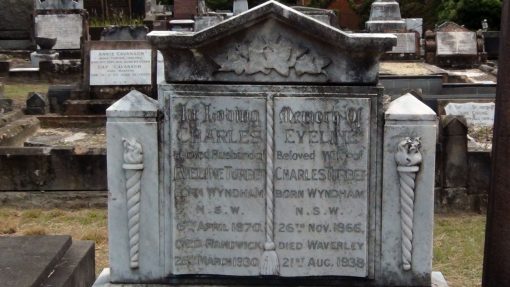
Charles TURBET

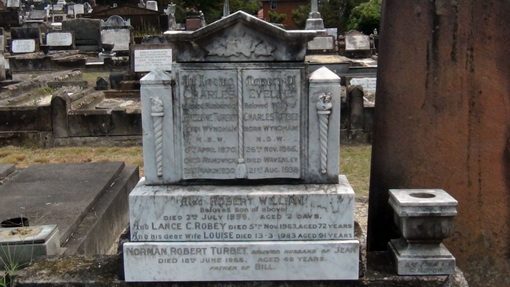
Charles TURBET

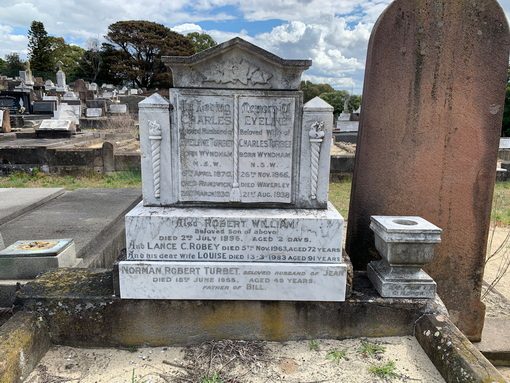
Charles TURBET

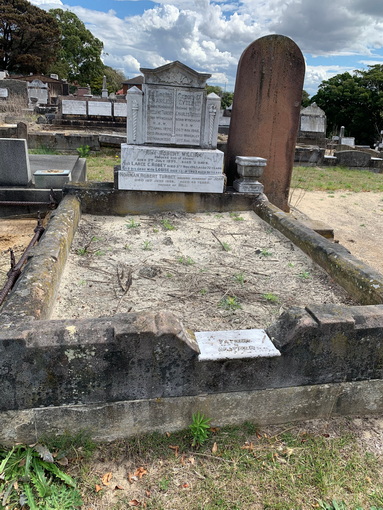
Charles TURBET

Buried at:  Randwick Cemetery, Malabar Rd, South Coogee, NSW

Grave LocationSection:  Presbyterian        Row:  A         Plot:  60

Grave GPS?,       ?


Memorial / Plaque / Monument located at ?

Dedication date of Memorial / Plaque / Monument: Nil – at this time ( March 2024 )


CHARLES is NOT mentioned on the Police Wall of Remembrance * NOT JOB RELATED


FURTHER INFORMATION IS NEEDED ABOUT THIS PERSON, THEIR LIFE, THEIR CAREER AND THEIR DEATH.

PLEASE SEND PHOTOS AND INFORMATION TO Cal


May they forever Rest In Peace

https://www.facebook.com/groups/AustralianPolice.com.au/ 

https://www.facebook.com/groups/NSWFallenPolice/ 

Australian Police YouTube Channel


New South Wales Police Gazette and Weekly Record of Crime (Sydney : 1860 – 1930),

Wednesday 2 July 1930 (No.27), page 518


PENSIONS, ALLOWANCES AND- GRATUITIES.

Pensions.

Turbet, Mrs. Eveline ( widow of the late Police Pensioner Ex-Superintendent 1st Class Charles Turbet ).

Advance of £200 from undrawn balance of pension in her case; also allowance of £62 16s. 9d. per month, on and from 27th March, 1930, until the undrawn balance of pension, £3,089 3s. 10d. is exhausted; the further payment of the allowance to be reconsidered in the event of the remarriage of the widow or on her decease.

02 Jul 1930 – Miscellaneous Information. – Trove


Sydney Mail (NSW : 1912 – 1938),

Wednesday 2 April 1930, page 15

The Police Force as a Career

FORMER Inspector of Police Charles Turbet, who died in retirement in Sydney last week, was an example of what may be attained by those who take to police work as a career. ( The most prominent on hand in that way is, of course, the Chief, Mr. Childs, who, a youth from, the country, joined up, and, adding brains to physique, became Commissioner ).

A policeman’s life nowadays is capable of greater acceptance of ability and hard work than it was half a century ago, and those who add strings to their bow have fine opportunities. Mr. Turbet was one of the class that assiduously pursues the side lines and aids. He learned shorthand, and became of great value in that way. He also had a hand in the introduction of the priceless finger-print system.

When he became Superintendent of Traffic he was reaching the topmost branches of the tree, but ill-health had its claim on him. He was 59 years of age.

https://trove.nla.gov.au/newspaper/article/160633086


Sydney Morning Herald (NSW : 1842 – 1954),

Monday 31 March 1930, page 16

OBITUARY.

SUPERINTENDENT TURBET.

The funeral of Superintendent Turbet took place on Friday. There was a large gathering of officers and men of the Police Department.

The interment at Randwick Cemetery was preceded by a service at the Randwick Presbyterian Church, conducted by the Rev. W. G. Grant, who was assisted by the Rev. T. Jamieson Williams.

The chief mourners were Mrs. Turbet (widow), and Messrs. Charles Turbet, James Turbet, and Norman Turbet (sons), and Mesdames Robey and Martin (daughters), Messrs. Robert and Walter Turbet (brothers), Mrs. Tom Waterson, Miss L. Turbet, and Mrs. Mark Garner (sisters), Messrs. Arthur Robinson, Tom Waterson, R. Y. Robinson, and Mark Garner (brothers-in-law), Mesdames A. Raynor, A. Edwards, G. Raynor, and G. Carpenter (sisters-in-law), Messrs. L. Robey, and J. A. Martin (sons-in-law), and Master Lance Robey ( grandson ).

Others present included the Commissioner of Police (Mr. Childs), Acting Superintendent Linegar (representing Metropolitan Superintendent Leary), Inspector Pattinson (representing Inspector Mackay, Criminal Investigation branch), Superintendent Bennetts (Traffic Department), ex-Inspector Thom (representing ex-Superintendent Saunders, president, Retired Police Officers’ Association), Chief Fire Officer Nance (representing Fire Brigades of New South Wales), Mr. Gordon Henderson (secretary), and Mr. W. J. McKinney (representing Royal Automobile Club of Australia). Alderman Jennings (Mayor of Randwick), Alderman J. Dunningham, M.L.A., Messrs. W. K. Percival (town clerk), and K. C. Rourke (deputy town clerk of Randwick) Inspectors Lynch, Farley and O’Brien, Messrs. H. H. Newell (deputy president), and S. R. Henderson (deputy member, Main Roads Board), Mr. I. B. Hodgson, Inspectors J. Scott, G. Mortimer, Rosen, W. J. Jones, ex-Superintendents Park, Brack, Edward, George Mitchell, May, John Cook, Lewis (secretary, Retired Police Officers’ Association), Nolan, Whitfield, Banks, ex-Inspectors Jones, Bannan, Maze, Devlin, A. Campbell, Manktelow, Sherwood, R. Bennett, Fullerton, W. J. Spence, Fowler, Briggs, Ewen, Doig, Littlejohn, Taylor, Robinson, Young, C. Smith, and Priddle; Messrs. W. G. Cox, ex-Detective-sergeant Jordan, M. W. McDonald, Oliver C. Cohen (Government Savings Bank, Randwick), S. F. Cutler, Charles M. Pearce, Detective-sergeants James and Quinn, Detective Almond, Messrs. Ross Jones, J. Pemell, W. Crawford, A. Kay, W. Matchett, Mr. and Mrs. William Duff, Messrs. Gordon Duff, W. J. Spence (Wollongong), John Yardley, ex-Detective-sergeant May, ex-Sergeants Bennett and Blair, and ex-Detective Jordon.

There were many beautiful floral tributes, among them being those of the Traffic Department, the New South Wales Police Association, officers and detectives of the Criminal Investigation branch and various metropolitan police divisions, the Minister and Session of the Presbyterian Church of Randwick, the Royal Automobile Club of Australia, and the Master Carriers’ Association.

https://trove.nla.gov.au/newspaper/article/16638080


Evening News (Sydney, NSW : 1869 – 1931),

Friday 28 March 1930, page 5

POLICE PALS

DEATH PARTS TWO IN TWO DAYS

WITHIN two days, death has robbed the Commissioner of Police, Mr. Childs, of two personal friends, who were formerly associated with him in the force.

The ex-superintendent of Traffic, Mr. Charles Turbet, died on Wednesday night, and ex-Superintendent John Evans, who retired 18 years ago, passed away at the Sydney Sanitarium, Wahroonga, last night.

Mr. Turbet was an old schoolmate of Mr. Childs, and Mr. Evans was closely associated with the Commissioner during his early days in the service.

Mr. Evans retired at Tamworth 11 years ago, and then bought a home at Pymble, in which he resided up to the time of his death. He had a record of long and valuable service. He was stationed at Tingha, in the tin mining area, and at Richmond River in the cattle stealing days. He was associated with many important cases, including the Wardell murder, which attracted much attention.

Mr. Childs met Mr. Evans, who was then the sergeant in charge at Armidale, 30 years ago. The present Commissioner was then serving in the town as district clerk to Superintendent Garvin, who rose to the office now occupied by Mr. Childs.

Before joining the service in N.S.W., Mr. Evans served with the Cornish police, in which he was a colleague of the late Inspector Sobye.

https://trove.nla.gov.au/newspaper/article/125967780


SUPERINTENDENT TURBET.
Death Announced.
Mr. Charles Turbet, former superintendent of the Police Traffic Department, died at his home, Dolphin-street, Randwick, at a late hour last night.

He had been in ill-health for a long time. Mr. Turbet entered the police force in 1892, and spent most of his police career in the Traffic Branch, in which he became inspector in 1922.

Upon the retirement of Superintendent Brack in 1924, Charles took charge of the branch. Ill-health, however, interfered with his service.

In August, 1928, he underwent a serious operation. He resumed duty in February last year ( 1929 ), but in the following month he again became ill.

He retired from the service last May ( 1929 ).

During Mr. Turbet’s regime at the Traffic Office the handling of motor traffic in the city became a serious problem. In September, 1924, Mr. Turbet visited America and studied motor traffic problems. It was on Mr. Turbet’s advice that the city parking regulations and other traffic regulations, including that relating to motor buses, were framed. Mr. Turbet, who was 59 years of age, is survived by Mrs. Turbet, three sons, Messrs. Charles, chief veterinary officer in Suva, James, and Norman Turbet, and two daughters, Mrs. Lance Robey and Mrs. Jack Martin. The funeral will take place at the Randwick Cemetery tomorrow, following a service at the Randwick Presbyterian Church, of which Mr. Turbet was an elder.

The Sydney Morning Herald
Thursday 27 March 1930, p.12

Charles Turbet (1870-1930) – Find a Grave Memorial


* Story behind any Nickname:


Nothing further, than what is recorded above, is known about this person at the time of publication and further information and photos would be appreciated.

**********


Cal
21 March 2024


John EVANS

John EVANS


AKA  ?  

* Nickname: 

Late of Pymble, NSW 


Relations in ‘the job’:

“possible” relation in ‘the job‘:    ?


NSW Police Training Centre – Belmore Barracks  Class #  ? ? ?  


New South Wales Police Force


Regd. # ‘Q‘ 2696 

For the purposes of this website ‘Q‘ represents those Police joining between 1 March 1862 ( commencement of NSWPF ) – 23 February 1915 ( Commencement of NSWPF current numbering system )


Rank: Was a Constable in the Cornish, ( England ), Police ( 1872 – 1975 ) at the age of 20 before immigrating to Australia


Commenced Training at  ? Police Academy on Monday ? ? ?

Probationary Constable- appointed 11 March 1876 (aged 24 years, 0 months, 1 day )  

Constable – appointed ? ? ? 

Constable 1st Class – appointed ? September 1877

Detective – appointed ? ? ? ( NO ) 

Senior Constable – appointed ? ? 188

Leading Senior Constable – appointed ? ? ? ( N/A )  

Sergeant 3rd Class – appointed ? ? ? ( N/A )

Sergeant 2nd Class – appointed ? ? 1887 

Senior Sergeant – appointed ? ?1894

Sub-Inspector – appointed ? ? 1900

Inspector – appointed ? ? ? 

3rd Class Superintendent – appointed ? ? 1909


Final Rank: = 3rd Class Superintendent 


Stations The Depot ( Belmore Police Barracks )( now Central Railway Stn ), Armidale (April 1876 )( O.I.C. of Armidale Stables and Senior Rider ),  Inverell ( late 1878 – 1884)( Cst 1/c – SenCon )( replaced Sgt Farnsworth ( Retired ), Ballina ( 1884 – 1887 ), Casino ( 1887 – 1894 )( Sergeant ), Armidale ( 1894 – 1900 )( Senior Sergeant ), Inverell sub-district ( 1900 – 1904 )( Sub-Inspector ), Lismore ( 1904 – 1909 )( Sub-Inspector ), Tamworth ( 1909 – ? )( Superintendent )( O.I.C. – North West District ) – Retirement


Time Employed with the Cornish Constabulary 1872 – 1875 = 3 years

Time employed ( Paid ) with NSW PoliceFrom:  11 March 1876   to  10 March 1912 = 35 years, 11 months, 28 days

Total Time Served in Policing = 39 years


Retirement / Leaving age: = 60 years, 0 months, 0 days

Time in Retirement from Police:  18 years, 0 months, 17 days


Awards:  No Find on Australian Honours system


 Born:  Wednesday 10 March 1852 – England

Died on:  Thursday 27 March 1930

Age:  78 years, 0 months, 17 days

Organ Donor:  No 


Cause ?

Event location:   Sydney Sanitarium, Wahroonga, NSW 

Event / Diagnosis date ?


Funeral date:   Saturday 29 March 1930

Funeral location: Northern Suburbs Cemetery ( Macquarie Park Cemetery ), 199 Delhi Rd, North Ryde, NSW

LIVE STREAM    ? N/A


Wake location???

Wake date???


Funeral Parlour: ?

John EVANS Grave

John EVANS Grave

Buried at: Northern Suburbs Cemetery, 199 Delhi Rd, North Ryde, NSW

Grave LocationSection:   Anglican       Row: F9        Plot: 0026

Grave GPS?,       ?


Memorial / Plaque / Monument located at ?

Dedication date of Memorial / Plaque / Monument: Nil – at this time ( June 2024 )


JOHN is NOT mentioned on the Police Wall of Remembrance * NOT JOB RELATED


FURTHER INFORMATION IS NEEDED ABOUT THIS PERSON, THEIR LIFE, THEIR CAREER AND THEIR DEATH.

PLEASE SEND PHOTOS AND INFORMATION TO Cal


May they forever Rest In Peace

https://www.facebook.com/groups/AustralianPolice.com.au/ 

https://www.facebook.com/groups/NSWFallenPolice/ 

Australian Police YouTube Channel


Barrier Miner (Broken Hill, NSW : 1888 – 1954),

Friday 4 April 1930, page 2

PERSONAL

Many old police officers attended the funeral of former Superintendent John Evans at the Northern Suburbs Cemetery, Sydney, on Monday ( 31 March 1930 ).

Mr. Evans, who retired from the force 18 years ago, had requested that his coffin should be carried to the graveside by old comrades. Mr. W. H. Childs, the Commissioner of Police, who was one of Mr. Evans’s oldest friends, acted as one of the pall bearers. Former Superintendent W. F. Dimond was another.

https://trove.nla.gov.au/newspaper/article/46564849


Sydney Morning Herald (NSW : 1842 – 1954),

Wednesday 2 April 1930, page 17

EX-SUPERINTENDENT EVANS.

Ex-Superintendent John Evans, aged 78, who died at Wahroonga on Thursday, was buried at the Northern Suburbs Cemetery on Saturday.

At the request of the deceased, the body was carried to the graveside by several of his old police friends.

The pall-bearers were the Commissioner of Police (Mr. Childs), ex-Superintendents Cook, Diamond, and Lewis, and ex-Inspectors Fowler and Flynn. Among those present were ex-Inspectors Spence, Cameron, Hogan, and ex-Sergeant Coward, and Drs. Humphery, Freeman, and Sherwood.

The chief mourners were his widow, Mr. Henry Evans, his son, who is a district surveyor of West Wyalong, and Mr. and Mrs. Catcher, son-in-law and daughter.

The service was conducted by the Rev. H. J. Campbell.

https://trove.nla.gov.au/newspaper/article/16638682


Evening News (Sydney, NSW : 1869 – 1931),

Friday 28 March 1930, page 5

POLICE PALS

DEATH PARTS TWO IN TWO DAYS

WITHIN two days, death has robbed the Commissioner of Police, Mr. Childs, of two personal friends, who were formerly associated with him in the force.

The ex-superintendent of Traffic, Mr. Charles Turbet, died on Wednesday night, and ex-Superintendent John Evans, who retired 18 years ago, passed away at the Sydney Sanitarium, Wahroonga, last night.

Mr. Turbet was an old schoolmate of Mr. Childs, and Mr. Evans was closely associated with the Commissioner during his early days in the service.

Mr. Evans retired at Tamworth 11 years ago, and then bought a home at Pymble, in which he resided up to the time of his death. He had a record of long and valuable service. He was stationed at Tingha, in the tin mining area, and at Richmond River in the cattle stealing days. He was associated with many important cases, including the Wardell murder, which attracted much attention.

Mr. Childs met Mr. Evans, who was then the sergeant in charge at Armidale, 30 years ago. The present Commissioner was then serving in the town as district clerk to Superintendent Garvin, who rose to the office now occupied by Mr. Childs.

Before joining the service in N.S.W., Mr. Evans served with the Cornish police, in which he was a colleague of the late Inspector Sobye.

https://trove.nla.gov.au/newspaper/article/125967780


Tamworth Daily Observer (NSW : 1910 – 1916),

Friday 13 September 1912, page 2

DEATH

EVANS. — On August 5, 1912, at Exeter, England, Kizia Phillips, beloved wife of Superintendant John Evans, of Tamworth aged 57 years.

https://trove.nla.gov.au/newspaper/article/109618238


Richmond River Express and Casino Kyogle Advertiser (NSW : 1904 – 1929),

Friday 15 March 1912, page 8

Forty Years in the Police Force.

SUPERINTENDENT EVANS’ CAREER.

On Saturday last ( 9 March 1912 ) there retired from the police force of New South Wales Superintendent John Evans, who on Sunday reached the age of 60 years. For some time prior to his retirement Superintendent Evans was stationed at Tamworth, in charge of the North-Western district, but there are still many living in this district who will remember him when, back in the 80’s ( 1880s ), he was stationed on the Richmond, at Ballina and Casino, and some years later at Lismore. The retiring Superintendent has just concluded a long and honorable service of 70 years in the cause of law and order. His police experience was not wholly gained in Australia. He has to thank the Cornish constabulary for a good initial grounding. At the age of 20, full of life and energy, he joined the force in Cornwall in 1872, remaining in the service three years. He had great admiration for his old chief and when the call of Australia came to him, his superior officer remarked : ” What, going to Australia to shoot kangaroos ? ” Evidently the colonies were not then associated with anything much more than kangaroos, and no doubt with blacks and bush rangers. Perhaps the spirit of adventure was deeply developed in the young officer, who, by the way, had gained the distinction of being one of the best wrestlers of the corps. The members of the constabulary gave their late comrade a hearty send-off on his voyage to distant shores.

A bosom friend of Constable Evans in the Cornish constabulary was Constable Sobye, now Sub-Inspector Sobye, of No. 1 Station, Clarence street, Sydney. They resigned at the same time, and journeyed to Australia together.

Superintendent Evans landed at Melbourne, where he had relatives, and after spending a few months in Victoria, made his way to Sydney, and in March, 1876, was accepted as a member of the N.S. Wales police force, being sent in the usual course to the depot. He did not remain long there, however. The authorities saw that he already possessed the training of a constable, and so, a fortnight after joining, he was sent to Armidale for duty. In 18 months’ time he was promoted to first-class constable, and placed in charge of Armidale stables, becoming senior mounted man. In another six months‘ time — the latter end of 1878 — he was transferred to Inverell, where he took up the duties of Sergeant Farnsworth ( retired ) under Sub-Inspector Harrison. Both these officers are now dead.

Shortly after Constable Evans went to Inverell, robberies from drunken men were of almost nightly occurrence. The officer determined to end them. Two or three men were suspected, but they managed to escape the clutches of the law till the wily officer arranged a trap. He himself lay down near a man he discovered drunk in the gutter, and by-and-bye two men came along. The night was light enough for the officer to distinguish their features, and when they commenced operating on the drunken man the disguised officer suddenly sprang up. The robbers were not mild characters, and they immediately started an assault on the constable. They gave him a bad time, but the officer, too, gave them a rough handling in attempting their arrest. The odds were too great against him, however, and they got away, but were speedily captured by other police, and subsequently received the reward for their misdeeds. The injuries sustained by Evans on this occasion were so severe that he was taken to the hospital in an unconscious state, remaining a patient for six weeks. While in the station he received notice of his promotion to the position of Senior Constable.

Gambling was rife at Tingha, some miles distant. Periodically, raids were made by the Inverell, Tingha, and other police. One night was particularly eventful. Thirty or forty Chinese had been arrested, and were on their way to Tingha lockup, when Senior-constable Evans was informed of the whereabouts of the ” keeper, ” who had made his escape by bursting through a window on detecting the approach of the police. The officer and the informer proceeded to the place, and found their man all right. They also found about 300 yelling, infuriated Chinamen. The presence of an informer and an officer of the law roused them to a great pitch of excitement, and they rushed the two, brandishing all kinds of weapons. It was an unenviable position for the officer and his companion. The constable fought for his life, and knocked the Chinese down like nine-pins, using both baton and fist. Still the Celestials came on, but many were felled to the ground. One particularly daring fellow he caught by the ‘pigtail,’ and held him, at the same time fighting the others with his right hand.

A Chinaman, wild with rage, here rushed at the officer with a cleaver. With a yell he raised the weapon, but a white man who had appeared on the scene, struck the blow aside. It was just in the nick of time, and the constable’s life was saved. Other whites hurried up, and the police, who had gone on to the lock-up with the prisoners, having heard of the occurrence, came galloping back. The Chinese were soon got under control, and more of their number, including the ‘ keeper,’ kept company with their compatriots in the cells.

Mr. G. H. Parker, who still lives at Tingha, was one of those who went to Constable Evans‘ assistance. If ever there was a time the policeman was tempted to draw the revolver it was on this occasion, but he refrained.

Senior-Constable Evans remained at Inverell until 1884, when he was transferred to Ballina, being stationed at that place for three years. His next shift was to Casino, having been selected to come here in consequence of his success in stock-stealing cases, by the late Inspector General of Police, Mr. Garvin, who at the time was superintendent in charge of the northern districts. A good deal of stock stealing had been going on in the Casino district, and it was Superintendent Garvin‘s opinion that the then Senior-constable Evans was the man to stamp it out. And he did. He came to Casino with the rank of sergeant, and soon got on the tracks of the offenders. Two of them, after their release from gaol, said good-bye to New South Wales, and crossed into Queensland, one being subsequently executed in the northern State on a charge of murder.

The Casino district was thoroughly cleared of crime in the shape of thefts of stock, and in 1894 Sergeant Evans was sent back to Armidale as senior-sergeant. Six years later he was promoted to the position of sub-inspector in charge of Inverell sub-district. In 1904 he was transferred to a similar position at Lismore.

During his career Superintendent Evans dealt with many serious cases. One of considerable interest occurred during his stay at Lismore. Two Hindoos were concerned, and after a lapse of five years the conscience of one troubled him, and he informed the police that his companion had committed murder, and concealed the body. The spot was pointed out, and sure enough the remains of a human being were brought to light. The Hindoo who committed the crime was sentenced to imprisonment for life.

Three years ago, Inspector Evans was sent to Tamworth, as superintendent of the north-western district, and he has administered the division with tact, resourcefulness, and ability, gaining at the same time the respect of the people. Shortly after his arrival at Tamworth he attended the annual meeting of the Prisoners’ Aid Association, and the opportunity was taken advantage of to give him a welcome. At that meeting a leading Sydney barrister described Superintendent Evans as ” a terror to evil doers.”

Superintendent Evans is a splendid horseman. In his prime days he has often been in the saddle for a couple of days at a time, in the chase for desperadoes. He took part in the pursuit of the Breelong blacksmith who spent many a day and night in the bush in search of a robber, ? ‘the hairy man,’ whose name was ? Burns. Superintendent Evans did not know how he came to be called the hairy man, for he was ? means possessed of a sup? dance of hair ; but he knows he committed many robberies in the Bundarra district, and had a habit of sticking up the mail coach. The ‘hairy man‘ was captured by a constable named Byrne, who came across him seated on a log, with two revolvers alongside him.

When Superintendent Evans had more direct charge of the constables — when, for instance, he was sergeant – it was his practice ( says the author of this sketch of his career ) to call a new man into his office, and give him a few words of advice. The first thing he impressed upon the recruit was to be truthful, pointing out that the liberties and lives of people often rested in the hands of constables. ” Don’t make a statement unless you are absolutely sure it is true,” was the officer’s warning.

Superintendent Evans, with Mrs. Evans and his daughter, will leave Sydney on March 27 by tho Otranto, on a trip to England, where he hopes to renew old associations.

https://trove.nla.gov.au/newspaper/article/124212761


* Story behind any Nickname:


Nothing further, than what is recorded above, is known about this person at the time of publication and further information and photos would be appreciated.

**********


Cal
20 March 2024

Updated 11 June 2024 with grave photos


Michael Richard HENNESSY

Michael Richard HENNESSY

AKA MICK  

Late of  ‘ Verona ‘, 46 Corunna road Stanmore, NSW

Father to Sgt Michael HENNESSY, NSWPF # 3924


NSW Police Training Centre – Redfern  / Police Training College – Penrith  Class #  ? ? ?  


New South Wales Police Force

Regd. #  ???? 


Service:  From ? ? pre 1906?   to   ? ? ?  =  ? years Service ? ? ?


Rank:  Commenced Training at ? Police Academy on ? ? ?

Probationary Constable- appointed ? ? ?

Constable – appointed ? ? ?

Constable 1st Class – appointed 1 January 1908

Detective – appointed ? ? ?

Senior Constable – appointed ? ? ? 

Leading Senior Constable – appointed ? ? ?

Sergeant 3rd Class – appointed ? ? ? 

Sergeant 2nd Class – appointed ? ? ?

21/3/1930Sergeant 1st Class – appointed ? ? ? 


Final Rank = Sergeant  ?/ Class 


Stations?, Gundagai ( Cst – Cst 1/c ), Broken Hill, ?


Retirement / Leaving age: = ?

Time in Retirement from Police: ?


Awards:  No Find on Australian Honours system


 Born? ? 1875?

Died on:  Friday  21 March 1930 

Age:  55


Cause?

Event location:   ?

Event date ?


Funeral date:  Saturday 22 March 1930 

Funeral location:  St Michael’s Church, Stanmore, NSW  

Funeral Parlour: W. N. BULL, Funeral Director


Buried at: Rookwood Cemetery, Barnet Ave, Rookwood, NSW

Section Mortuary 2, Row C, Plot 228 

Approx. GPS:  -33.8769295064591    151.052072194442

Approximate Grave location: [codepeople-post-map]

https://billiongraves.com/grave/Michael-Hennessy/36373963

Michael Richard HENNESSY, Mick HENNESSY, M.R. HENNESSY, Sgt HENNESSY
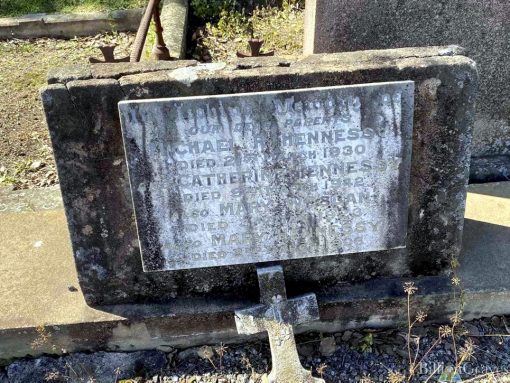
In loving Memory Of Our Parents Michael R Hennessy Died 21st March 1930 and Catherine Hennessy Died 9th March 1942 Also Mary Weslan Died 3rd May 1923 Also Mary Hennessy Died 2nd March 1906


Memorial / Plaque / Monument located at: ?

Dedication date of Memorial / Plaque / Monument: Nil – at this time ( January 2021 )


 MICHAEL is NOT mentioned on the Police Wall of Remembrance  *NEED MORE INFO


FURTHER INFORMATION IS NEEDED ABOUT THIS PERSON, THEIR LIFE, THEIR CAREER AND THEIR DEATH.

PLEASE SEND PHOTOS AND INFORMATION TO Cal


May they forever Rest In Peace

https://www.facebook.com/groups/AustralianPolice.com.au/ 


https://www.facebook.com/groups/NSWFallenPolice/ 

Australian Police YouTube Channel 


https://trove.nla.gov.au/newspaper/article/231857766


Vide Police Gazette, 1905, page 28.

William Kline alias McGrath, charged in company with inflicting grievous bodily harm on Michael R. Hennessy, has been arrested by Senior-constable Young and Constables Spencer and Hennessy, Sydney Police.

Committed for trial at Quarter Sessions.

Further charged in company with Arthur Turner with assaulting Constable James C. Farley.

Sentenced to three months and Turner to two months gaol.


08 Feb 1905 – Apprehensions, &c. – Trove


Daily Telegraph (Sydney, NSW : 1883 – 1930),

Saturday 21 July 1906, page 18

CHARGE OF TRESPASS.

A CONSTABLE SUMMONED.

Constable Michael R. Hennessy was proceeded against at the Central Summons Court on an information alleging that, on the 10th Inst., he, without lawful excuse, entered the enclosed lands of Charlie Young, 58 Campbell-street, without the consent of the occupier, Charlie Young, or of the person in charge, Ah Chong. Defendant pleaded not guilty.

Mr. J. J. Carroll ( Messrs. Crick and Carroll ) appeared for the prosecution, and Mr. Mant ( Crown Law Office ) for the defence. Charlie Young, a Chinese, who spoke English fluently, said he lived at 58 Campbell-street, and was a commission agent for market gardeners. He was the owner of the premises. He did not give the defendant permission to enter the premises on the 10th Inst. On that day witness went out at about five minutes to 1, leaving Ah Chong in charge, and returned about ten minutes later. Ah Chong then “told him something, ” and witness laid the information. Cross-examined, witness said that he used to sell pak-a-pu tickets, but had not done so since the passage of the new Act. There were a lot of pak-u-pu tickets under the counter, but witness did not use them. There was a result of an old pak-a-pu drawing on the wall when the police entered the premises. Defendant had not cautioned witness about selling pak-a-pu tickets. Ah Chong, a cook, stated through an interpreter that when the defendant entered witness was standing at the end of the counter. Defendant opened a drawer, | took out some papers, and tore them up, and said ” These are old pak-a-pu tickets. ” Defendant said that he went to the premises on special duty in connection with pak-a-pu shops. The

place was open to the public, and he believed he had a right to enter. Witness had been there before and no objection had been made to his entering. On entering witness said to Ah Chong, ” I see you are playing pak-a-pu. I saw a white man leaving the shop. ” There were pak-a-pu tickets on the counter, and Ah Chong, on seeing witness, tried to put them into a drawer. Witness said ” You had better tear them up. They are pak-a-pu tickets, ” and Ah Chong said ” All li, me tearem up,” and did so. There was also pak-a-pu results posted on the wall, and Ah Chong tore these. witness destroyed nothing in the shop. The complainant, called in reply, said that certain tickets produced were torn up by the defendant. The backs of these tickets were used by witness for making business memoranda. . At this stage it was agreed that the evidence in this case should be taken as evidence in a case wherein the defendant was proceeded against by Charlie Young on a charge of having maliciously damaged, to the extent of £4 10s certain personal property of the complainant, namely, several sheets of paper containing memoranda of accounts and business transactions. Charlie Young, re-called, gave particulars of certain items written on the backs of tire tickets. He did not give instructions to Ah Chong or anyone else to tear up valuables belonging to him. Evidence was given for the defence by Senior constable Orr and Constable McGannon.

His Worship dismissed both informations.

21 Jul 1906 – CHARGE OF TRESPASS. – Trove


Michael HENNESSY Snr was part of the contingent that were transferred to Broken Hiss during the Miner’s Strike in 1910.


Forbes Advocate (NSW : 1911 – 1954),

Friday 9 April 1937, page 1

GROWN WITNESS DENIES POLICE EVIDENCE

Assault and Robbery Charge CONFLICTING STATEMENTS IN MATTER OF DRINKS

THERE was an excessive conflict of evidence presented to the Police Magistrate, Mr. M. J. Ryan, at the Forbes Petty Sessions on Tuesday when an assault and robbery case was heard. The defendant was one, John Clement Hay, aged 21, who was charged with the assault and robbery of his friend, Thomas Henry Roberts, in a lavatory in the backyard of the Club House Hotel, Forbes, on the afternoon of Saturday, March 20. Hay pleaded not guilty to the charge. At the conclusion of the Crown case, Mr. Meillon, who appeared for Hay, submitted to the P.M. that no case had been made out against his client, and asked that he be discharged. Mr. Ryan maintained that a prima facie case of assault had been submitted by the police, and amended the charge to one of common assault. Later he convicted Hay and imposed a fine of £2, with £4/11/8 costs.

Mr. R. Meillon appeared for the defendant, and the Crown case was in | the hands of Inspector D. O’Connell.

CROWN CASE

John Keith McLean, constable of police stationed at Forbes, stated that at about 3.30 o’clock on the afternoon of March 20, as a result of something he was told, he proceeded to Johnson Street, Forbes, accompanied by Constable Reeves. He saw the accused, Hay sitting in a motor lorry in front of his home. He told the defendant he wanted to see him. Hay got out of the lorry and walked a few yards away. He then informed defendant that he was making enquiries concerning a man named Roberts, who said he had been assaulted and robbed by him in the backyard of the Club House Hotel that afternoon. Roberts claimed that he had been relieved of £2/10/ from the fob pocket of his trousers. In reply the defendant denied that he had either assaulted or robbed Roberts. Continuing, the witness stated that he asked Hay if he had seen Roberts that afternoon, and the former replied that he had seen Roberts that morning when they had had a few drinks together, later going to Hay’s home for dinner. Asked if he would go to the Police Station and see Roberts, the defendant said he would. They did so, and on being confronted with Hay, Roberts said, “That is the man who assaulted and robbed me this afternoon.” The defendant made no reply. Prior to going to the Police Station, said McLean, he had asked the defendant if he had gone to the Club House Hotel that afternoon, and if he had gone into the lavatory with Roberts. Hay said he had done so and that they had had a bit of an argument concerning some money Roberts owed a man named Gage. They were alone in the lavatory, Hay told him. After Hay arrived at the Police Station he was warned in the usual way and asked if he wished to make a statement, which he did ( produced ).

SHOWED SIGNS OF DRINK

At the time of his arrest, said witness, Hay showed definite signs of having had strong drink, but was not drunk. The trousers he was wearing bore stains which appeared to be blood. His underpants were similarly marked and there was blood on his left hand. Hay said he could not account for the stains. The trousers and shirt worn by Roberts were also stained with what appeared to be blood. The four articles of clothing were removed from both Roberts and Hay and taken to Sydney for analysis by Constable Hennessy. A certificate had been returned stating that the stains were made by human blood. Cross-questioned by Mr. Meillon, witness stated he first saw Roberts at the Police Station about 2.45. He came to the station alone and was not under arrest. He would not say that Roberts was drunk. He was not bleeding at the time he came to the station, but had a bruise and a scratch about half an inch long under the left eye. In his opinion the cut could account for the blood on his clothes. Further questioned by Mr. Meillon, McLean said he had made certain enquiries about Hay before he saw him in the lorry. The latter informed him that he was told the police were looking for him and he had gone home. Hay had definitely been drinking. In reply to a question by Inspector O’Connell, witness stated that defendant had no money in his pockets when arrested. Leslie Reeves, police constable, deposed that about 3 p.m. on Saturday, March 20, from something he was told, he accompanied a man named Roberts to the Police Station. Accompanied by Constable McLean, he later proceeded to Johnson Street and saw a man named Hay sitting in a motor lorry in front of his residence. McLean told Hay they were making enquiries concerning a man named Roberts who alleged that he (Hay) had assaulted and robbed him of 50/ that afternoon in the backyard of the Club House Hotel. Defendant denied the allegations. Witness then corroborated the evidence of Constable McLean regarding the conversation that took place with Hay. He, too, was of the opinion that the defendant had been drinking, but was not in what could be termed; a drunken state. In reply to questions by Mr. Meillon, Reeves stated he had first seen Roberts in Templar Street. He was not bleeding at the time, but there was blood on his nose and eye and his shirt was wet with blood. There were no marks on his face except the cut near the left eye. He did not tell Roberts he looked as if he had been fighting and had better come to the Police Station. Roberts did not have a coat and appeared as if he had been fighting. He did not arrest Roberts, but asked him to go to the station with him. Constable Michael R. Hennessy gave formal evidence of having taken the clothing removed from Hay and Roberts to Sydney for analysis.

INFORMANT’S STORY

Thomas Henry Roberts, a laborer, living at Sheriff Street, Forbes, stated he was a relief worker. On March 20 he went to the Town Hall to collect his pay (£3/0/2). He met Hay and William Gage there and after getting their pay the three of them went to the P.O. Hotel, where they had three which he owed him. Gage then left them and he accepted an invitation from Hay to go to his place for dinner. Hay had a bottle of whisky at his home and they had a couple of drinks from it. After dinner, Hay and he went to Jack Hanley’s place. Hanley was not at home, and they talked to Mrs. Hanley. Later, they went down the town and to the Club House Hotel, where they both proceeded to the lavatory in the back yard. While standing in the lavatory, continued Roberts, Hay punched him on the nose and mouth, and he was knocked against the wall. He put up his hands to protect his face when he felt something tugging at his trousers. He said, “Benny, what is the matter with you?” Hay did not reply. He then walked out of the lavatory to the back of the hotel, where the proprietor gave him rag and water to wash his face. In reply to questions by Inspector O’Connell, witness said he noticed his trousers were torn at the fob pocket. He had had 50/ in notes in the pocket. He did not see the defendant after leaving the lavatory. Later he walked into Templar Street, where he met Constable Reeves. He had a conversation with the constable and went to the Police Station. He made a statement to the police. The shirt produced was the one he was wearing at the time of the assault. There was 50/ in notes in the fob pocket of his trousers when he went into the Club House Hotel. He and the defendant were alone in the lavatory. To the PM., Roberts said that he and Hay had had four beers and two whiskies during the day. Cross-questioned by Mr. Meillon, Roberts stated that he and Hay had known each other practically all their lives. They had gone to school together and had always been on very friendly terms. He had only shouted once in the P.O. Hotel and had spent 1/6 there. He had no silver in his pocket when he went to the Police Station. He should have had 3/6 In silver, but did not know what had happened to it. Neither Hay or himself had had any drinks at the Club House. When he and Hay went to Hanley’s Mrs. Hanley did not tell them they were too drunk to go down the town.

GROWN WITNESS DENIES POLICE EVIDENCE

Assault and Robbery Charge CONFLICTING STATEMENTS IN MATTER OF DRINKS

THERE was an excessive conflict of evidence presented to the Police Magistrate, Mr. M. J. Ryan, at the Forbes Petty Sessions on Tuesday when an assault and robbery case was heard. The defendant was one, John Clement Hay, aged 21, who was charged with the assault and robbery of his friend,

Thomas Henry Roberts, in a lavatory in the backyard of the Club House Hotel, Forbes, on the afternoon of Saturday, March 20. Hay pleaded not guilty to the charge. At the conclusion of the Crown case, Mr. Meillon, who appeared for Hay, submitted to the P.M. that no case had been made out against his client, and asked that he be discharged. Mr. Ryan maintained that a prima facie case of assault had been submitted by the police, and amended the charge to one of common assault. Later he convicted Hay and imposed a fine of £2, with £4/11/8 costs.

Mr. R. Meillon appeared for the defendant, and the Crown case was in | the hands of Inspector D. O’Connell. CROWN CASE John Keith McLean, constable of police stationed at Forbes, stated that at about 3.30 o’clock on the afternoon of March 20, as a result of something he was told, he proceeded to Johnson Street, Forbes, accompanied by Constable Reeves. He saw the accused, Hay sitting in a motor lorry in front of his home. He told the defendant

he wanted to see him. Hay got out of the lorry and walked a few yards away. He then informed defendant that he was making enquiries concerning a man named Roberts, who said he had been assaulted and robbed by him in the backyard of the Club House Hotel that afternoon. Roberts claimed that he had been relieved of £2/10/ from the fob pocket of his trousers. In reply the defendant denied that he had either assaulted or robbed Roberts. Continuing, the witness stated that he asked Hay if he had seen Roberts that afternoon, and the former replied that he had seen Roberts that morning when they had had a few drinks together, later going to Hay’s home for dinner. Asked if he would go to the Police Station and see Roberts, the defendant said he would. They did so, and on being confronted

with Hay, Roberts said, “That is the man who assaulted and robbed me this afternoon.” The defendant made no reply. Prior to going to the Police Station, said McLean, he had asked the defendant if he had gone to the Club House Hotel that afternoon, and if he had gone into the lavatory with Roberts. Hay said he had done so and that they had had a bit of an argument concerning some money Roberts owed a man named Gage. They were alone in the lavatory, Hay told him. After Hay arrived at the Police Station he was warned in the usual way and asked if he wished to make a statement, which he did ( produced ). SHOWED SIGNS OF DRINK At the time of his arrest, said witness, Hay showed definite signs of having had strong drink, but was not drunk. The trousers he was wearing bore stains which appeared to be blood. His underpants were similarly marked and there was blood on his left hand. Hay said he could not account for the stains. The trousers and shirt worn by Roberts were also stained with what appeared to be blood. The four articles of clothing were removed from both Roberts and Hay and taken to Sydney for analysis by Constable Hennessy. A certificate had been returned stating that the stains were made by human blood. Cross-questioned by Mr. Meillon, witness stated he first saw Roberts at the Police Station about 2.45. He came to the station alone and was not under arrest. He would not say that Roberts was drunk. He was not bleeding at the time he came to the station, but had a bruise and a scratch about half an inch long under the left eye. In his opinion the cut could account for the blood on his clothes. Further questioned by Mr. Meillon, McLean said he had made certain

enquiries about Hay before he saw him in the lorry. The latter informed him that he was told the police were looking for him and he had gone home. Hay had definitely been drinking. In reply to a question by Inspector O’Connell, witness stated that defendant had no money in his pockets when arrested. Leslie Reeves, police constable, deposed that about 3 p.m. on Saturday, March 20, from something he was told, he accompanied a man named Roberts to the Police Station. Accompanied by Constable McLean, he later proceeded to Johnson Street and saw a man named Hay sitting in a motor lorry in front of his residence. McLean told Hay they were making enquiries concerning a man named Roberts who alleged that he (Hay) had assaulted and robbed him of 50/ that afternoon in

the backyard of the Club House Hotel. Defendant denied the allegations. Witness then corroborated the evidence of Constable McLean regarding the conversation that took place with Hay. He, too, was of the opinion that the defendant had been drinking, but was not in what could be termed; a drunken state. In reply to questions by Mr. Meillon, Reeves stated he had first seen Roberts in Templar Street. He was not bleeding at the time, but there was

blood on his nose and eye and his shirt was wet with blood. There were no marks on his face except the cut near the left eye. He did not tell Roberts he looked as if he had been fighting and had better come to the Police Station. Roberts did not have a coat and appeared as if he had been fighting. He did not arrest Roberts, but asked him to go to the station with him. Constable Michael R. Hennessy gave formal evidence of having taken the clothing removed from Hay and Roberts to Sydney for analysis. INFORMANT’S STORY Thomas Henry Roberts, a laborer, living at Sheriff Street, Forbes, stated he was a relief worker. On March 20 he went to the Town Hall to collect his pay (£3/0/2). He met Hay and William Gage there and after getting their pay the three of them went to the P.O. Hotel, where they had three

which he owed him. Gage then left them and he accepted an invitation from Hay to go to his place for dinner. Hay had a bottle of whisky at his home and they had a couple of drinks from it. After dinner, Hay and he went to Jack Hanley’s place. Hanley was not at home, and they talked to Mrs. Hanley. Later, they went down the town and to the Club House Hotel, where they both proceeded to the lavatory in the back yard. While standing in the lavatory, continued Roberts, Hay punched him on the nose and mouth, and he was knocked against the wall. He put up his hands to protect his face when he felt something tugging at his trousers. He said, “Benny, what is the matter with you?” Hay did not reply. He then walked out of the lavatory to the back of the hotel, where the proprietor gave him rag and water to wash his face. In reply to questions by Inspector O’Connell, witness said he noticed his trousers were torn at the fob pocket. He had had 50/ in notes in the pocket. He did not see the defendant after leaving the lavatory. Later he walked into Templar Street, where he met Constable Reeves. He had a conversation with the constable and went to the Police Station. He made a statement to the police. The shirt produced was the one he was wearing at the time of the assault. There was 50/ in notes in the fob pocket of his trousers when he went into the Club House Hotel. He and the defendant were alone in the lavatory. To the PM., Roberts said that he and Hay had had four beers and two whiskies during the day. Cross-questioned by Mr. Meillon, Roberts stated that he and Hay had known each other practically all their lives. They had gone to school together

and had always been on very friendly terms. He had only shouted once in the P.O. Hotel and had spent 1/6 there. He had no silver in his pocket when he went to the Police Station. He should have had 3/6 In silver, but did not know what had happened to it. Neither Hay or himself had had any drinks at the Club House. When he and Hay went to Hanley’s Mrs. Hanley did not tell them they were too drunk to go down the town.

ASSAULT AND ROBBERY CASE 

NO STRUGGLE

Questioned about the assault, Roberts said he did not have an argument with Hay, and he did not tell the police there had been an argument about money. When Hay hit him he made no attempt to resist; he was too dazed. His mouth was cut on the inside, his nose was cut and there was a bruise above his right ear. Blood came from his mouth and nose. There was no struggling between he and Hay. About two minutes after leaving the lavatory he noticed the pocket was torn and the money gone. ‘He did not search the ground or go and look in the lavatory for it. He did not look for Hay. Continuing, Roberts informed Mr. Meillon that he was on his way home when he met Constable Reeves. He had no intention of laying a charge against Hay. Reeves asked him what was the matter and he told him what had happened. He never saw Hay at the Police Station and did not say to the police, “That is the man who assaulted and robbed me.” He was not drunk and had never had an argument with Hay in his life. He could not account for the attack. The last he saw of the 50/ was when he put it in his pocket at the P.O. Hotel. To the P.M., Roberts said he did not see Hay at the Police Station. Mr. Meillon then submitted to the Magistrate that there was no case to answer, and asked him to discharge the information. Throughout the case for the prosecution there had been a great conflict of evidence. Roberts was a very reliable witness. The police said Roberts was not drunk and that he had accused Hay of the assault and robbery when he saw him at the station. Roberts had denied that he ever saw Hay at the station. If Roberts’ evidence was reliable, then the police evidence was not, or vice versa. The P.M. said he was satisfied that an assault had been committed, but there was no evidence to show that robbery had taken place. He would amend the charge to one of common assault.

DEFENDANT IN BOX

John Clement Hay, laborer, a married man, said he had lived all his life in Forbes, and had known Roberts since their school days. He had always been friendly with him and they worked together. They had never had any arguments. He then corroborated the evidence given by Roberts up to the stage when they returned to the Club House Hotel. Here, Hay said, they had had some drink, he did not know how much, but it was more than one. It was not correct that they did not have drinks there. From the bar the two of them went to the lavatory and were there for some time, as he was pretty drunk. They had some hot words and a fight ensued. He did not know who started it, but they got into holts. He did not take any money from Roberts and had no intention of doing so. After the fight he went out the back gate and down to the Royal Hotel, where a chap named Turner came in and told him the police were looking for him and were up at his place. He went home in a motor lorry, and just after he got there the police arrived. He went to the station with them and did not see Roberts. It was not correct that he heard Roberts accuse him of assault and robbery. He had an idea the argument with Roberts was about fighting, he was not sure.

NOT “KING HITTER”

In reply to Inspector O’Connell, witness said on March 20 he had had a good number of drinks and was pretty “full.” When he and Roberts first went to the lavatory he did not see any blood on the latter, but there was some after the fight. He was not very good with his hands, and was not known in Forbes as “The King Hitter.” There were no marks of fight on him the morning after the fight. He could not remember how many drinks they had had at the Club House Hotel, but all the money he had (5/) was gone. Pearl Thelma Hay, wife of the defendant, supported the evidence of Roberts and Hay with regard to their going to her home for dinner. While there, she said, they consumed a little over half a bottle of whisky. Her husband gave her £2/13/ when he arrived home, and she gave him 5/ when he left home after dinner. When the two men arrived at the house they were under the influence of drink, and on leaving were decidedly drunk. They were quite friendly. Her husband had given her no more money. Alice Jane Hanley gave evidence to the effect that the two men went to her home on the afternoon of March 20. They were both drunk and she advised them to go home and have a sleep. Neither of the pair could walk straight. That concluded the evidence, and in his address, Mr. Meillon pointed out to the P.M. the improbability of the bloodstains on Hay’s clothes unless there had been a struggle and the men got into holts, which Roberts denied that they did. It was therefore safe to assume, continued Mr. Meillon, that Hay’s story was correct, and that while under the influence of drink the men had had a brawl, and during the struggle Roberts’ pocket got torn and the money lost. It was also probable, said the solicitor, that when Roberts met the police he was fearful of being arrested and concocted the story to save himself. The whole affair was shadowed in doubt, and his client was entitled to the benefit of that doubt. Mr. Ryan, however, thought otherwise, and convicted the defendant. He imposed a fine of £2.

UNFAIR COSTS

When Inspector O’Connell asked for £4/11/6 costs, Mr. Meillon strongly objected. He said it was grossly unfair to his client that a policeman was sent to Sydney to take the clothes for examination. They could have been sent by registered post for a shilling or two. It was most unnecessary. The P.M. explained that the first charge preferred, that of assault and robbery, was a serious one, and the police had to take all precautions with regard to the exhibits. The costs asked for were allowed, and three months were granted the defendant in which to pay.

09 Apr 1937 – GROWN WITNESS DENIES POLICE EVIDENCE – Trove


HENNESSY.— The friends of Mrs CATHERINE HENNESSY of Verona, 46 Corunna road Stanmore, and Mr. and Mrs. J. BENHAM, Mr MICHAEL HENNESSY and Misses MARY, TESS and KITTY HENNESSY are kindly invited to attend the Funeral of their beloved HUSBAND and FATHER Michael Richard Hennessy ( retired Sergeant Police ) to leave St Michael’s Church Stanmore THIS (Saturday) AFTERNOON at 2.30 for Rookwood Cemetery by road Motor Funeral

W. N. BULL
Funeral Director


HENNESSY. – The friends of Mr. and Mrs. WILLIAM HENNESSY, Mr and Mrs. JOHN HENNESSY, Mr and Mrs JAMES HENNESSY and FAMILIES, Mr and Mrs J HORON and Mr PATRICK HENNESSY are kindly invited to attend the funeral of their beloved BROTHER and UNCLE Michael Richard Hennessy to leave St Michael’s Church, Stanmore, THIS (Saturday) AFTERNOON at 2.30 for Rookwood Cemetery

W N BULL,
Funeral Director.


HENNESSY. – The Friends of Mr and Mrs. JAMES WESLAN, Mr and Mrs MICHAEL WESLAN, Mr and Mrs WILLIAM WESLAN and FAMILIES are kindly invited to attend the Funeral of their beloved BROTHER IN LAW and UNCLE Michael Richard Hennessy to leave St Michael’s Church, Stanmore THIS SATURDAY at 2.30 for Rookwood Cemetery.

W. N. BULL
Funeral Director.


HENNESSY – The Friends of Mrs. ELLEN STAUNTON and FAMILY are kindly invited to attend the Funeral of their beloved NEPHEW and COUSIN, Michael Richard Hennessy to leave St. Michael’s Church Stanmore THIS (Saturday) AFTERNOON at 2.30 for Rookwood Cemetery

W. N. BULL
Funeral Director.

22 Mar 1930 – Family Notices – Trove


Nothing further, than what is recorded above, is known about this person at the time of publication and further information and photos would be appreciated.


Cal


Walter WILLIAMS

Walter WILLIAMS

Late of Casino

New South Wales Police Force

Regd. #  ????

Rank:  Tracker

Stations:  Casino

ServiceFrom  ? ? 1919  to  ? ? 1930 = 12 years Service

Awards?

Born? ? 1891 or 1892 in Bonalbo, NSW

Died on:  Sunday  2 March 1930

Age:  38

CausePneumonia & pleurisy

Event location:   ?

Event date:   ?

Funeral date:  Monday  3 March 1930

Funeral location?

Buried at:  Casino West Cemetery, West St

Old Anglican Section

 Memorial located at?

Walter WILLIAMS


[alert_yellow]WALTER is NOT mentioned on the Police Wall of Remembrance[/alert_yellow]  *NEED MORE INFO


FURTHER INFORMATION IS NEEDED ABOUT THIS PERSON, THEIR LIFE, THEIR CAREER AND THEIR DEATH.

PLEASE SEND PHOTOS AND INFORMATION TO Cal


May they forever Rest In Peace


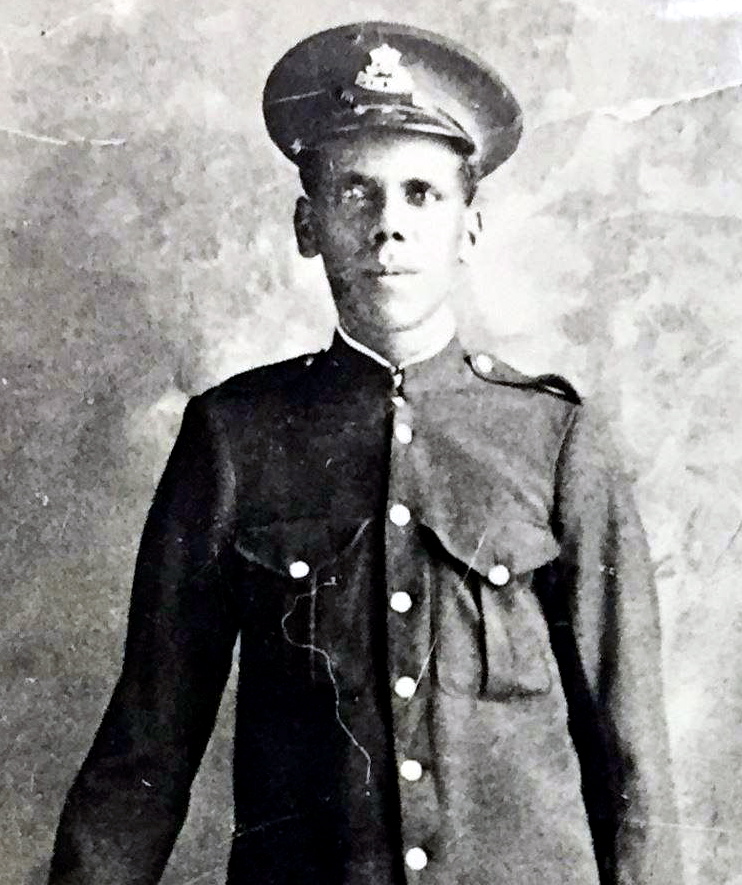
Walter Williams, a Bundjalung man, was born at Bonalbo in the 1890s to Lansbury Williams, a renowned stockman and tracker, and Emily Charles.  Lansbury Williams probably spoke the Gidhabal dialect of Bundjalung.  Walter was also the great-grandson of King Bobby and Queen Jinny Little who both had strong ties to Yulgilbar Station on the Clarence River.  Before taking the job as the tracker at Casino in about 1919, he worked as a bush labourer and horse breaker.  On one occasion, he drove 200 horses to Tabulam before breaking them all.  He was a master horseman.

Walter took over as the Casino tracker from his father-in-law Denny Joseph.  He continued to break horses for the police.  His other main jobs as the tracker were to look for people lost in the bush and trailing herds of lost or stolen cattle.  His tracking career was sadly cut short in 1930 when he suddenly passed away suffering from pneumonia, a condition he had first suffered from in 1919.  He was survived by his wife, Violet Joseph, and four children.[1]


  1.  Bundjalung News 01/11/1977; Death Certificate of Walter Williams 1930/005249; Casino and Kyogle Courier and North Coast Advertiser 26 February 1919:


Casino and Kyogle Courier and North Coast Advertiser (NSW : 1904 – 1932), Wednesday 5 March 1930, page 2


CASINO BLACK TRACKER DIES.

The black-tracker, Walter Williams, who was attached to the Casino Police station, and who had been ill for the past few weeks, died on Sunday, after a severe bout of pneumonia and pleurisy. The deceased was 38 years of age, and besides his wife and family, leaves other relatives in the Tabulam district. . ” Walter Williams was a loyal and conscientious worker. ” said Sergeant S. L. McIntosh, when referring to Tracker Williams‘ death. ” He was with the police for 12 years, ” he added, ” and was most loyal in his work. ”

https://trove.nla.gov.au/newspaper/article/233787676


Williams, Clive Andrew (1915–1980)

by Alan T. Duncan

This article was published in Australian Dictionary of Biography, Volume 16, (MUP), 2002

Clive Andrew Williams (1915?-1980), Aboriginal leader, was born probably on 22 February 1915 at Casino, New South Wales, second of five children of Walter Williams, an Aboriginal tracker, and his wife Violet, née Joseph, from Queensland. Clive attended the public school and was one of few Aborigines accepted at Casino Intermediate High School. At the age of 15 he began work on the railways at Coonabarabran. He returned to Casino where he was employed in the butter factory. While still a young man, Williams planned to travel to Bellbrook on the Macleay River to participate in an initiation ceremony. He found, to his disappointment, that the ceremonies had recently been discontinued, as they had among his own Bundjalung people on the Richmond and Clarence rivers.

At St John’s Presbyterian Church, Coraki, on 26 April 1941 Williams married Ida Drew, who had been taken from her parents by the Aborigines Protection Board. He built a rough dwelling and continued to work in the Casino butter factory. The family then lived for a time on the Aboriginal reserve, but in 1962 moved to a cottage in the town. In the mid-1960s Williams accepted accommodation at Tranby Co-operative College for Aborigines at Glebe, Sydney, where his work with Rev. Alfred Clint and the Co-operative for Aborigines Ltd was highly regarded. He gained employment with the Department of Main Roads and brought his growing family to their new home at Rozelle.

Having joined the Aboriginal-Australian Fellowship, Williams attended the annual conferences of the Federal Council for the Advancement of Aborigines and Torres Strait Islanders. Before the 1967 referendum, he helped in the successful campaign for the removal of the two offensive clauses in the Constitution relating to Aborigines. A member of the executive committee of the Aboriginal Education Council, he was involved with the early leadership training schools and other community development programmes. His wise counsel was appreciated.

In the 1960s the Commonwealth government was promoting the doctrine of ‘assimilation’, while Aboriginal organizations, especially F.C.A.A.T.S.I., wanted increased recognition of Aboriginal identity. Caught between two worlds, Williams was fiercely proud of his Aboriginal heritage but remained gentle and non-aggressive. In 1967 he took the leading role in a film, One Man’s Road, produced by the Commonwealth Film Unit for the Department of Interior; in it he and Ida told of their life and struggles. He was dismayed to discover that the Department of Territories used the film as propaganda to promote assimilation.

Williams and his family returned to the North Coast where he quickly became involved with the community. He was a leader among a group of Aboriginal elders who worked with the administrators of the Northern Rivers College of Advanced Education towards the recognition of the interests of the Bundjalung and other Aboriginal communities in the area. Suffering from hypertension, Clive Williams died of myocardial infarction on 1 December 1980 at his Lismore home and was buried in Goonellabah cemetery. His wife, and their three sons and six daughters survived him.

http://adb.anu.edu.au/biography/williams-clive-andrew-12030