NSW Police Training Centre – Redfern / Police Training College – Penrith / Belmore Barracks Class #? ? ?
New South Wales Police Force
Regd. # ‘Q‘ 9654
For the purposes of this website ‘Q‘ represents those Police joining between 1 March 1862 ( commencement of NSWPF ) – 23 February 1915 ( Commencement of NSWPF current numbering system )
Rank: Commenced Training at ? Police Academy on Monday ? ? ? ( aged ? years, ? months, ? days )
Probationary Constable – appointed 2 May 1913( aged 29 years, 8 months, 26 days )
Constable – appointed ? ? ?
Constable 1st Class – appointed ? ? ? ( No )
Detective – appointed ? ? ? ( No )
Senior Constable – appointed ? ? ? ( N/A )
Leading Senior Constable – appointed ? ? ? ( N/A )
Sergeant 3rd Class – appointed ? ? ? ( N/A )
Sergeant 2nd Class – appointed 1 June 1927
Final Rank: = Sergeant 2nd Class
Stations: Granville ( 18 Division ), Mittagong, Police Barracks – Bourke St Redfern, Glebe ( 1914 ), ( War Duty 12 May 1915 – 1919 ), Darlinghurst ( 3 Division )( 1935 ), Cootamundra ( 1936 ), Police Barracks – Drill Instructor, North Sydney ( 6 Division )( 1940 )
Service ( From Training Date ) period: From Friday 2 May 1913 to 6 August 1943 = 30 years, 3 months, 4 days Service
Time employed ( Paid ) with NSW Police: From: Friday 2 May 1913 to 6 August 1943 = 30 years, 3 months, 4 days Service
Time in Retirement from Police: 3 years, 4 months, 16 days
Age at Retirement / Leaving: = 60 years, 0 months, 0 days
Regiment: Australian Imperial Force ( A.I.F. ) 8th Reinforcements, 1st Field Artillery Brigade of Enmore, NSW
Enlisted: 12 May 1915
Service # 4834
Rank: Sgt
Embarkation: from Melbourne, Victoria aboard HMAT Makarini on 15 September 1915.
Age at embarkation: ?
Occupation: Police Constable
Address: ?
Next of kin: ?
Religion: ?
Single / Married: ?
Returned to Australia: 1 April 1919 with the 12th Field Artillery Brigade.
Date of Discharge: ?
Awards: ?
Awards: No Find on the Australian Honours system – however:-
Scottish Police Coronation Medal – 1911
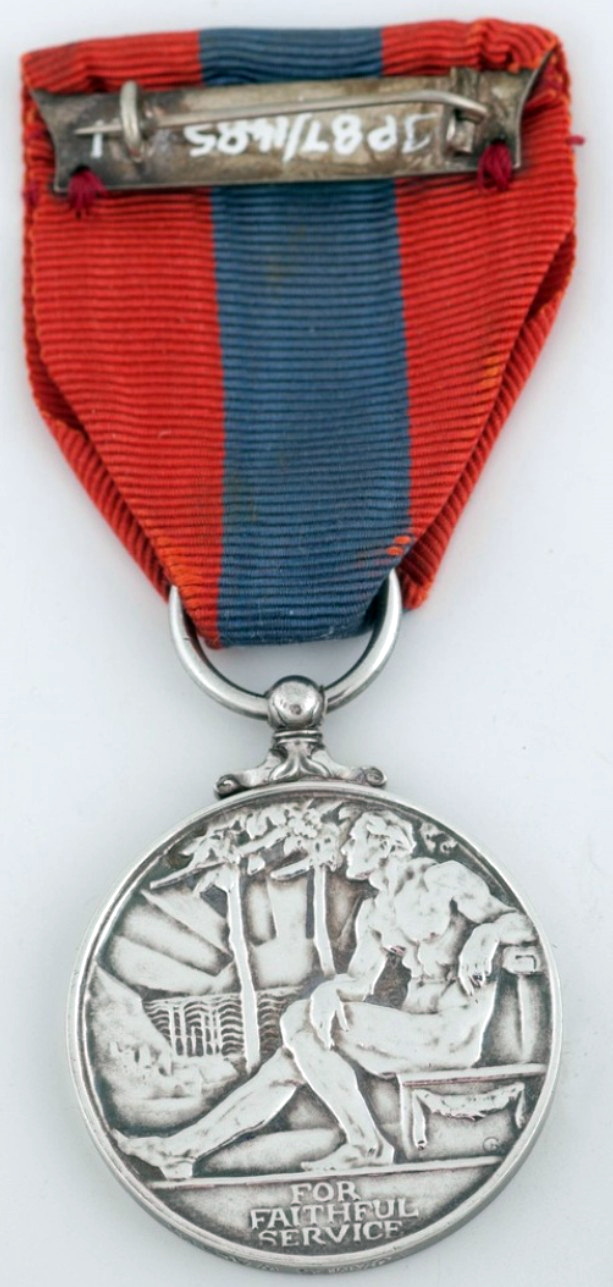
Imperial Service Medal – 1943
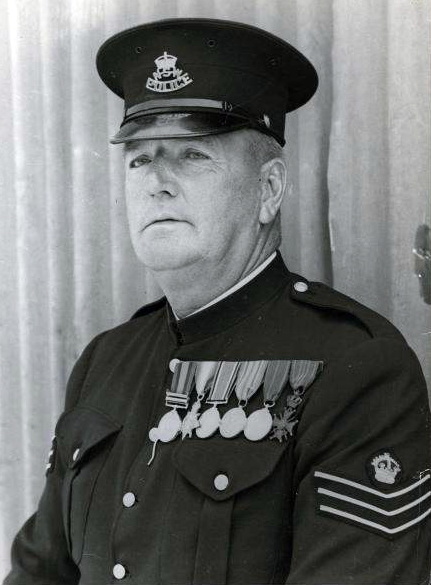
War service medals and Scottish Police Medal awarded to Sergeant James Johnstone Walsh, 1902-1919
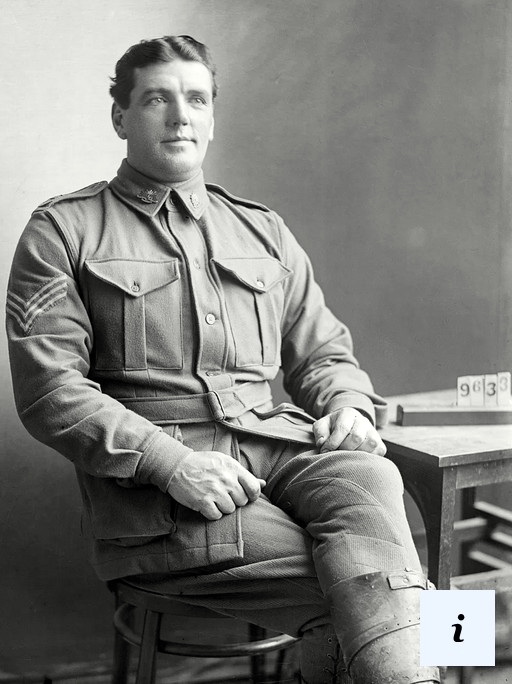
JP86/115-9. A photograph of policeman J. J. Walsh, in uniform with medals. For full details refer to the Vernon database. James Johnstone WALSH AKA James WALSH, Jim WALSH, Jimmy WALSH, Jock WALSH
Born: 6 August 1883 in Lesswade Midlothian, Scotland
Buried at: Cremated at Rookwood Crematorium, Lidcombe, NSW
Grave Location: Section: Row: ?Plot: ?
Grave GPS: ?, ?
Memorial / Plaque / Monument located at: ?
Dedication date of Memorial / Plaque / Monument: Nil – at this time ( May 2026 )
Jock is NOT mentioned on the Police Wall of Remembrance * NOT JOB RELATED
FURTHER INFORMATION IS NEEDED ABOUT THIS PERSON, THEIR LIFE, THEIR CAREER AND THEIR DEATH.
If you have anything further to add to what is recorded here, please get in touch.
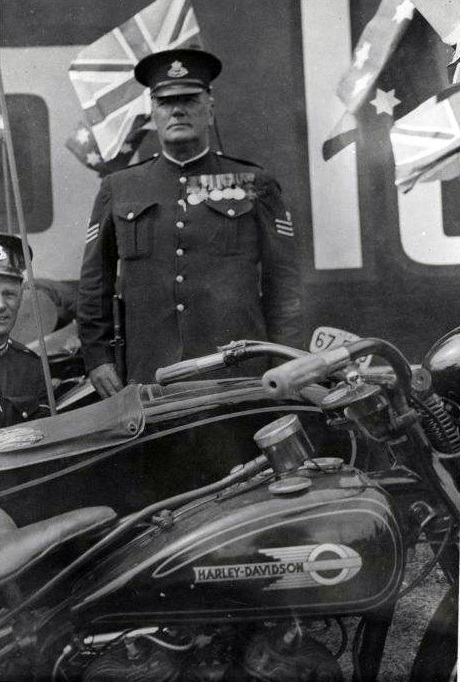
JP86/115-1. A photograph of policeman James Johnstone Walsh standing next to a motorcycle.
When Constable James (Jock) Johnstone Walsh joined the Australian army in 1915 at the age of 31 he was already an experienced soldier.
His first venture into military service took place in his home town Edinburgh in 1899 when he was not yet 16 and still a growing lad. He misstated his age to join the Argyle & Sutherland Highlanders but was discharged after two months when his true age was discovered.
In 1901 he enlisted in the Royal Marine Artillery where he lasted for ten months before decamping to join the 31st Battalion Imperial Yeomanry, known as Fincastle’s Horse, a battalion raised for service in the Second Anglo-Boer War.
Back in Edinburgh after the end of the South African war he enlisted in the Royal Garrison Artillery. This time he lasted longer ‘with the colours’, serving for eight years including four years in India and one year in Aden.
He then worked briefly as a coal miner in Auchterderran in the County of Fife, Scotland, before joining the Edinburgh City Police in April 1911. Four months later he resigned, having answered a recruiting advertisement for the Shanghai Municipal Police.
His Edinburgh service had coincided with the coronation of King George V and the King’s visit to Edinburgh in July 1911, so he was entitled to receive the Scottish Police Coronation Medal.
Jock Walsh’s Shanghai adventure as a probationary constable was terminated in April 1912.
He sailed for Sydney, joining the NSW Police within a week of arrival.
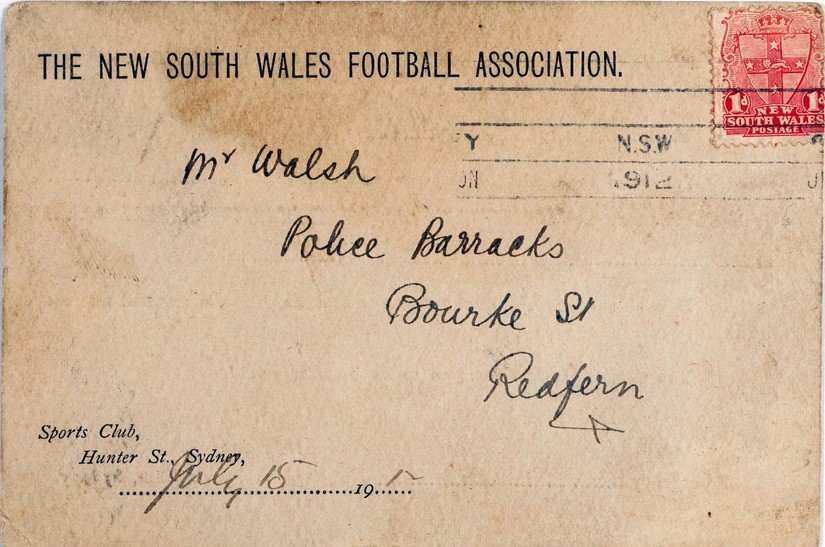
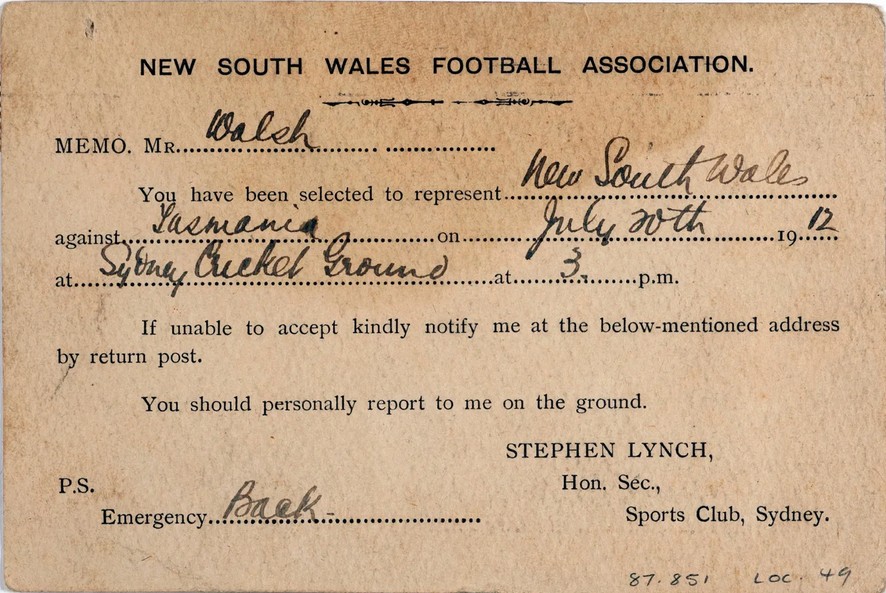
He also joined the NSW Football Association (soccer) and quickly established a reputation as a talented fullback for the police, chosen to represent New South Wales in an interstate match against Tasmania held in Sydney in July 1912.
He was based at the police barracks in Bourke Street, Redfern.
Three years after his arrival in Sydney Jock Walsh enlisted as a gunner in the 8th Field Artillery Reinforcements and was made acting sergeant almost immediately.
James Johnstone WALSH
He embarked for Egypt in September 1915 and in mid-November was on board Her Majesty’s Australian Transport ship Themistocles, headed for the Gallipoli peninsula, arriving more or less at the very moment the decision was being made to evacuate the Anzac and Suvla positions on the peninsula.
He was back in Alexandria for Christmas.
By June 1916 Walsh was in France, appointed Battery Sergeant Major.
In June 1917 he was promoted in the field to Regimental Sergeant Major and in November 1917 he was selected to be assistant instructor of the 1st Anzac Corps Artillery School. But this order was soon cancelled, after a court martial found him guilty of a disciplinary offence. He was reduced to Battery Sergeant Major and sent back into the field in Belgium before spending the final months of the war in France.
James Johnstone WALSH AKA James WALSH, Jim WALSH, Jimmy WALSH, Jock WALSH
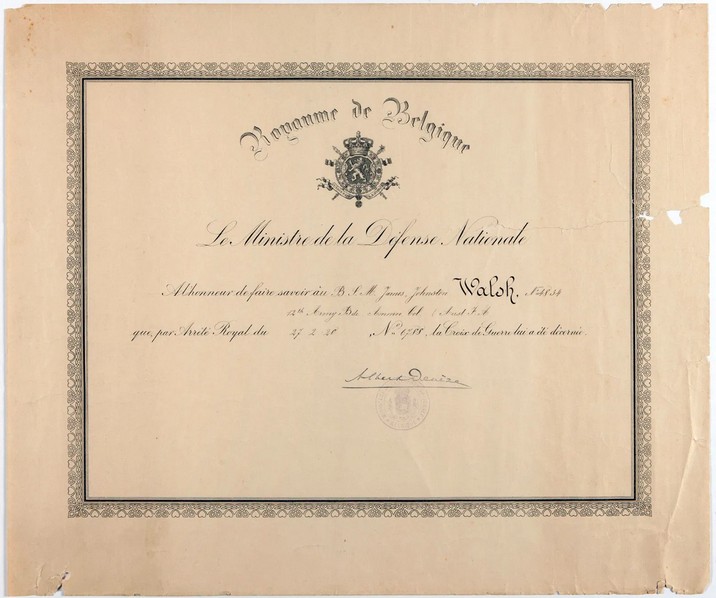
Walsh was insubordinate on occasion but his service in Belgium and France in the last year of the war earned him a mention in despatches in January 1919 and in the same month he was awarded the Belgian Croix de Guerre.
Certificate sent to Battery Sergeant Major James Johnstone Walsh to accompany his award of the Belgian Croix de Guerre
In France, in February 1919, he also acquired one final ‘souvenir’ of the war, falling victim to the influenza pandemic that had been devastating the battlefields of Europe since 1918.
He was admitted to No 40 Stationery Hospital at Harfleur in Normandy before being transferred to the Endell Street Military Hospital in London.
From London he returned to Australia, listed as an invalid on the transport Shropshire, arriving home in May 1919.
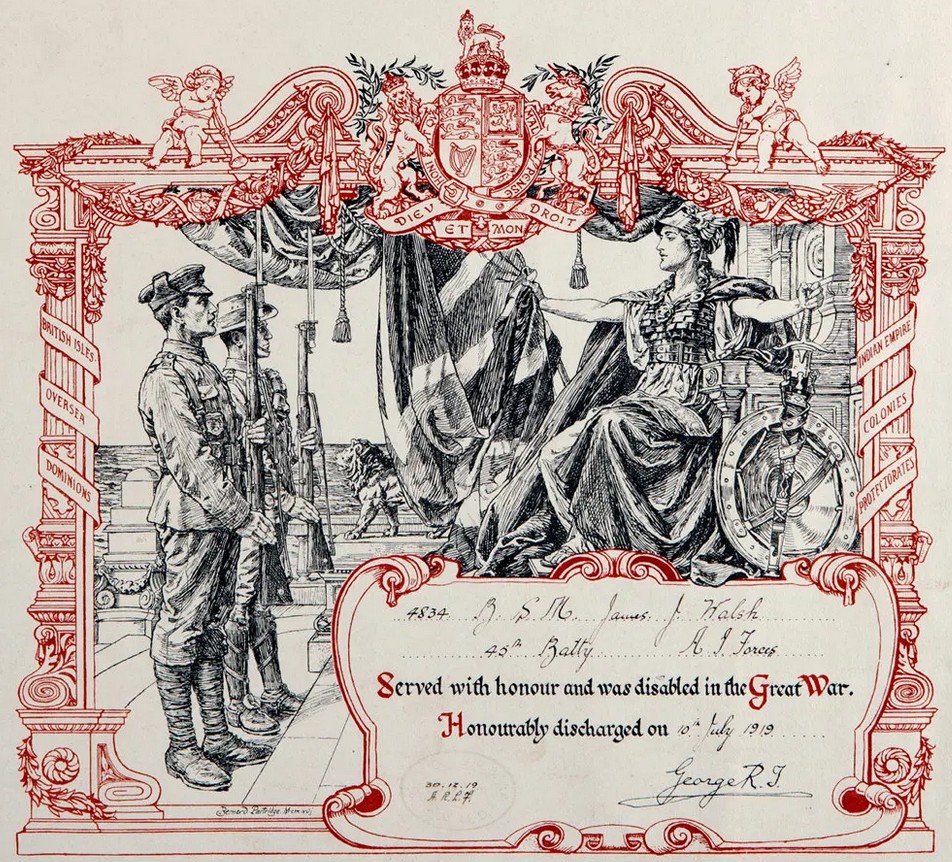
He received his discharge from the AIF on 10 July 1919 and was back on duty with the NSW Police by the end of the month.
King’s Certificate of Discharge issued to Battery Sergeant Major James Johnstone Walsh for service in the AIF during the First World War
For the first few years after his return from war service Jock Walsh was based at Glebe Police Station in Sydney’s inner west, but on at least one occasion in March 1920 he was on duty at the Police Museum at the Depot in Bourke Street, Redfern, headquarters of the city police.
Here he acted as guide for a journalist named William Howarth, who later published a series of articles about the police museum’s collections.
Howarth’s first story began with Constable Walsh, describing him as a modest man, wearing his war service medals but not speaking of his experiences in battle.
It was one of Jock’s comrades who provided the journalist with those details.
As well as housing the museum, the Bourke Street Depot was the place where all new police recruits received their basic training.
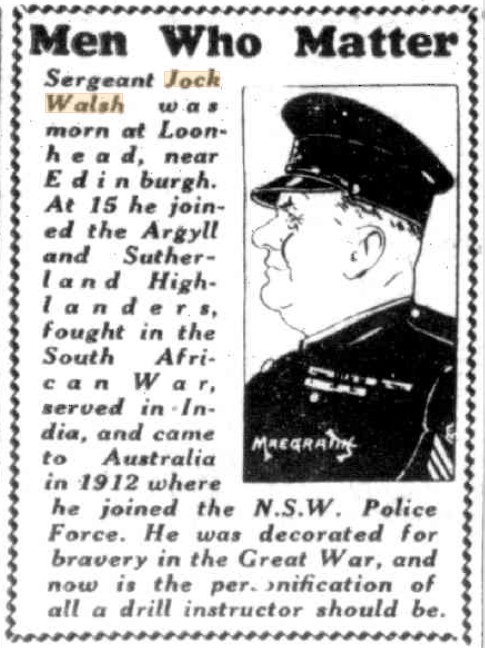
For several years Jock Walsh was drill instructor at the Depot. It was a role that meant he was widely known among the force –his promotion from constable to sergeant in June 1927 was reported by the Sydney Evening News.
According to the News he was ‘a man of fine physique and one of the most popular officers in the metropolitan police force’.
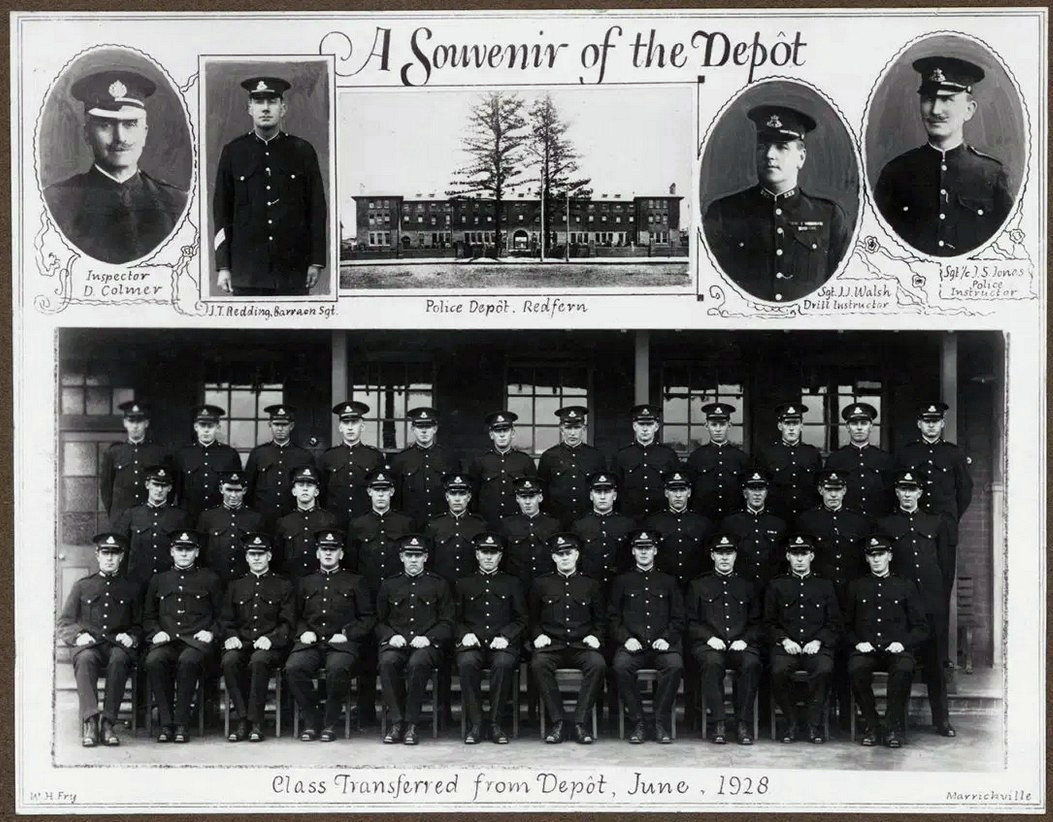
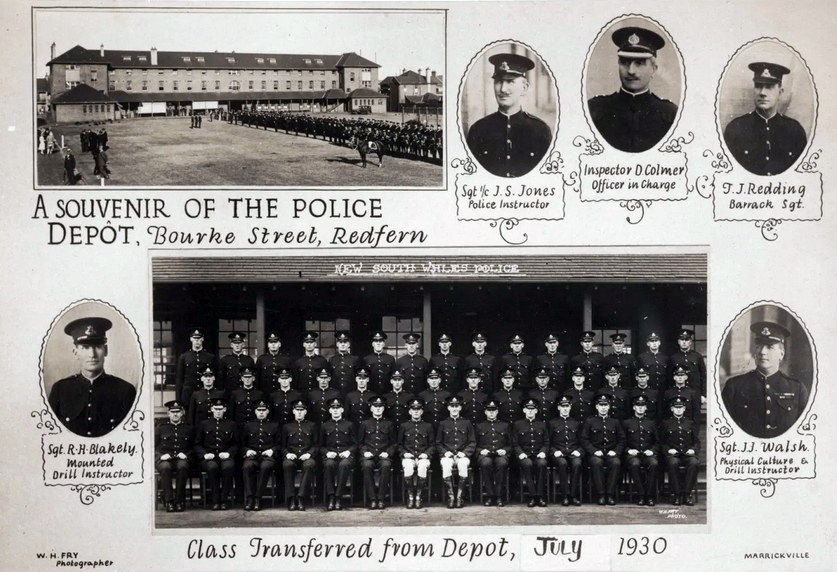
For several years each graduating class received a photographic ‘souvenir’ of the depot comprising a group picture of the class and cameo pictures of the personalities associated with their training, including Sergeant J J Walsh.
Jock’s last cameo appearance in a ‘souvenir’ was in 1930.
In 1931 he was relieved of his duties as drill instructor for improper possession and supply of an automatic pistol.
Jock Walsh was often in trouble in the 1930s – he was placed on report more than once for misconduct or disobedience, suspended in rank and pay for three months on one occasion, for twelve months on another, and eventually rusticated for a few years to Cootamundra in the south-west of New South Wales.
But he managed to rehabilitate himself and by late 1938 was back in Sydney and active in the NSW Police sub-branch of the Returned Sailors and Soldiers’ Imperial League of Australia.
For the annual police carnival in February 1939 Walsh drilled a squad of returned soldier and sailor police in a display with fixed bayonets.
The local press reported that this was a display that had not been seen before in Australia but that it was a regular part of a Highland Brigade review. It was also, according The Referee, a sporting newspaper, the only form of bayonet exercise during the South African war and one that all old South African soldiers would remember.
Hardly surprising then that an old drill sergeant with Jock Walsh’s background should introduce the exercise to a police carnival.
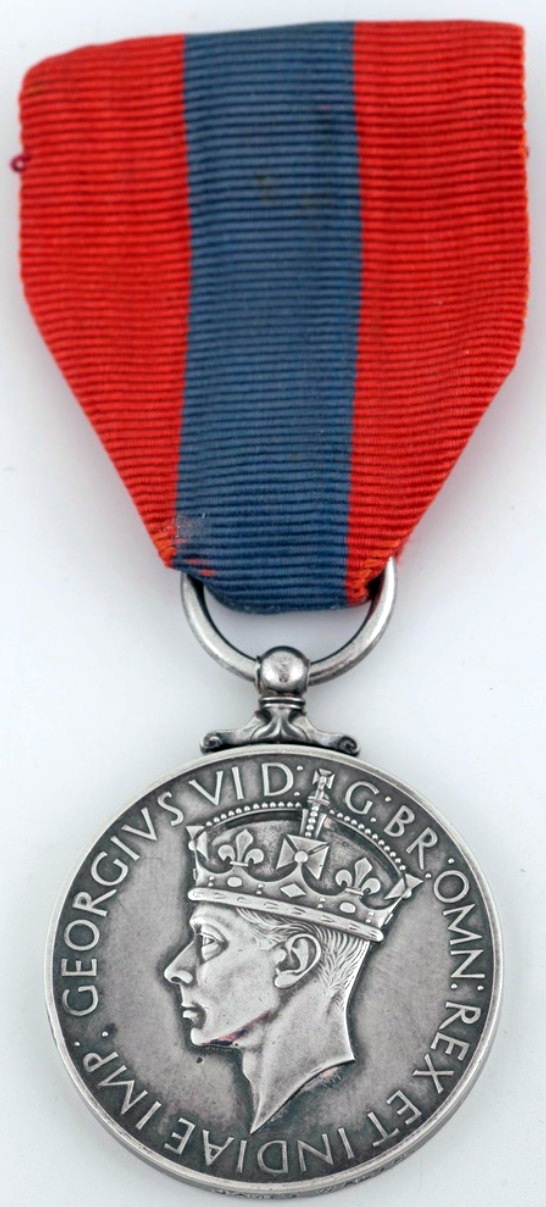
In 1943, on the eve of his retirement from the NSW Police, Jock Walsh was recommended for the Imperial Service Medal, awarded for meritorious service over more than 25 years.
He received the medal in a ceremony at Government House Sydney in August 1944.
James Johnstone WALSH AKA James WALSH, Jim WALSH, Jimmy WALSH, Jock WALSHJames Johnstone WALSH AKA James WALSH, Jim WALSH, Jimmy WALSH, Jock WALSHClass ?? – Redfern Police Depot – June 1928. With Insp. D. COLMER, Barrack Sgt J.T. REDDING, Drill Instructor Sgt James Johnstone WALSH # Q 9654, Police Instructor Sgt 1/c J.S. JONES
Photographic souvenir postcard depicting the class transferred from the Police Depot, Bourke St, Redfern, July 1930 Sgt 1/c J.S. JONES – Police Instructor, Ins. D. COLMER – O.I.C., T.J. REDDING – Barrack Sgt, Sgt R.H. BLAKELY, Mounted Drill Instructor, Sgt James Johnstone WALSH # Q 9654 – Physical Culture & Drill Instructor.
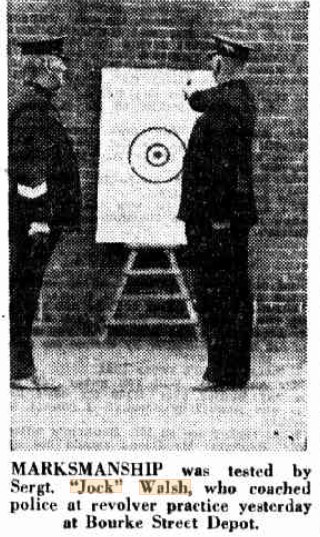
The Daily Telegraph ( Sydney ) Friday 10 March 1933 p7
Sun (Sydney, NSW : 1910 – 1954),
Saturday 29 June 1940, page 6
RESCUED CHILD FROM ALSATIAN
Wearing only his pyjamas, Sergeant Jock Walsh, stationed at North Sydney, saved a seven-years-old child from an attack by an Alsatian dog, and was badly bitten on the right hand, at Belmore, during the week.
Sergeant Walsh was shaving at his home in Persic-street, Belmore, before going on duty, when he heard screams.
He ran outside and saw the girl being attacked by the dog.
He tackled the dog with his bare hands, and dragged the girl away, but the dog turned on him. A piece of flesh from his wrist to index finger was torn from the back of his hand. He was taken to Canterbury Hospital, where eight stitches were inserted.
Daily Mirror ( Sydney ) Friday 26 December 1941 p7
Edinburgh City Police – PC 276 B James Johnstone Walsh
Edinburgh City Police
New South Wales Police – Australia
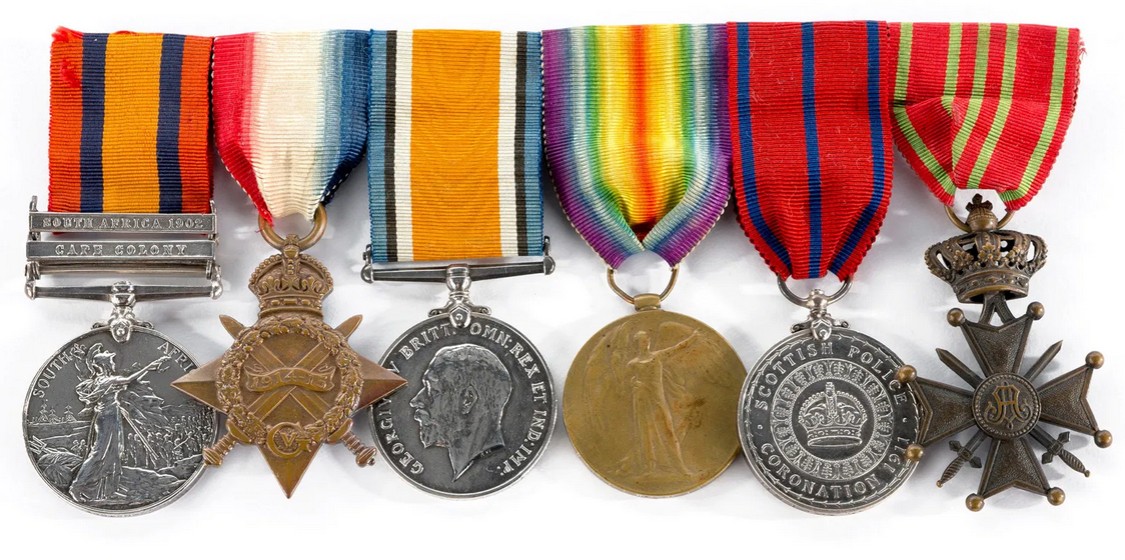
Queen’s South Africa Medal
1915 -15 Star
British War Medal
Victory Medal
King George V Coronation (Scottish Police) Medal, 1911
Imperial Service Medal
Croix de Guerre (Belgian)
PC James Johnstone Walsh
The following is a fascinating story of a young man born in Straiton near Edinburgh in 1883, who worked as a Shale and Coal Miner, lied about his age and served in the Argyll and Sutherland Highlanders until he was found out. He then enlisted in the Royal Marine Artillery, (again giving a false age), went on the ‘run’ and enlisted in the Imperial Yeomanry (in his mother’s surname) and served in the Boer War.
On his return to the United Kingdom, he then joined the Royal Garrison Artillery (still in his mother’s surname) and served for eight years in India and Aden.
He joined Edinburgh City Police in 1911, just long enough to earn the Coronation (Scottish Police) Medal, 1911. He then joined the Shanghai Municipal Police in China for a few months before being appointed to the New South Wales Police in Australia in 1912.
During World War 1, he enlisted in the Australian Imperial Force and served in France and Belgium with the Field Artillery. He returned to Australia with the rank of Warrant Officer Class 1.
He then had a successful career in the New South Wales Police and retired in 1943. He was awarded the Imperial Service Medal in 1944.
The early years
James (Johnstone) Walsh was born on 6 August 1883 at Straiton in the Parish of Liberton in the County of Edinburgh. His father Thomas Walsh, was a Labourer at the Oil Works and his mother, Agnes Walsh, Maiden Surname Johnstone.
The name ‘Johnstone’ is not recorded on his birth certificate but it will be seen when the rest of his story is added, Johnstone was a surname used by James Walsh from time to time in his early life.
His parents were married on 3 September, 1872 at St Mungo’s Roman Catholic Chapel in Glasgow.
In the Census of 1881, his parents were recorded living at Straiton Cottar Houses at Liberton in the County of Edinburgh. The family consisted of Thomas, (36), born in Ireland, a Labourer in Oil Works, Agnes, (36), born in Uphall in West Lothian, Henry, (7), born in Glasgow, Thomas, (4), born in Glasgow and Mary, (1), born in Straiton in Liberton. There were also three lodgers, two of whom were born in Ireland, at least one of whom is a relative.
In the Census of 1891, the family were living at Dalmeny Oil Company Houses at 3 Railway Row, Dalmeny in Midlothian. All of the family are still alive and also recorded were James Walsh, (7) and George Walsh, (6).
On 9 June, 1891, Agnes Johnstone or Walsh, (46), married to Thomas Walsh of the Oil Works Cottages in Dalmeny in the County of Linlithgow, died there. Her husband registered her death.
On leaving school, James Walsh worked as a Shale Miner in the Lothians.
Argyll & Sutherland Highlanders
On 25 February, 1899, James Walsh claiming to be “18 Years and 6 months” enlisted for “7 years with the Colours and 5 with the Reserve” as Private 6866 at the Regimental Depot of ‘the Argylls’ in Stirling Castle. His ‘next of kin’ was listed as his father, “Thomas Walsh of 5 Tarbrax, Cobinshaw (in West Lothian, also then a Shale Mining area).
He was described as 5’, 3.5”, fresh complexion, blue eyes and light brown hair. Under ‘Marks and scars’ were “Scars upper lip, back of head, right upper eyebrow, left side of neck, over part of stomach and several each shin and on each knee”.
73 days later, his true age was discovered and he was discharged on 8 May, 1899.
Royal Marine Artillery
Undeterred, on 11 March, 1901, giving his date of birth as 6 August, 1882, he enlisted in the Royal Marine Artillery (RMA) as Private 9389.
He appears in the Census of 1901 as a “Private, RMA” stationed at Eastney Barracks in Portsmouth in Hampshire, England.
Both entries on his RMA record his character and ability as “Very good” but the reason for discharge is given as “Run” which is naval parlance for ‘Absent without leave’. He was discharged on 14 January, 1902.
Imperial Yeomanry (Fincastle’s Horse)
In the meantime, on 7 January, 1902, he had enlisted as “James Johnstone” as Private 43514 in the 140th Company (Fincastle’s Horse) of the 31st Battalion Imperial Yeomanry. He was discharged on 26 October, 1902.
The medal roll of that unit dated 11 November, 1902 confirms ‘James Johnstone’s’ entitlement to the Queen’s South Africa (QSA) Medal with the clasps, ‘Cape Colony’ and ‘South Africa 1902’. The QSA is the first medal from left to right below.
Royal regiment of Artillery (Royal Garrison Artillery)
Upon his return to Edinburgh, on 4 March, 1903, he enlisted, (still using 6 August, 1882 as his date of birth and the name “James Johnstone), as Gunner 14745 in “the Royal Regiment of Artillery, (Royal Garrison Artillery). The scars noted on his record match those recorded in 1899.
There are 13 questions on his application to join the Army.
To question number 10, “Do you now belong to the Army, the Marines, the Militia, the Militia Reserve, the Royal Navy, the Volunteers, the Yeomanry, the Army Reserve, the Naval Reserve Force? If so, what Corps?”
He answered “No”.
To question number 11, “Have you ever served in the Army, the Marines, the Militia, the Militia Reserve, or the Royal Navy? If so, state which and cause of discharge.”
He answered “No”.
To number 12, “Have you truly stated the whole, if any, of your previous Service?”
He answered “Yes”.
He originally enlisted for “3 years with the Colours and 9 with the Reserve”. His description is similar to that of 1899 but his height is now “5’, 10”. He later extended his service with the colours to 8 years.
His past evidently caught up with him because there are several entries (undated) all in red ink that amend his name, age and date of birth to their correct status. The alias of “James Johnstone Walsh” was used thereafter.
He was granted pensionable service for his previous service and it also counted towards his service and good conduct pay.
He also paid for his “Run” from the Royal Marine Artillery by having 14 days forfeited for Absence.”
He qualified as a Gun Layer and 1st Class Gunner.
His record also lists his service dates in South Africa with the Imperial Yeomanry and confirms his entitlement to the QSA and clasps.
James Johnstone Walsh served in India for one and a half years, Aden for just over one year and then India for a further three years. He returned “Home” on 27 January, 1911.
He was “Transferred to the Reserve” on 3 March, 1911.
Edinburgh City Police
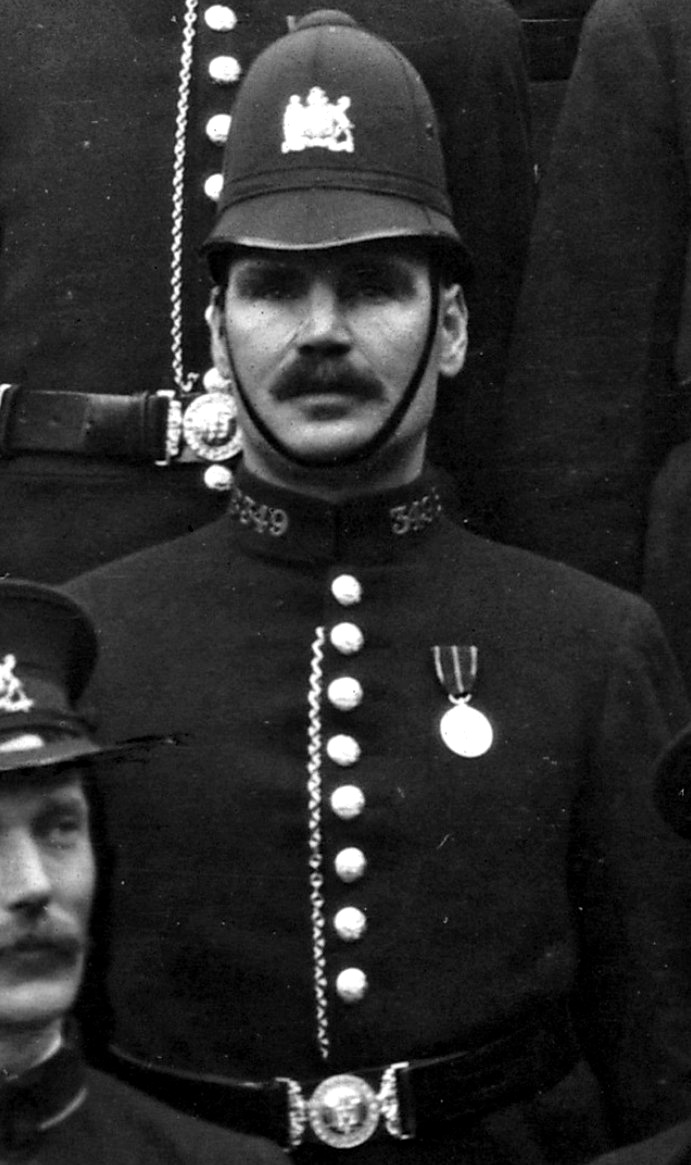
On 4 April, 1911, he joined Edinburgh City Police as PC 276 B in Gayfield Square and “Resigned” on 29 August, 1911. He, like every other officer in Edinburgh City Police, was awarded the Coronation (Scottish Police) Medal, 1911.
There are only two entries in the Edinburgh City Police Weekly Records concerning him, the day he joined and the day he left.
Discharge from the Army Reserve
On 15 August, 1911, his Army Record records that he was “Discharged at his own request on payment of £25.00…”
PC 349 B Edwin Adselt, a contemporary of James WALSH in Gayfield Square wearing the 1911 Coronation ( Scottish Police ) Medal.
Shanghai Municipal Police
The Shanghai Municipal Police policed the Shanghai International Settlement in China between 1854 and 1943 and recruited in the United Kingdom via Government Agents. A regular stream of young men went to Shanghai but promotion from the lower ranks was limited as most senior officers were recruited from British or Colonial Police forces.
Walsh left London with a draft of recruits on 4 September, 1911 arriving in Shanghai in mid to late October.
According to the records of the Shanghai Municipal Police in, James Johnstone Walsh served there from October, 1911 before he left for Hong Kong aboard the steamer Assaye on 23 April, 1912.
New South Wales Police 1
James Johnstone Walsh arrived in Sydney, Australia on 18 May, 1912 and according to the records of the New South Wales Police, he joined as a Probationary Constable on 3 May that year. He was known thereafter as “Jock” Walsh.
He served in Granville, a suburb of western Sydney and then Mittagong, a town in the Southern Highlands of New South Wales (NSW).
On 12 May, 1915, like thousands of Australians, he enlisted in the Australian Imperial Force for service in the 1st World war.
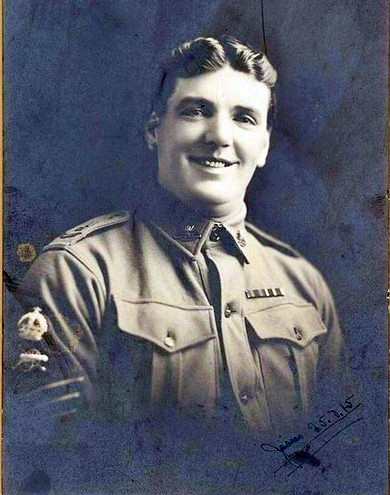
James Johnstone WALSH AKA James WALSH, Jim WALSH, Jimmy WALSH, Jock WALSH Australian Imperial Force 1915 – 1919
Australian Imperial Force
He joined as a Gunner, his regimental number was 4834 and he was posted to the 12th Field Artillery Brigade.
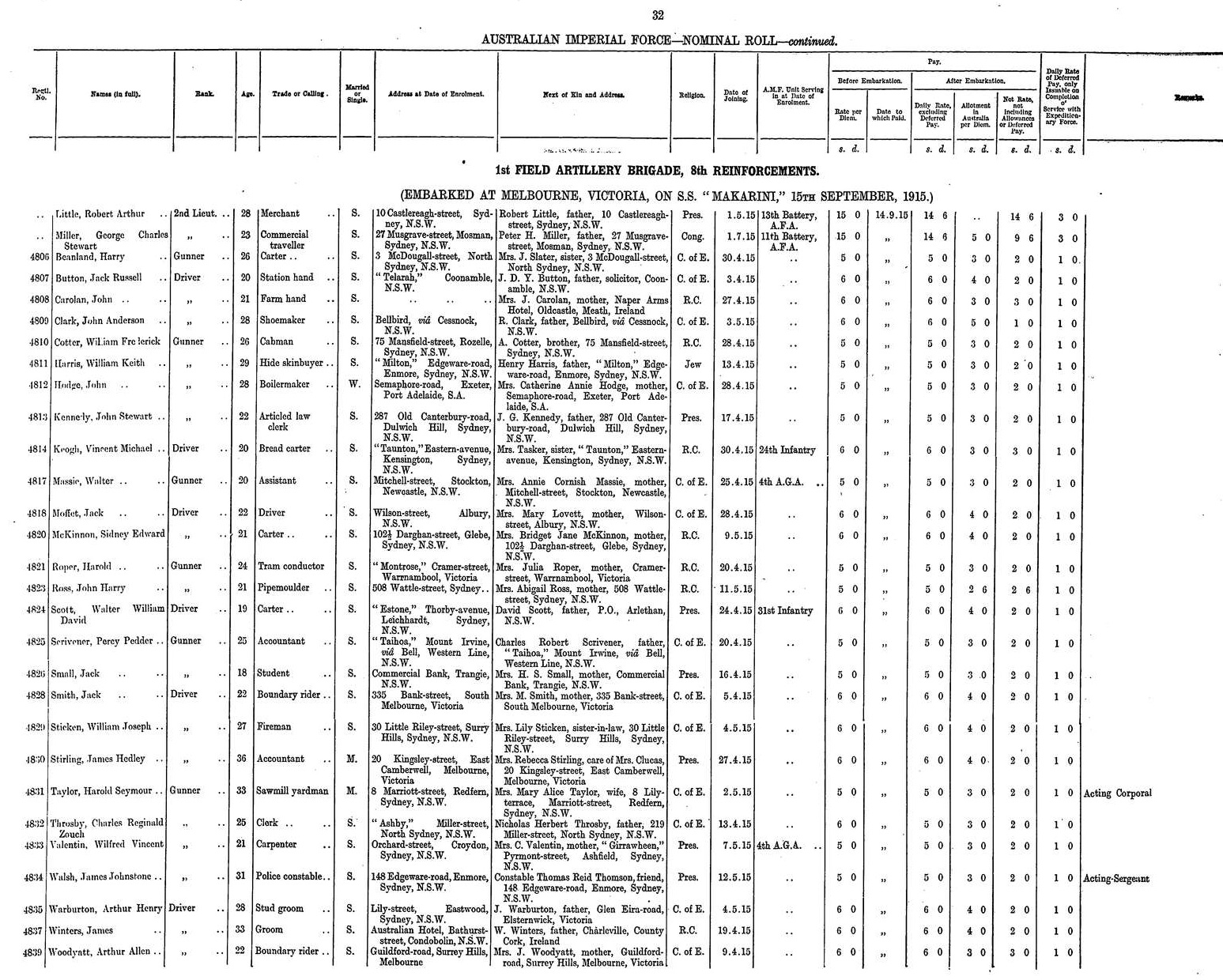
He sailed with his regiment from Melbourne, Victoria on 15 September, 1915 aboard the S.S. Makarini. A note on the nominal roll shows him as “Acting Sergeant.
He served with distinction in France and Belgium where he was ‘Mentioned in Despatches’, Gazetted in London (No. 31448) on 11 July, 1919 and the Commonwealth Gazette, No.124 of 30 October, 1919.
He was also awarded the Croix de Guerre (Belgium), the 1914-15 Star, the British War Medal and the Victory Medal. (The Croix de Guerre is the last medal in the row, looking left to right above).
He returned to Australia on 1 April, 1919 at the rank of Warrant Officer Class 1 (Battery Sergeant Major) and rejoined New South Wales Police.
New South Wales Police 2
From then he served in the Metropolitan District, until 1925 when he transferred to the Depot from then until 1930. He was promoted to Sergeant on 1 June, 1927. From then, apart from another short posting to the Depot in 1931, he served in the Metropolitan District until 1935.
He then served at Cootamundra, a town in the South West Slopes region of NSW from 1936 to 1938.
From then he served again in the Metropolitan District, apart from a short posting to the Stockrington Colliery in the Hunter region of NSW and retired from the force on his 60th birthday, 6 August, 1943.
Shortly before his retirement, he was recommended for the award of the Imperial Service Medal and it was presented by“His Excellency, Alexander Hore-Ruthven, 1st Earl of Gowrie, the Governor-General of Australia,on Tuesday, 19 September, 1944.
James Johnstone WALSH AKA James WALSH, Jim WALSH, Jimmy WALSH, Jock WALSH Sergeant ‘Jock’ Walsh – Imperial service Medal presented in 1944 ( Obverse )James Johnstone WALSH AKA James WALSH, Jim WALSH, Sergeant ‘Jock’ Walsh – Imperial service Medal presented in 1944 ( Reverse )
Jock Walsh died in Australia on 22 December, 1946 aged 63.
Much of the information about the life and career of James Johnstone Walsh, including the photographs here, have all come from the efforts of Megan Martin of Sydney Living Museums in Australia.
Megan contacted me through the website regarding James Johnstone Walsh’s brief time in the Scottish Police. It has been an extremely interesting enquiry to follow through to its conclusion.
The medals are in the care of Sydney Living Museums.
I am very grateful to Megan for all the information and pictures of ‘Jock’ Walsh and also for the kind permission to use them here.
Nothing further, than what is recorded above, is known about this person at the time of publication and further information and photos would be appreciated.
My father Insp 2nd Class Adam “Scotty” Denholm, joined the Police in 1929. Jock Walsh was the drill Sergeant and Dad recalled that Jock had various says which would explode from him when things were going bad and the parade ground. “Denholm, you burgoo headed buggar, march in time”. Another was ” Oh Denholm, may the lord above send down a dove with wings as sharp as razors, to cut the throats of all you blokes, by the holey striped tailed jaysus.” Insp Colmer at the Depot had a male cat who at certain times of the evening would march around the parade ground proclaiming his desire to find a little female cat to meet. Well, one evening it was too much for my father, who was at the time living in the barracks with other Police. He “pelted a gibber (rock) at the cat and hit it. The blessed thing rolled over sideways and apparently died. Filled with fear and trepidation, the old man slunk into bed and lay there thinking of the future after killing Inspector Colmers cat. In the morning just before daylight, he awoke with the intention of removing the corpse of the presumably dead kitty, but it was nowhere to be seen. He must have just knocked it out. The cat was never seen again though at night on the Parade Ground singing his mournful song wishing to entice a little cat lady for some nocturnal romance.





My father Insp 2nd Class Adam “Scotty” Denholm, joined the Police in 1929. Jock Walsh was the drill Sergeant and Dad recalled that Jock had various says which would explode from him when things were going bad and the parade ground. “Denholm, you burgoo headed buggar, march in time”. Another was ” Oh Denholm, may the lord above send down a dove with wings as sharp as razors, to cut the throats of all you blokes, by the holey striped tailed jaysus.” Insp Colmer at the Depot had a male cat who at certain times of the evening would march around the parade ground proclaiming his desire to find a little female cat to meet. Well, one evening it was too much for my father, who was at the time living in the barracks with other Police. He “pelted a gibber (rock) at the cat and hit it. The blessed thing rolled over sideways and apparently died. Filled with fear and trepidation, the old man slunk into bed and lay there thinking of the future after killing Inspector Colmers cat. In the morning just before daylight, he awoke with the intention of removing the corpse of the presumably dead kitty, but it was nowhere to be seen. He must have just knocked it out. The cat was never seen again though at night on the Parade Ground singing his mournful song wishing to entice a little cat lady for some nocturnal romance.